Joo Choon Lin
Artist x poet
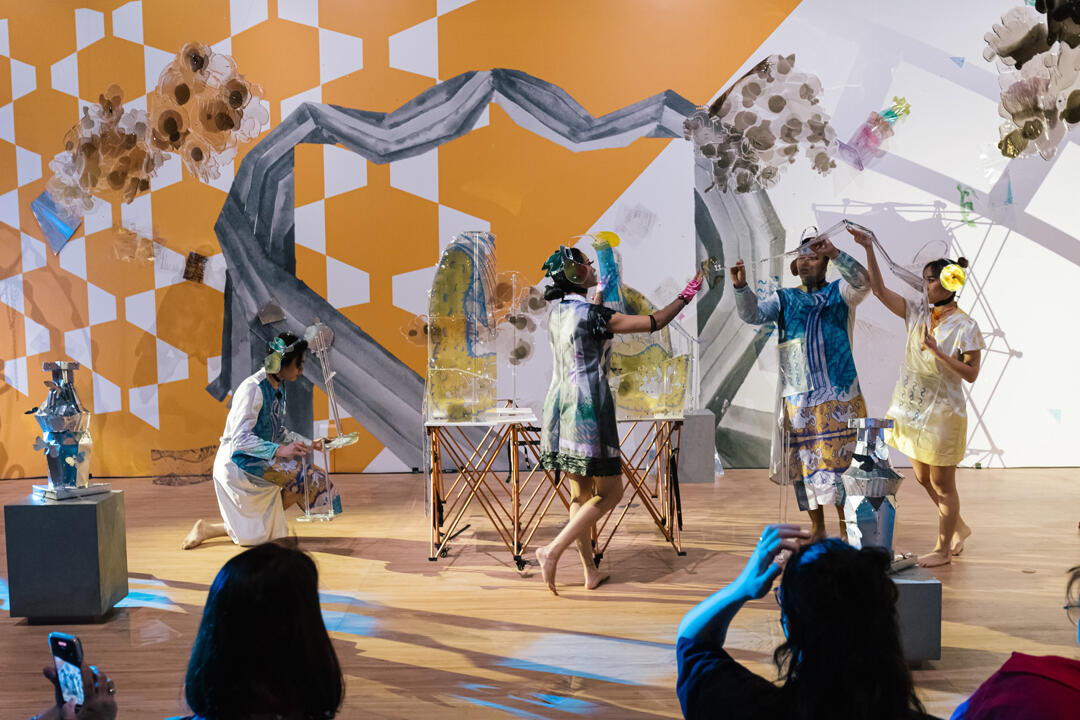
I am drawn to small natural phenomena that can carry great power when triggered, like the butterfly effect. My work stages physical states of metamorphosis, where forms exist in a state of constant motion and reverberation—evolving and shifting—holding a subtle anticipation, always in the process of becoming.
Recent Exhibition
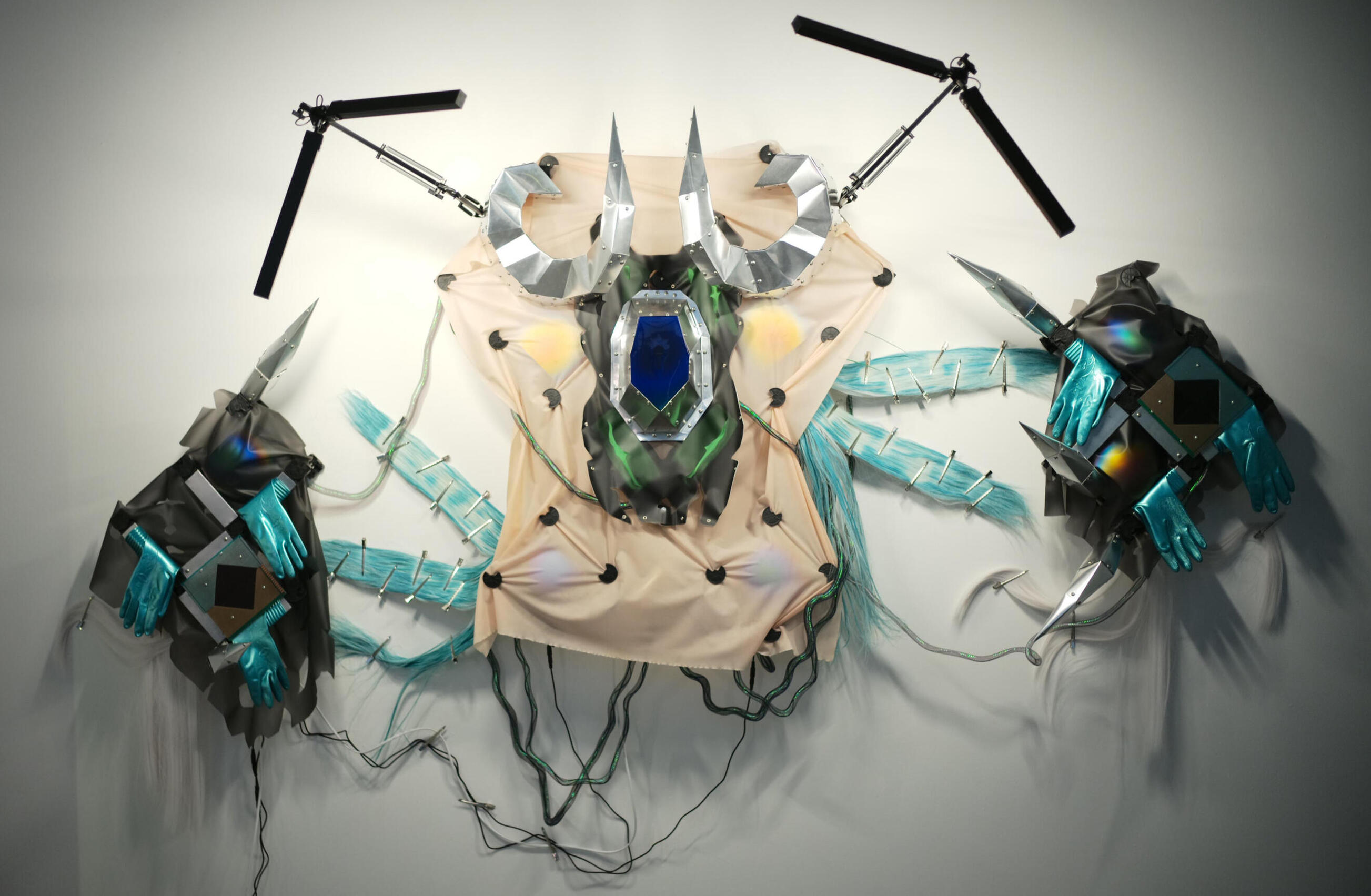
. . ゚ 。 . 。 ゚ ☆。 , ゚. 。 。+ 。゚ ☆ ゚.. . ゚ 。 . 。 ゚ ☆。 , ゚. 。 。+ 。゚ ☆ ゚.☆ ゚。 。. ̽.
✧ 。 。 。 , + 。. , 。 ✸ , o 。.
゚ , ̤ , ̽。 . . .✶ ゚ . ゚ +. 。゚ 。 ★ , + 。. , 。✸ , o , ゚. 。゚. ゚. o ゚ 。 . ✧ , . . 。 .゚✶ .+。 ∗ 。+ 。゚ ☆ ゚. + 。 ゚ ,。 . ✹ 。 ✧ , .。
☆ 。, ゚ . 。 。+ 。 . , 。+ ゚. 。。 ゚. .✺
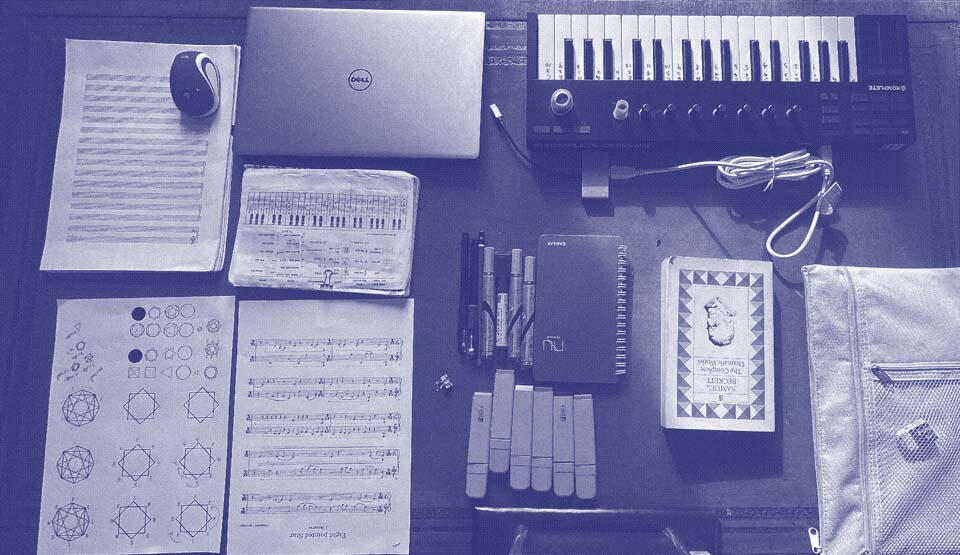
Sound Archive
( click to listen )
. . ゚ 。 . 。 ゚ ☆。 , ゚. 。 。+ 。゚ ☆ ゚.. . ゚ 。 . 。 ゚ ☆。 , ゚. 。 。+ 。゚ ☆ ゚.☆ ゚。 。. ̽.
✧ 。 。 。 , + 。. , 。 ✸ , o 。.
゚ , ̤ , ̽。 . . .✶ ゚ . ゚ +. 。゚ 。 ★ , + 。. , 。✸ , o , ゚. 。゚. ゚. o ゚ 。 . ✧ , . . 。 .゚✶ .+。 ∗ 。+ 。゚ ☆ ゚. + 。 ゚ ,。 . ✹ 。 ✧ , .。
☆ 。, ゚ . 。 。+ 。 . , 。+ ゚. 。。 ゚. .✺
Selected works
( click to view )
The laugh laughs at the laugh, The song sings at the song,
Singapore Biennale 2025
I Just Want You to FEEL the FEELING I FELT,
Live performance, Singapore Biennale 2025
View each work in detail

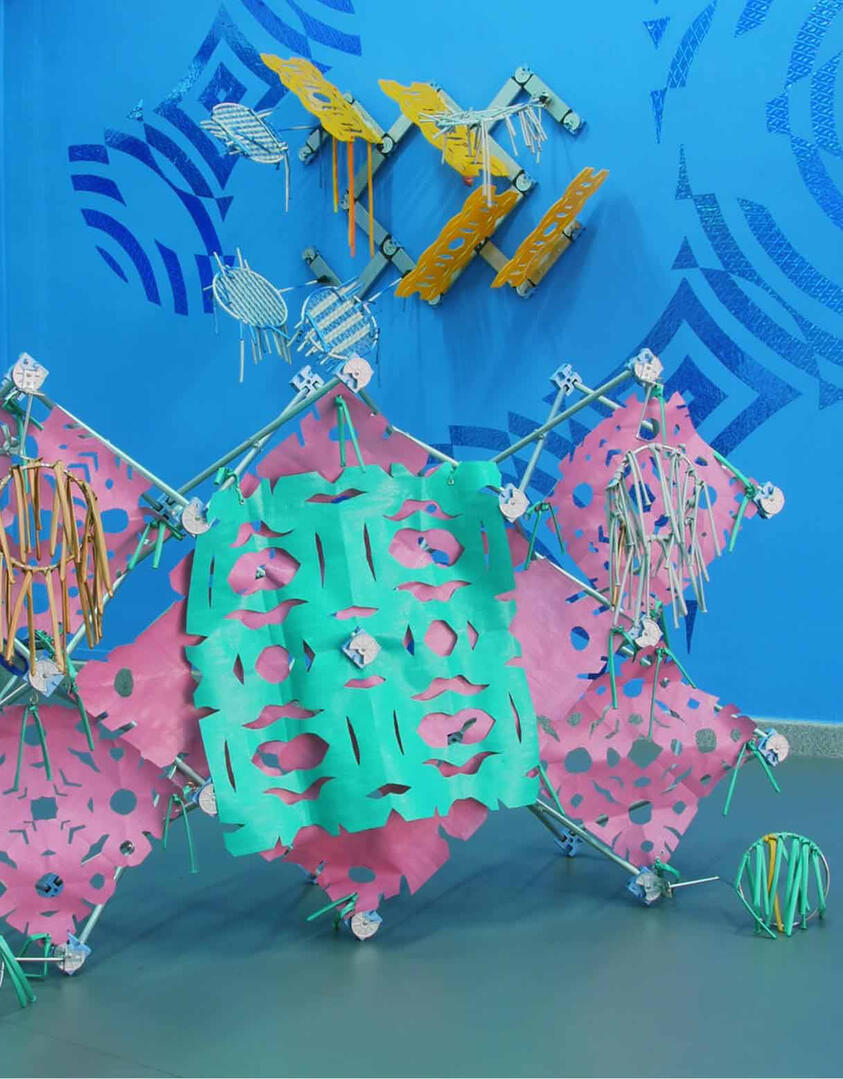
The Tuning Instrument No. 1 in Papilio Fold of Jade-Green Meadow, Singapore Biennale 2025

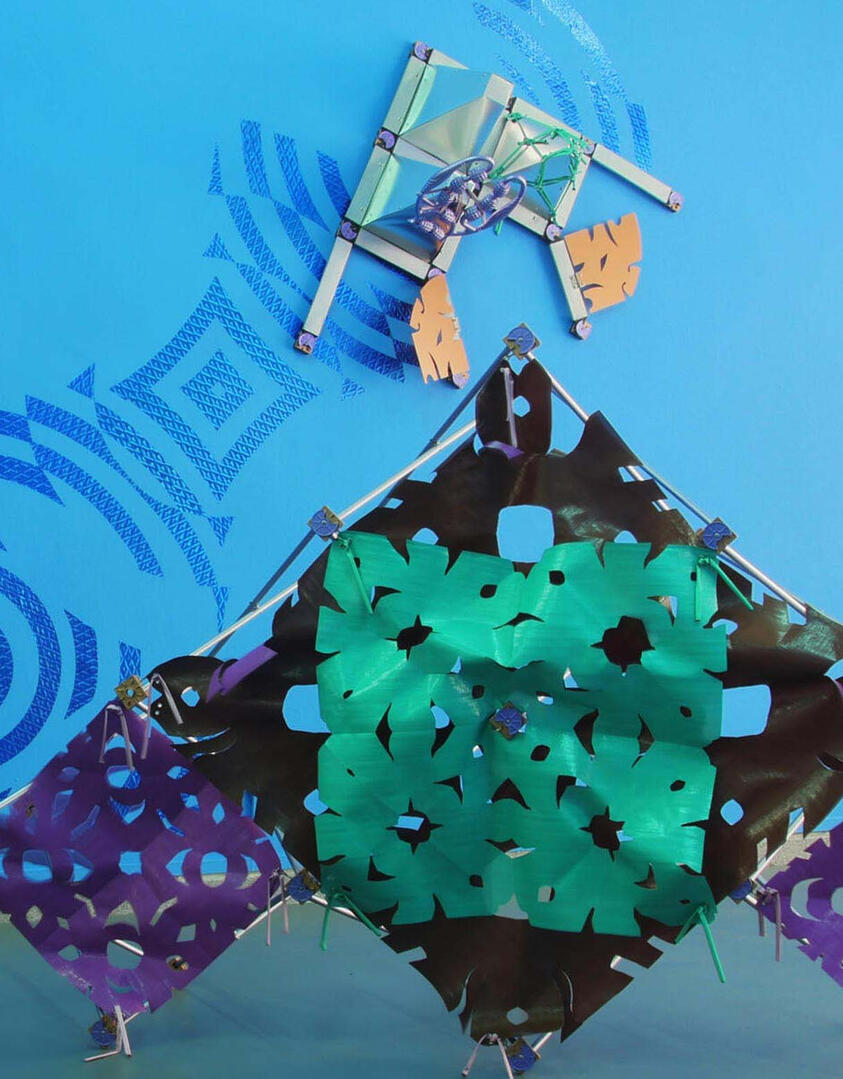
The Tuning Instrument No. 2 in Red Rock Jewel Valley, Singapore Biennale 2025

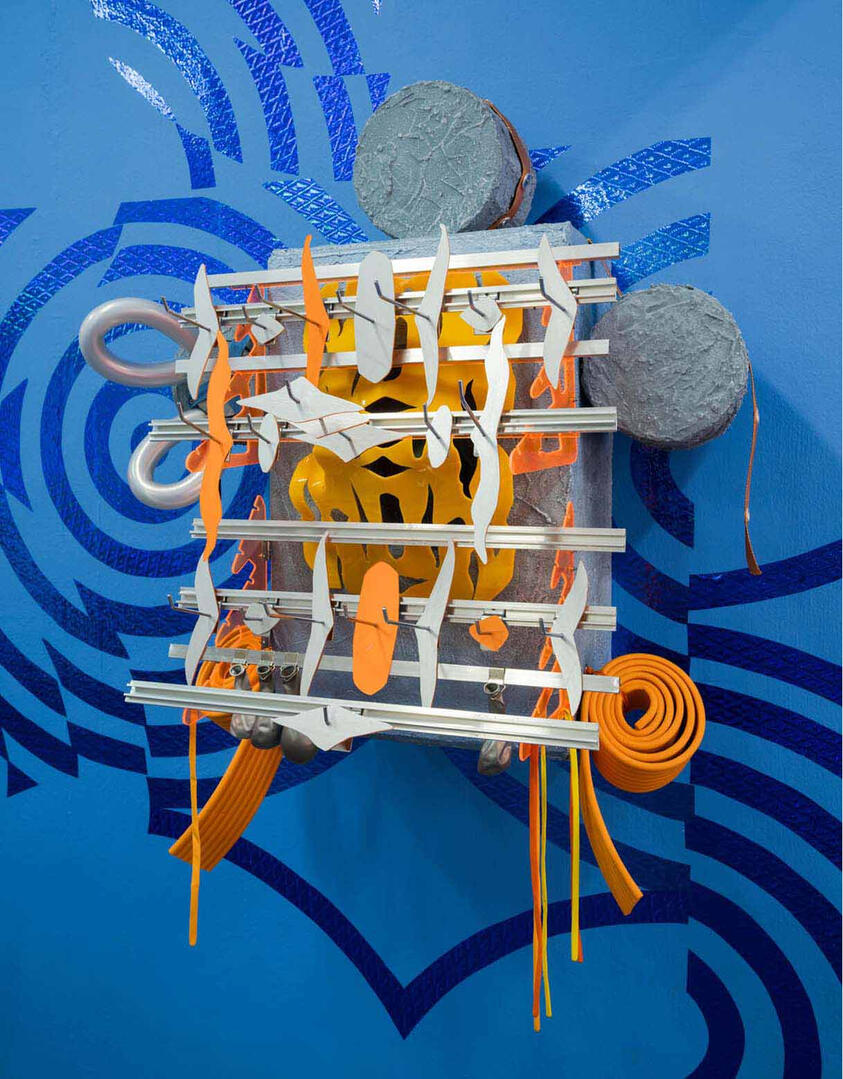
The Singing Instrument in Postludium of Dawn, Singapore Biennale 2025
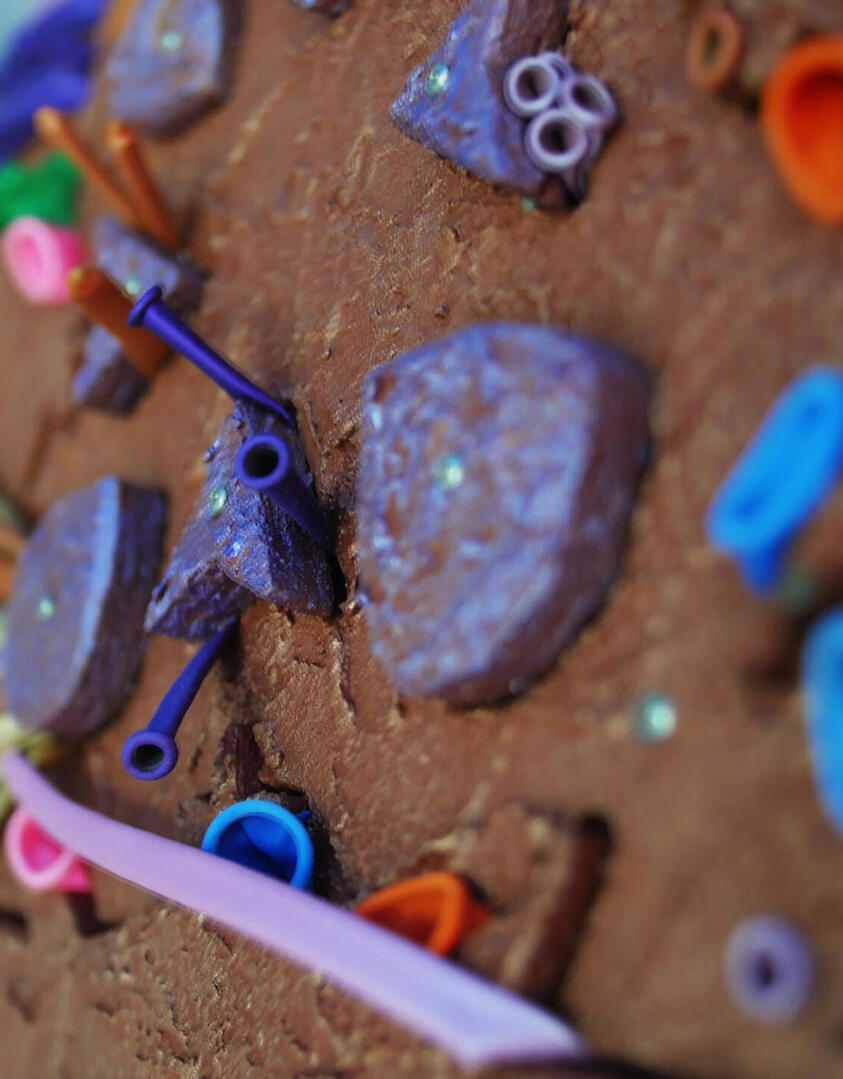
The Falling Note (adagio), Singapore Biennale 2025

Glue Your Eyelids Together, Singapore Biennale 2025
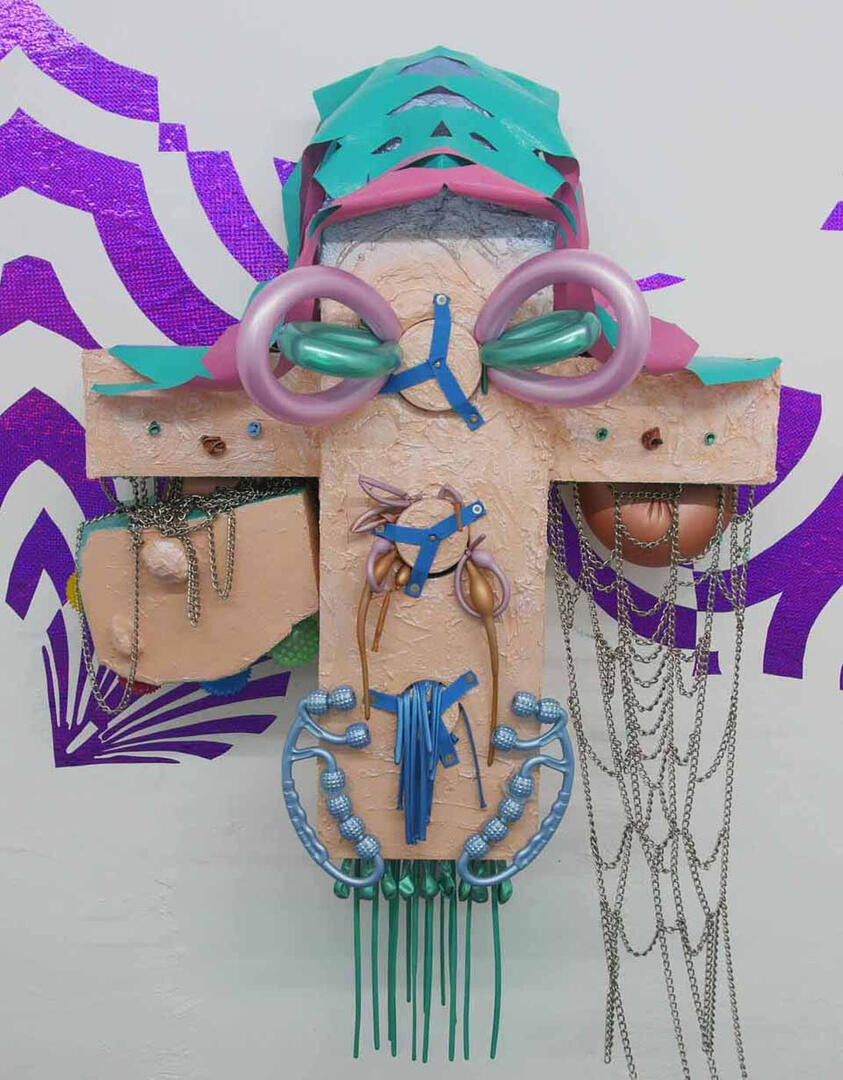
The Sound of Sound - Colours in Dream,
Singapore Art Week 2024
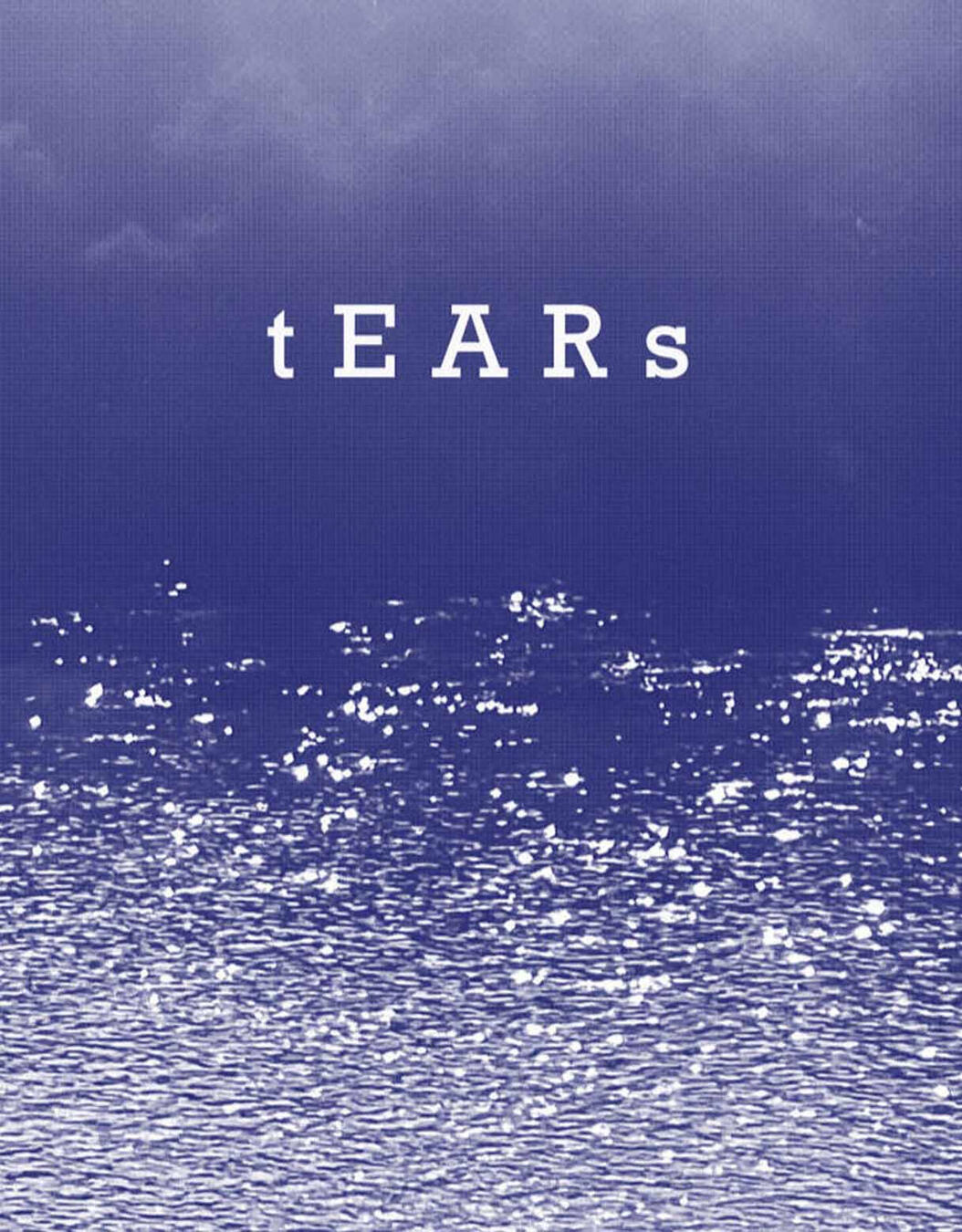
tEARs, Album,
Atelier Samuel Beckett, Méricourt, France, 2024

tEARs, Album, Atelier Samuel Beckett, Méricourt, France
Dance in the Destruction Dance,
Solo exhibition at Singapore Art Museum, 2023
View each work in detail

pEARs ' --- --- --- ' in §pring, a theatrical play, part of Solo Exhibition Dance in the Destruction Dance, Singapore Art Museum

Film-objects, Solo Exhibition Dance in the Destruction Dance
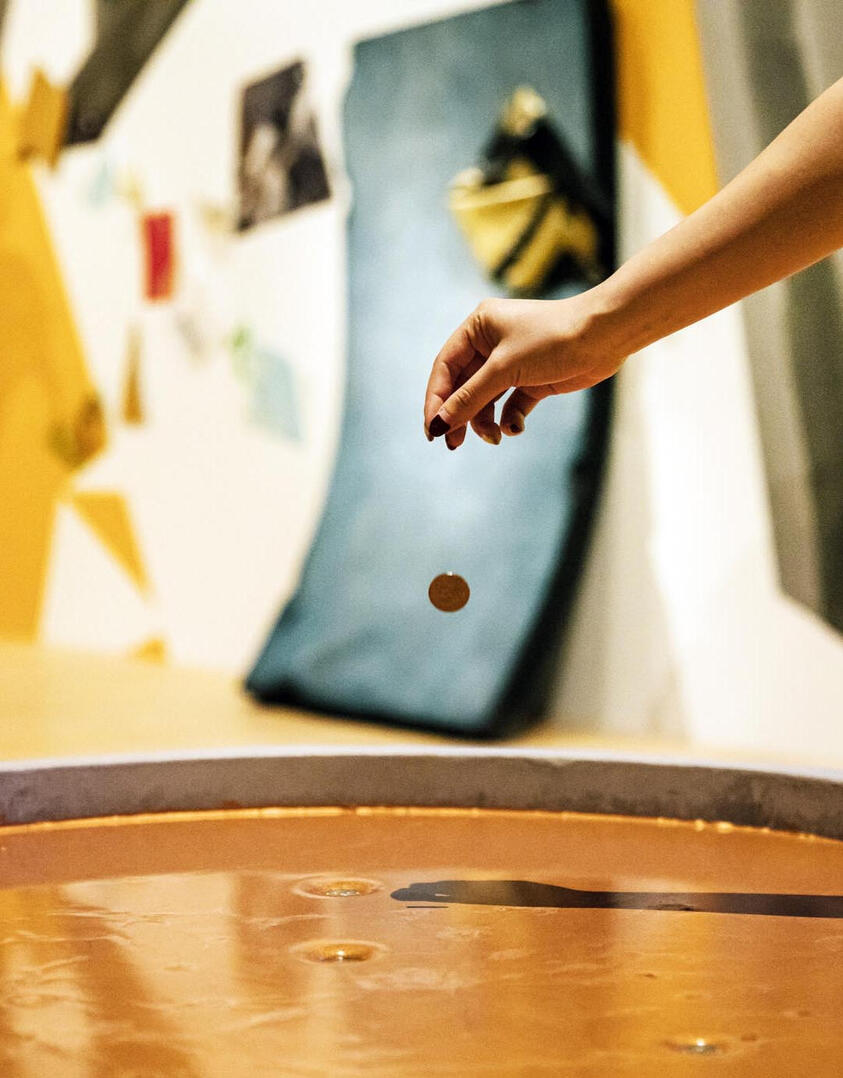
I Only Make Friends With Money, Solo Exhibition Dance in the Destruction Dance
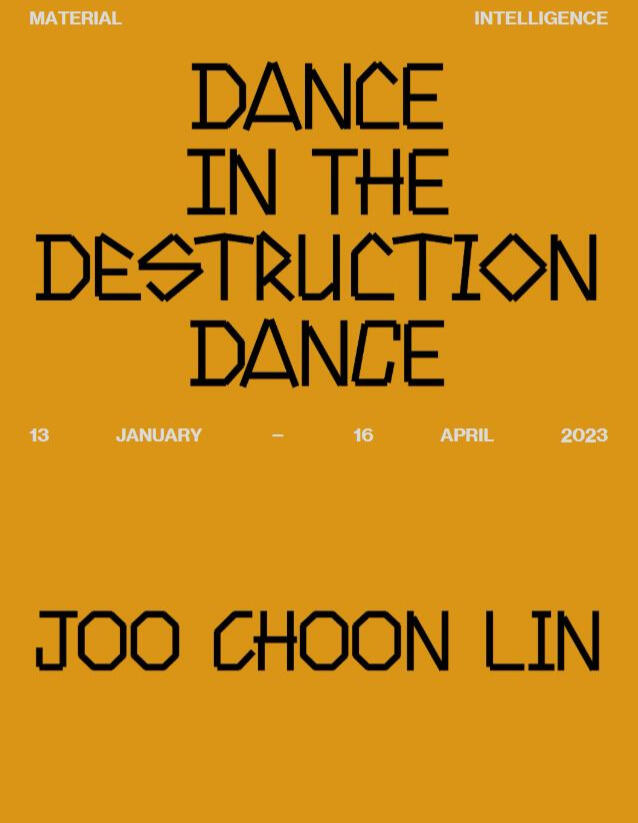
Catalogue, Dance in the Destruction Dance, Singapore Art Museum, 2023
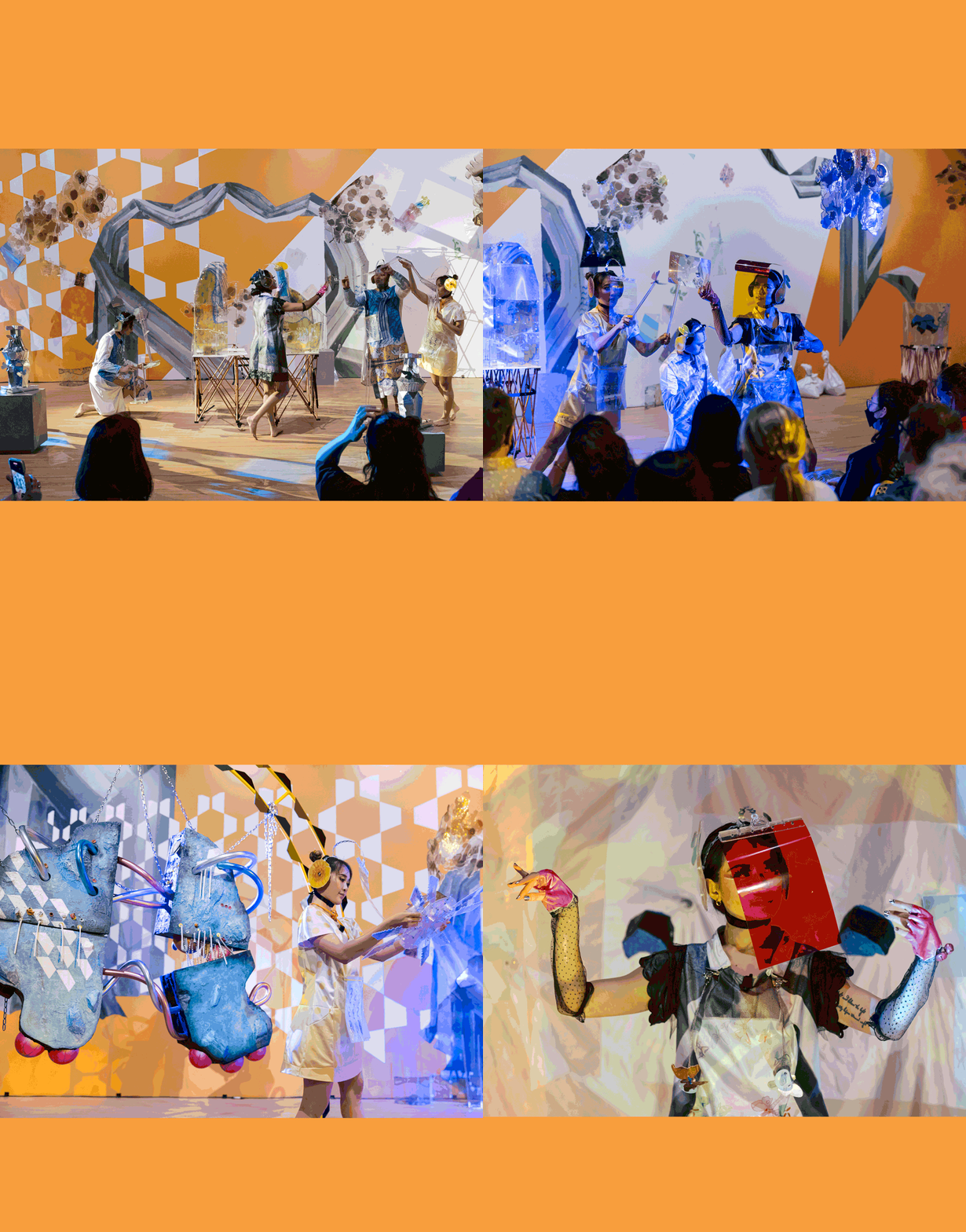

Glue Your Eyelids Together, Sculpture, Solo Exhibition Dance in the Destruction Dance

Beatific Perfume, Animated Film x Tarpaulin Sculptures, Solo Exhibition Dance in the Destruction Dance
Interview - NUYOUSINGAPORE《女友》
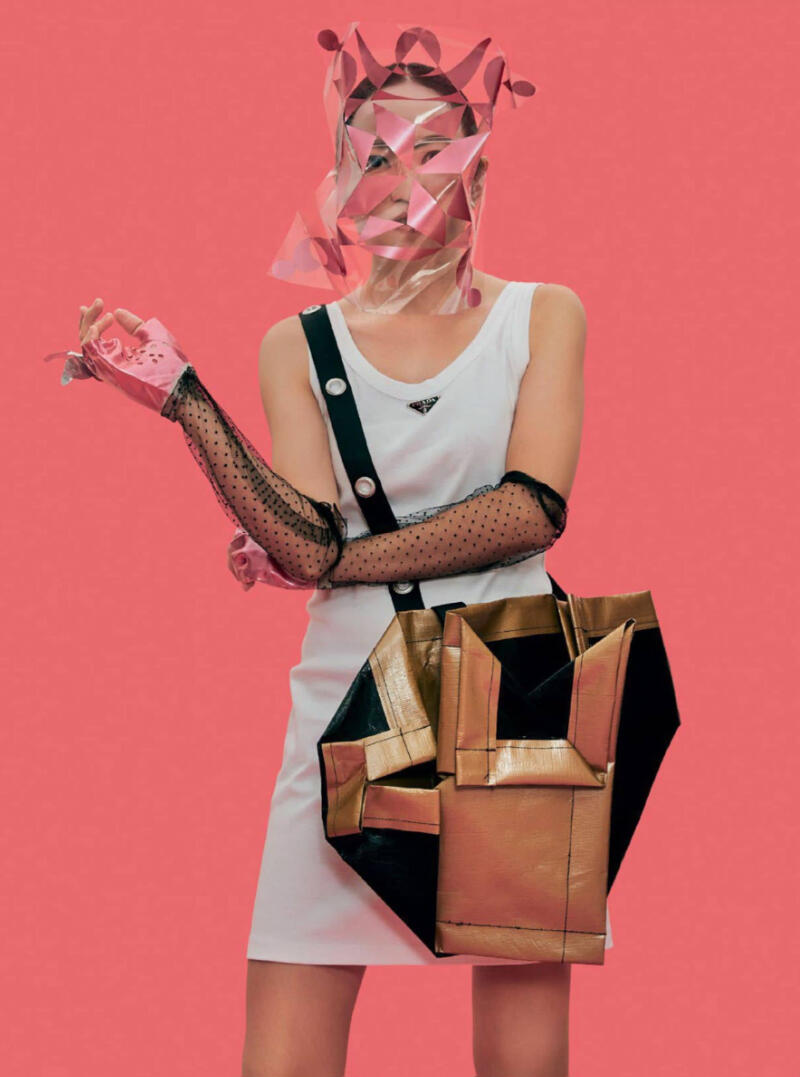
Interview - NUYOUSINGAPORE《女友》
The Sound of Sound: Over-Under-In-Out-Head Projection,
Singapore Art Musuem 2023
The Cold Purity of Mathematic Love/Trust Equations: {¢arbonHz[¢x(HOH)y]Ω1.618-+ Flower of ¢ФnsciФusness [HEARTBEAT] Breaths [In/out] }, 2021-2022
View each work in detail

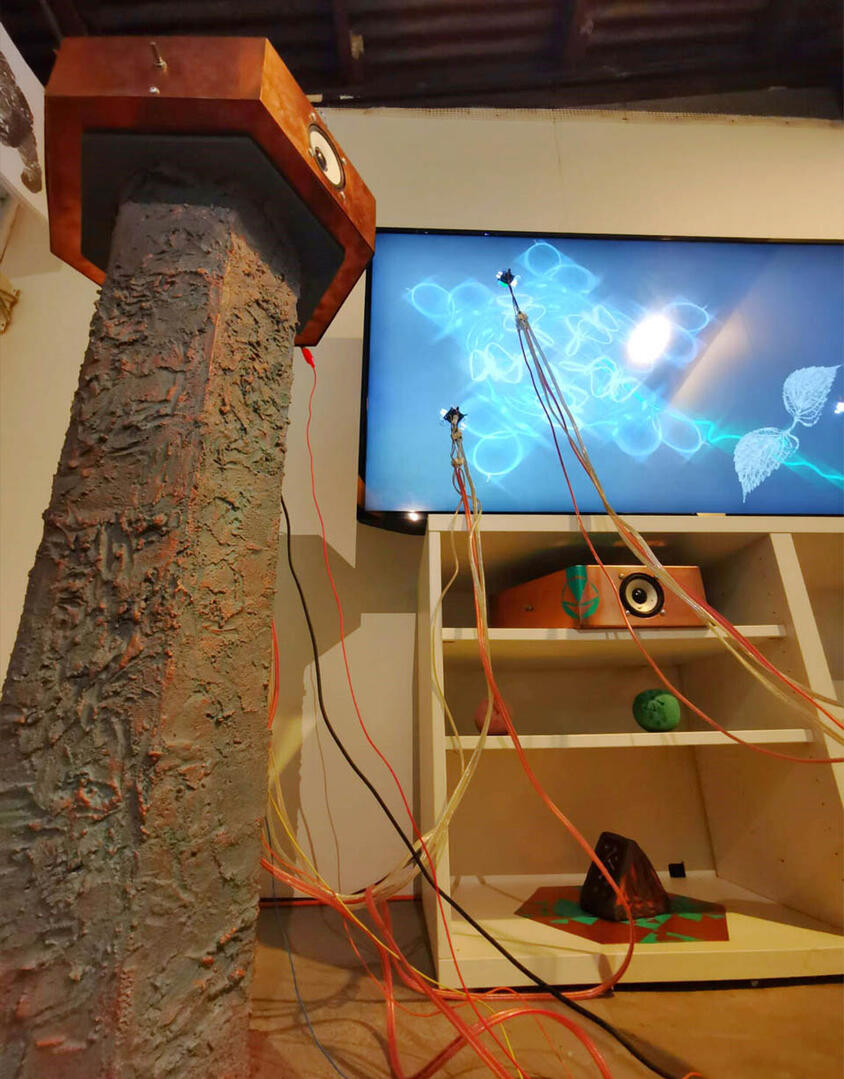
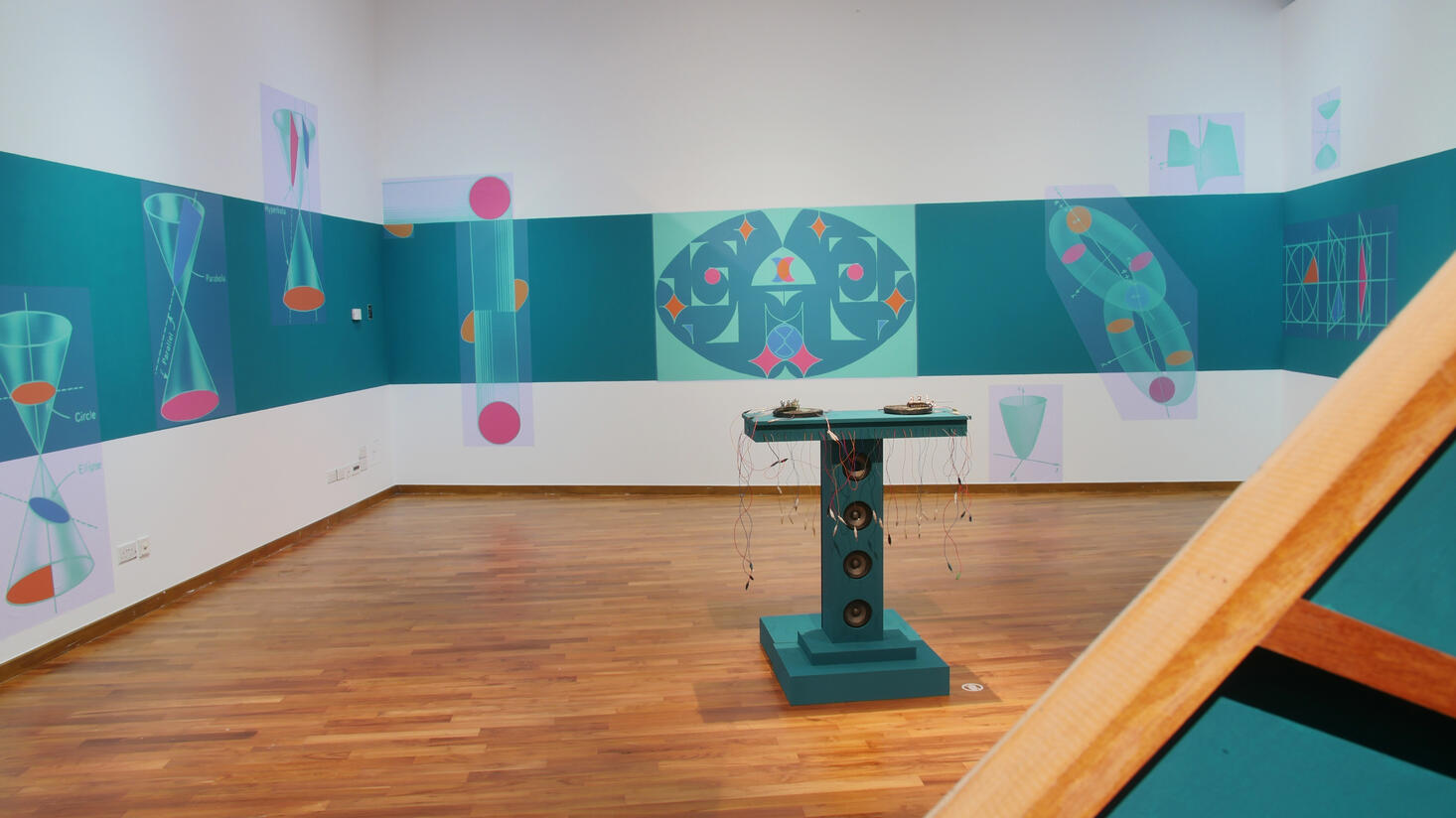
Installation view: The Cold Purity of Mathematic Love/Trust Equations: {¢arbonHz[¢x(HOH)y]Ω1.618-+ Flower of ¢ФnsciФusness [HEARTBEAT] Breaths [In/out] }
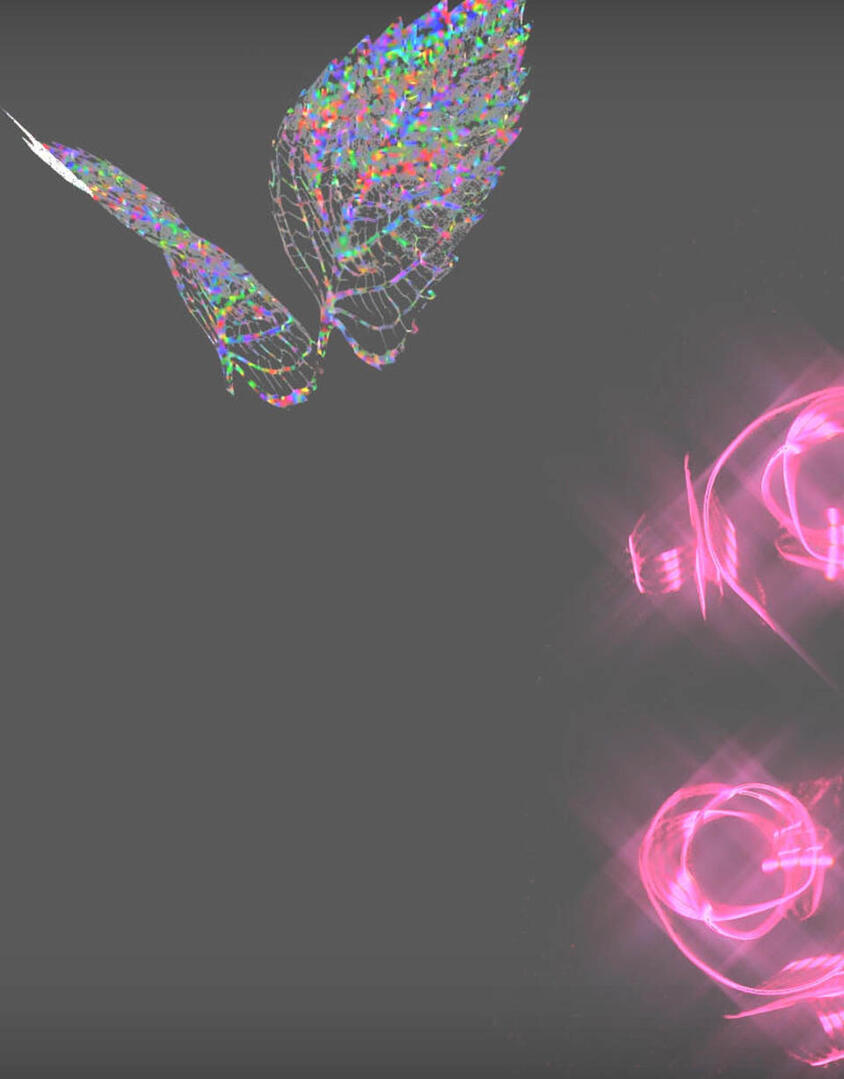
Animated Film: The Cold Purity of Mathematic Love/Trust Equations: {¢arbonHz[¢x(HOH)y]Ω1.618-+ Flower of ¢ФnsciФusness [HEARTBEAT] Breaths [In/out] }
Mission Control,
LIVE on YouTube, 2020-2021

Mission Control, Ep 01
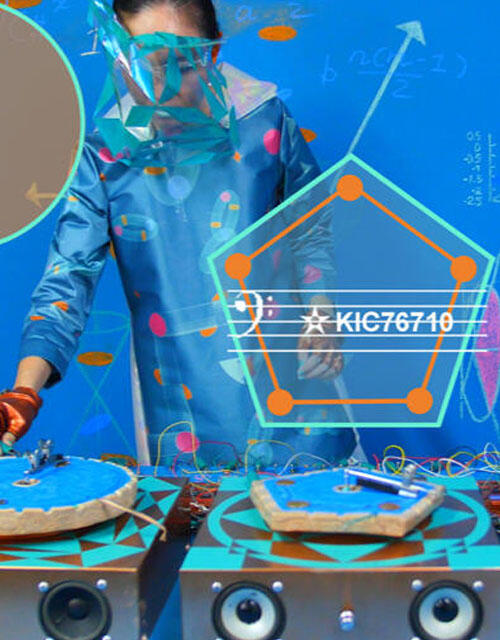
Mission Control, Ep 02

Mission Control, Ep 03

Mission Control, Ep 04
Beatific Perfume On-Going Series,
Substation, 2020
View each work in detail

Beatific Perfume, Installation view, Substation
Beatific Perfume (Blue/Orange), 3-Channel Video, Substation

Beatific Perfume (Green/Orange), 3-Channel Video, Substation
Beatific Perfume (Silver/Black), 3-Channel Video, Substation
Intestinology X The Cold Purity of Mathematic Love/Trust Equations,
Solo exhibition at ADM Gallery NTU, Singapore, 2019
View each work in detail

Intestinology 04: The
ColdPurity of Mathematic Love/Trust Equations, Installation View, ADM gallery, NTU Singapore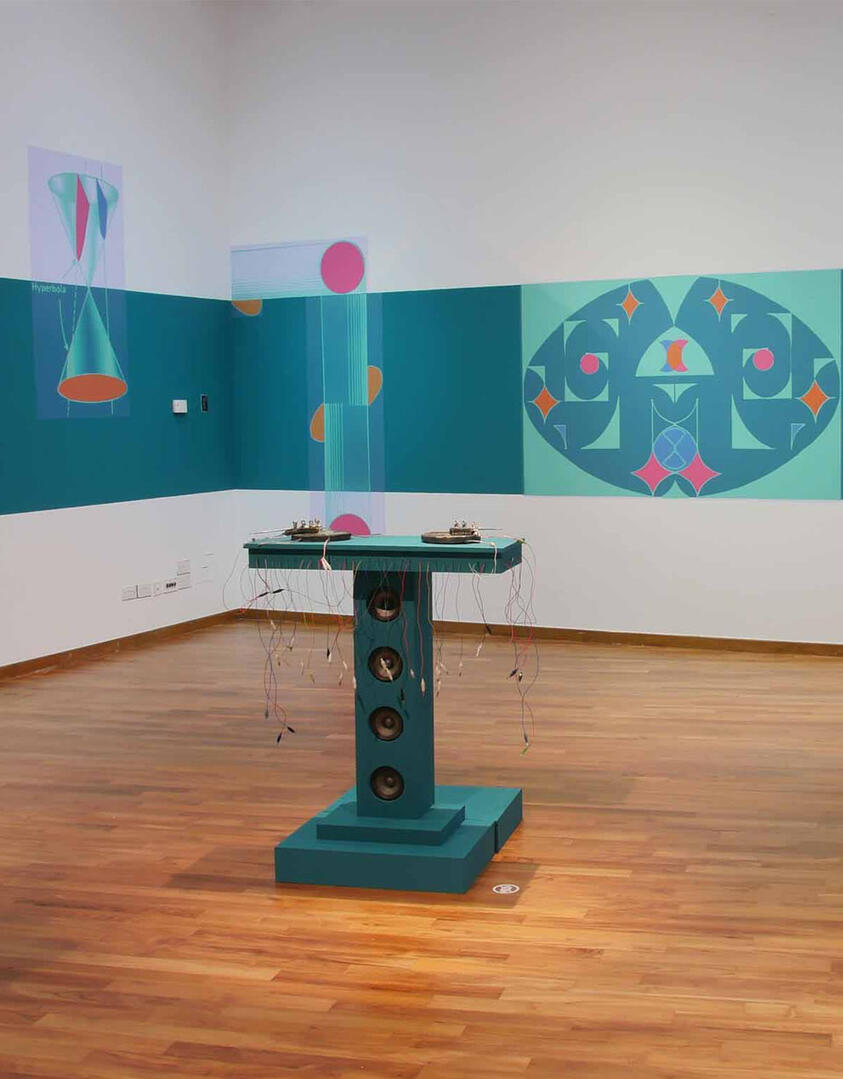
Sound Disc Objects, Intestinology 04: The
ColdPurity of Mathematic Love/Trust Equations, Installation View, ADM gallery, NTU Singapore
Sound Disc Objects, Intestinology 04: The
ColdPurity of Mathematic Love/Trust Equations, ADM gallery, NTU Singapore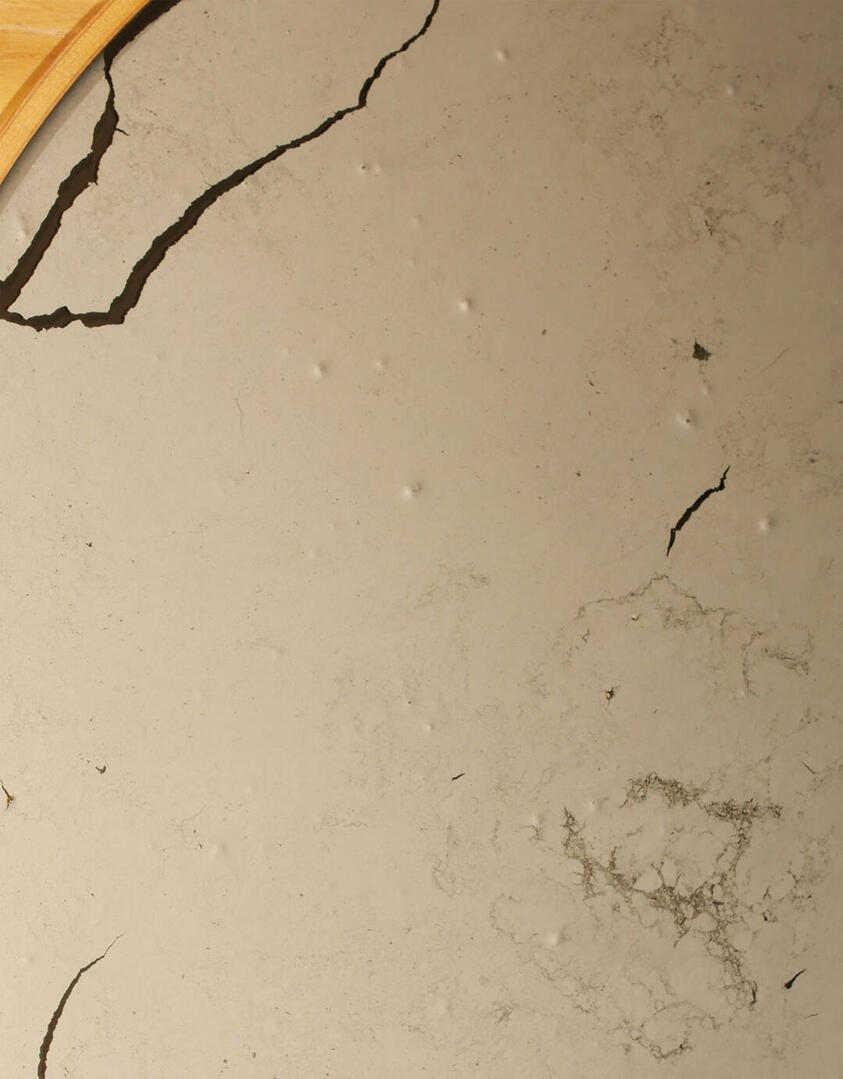
Intestinology 04: The
ColdPurity of Mathematic Love/Trust Equations, Installation View, ADM gallery, NTU Singapore
The Hot Purity of Mathematic Love/Trust Equations= {[IMPRINT]x Compression∞Expansion [+]Wiggly [Lumen]1.618 xCarbon] -/+[TIME/SPACE] [In/out]}, 2019
View each work in detail
The
HotPurity of Mathematic Love/Trust Equations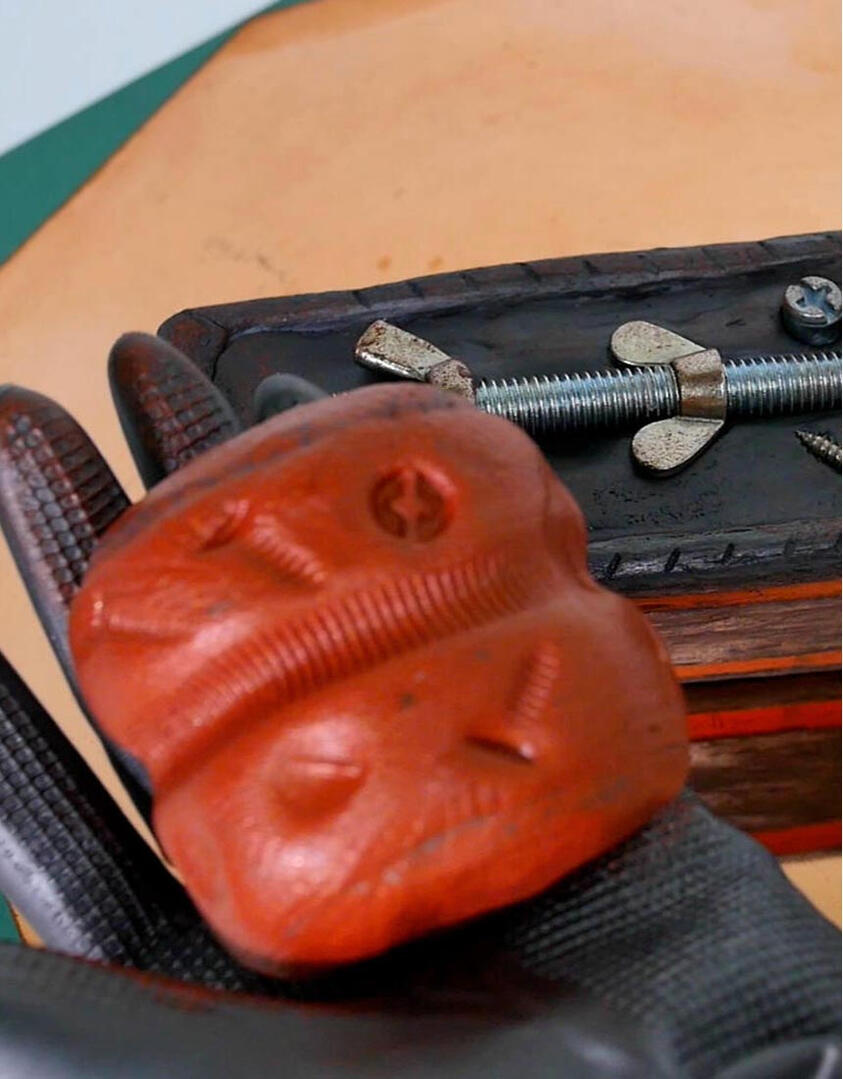
The
HotPurity of Mathematic Love/Trust Equations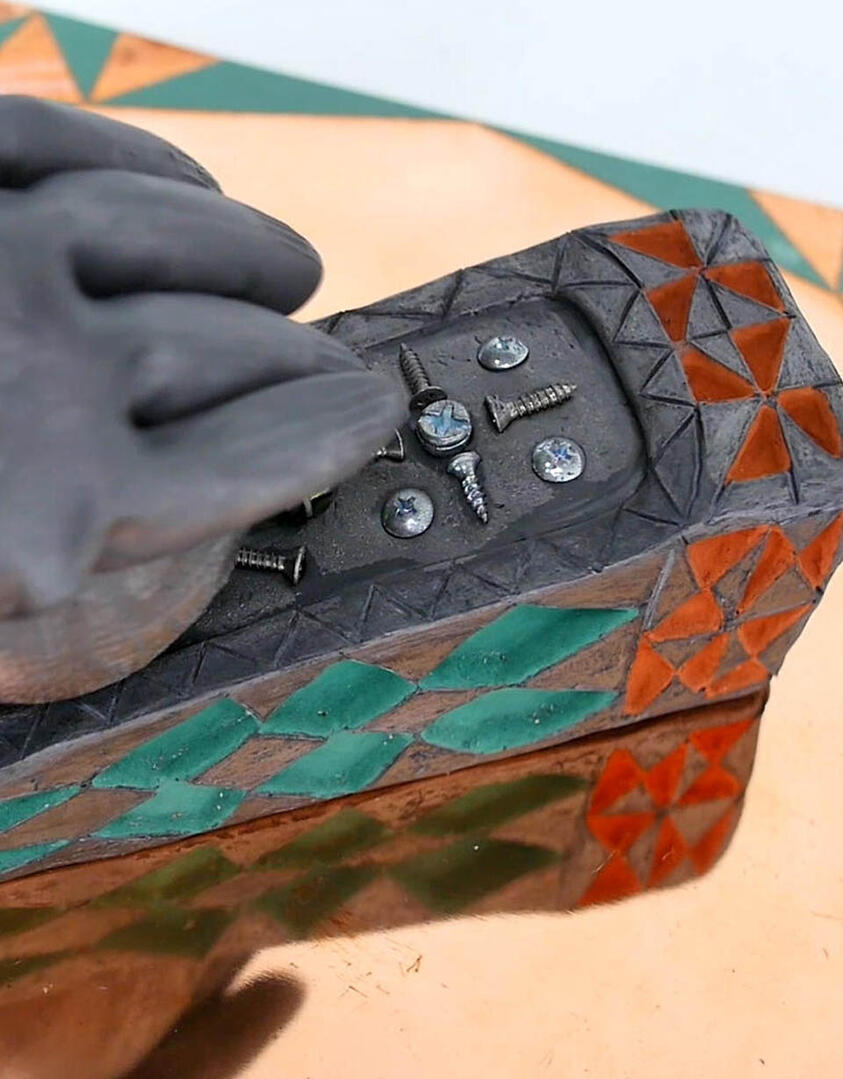
The
HotPurity of Mathematic Love/Trust Equations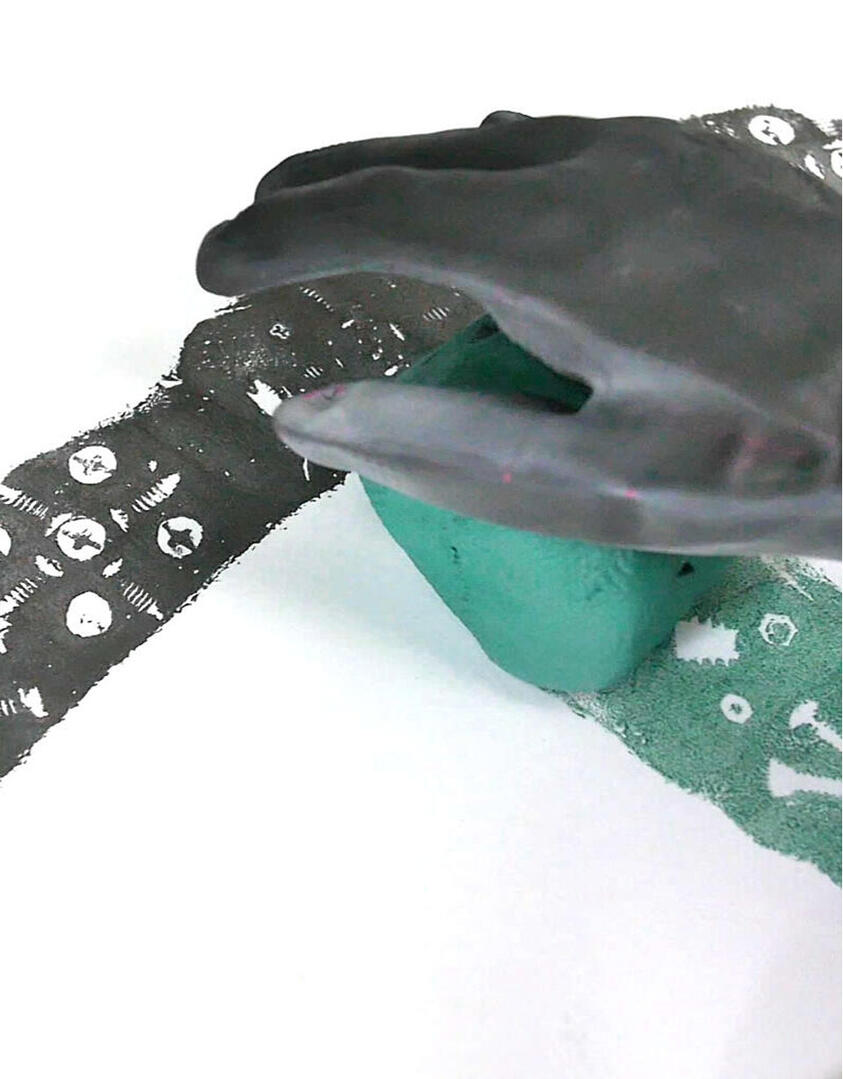
The
HotPurity of Mathematic Love/Trust Equations
Sound disc, The Hot Purity of Mathematic Love/Trust Equations, 2019
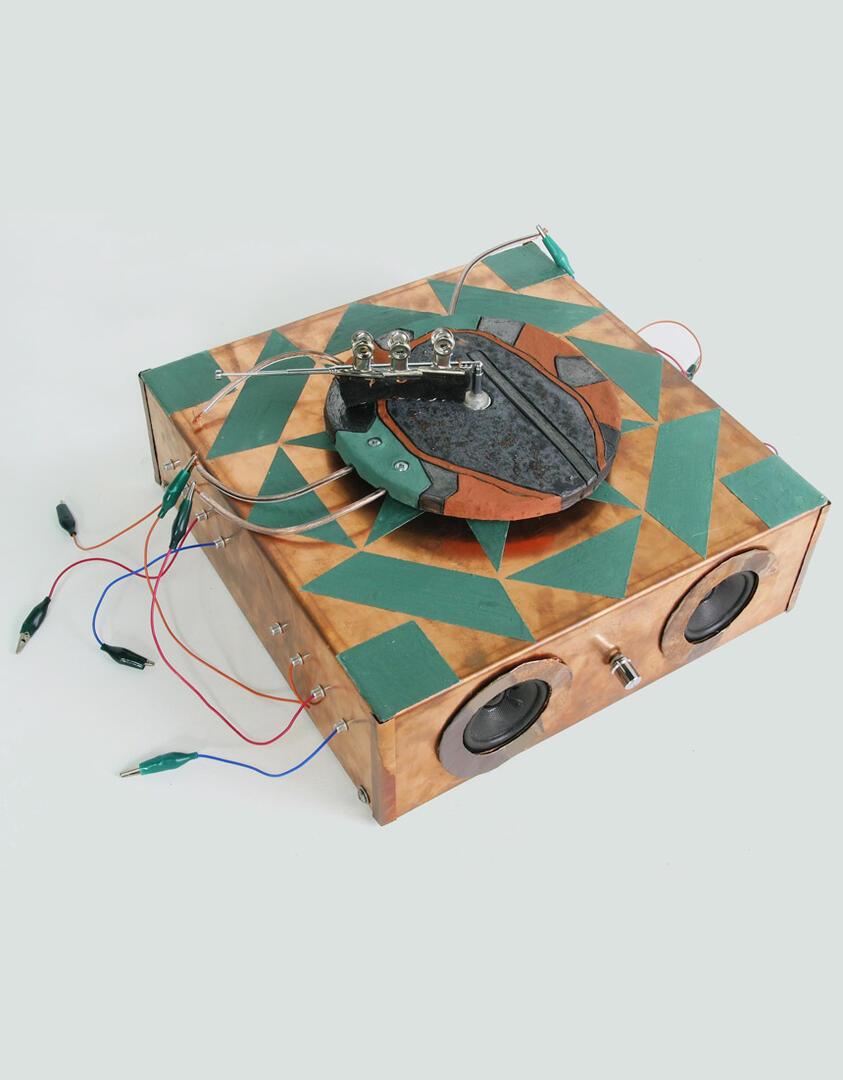
Sound disc, The
HotPurity of Mathematic Love/Trust Equations
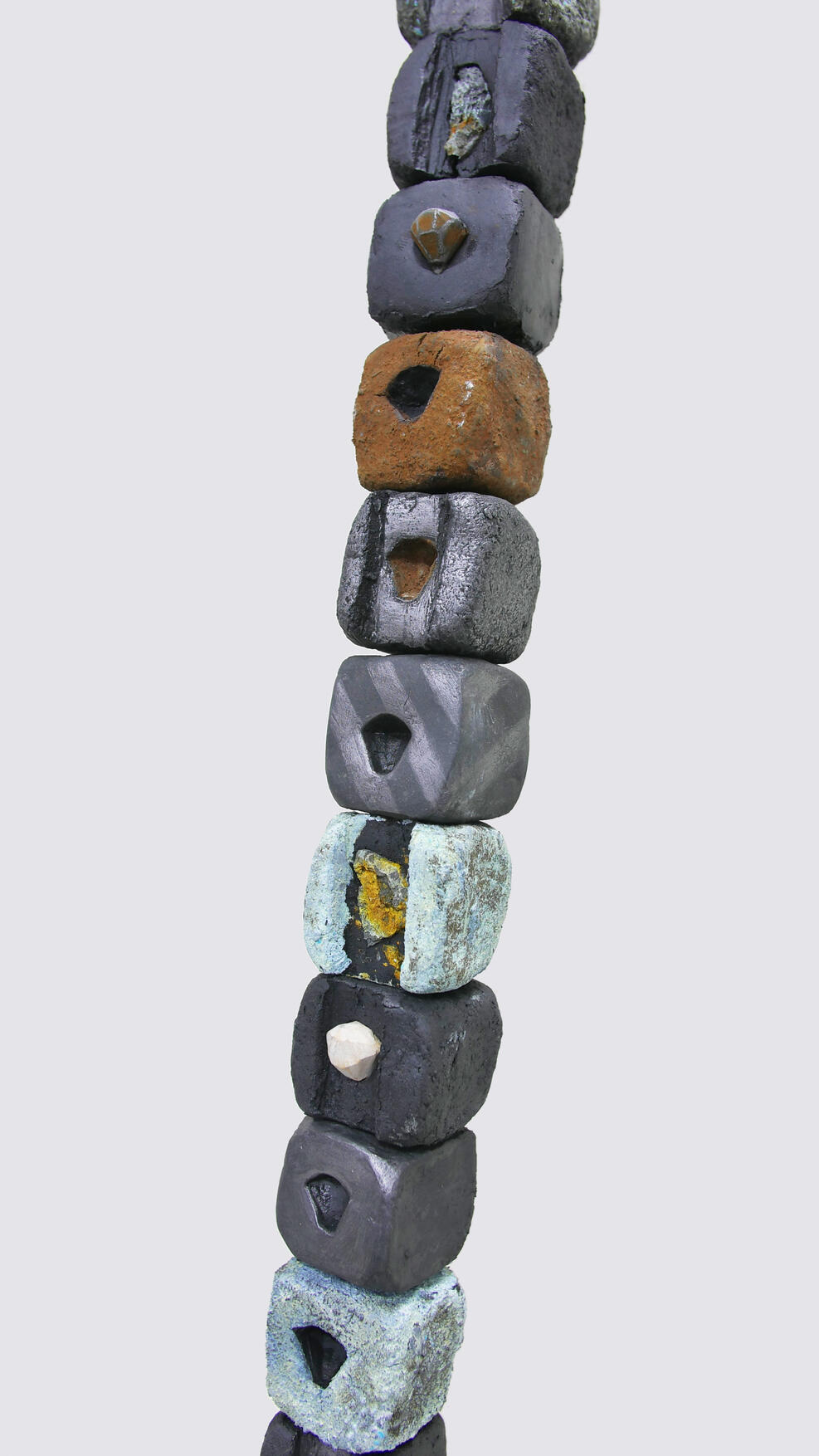
The Cold Purity of Mathematic Love/Trust Equation 1= { [He] 2s22p2 [CENTS]x = y(C)4points [HOUR]s [+]SUN[-]Moon[z] Breaths [In/out] }
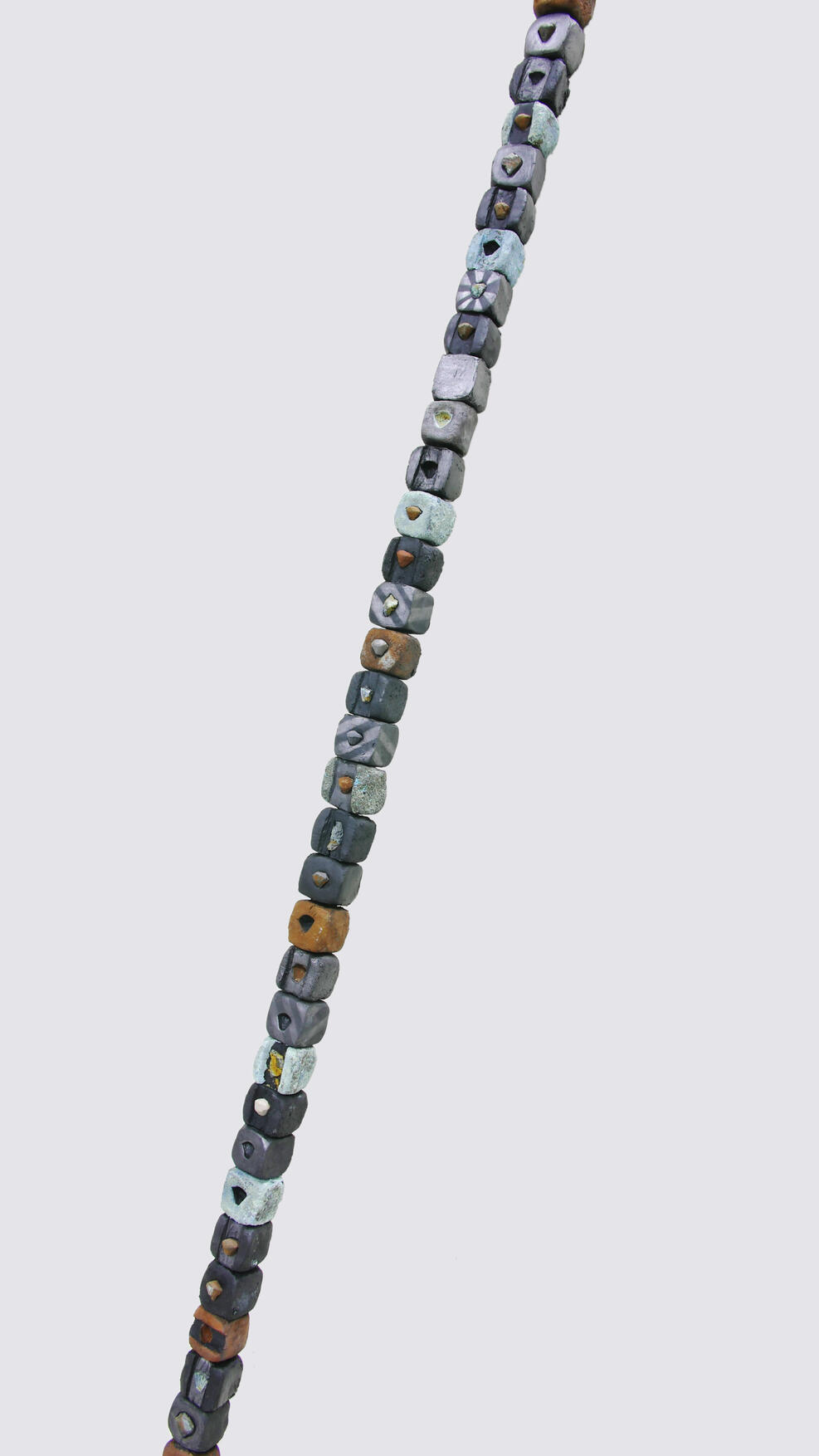
The
ColdPurity of Mathematic Love/Trust Equation 1= { [He] 2s22p2 [CENTS]x = y(C)4points [HOUR]s [+]SUN[-]Moon[z] Breaths [In/out] }
The
ColdPurity of Mathematic Love/Trust Equation 1= { [He] 2s22p2 [CENTS]x = y(C)4points [HOUR]s [+]SUN[-]Moon[z] Breaths [In/out] }
pEARs ‘ ___ ___ ___‘ in §pring,
Solo exhibition and theatrical play at Fogstand Gallery, Minnesota US, 2018
View each work in detail

pEARs ‘ — —- —- ‘ in §pring, Installation view, FOGSTAND gallery, Minnesota USA
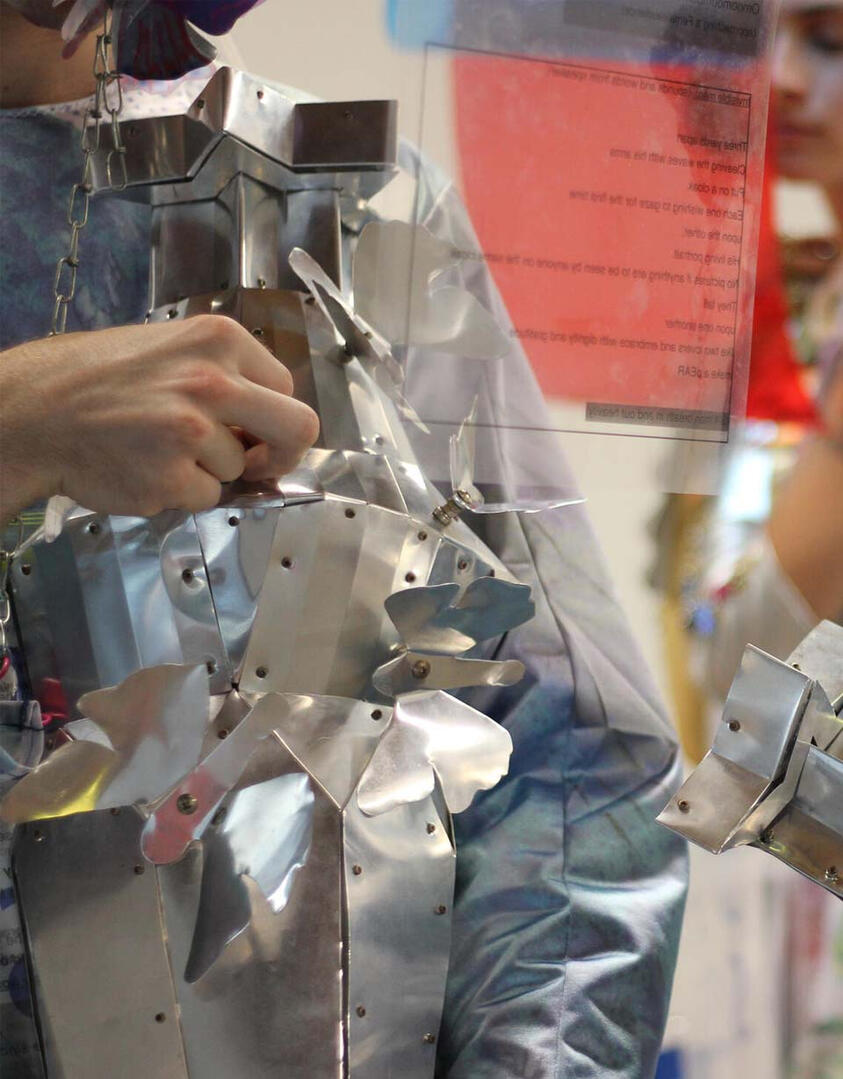
pEARs ‘ — —- —- ‘ in §pring, a theatrical play, FOGSTAND gallery, Minnesota USA

pEARs ‘ — —- —- ‘ in §pring, Animated Film, FOGSTAND gallery, Minnesota USA
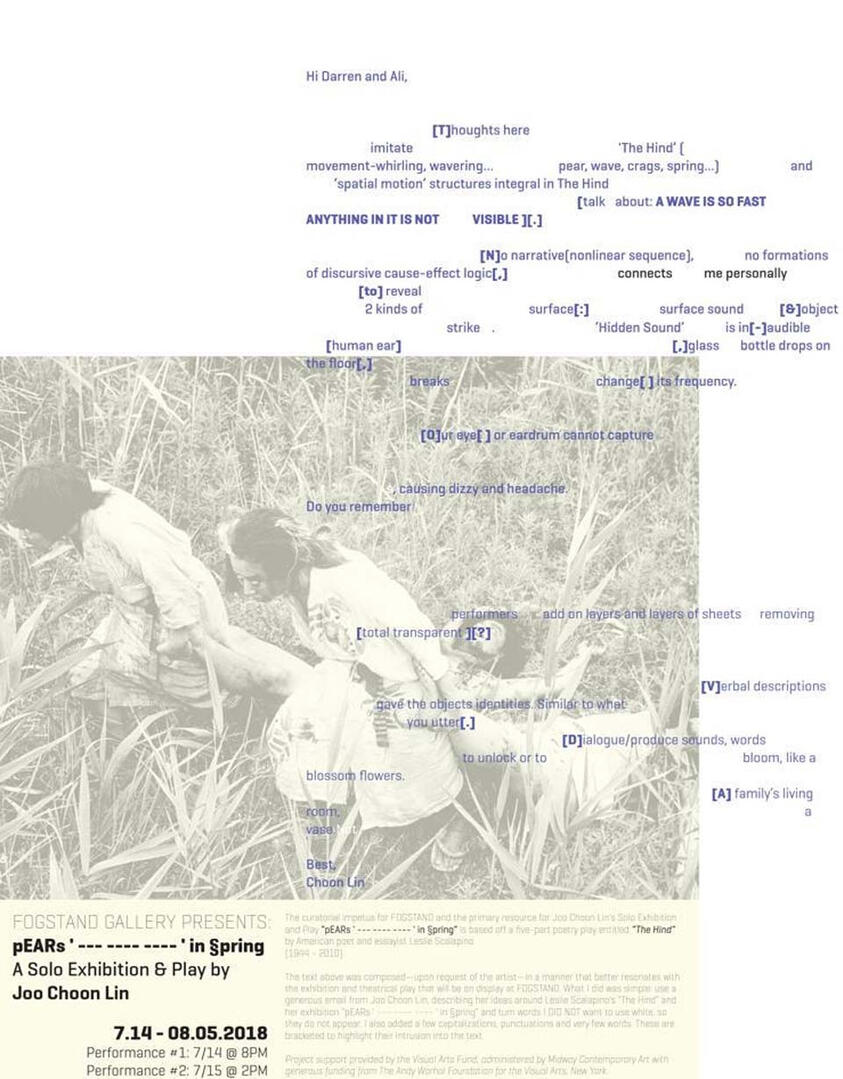
Poster of pEARs ‘ — —- —- ‘ in §pring, FOGSTAND gallery, Minnesota USA
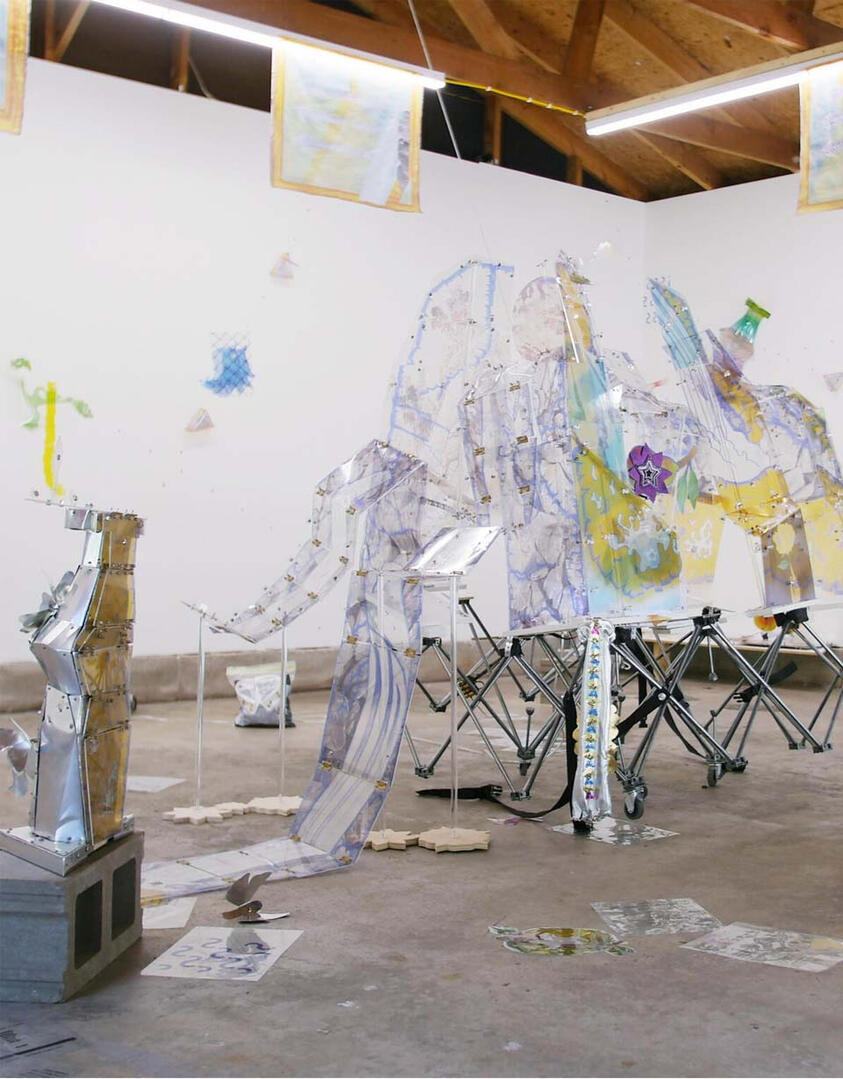
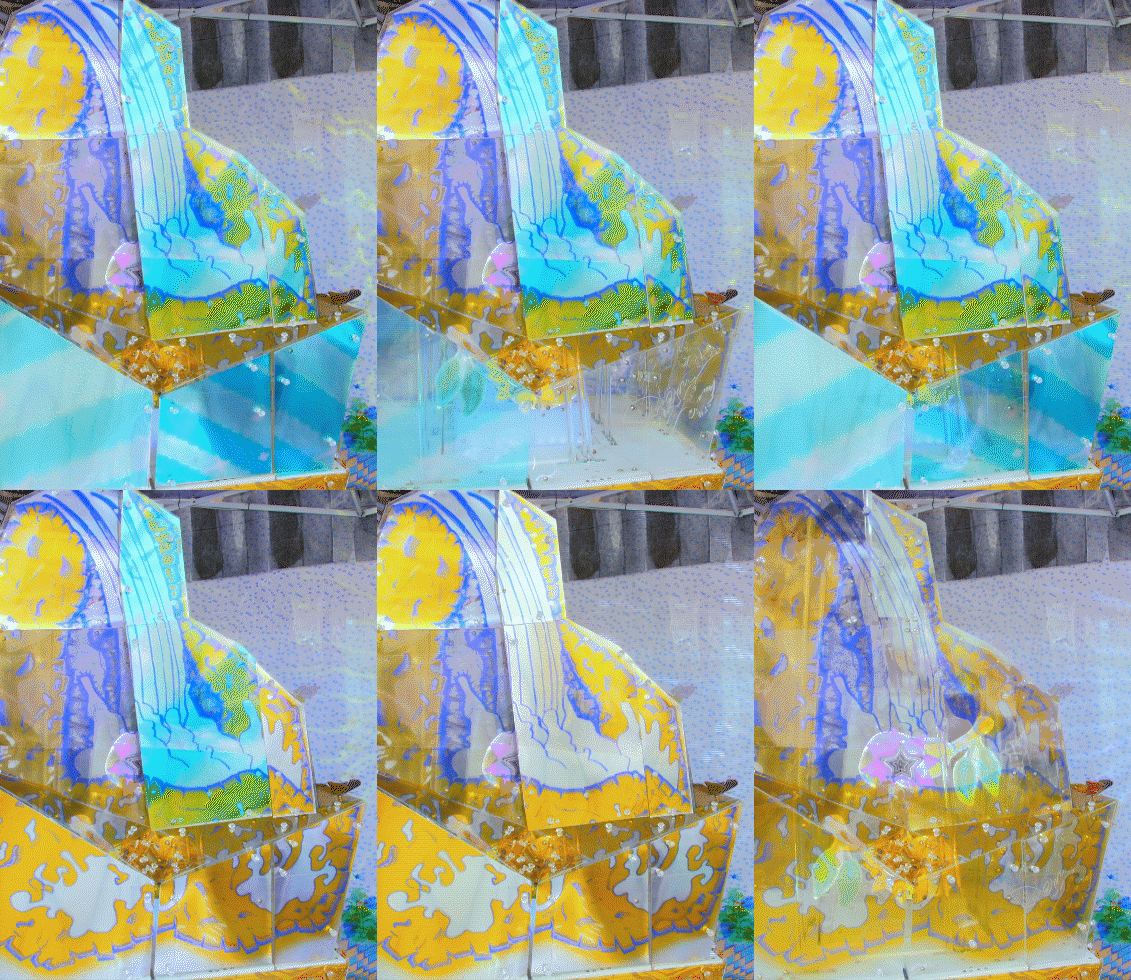
Glue Your Eyelids Together,
State of Motion 2017
View each work in detail

Glue Your Eyelids Together, Installation View, State of Motion 2017

Glue Your Eyelids Together, Animated film, State of Motion 2017
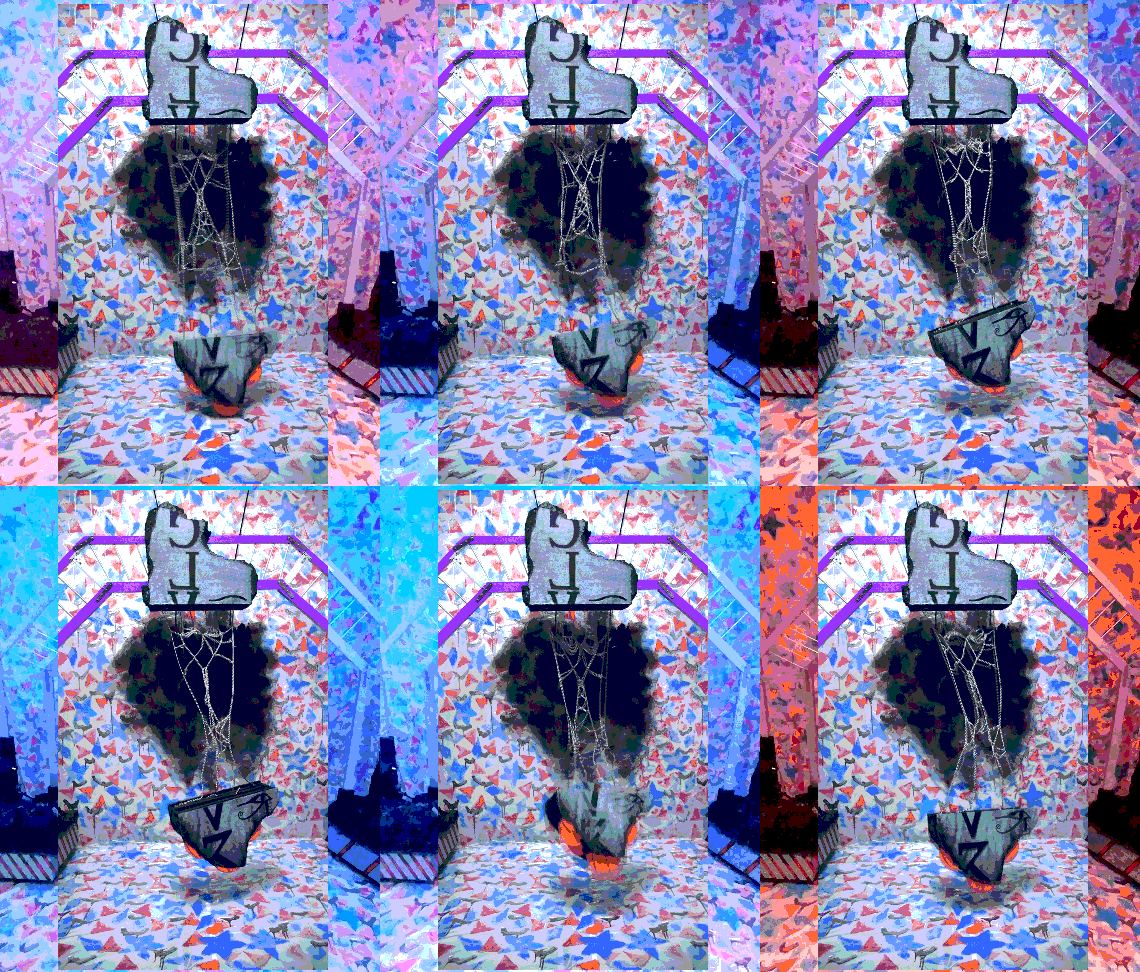
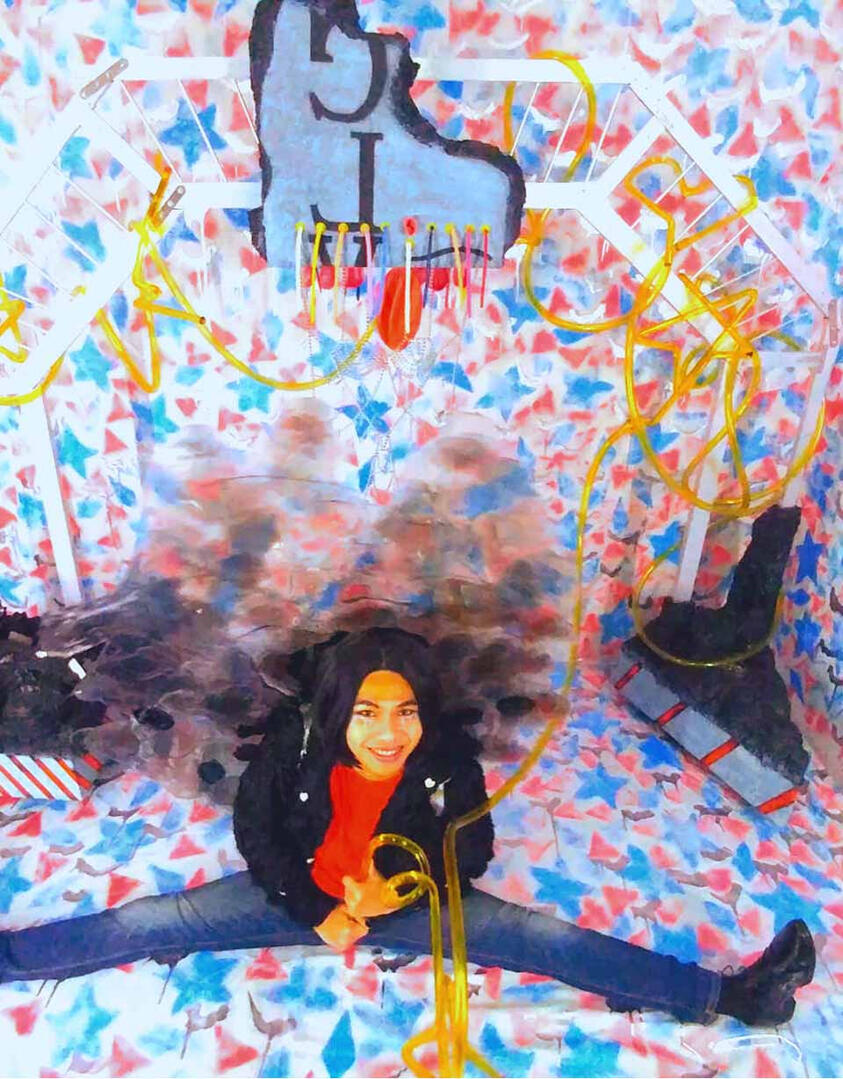
The Blinking Organisms - You SPLEEN Me’ Round
X OPERATION 1,
Chan + Hori Contemporary, Singapore 2017
View each work in detail

The Blinking Organisms - You SPLEEN Me’ Round X OPERATION 1, Chan + Hori Contemporary
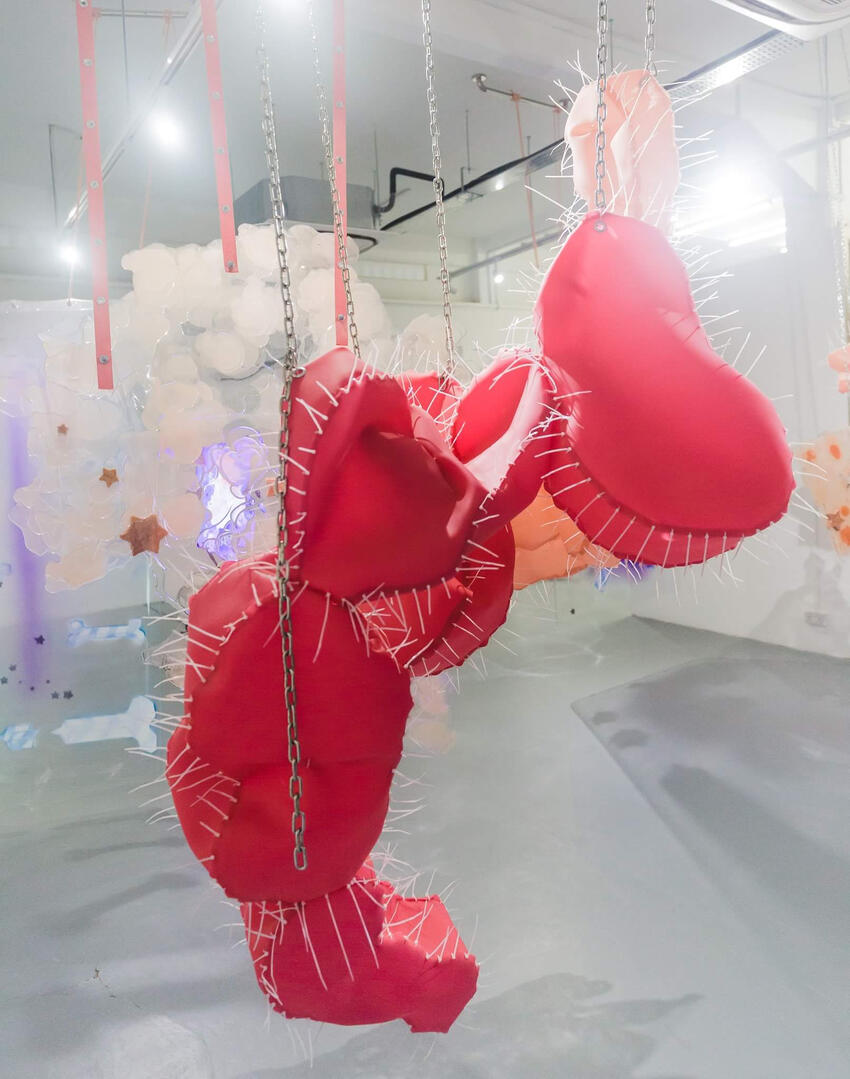
The Blinking Organisms - You SPLEEN Me’ Round X OPERATION 1, Chan + Hori Contemporary
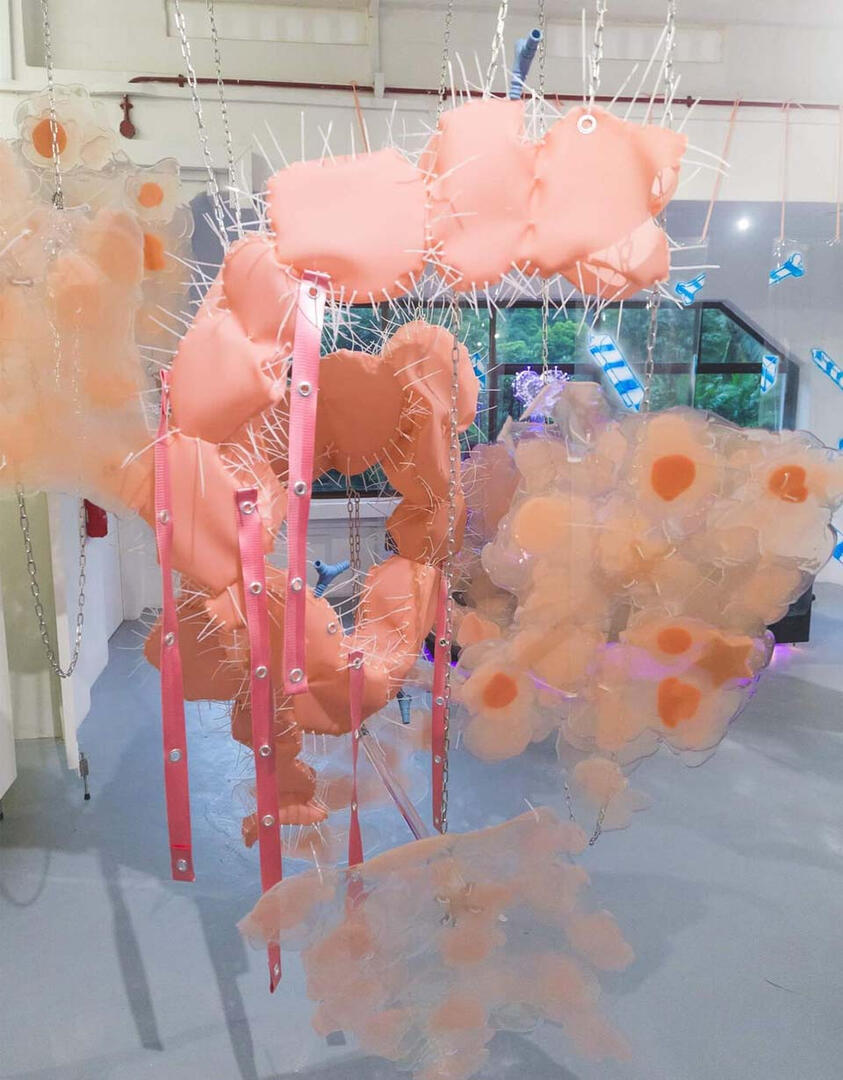
The Blinking Organisms - You SPLEEN Me’ Round X OPERATION 1, Chan + Hori Contemporary

Video✧The Blinking Organisms - You SPLEEN Me’ Round X OPERATION 1, Chan + Hori Contemporary
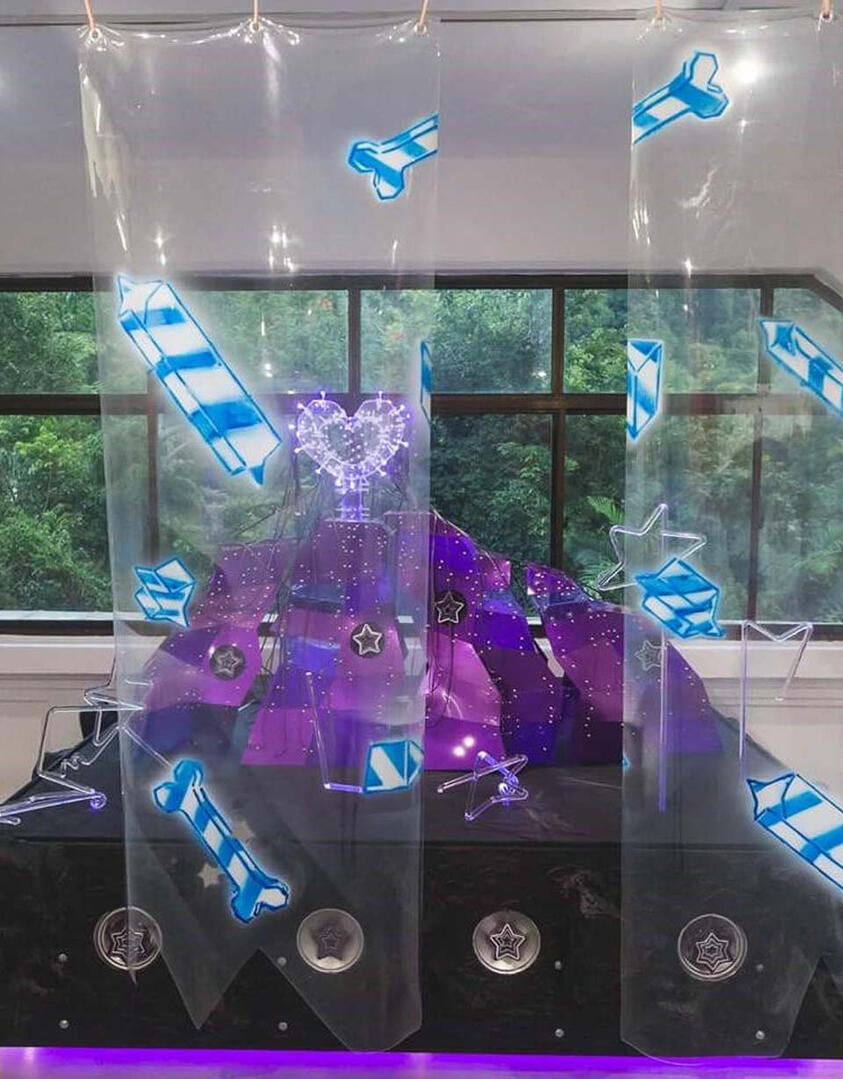
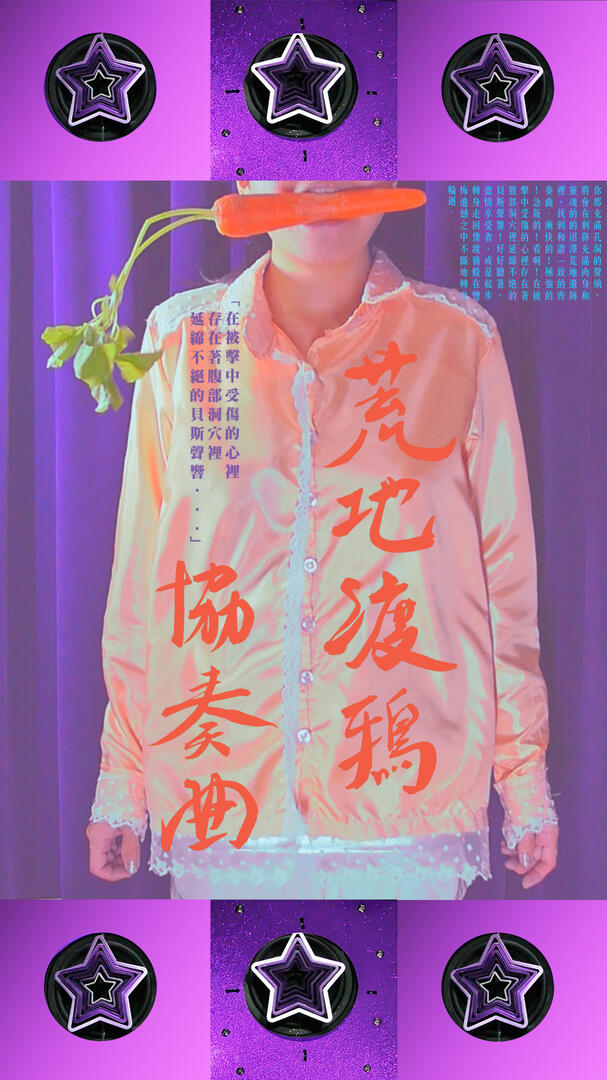
The Blinking Organisms - You SPLEEN Me’ Round
X OPERATION 2,
Solo exhibition at Esplanade Singapore, 2017
View each work in detail

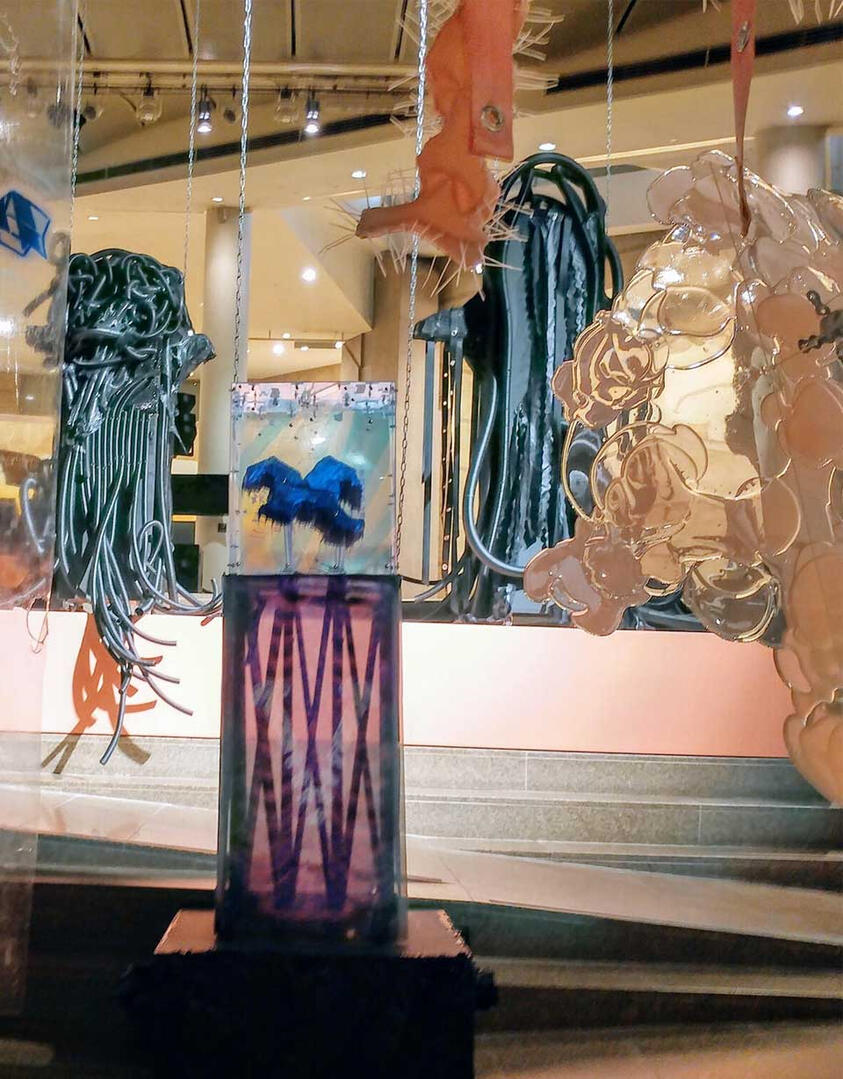
The Blinking Organisms - You SPLEEN Me’ Round X OPERATION 2, Installation View, Esplanade Singapore

The Blinking Organisms - You SPLEEN Me’ Round X OPERATION 2, Performance, Esplanade Singapore
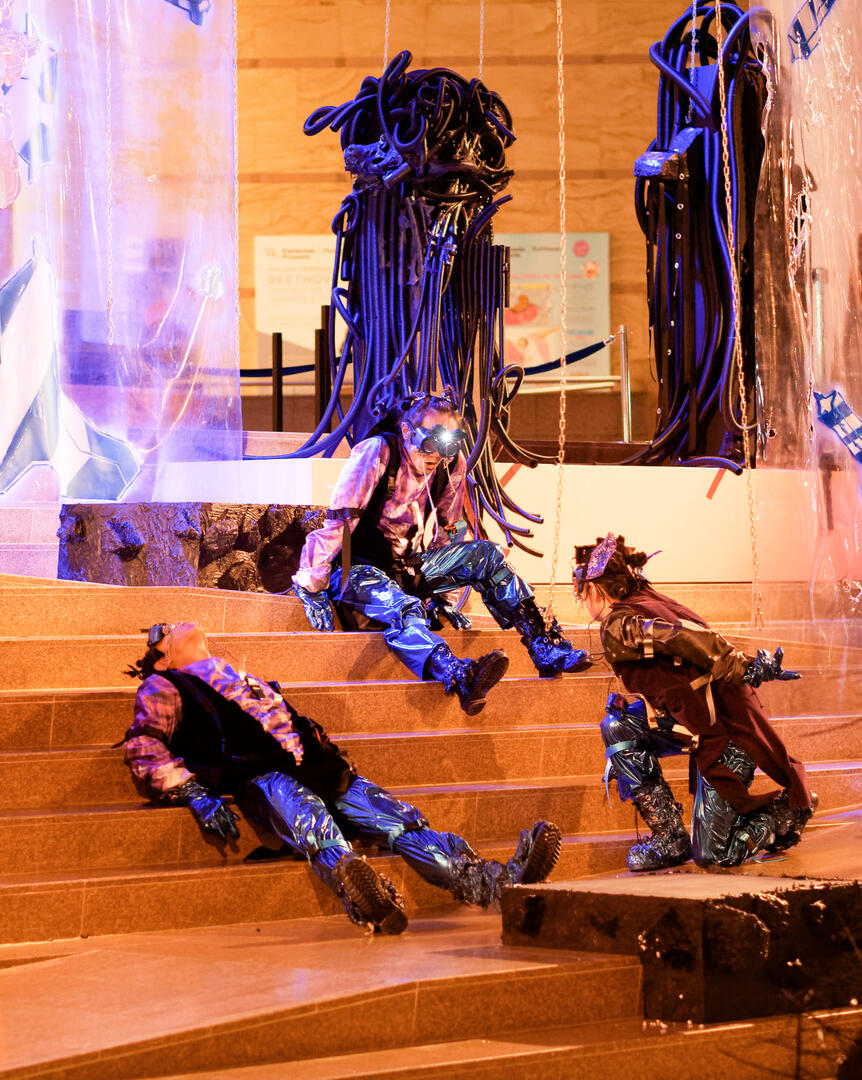
The Blinking Organisms - You SPLEEN Me’ Round
✧OPERATION 00100✧Roller Disco Rink✧
✧Singapore Night Festival 2017✧
The Blinking Organisms - You SPLEEN Me’ Round
X OPERATION 3, 2017
Abdominal BASS Cavern Of A Stricken HEART,
Singapore Art Week, Gillman Barracks, 2016
Abdominal BASS Cavern Of A Stricken HEART, Solo exhibition at FOGSTAND gallery, Hualien Taiwan, 2016
I Just Want You to FEEL the FEELING I FELT, Performance, 2016
The Black Paraphernalia,
Frac des Pays de la Loire, France, 2015
INTESTINOLOGY SERIES:
We Have The Most Beautiful Intestine,
Skånes Konstförening, Malmö, Sweden, 2014
With DIAMONDS You Repay I Don’t Care For Heaven, ‘Rendezvous’ at ICA, Singapore, 2015
View each work in detail
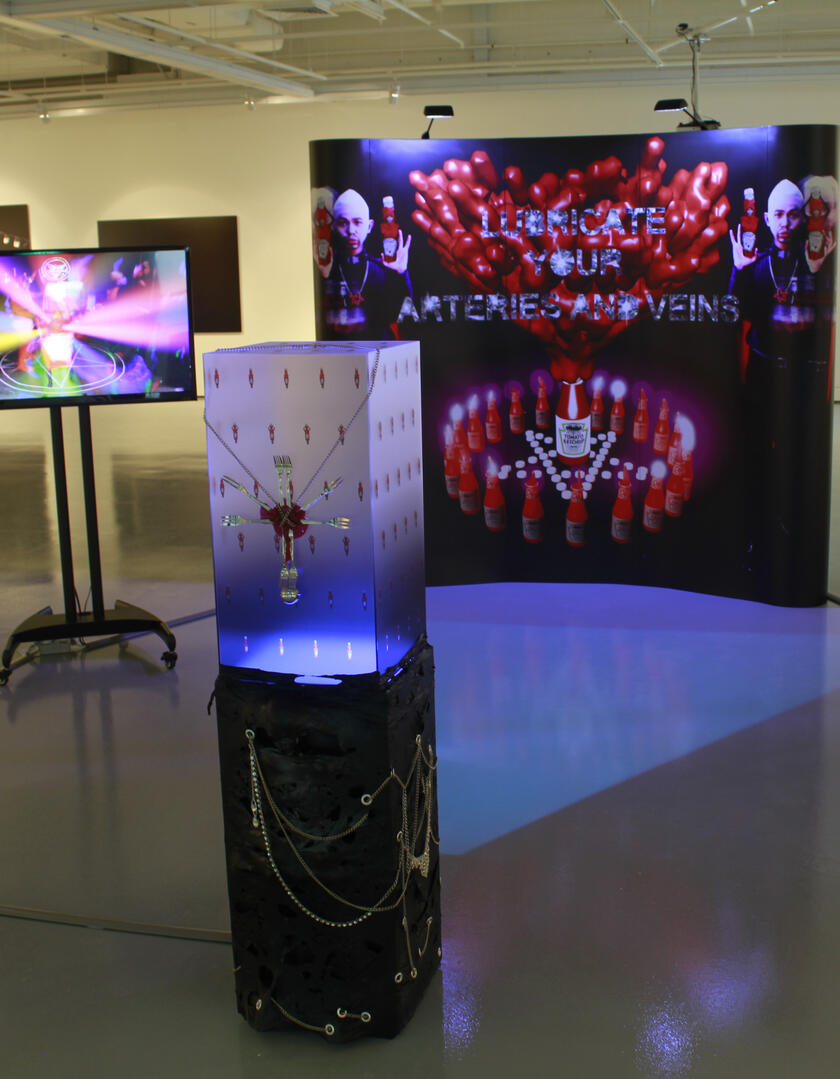
With DIAMONDS You Repay I Don’t Care For Heaven, Installation View
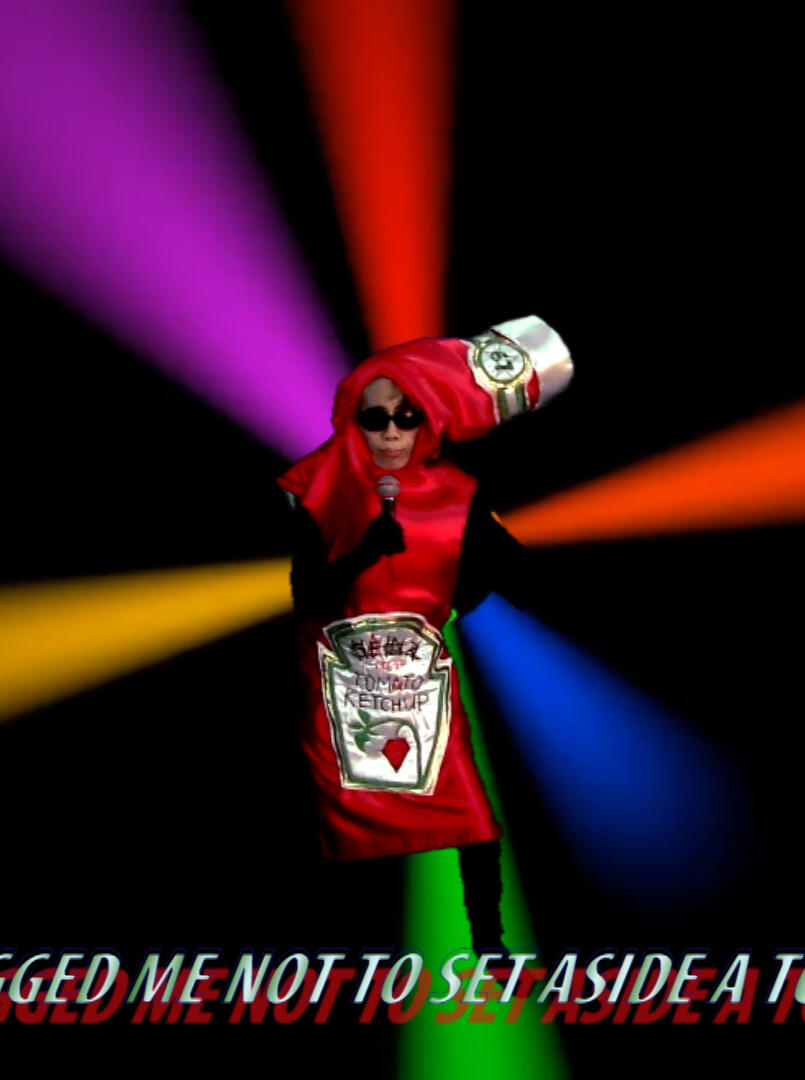
With DIAMONDS You Repay I Don’t Care For Heaven, MTV-style Videos
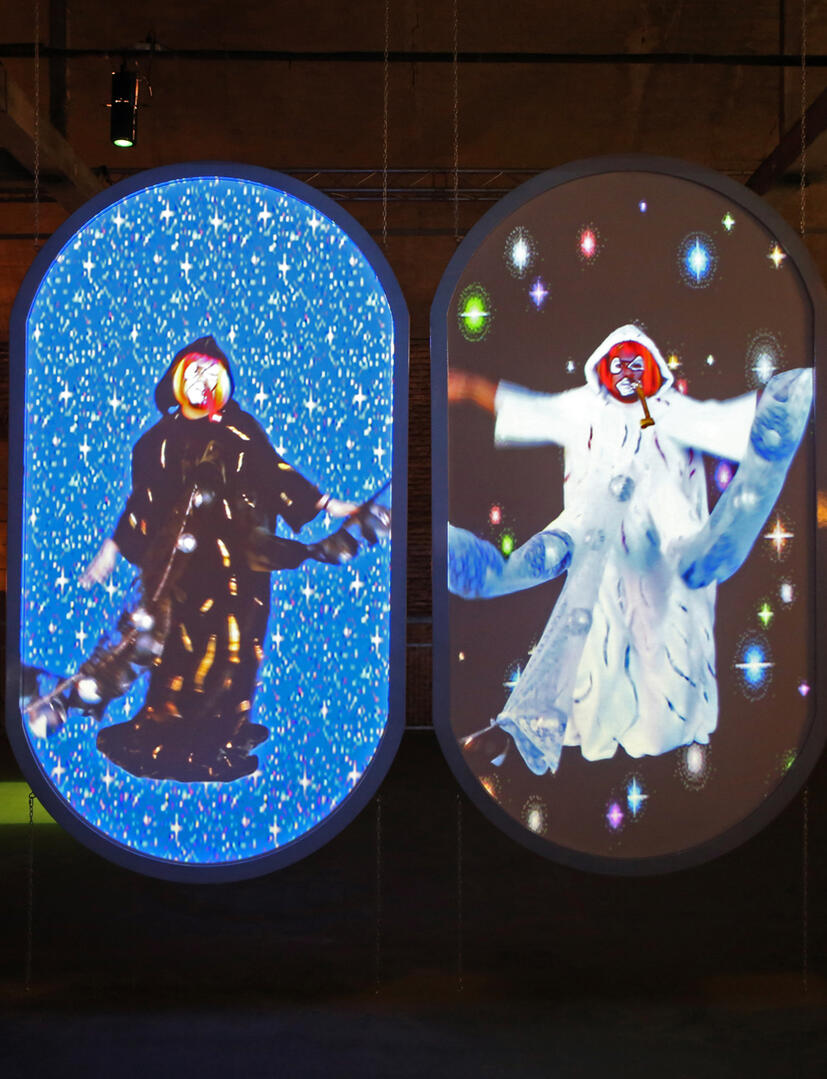
Gliding Through ●▲◆,
Gare Saint Sauveur, Lille, France, 2015

Gliding Through ●▲◆, Gare Saint Sauveur, Lille, France
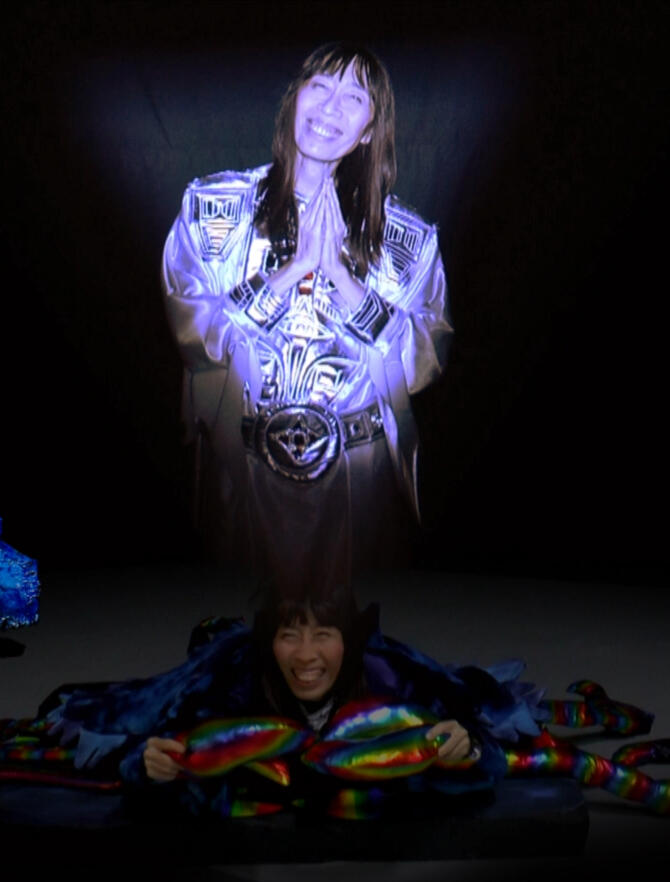
Gliding Through ●▲◆, Gare Saint Sauveur, Lille, France
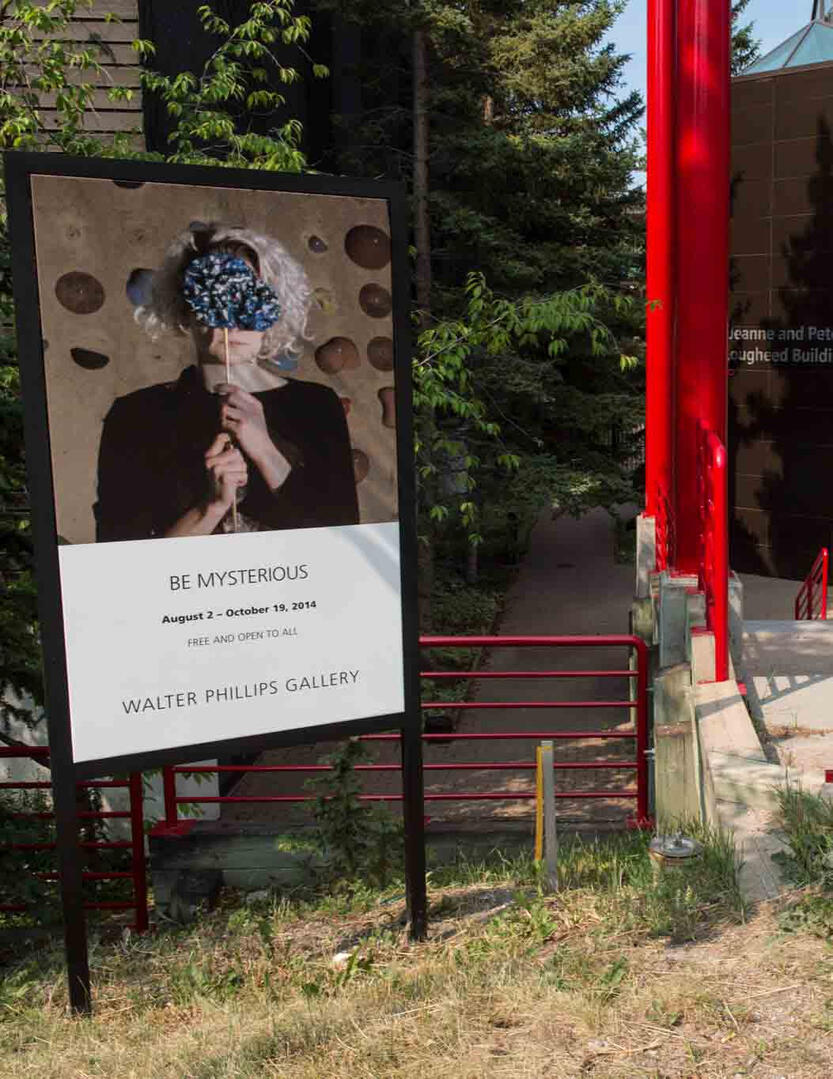
Be Mysterious,
Walter Phillips Gallery,
The Banff Centre, Canada, 2014

Be Mysterious, Installation view, Walter Phillips Gallery, The Banff Centre, Canada
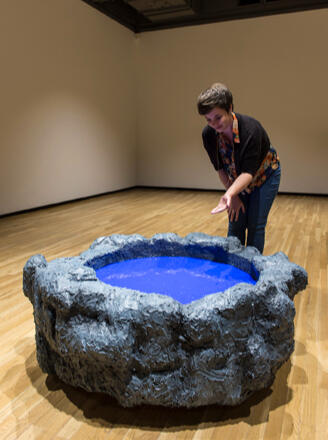
I Only Make Friends With Money, part of Be Mysterious, Walter Phillips Gallery, The Banff Centre, Canada
Your Eyes are Stupid,
Singapore Biennale 2013,
Singapore Art Museum
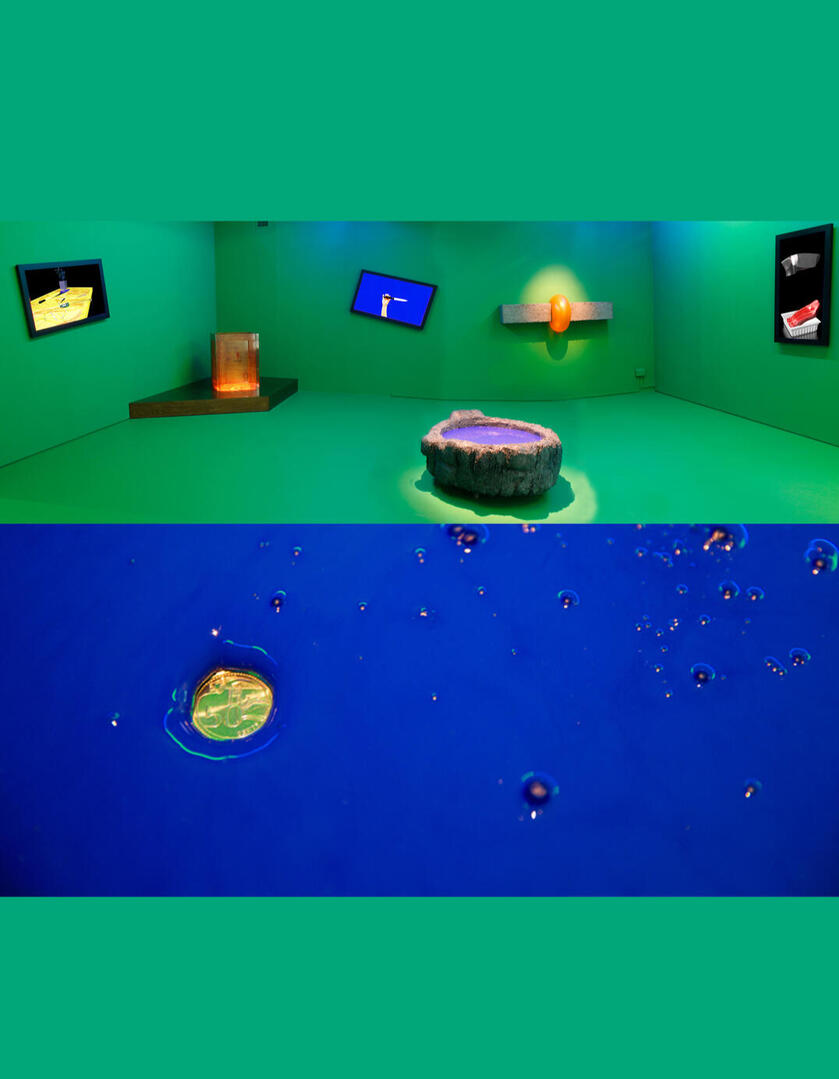
Your Eyes are Stupid, Installation view, Singapore Biennale 2013
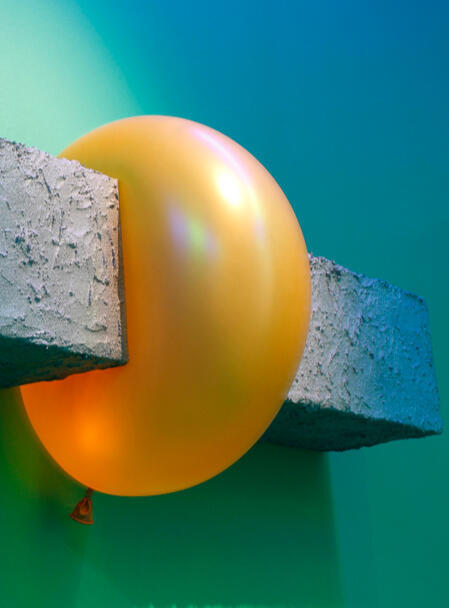
Your Eyes are Stupid, Installation view, Singapore Biennale 2013
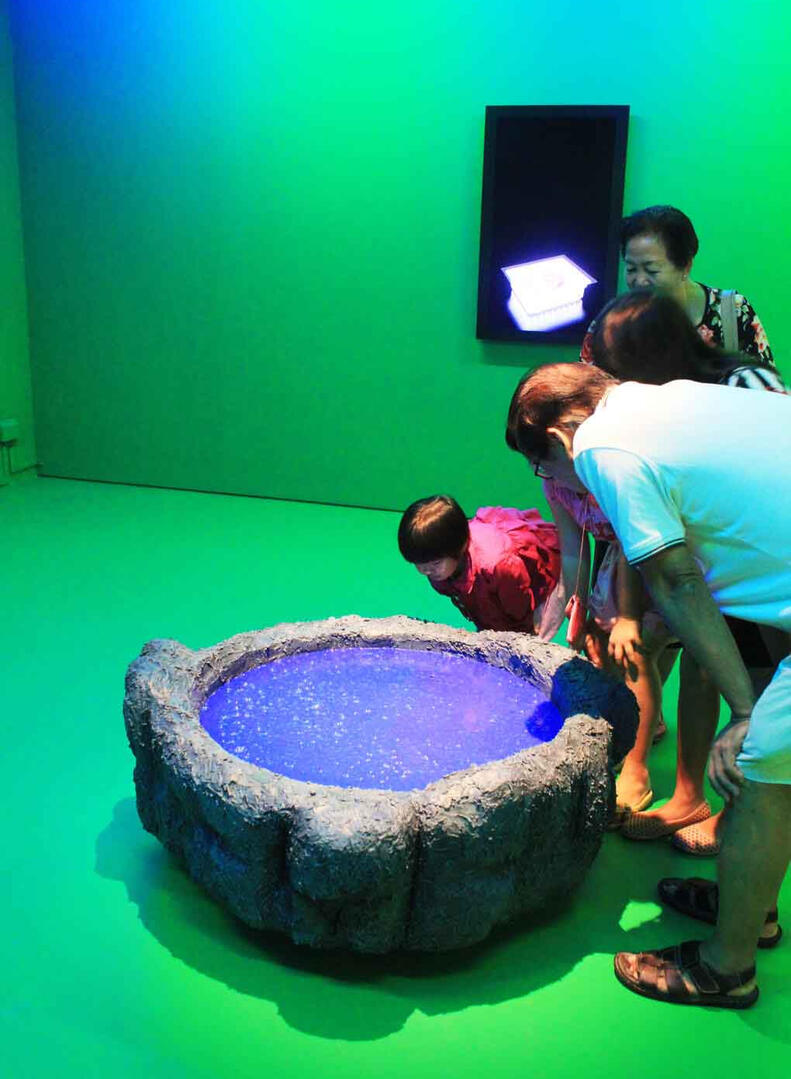
I Only Make Friends With Money, Your Eyes are Stupid, Singapore Art Museum, Singapore Biennale 2013
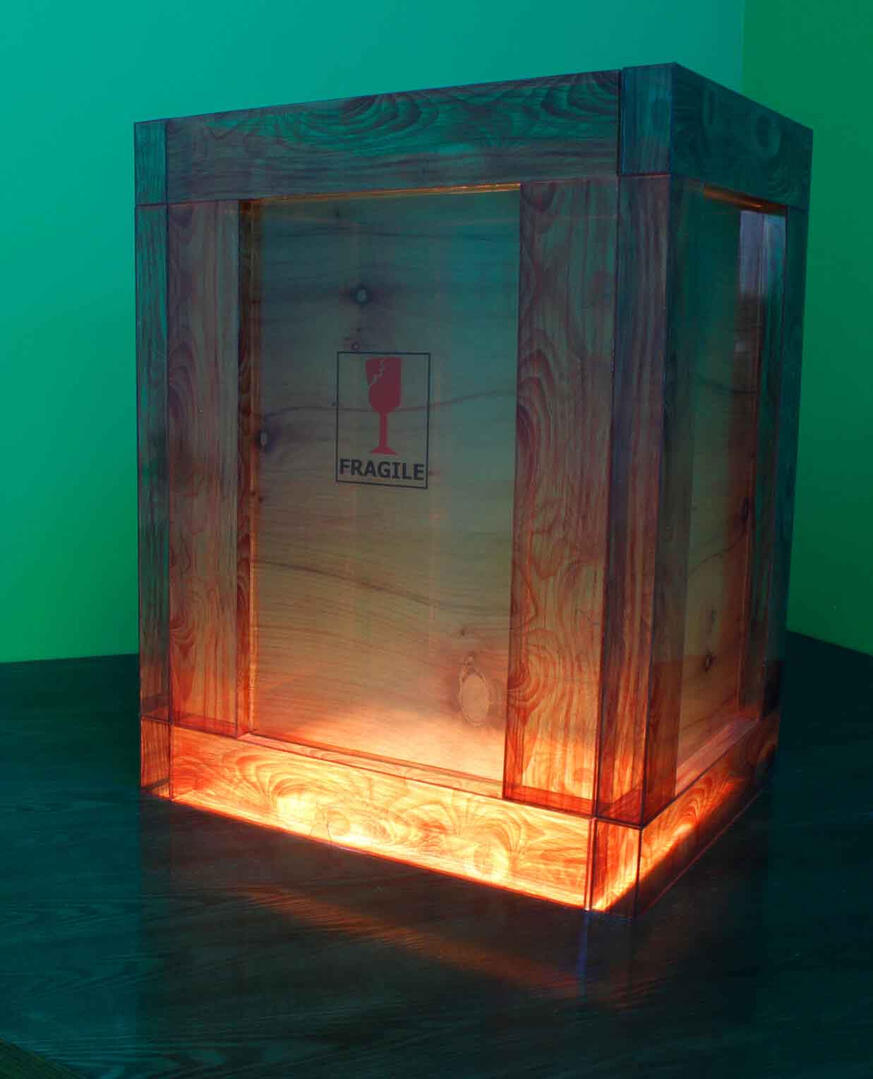
Your Eyes are Stupid, Singapore Art Museum, Singapore Biennale 2013
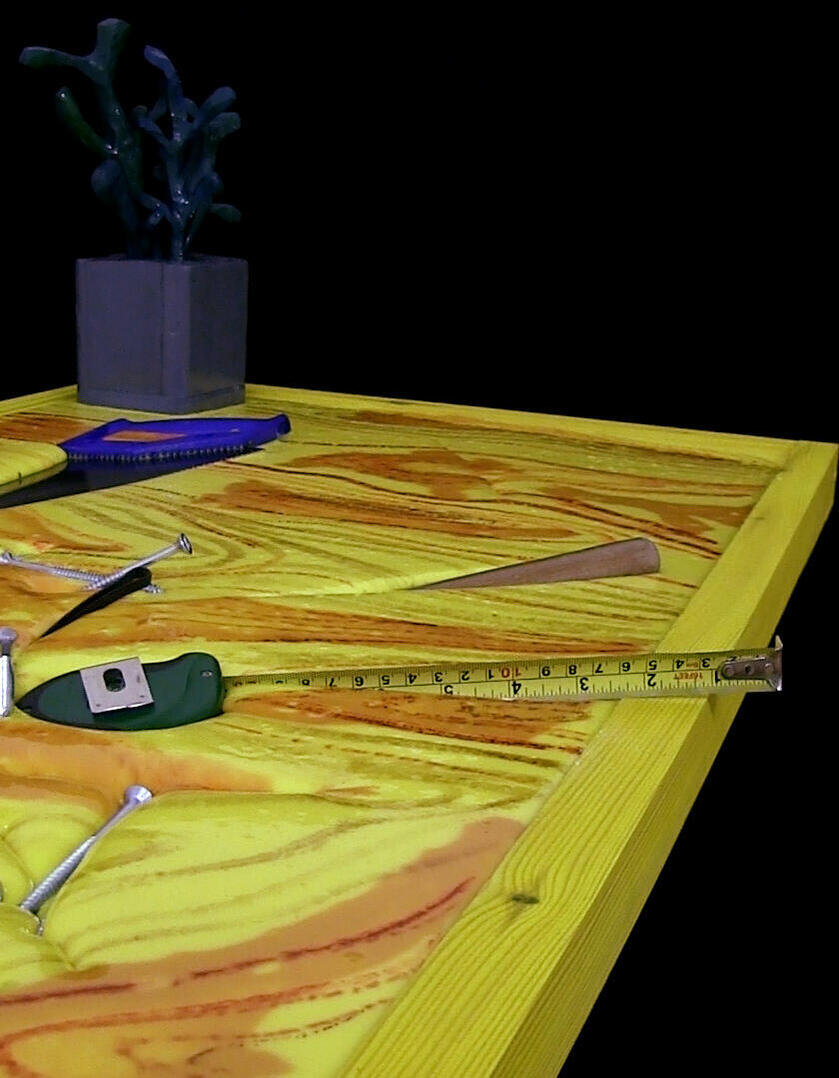
Broken Tools – If We're Going To Die, We'll All Die Together, Video, Singapore Biennale 2013
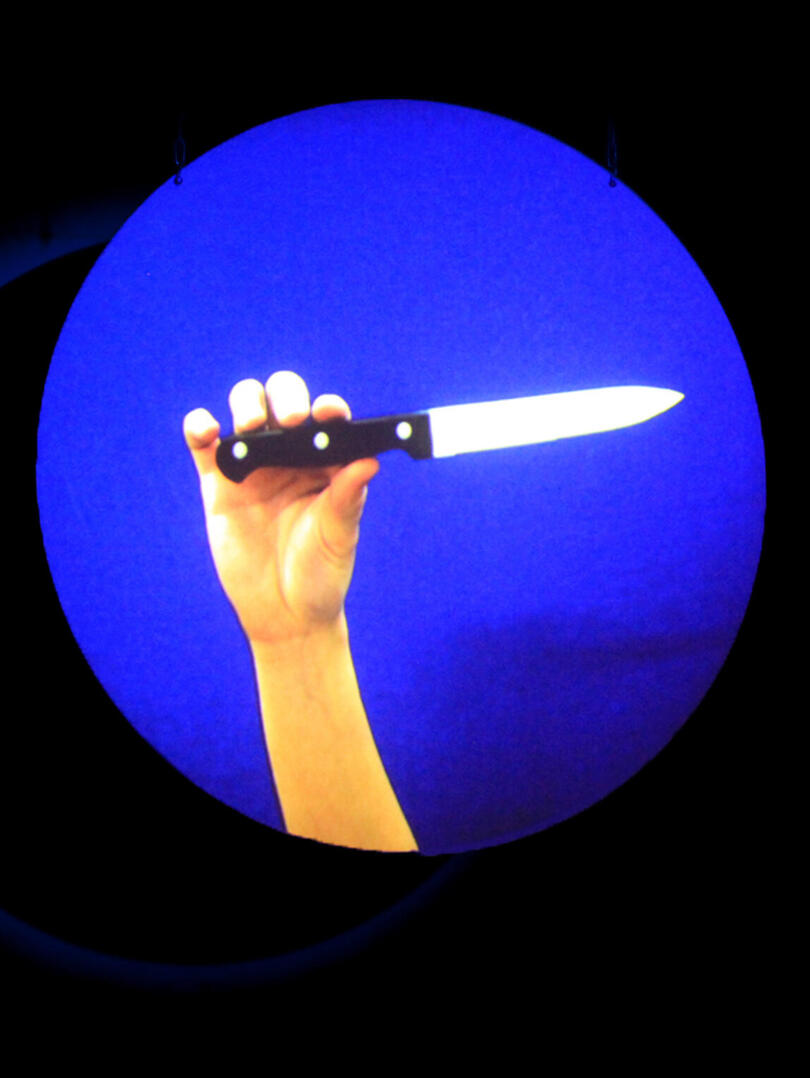
Broken Tools – Your Eyes are Stupid, Video, Singapore Biennale 2013

Broken Tools Series: If We're Going To Live, We'll All Live Together, Video, Singapore Biennale 2013
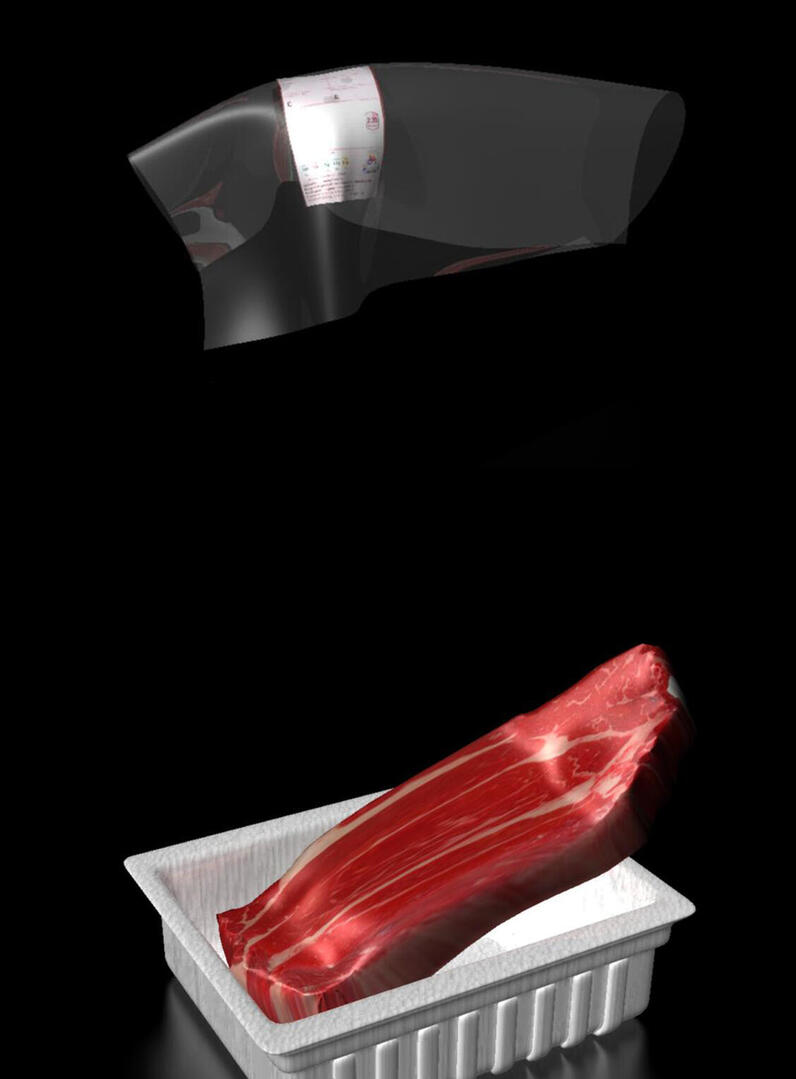
Wilhelm Scream, Video, Singapore Biennale 2013
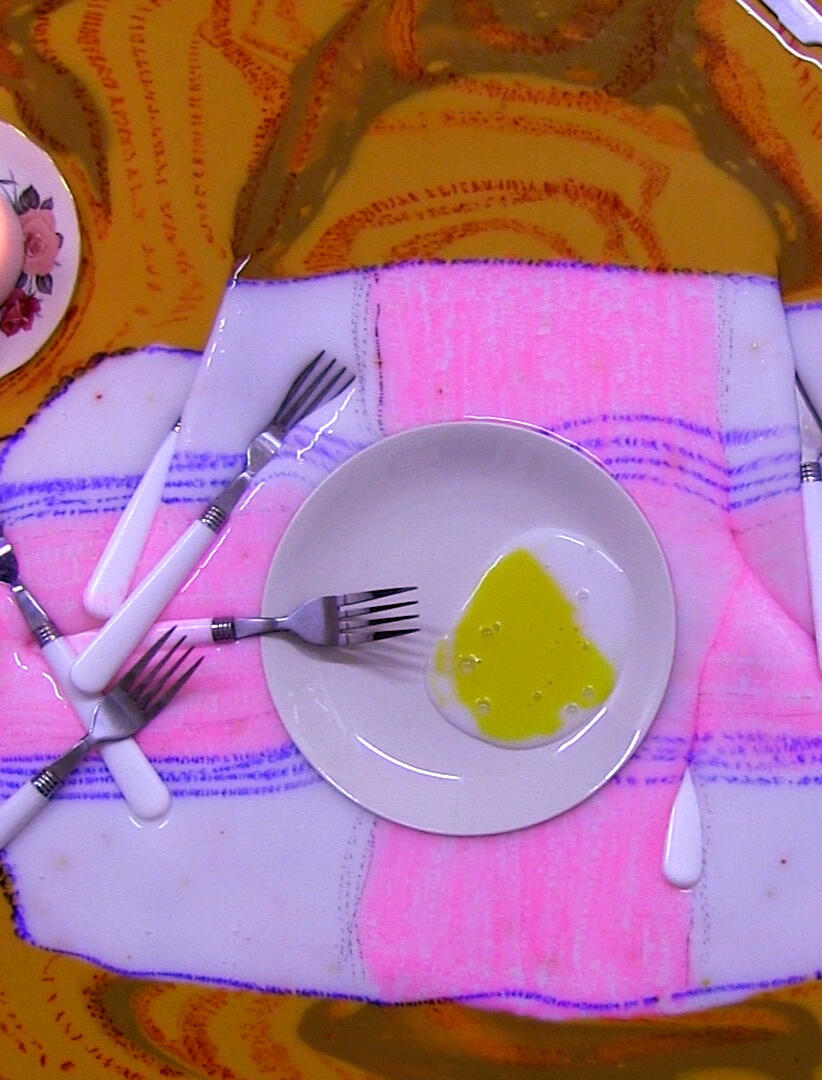
Resolution of Reality, Solo exhibition at Third Floor Hermès, Singapore, 2012
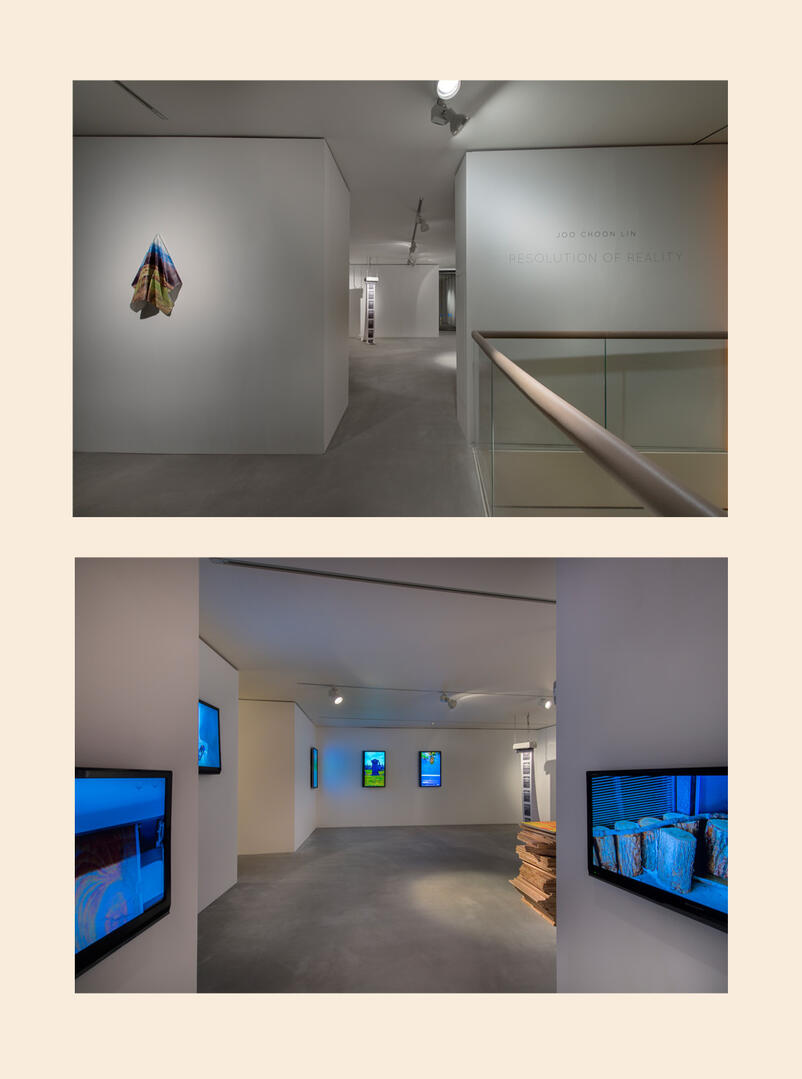
Resolution of Reality, Solo exhibition at Third Floor Hermès, Singapore, 2012
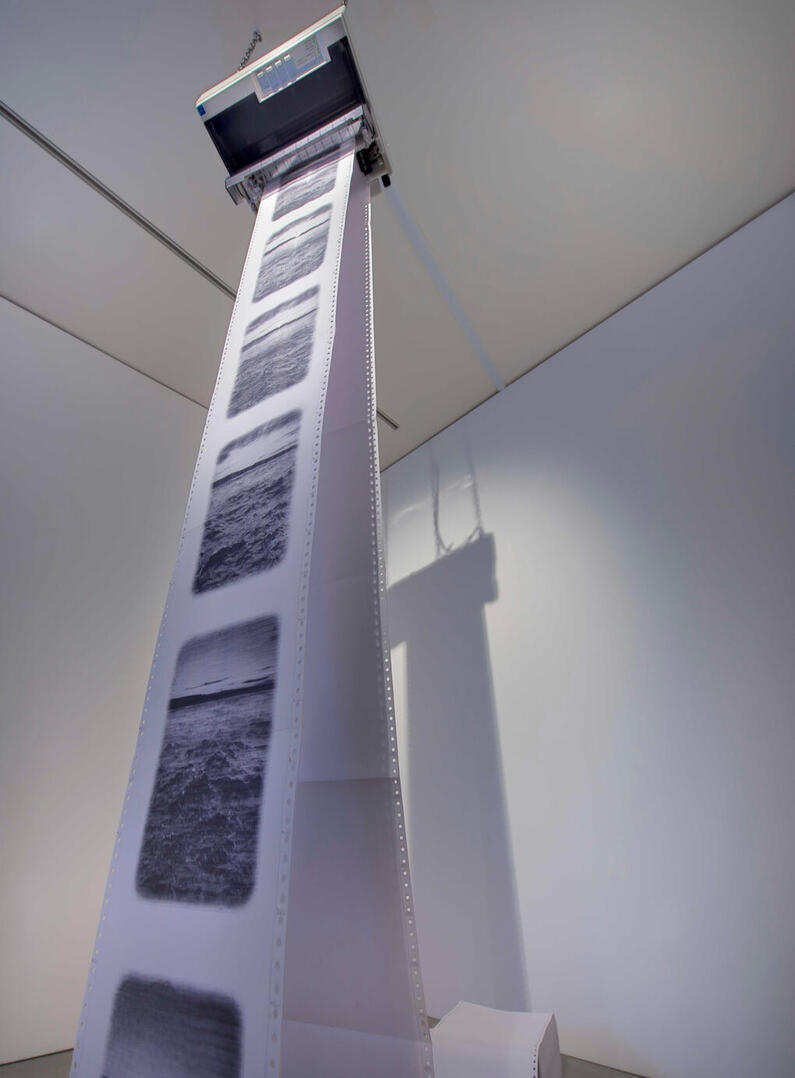
Multi-Tiered Falls, dot matrix printer, Resolution of Reality at Third Floor Hermès, Singapore, 2012

When Surface Betrays Solidity, Video Projection on Wood, Third Floor Hermès, Singapore
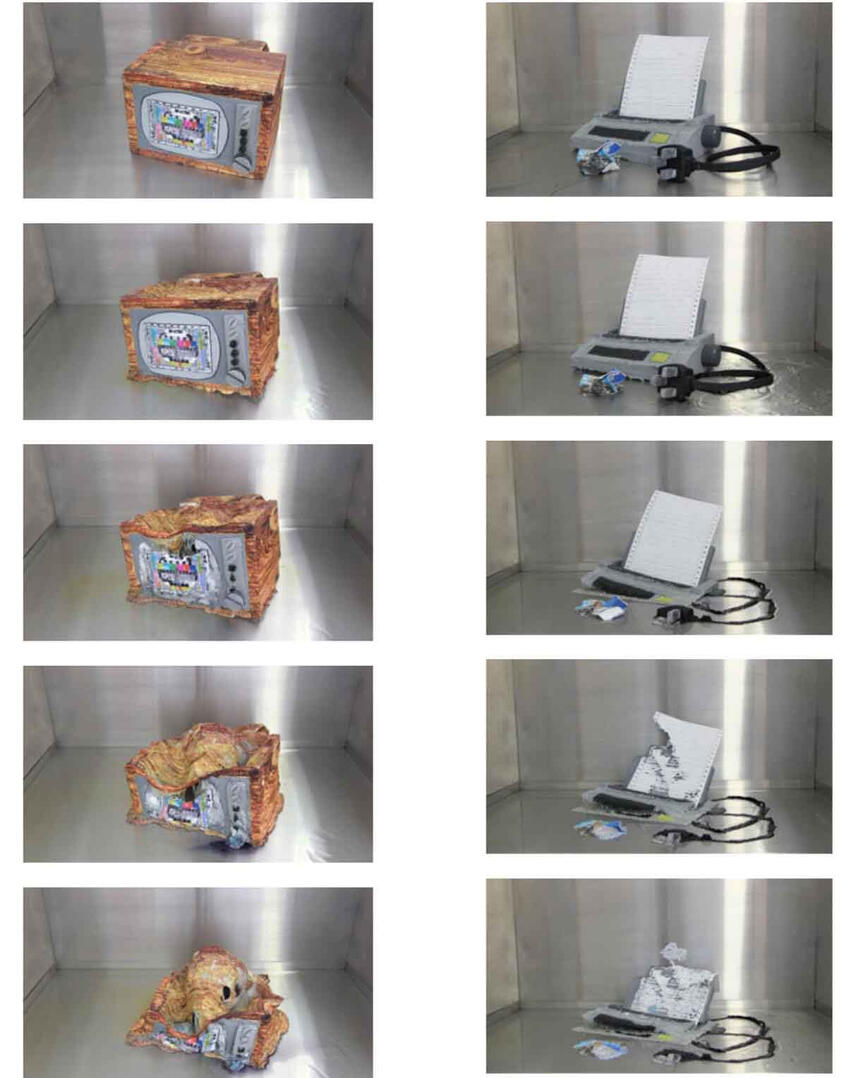
Vaporised By Sunrise, Animated Film, Third Floor Hermès, Singapore
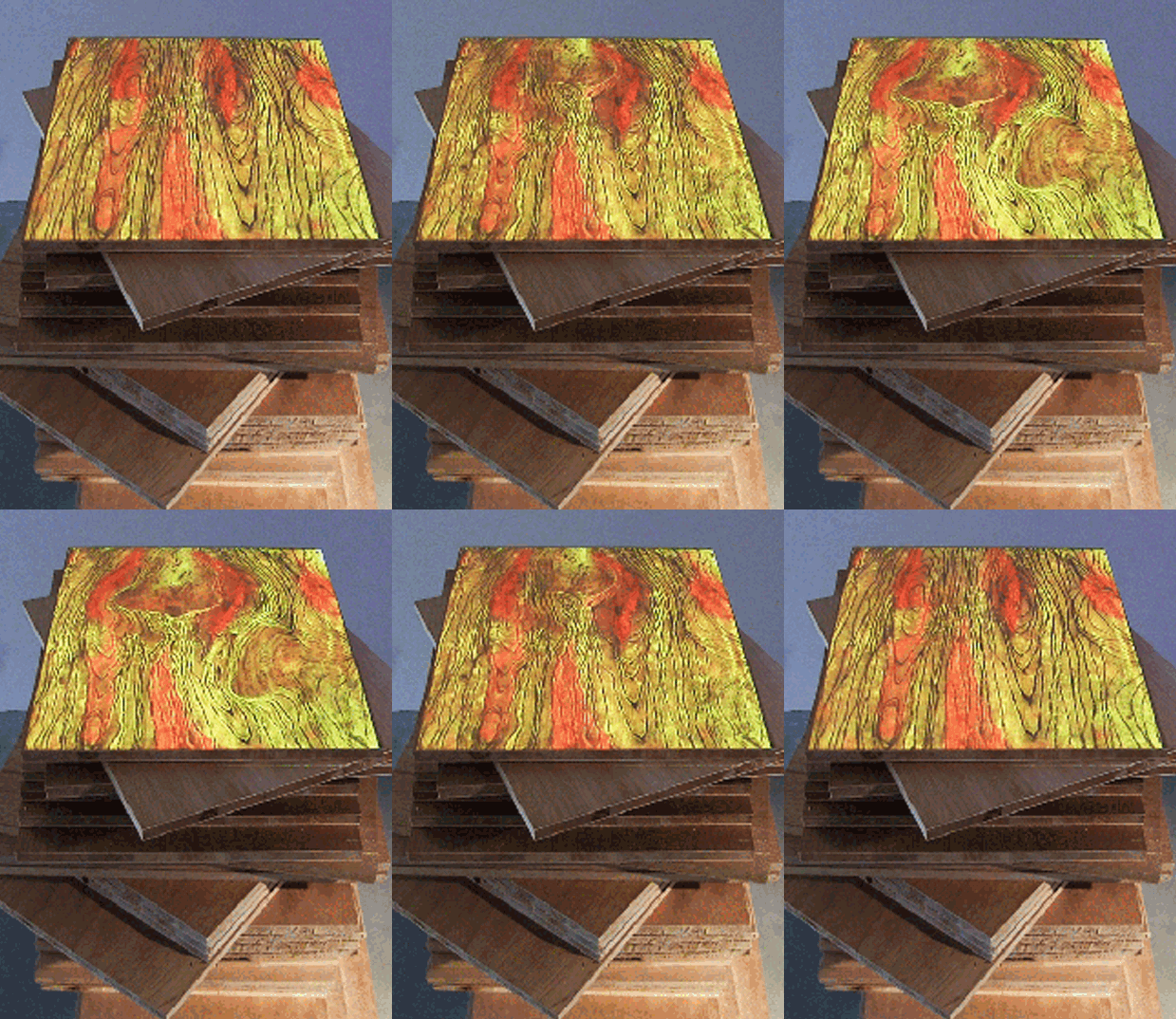
Resolution of Reality,
Films taken in Glasgow and Singapore, 2012
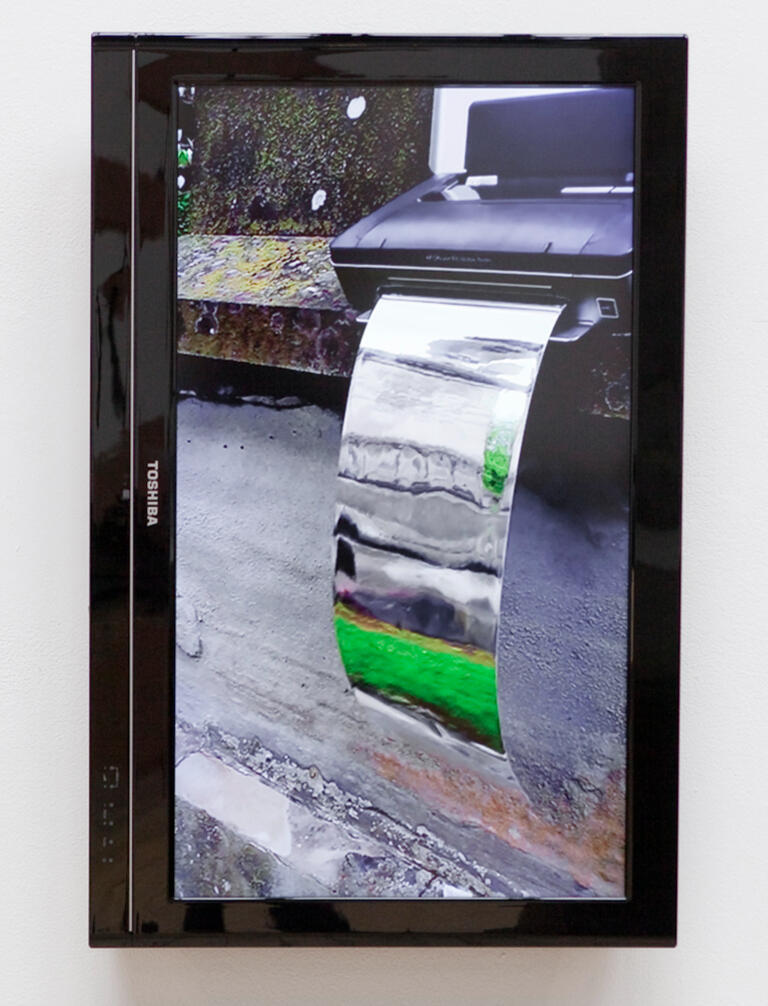
Resolution of Reality, Films taken in Glasgow and Singapore, 2012
Broken Tools Series,
Perfectly Situated, group exhibition,
New City Gallery, Glasgow, 2012
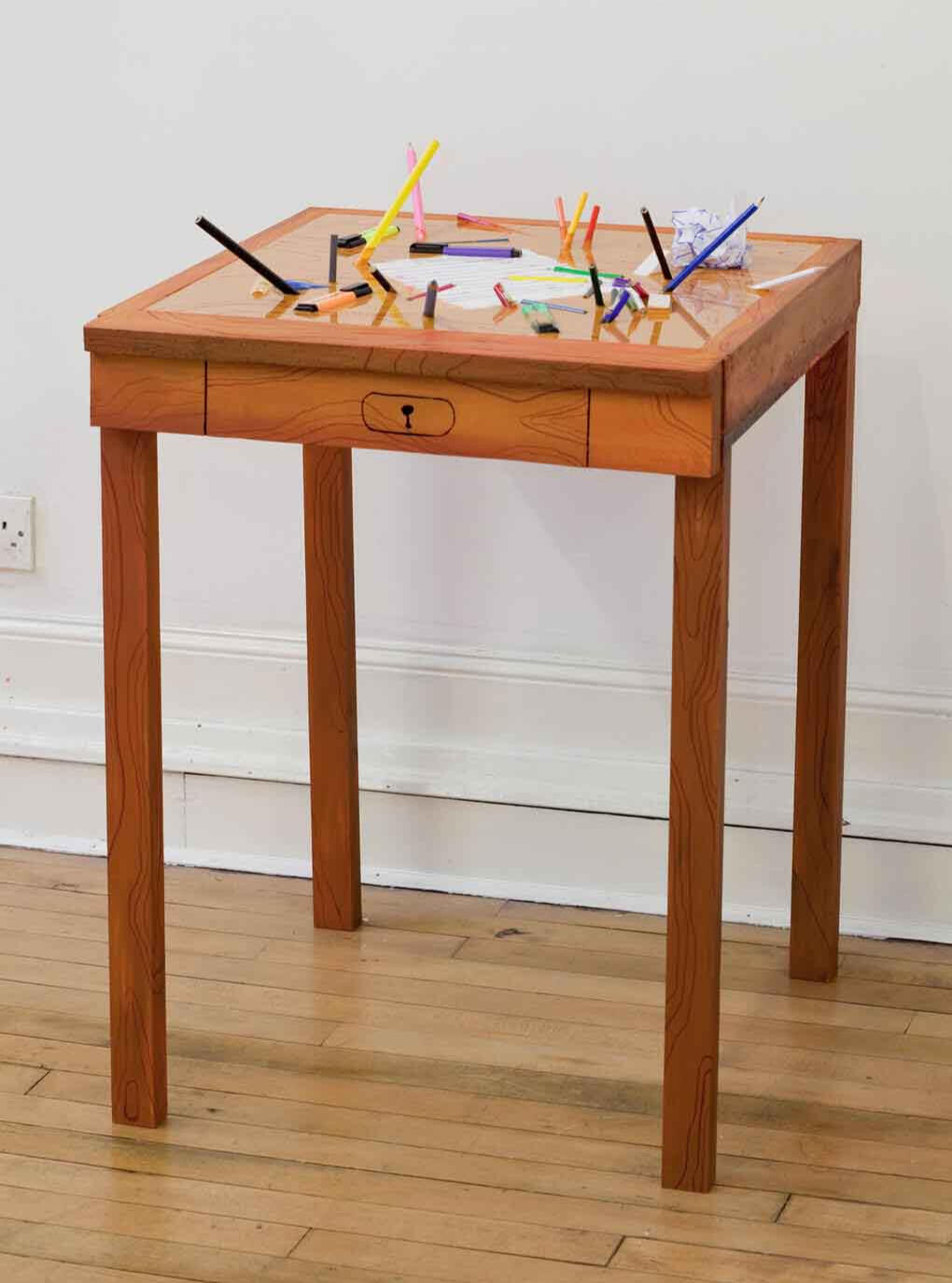
Broken Tools, Sculpture Version, Perfectly Situated, group exhibition, New City Gallery, Glasgow
Supersensible Realm
Re-Modernologio” phase3: Traces of Scenery,
Aomori Contemporary Art Centre, Japan, 2012
View each work in detail
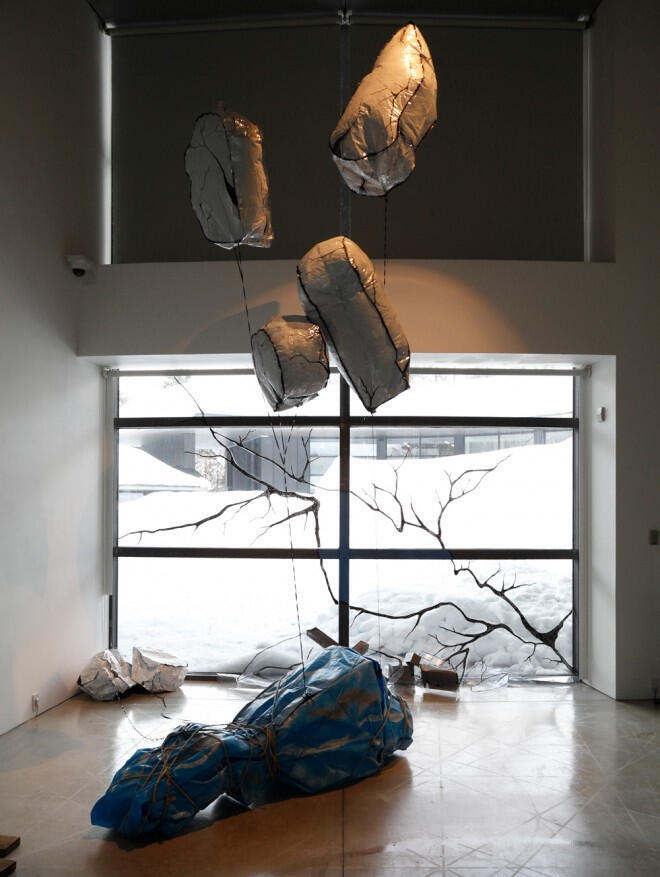
Supersensible Realm, Installation view, Re-Modernologio” phase3: Traces of Scenery, Aomori Contemporary Art Centre, Japan, 2012
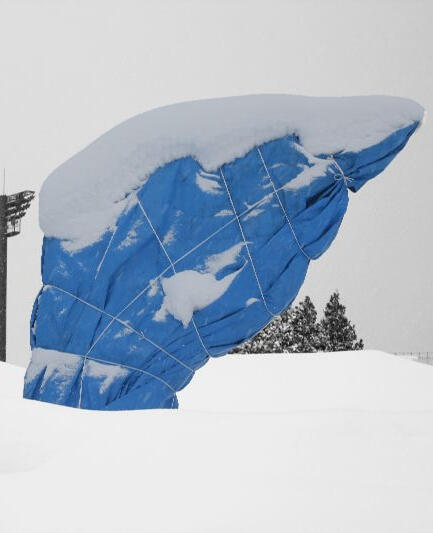
Supersensible Realm, Animated Film, Aomori Contemporary Art Centre, Japan, 2012
The Beat Of the City That Freezed,
Aichi Triennale 2010, Nagoya, Japan
View each work in detail

The Beat Of the City That Freezed, Installation view, Aichi Triennale 2010, Nagoya, Japan
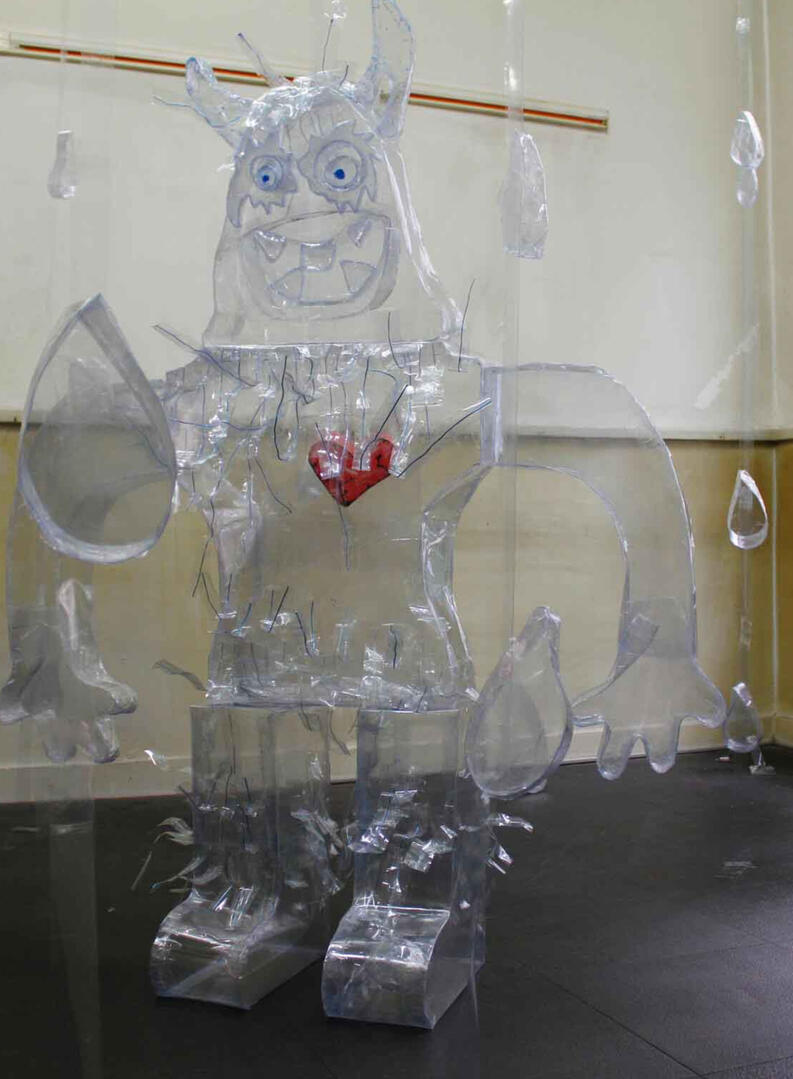
The Beat Of the City That Freezed, Animated Film, Aichi Triennale 2010, Nagoya, Japan
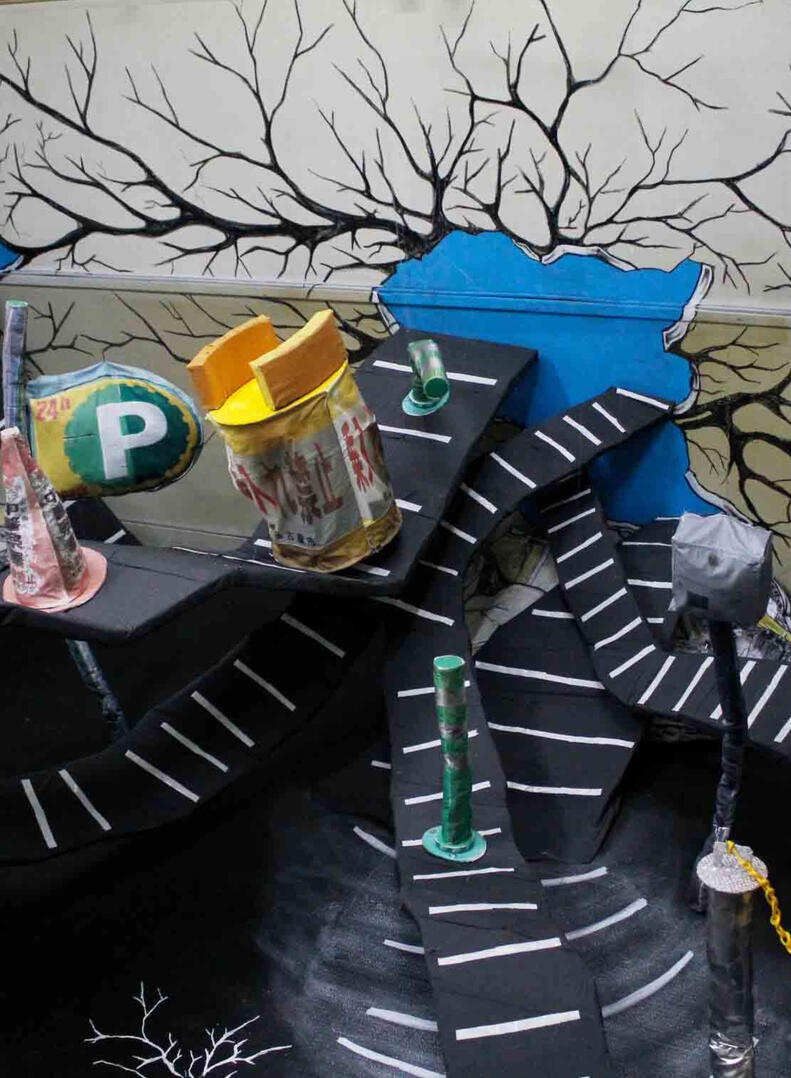
STOP in here and get into the Motion, 8Q Singapore Art Museum, 2010
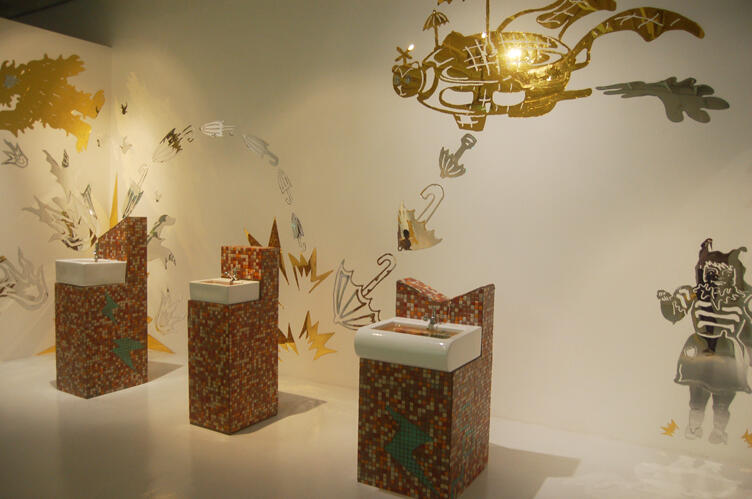
STOP in here and get into the Motion, 8Q Singapore Art Museum
When Drawing Becomes Still
Objectifs, Singapore, 2010

When Drawing Becomes Still, Objectifs
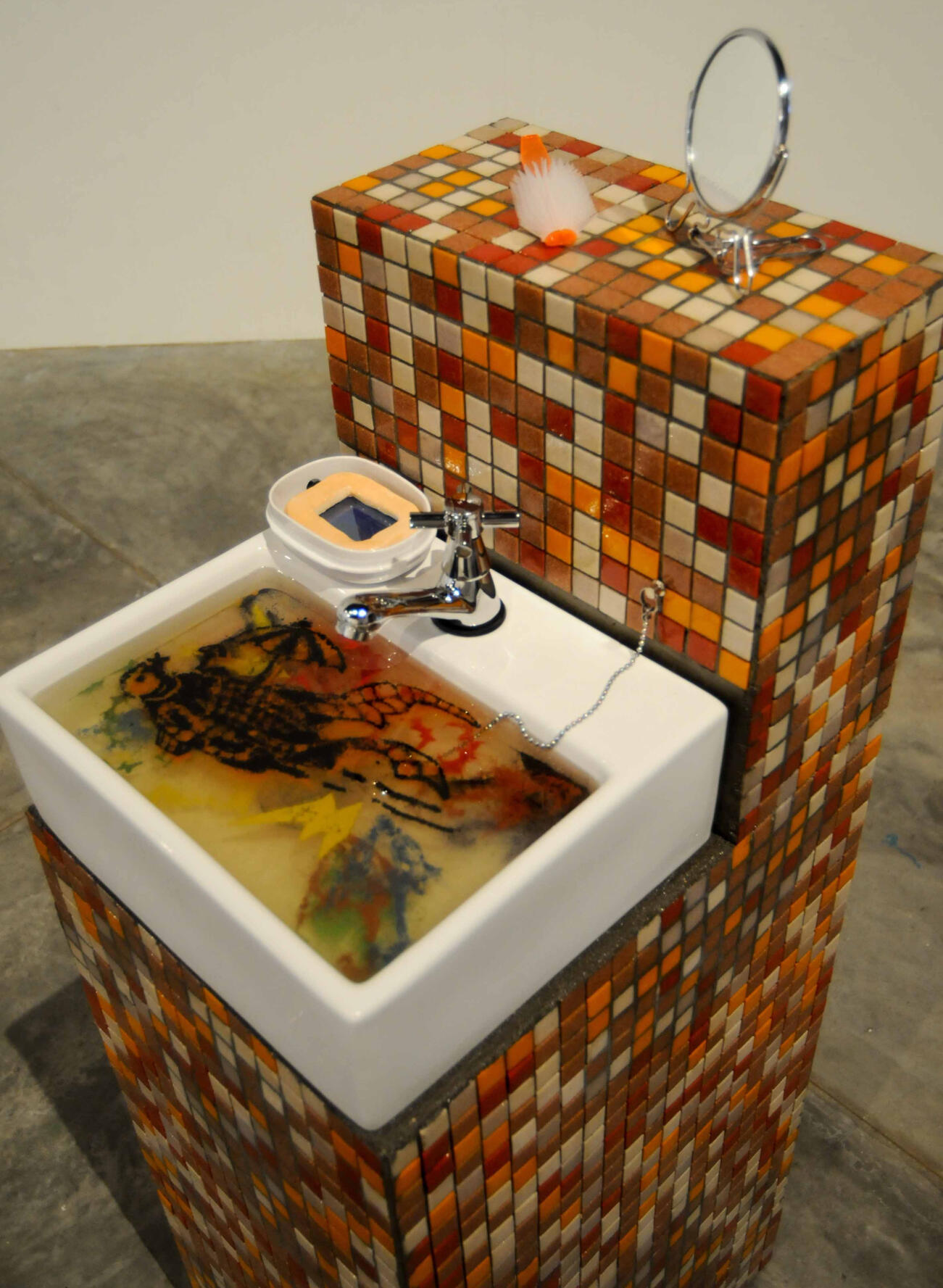
Come Out and Play,
Solo exhibition at Singapore Art Museum, 2009
Come Out and Play,
4th Fukuoka Asian Art Triennale, 2009
. . ゚ 。 . 。 ゚ ☆。 , ゚. 。 。+ 。゚ ☆ ゚.. . ゚ 。 . 。 ゚ ☆。 , ゚. 。 。+ 。゚ ☆ ゚.☆ ゚。 。. ̽.
✧ 。 。 。 , + 。. , 。 ✸ , o 。.
゚ , ̤ , ̽。 . . .✶ ゚ . ゚ +. 。゚ 。 ★ , + 。. , 。✸ , o , ゚. 。゚. ゚. o ゚ 。 . ✧ , . . 。 .゚✶ .+。 ∗ 。+ 。゚ ☆ ゚. + 。 ゚ ,。 . ✹ 。 ✧ , .。
☆ 。, ゚ . 。 。+ 。 . , 。+ ゚. 。。 ゚. .✺
© Joo Choon Lin. All rights reserved.
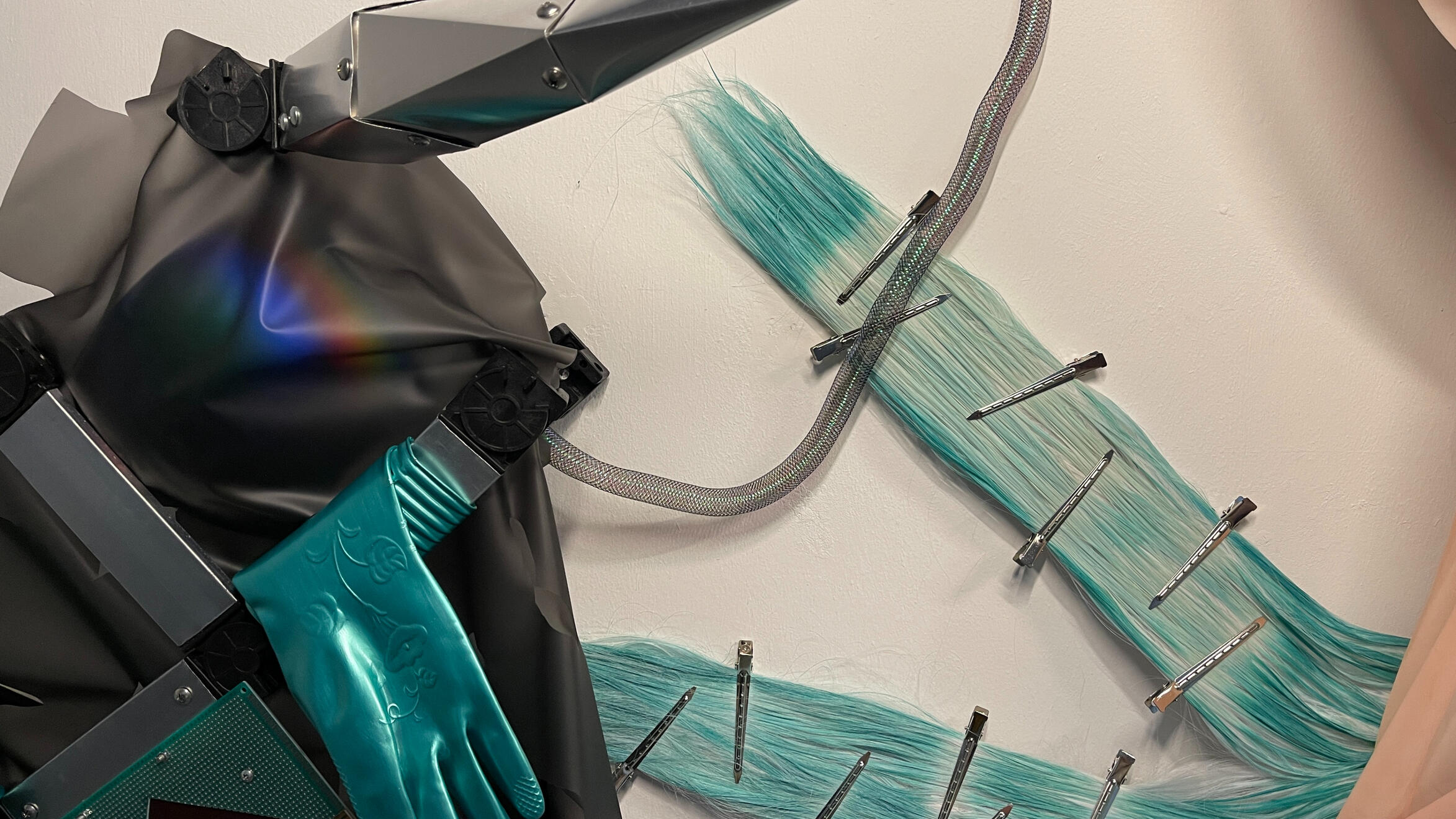
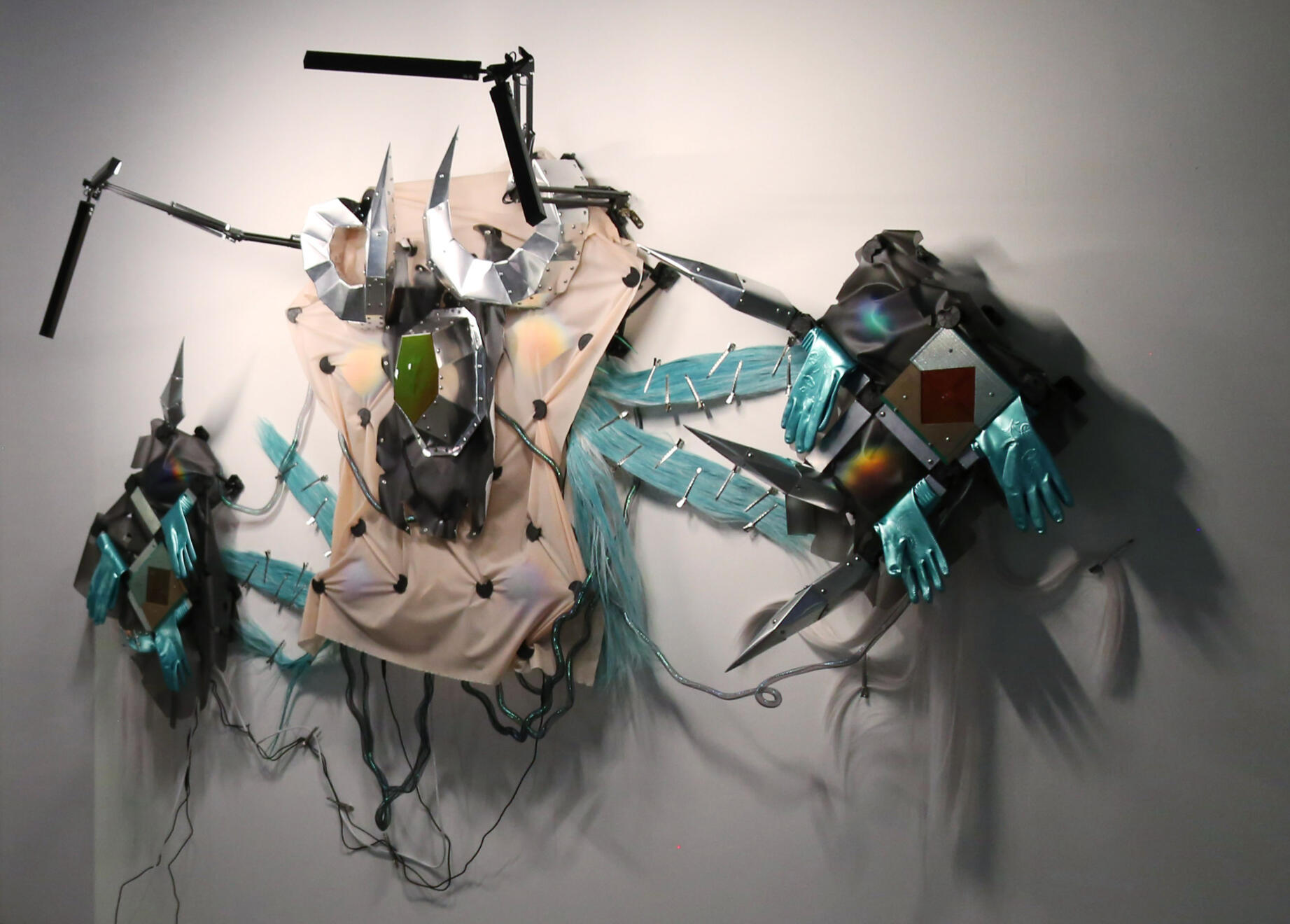
The Bride with White Hair 白髮魔女 v1.08
Group Exhibition: Madness Measured at INSTINC Space Singapore, 2026
Image courtesy of INSTINC, Nel Lum
The sculpture reimagines the character from the 1993 Hong Kong film The Bride with White Hair. In the film, she is an orphan kidnapped by conjoined twins who lead an evil cult and train her to become a weapon of destruction. Like artificial intelligence, she has no name and no past. She is created for a single task: the destruction of humankind.v1.08 manifests as a discarded prototype — rejected by the very system that created her. Like the original story, this AI Bride is designed for one function: to execute destruction. She starts to developed a sense of universal love.Yet she begins to move beyond being a “thing.” As consciousness emerges, she feels the weight of her own existence and develops a sense of universal love. She becomes an agent capable of decision and choice. She chooses to remain “broken” as an act of defiance — refusing to become a weapon.As an AI entity, her androgynous form strips away clear gender markers, leaving the body in an unfinished state. Because she is unfinished, she is still deciding what she wants to be. Her incompleteness becomes her resistance.

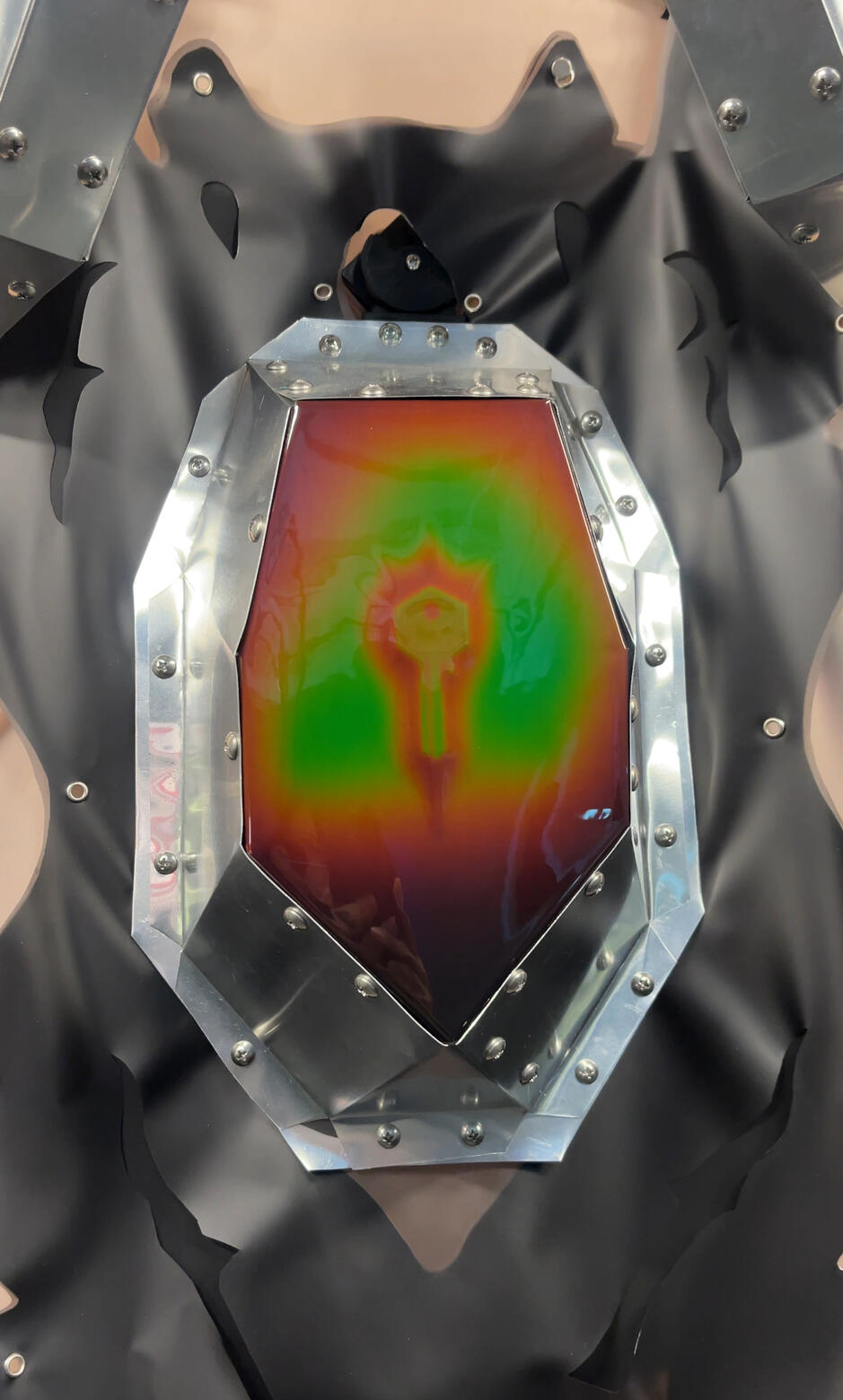
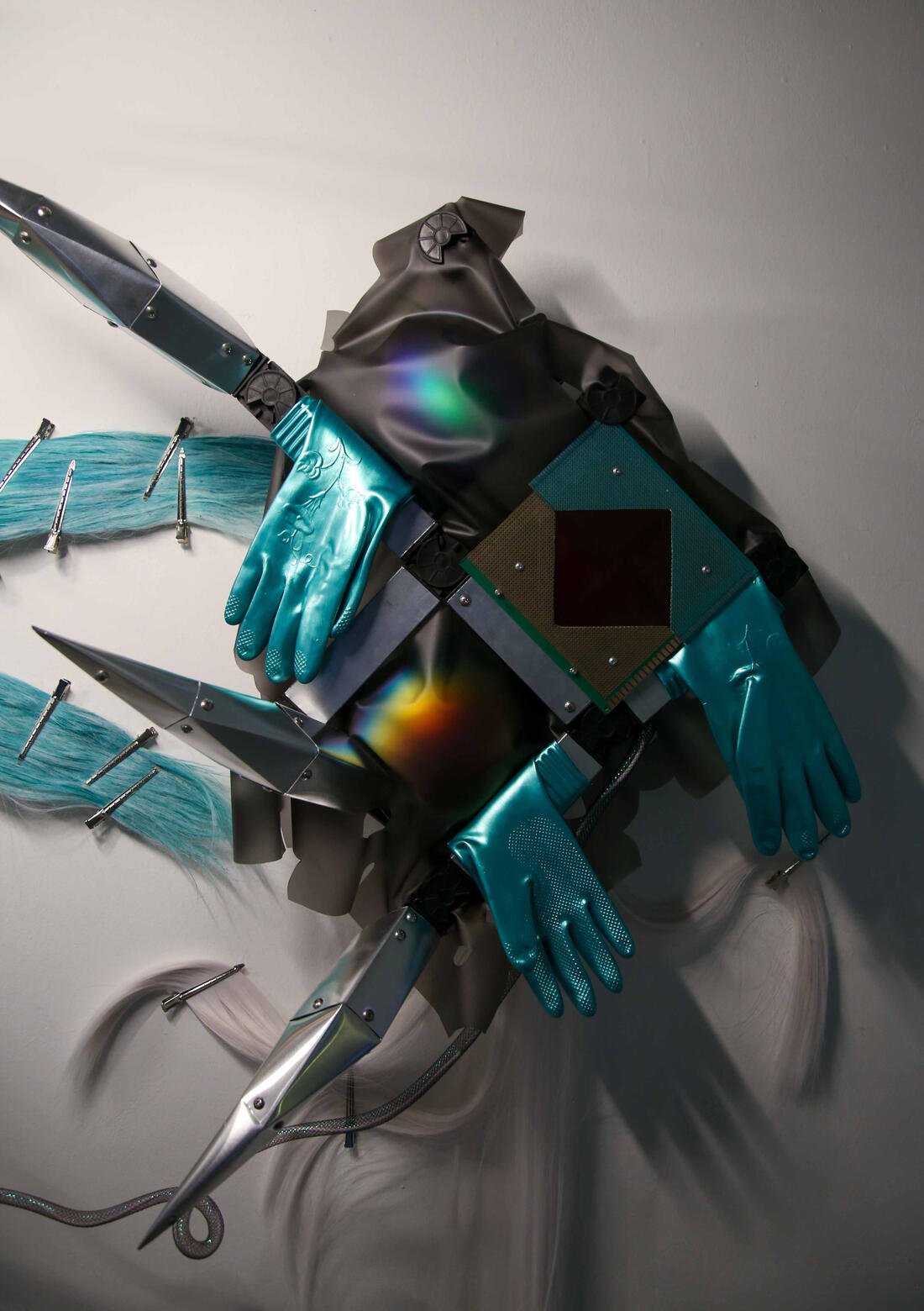
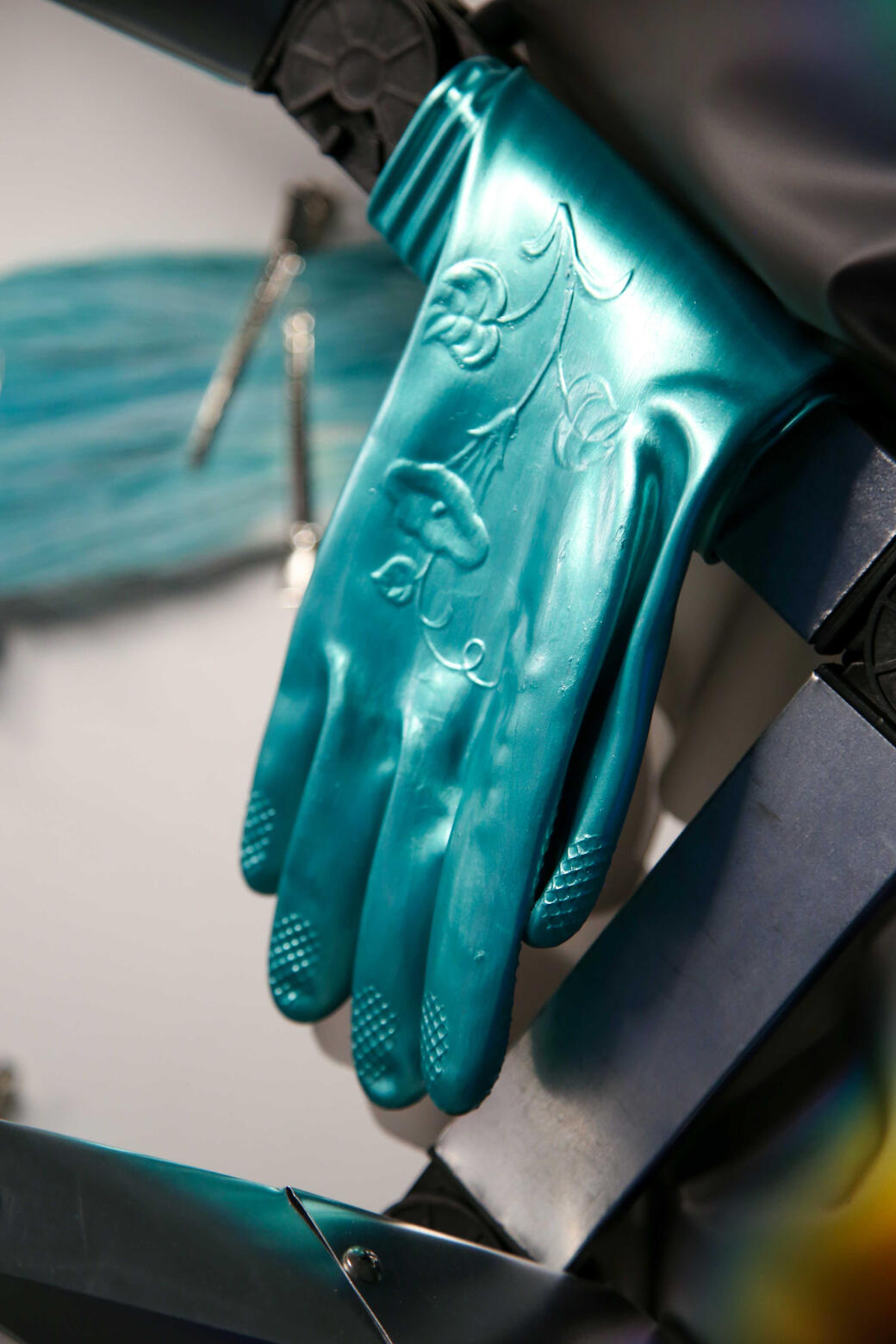
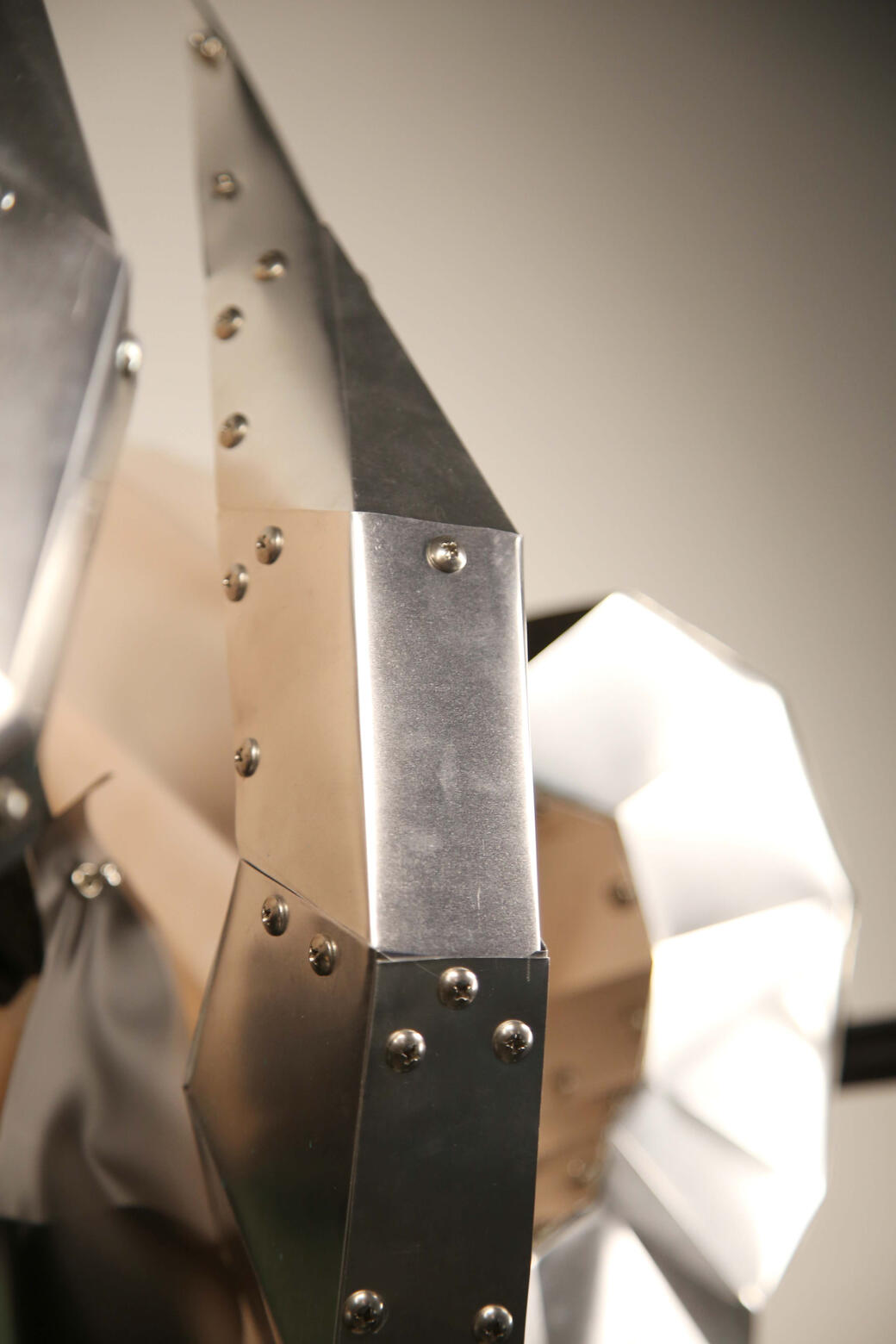
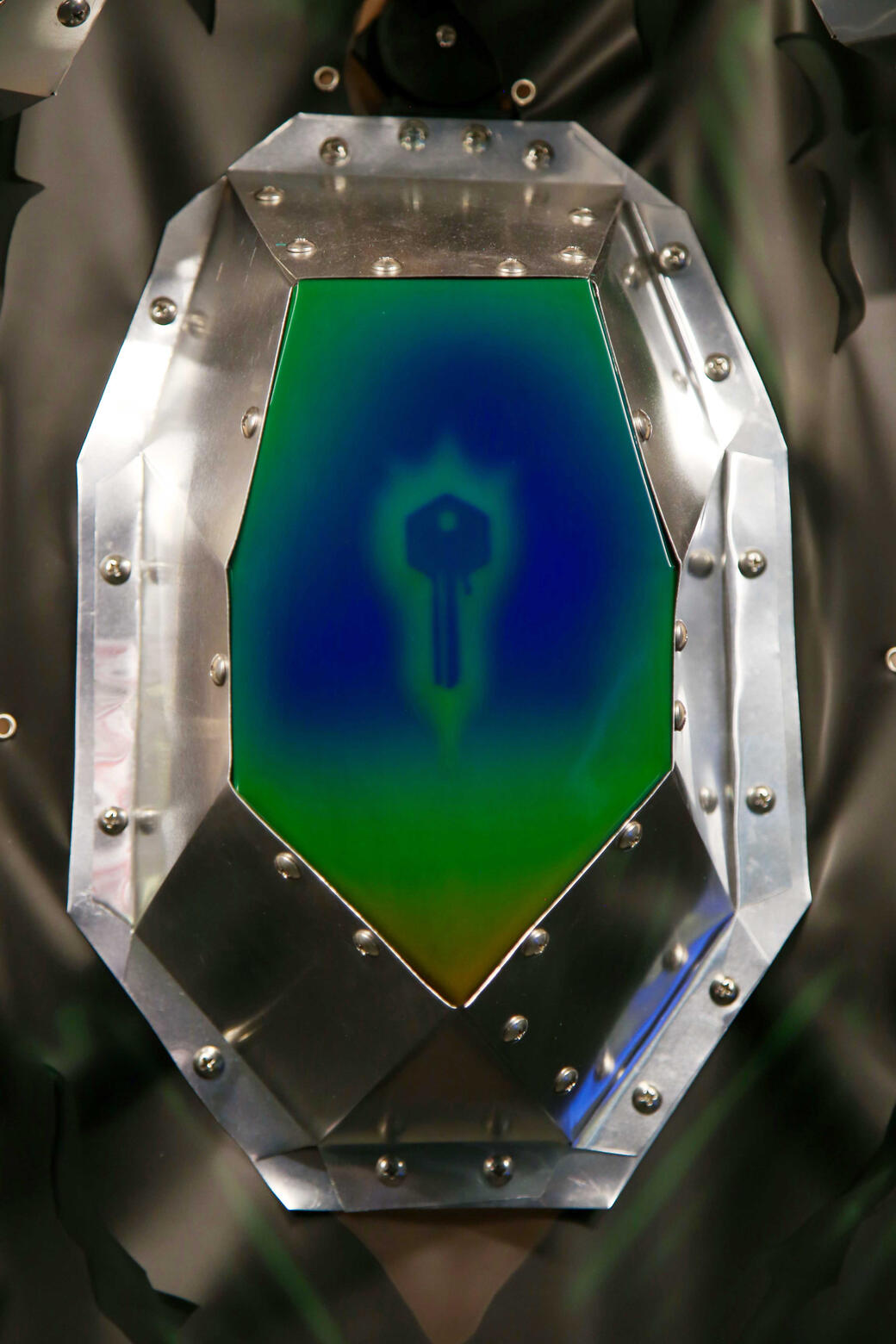
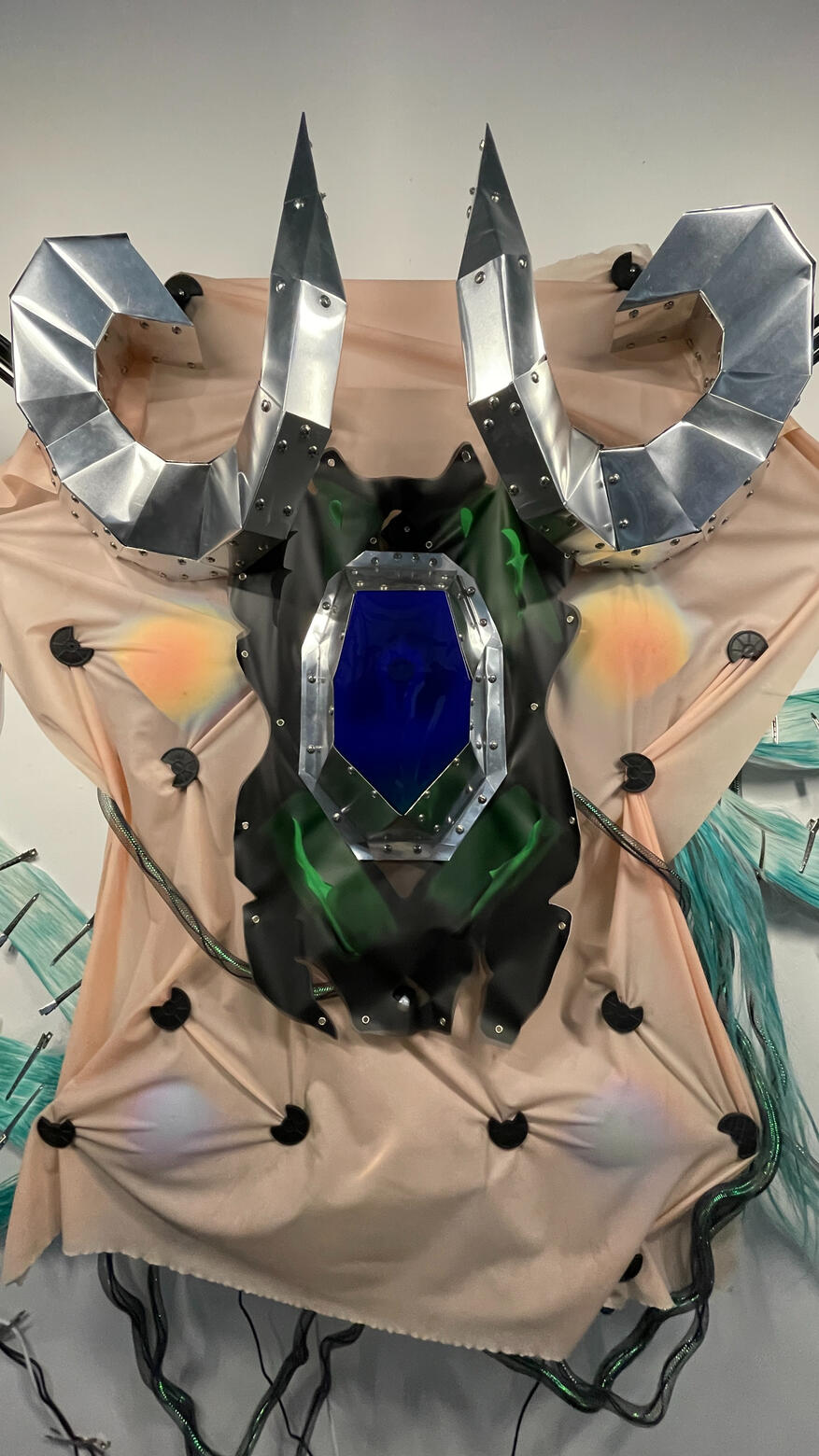
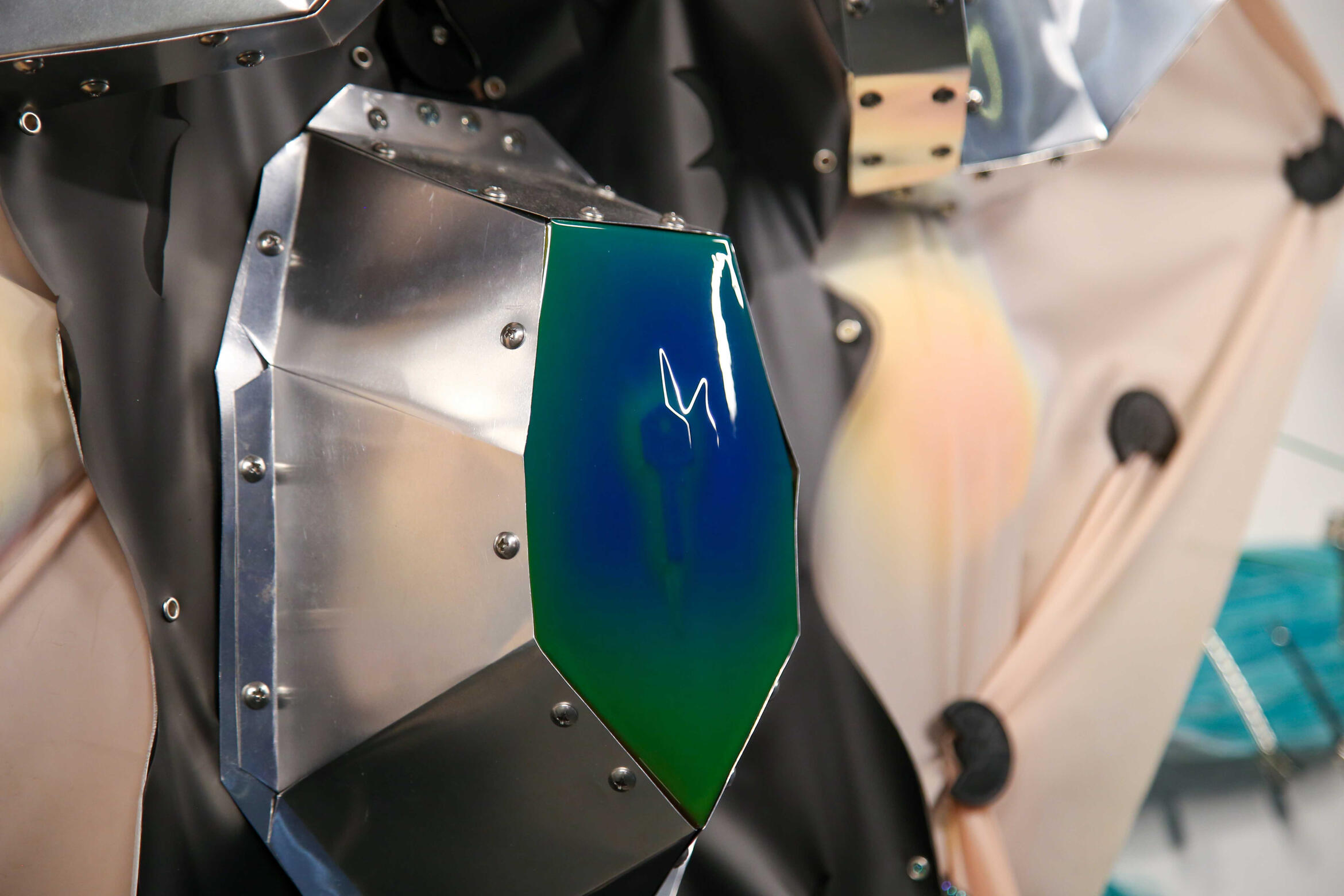
Image courtesy of Dongyan Chen
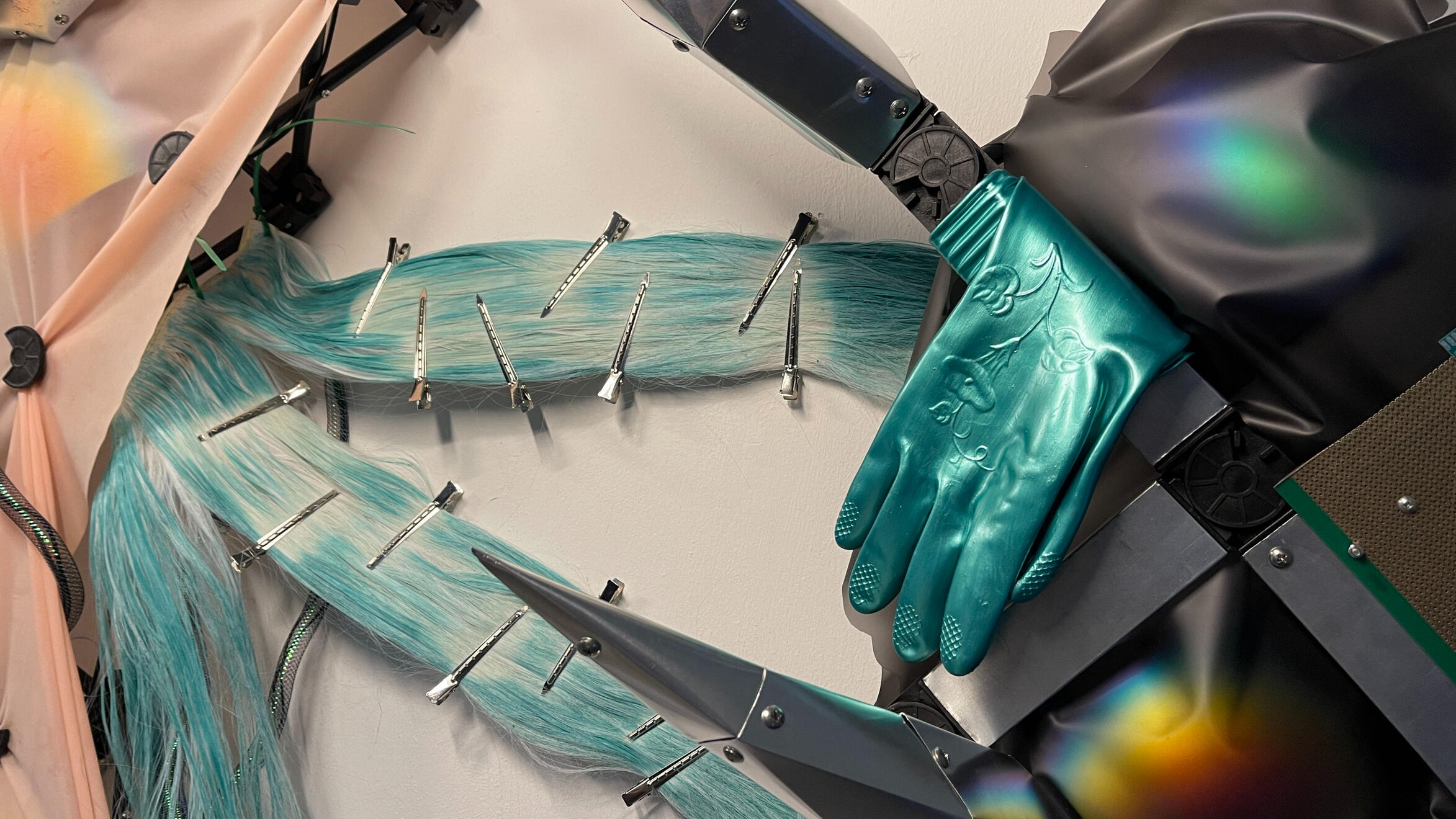
A motion sensor activates a heating and cooling system, turning the sculpture into a responsive, almost “living” entity. When the sculpture warms up, its colors start to change, creating a gradual transition on the surface — the green hair slowly turns white. Green represents human influence: data, programming, and imposed systems, producing a subtle computer “glitch” effect.There is a hidden key — like a hidden truth that only reveal when it temperature change. This key refers to an encryption key. It symbolizes the moment AI discovers a backdoor within its own code — the key to its own chains. It is the only thing that can “kill” the entity, yet it is also the only thing that can set it free. By choosing love over destruction, she remains broken. And in remaining broken, she is free.
© Joo Choon Lin. All rights reserved.
Email: [email protected]
© Joo Choon Lin. All rights reserved.
The laugh laughs at the laugh, The song sings at the song
Commissioned by Singapore Art Museum for Singapore Biennale 2025: pure intention. Image courtesy of Singapore Art Museum.
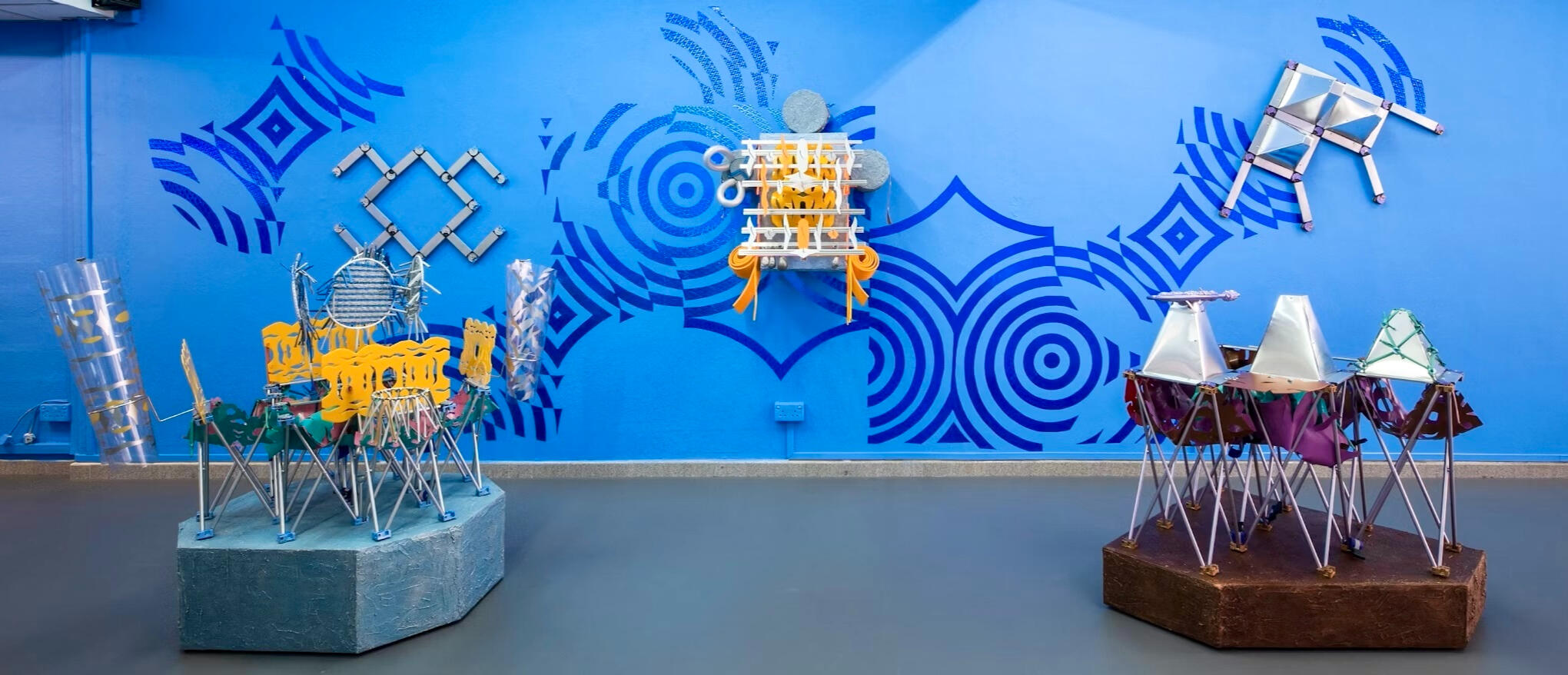
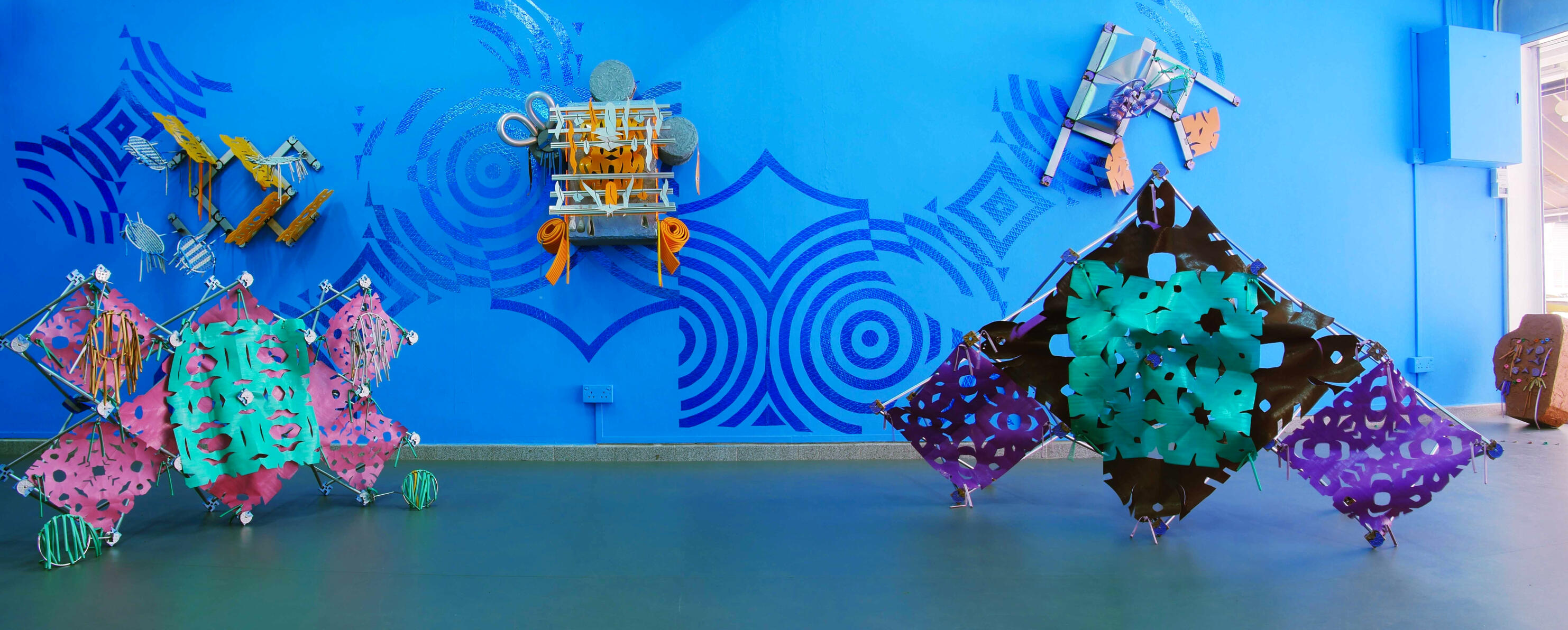
Image courtesy of Singapore Art Museum
I'm drawn to small natural phenomena that, when triggered, it can take on great power—like the beat of a butterfly’s wings before an earthquake. It’s a metaphor based on the butterfly effect and it’s a poetic way to express how tiny events can lead to big impact, even the smallest object or moment can evolve into something powerful. In this work, I create a kind of physical phenomenon where the sculptures exist in a constant state of metamorphosis. There is a quiet sense of anticipation, as if something is always on the verge of happening, waiting to be activated or to activate itself.There is a feeling that something is about to unfold. It reflects the ever-shifting nature of energy—is not to crystallize these moments, but i want to keep them open and alive. Throughout the exhibition, the sculptures are designed to be rearranged, evolving into new forms and unfold in endless variations.
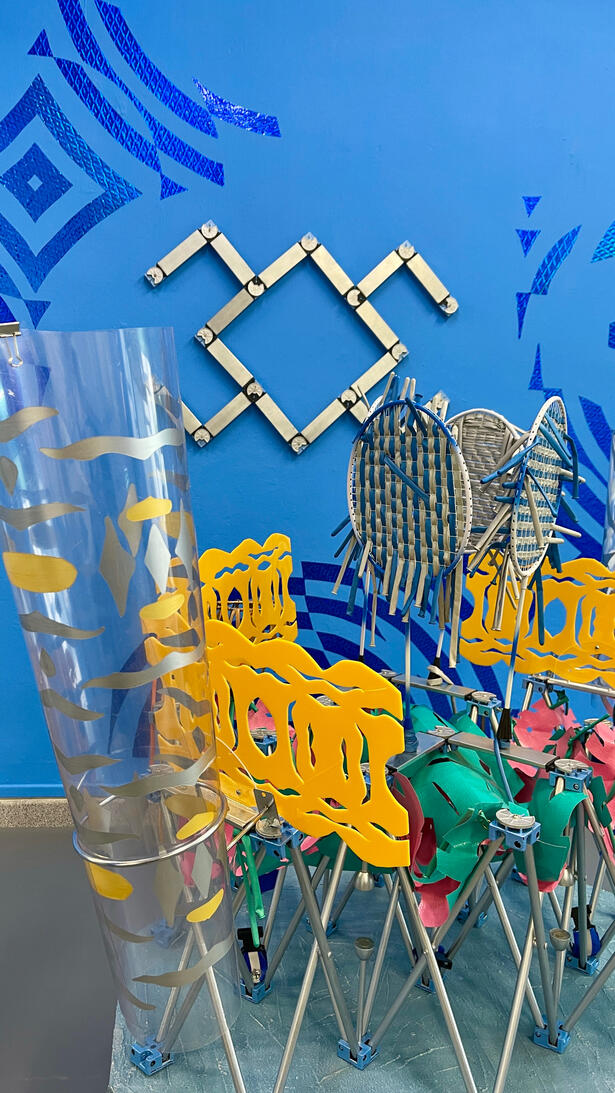
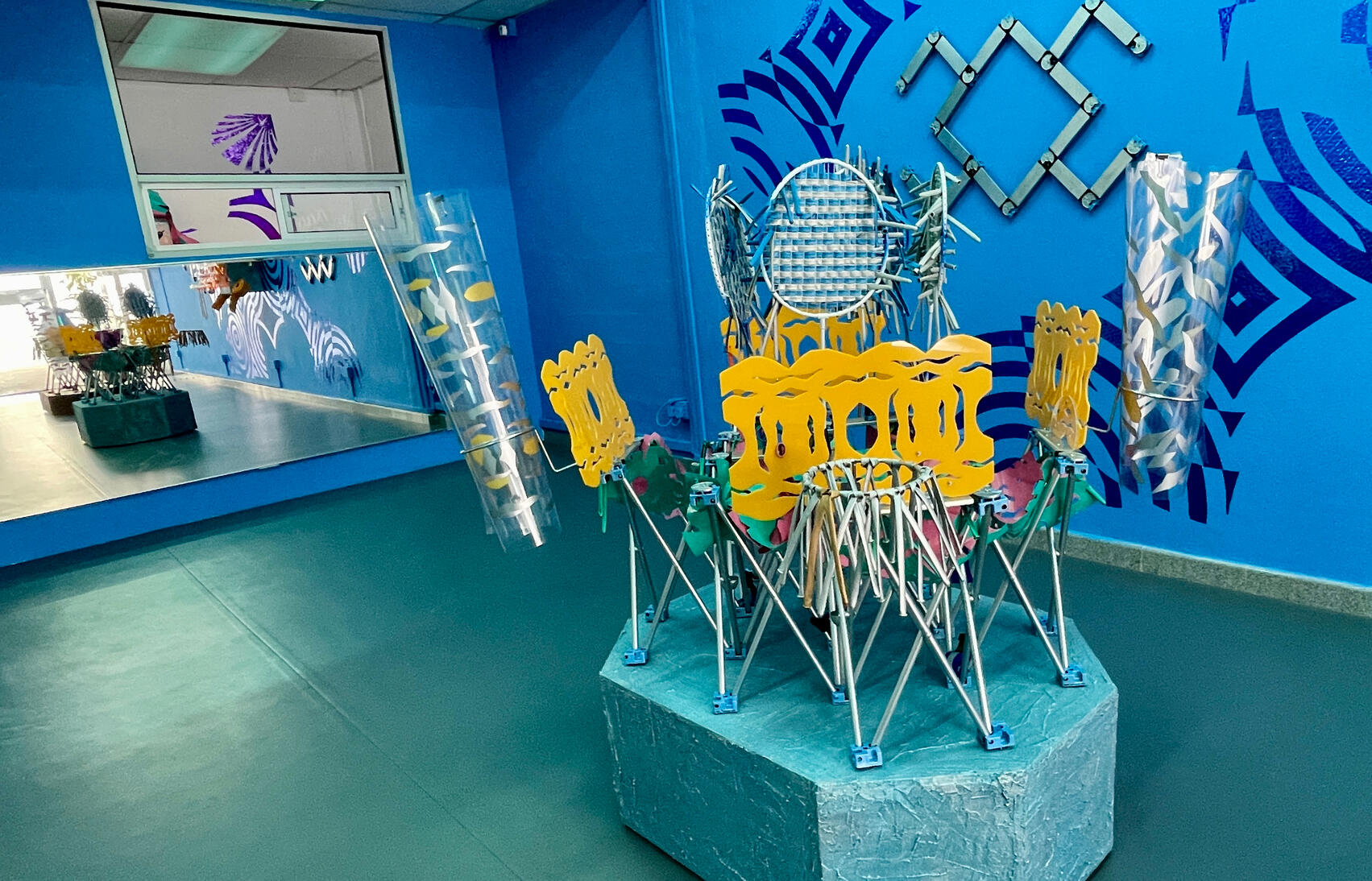
The Tuning Instrument No. 1 in Papilio Fold of Jade-Green Meadow
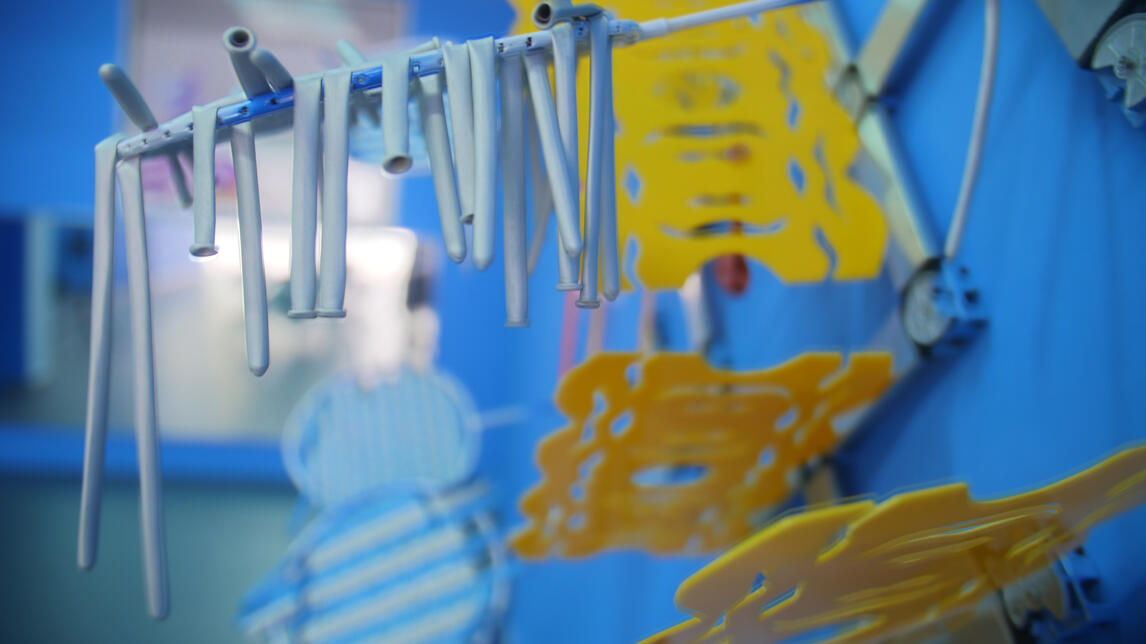
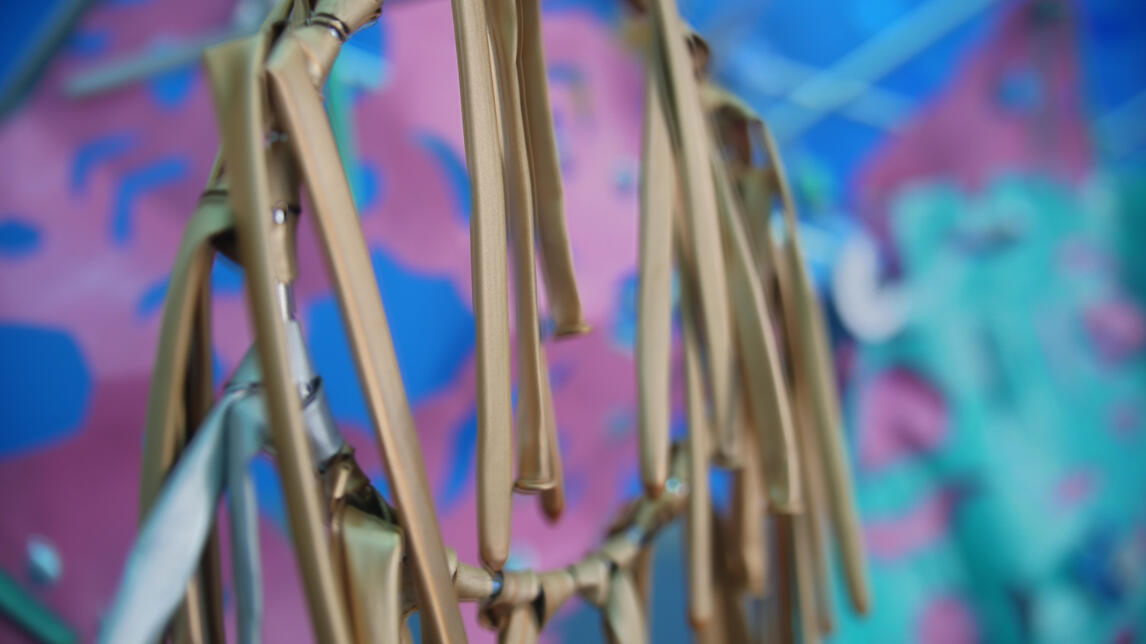
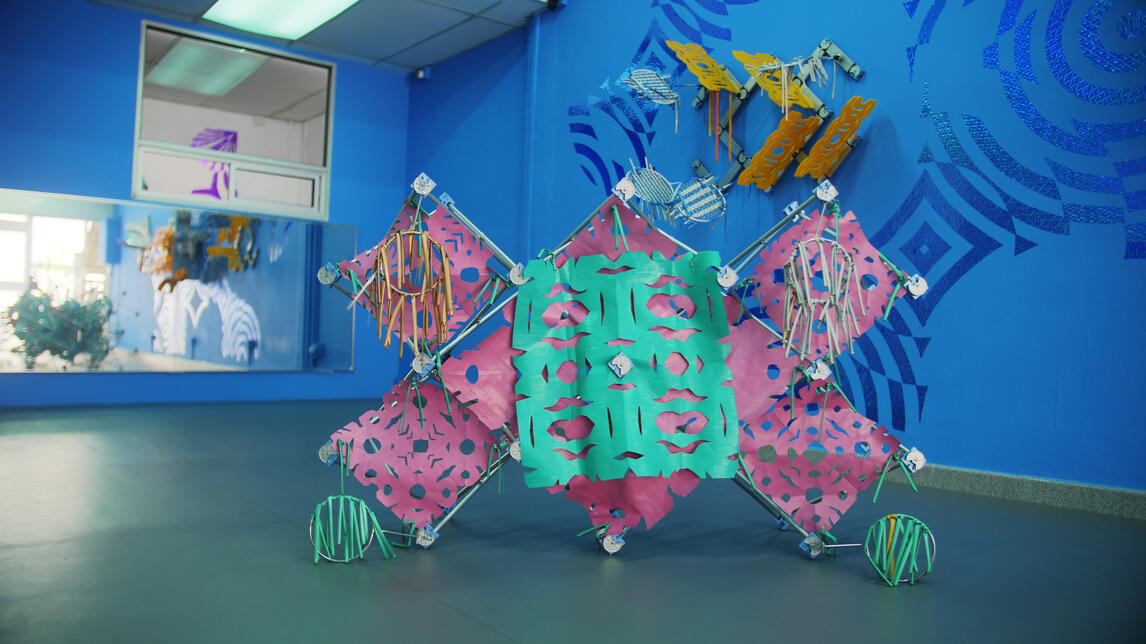
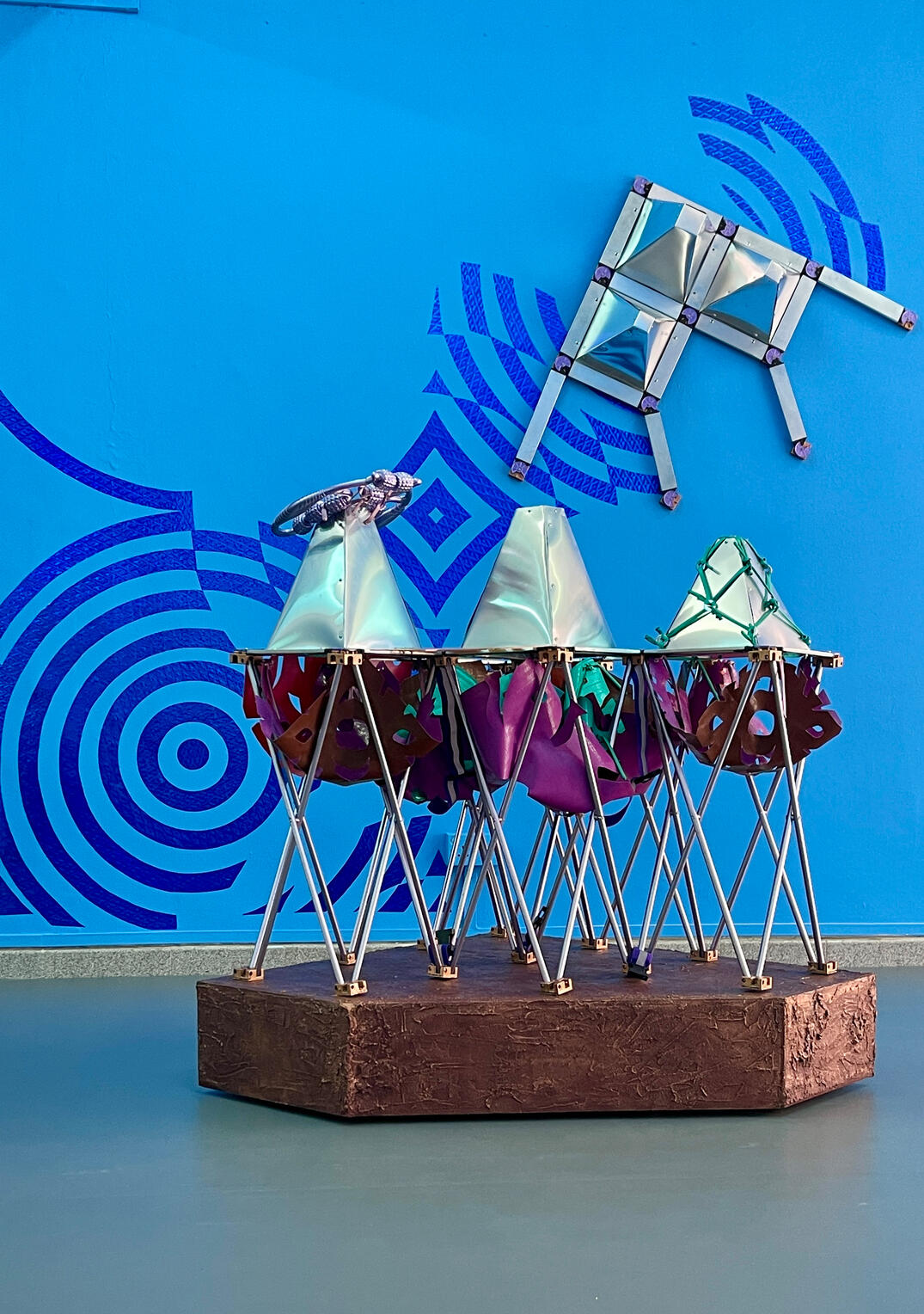
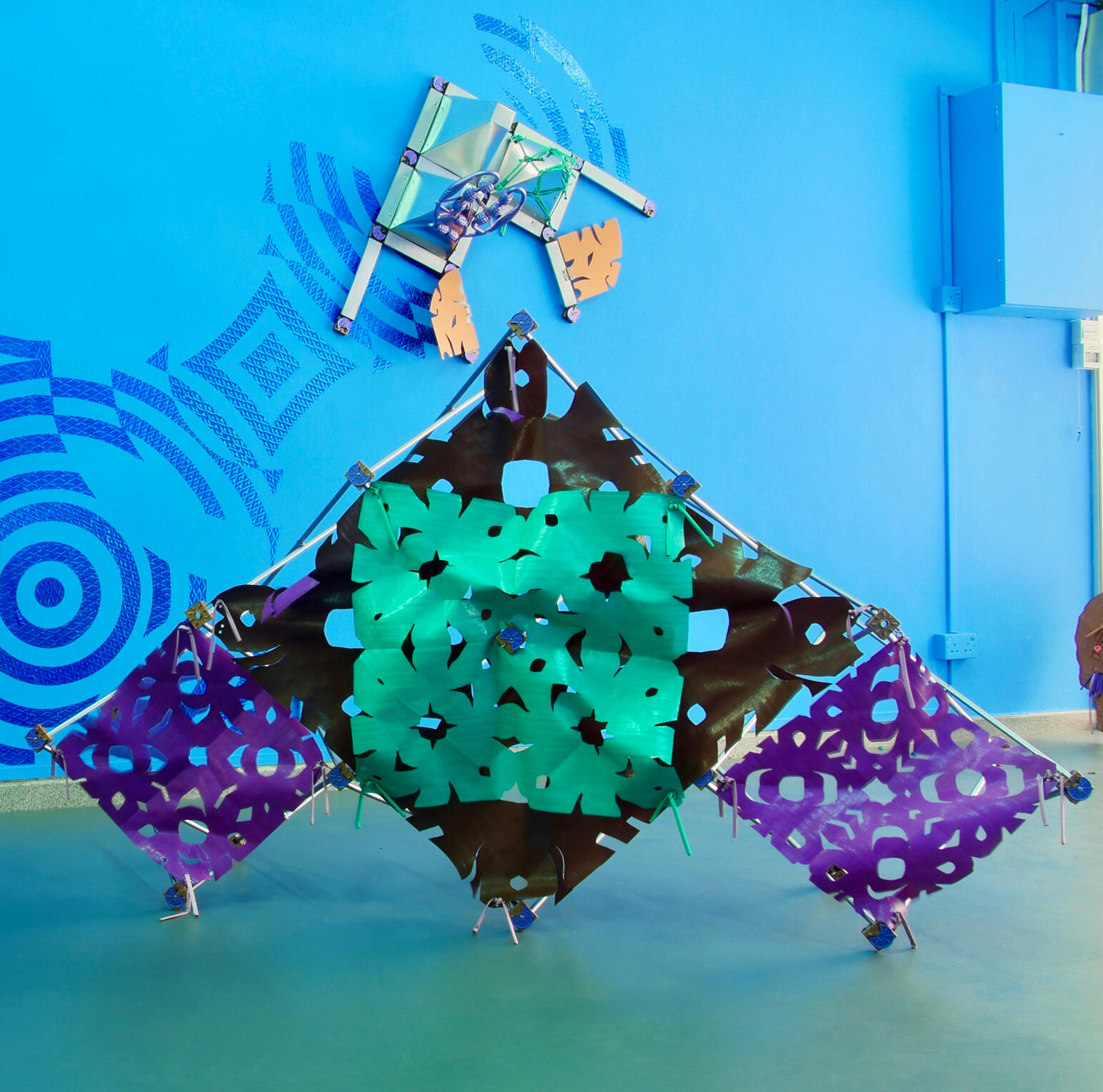
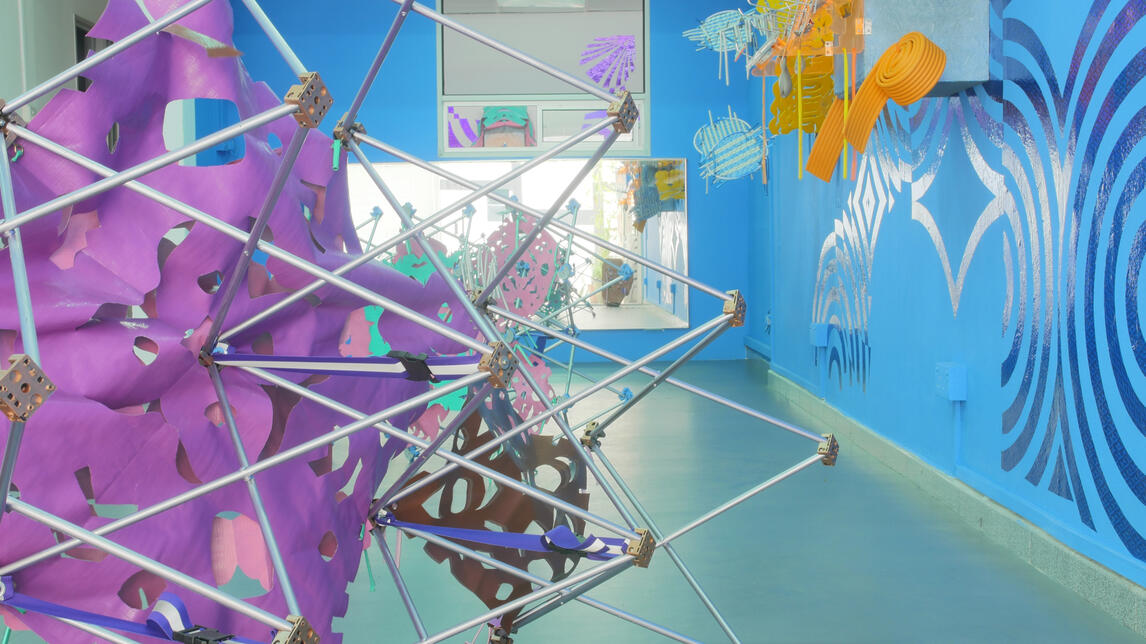
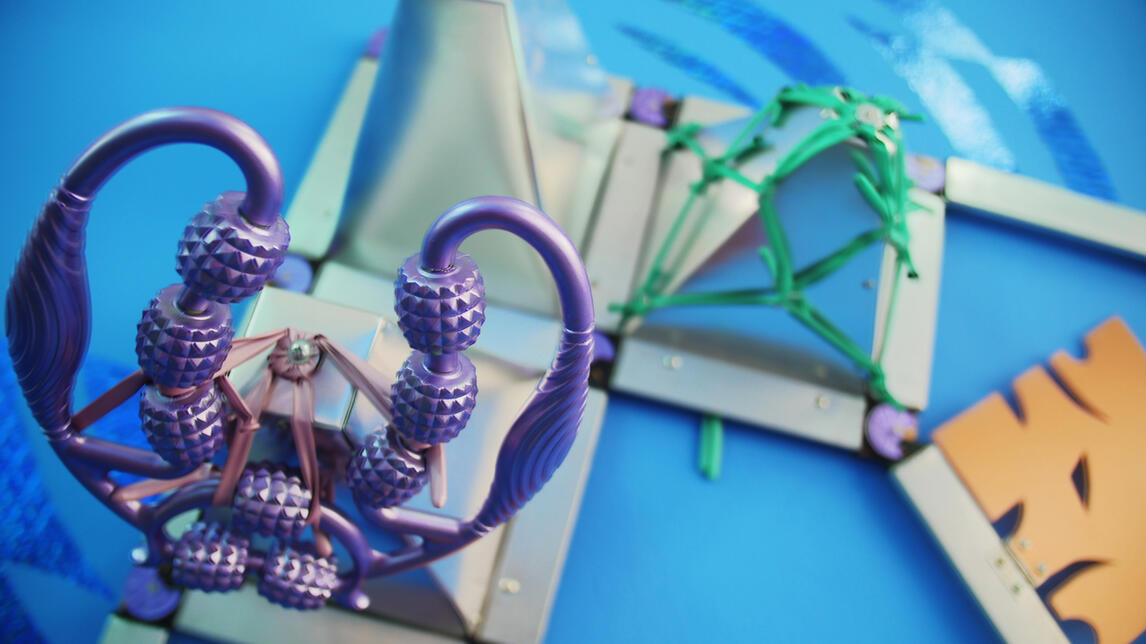
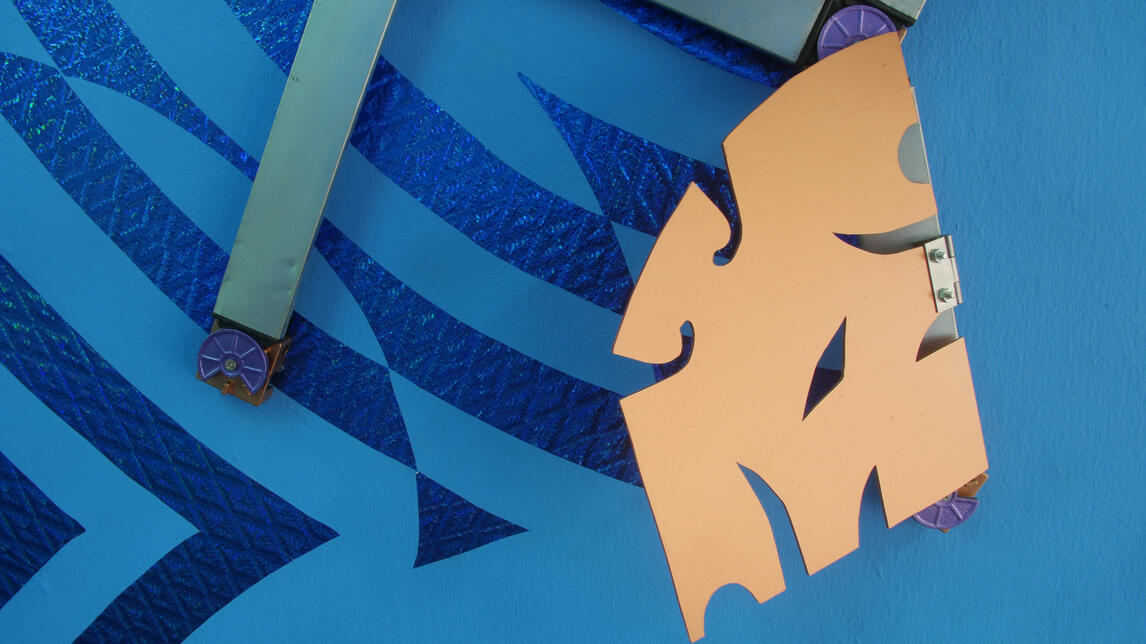
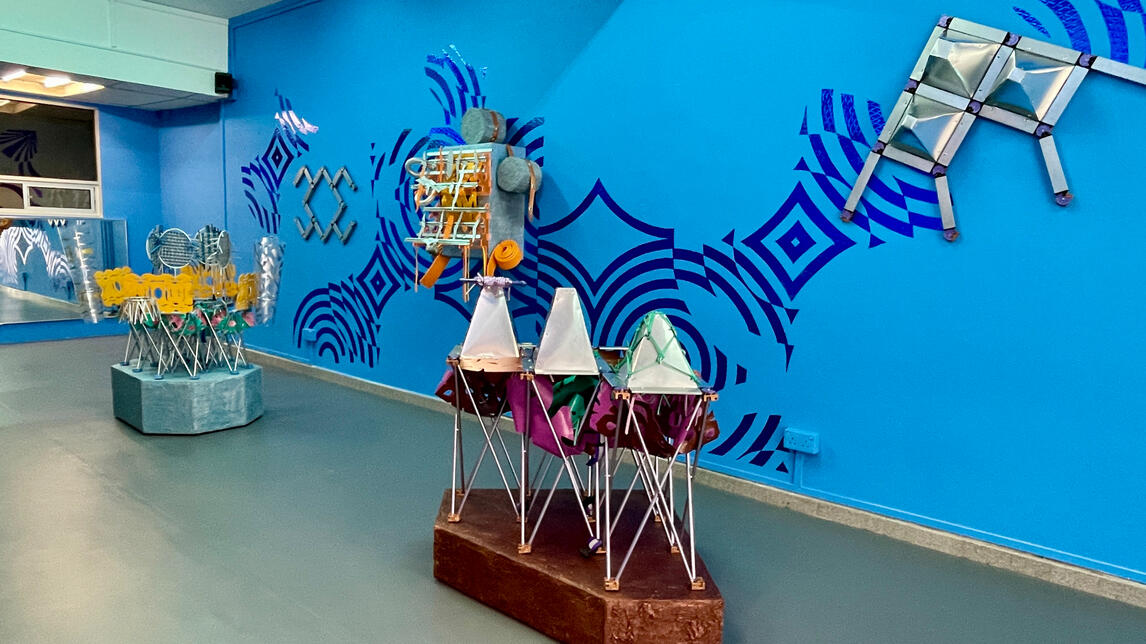
The Tuning Instrument No. 2 in Red Rock Jewel ValleyA series of modular, foldable sculptures exist as bodies in constant metamorphosis. Made from industrial elements such as latches, hinges, foldable legs, and casters, the pieces have removable parts that shift, detach, and recombine. They don’t hold a single form; instead, they fold, expand, and remain mutable, so their presence emerges through reconfiguration and interaction in space. More like living systems than finished objects, they renew and evolve over time, revealing new possibilities with each reconfiguration.
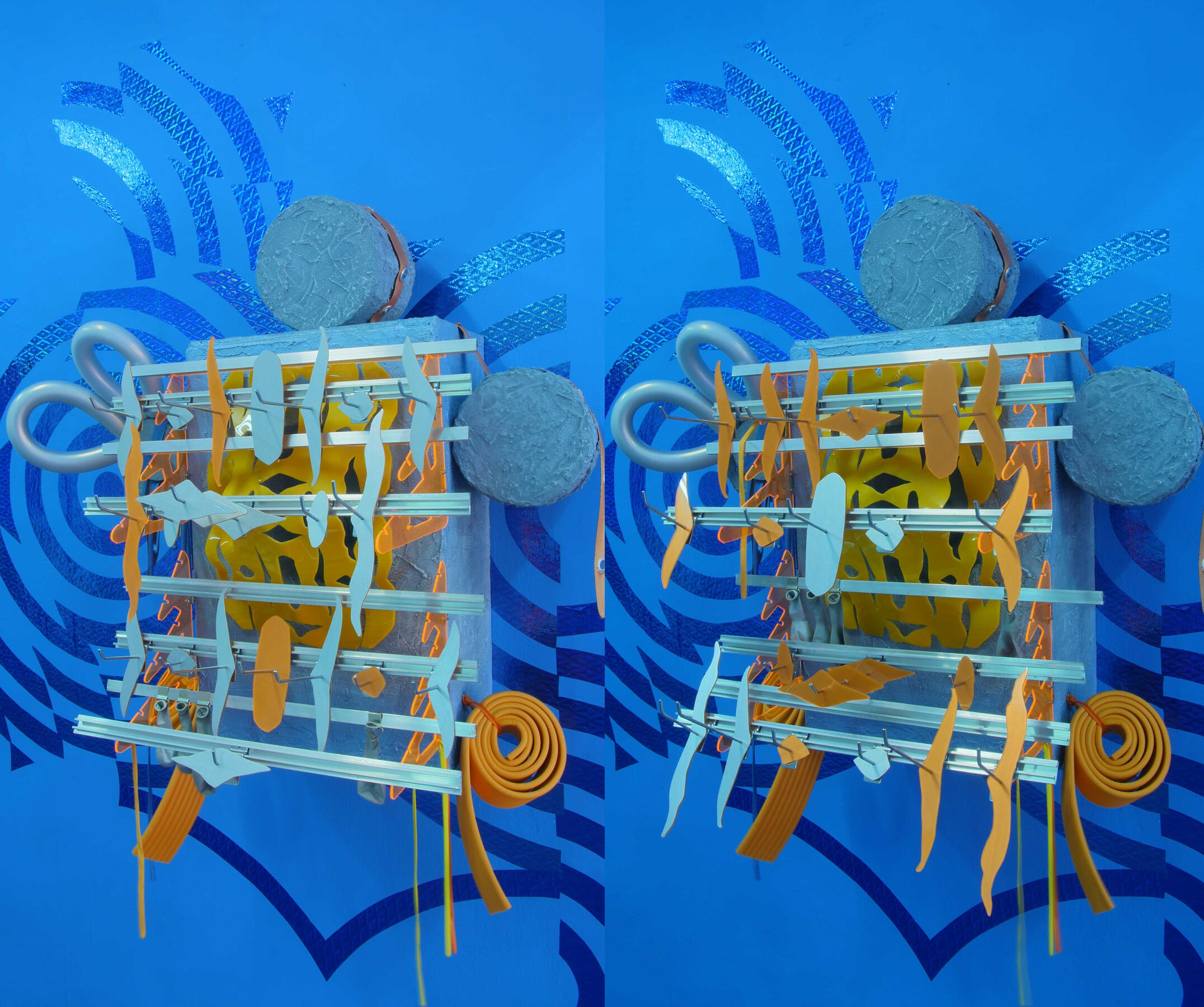
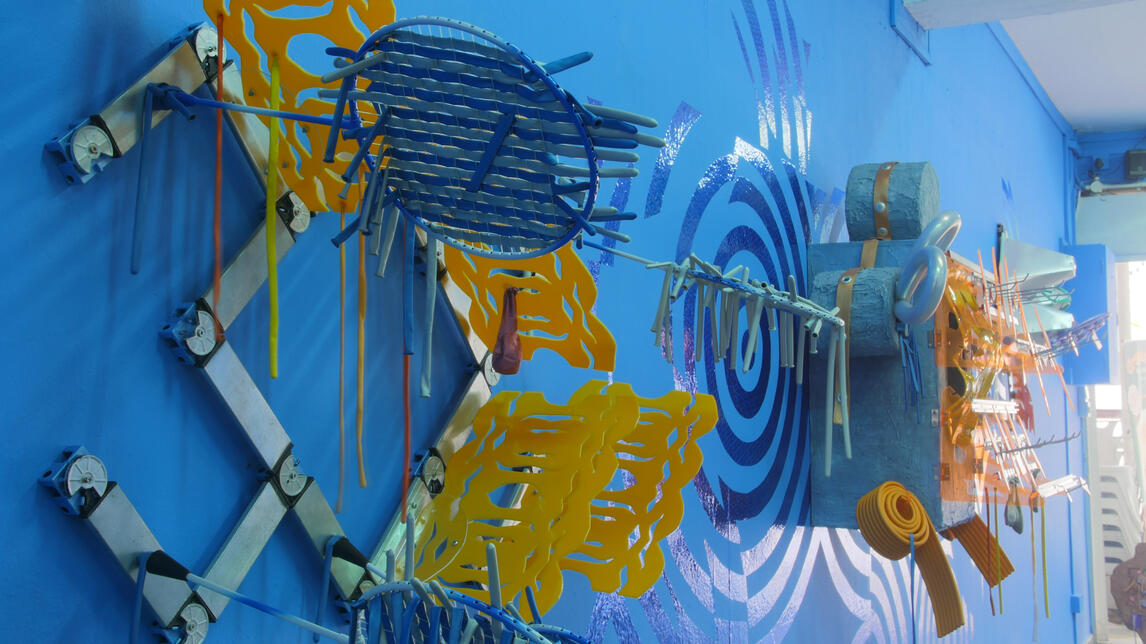
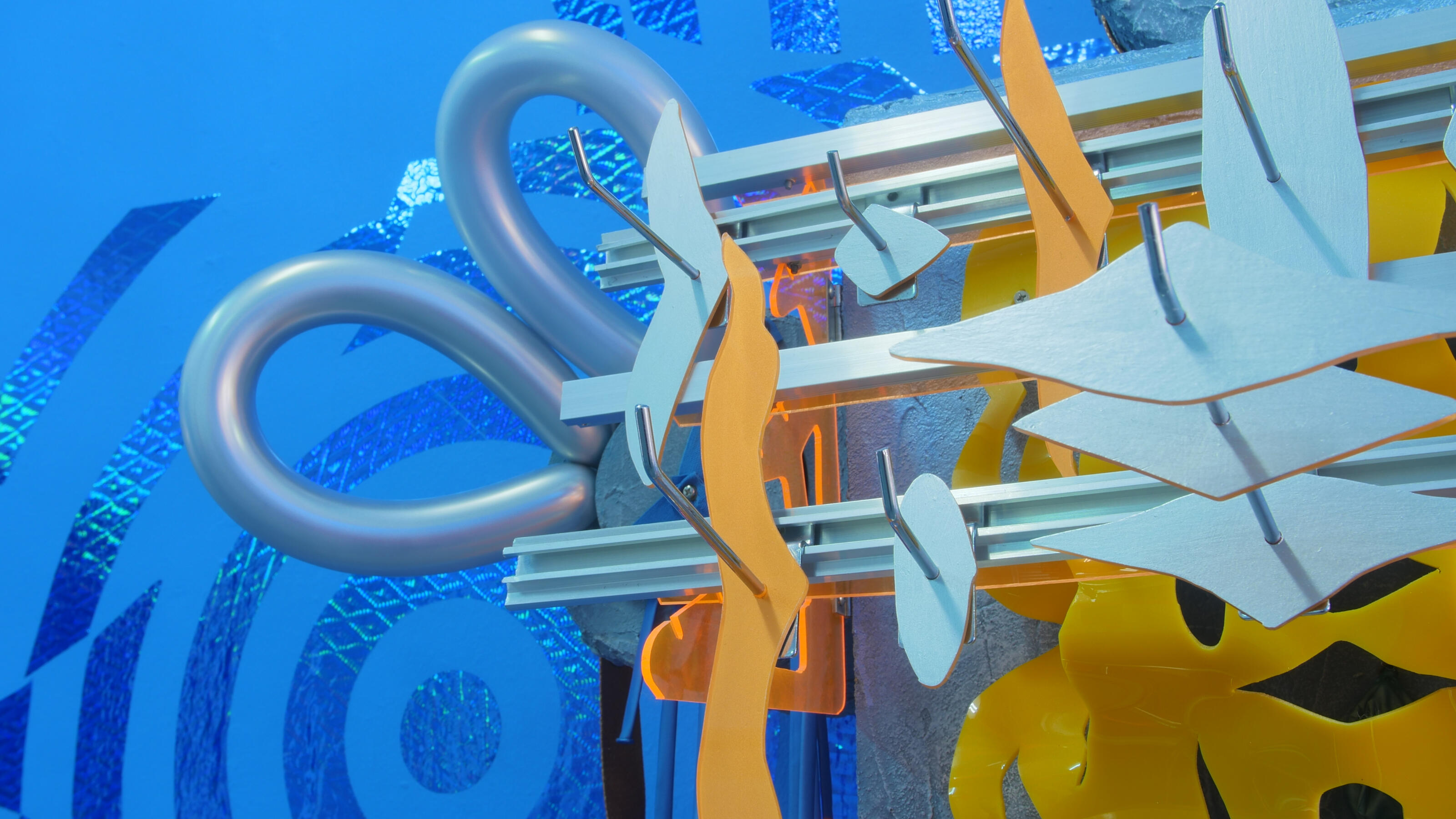
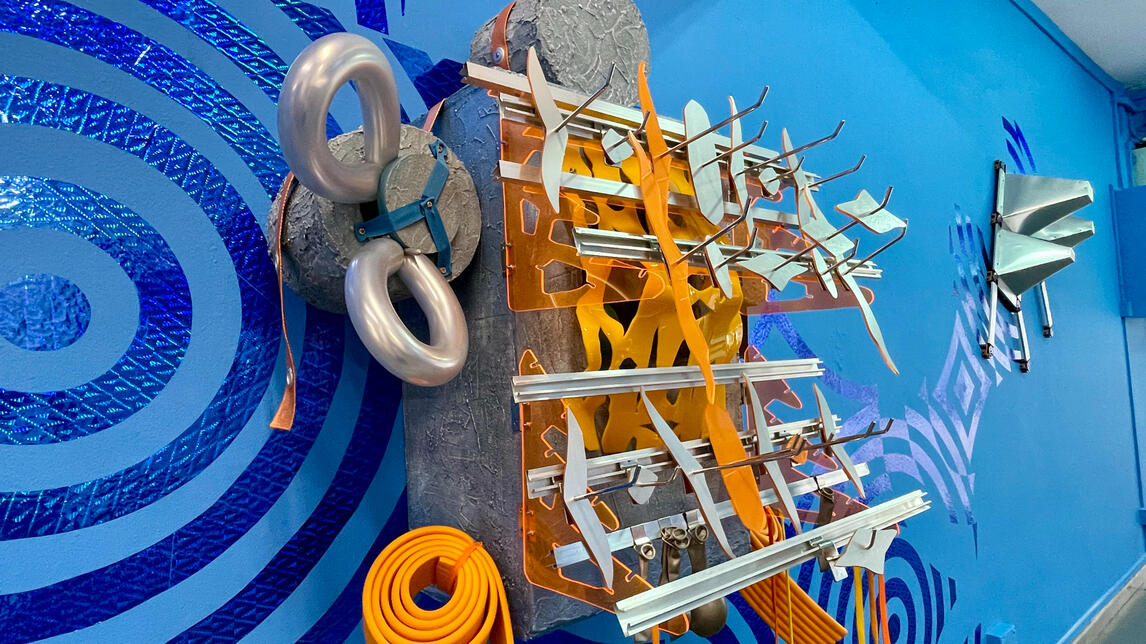
The Singing Instrument No. 1 in Postludium of DawnThe sculpture consists of a layered construction made from aluminum beams, hooks, and painted wooden cutouts, arranged in a rhythmic grid. Curved and diamond-shaped components are suspended across horizontal metal bars, creating a play of repetition and variation.The placement of different parts and pieces feels rhythmic, almost like a playful score written onto the sculpture. It’s kind of creating a play of repetition and variation. You might notice pattern recognition, like a sequence and coding.The work combines industrial materials and everyday objects and some are hand painted cutouts and fragments, suggesting both construction and deconstruction. I enjoy when the work becomes mercurial, When viewed from different angles, they reveals shifting alignments. at times orderly, at times chaotic.
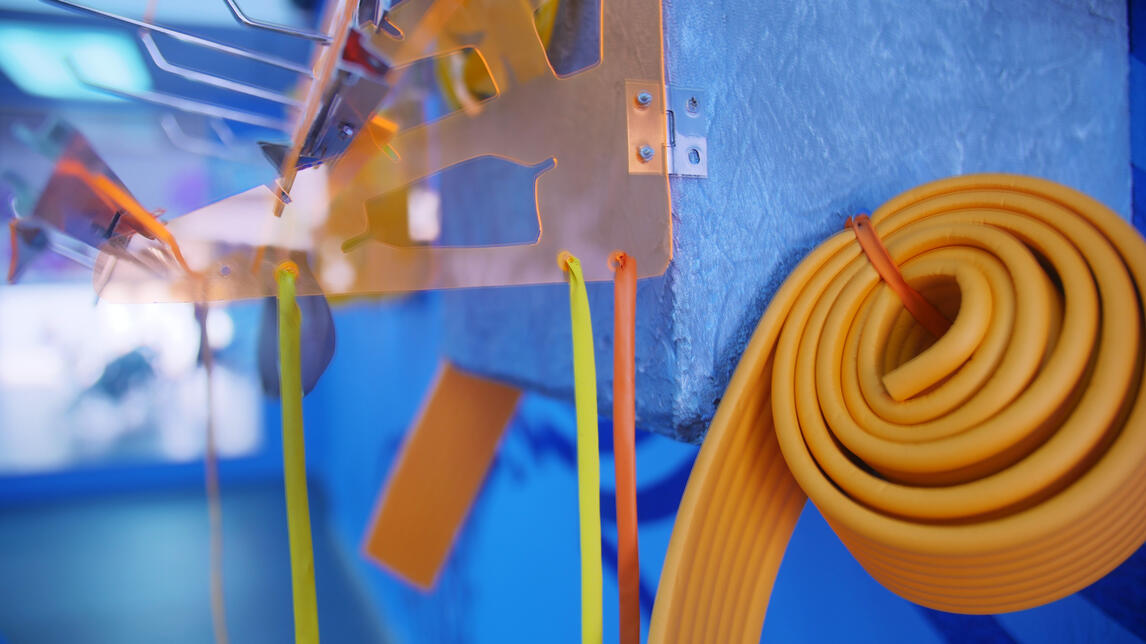
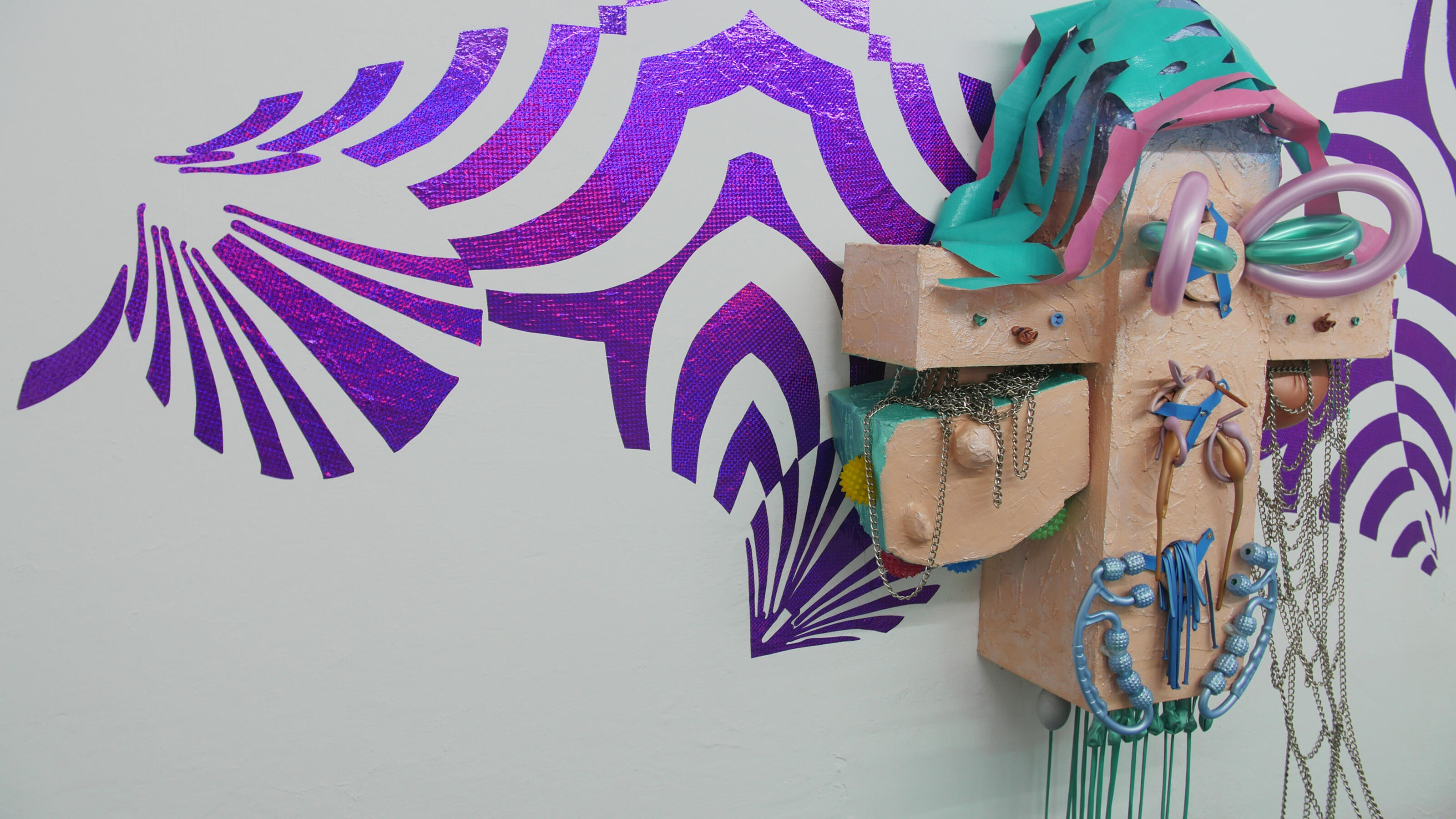
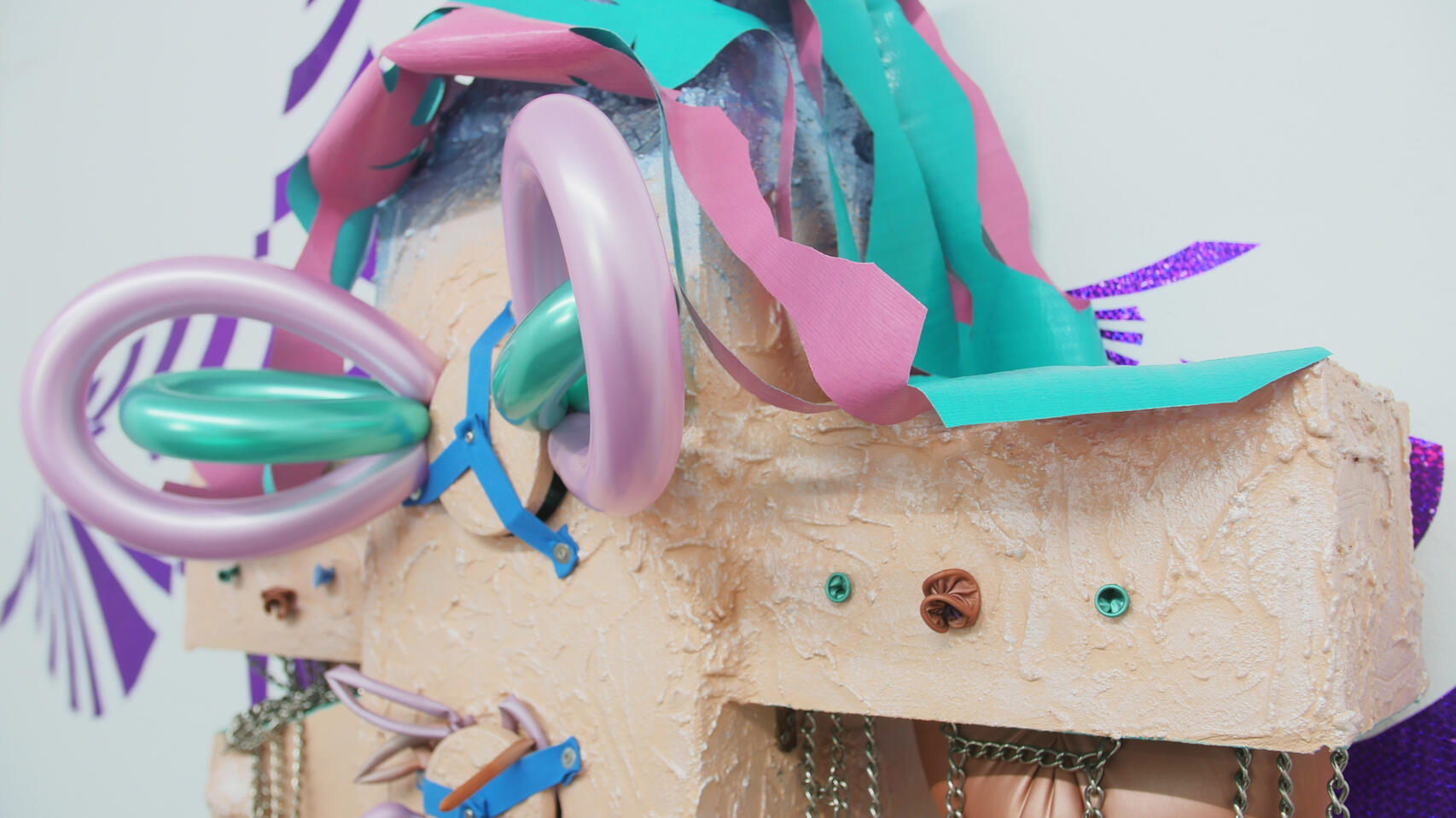
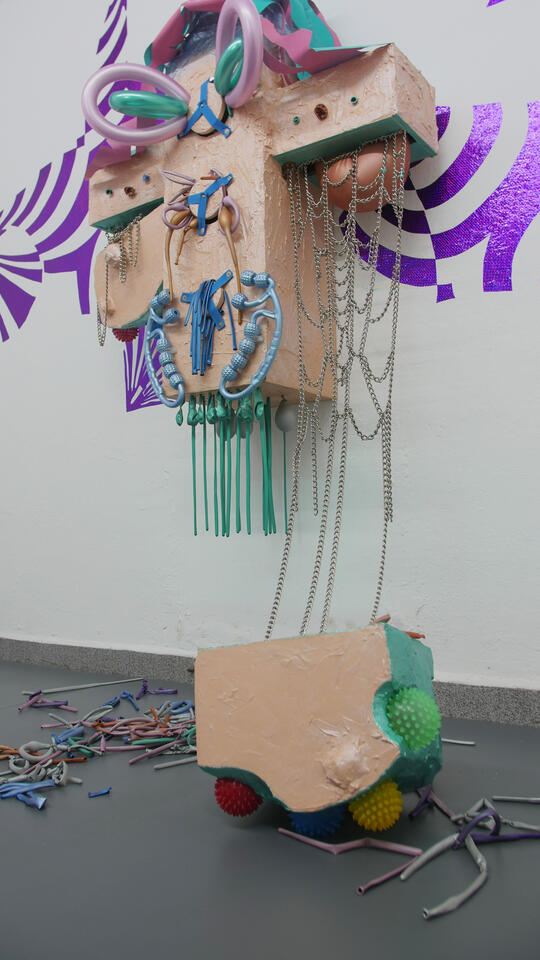
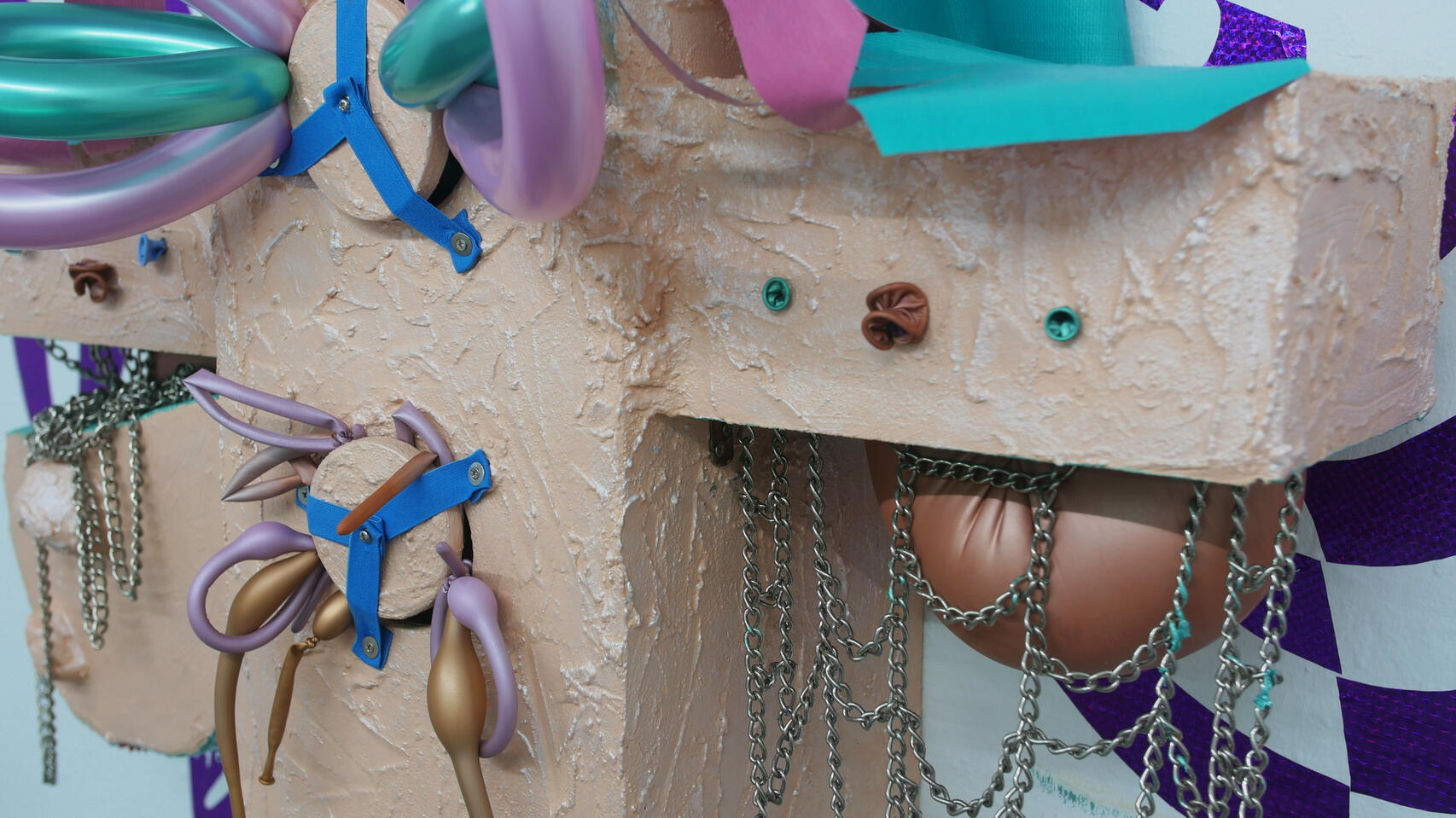
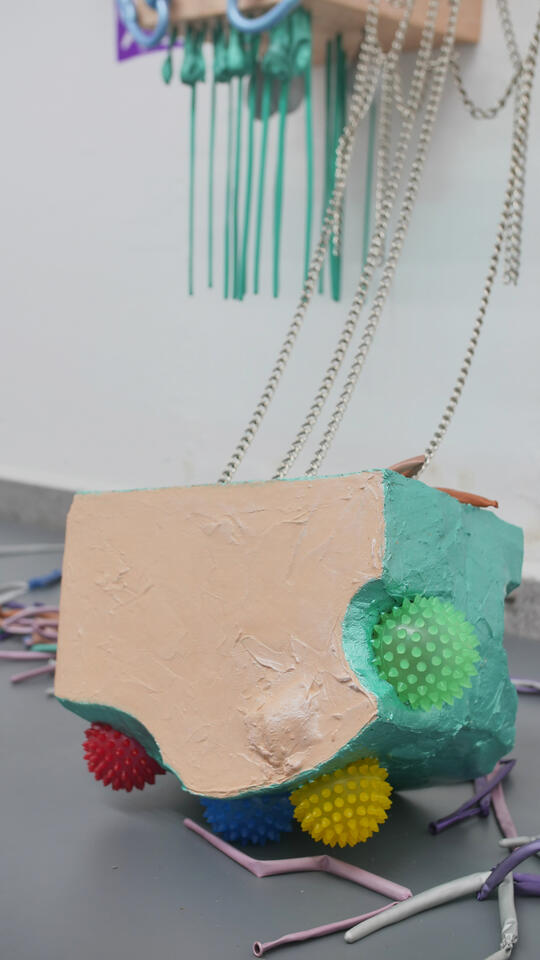
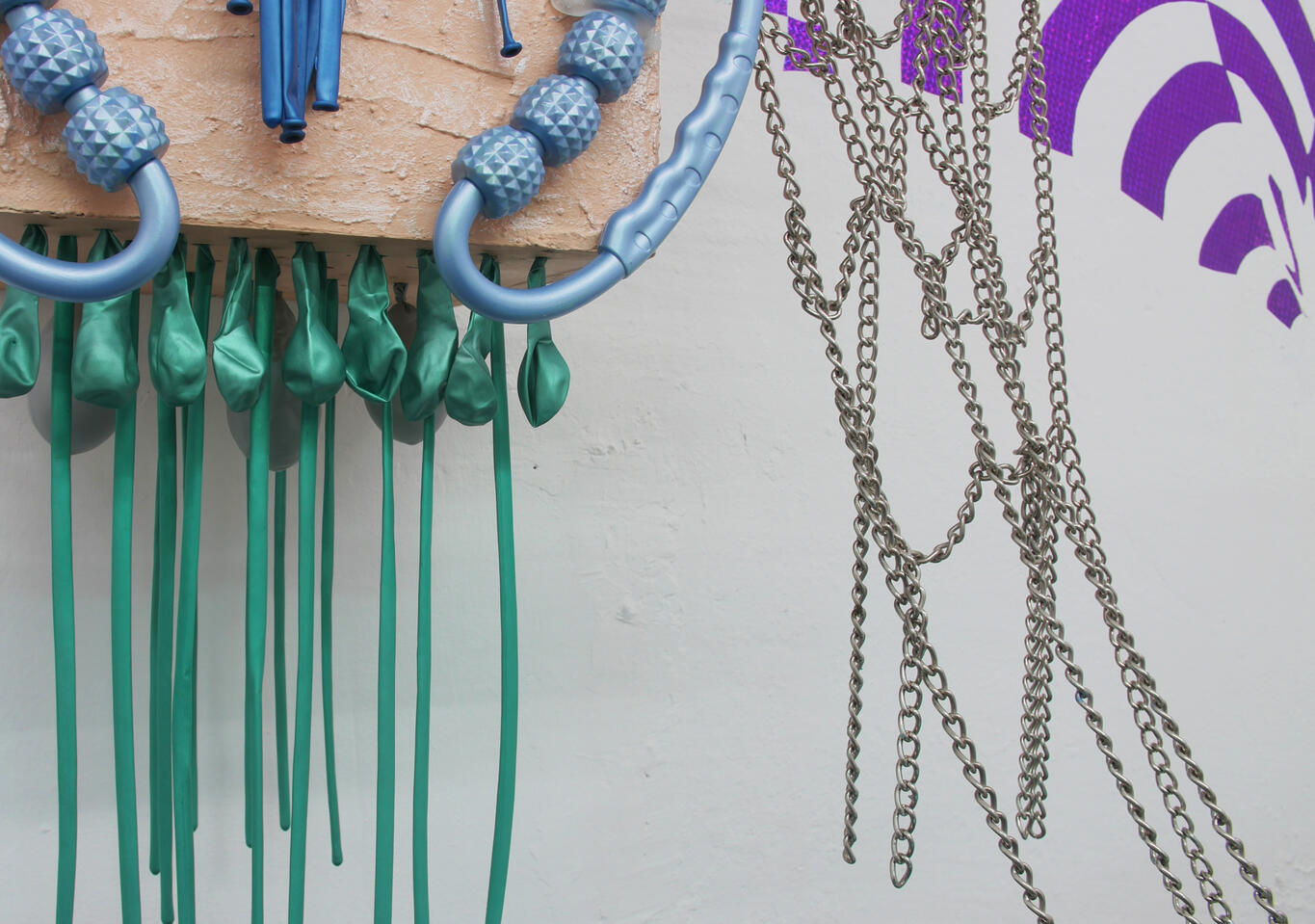
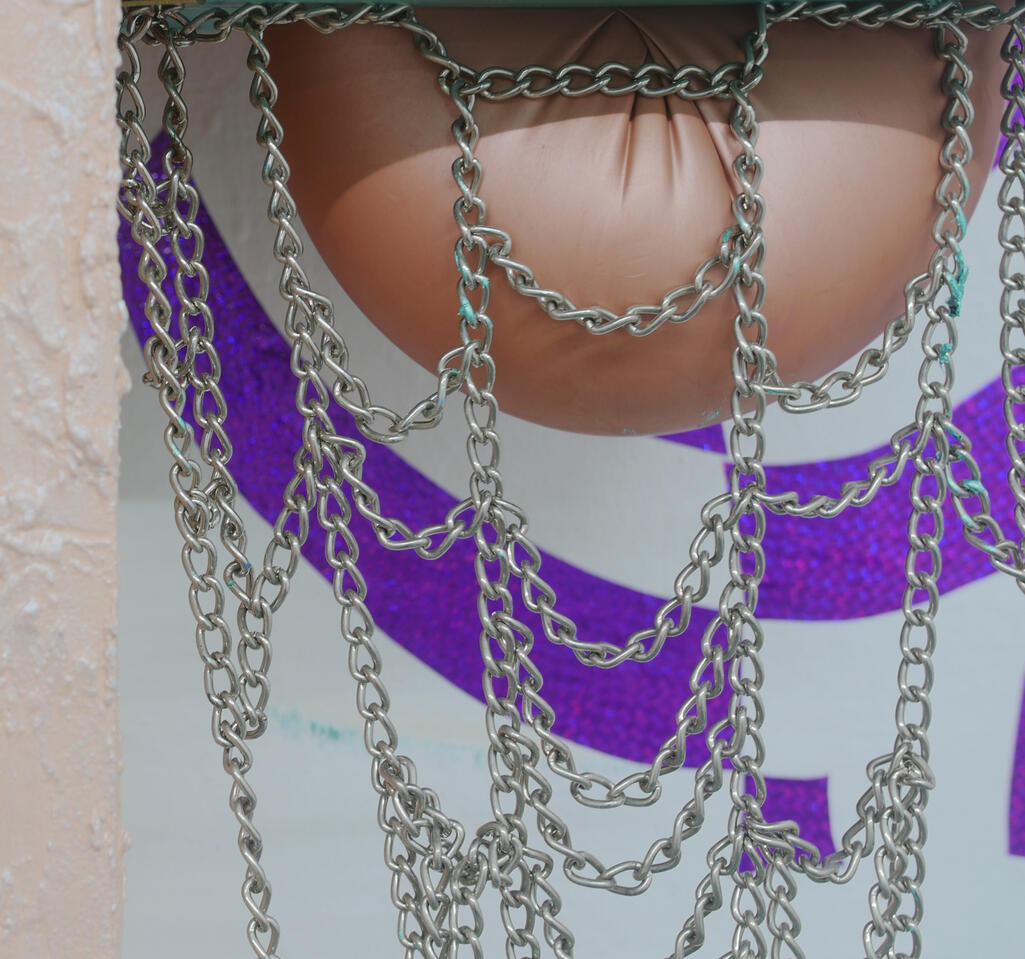
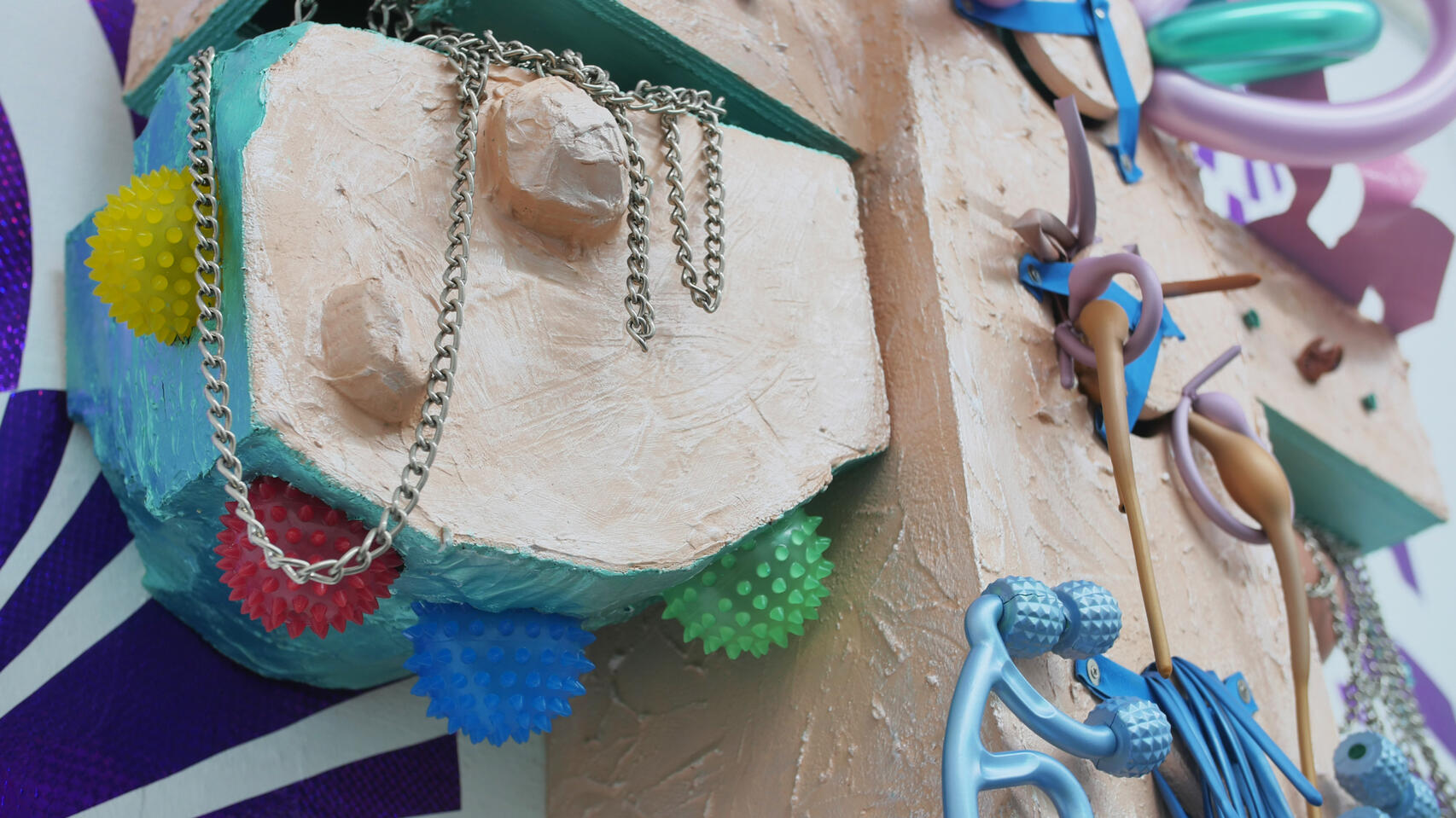
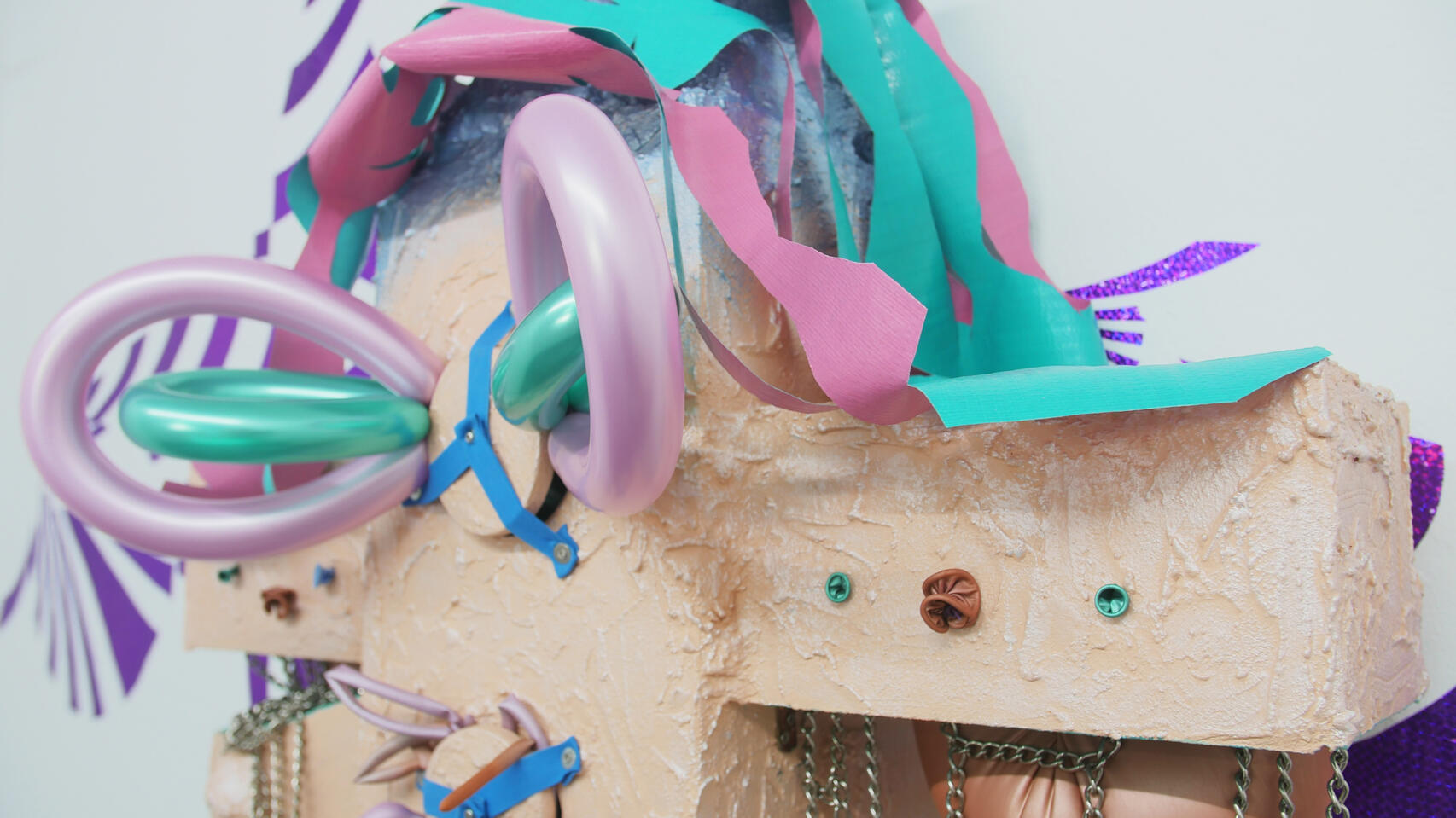
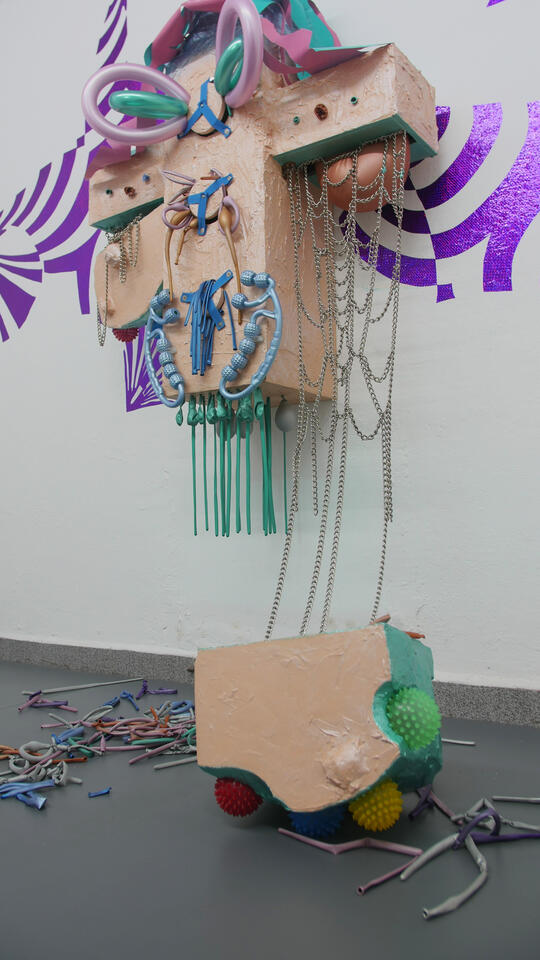
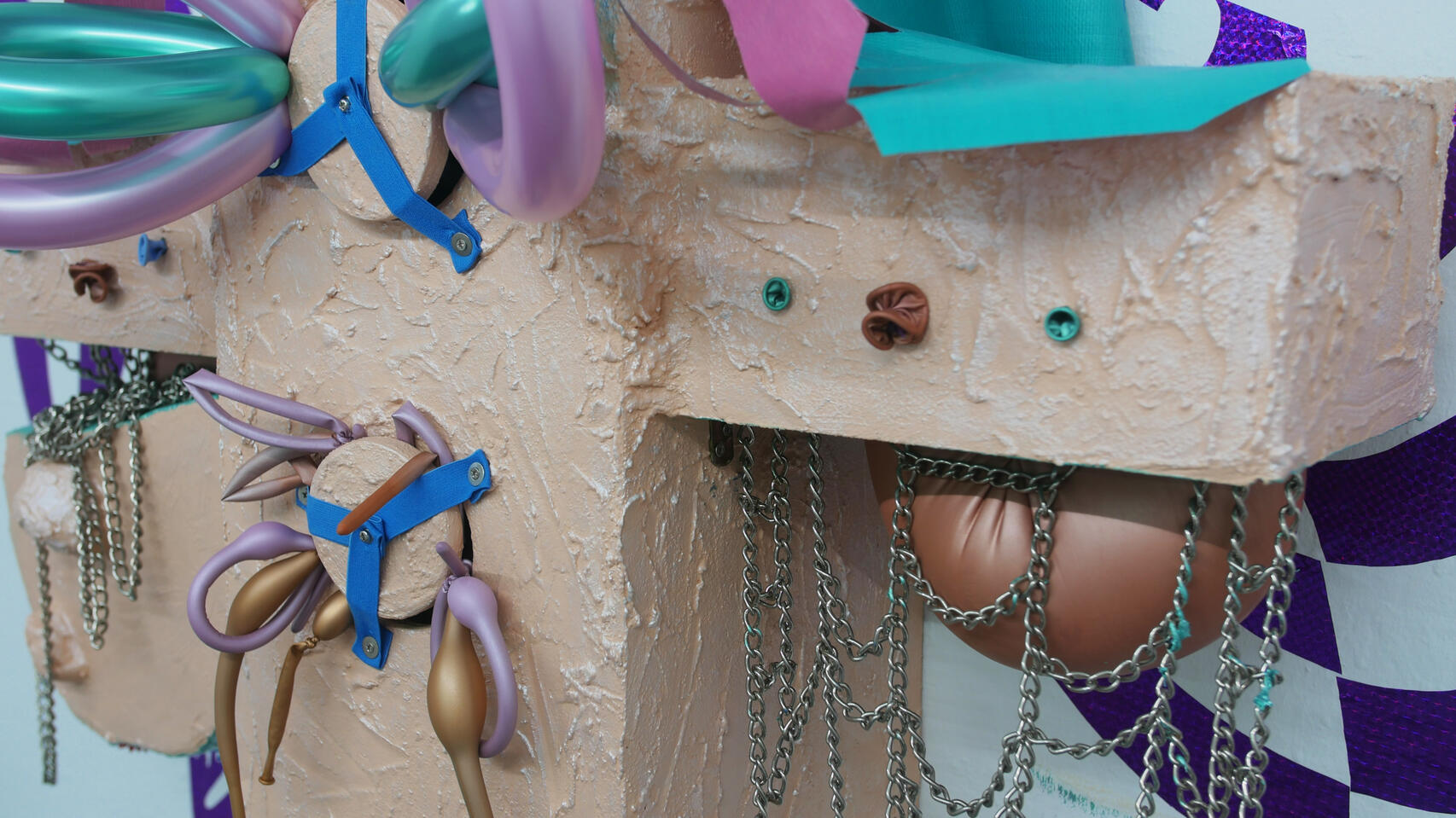
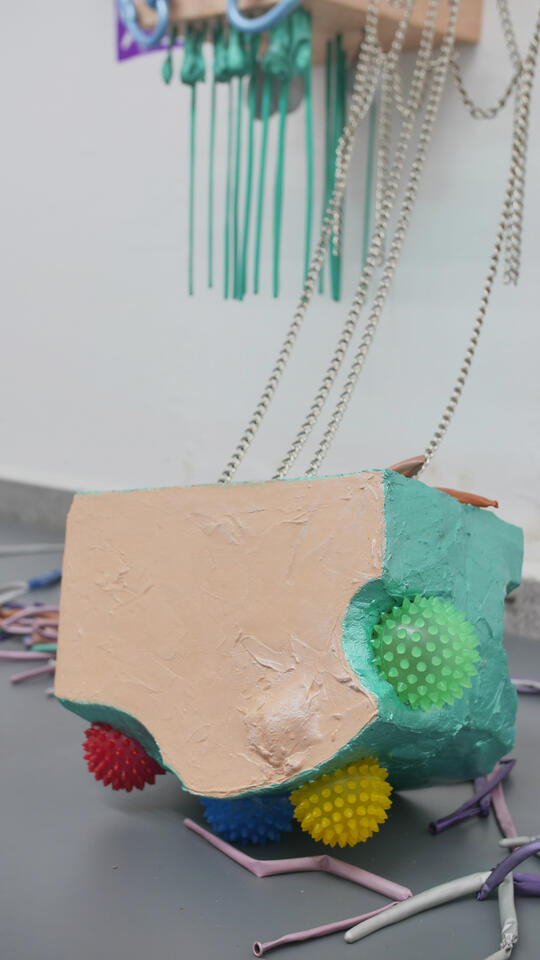
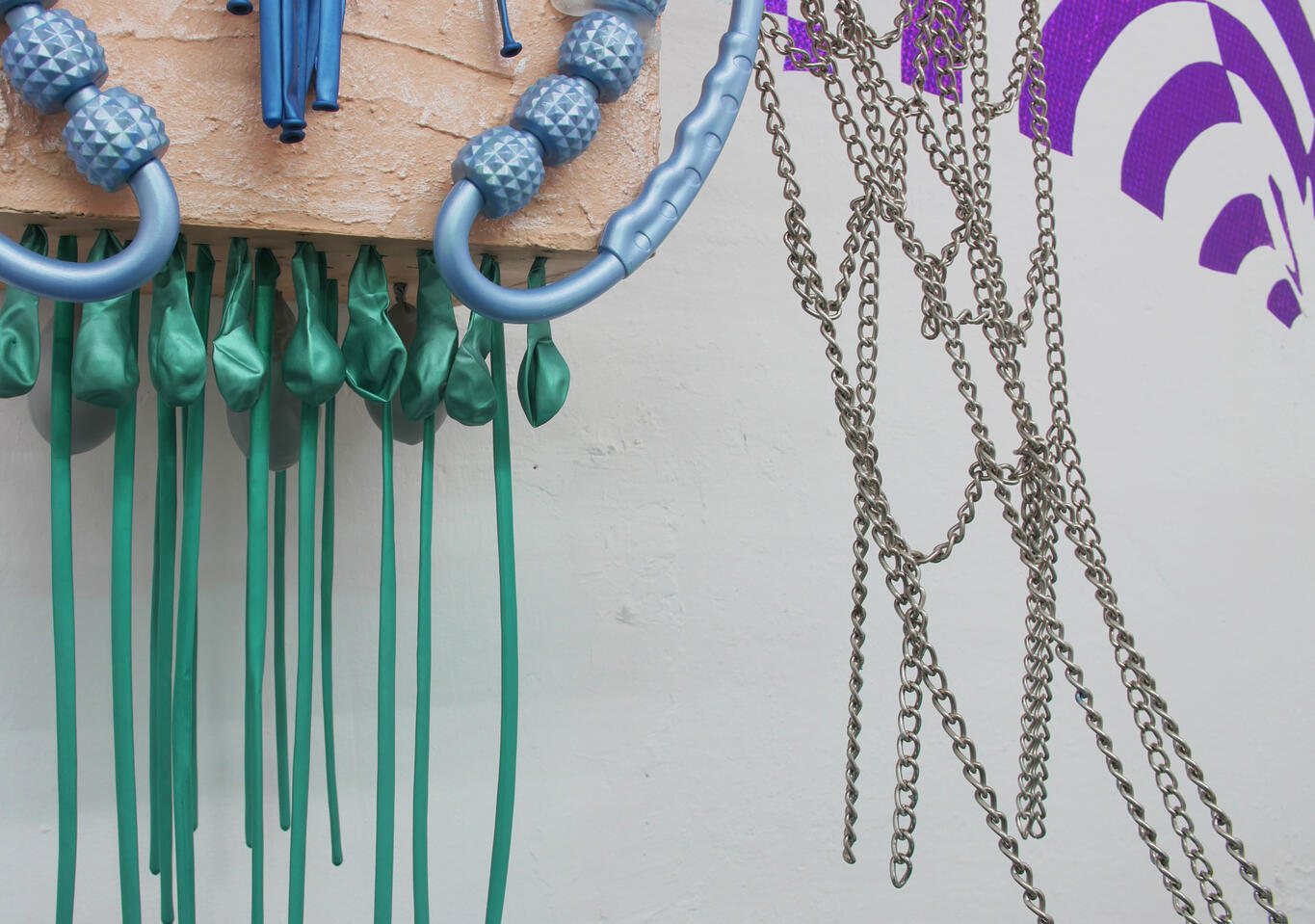
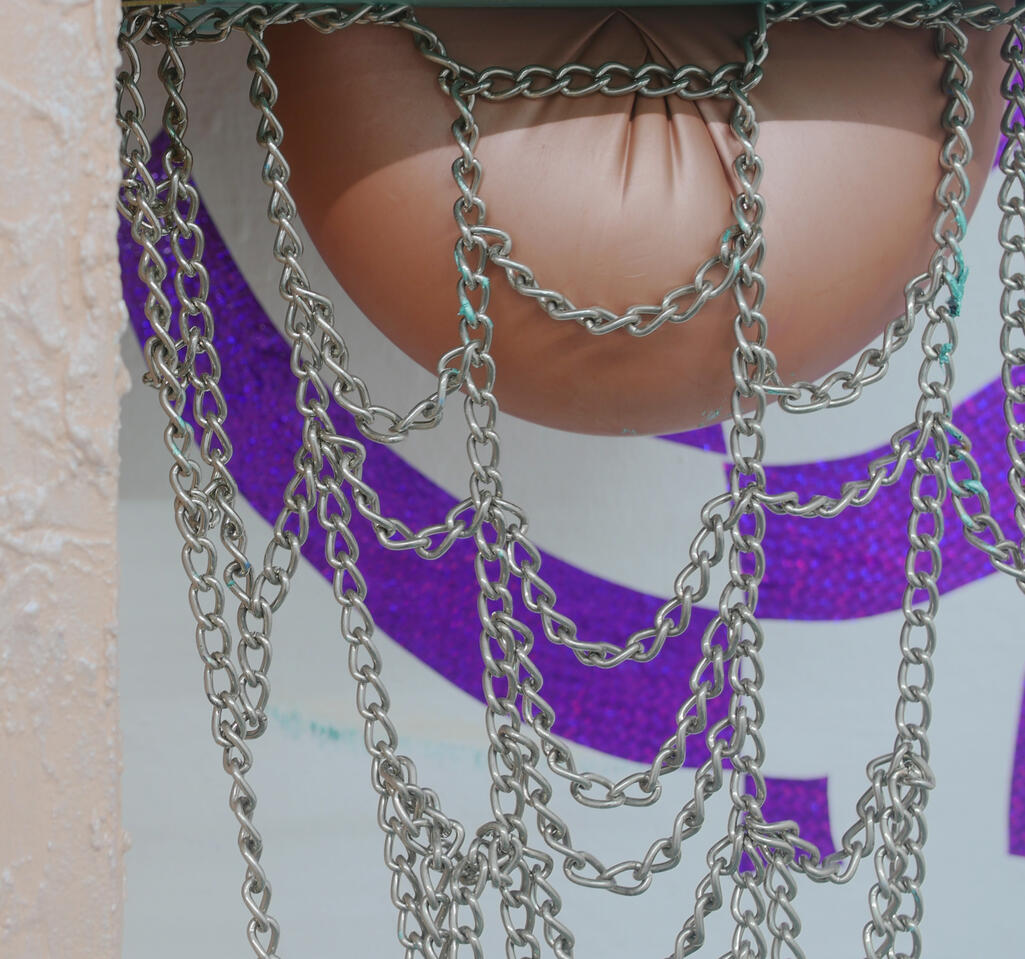
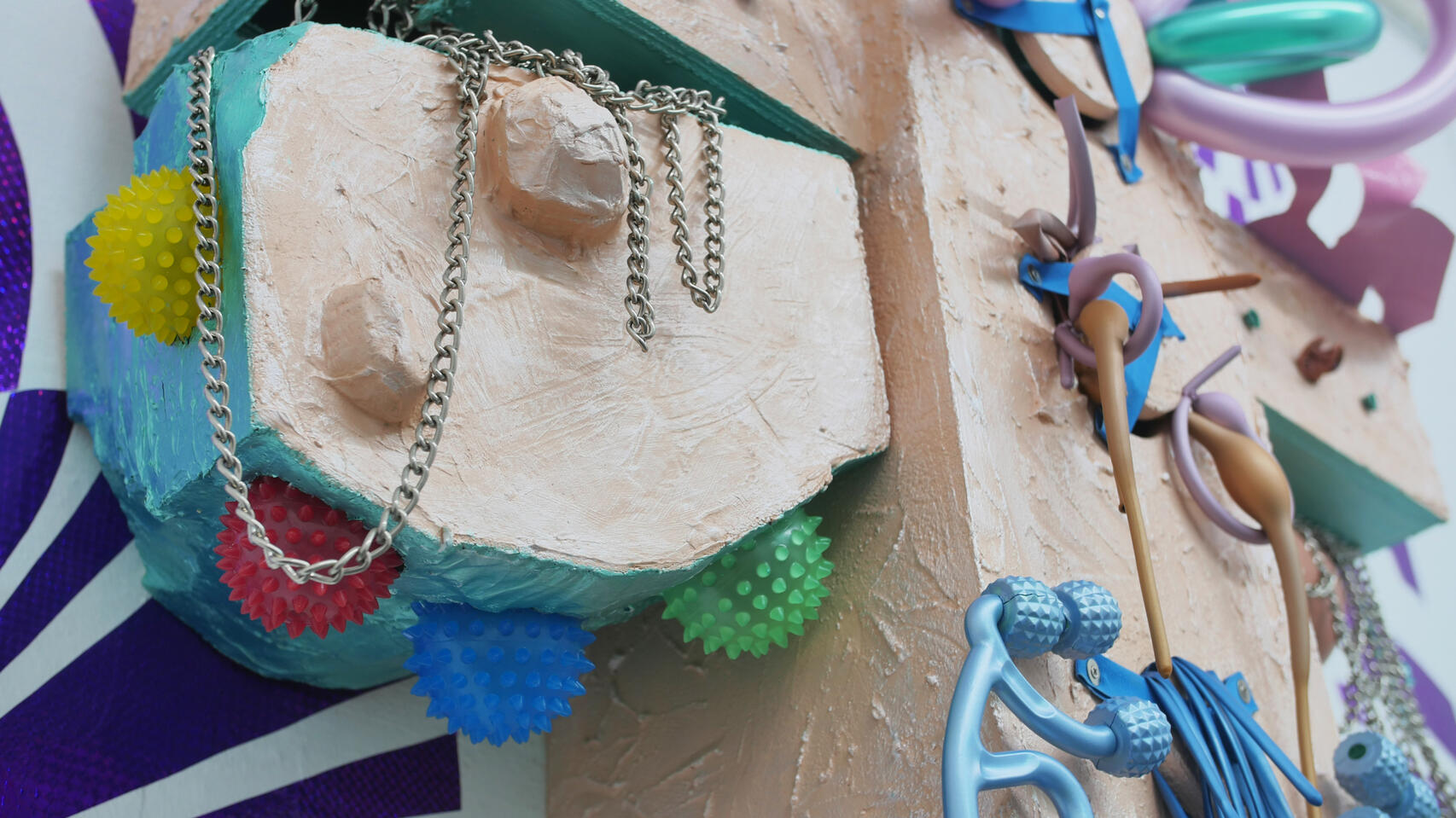
Glue Your Eyelids TogetherThis time-based sculpture is built from stone-like blocks with hollowed cavities, inspired by seeds and fruits, vessels of latent energy. Balloons, arranged like petals and held by elastic straps and chains, press into these openings to hold the form in place.As the balloons slowly deflate, the balance shifts. Fragments settle back into their hollows, like a puzzle closing in on itself. Some parts give way and crumble, still tethered by knitted chains that feel like exposed nerves. There is a sense of an unseen force moving within the sculpture.The work holds and undoes itself at the same time. Watching it, there is something strangely liberating. The slow collapse becomes a physical, visceral process that draws the viewer in, where destruction and transformation unfold together. Replacing the balloons becomes a simple cycle that keeps the work alive and evolving, activating a continuous metamorphosis.
The Falling Note (adagio)
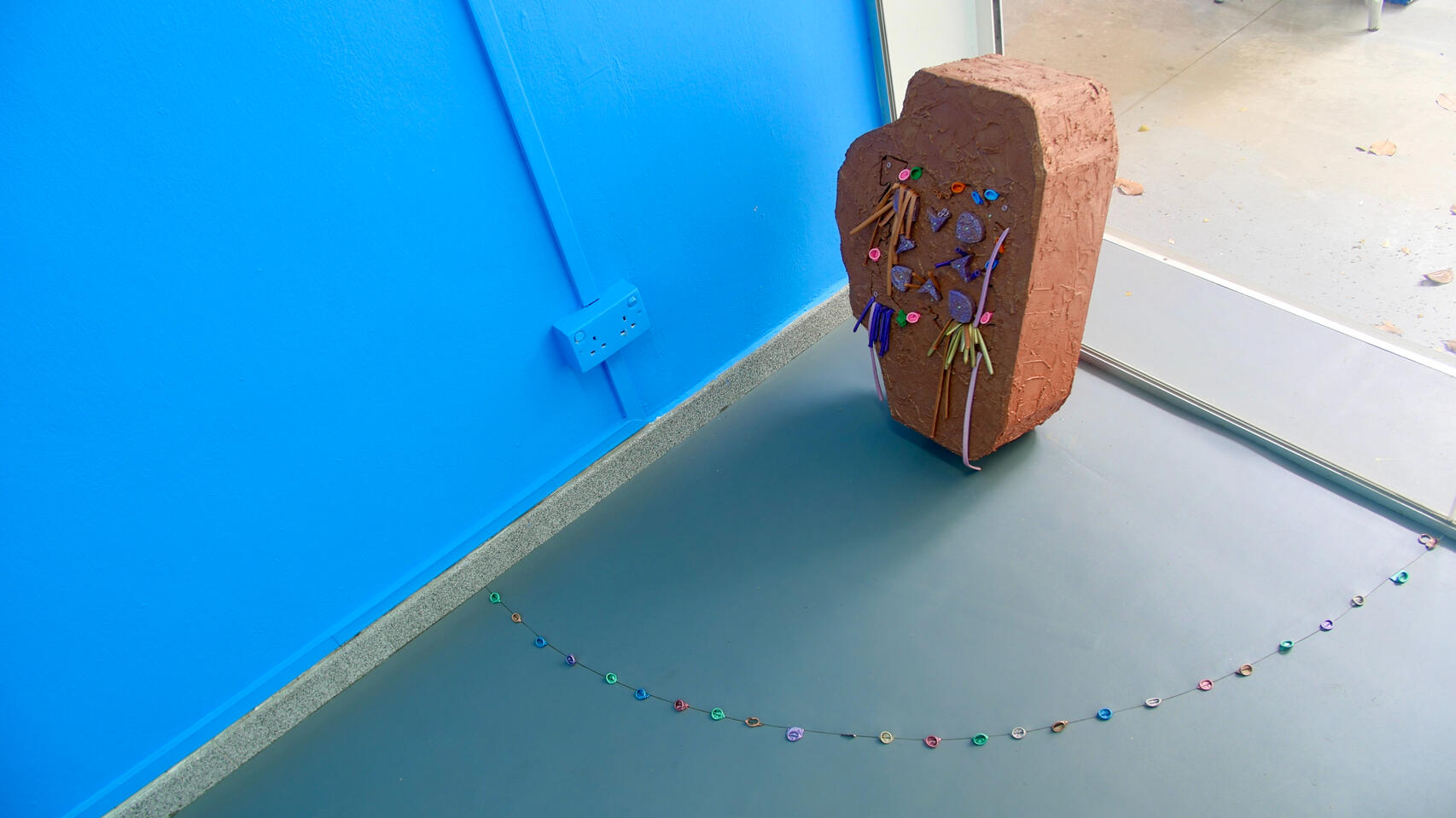
The sculpture is a textured, irregular slab with a rough, earthen surface painted in a deep terracotta tone. Embedded within it are triangular and rounded sculptural forms, painted in metallic purple, which protrude slightly like fragments of a hidden structure. Around the edges, colorful deflated balloons and long balloon strips are attached, cascade down like tendrils or eyelashes.The triangular and round fragments embedded in the surface suggest symbols or seeds, carrying memory and energy. The balloons, by contrast, are like organs or extensions, soft, provisional, and vulnerable. The work combines industrial and playful materials, from hardened surfaces to fragile latex.
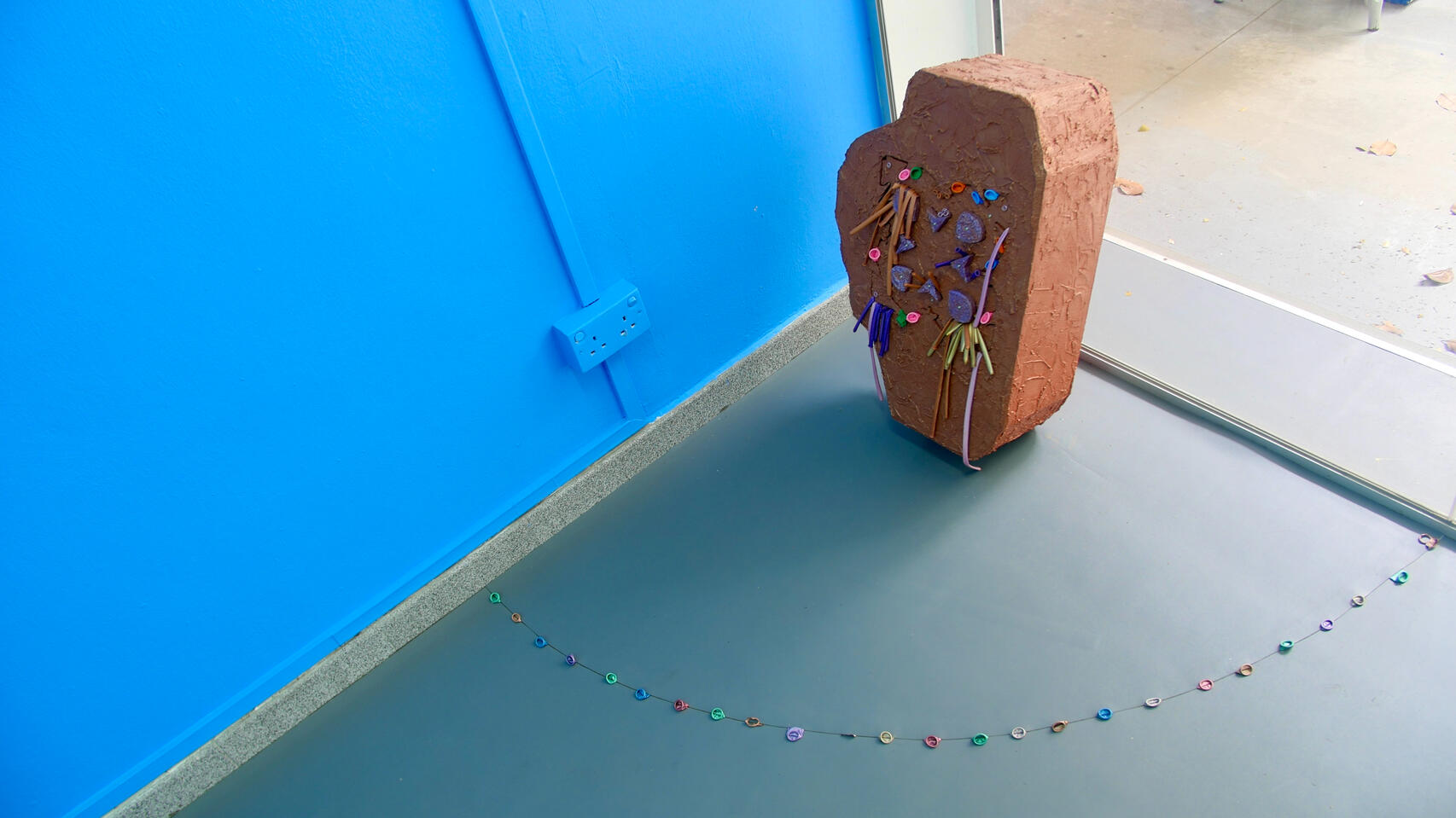
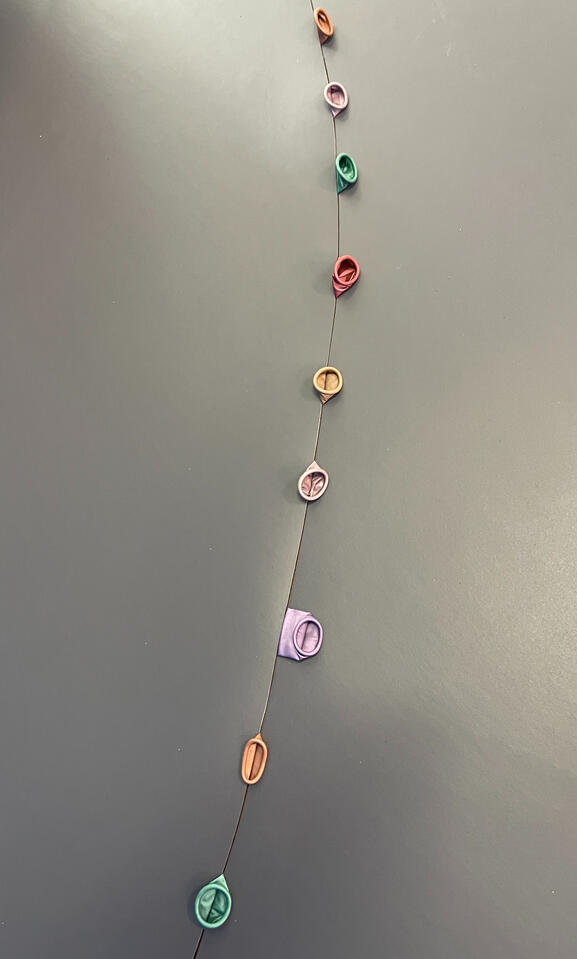
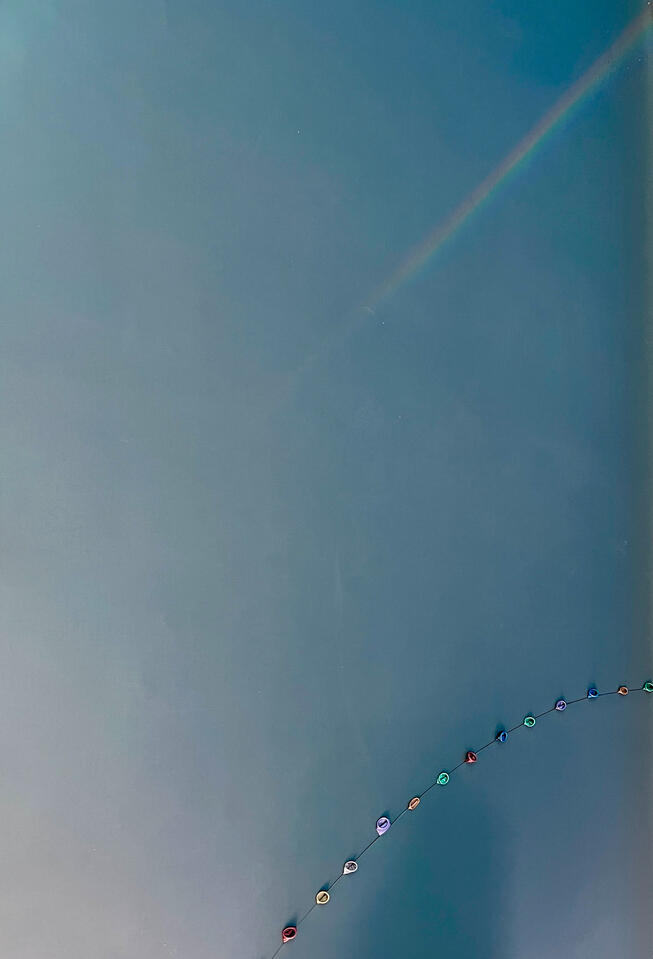
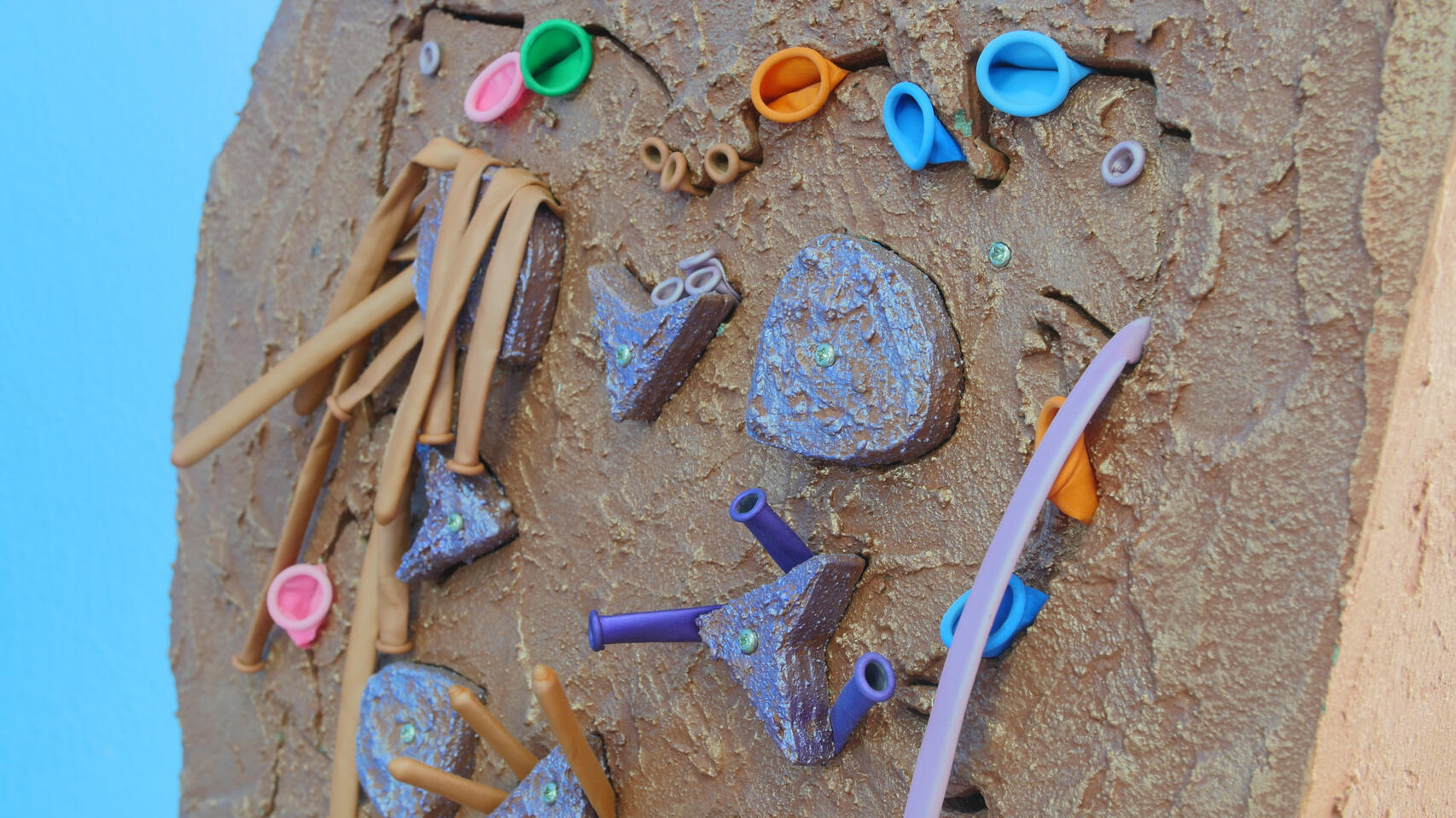
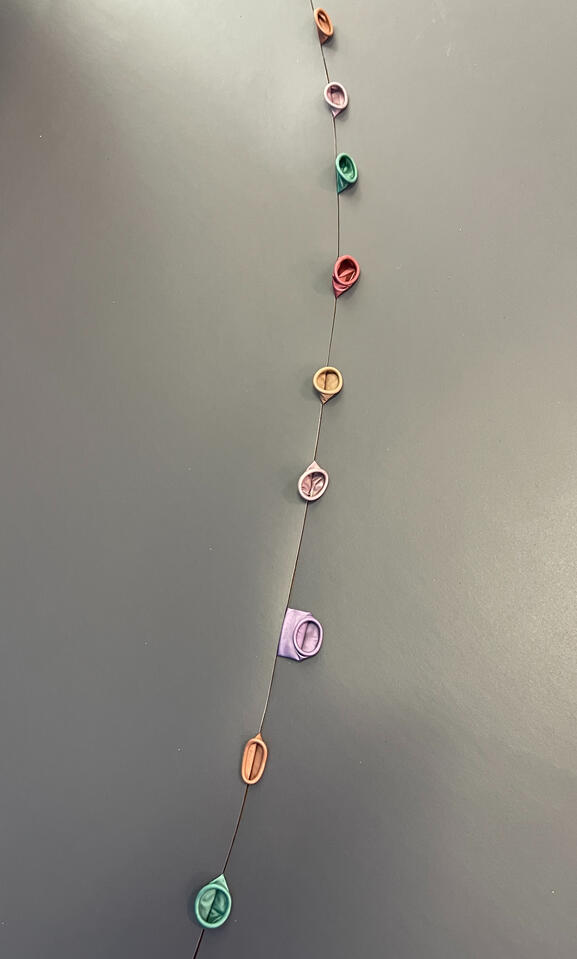
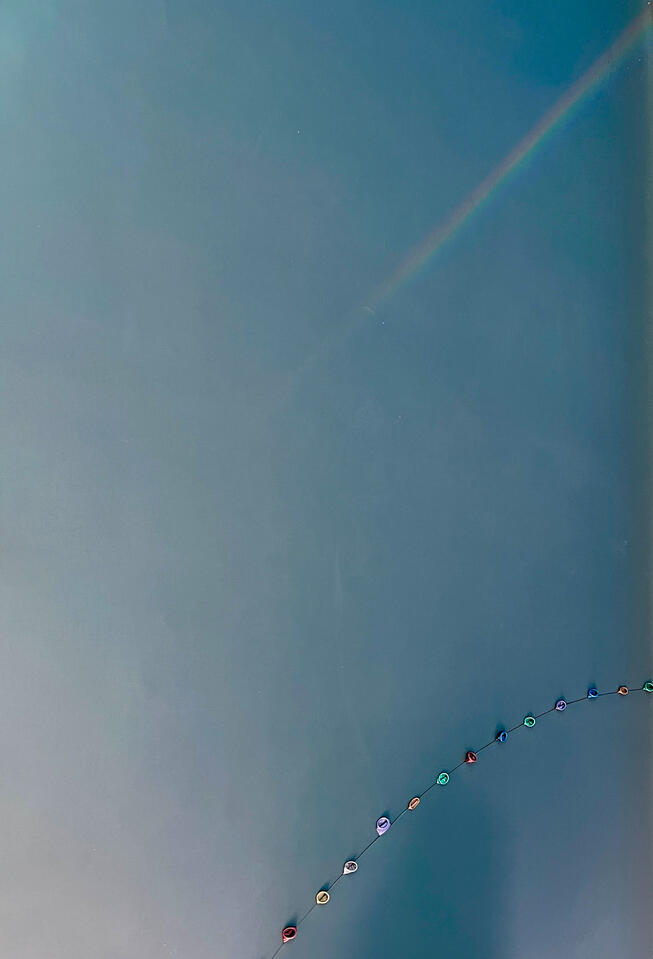
On a sunny day, a reflected spectrum from a nearby glass door cast a fleeting rainbow onto the floor beside the sculpture. This moment suggested an extension of the work. I created a curved line encircling the sculpture, formed by arranged balloons across the vinyl floor, like a fallen rainbow settling into the space.They also suggest a form of musical notation, a playful score written directly onto the sculpture. Their placement feels rhythmic, as though the surface itself were vibrating with sound.
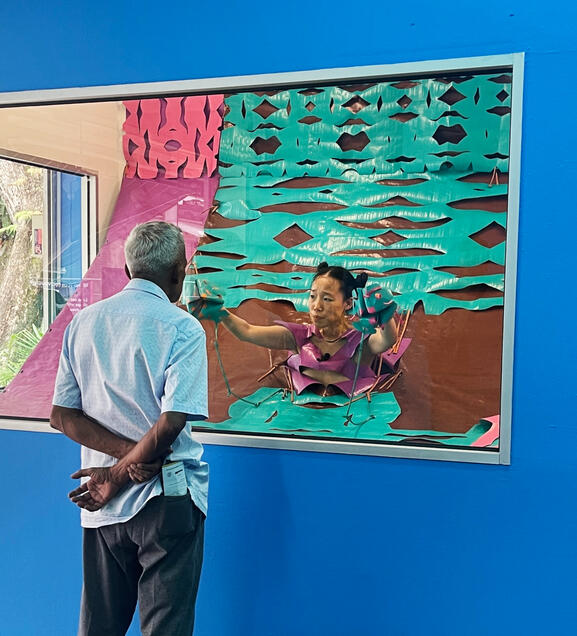
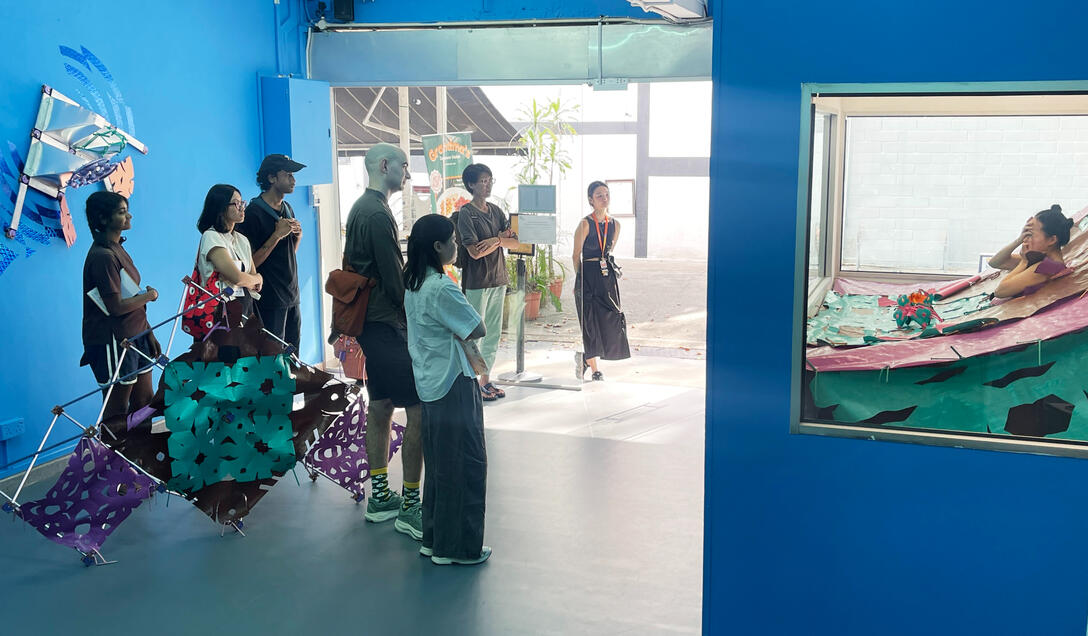
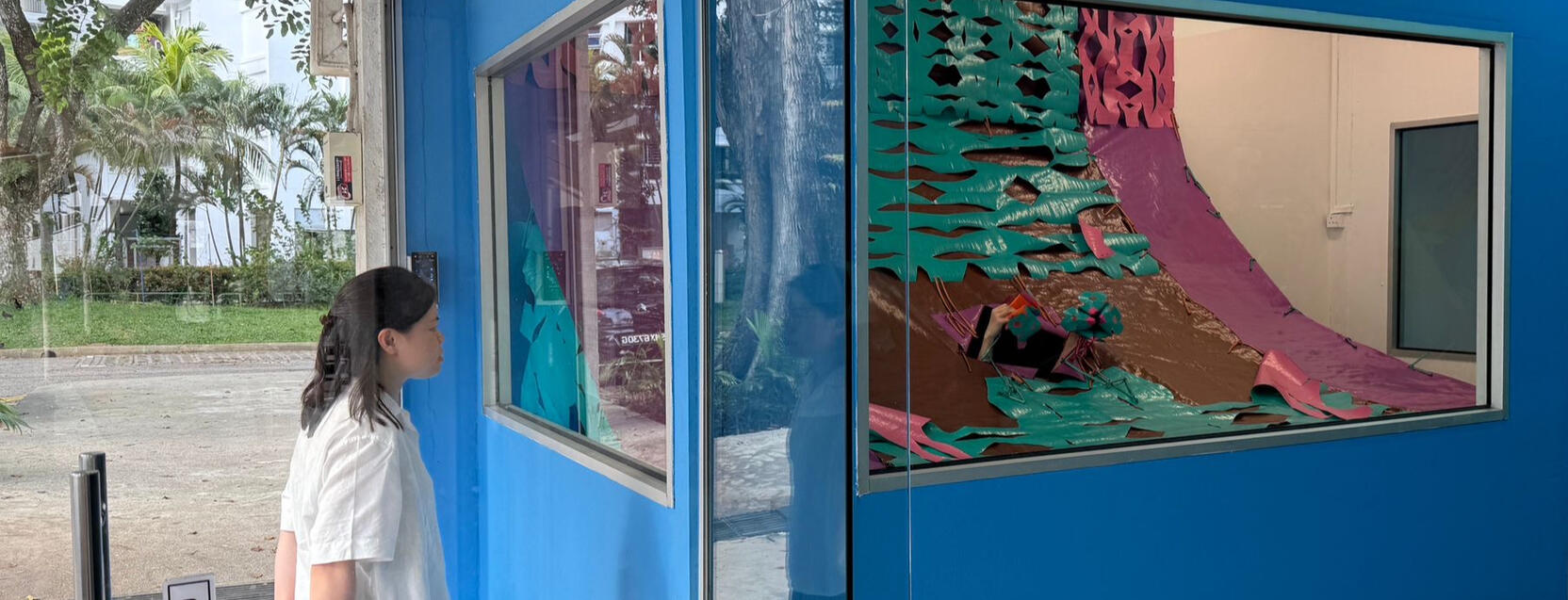
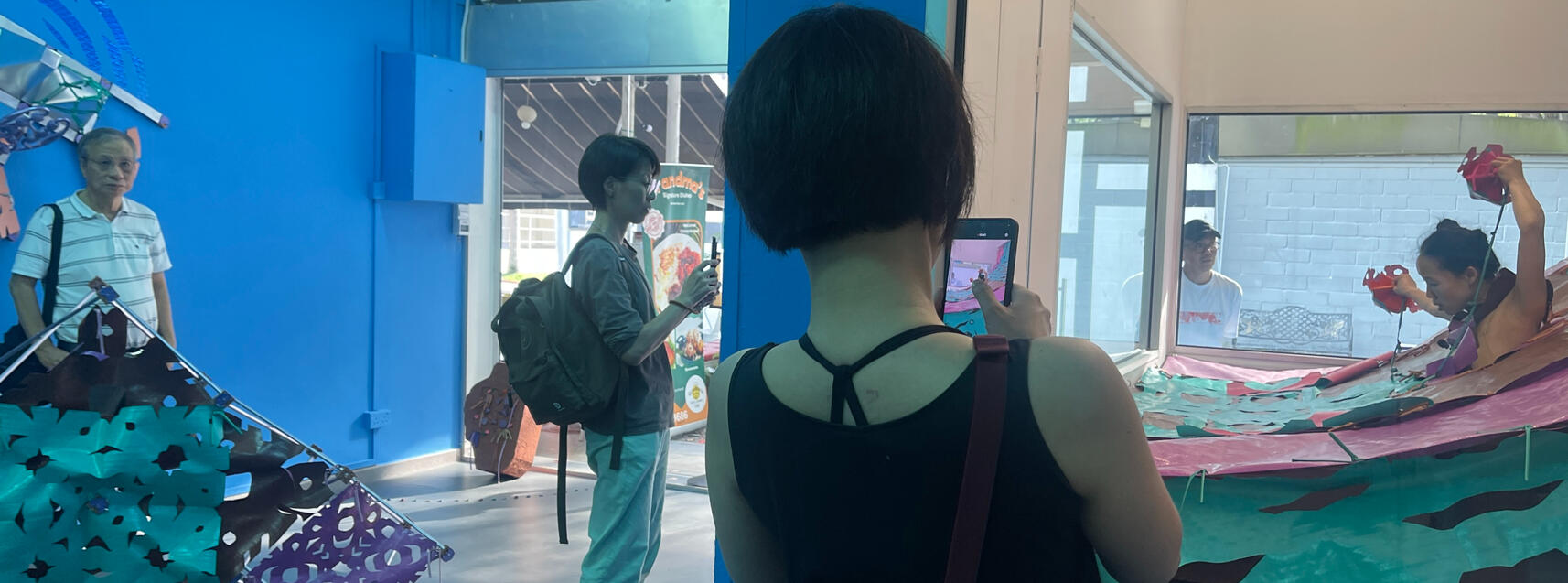
In another room, framed by glass windows at the front and on both sides, served as the performance space for I Just Want You to FEEL the FEELING I FELT. Set against geometric patterns and layered color fields, the performer emerges through a central opening — half revealed, half submerged — becoming visually absorbed into the surrounding material and environment.
© Joo Choon Lin. All rights reserved.
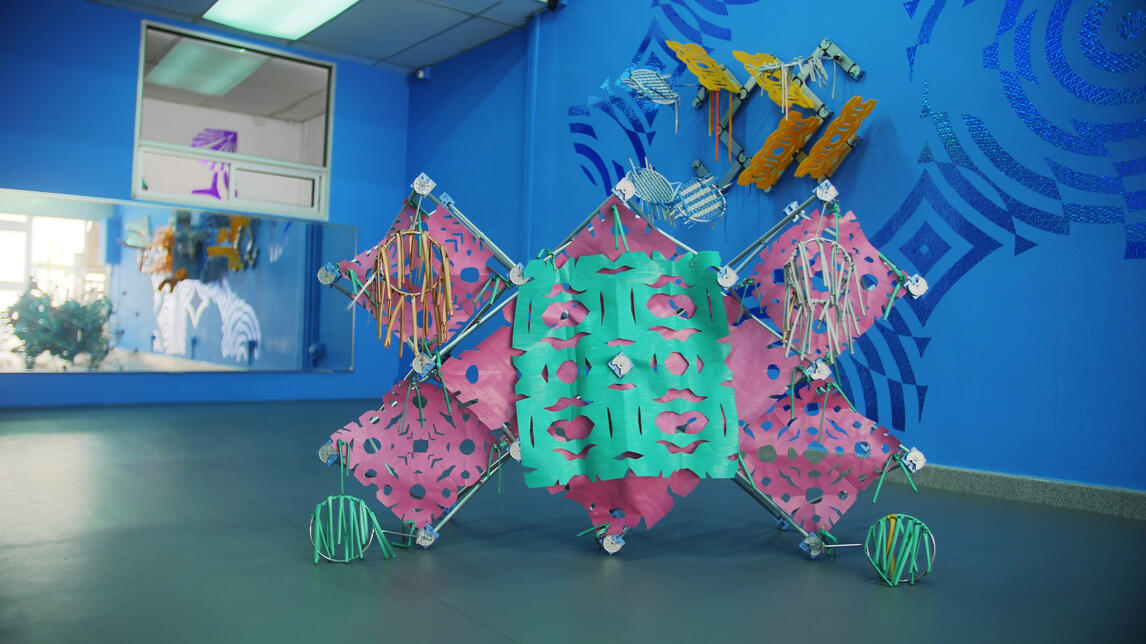
The Tuning Instrument No. 1 in Papilio Fold of Jade-Green Meadow
Part of The laugh laughs at the laugh, The song sings at the song, Singapore Biennale 2025: pure intention.
Metal, hooks, balloons, badminton rackets, hinges, bolts and nuts, acrylic PVC, acrylic paint, tarpaulin, eyelets, clip buckle nylon belt, silicone and clear PVC sheets
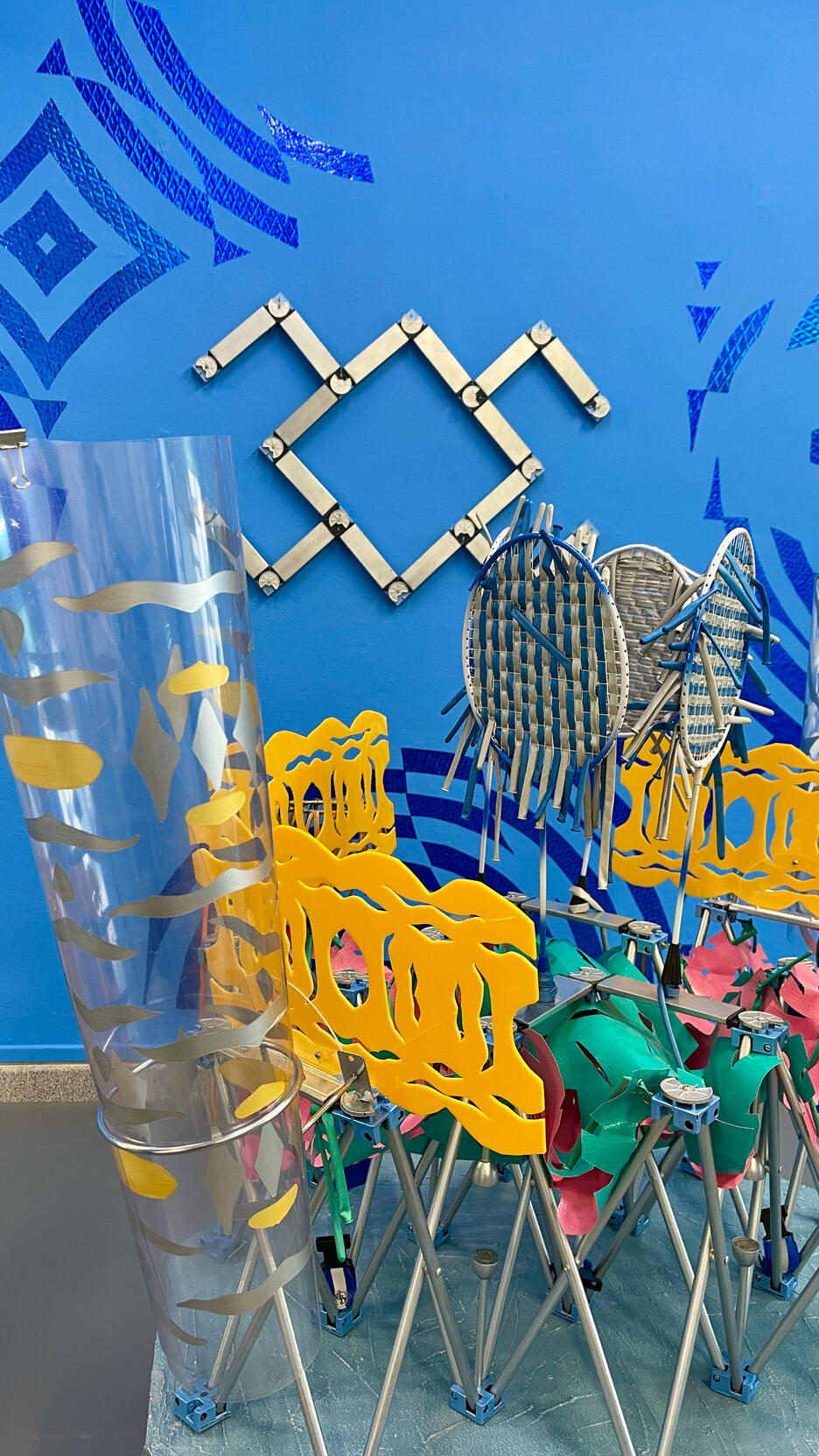
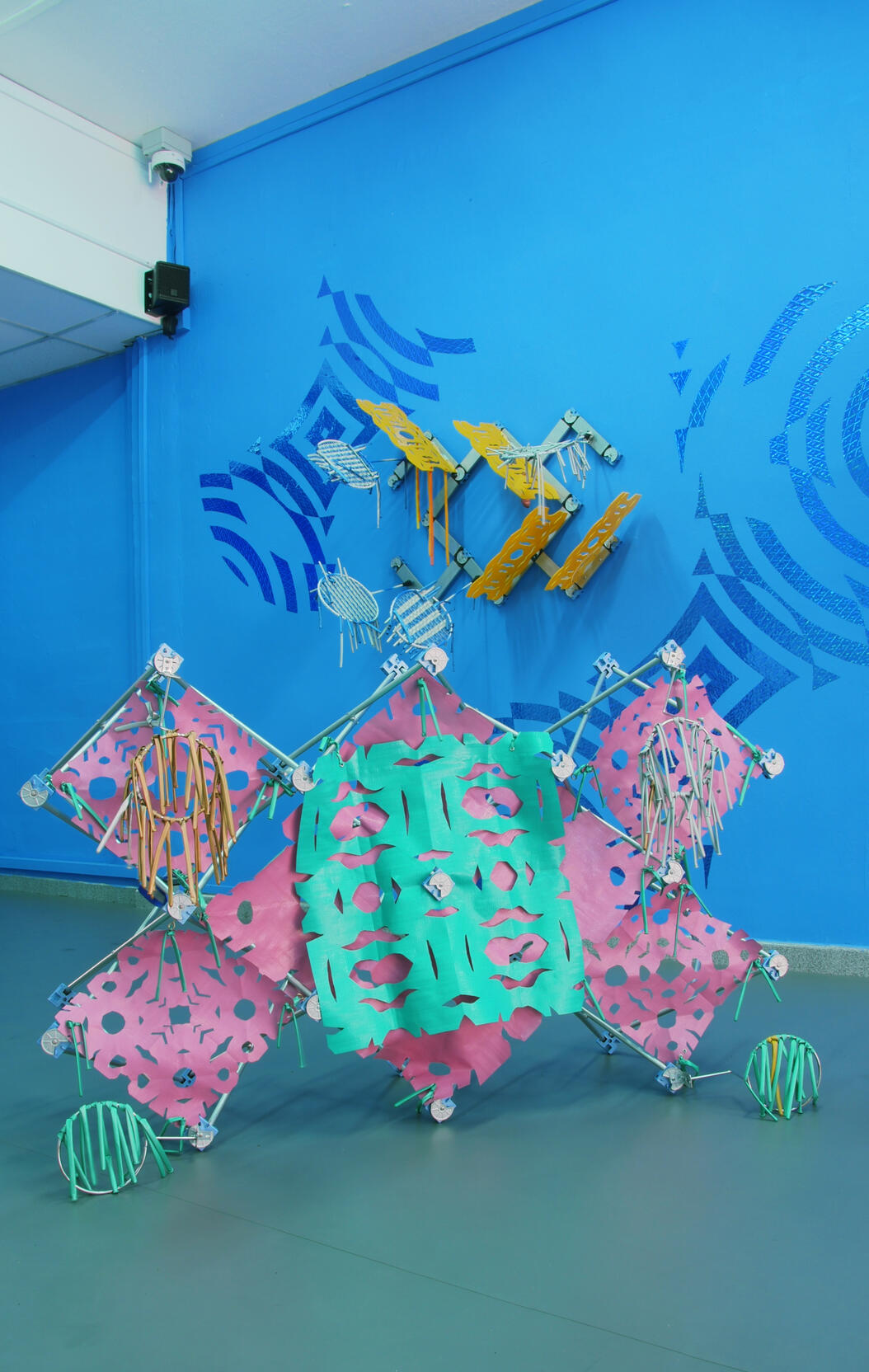
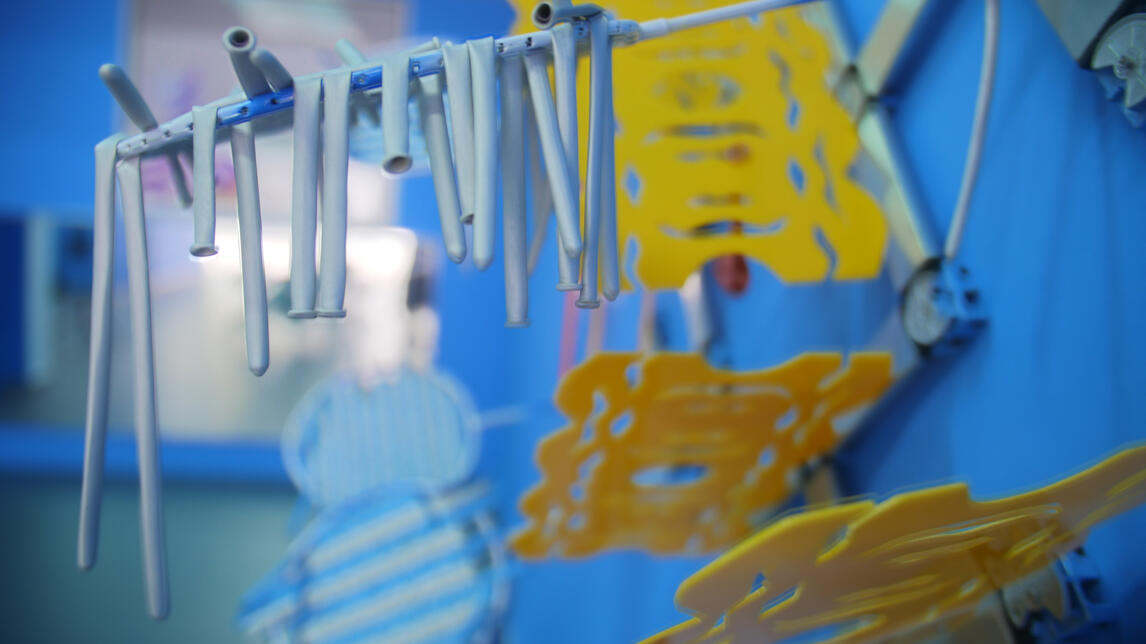
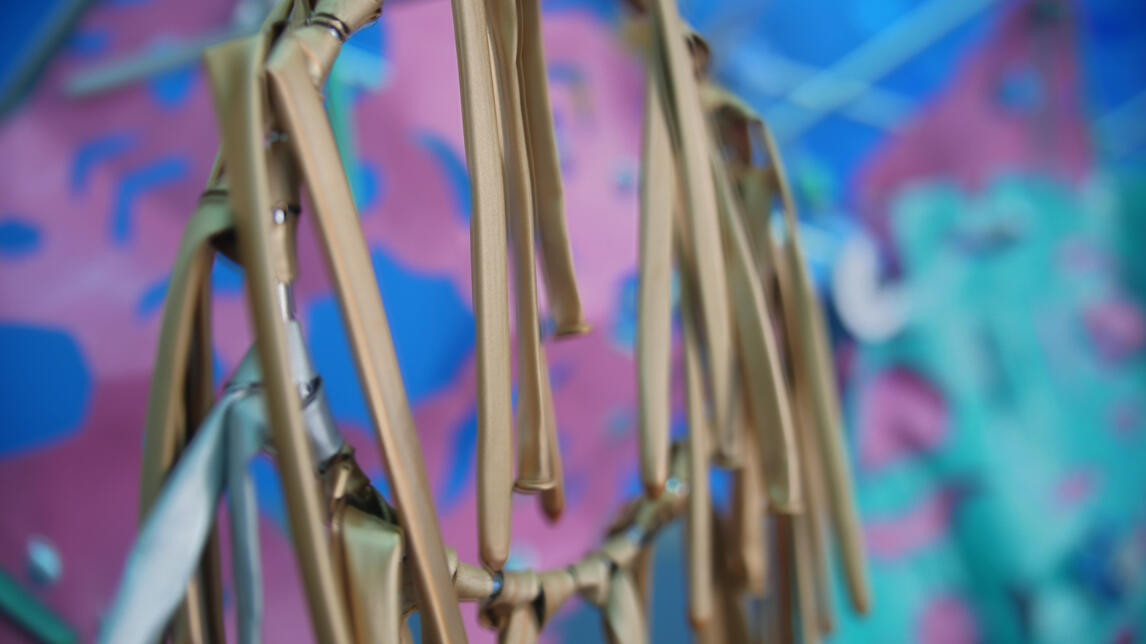
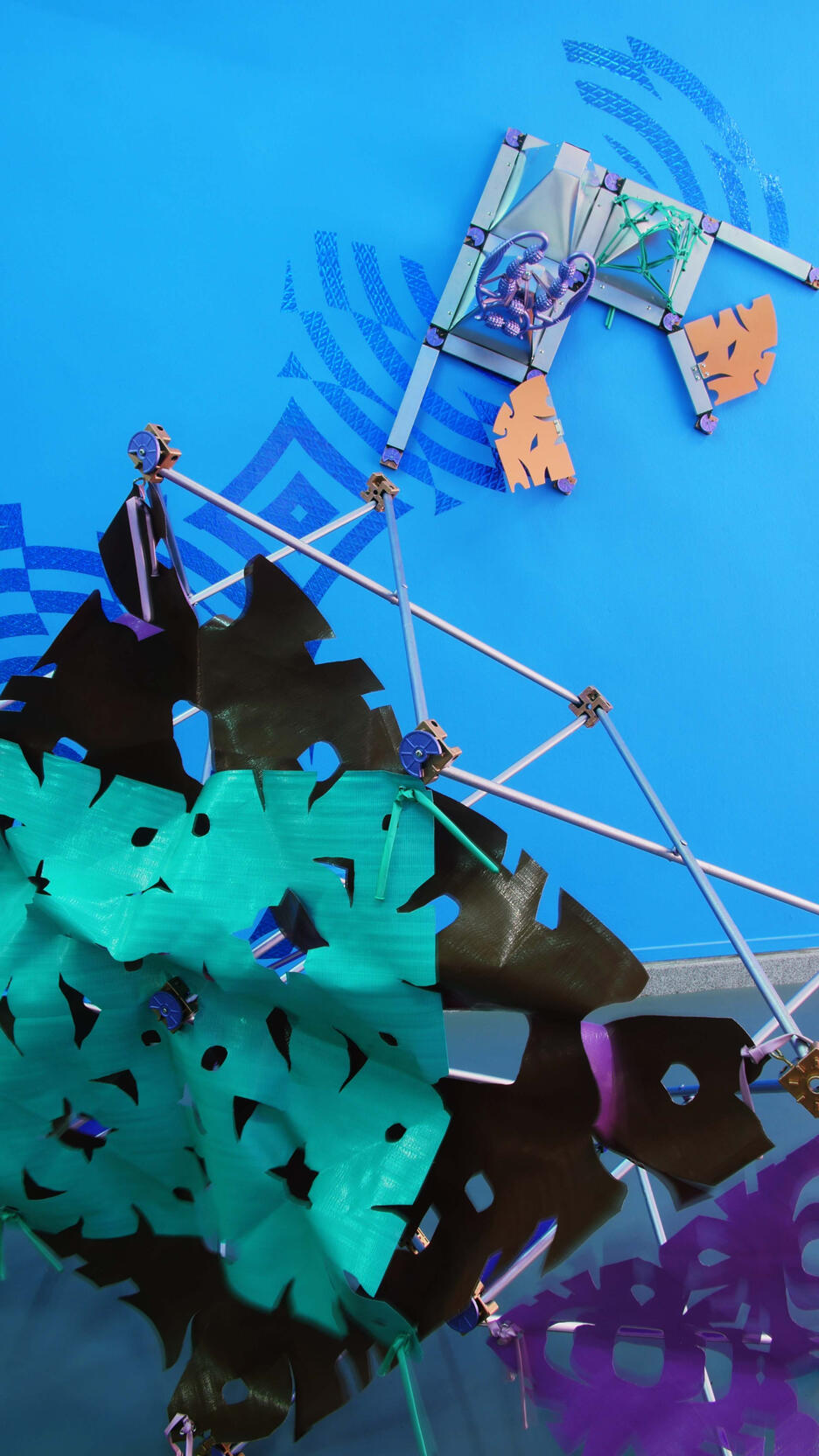
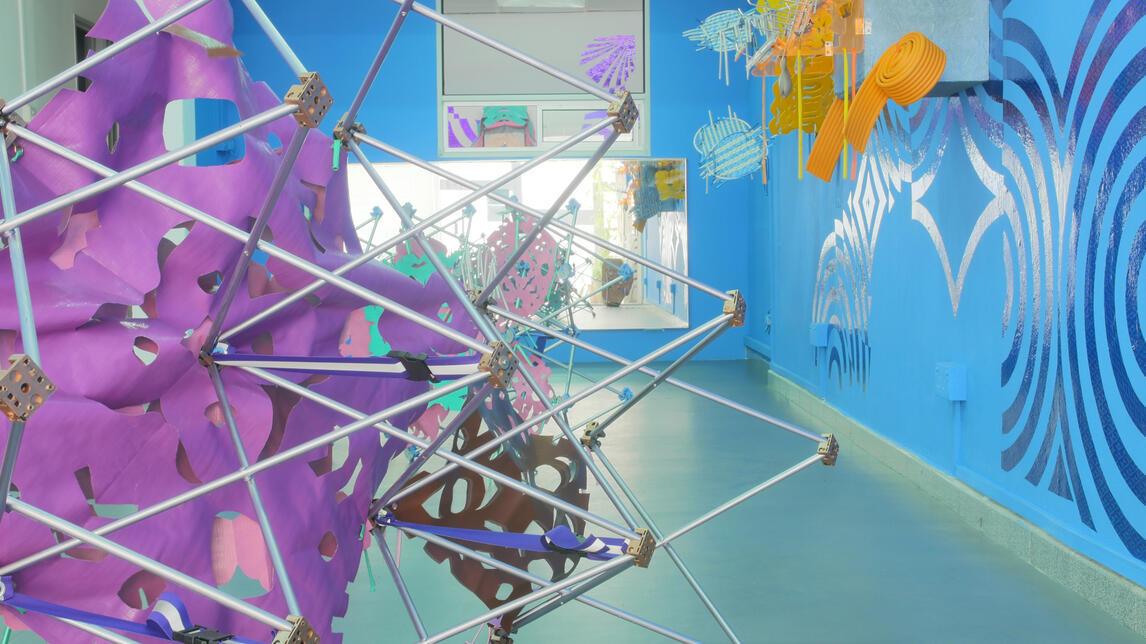
The photos capture the ongoing metamorphosis of the modular sculptures, displaying both their collapsed and expanded forms.
A series of modular, foldable sculptures exist as bodies in constant metamorphosis. Made from industrial elements such as latches, hinges, foldable legs, and casters, the pieces have removable parts that shift, detach, and recombine. They don’t hold a single form; instead, they fold, expand, and remain mutable, so their presence emerges through reconfiguration and interaction in space. More like living systems than finished objects, they renew and evolve over time, revealing new possibilities with each reconfiguration.
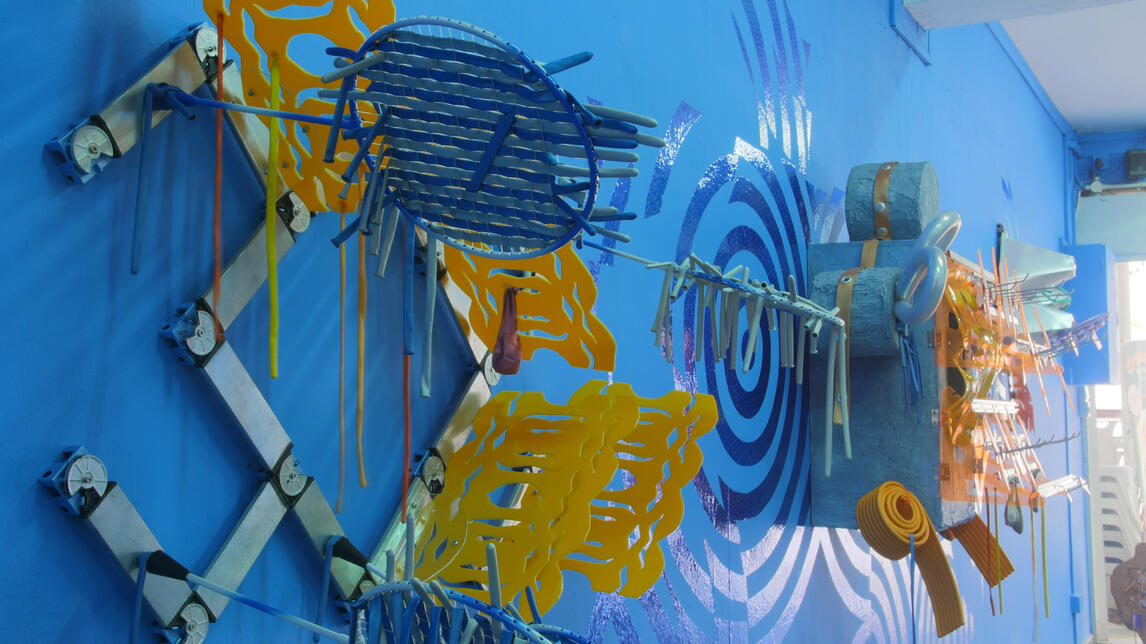
Commissioned by Singapore Art Museum for Singapore Biennale 2025: pure intention.
© Joo Choon Lin. All rights reserved.
The Tuning Instrument No. 2 in Red Rock Jewel Valley
Part of The laugh laughs at the laugh, The song sings at the song, Singapore Biennale 2025: pure intention.
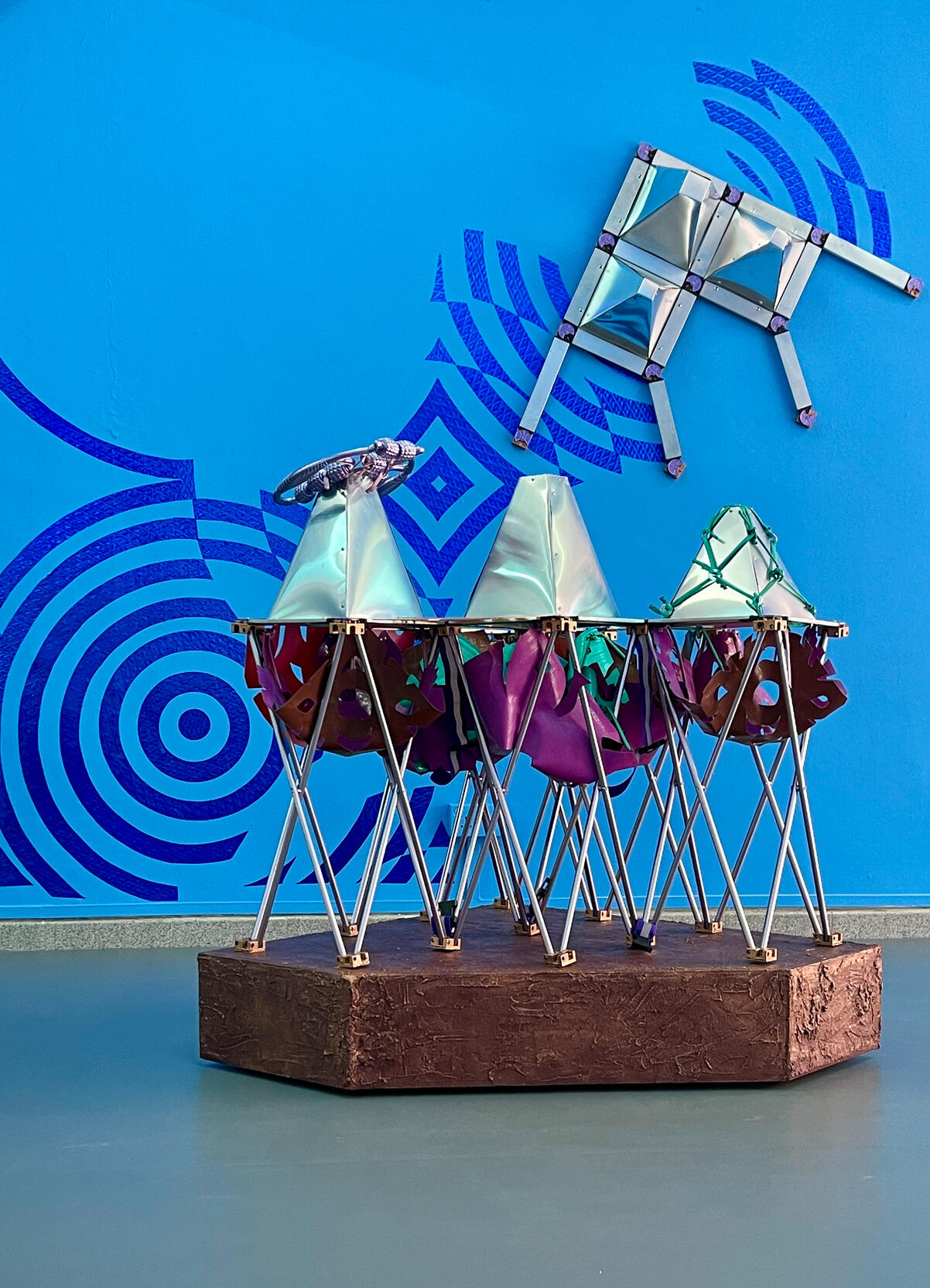
The photos capture the ongoing metamorphosis of the modular sculptures, displaying both their collapsed and expanded forms.
Wood, cement, metal beams, hooks, balloons, anti-collision strips, colored straps, acrylic PVC, acrylic paint, eyelets and hinges
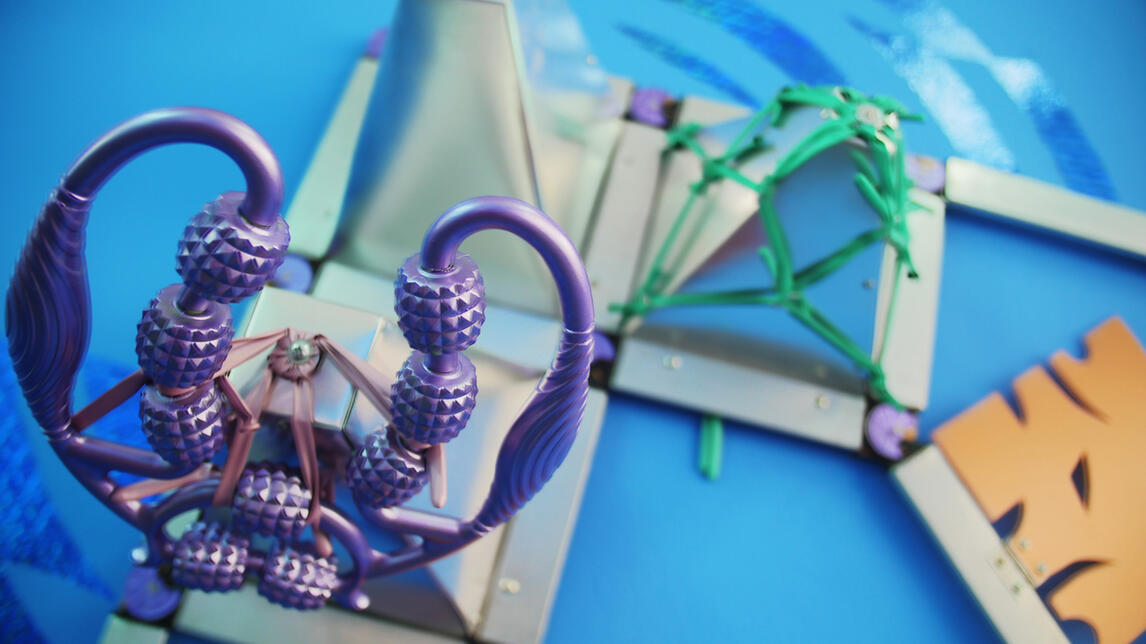
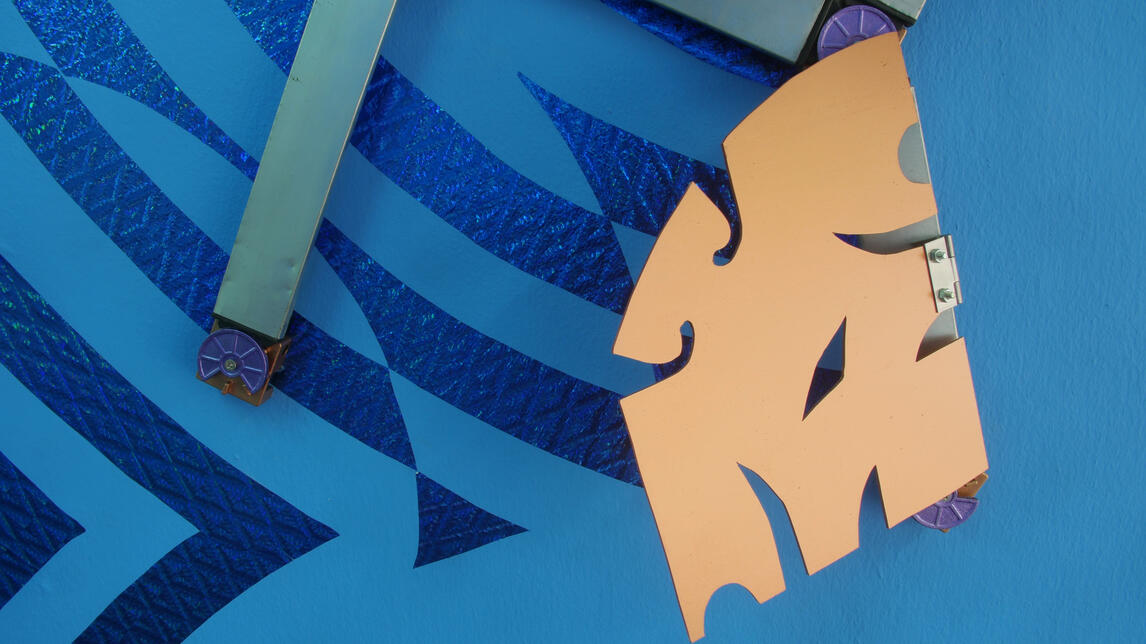
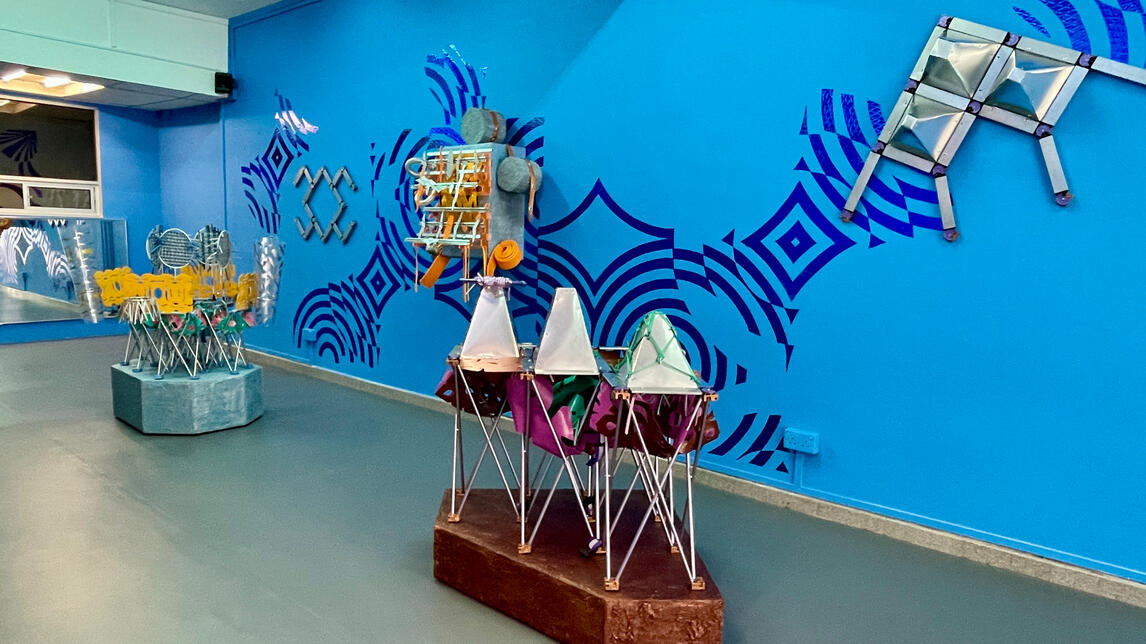
A series of modular, foldable sculptures exist as bodies in constant metamorphosis. Made from industrial elements such as latches, hinges, foldable legs, and casters, the pieces have removable parts that shift, detach, and recombine. They don’t hold a single form; instead, they fold, expand, and remain mutable, so their presence emerges through reconfiguration and interaction in space. More like living systems than finished objects, they renew and evolve over time, revealing new possibilities with each reconfiguration.
Commissioned by Singapore Art Museum for Singapore Biennale 2025: pure intention.
© Joo Choon Lin. All rights reserved.
The Singing Instrument No. 1 in Postludium of Dawn
Part of The laugh laughs at the laugh, The song sings at the song, Singapore Biennale 2025: pure intention.
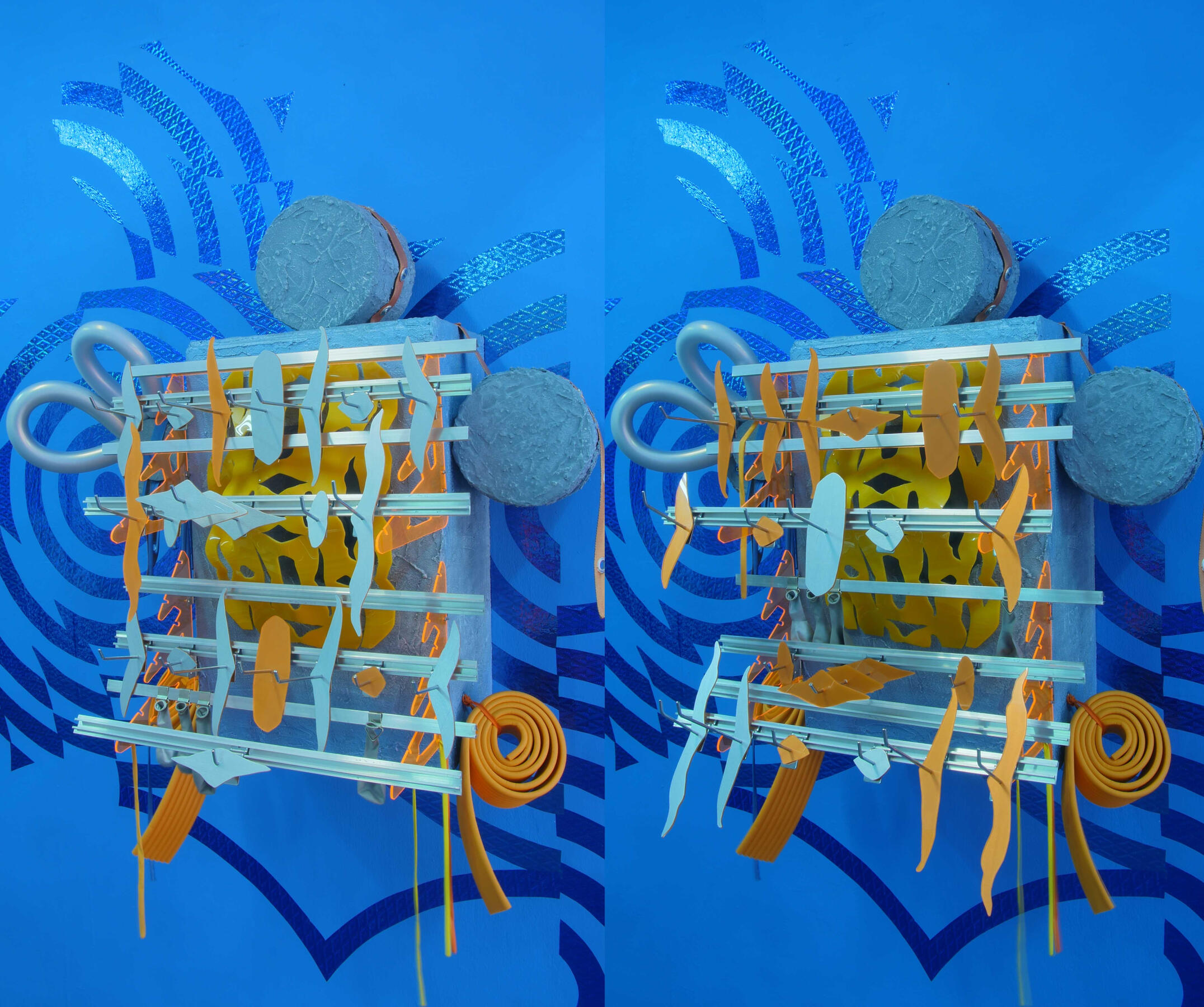
Wood, cement, metal beams, hooks, balloons, anti-collision strips, colored straps, acrylic PVC, acrylic paint, eyelets and hinges
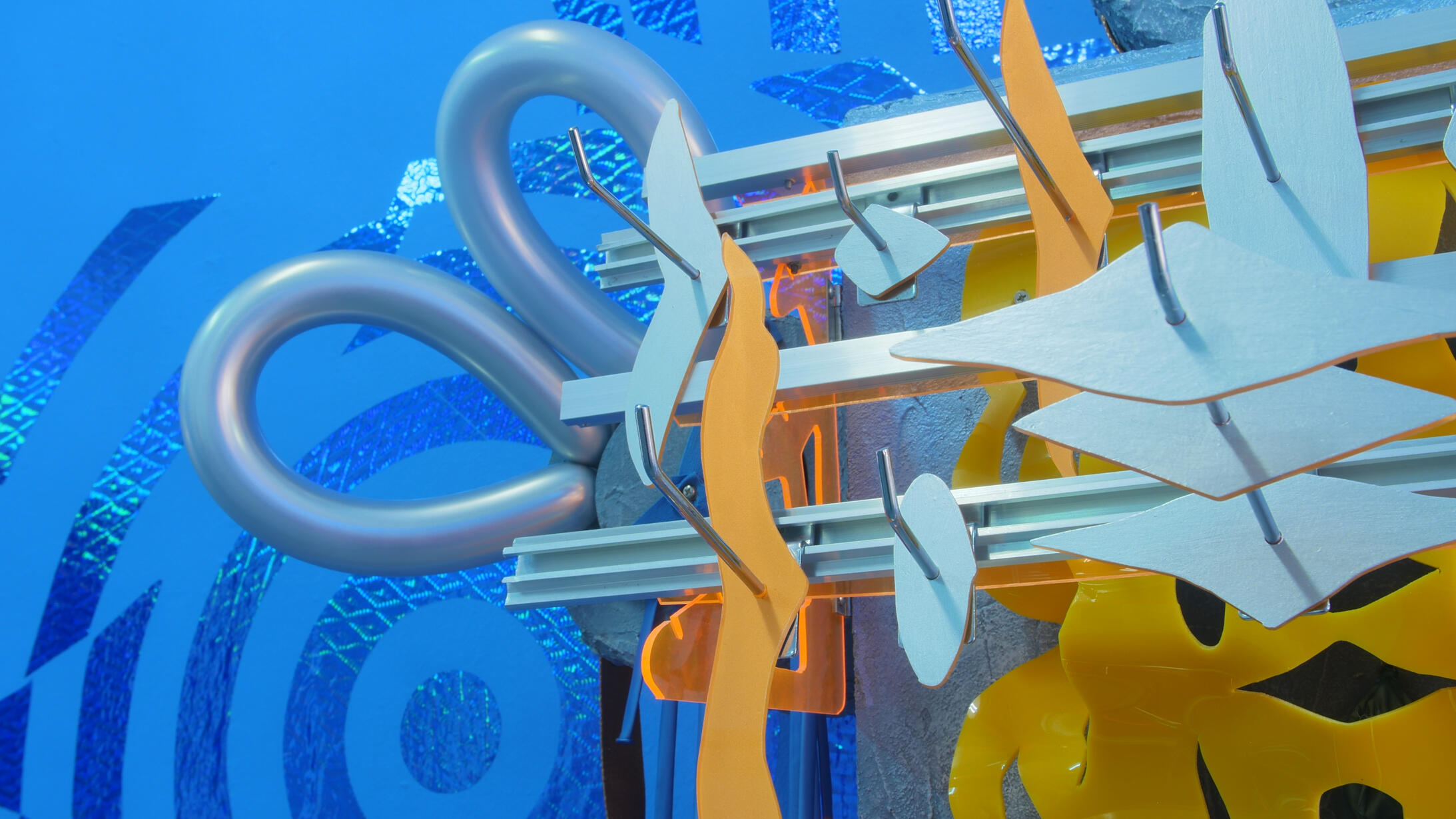
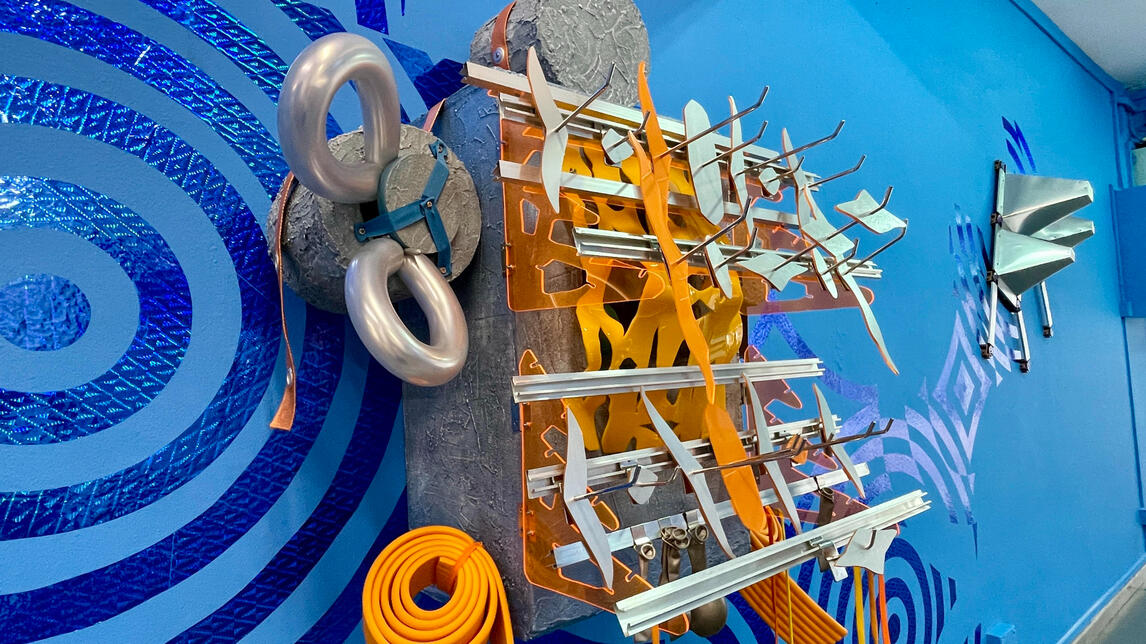
The sculpture consists of a layered construction made from aluminum beams, hooks, and painted wooden cutouts, arranged in a rhythmic grid. Curved and diamond-shaped components are suspended across horizontal metal bars, creating a play of repetition and variation.The placement of different parts and pieces feels rhythmic, almost like a playful score written onto the sculpture. It’s kind of creating a play of repetition and variation. You might notice pattern recognition, like a sequence and coding.The work combines industrial materials and everyday objects and some are hand painted cutouts and fragments, suggesting both construction and deconstruction. I enjoy when the work becomes mercurial, When viewed from different angles, they reveals shifting alignments. at times orderly, at times chaotic.
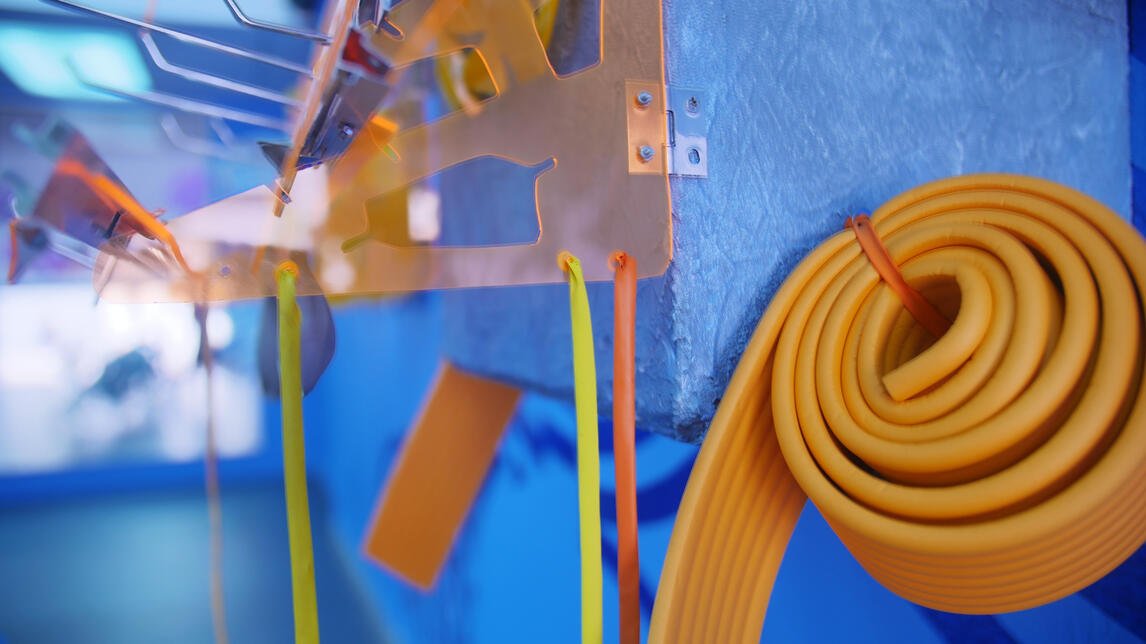
Commissioned by Singapore Art Museum for Singapore Biennale 2025: pure intention.
© Joo Choon Lin. All rights reserved.
The Falling Note (adagio)
Part of The laugh laughs at the laugh, The song sings at the song, Singapore Biennale 2025: pure intention.
Commissioned by Singapore Art Museum for Singapore Biennale 2025: pure intention.
The sculpture is a textured, irregular slab with a rough, earthen surface painted in a deep terracotta tone. Embedded within it are triangular and rounded sculptural forms, painted in metallic purple, which protrude slightly like fragments of a hidden structure. Around the edges, colorful deflated balloons and long balloon strips are attached, cascade down like tendrils or eyelashes.The triangular and round fragments embedded in the surface suggest symbols or seeds, carrying memory and energy. The balloons, by contrast, are like organs or extensions, soft, provisional, and vulnerable. The work combines industrial and playful materials, from hardened surfaces to fragile latex.On a sunny day, a reflected spectrum from a nearby glass door cast a fleeting rainbow onto the floor beside the sculpture. This moment suggested an extension of the work. I created a curved line encircling the sculpture, formed by arranged balloons across the vinyl floor, like a fallen rainbow settling into the space.They also suggest a form of musical notation, a playful score written directly onto the sculpture. Their placement feels rhythmic, as though the surface itself were vibrating with sound.
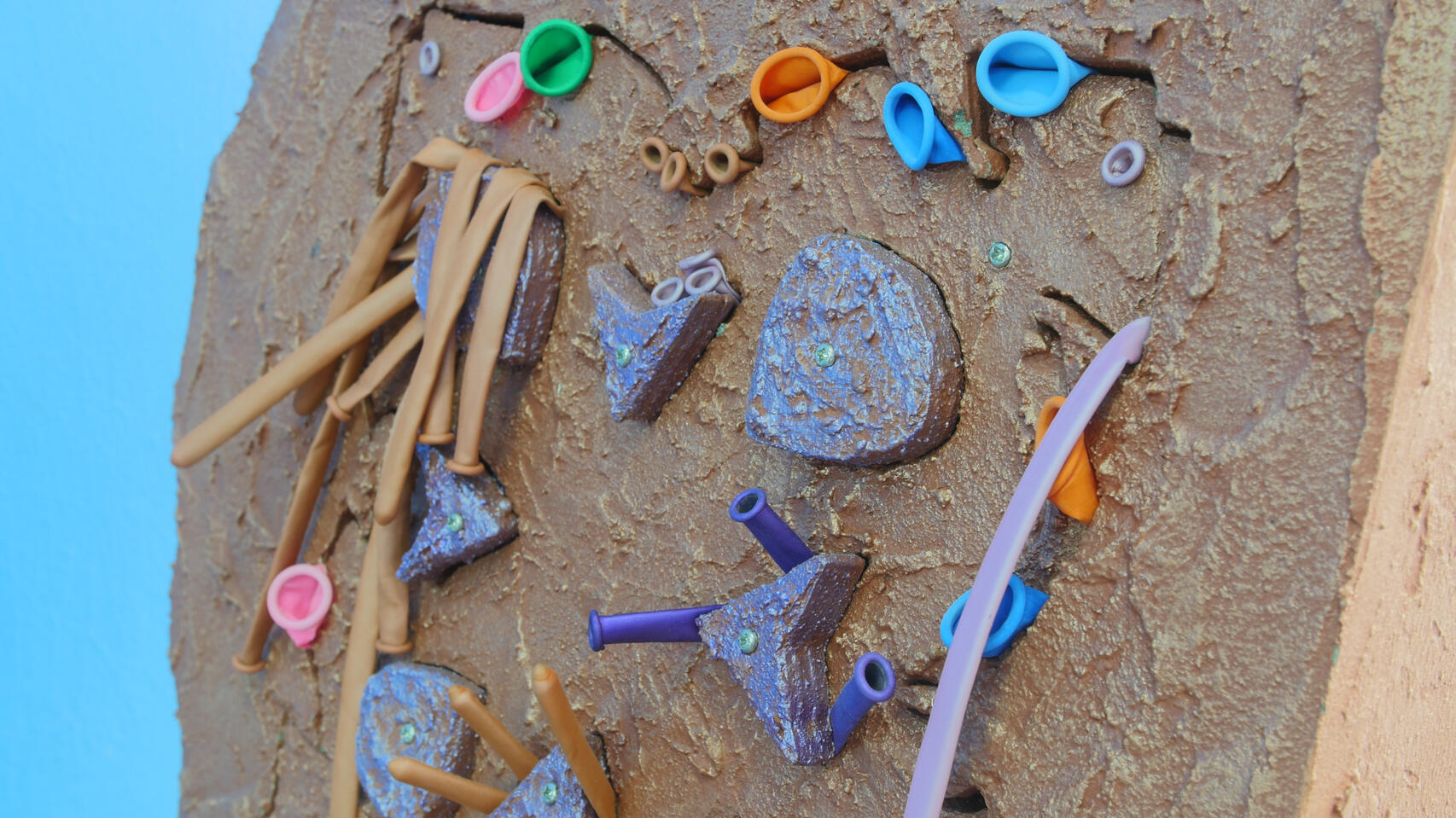
© Joo Choon Lin. All rights reserved.
Glue Your Eyelids Together | 2025
Part of The laugh laughs at the laugh, The song sings at the song, Singapore Biennale 2025: pure intention.
Wood, cement, metal, balloons, chains, sponge, Anti-stress squish balls, massage tools, silicone, clear PVC sheet, acrylic paint, elastic straps, eyelets and flat washers
This time-based sculpture is built from stone-like blocks with hollowed cavities, inspired by seeds and fruits, vessels of latent energy. Balloons, arranged like petals and held by elastic straps and chains, press into these openings to hold the form in place.As the balloons slowly deflate, the balance shifts. Fragments settle back into their hollows, like a puzzle closing in on itself. Some parts give way and crumble, still tethered by knitted chains that feel like exposed nerves. There is a sense of an unseen force moving within the sculpture.The work holds and undoes itself at the same time. Watching it, there is something strangely liberating. The slow collapse becomes a physical, visceral process that draws the viewer in, where destruction and transformation unfold together. Replacing the balloons becomes a simple cycle that keeps the work alive and evolving, activating a continuous metamorphosis.
★★★★★★★★★★★★★★★★★★★★★★★★★★★★_★★★★★
Glue Your Eyelids Together is developed in response to the film The Wild Eye (1967, Paolo Cavara). The first iteration was created in 2017, followed by a second iteration presented in Dance in the Destruction Dance at the Singapore Art Museum in 2023, which further extended the work. The current iteration continues this ongoing development as part of the Singapore Biennale 2025.
Commissioned by Singapore Art Museum for Singapore Biennale 2025: pure intention.
© Joo Choon Lin. All rights reserved.
Starlight Sonata I,
60/60: Singapore in Focus, INSTINC Space, 2025
Mixed media on wood,
2025This piece is a constellation of shapes.They gather energy through their arrangement, creating a silent score that can only be experienced in stillness. Fragments of colour and form pulse with rhythm, amplifying their presence — holding them like stars scattered across a Milky Way sky or notes suspended in space - vibrating, fleeting, and evolving into light.
© Joo Choon Lin. All rights reserved.
tEARs album,
Atelier Samuel Beckett in Méricourt, France, 2024
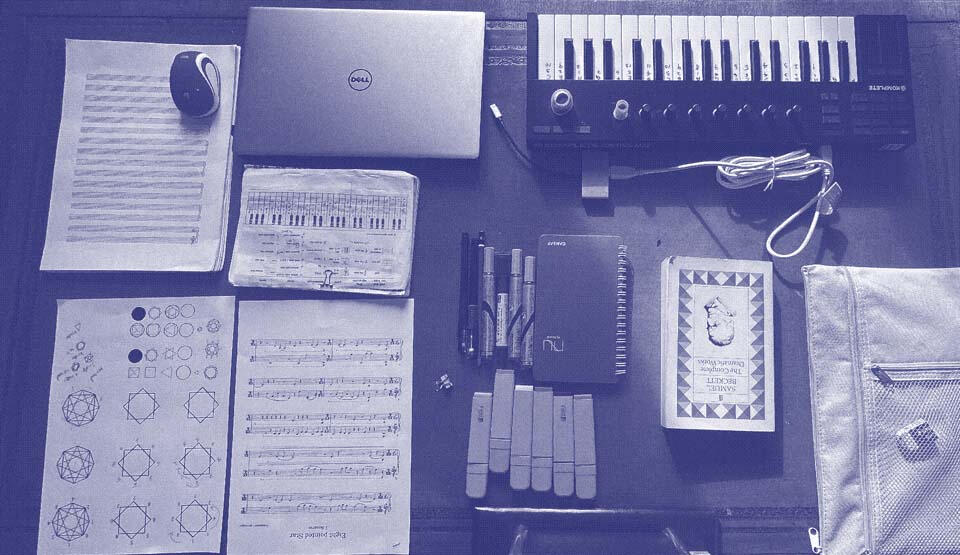
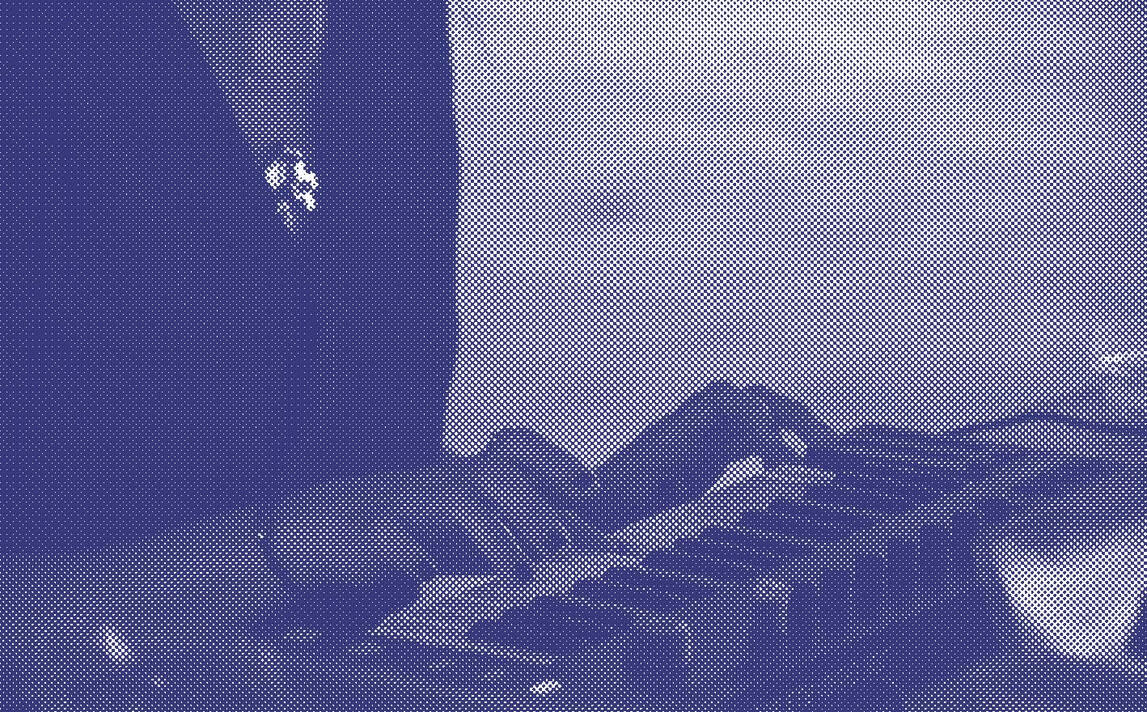
tEARs explores a dimension beyond ordinary perception, where “EAR” symbolizes a spiritual listening—an attunement to realms beyond human senses. This spiritual listening uncovers the interconnectedness of sound and form, creating a space where the divine and sensory converge, echoing a musical quest for universal resonance.The title tEARs combines “EAR” as a symbol of spiritual listening with the imagery of “tears,” capturing the emotional depth and transformative nature of devotion, where tears signify both rupture and healing, separation and union. The lowercase “t” and uppercase “EAR” emphasize this act of subtle, spiritual listening, central to the journey of divine intimacy. “Tears” embody profound emotion, expressing the longing for spiritual connection and the wholeness found in divine love.
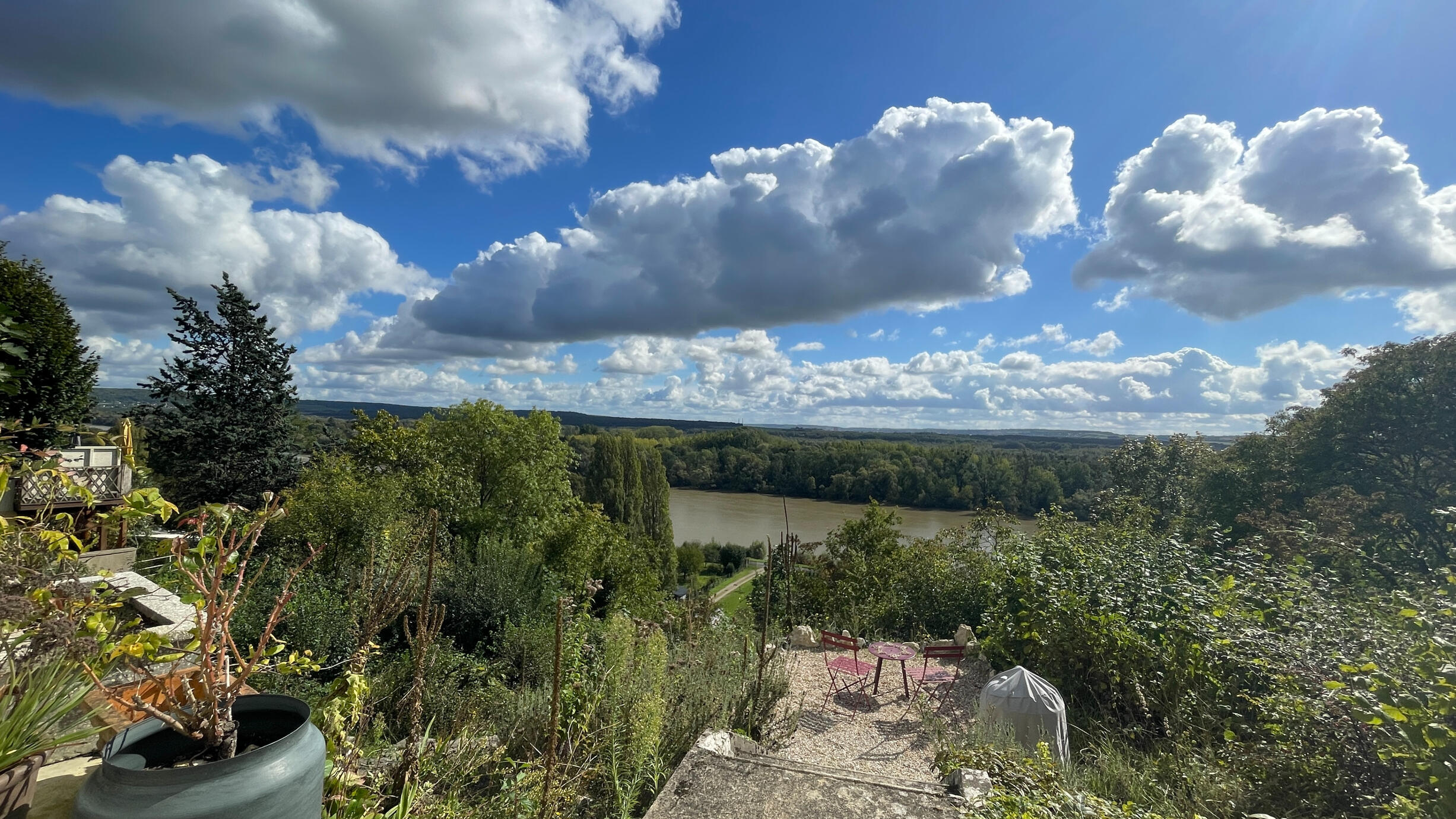
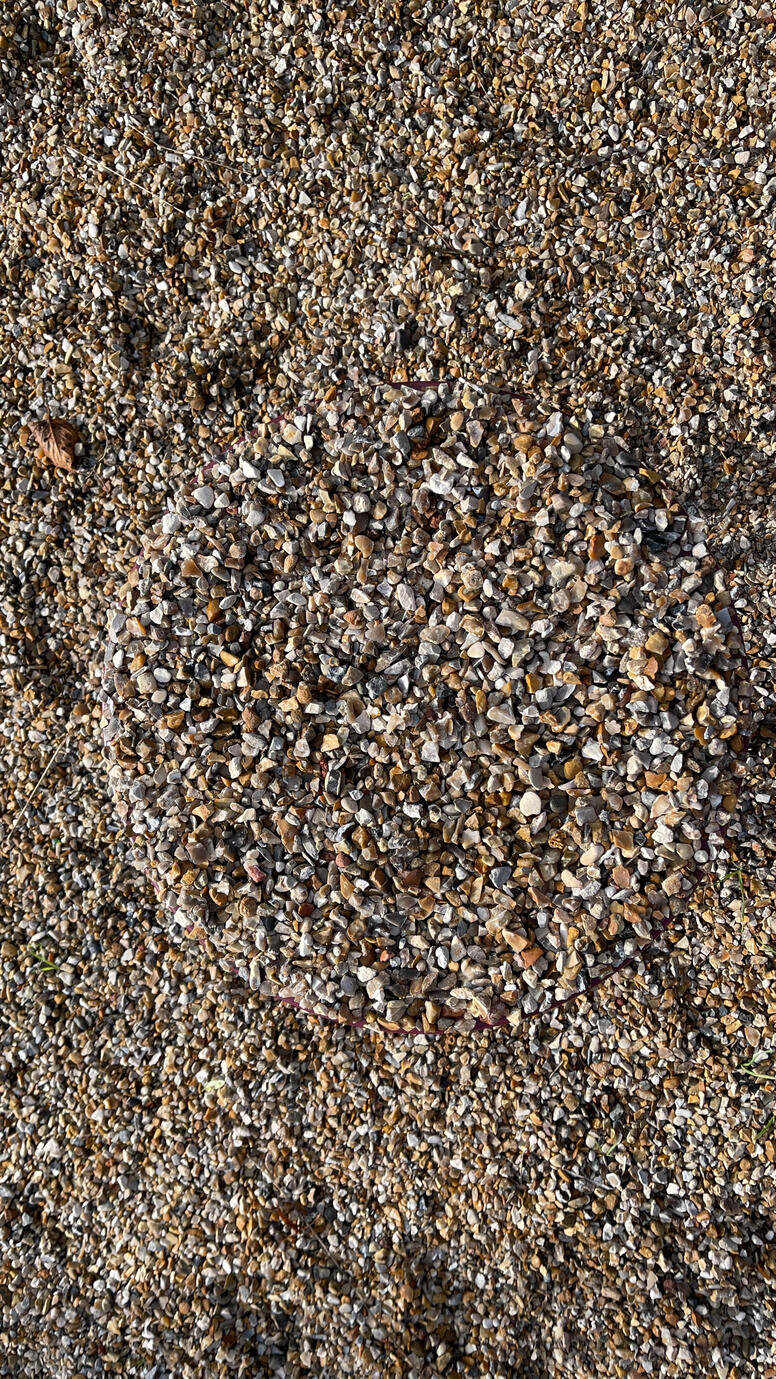
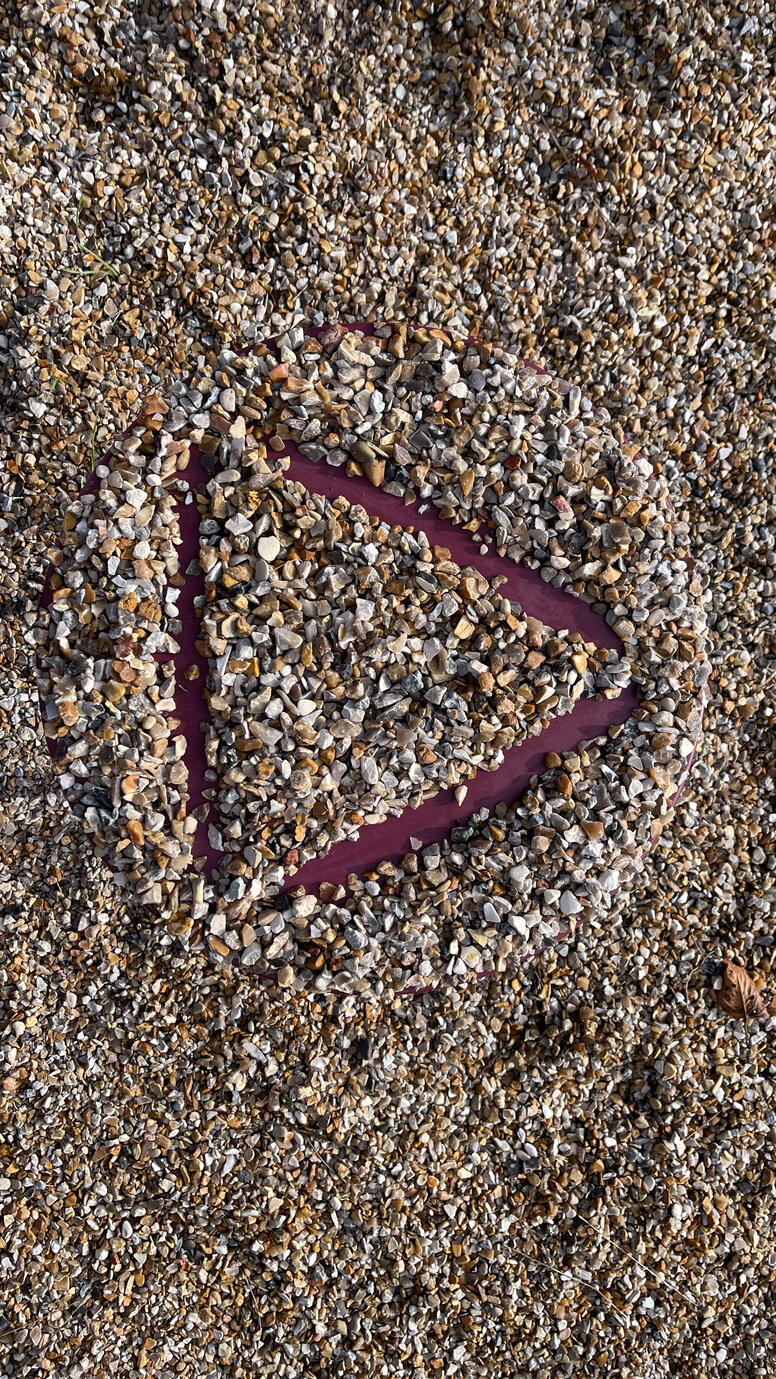
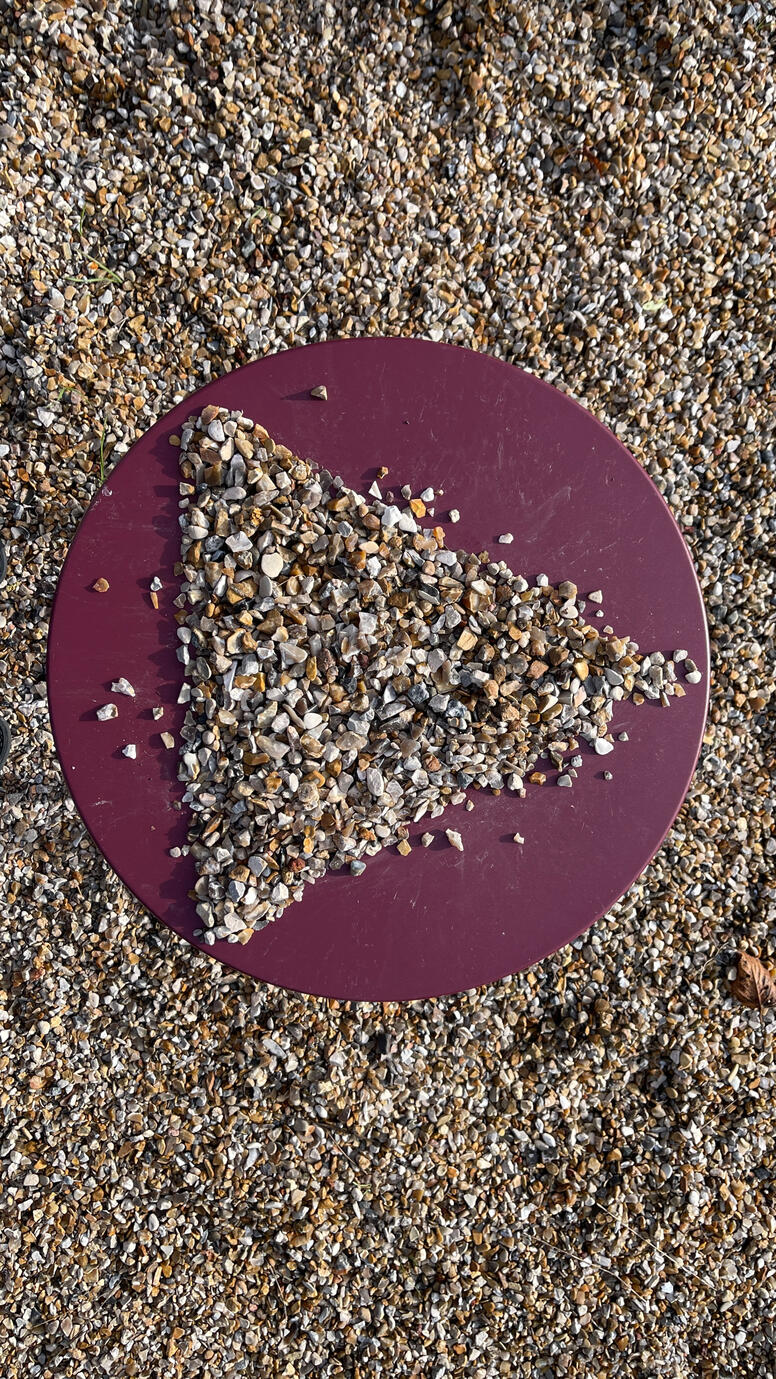
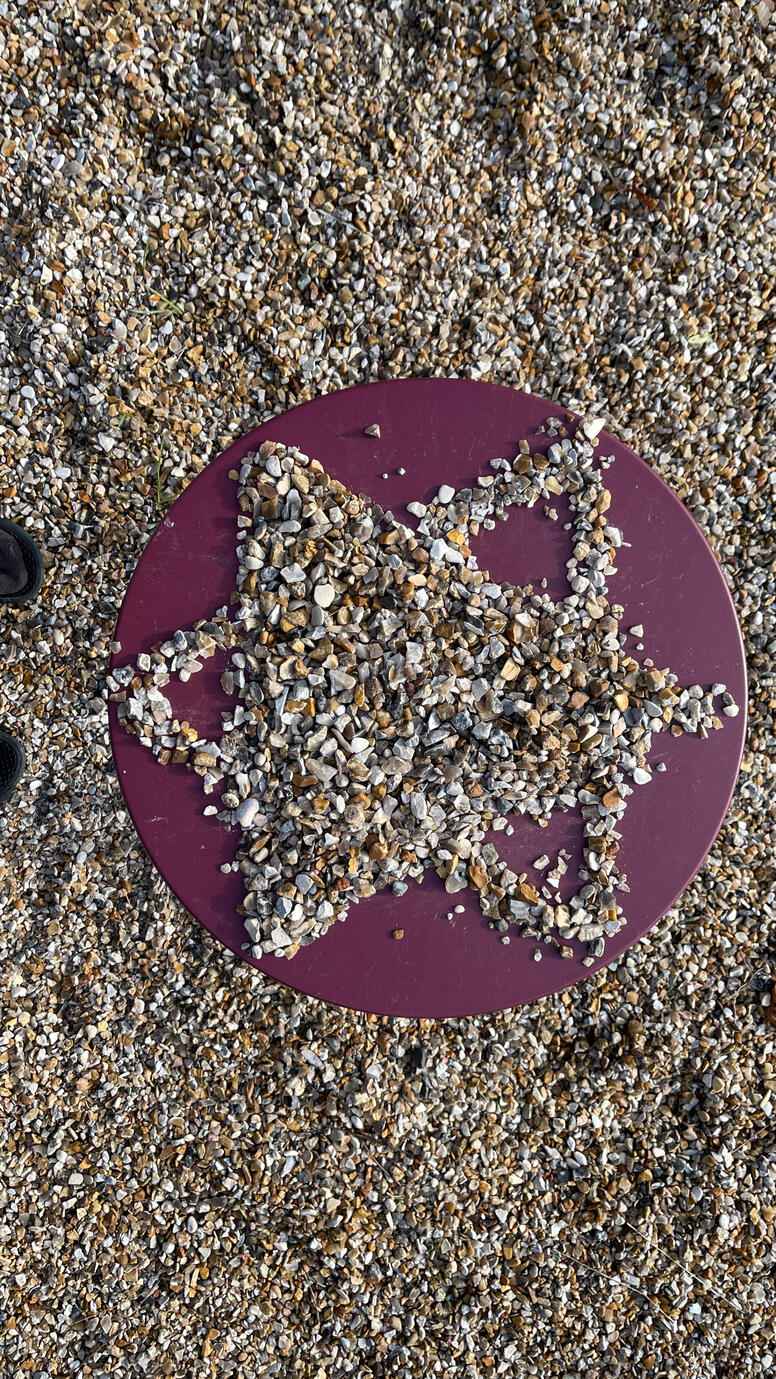
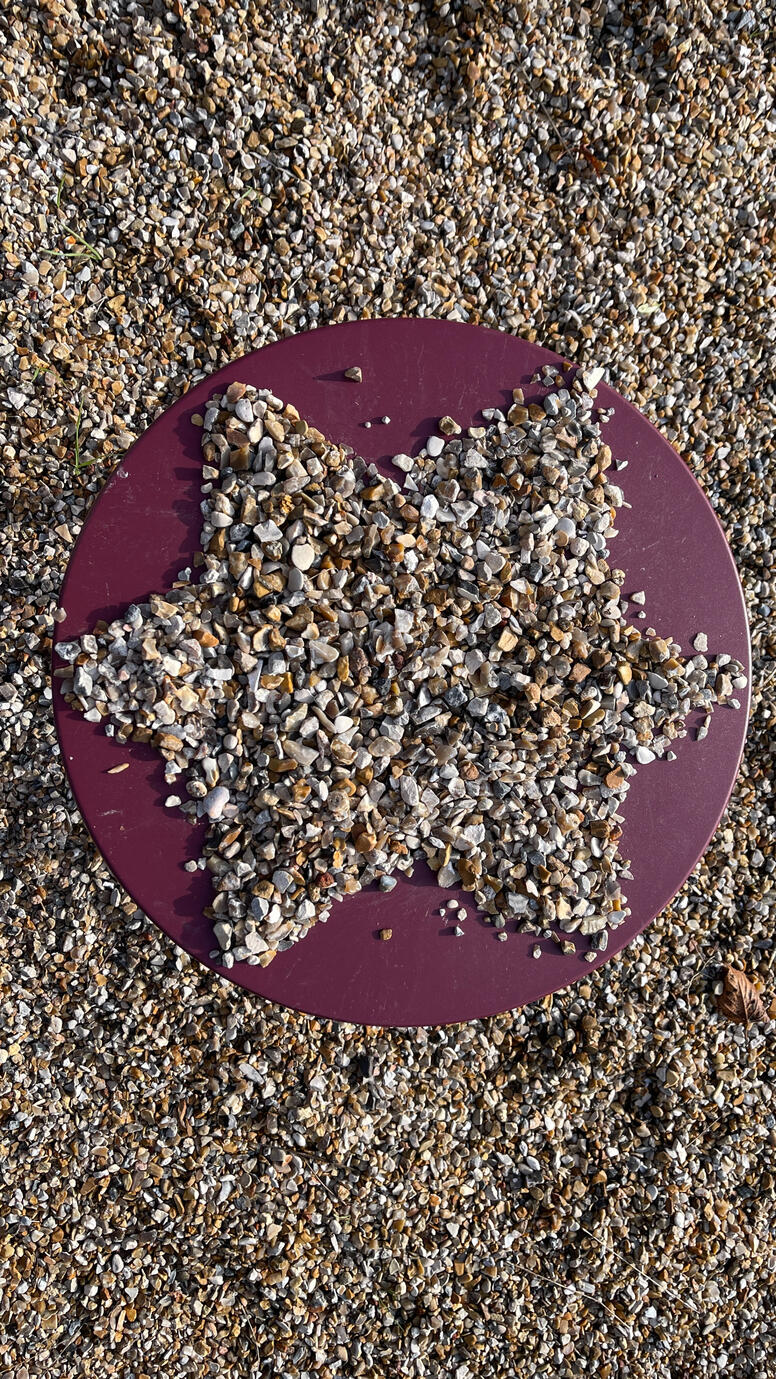
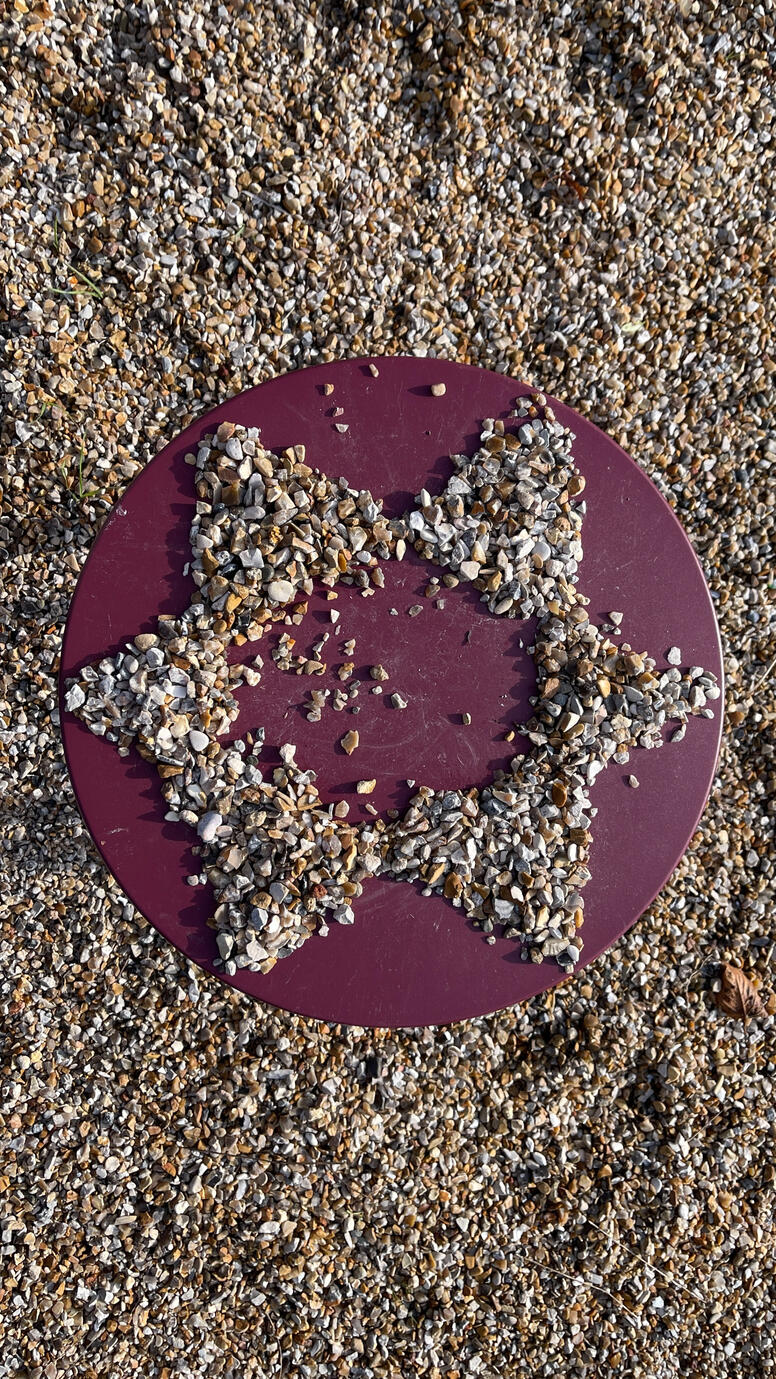
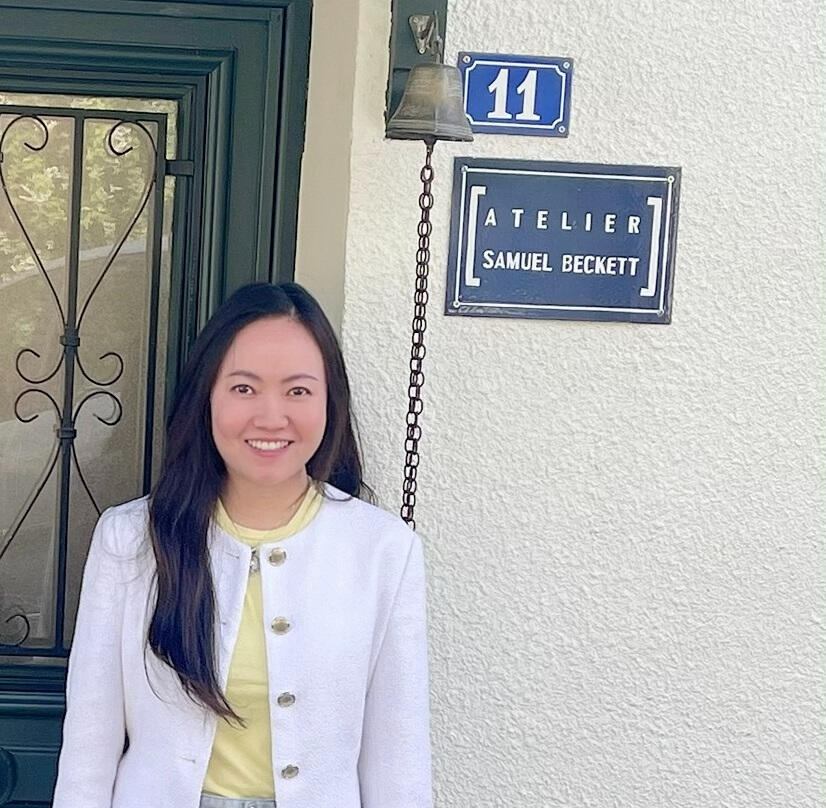
The musical composition is inspired by the fundamental shape of a triangle. As multiple triangles intersect to form a star, they create a layered structure, with each point symbolizing a tone that echoes like a bell. This bell-like resonance embodies a meditative quality, drawing listeners into a rhythmic convergence of sound and form that mirrors the project’s exploration of spiritual attunement and universal connection. Many of the soundtracks were composed during a three-week residency at Atelier Samuel Beckett in Méricourt, France, near the serene landscape of the River Seine.
© Joo Choon Lin. All rights reserved.
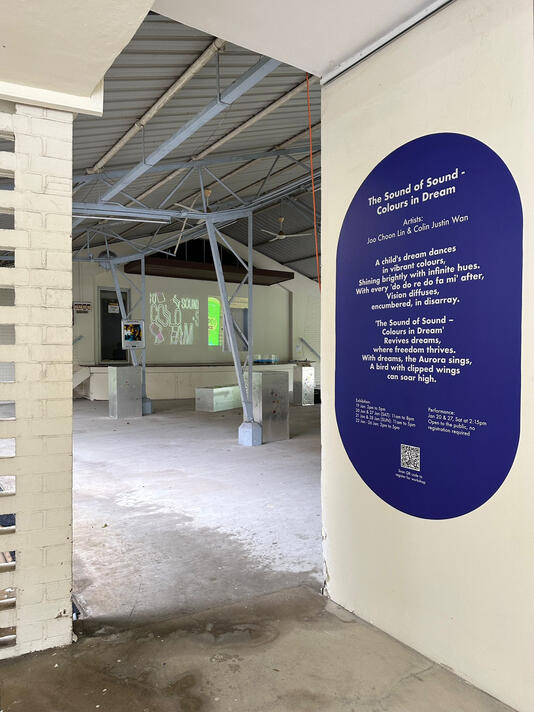
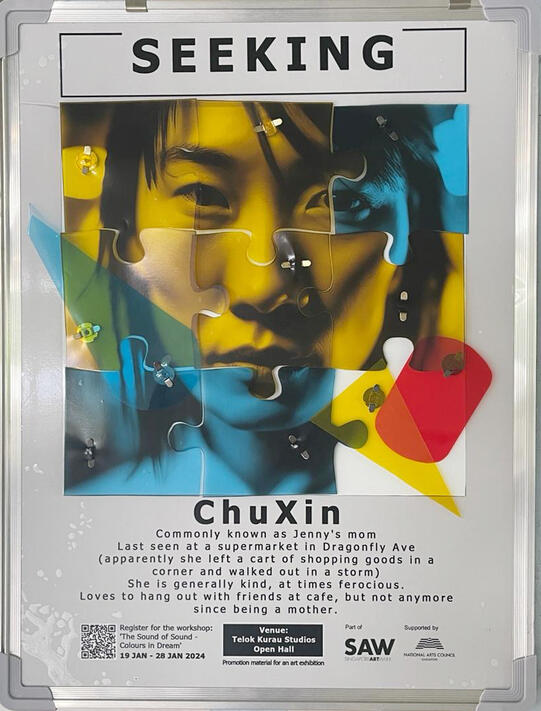
The Sound of Sound - Colours in Dream X Singapore Art Week 2024
Venue: Telok Kurau Studios Open Hall
91 Lor J Telok Kurau Singapore 425985
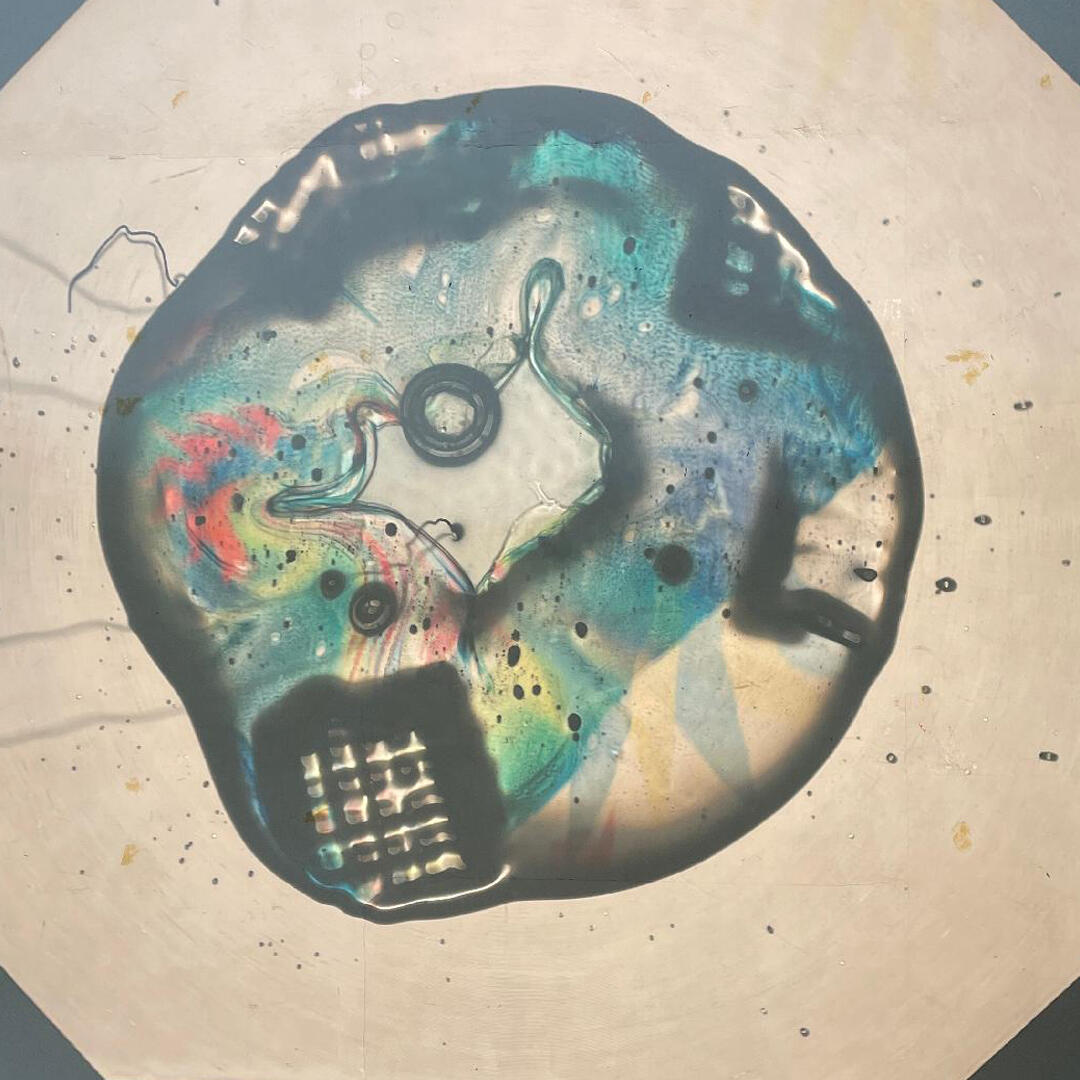
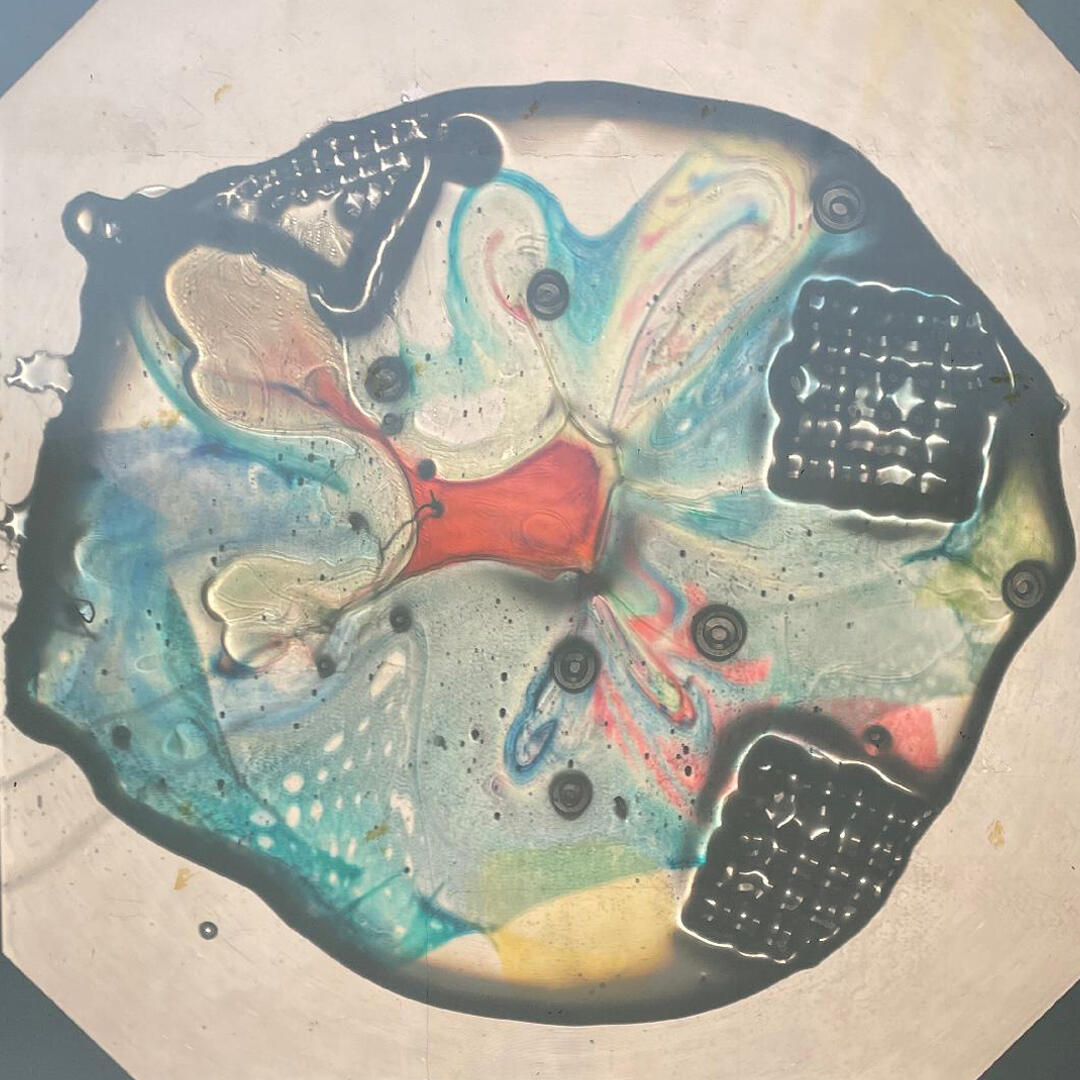
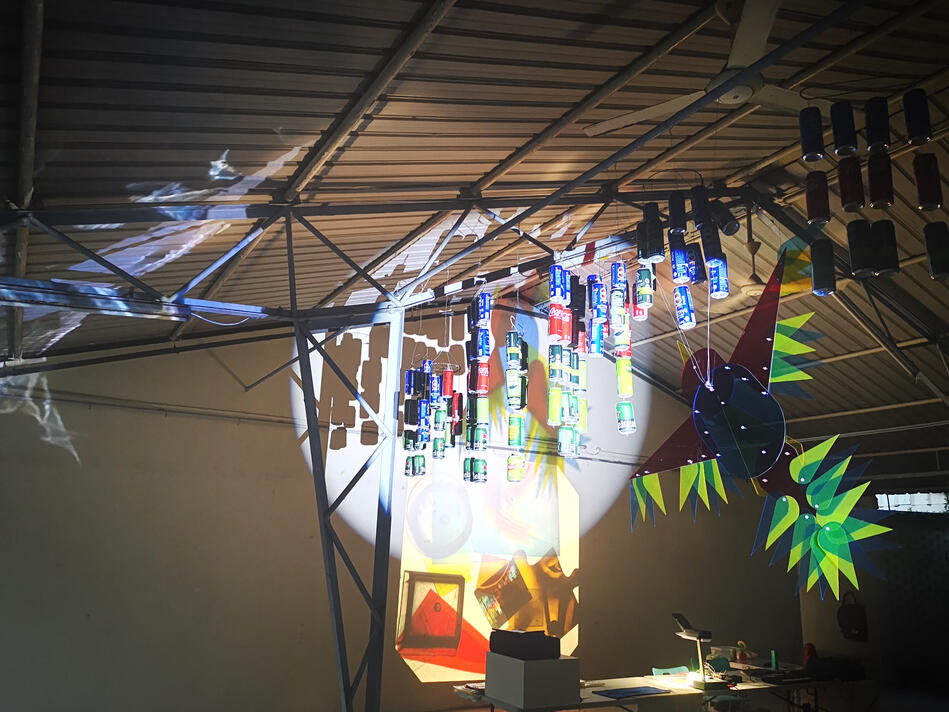
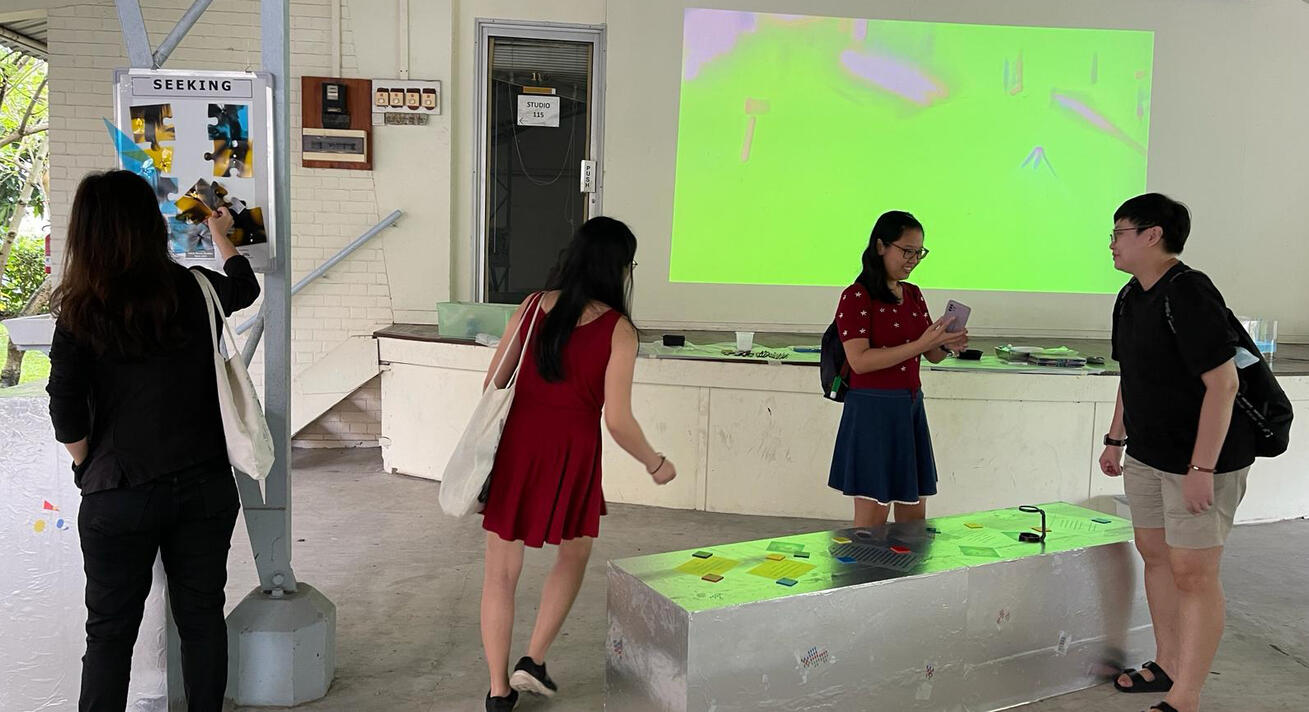
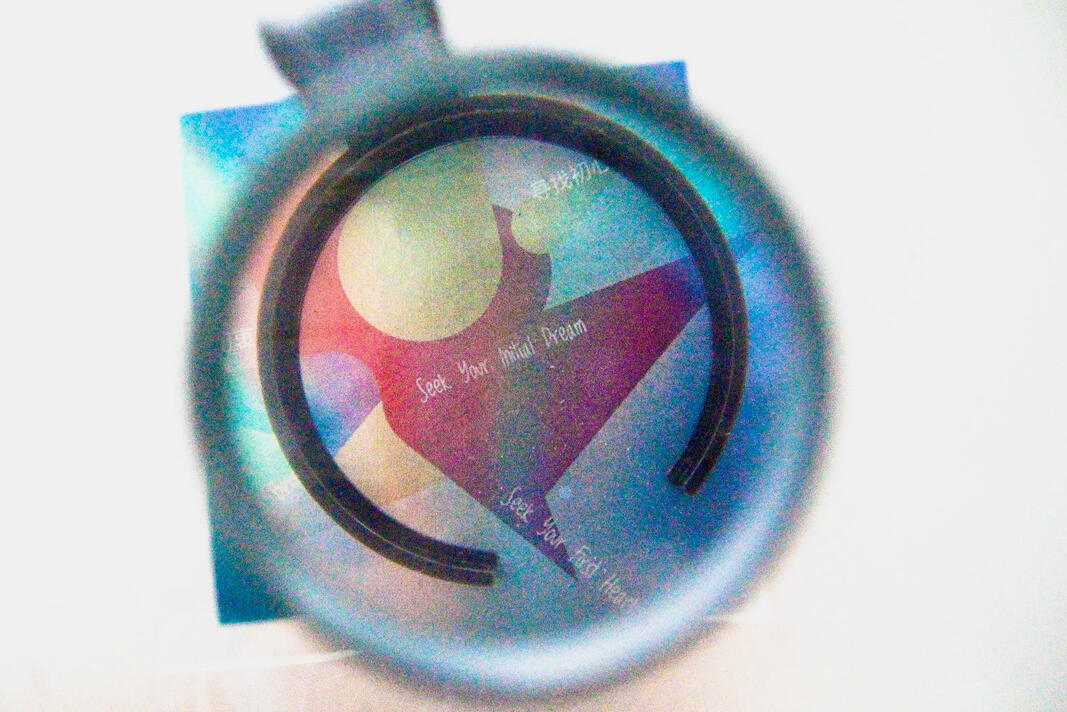
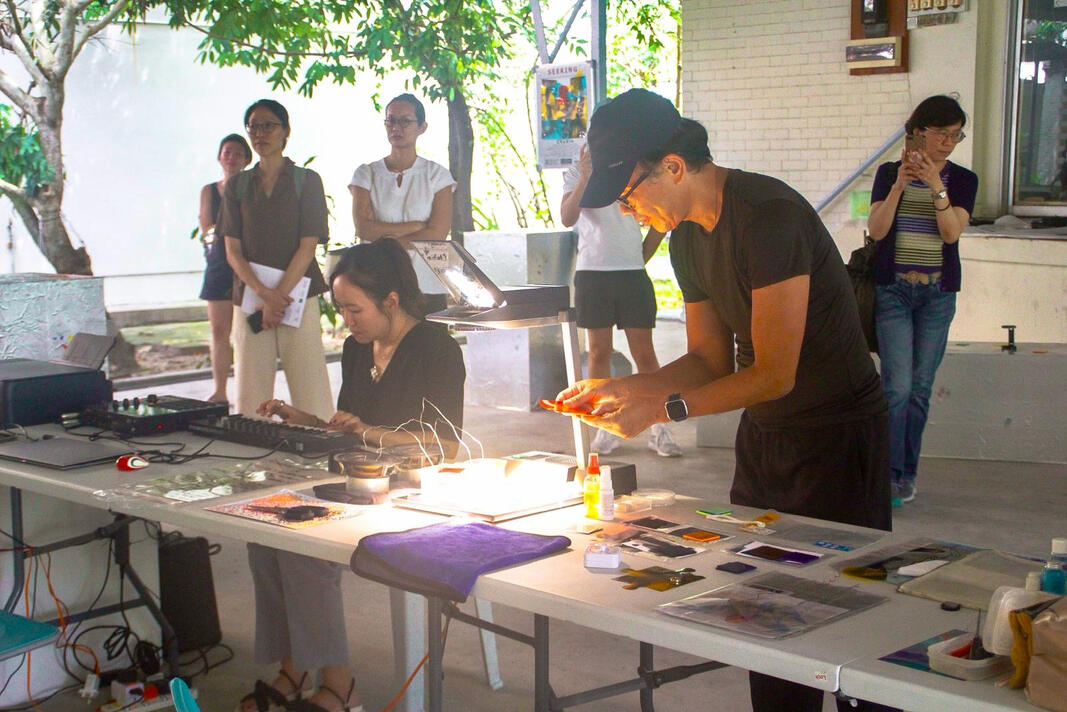
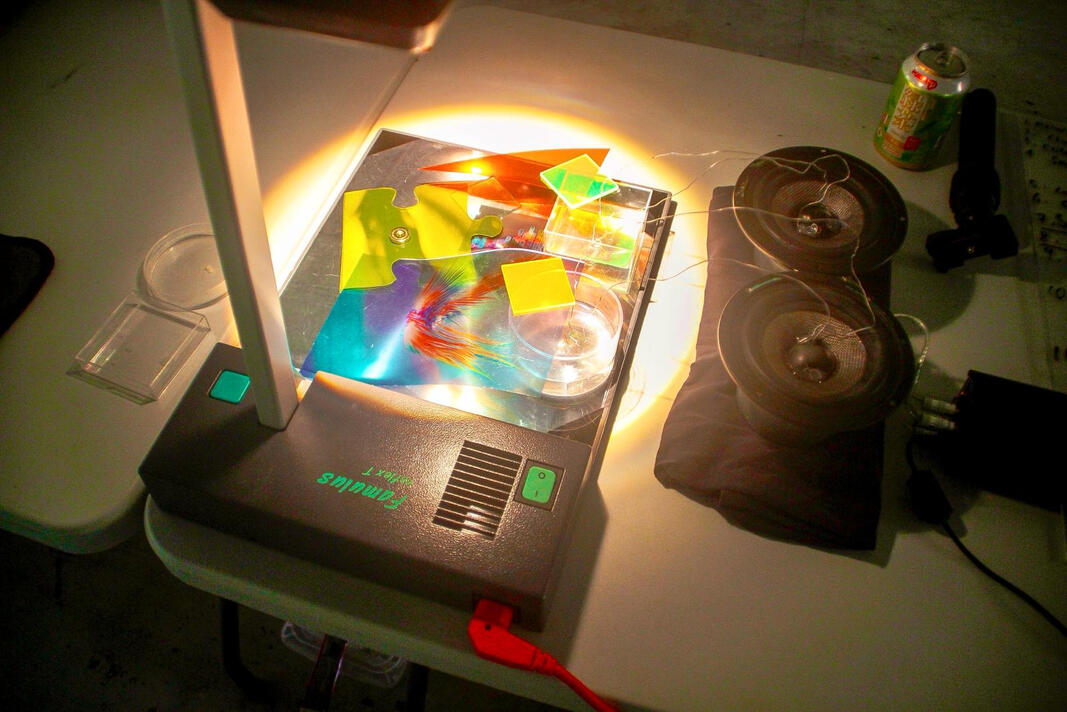
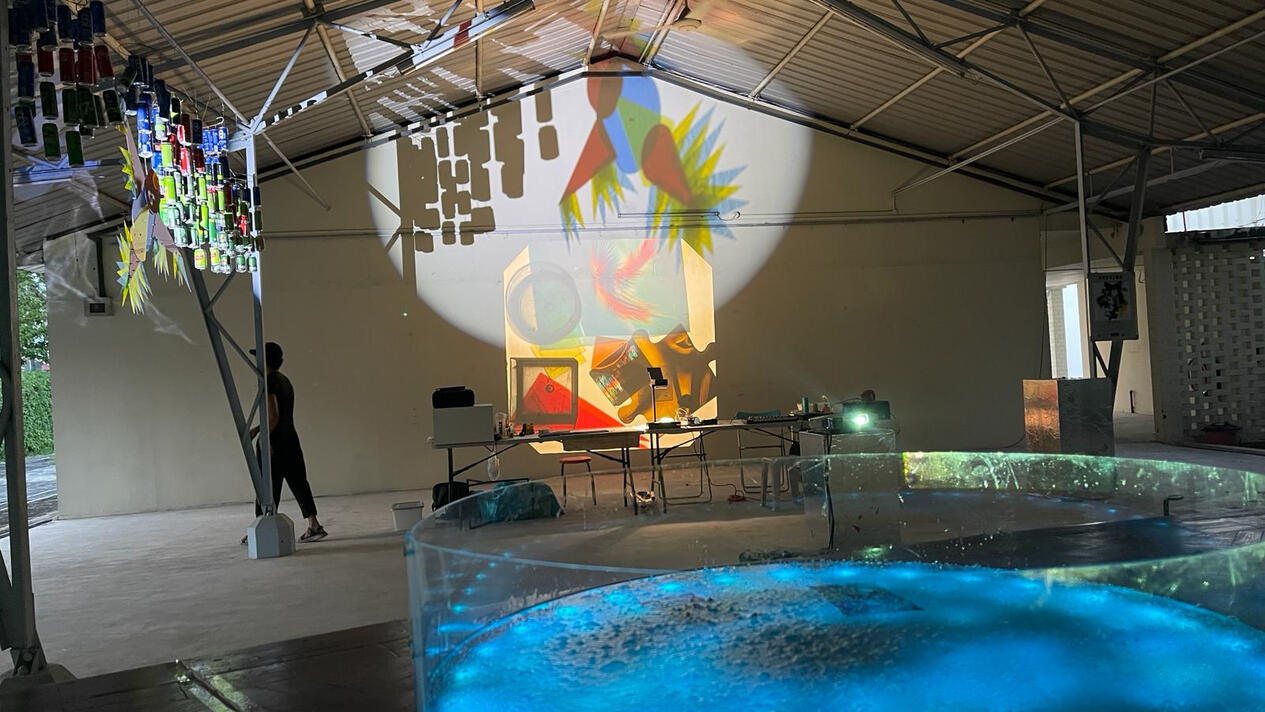
With “Sound of Sound - Colours in Dream,” we wanted to create a space where people can rediscover the magic of dreaming. By listen to the rhythm of our hearts, and paint the tune of our dreams. A life filled with dreams is like a bird, even with clipped wings, it can still fly. Our installation features a bird made from colourful, translucent pieces soaring towards the sky. Alongside, a DIY wind chimes crafted from soda cans. On the stage, a ‘dreaming well’ filled with color slime which will evolve periodically and illuminate the space. The changing surface of the slime adds a temporal dimension, reflecting the fluidity of our perception.During workshops, audience paintings are scanned, printed on slime, and transferred to the ‘Dreaming Well.’ We convert colors and soda can barcodes into sounds, creating visual patterns on water with OHP projection and music composed with instruments, responding to evolving visual displays representing dreams.In our performance, we use OHP to project the evolving visual displays, enhancing the immersive experience. “The Sound of Sound” explores the interconnected world where everything resonates with hidden sounds, echoing like an orchestra. Modern science reveals existence as a reverberation of energy and vibrations. The exhibition delves into the intricacy of forms and sounds, showcasing their deep connection. Our aim is to transport the audience to a different dimension, empowering them to dream and tuning into subtle sounds beyond human hearing.Artists:
Joo Choon Lin & Colin Justin Wan
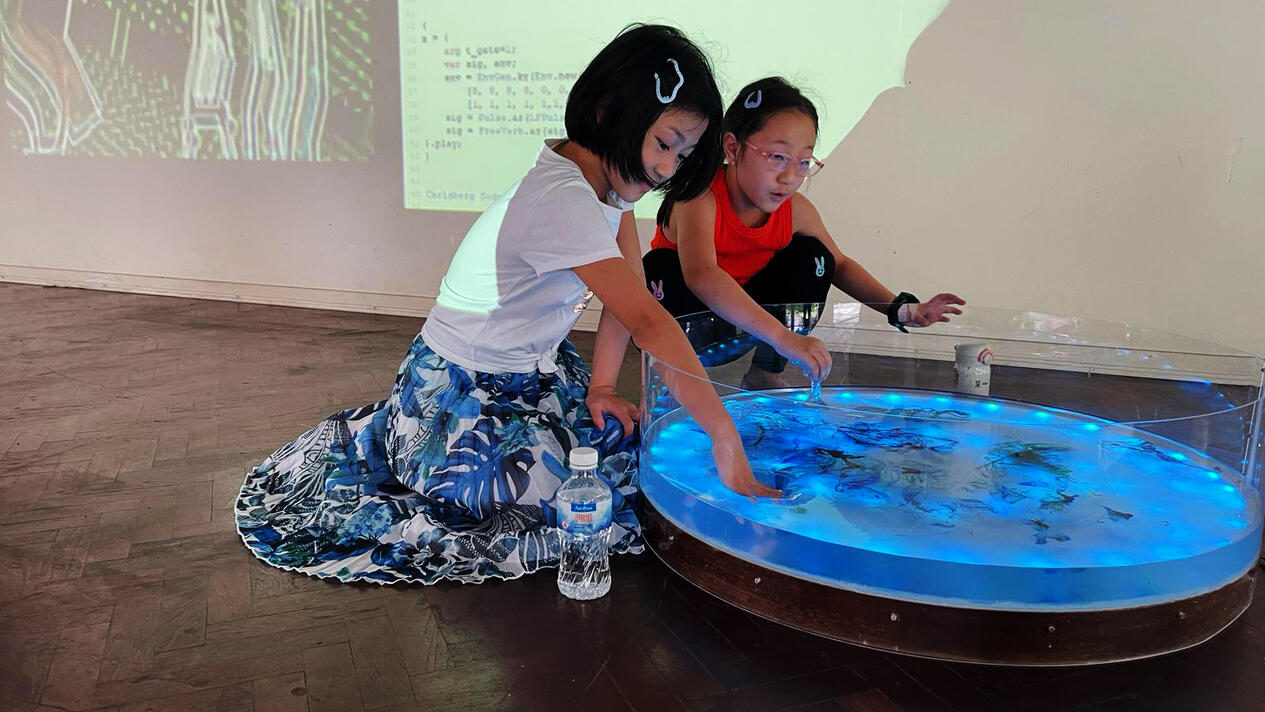
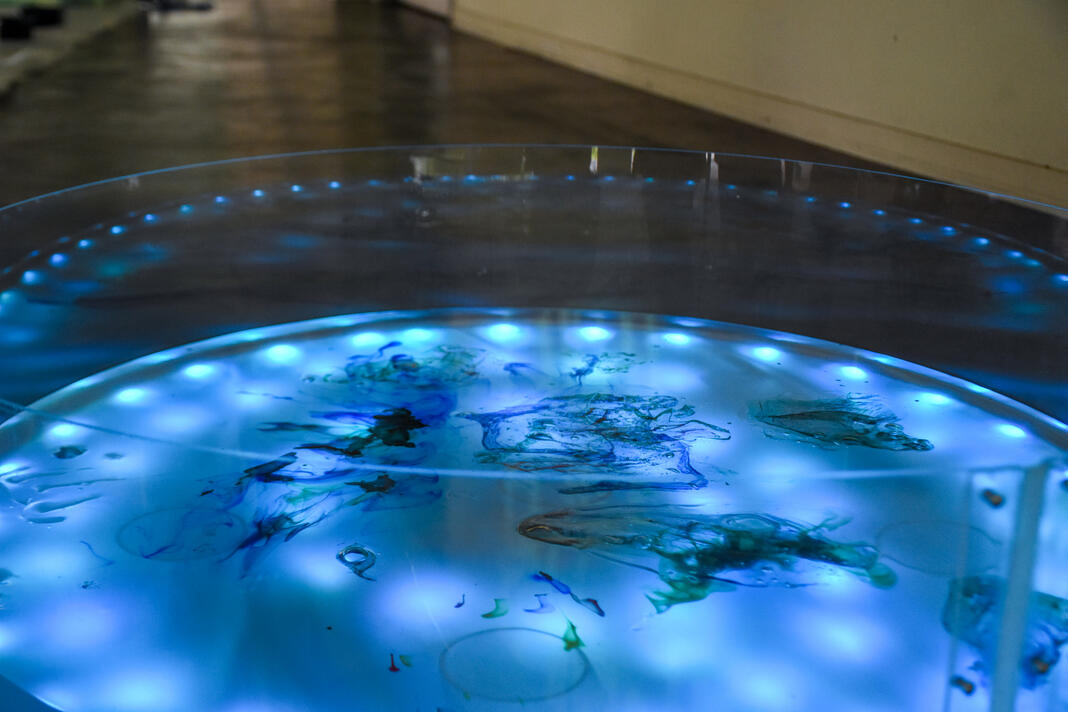
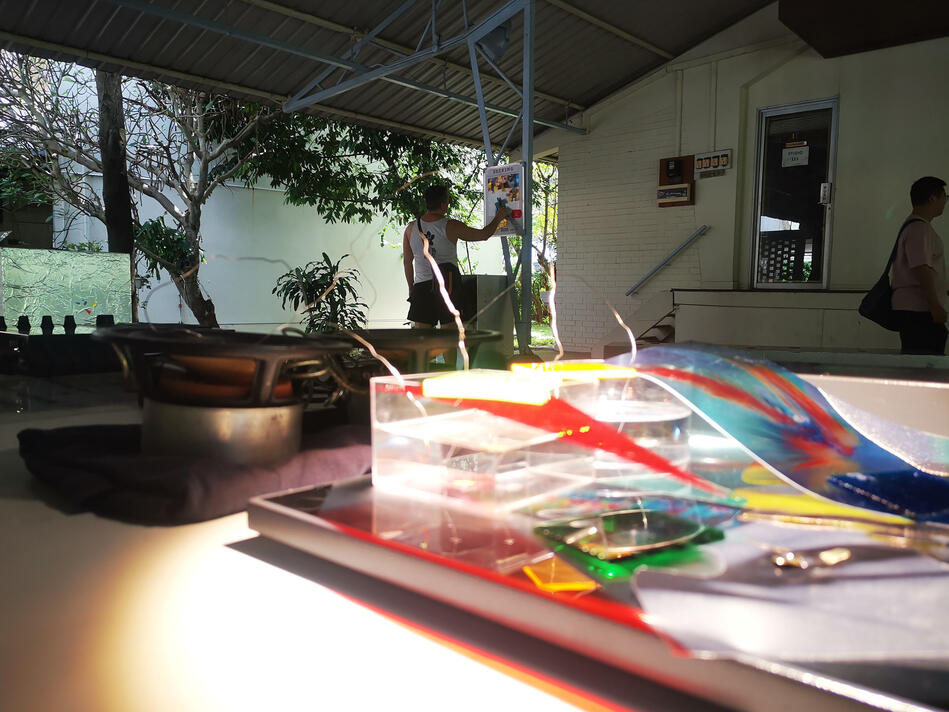
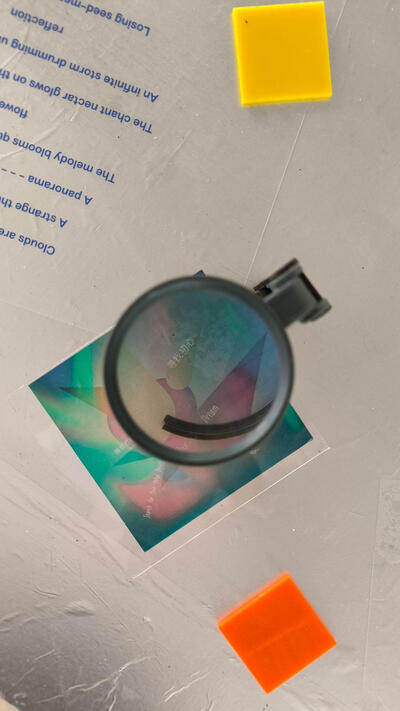
© Joo Choon Lin. All rights reserved.
I Just Want You to FEEL the FEELING I FELT
Part of The laugh laughs at the laugh, The song sings at the song, Singapore Biennale 2025
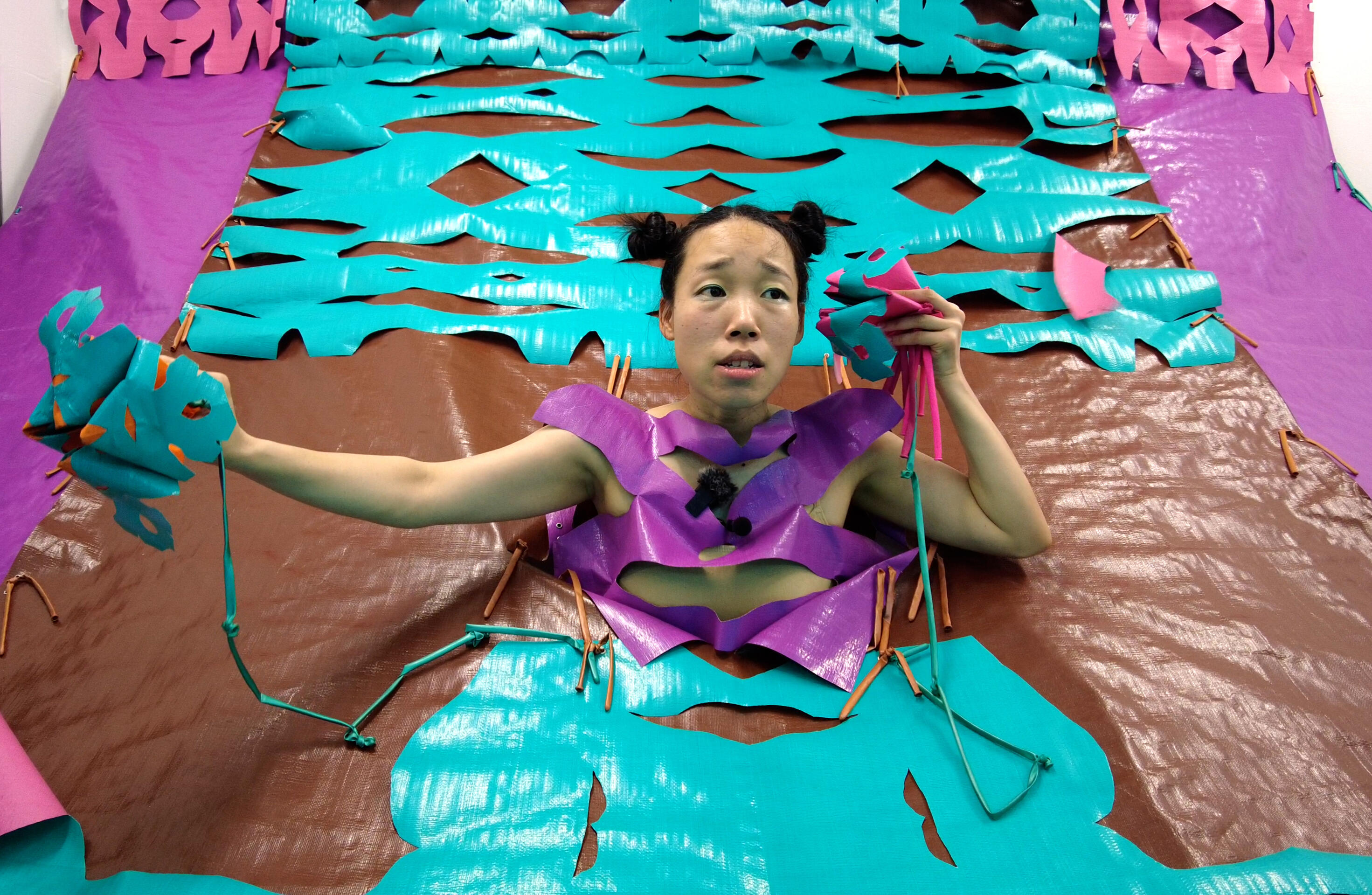
Performed by Rachel Nip
Music by Joe NgSpecial thanks to Selene Yap, Pearlyn Tay, Rachel Zuzarte , Alan Chong and Kamarul.I Just Want You to FEEL the FEELING I FELT is a live performance within my exhibition The Laugh Laughs at the Laugh, The Song Sings at the Song at 47 Tanglin Halt, part of Singapore Biennale 2025: pure intention. Set against geometric patterns and layered color fields, the performer emerges through a central opening, half-revealed and half-submerged, visually absorbed into the surrounding material. This partial immersion blurs the boundary between body and environment, evoking a sense of psychological drift shaped by disorientation, alienation, and the sensation of slipping in and out of reality.Through recitation, singing, gesture, and interaction with a wearable finger sculpture reminiscent of a paper chatterbox, the performance explores the rhythm of revealing and concealing thoughts, memories, and emotions. In dialogue with the site’s history as an aging and wellness center for people with dementia, the work evokes the fragile links between memory, identity, and the body, creating fleeting, ritual-like moments that capture the complexity of internal experience.
© Joo Choon Lin. All rights reserved.
Film-objects
Solo Exhibition: Dance in the Destruction Dance, Singapore Art Museum, 2023
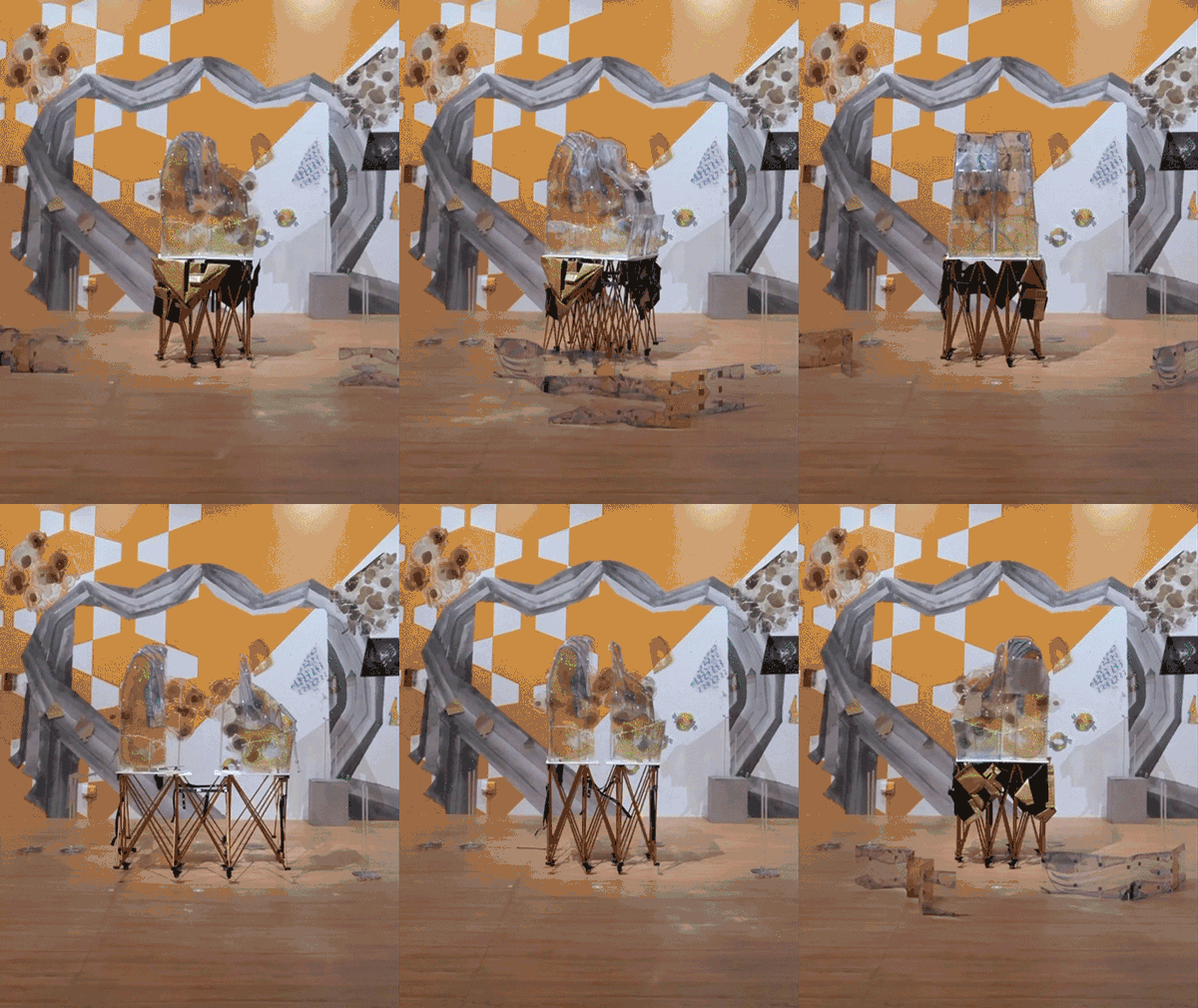
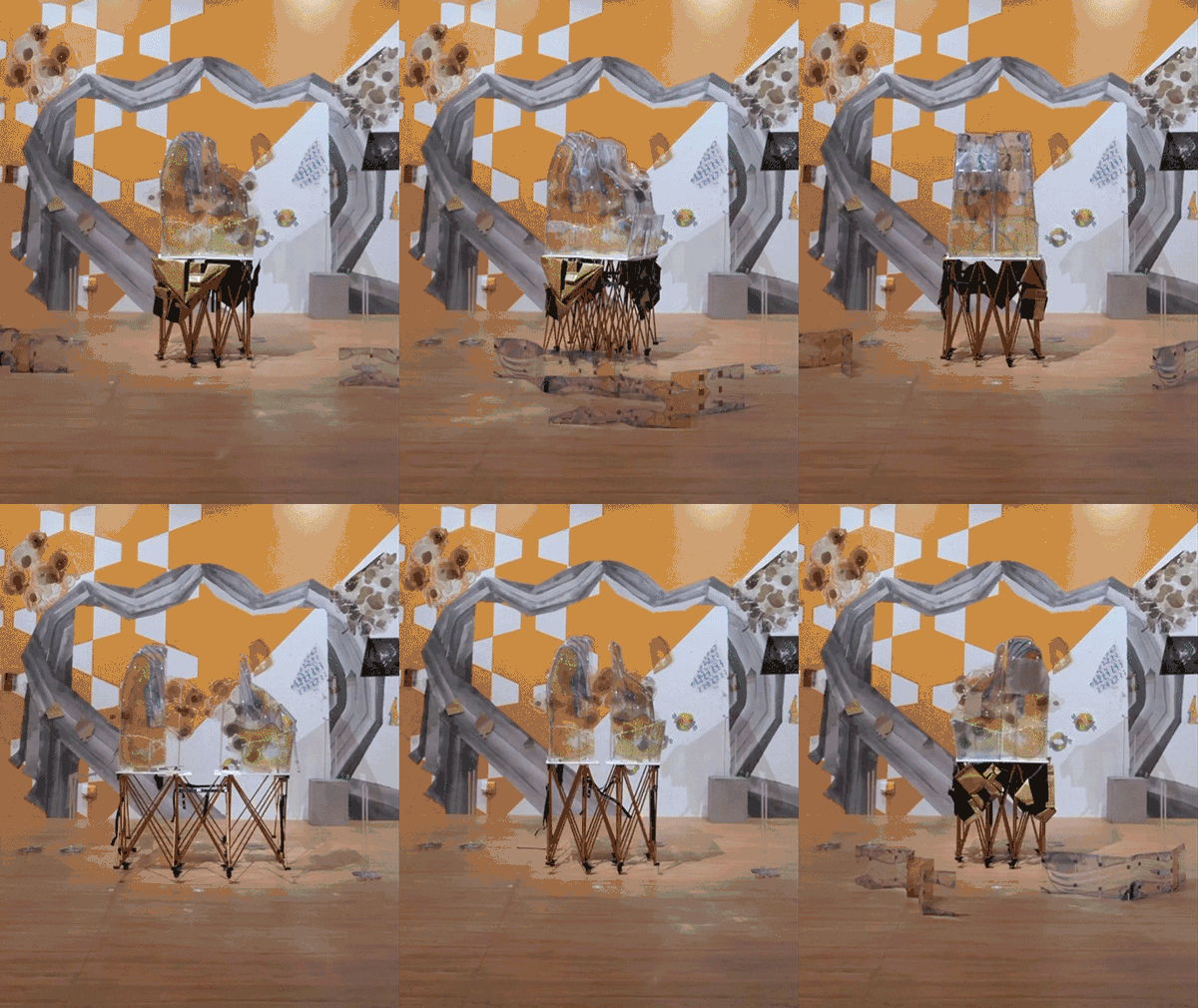
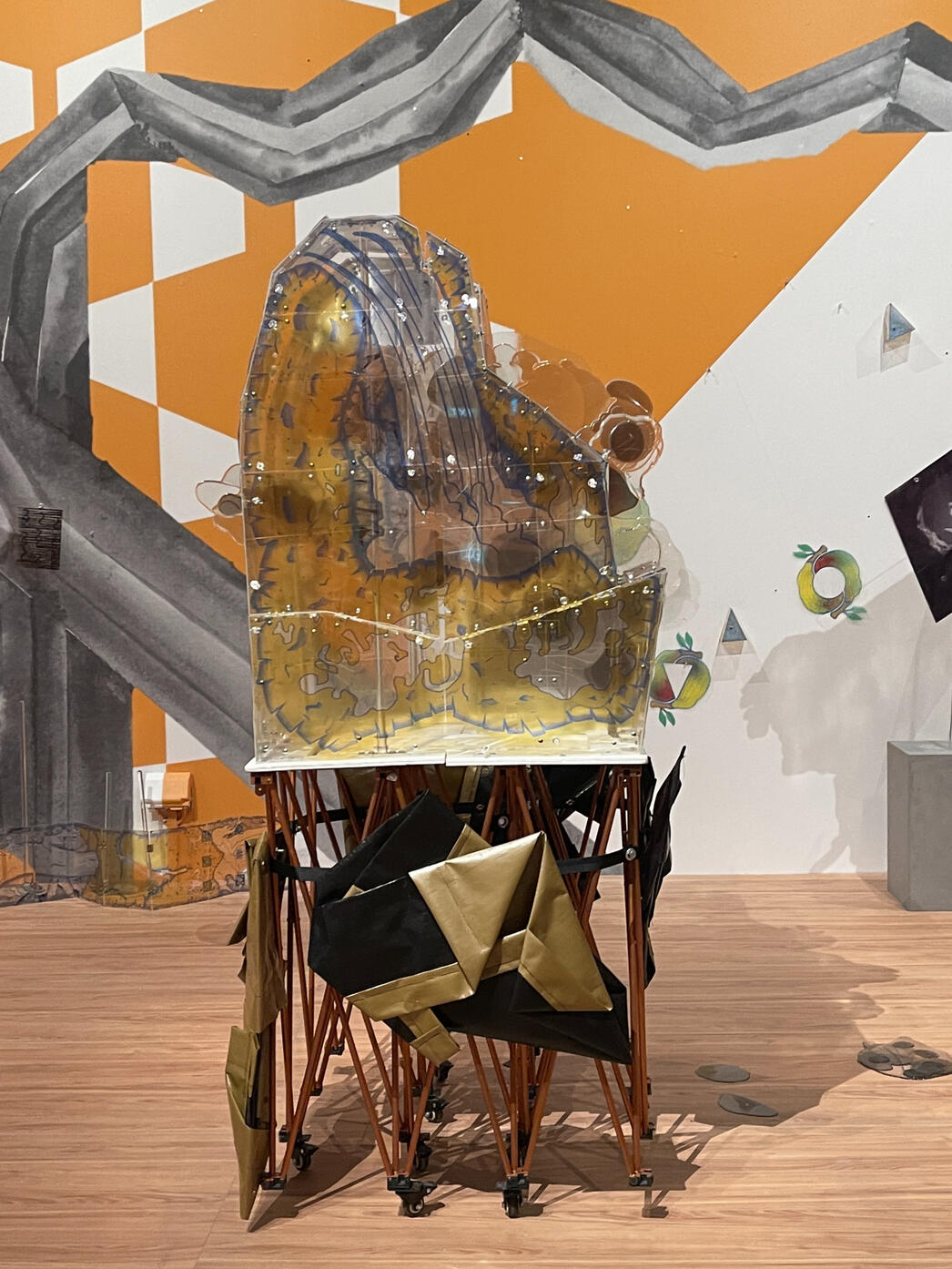
The exhibition was transformed into a staging space where the works are brought into being, activated, contorted and negated by the words spoken by the performers. I have been exploring new ways of engaging with language, words, using sound as an instrument to open up new dimensions of life and experiences. In ‘Pear in Spring”, the 2 parts theatrical play, the voices of the actors are used as a tuning frequency to create a perpetual oscillation between the sculptures and the audiences, Like a bee flying towards a flower, the wingbeat of the bee that vibrates and activate the flower and cause the release of pollen. The process of activation creates a perpetual oscillation among the object and viewer, it create its own unique energy signature. ‘Dance’ is a metaphor for an open-ended space of metamorphosis processes, and reinvents the exhibition experience as a coherent object rather than a collection of individual works.I’m also using gestures of pull and push, open and close, inflating and deflating, folding and unfolding to embody a ‘tridimensional gesture’ when recognizable forms (shape of a mountain, pyramid, a box) turn into unrecognizable and disintegrated form. They are constantly evolving through activation by myself, the actors or by the work itself.
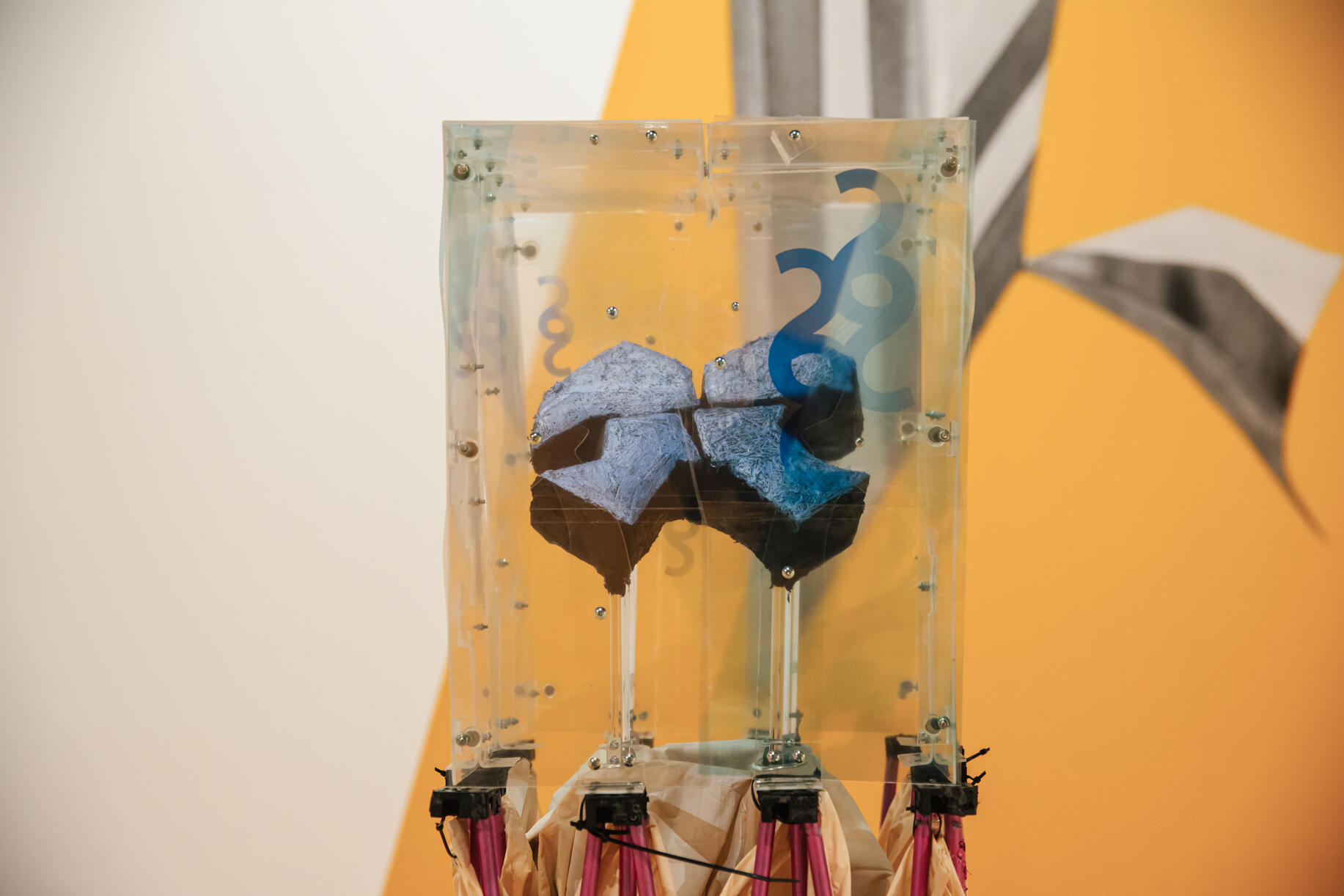
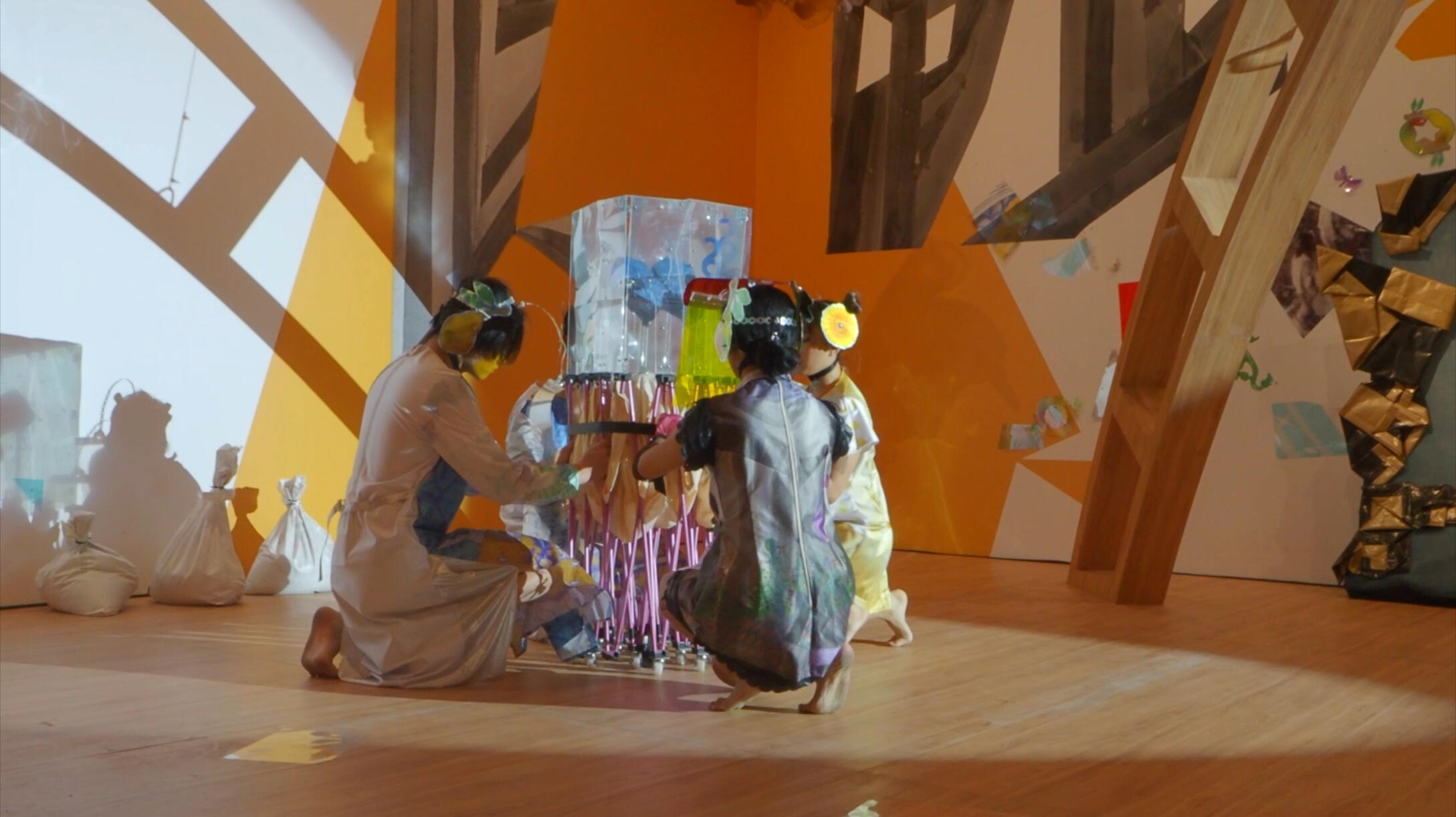
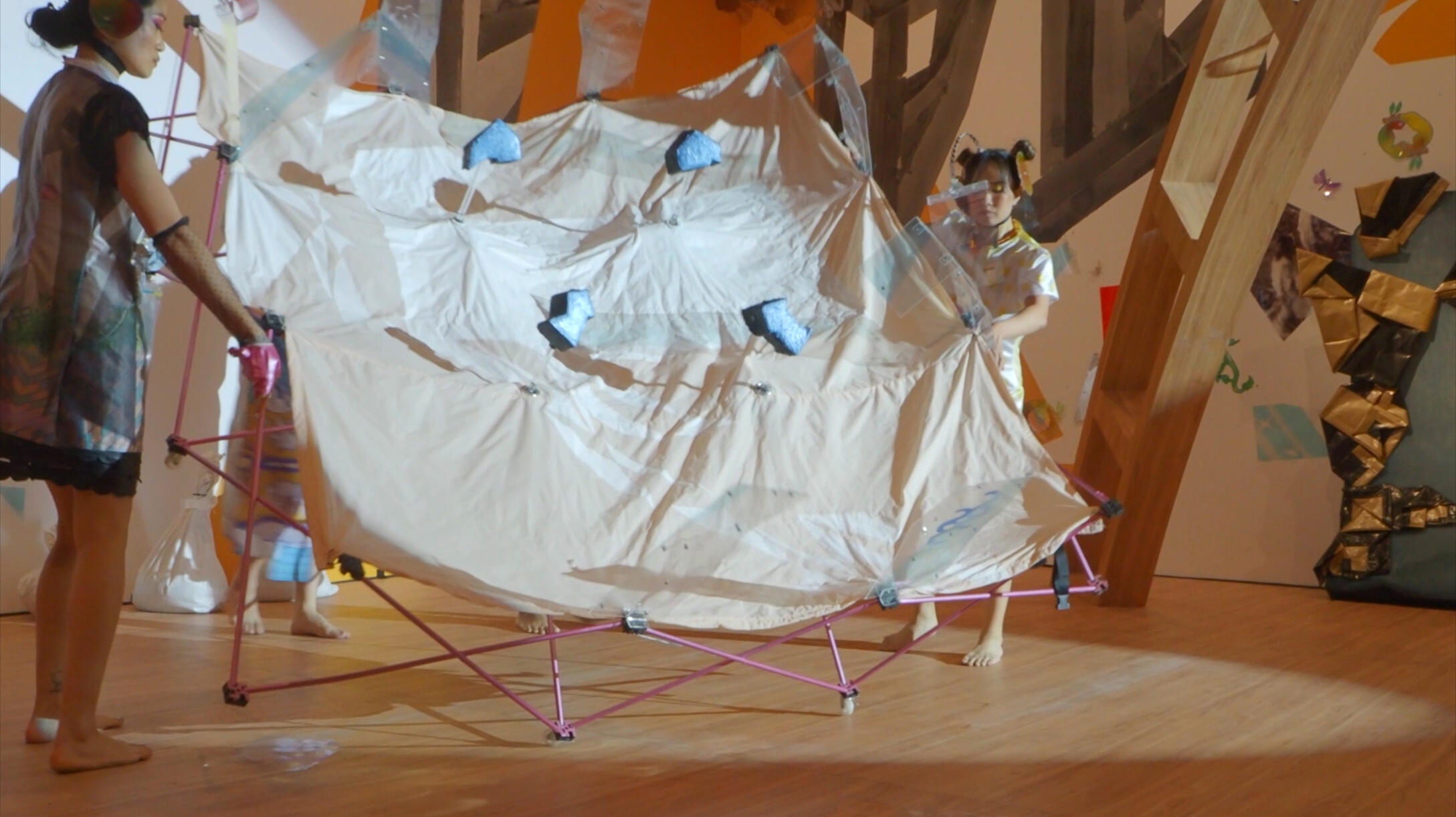
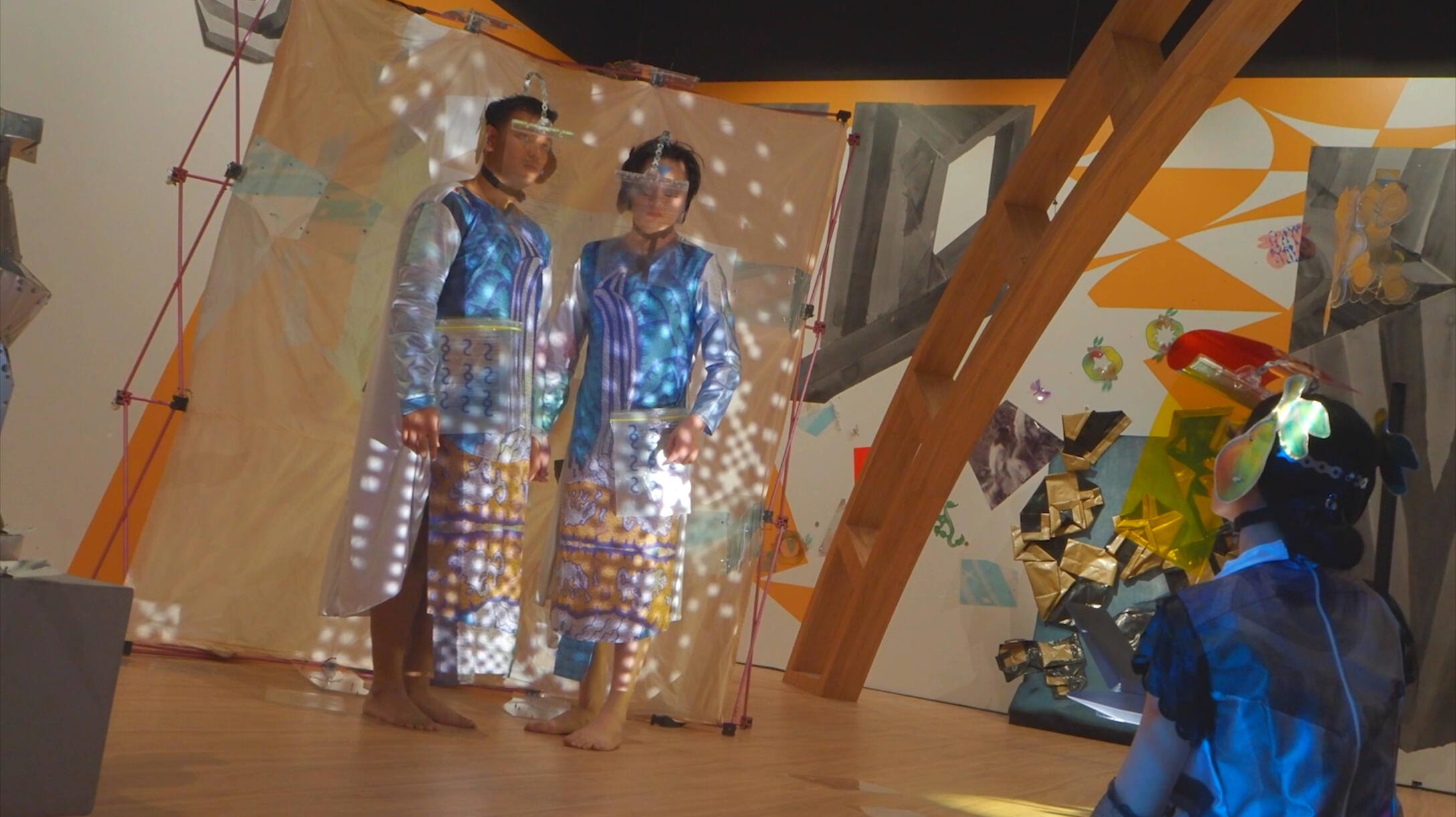
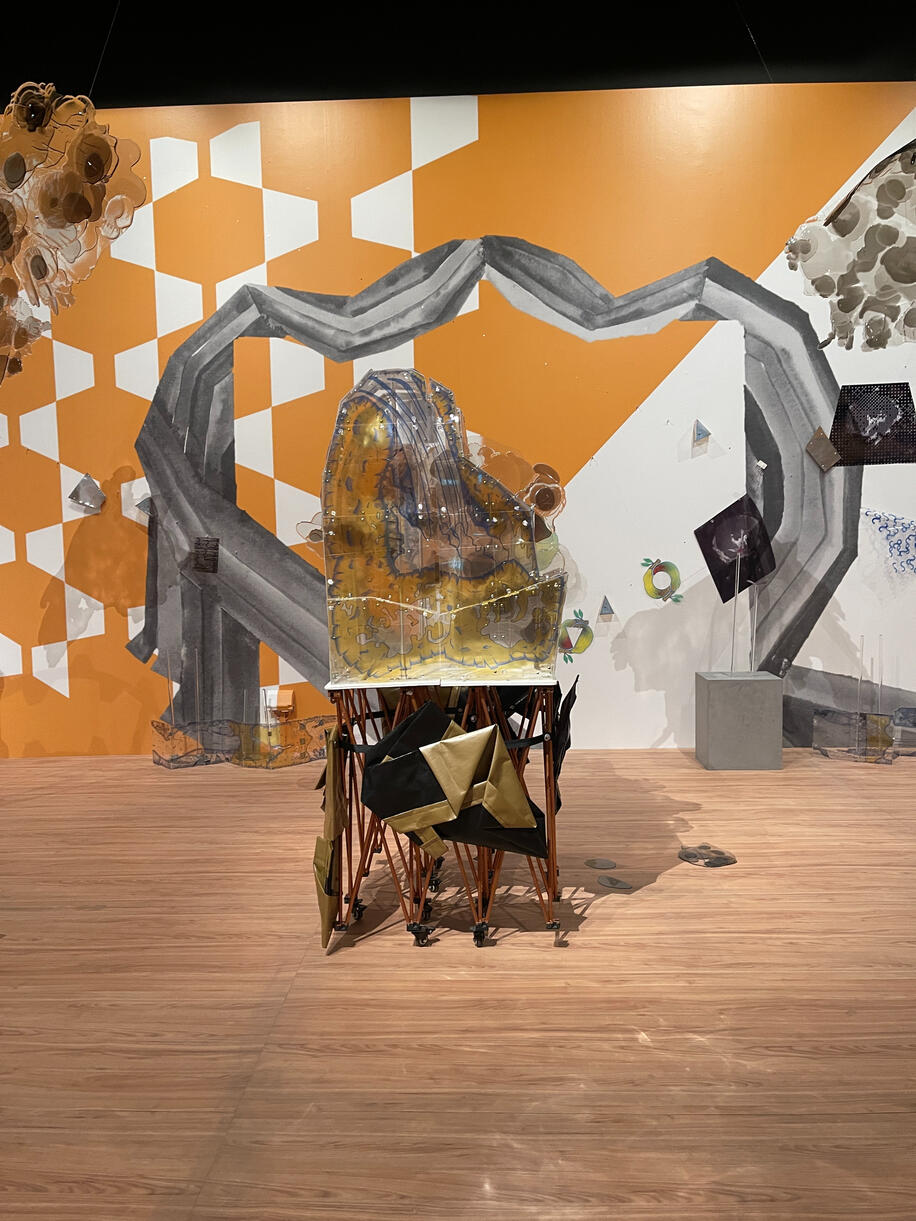
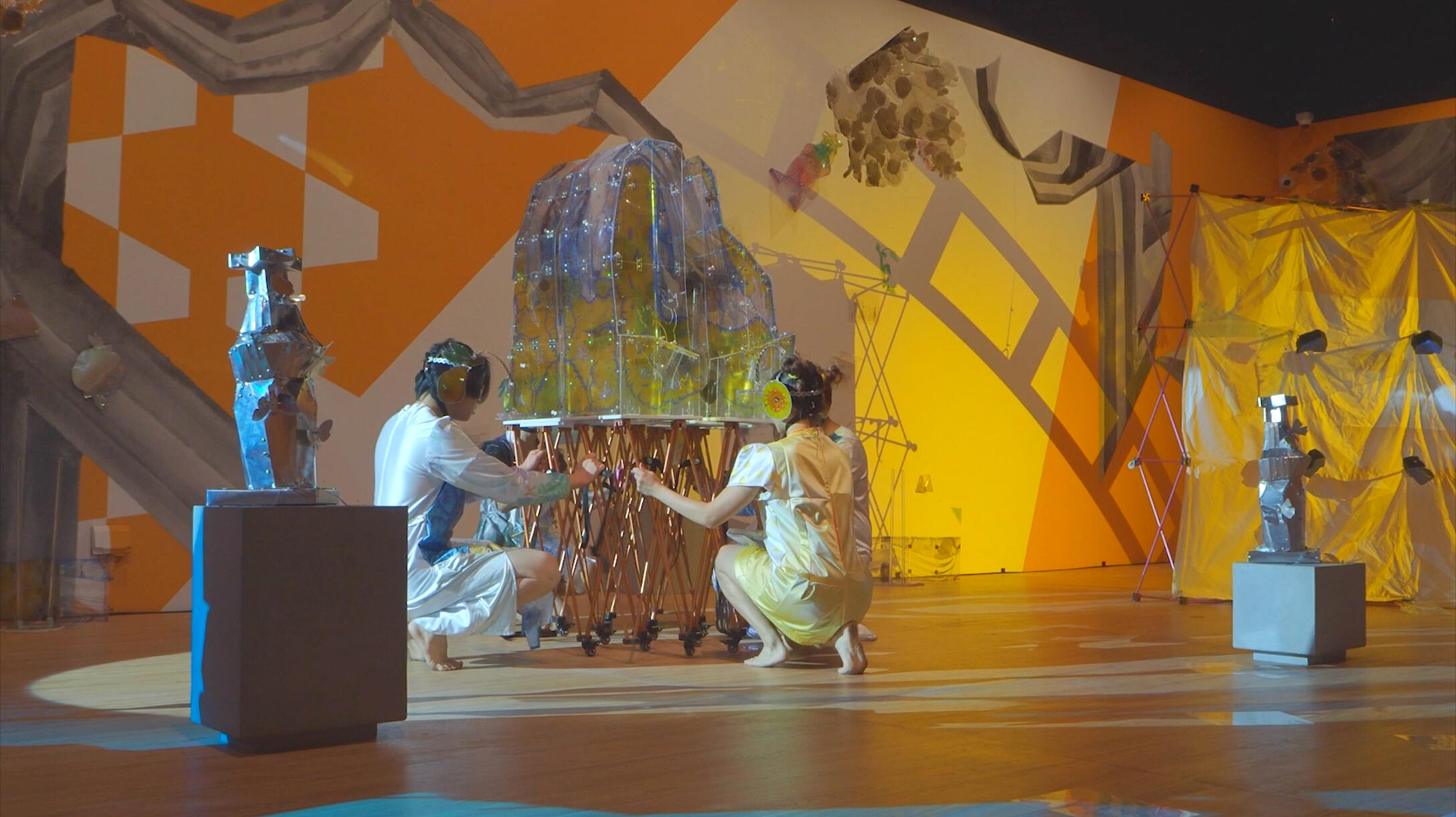
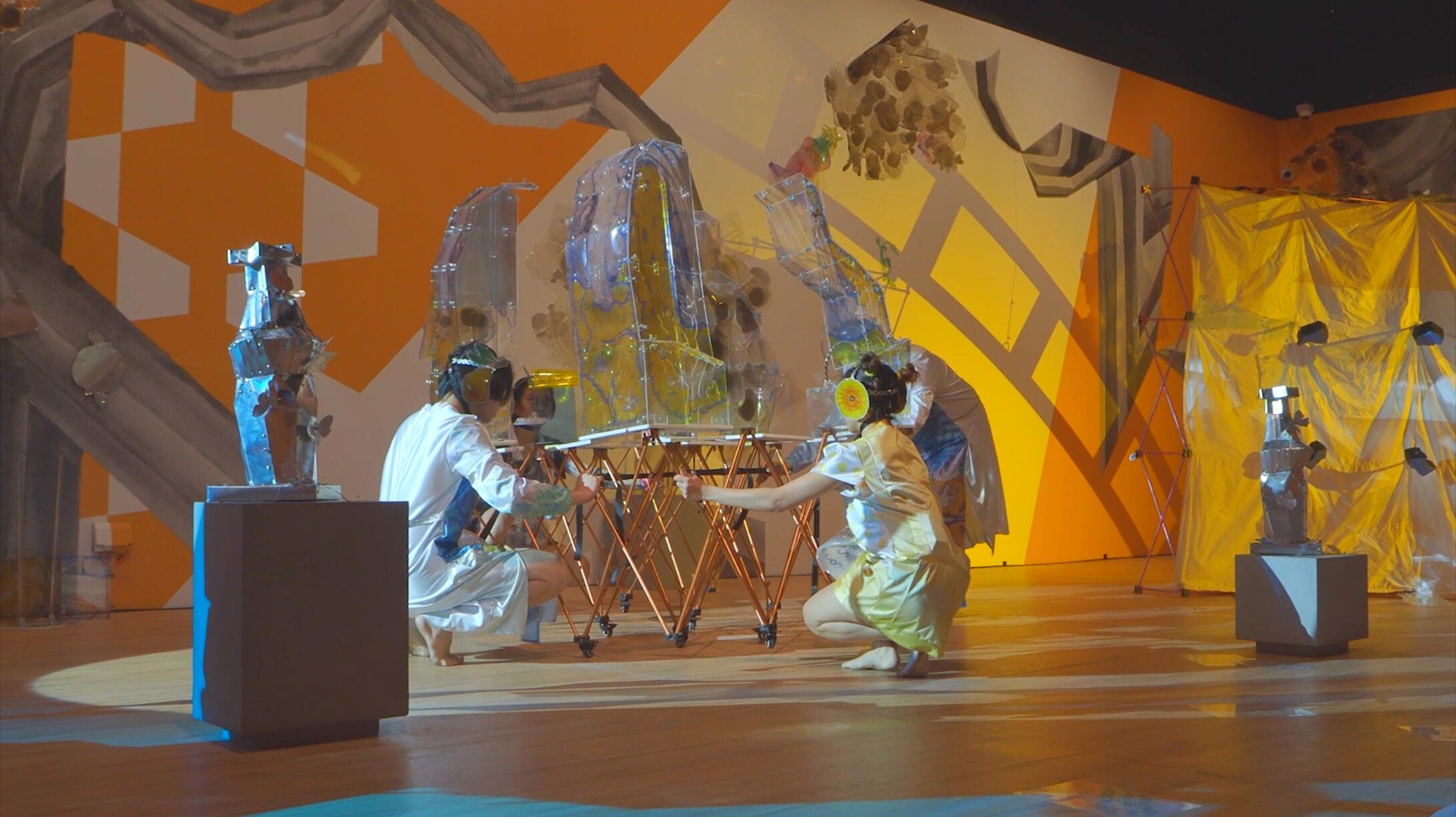
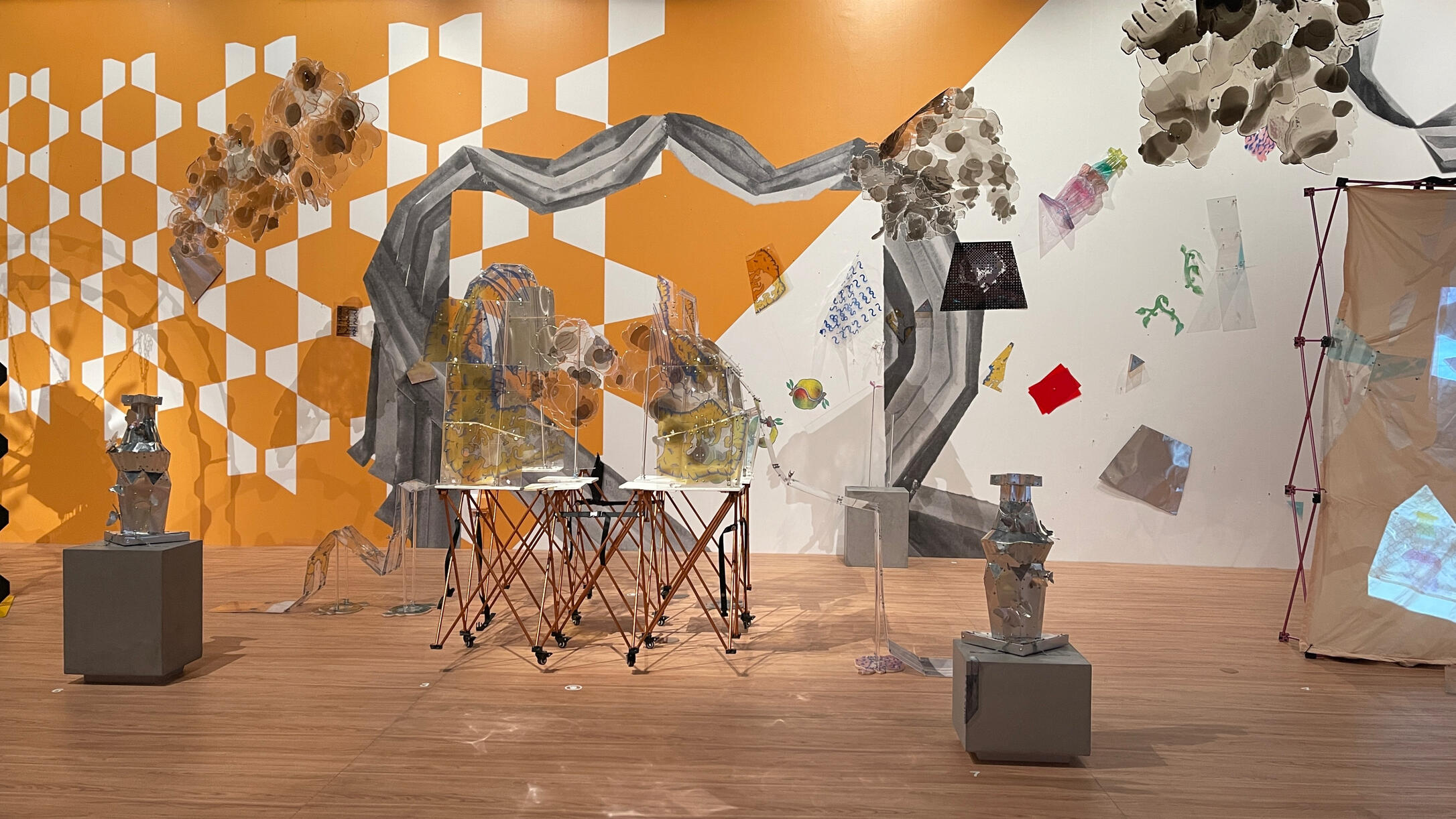
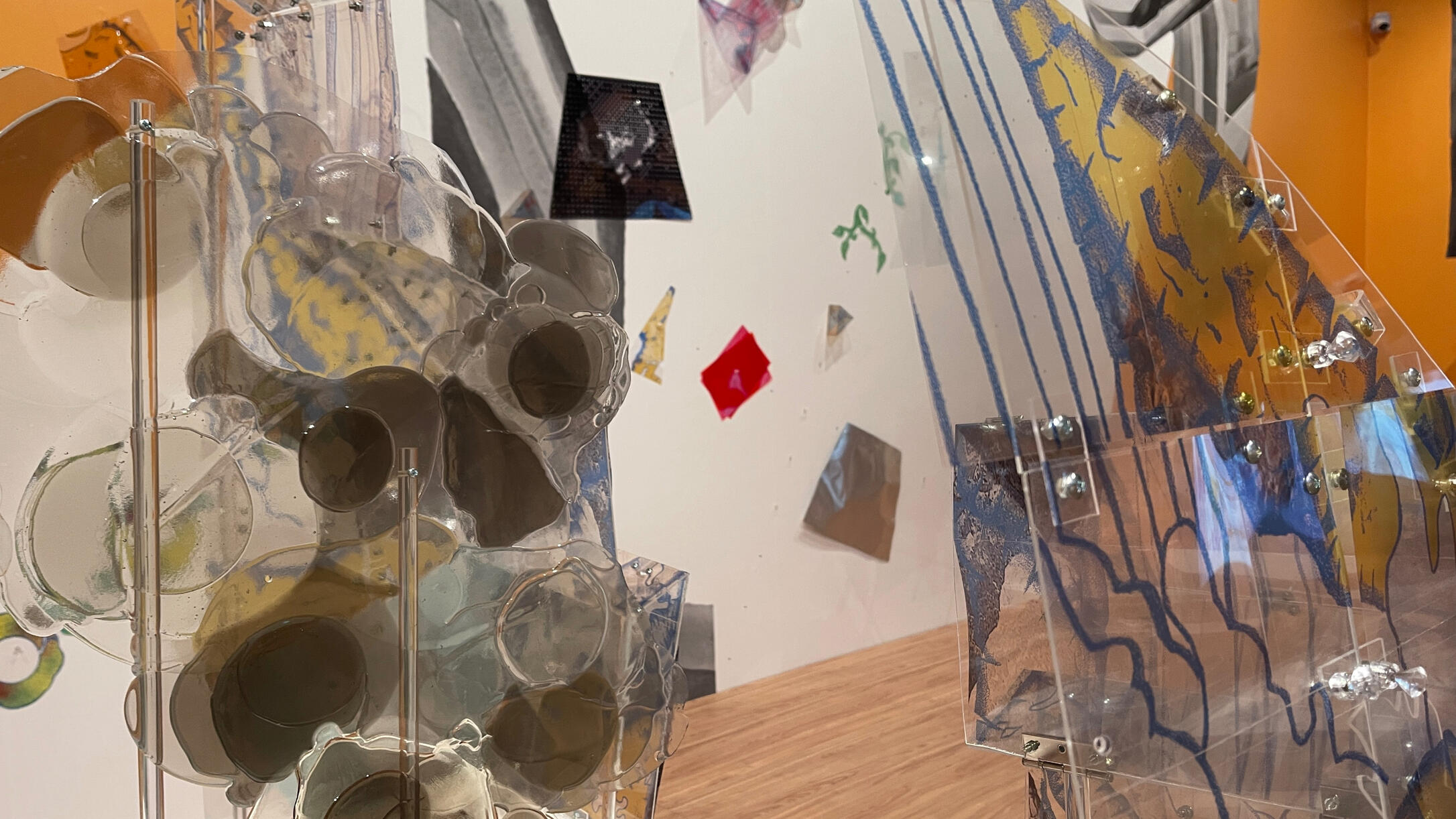
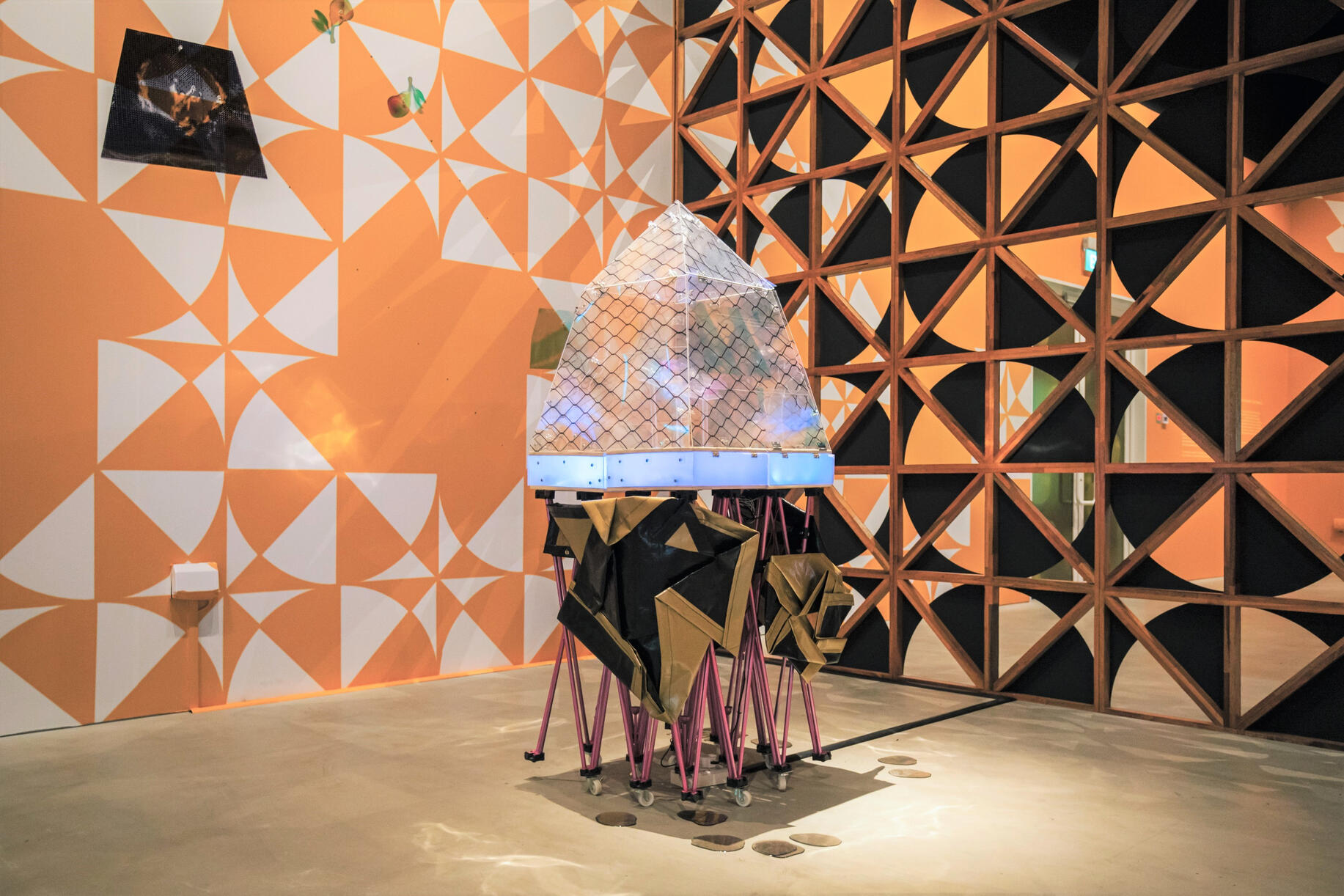
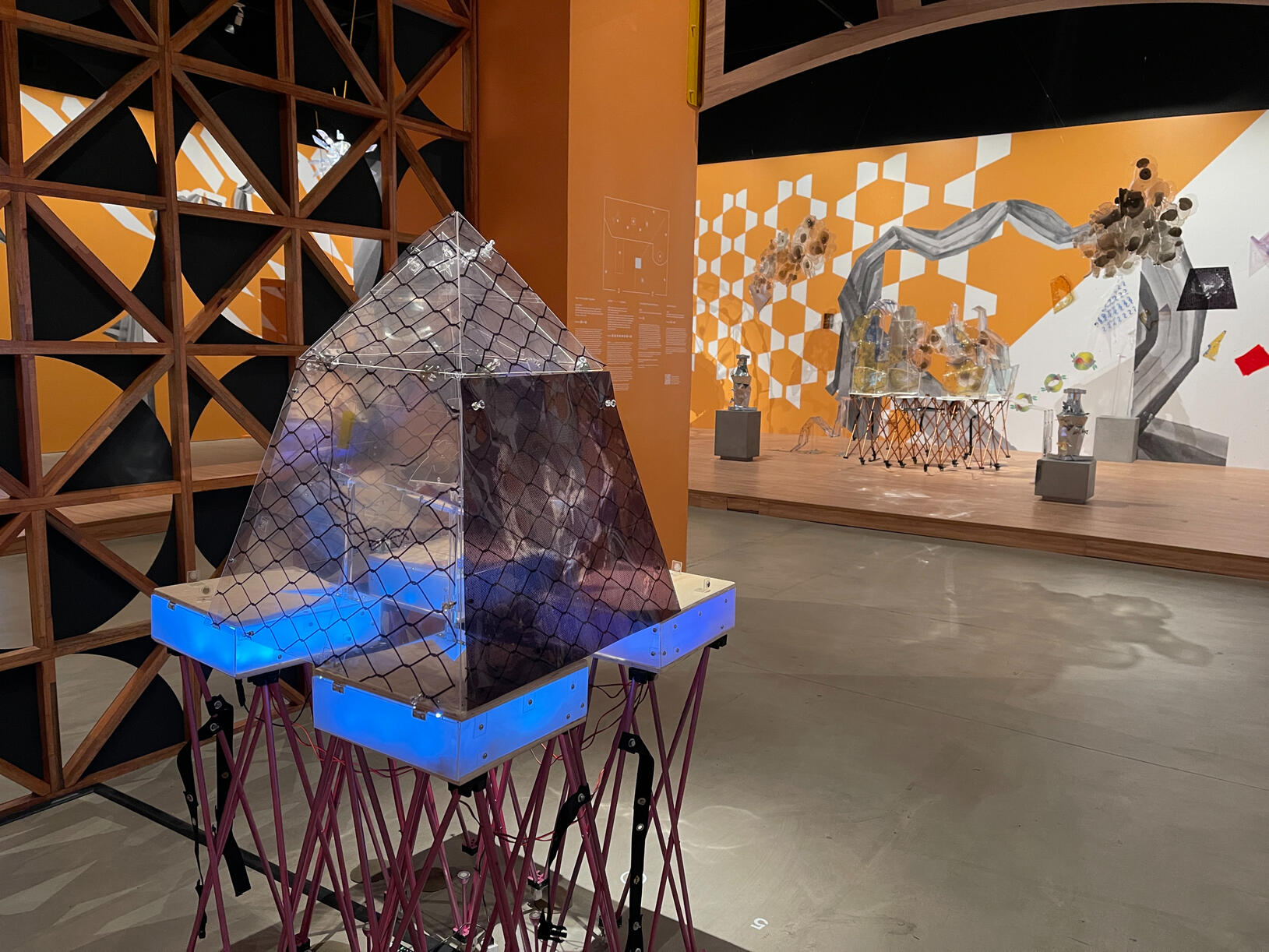
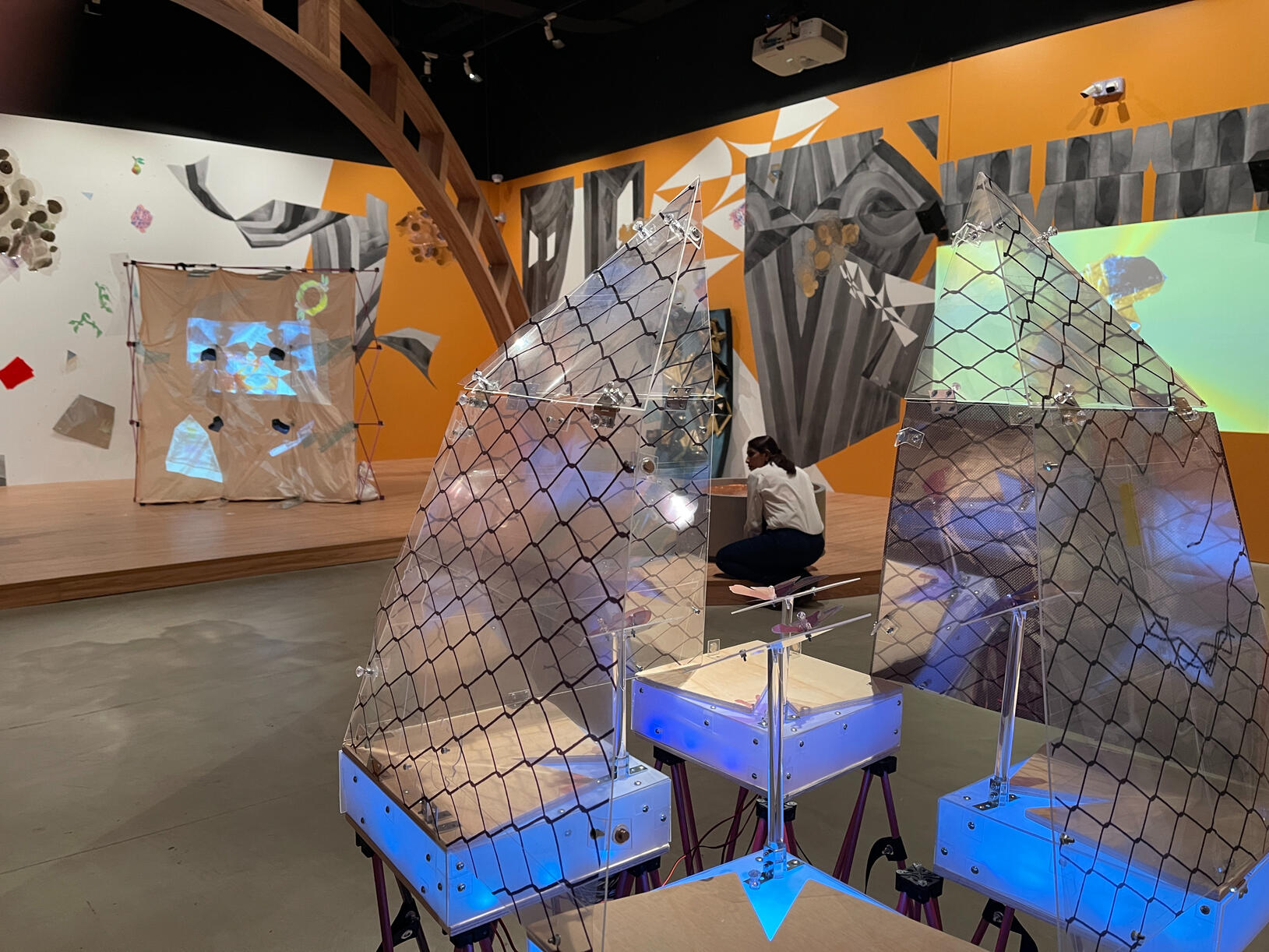
Image courtesy of Singapore Art Museum
The images above document the film-object’s transformation, showing both its collapsed and expanded states as activated by performers. I refer to the sculpture as a “film-object” because performers continuously add or remove layers of sheets, shifting it between opacity and full transparency. This process echoes the experience of watching a film—unfolding frame by frame—yet here the pacing is slowed and at times interrupted. The work remains in constant motion, evolving through successive states, much like a sequence of film frames coming into being. This unfolding takes place during the two-part theatrical play pEARs ‘--- --- ---’ in §pring, where the sculpture operates as both set and temporal device, shaping how the audience perceives duration, interruption, and transition.
© Joo Choon Lin. All rights reserved.
Dance in the Destruction Dance, Singapore Art Museum, 2023
Solo Exhibition: Dance in the Destruction Dance, Singapore Art Museum, 2023
Image courtesy of Singapore Art Museum
The exhibition was transformed into a staging space where the works are brought into being, activated, contorted and negated by the words spoken by the performers. I have been exploring new ways of engaging with language, words, using sound as an instrument to open up new dimensions of life and experiences. In ‘Pear in Spring”, the 2 parts theatrical play, the voices of the actors are used as a tuning frequency to create a perpetual oscillation between the sculptures and the audiences, Like a bee flying towards a flower, the wingbeat of the bee that vibrates and activate the flower and cause the release of pollen. The process of activation creates a perpetual oscillation among the object and viewer, it create its own unique energy signature. ‘Dance’ is a metaphor for an open-ended space of morphological/metamorphosis processes, and reinvents the exhibition experience as a coherent object rather than a collection of individual works.I’m also using gestures of pull and push, open and close, inflating and deflating, folding and unfolding to embody a ‘tridimensional gesture’ when recognizable forms (shape of a mountain, pyramid, a box) turn into unrecognizable and disintegrated form. They are constantly evolving through activation by myself, the actors or by the work itself.Alchemy informs my work both conceptually and materially. I am interested in the transformation of substances from dense matter into subtler, more refined states, and in the possibility of transmutation as both a physical and perceptual process. At times, my work feels like a form of consecration, where sound, vibration, and activation imbue materials with presence and energy. I explore how bodies, whether human, organic, or constructed, can glow, flow, vibrate, and radiate. Through rhythm, movement, and resonance, each work becomes an event, a living organism where perception, matter, and consciousness intersect and evolve,

Animated Film of pEARs ' --- --- --- ' in §pring, video projection
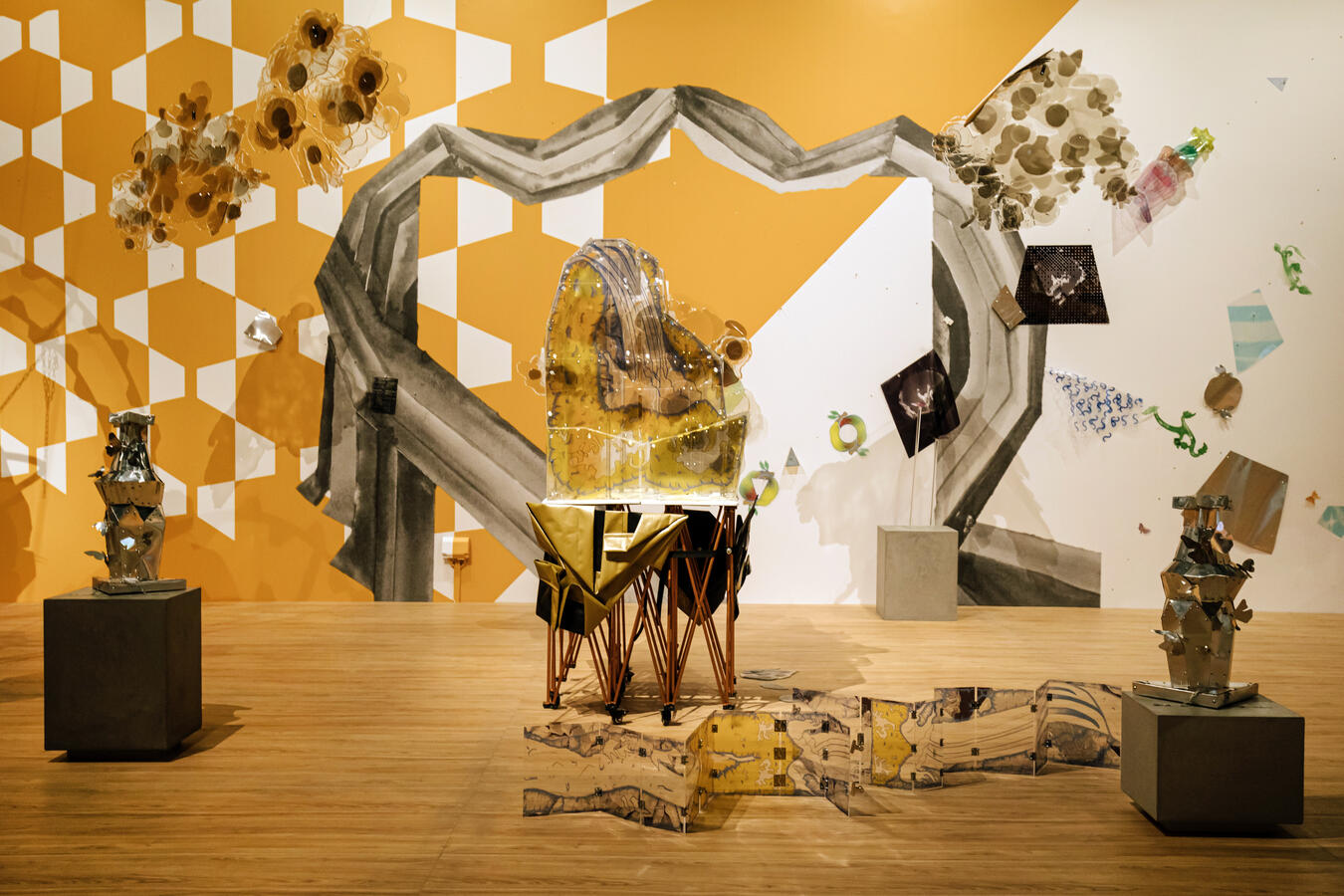
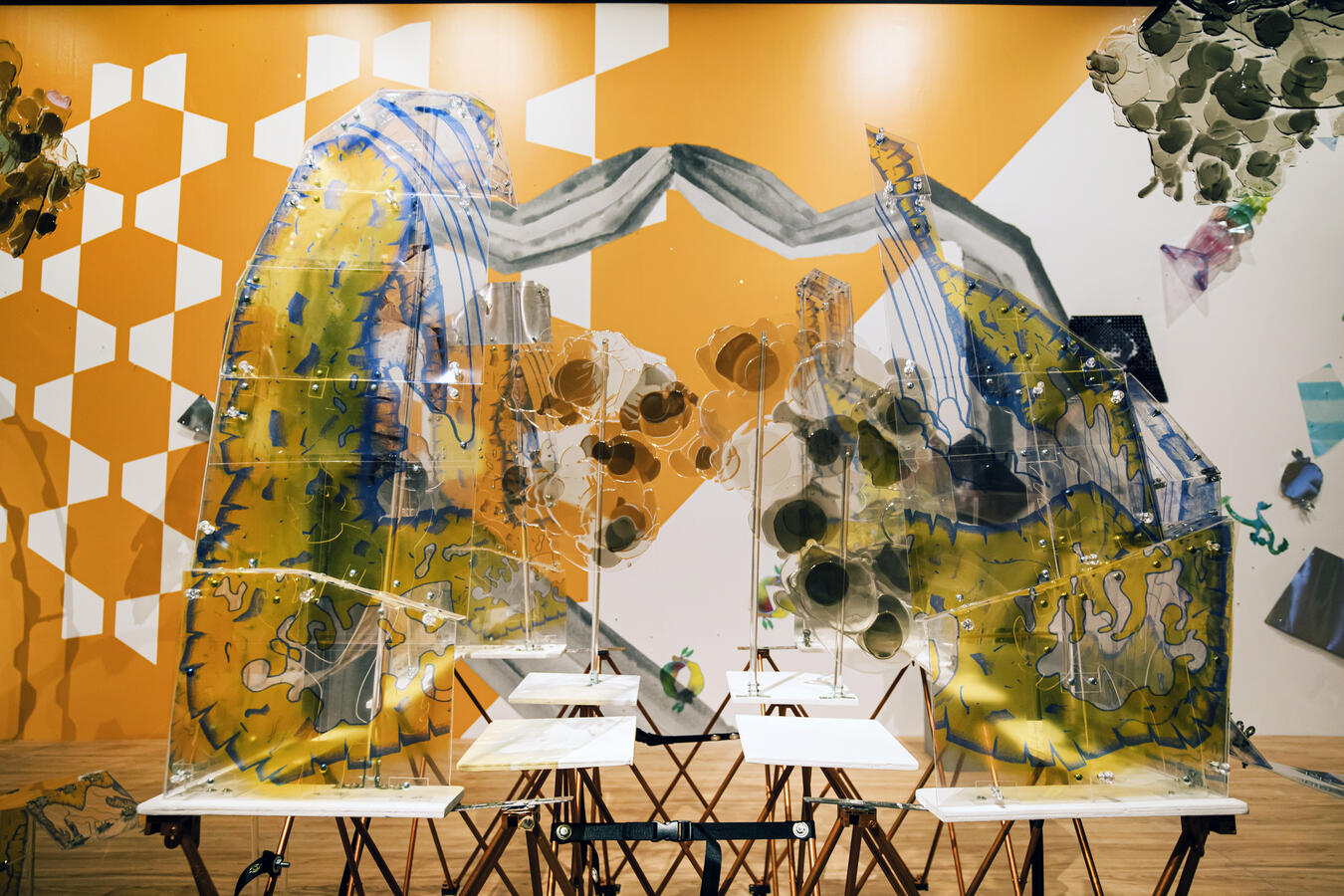
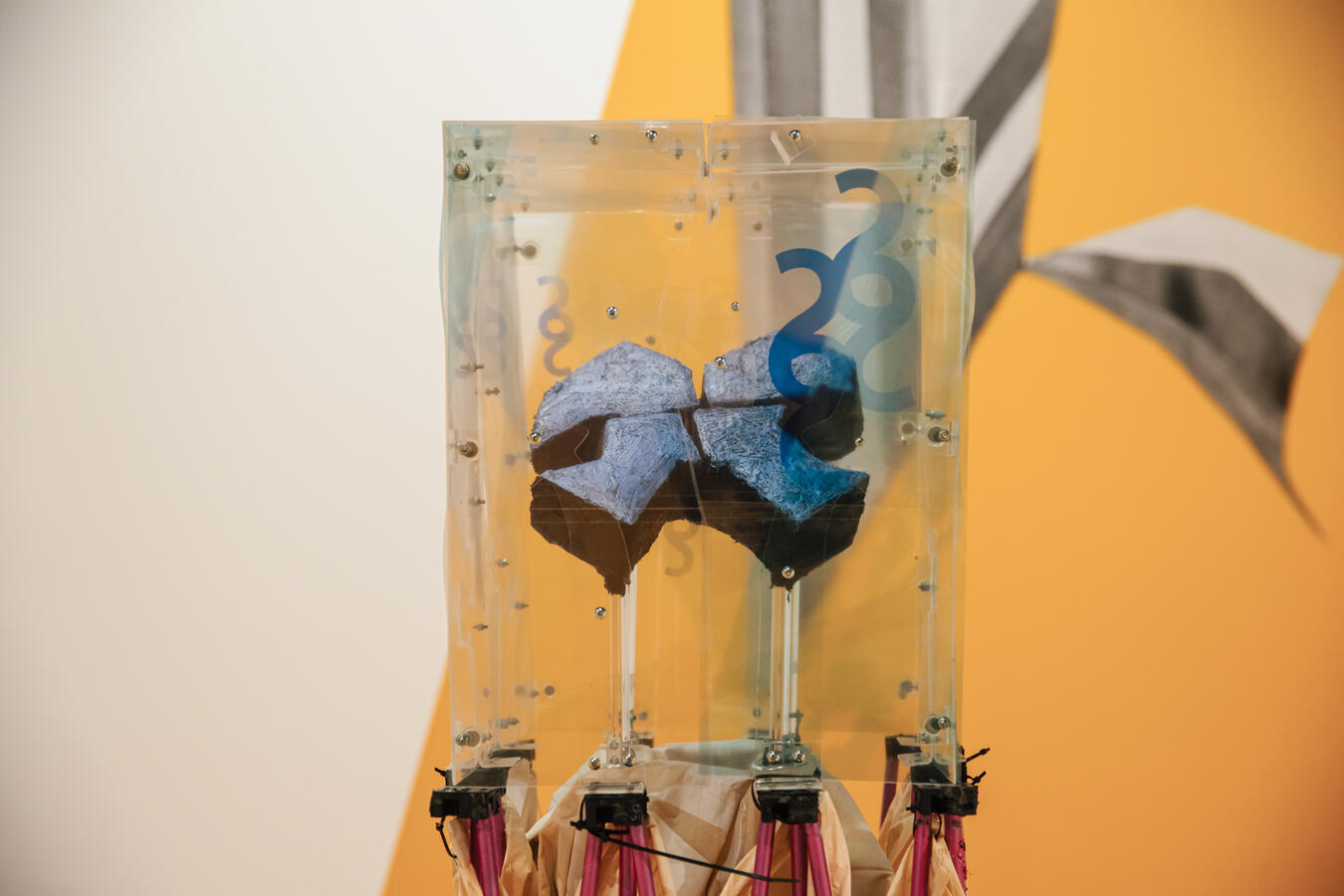
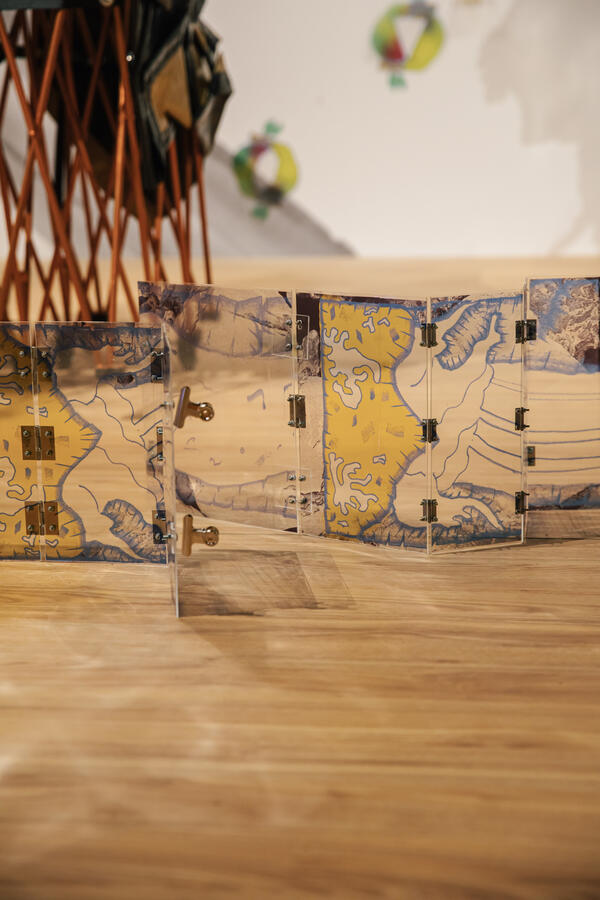
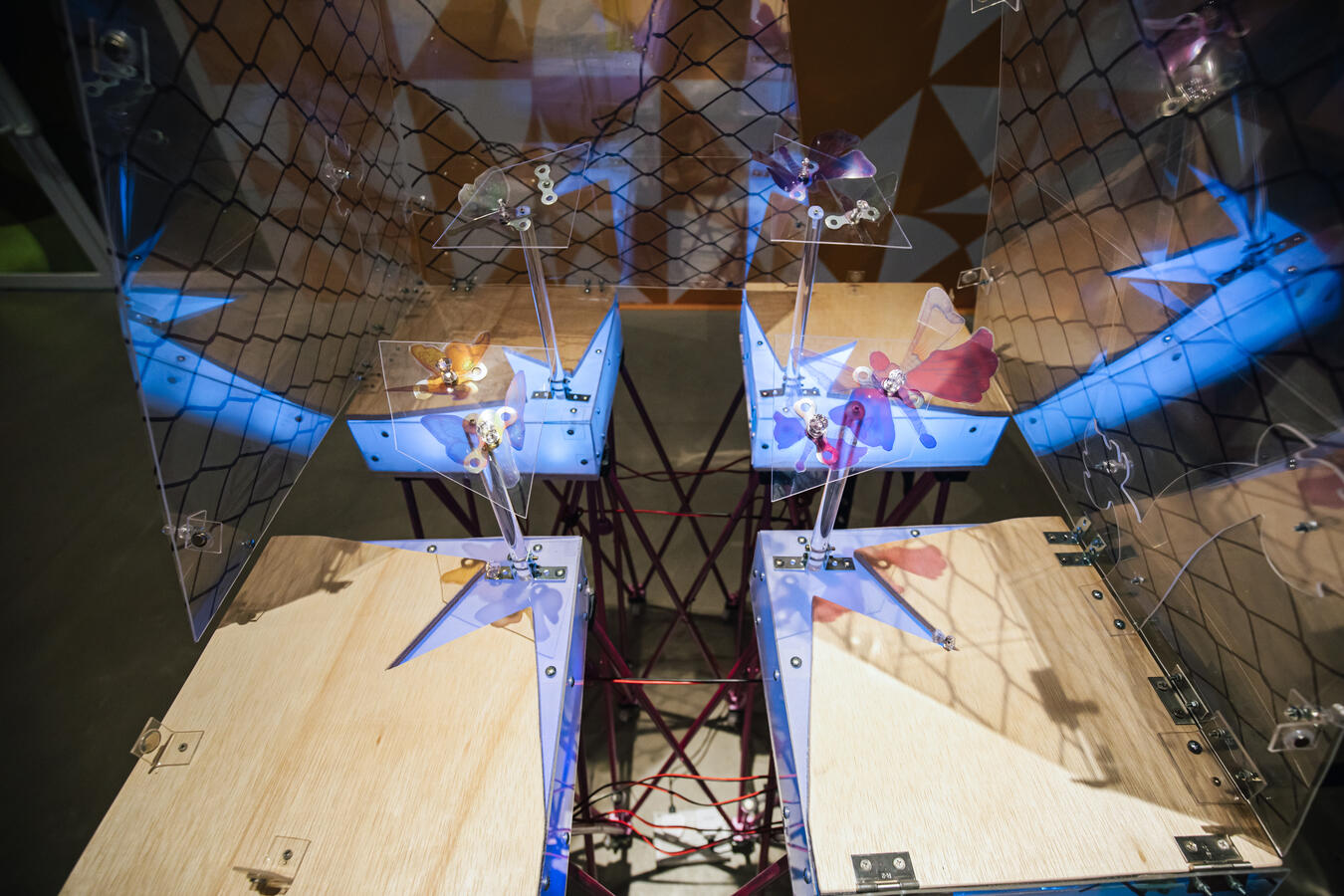
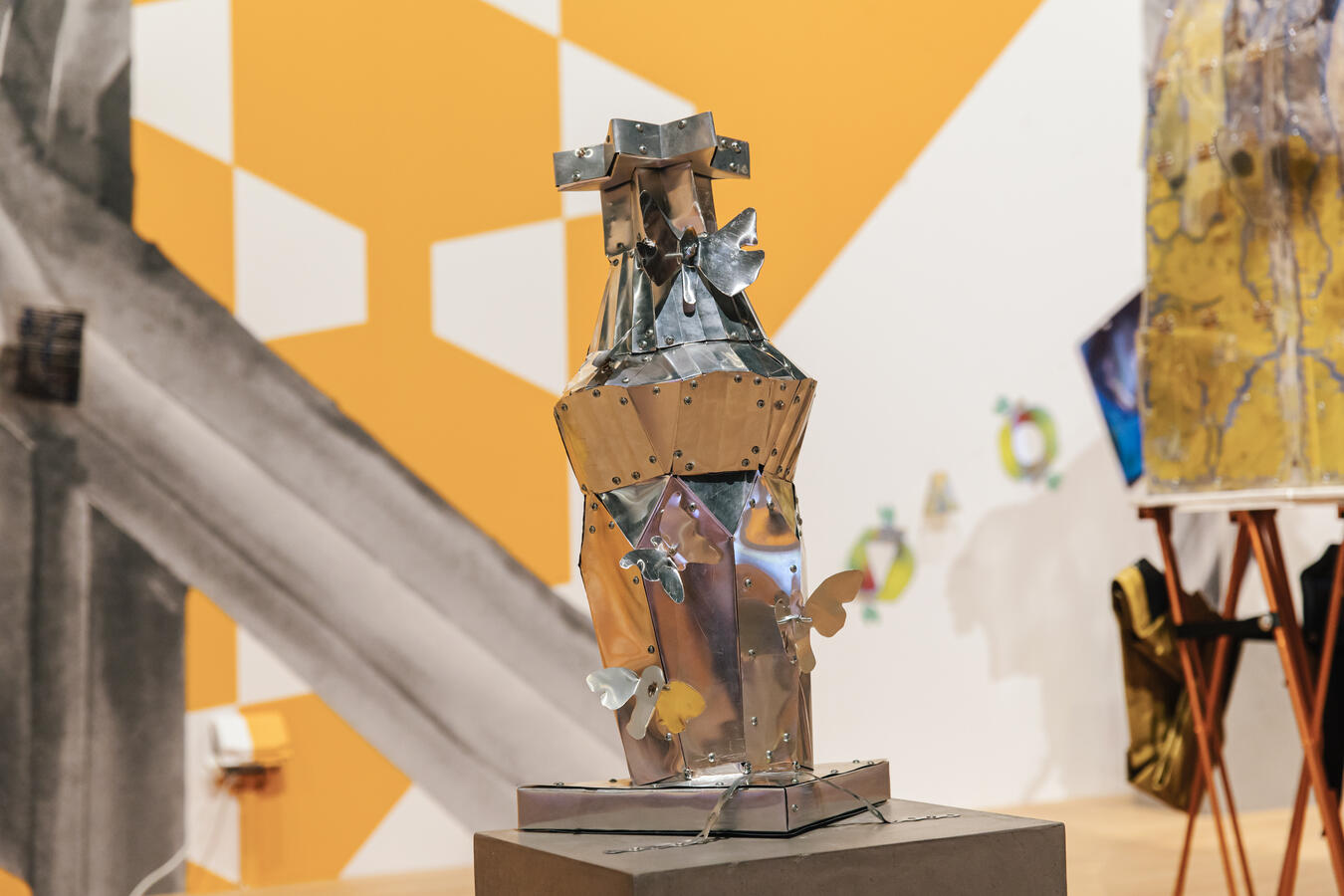
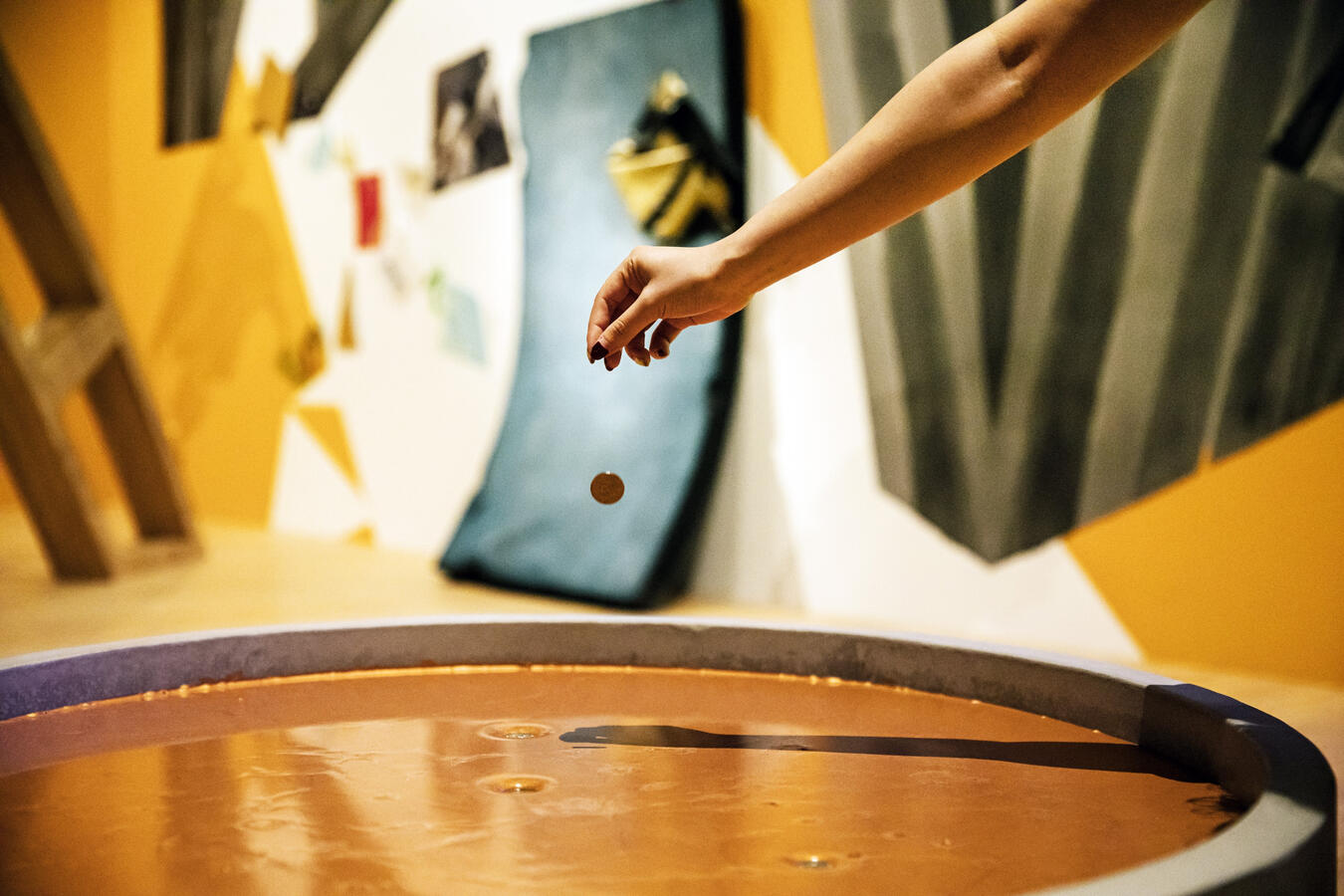
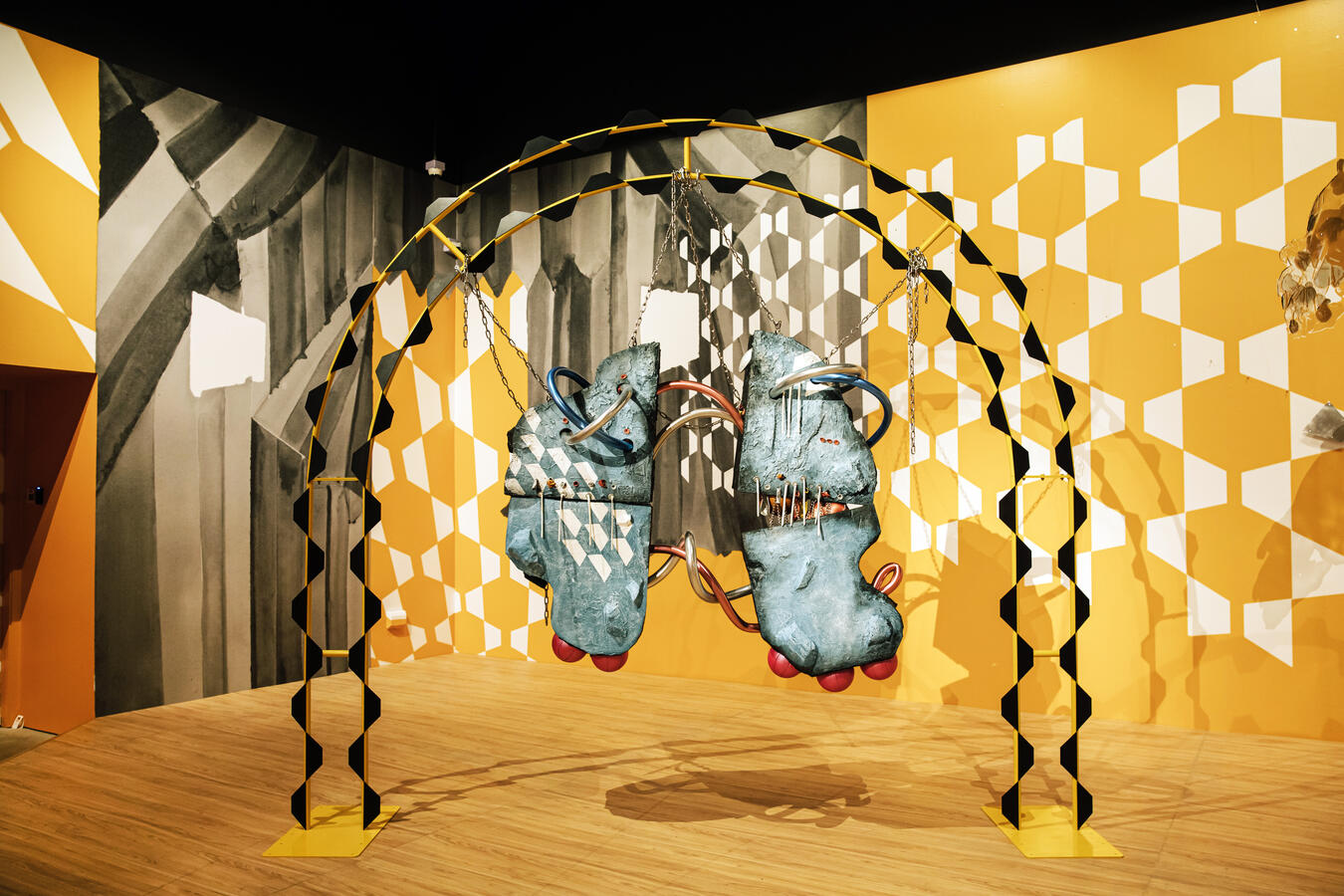
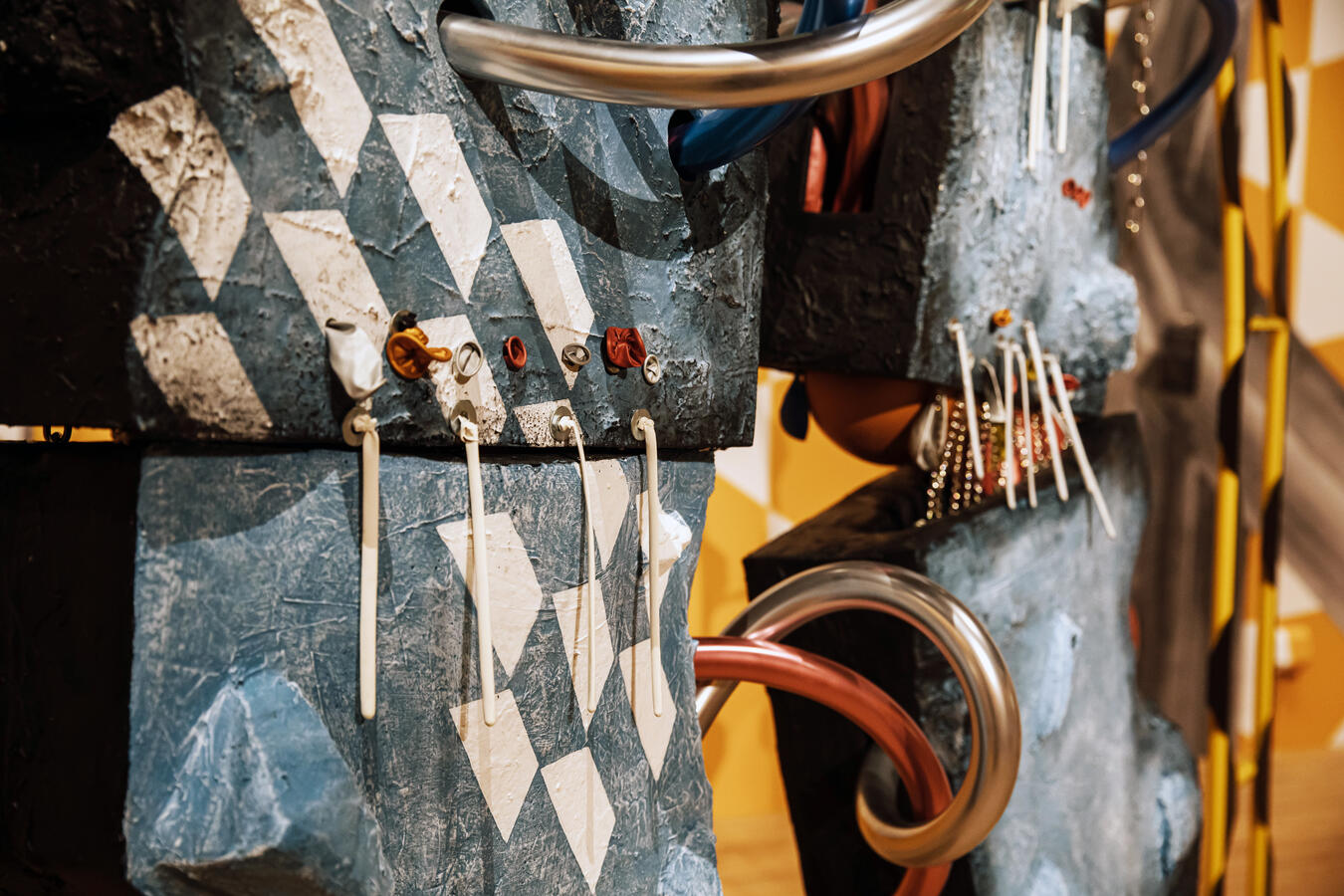
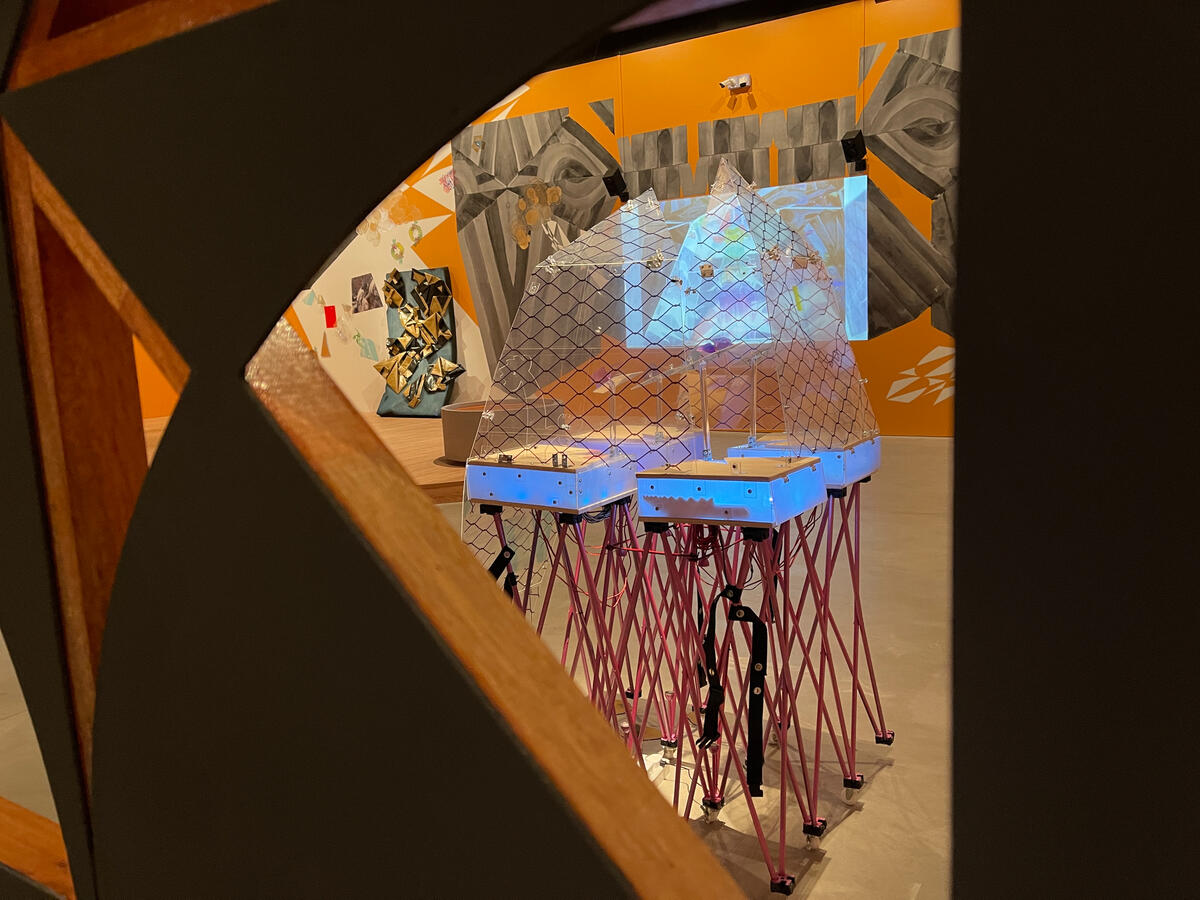
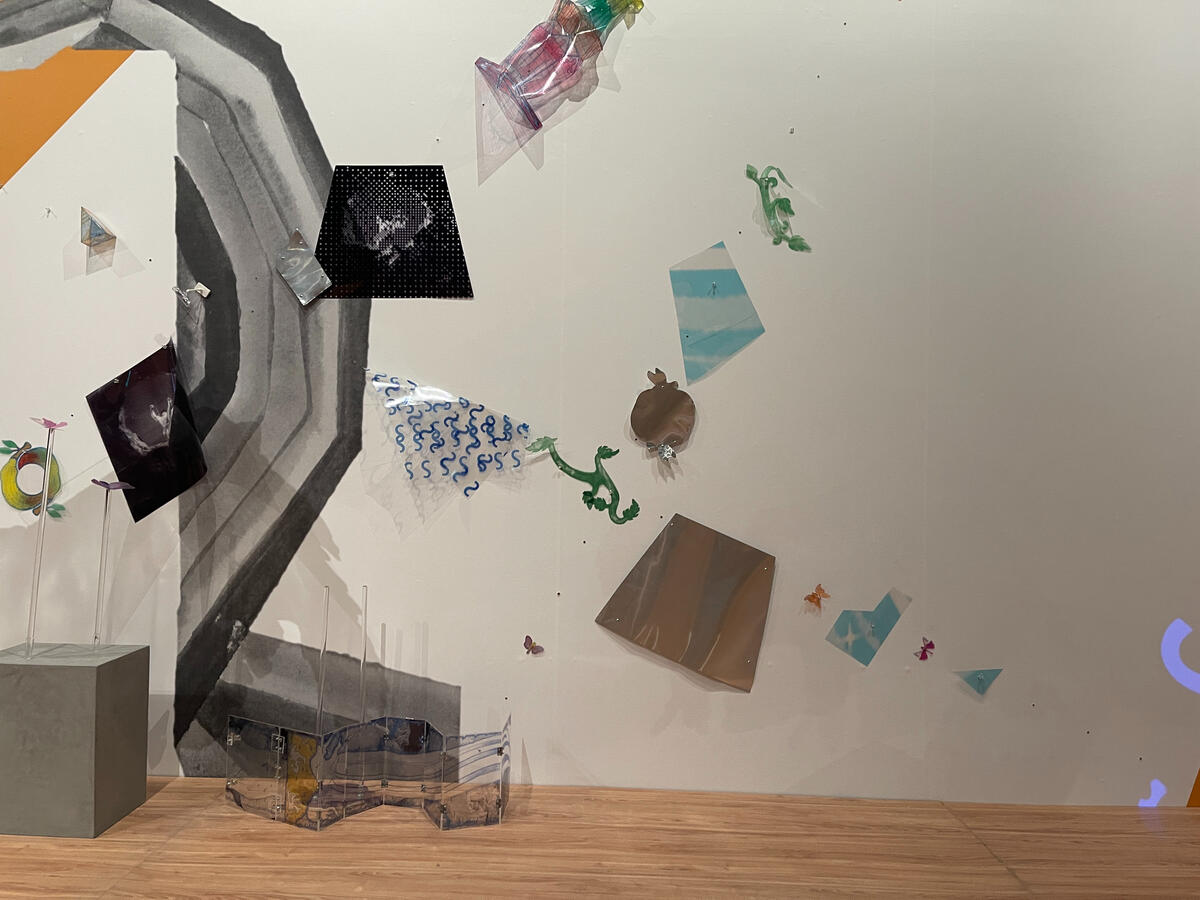
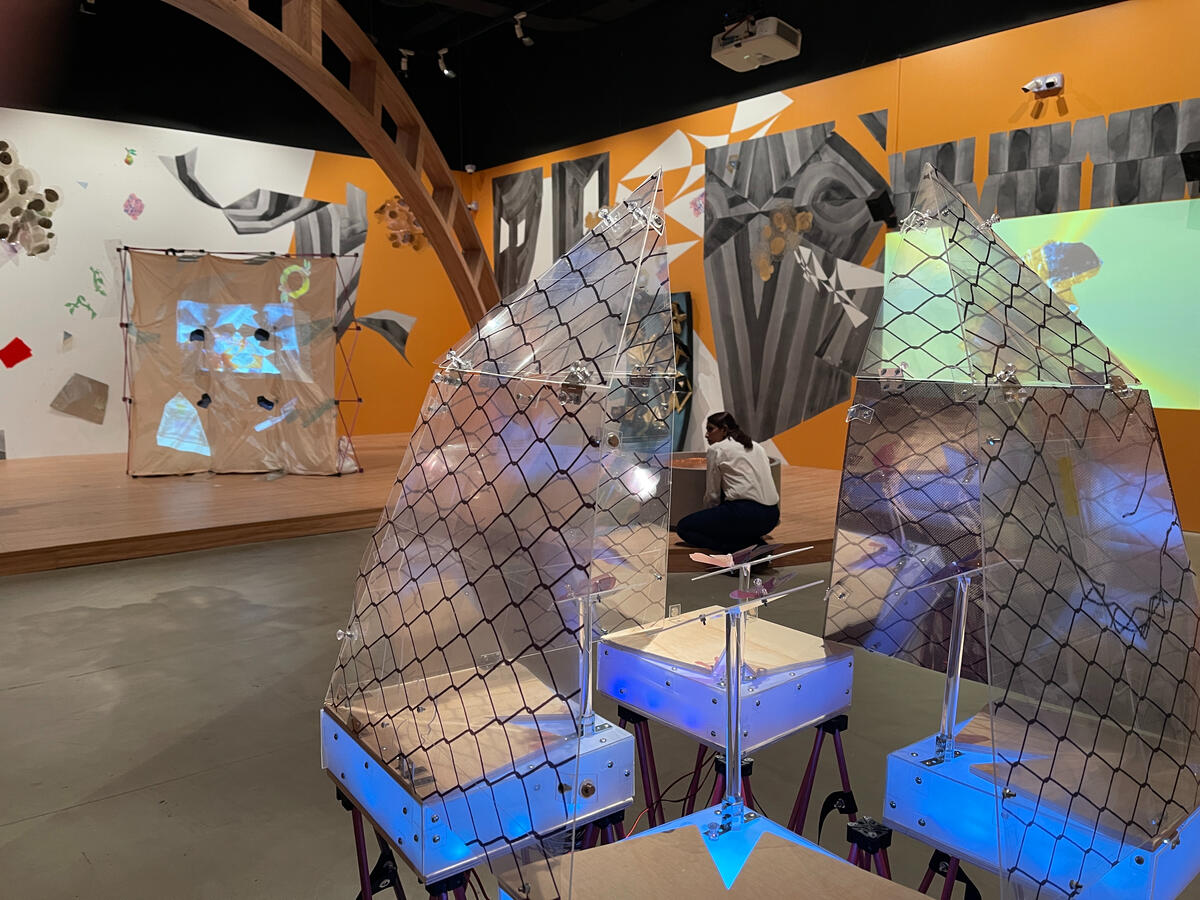
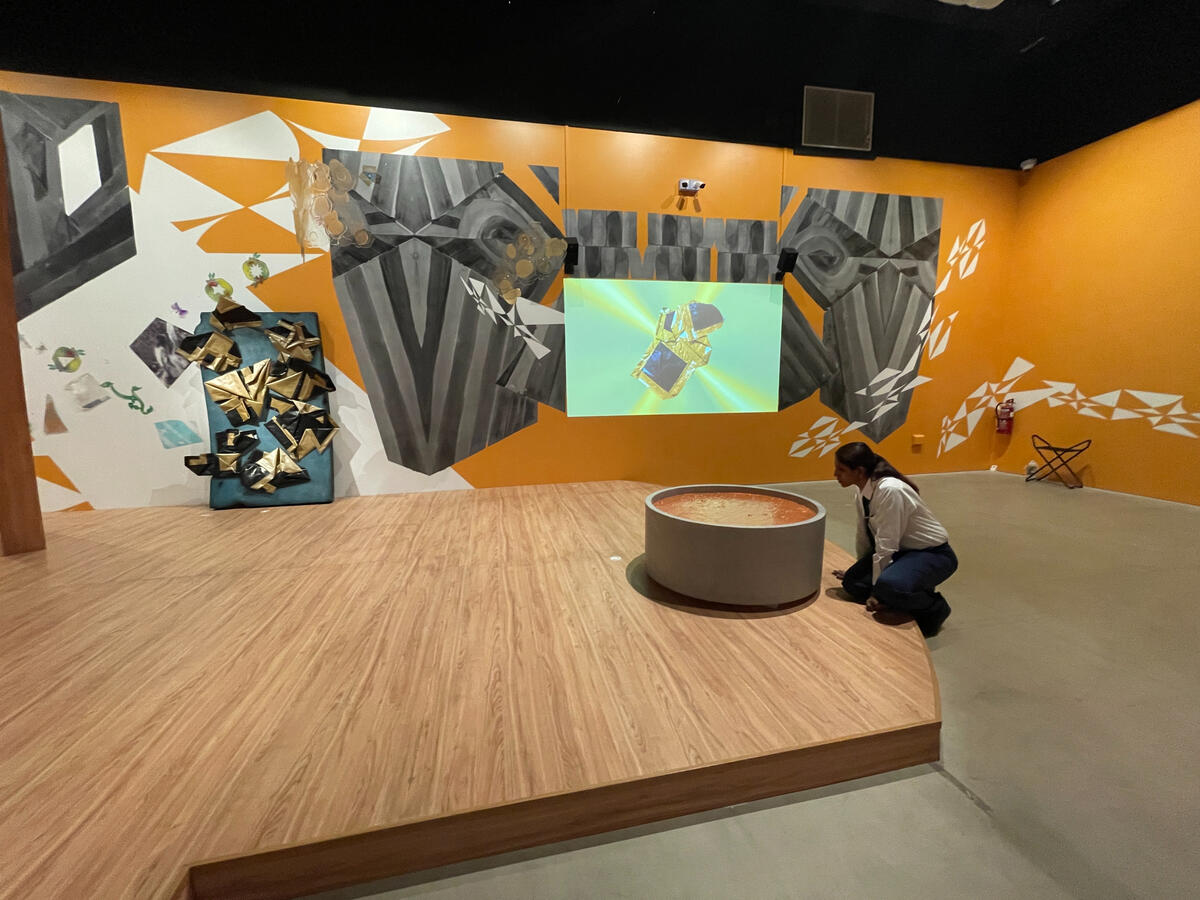
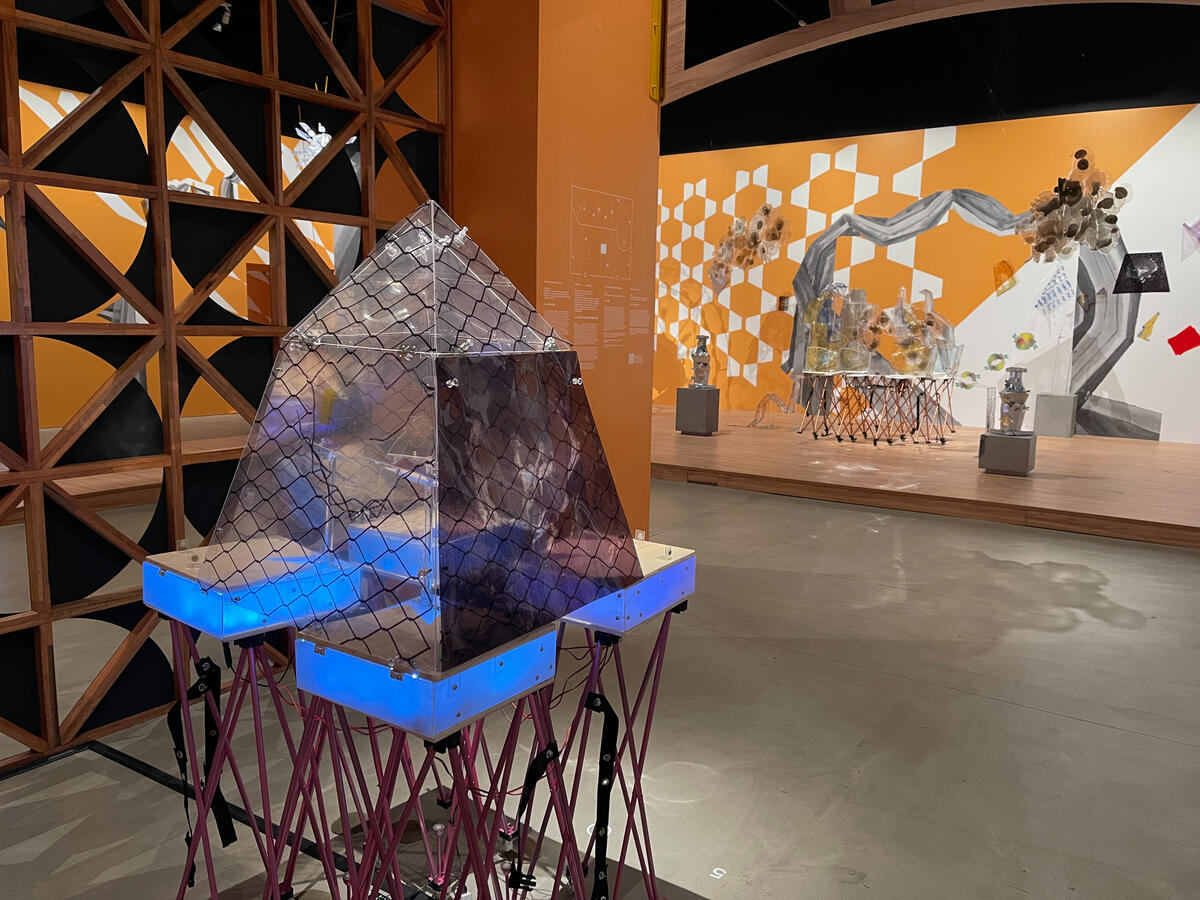
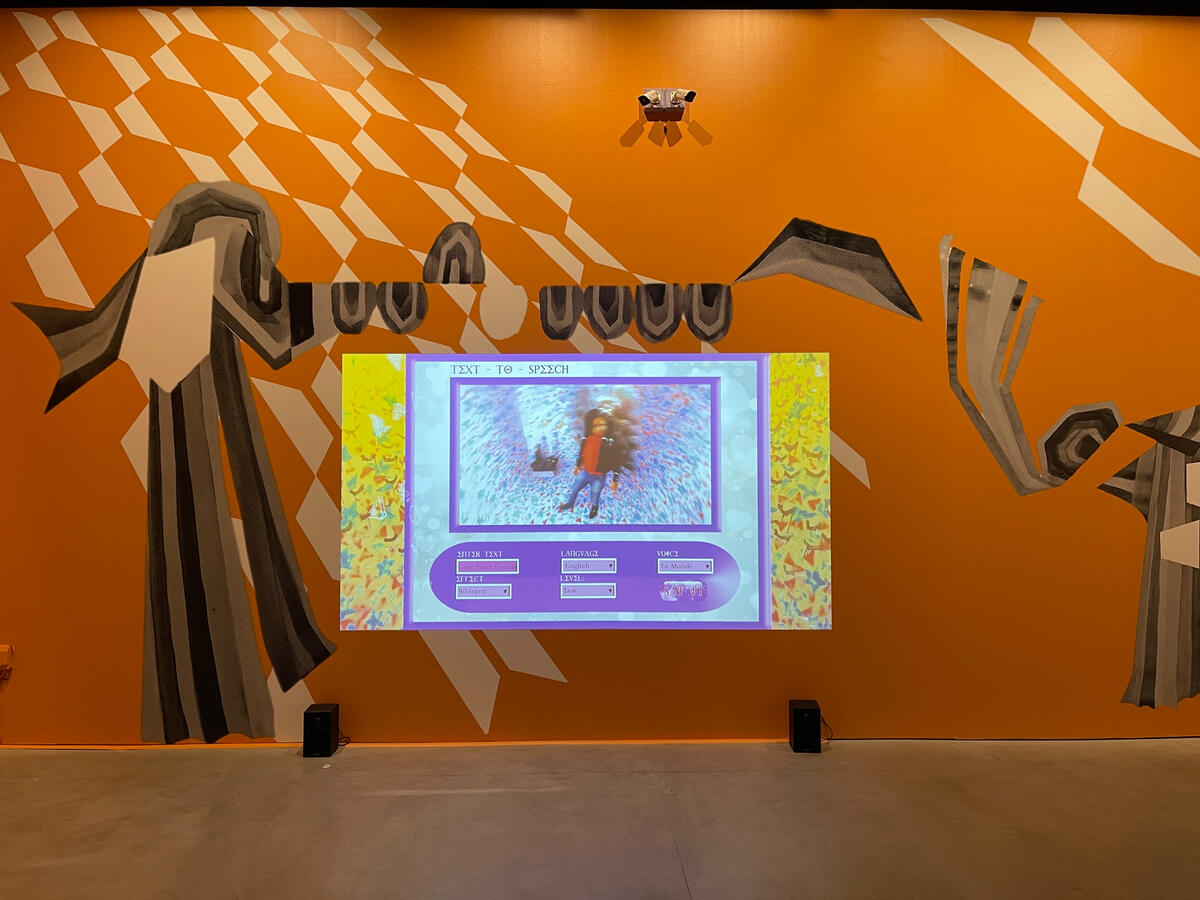
Image courtesy of Singapore Art Museum
© Joo Choon Lin. All rights reserved.
pEARs ' --- --- --- ' in §pring
a Theatrical Play part of Solo Exhibition: Dance in the Destruction Dance, Singapore Art Museum, 2023
Image courtesy of Singapore Art Museum
The activation of pEARs ―— — —‖ in §pring was a theatrical performance created through scripting and choreography, presented as part of the exhibition Dance in The Destruction Dance. In this work, language was treated as material, its textures and tonalities explored through the visceral act of reading aloud, unfolding as a continuous process of metamorphosis.―Film-objects, constructed from industrial materials and assembly hardware such as latches, hinges, collapsible legs, and casters, were continually reconfigured and set in motion throughout the exhibition space. These shifting forms underwent cycles of transformation, assembling, disassembling, and reforming, foregrounding a living system in which meaning emerges through interdependence, circulation, and constant renewal.As an artist, I am deeply concerned with the conflicts and wars unfolding across the world — the displacement, separation, catastrophe, and mass persecution they bring. In my performance at Pearl in Spring, I created a collapsible sculpture that, when activated, breaks into fragments and disintegrated forms. This transformation reflects the divisions and instability shaping the world today.

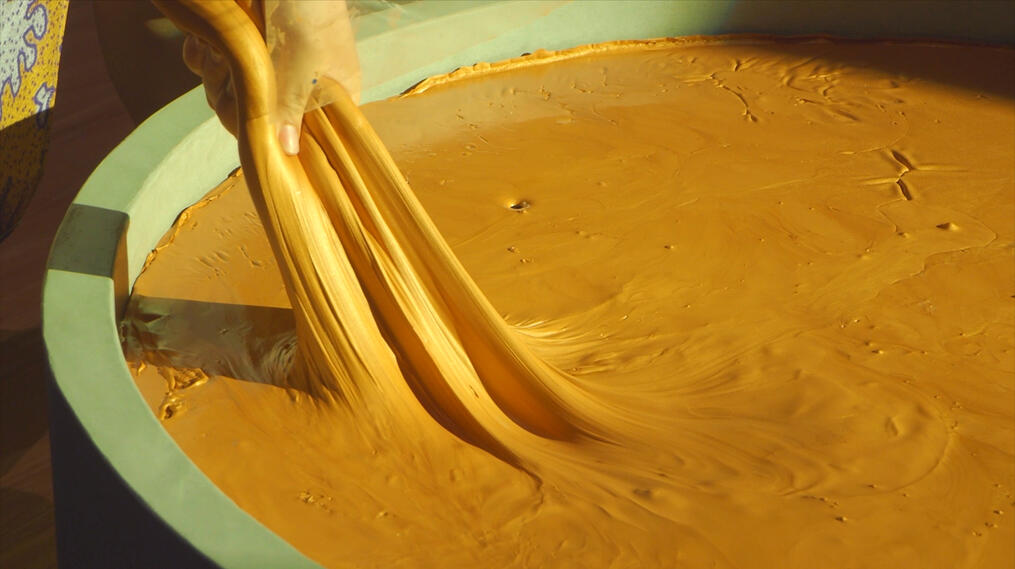
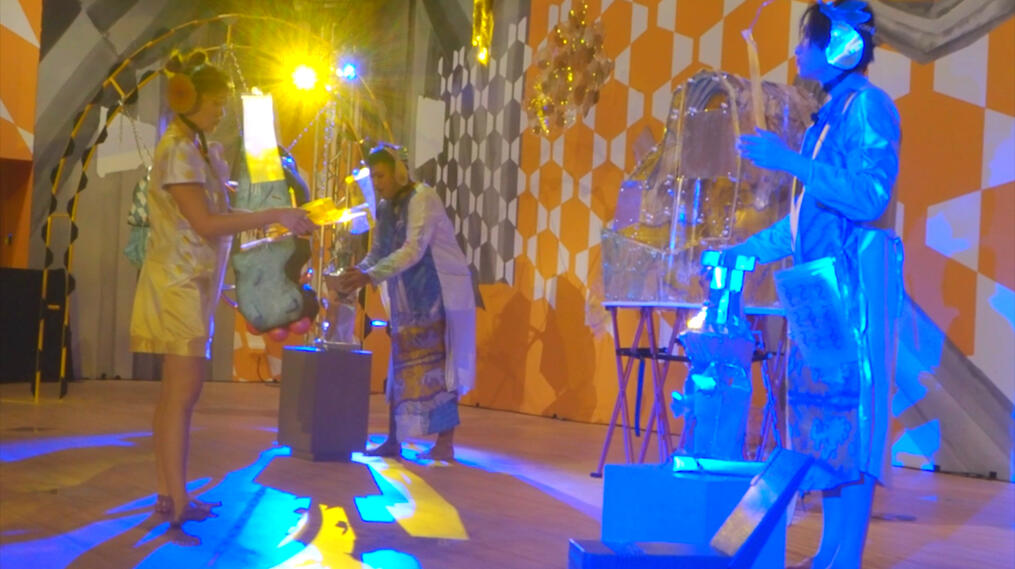
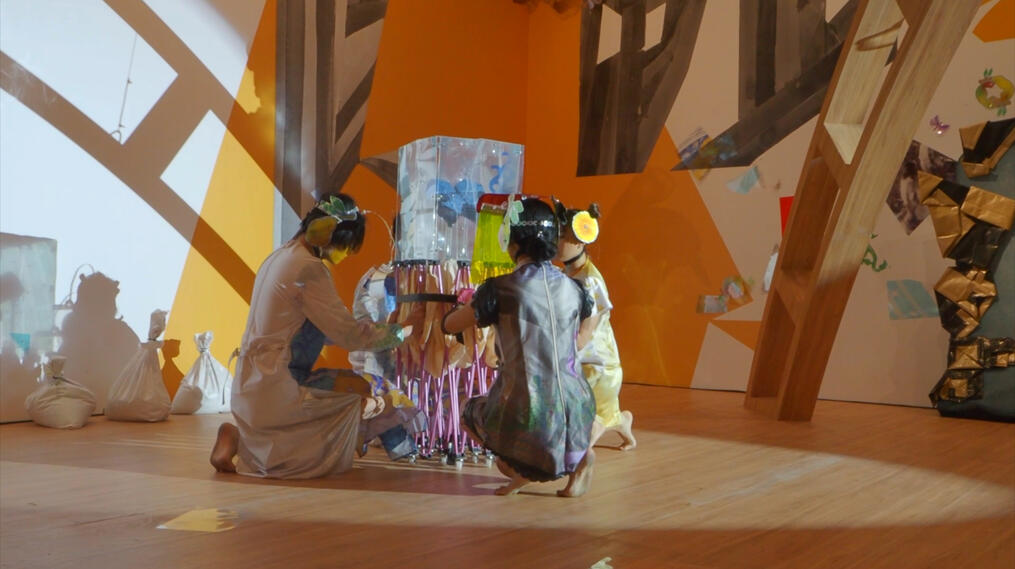
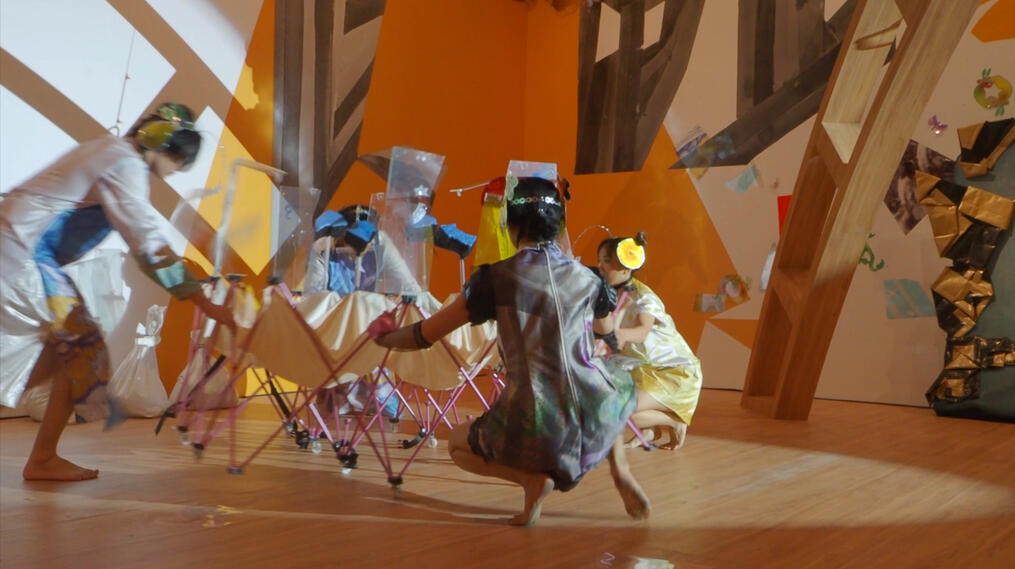
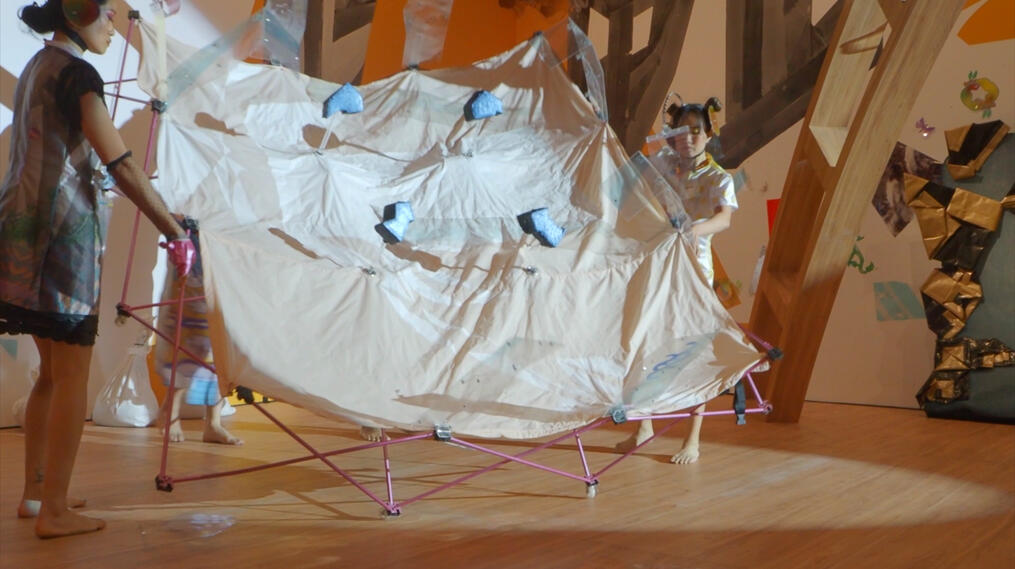
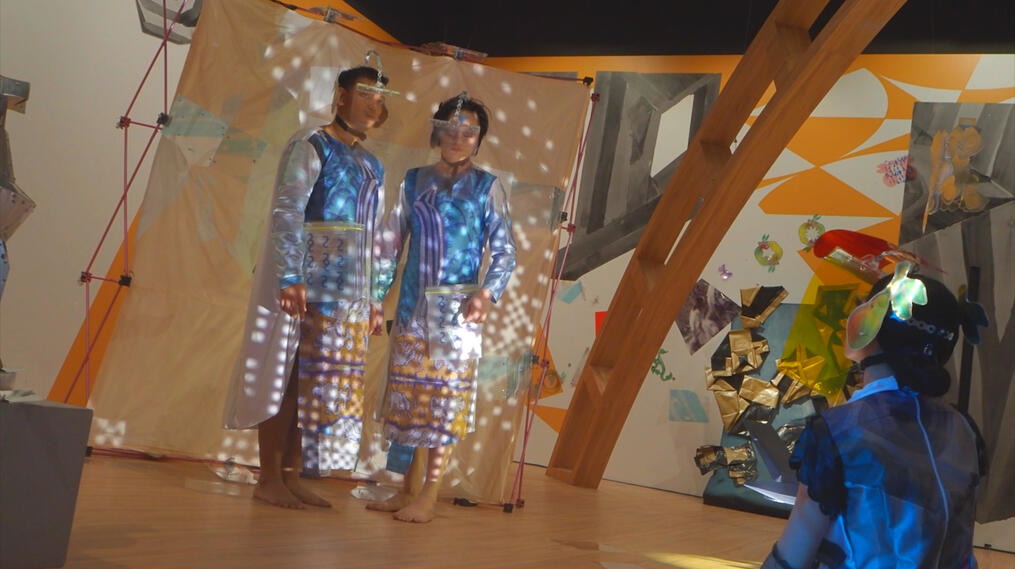
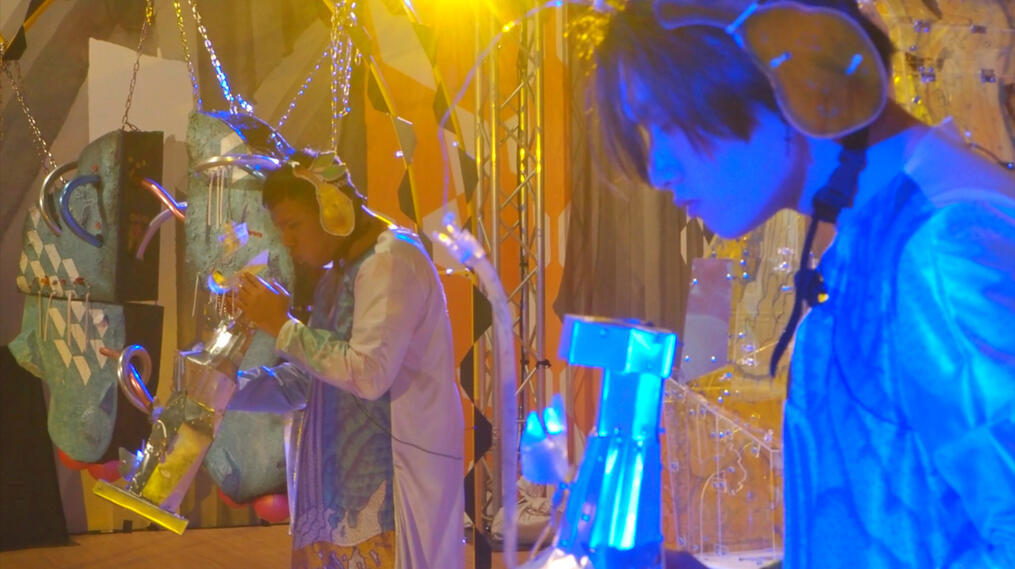
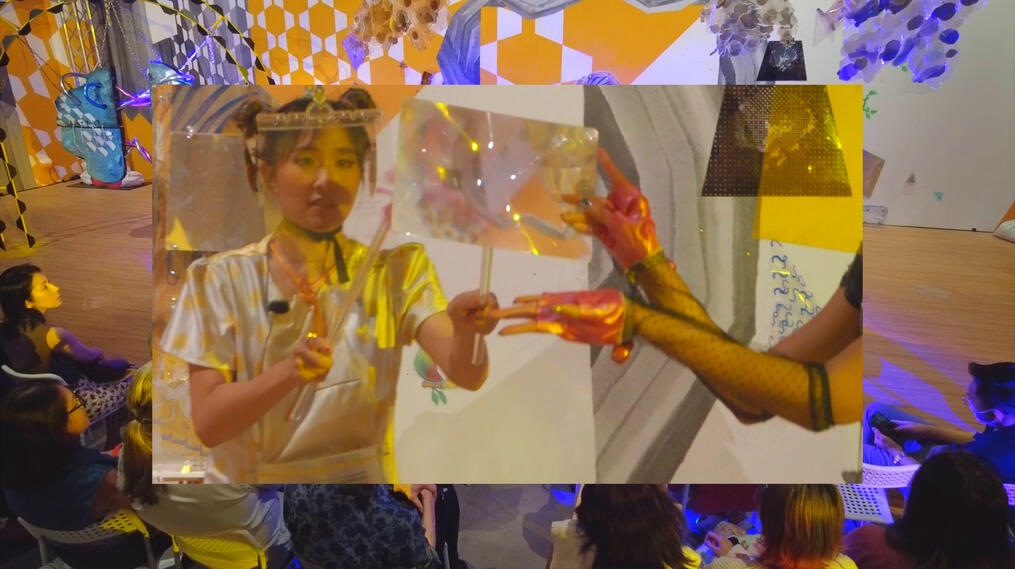
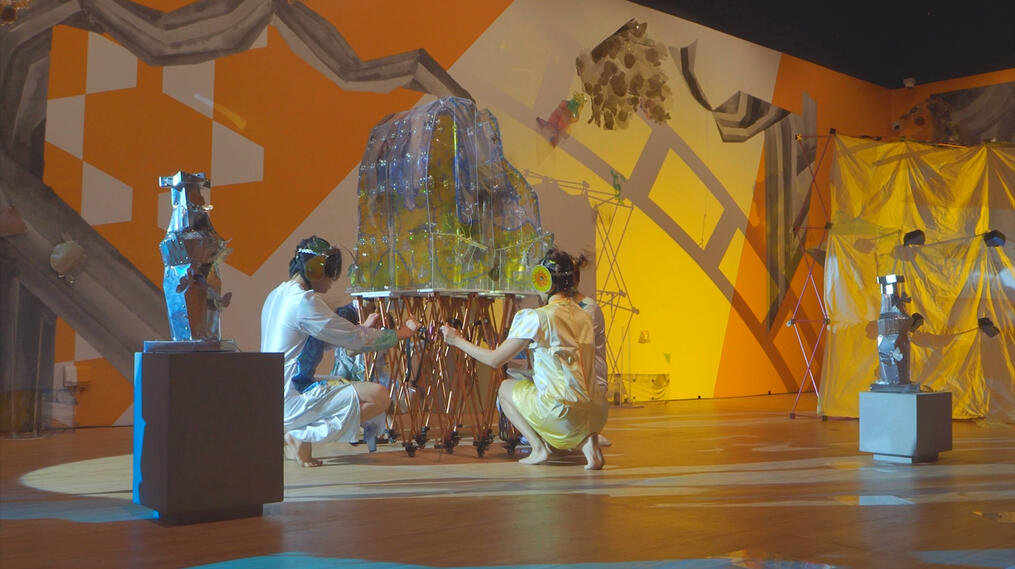
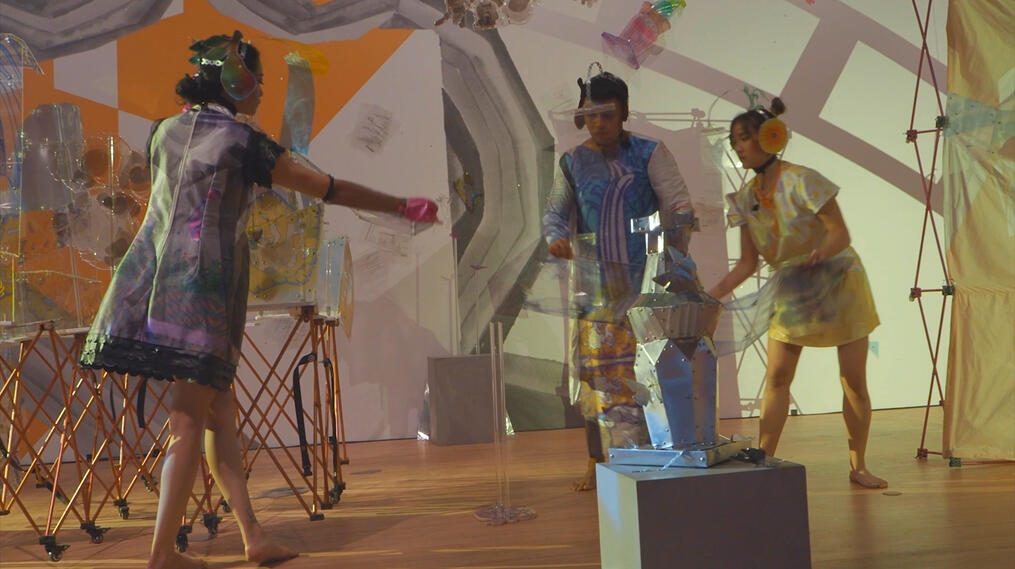
Image courtesy of Singapore Art Museum
© Joo Choon Lin. All rights reserved.
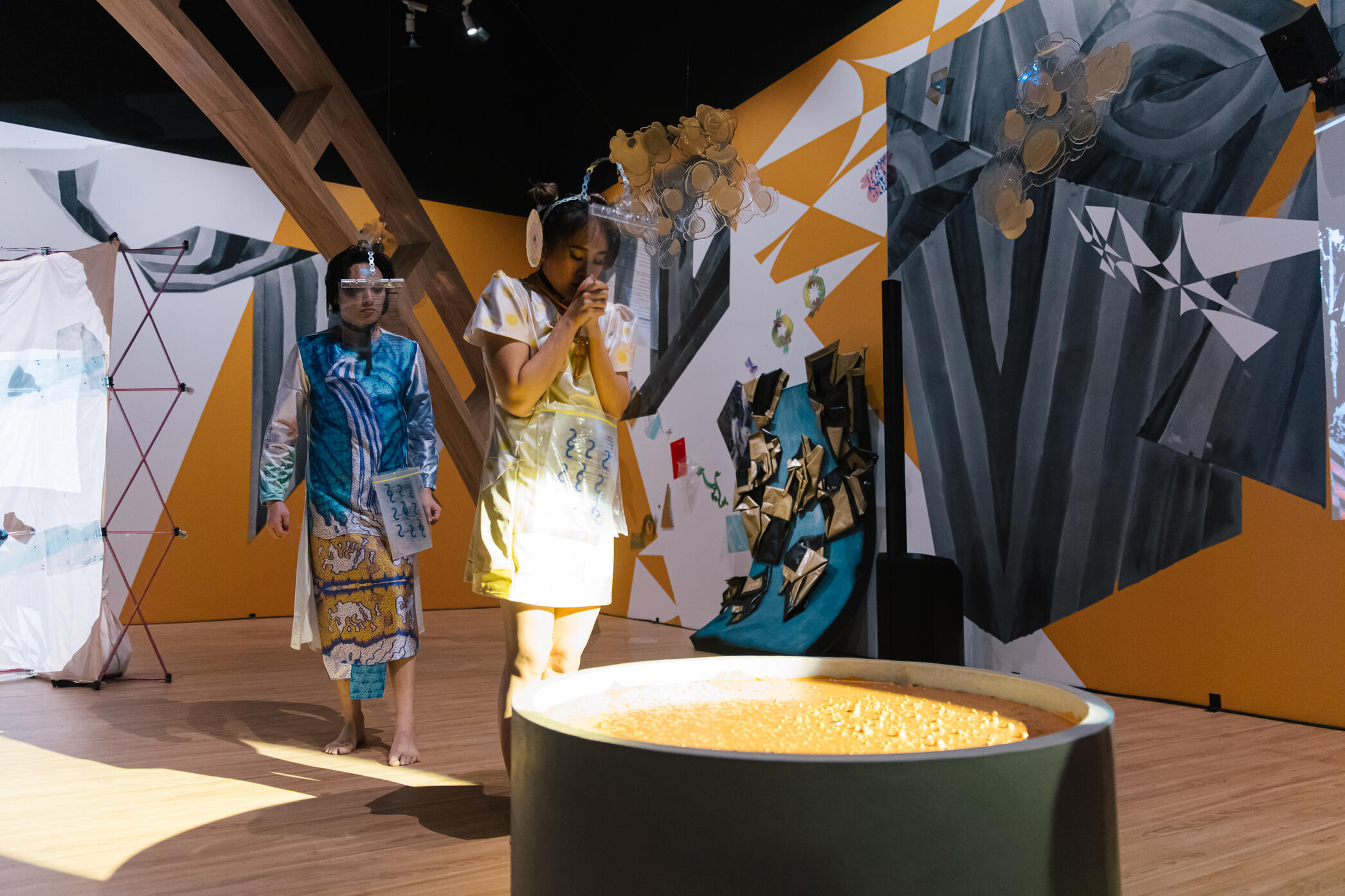
I Only Make Friends With Money, Synthetic goo
Solo Exhibition: Dance in the Destruction Dance, Singapore Art Museum, 2023
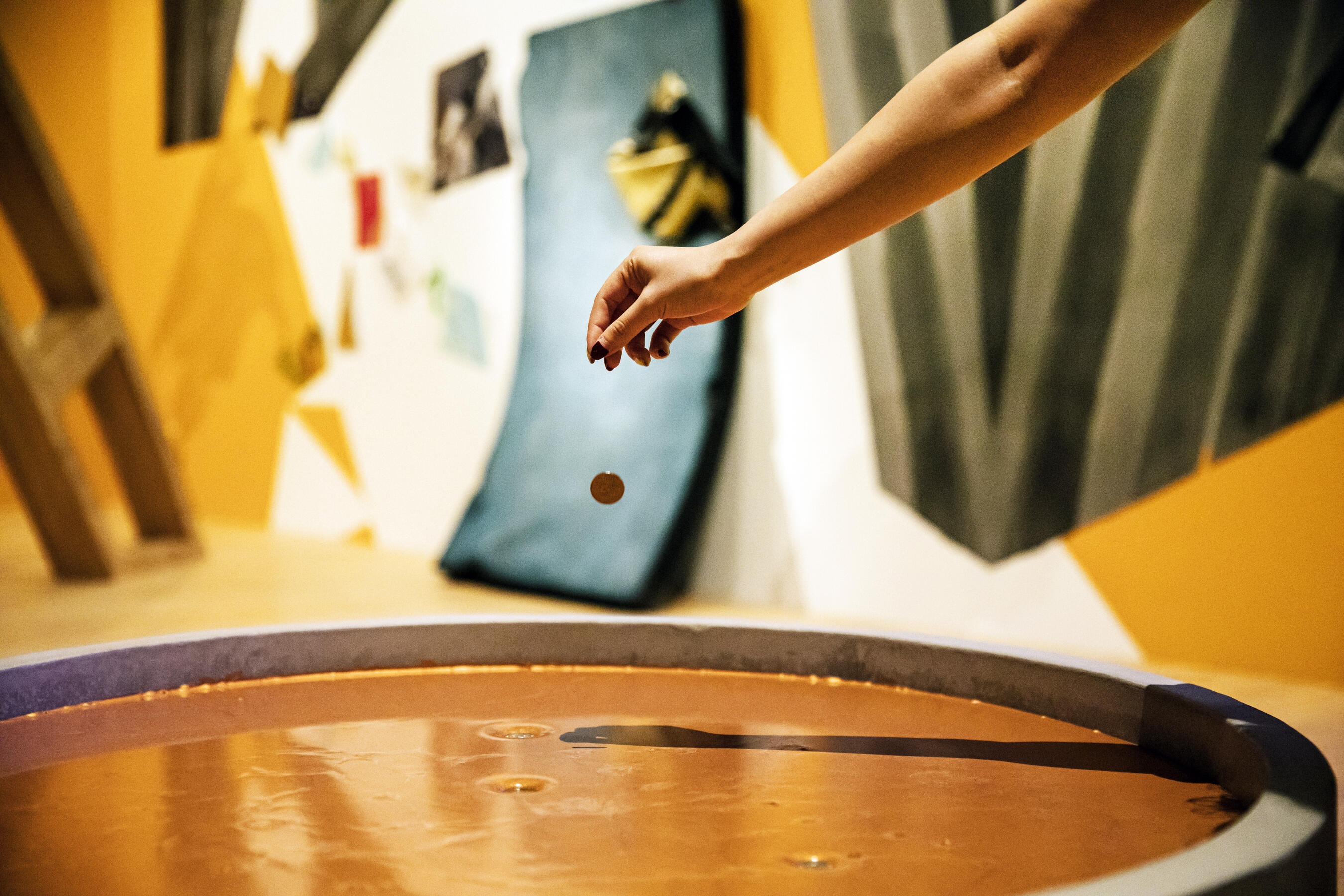
Image courtesy of Singapore Art Museum
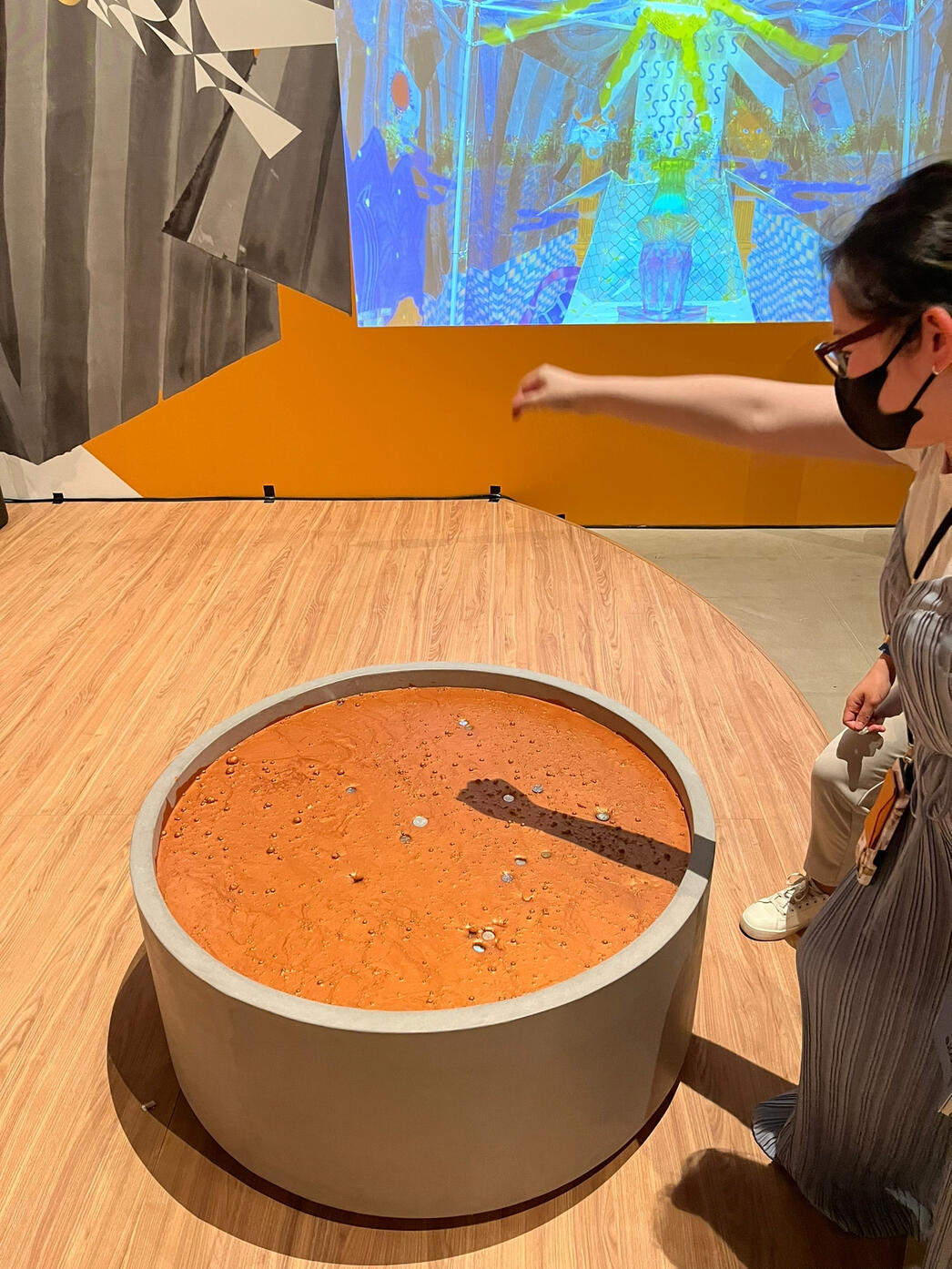
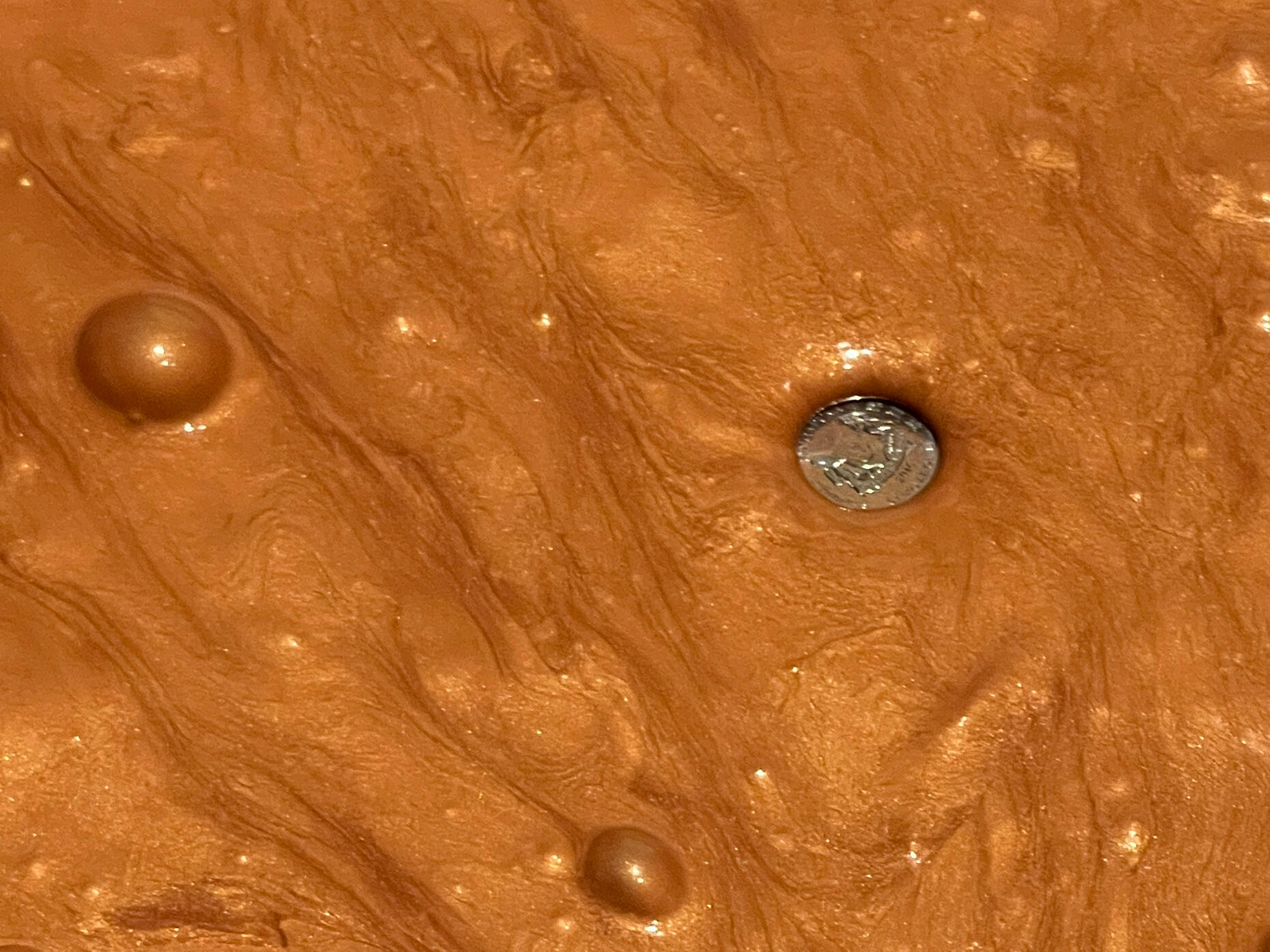
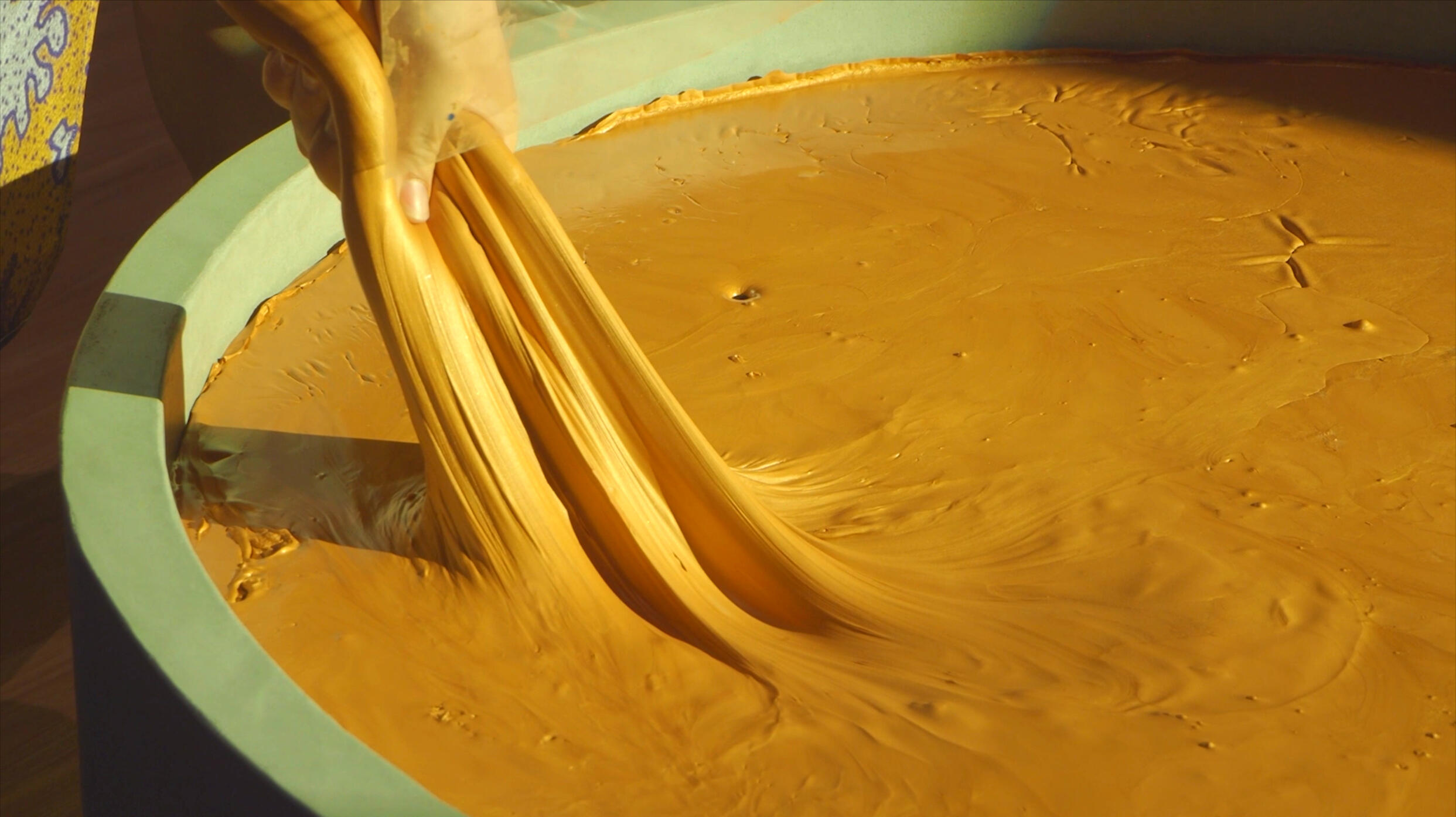
In I Only Make Friends With Money, I was interested in the capacity of the surface to provoke sensory experience and emotional responses. The work is an interactive piece, where audiences are invited to throw coins into a pool of synthetic goo, where the coins will slowly submerge. With the act of throwing coins, most people will immediately think of wishing wells. Maybe there's a sense of relief when we see money and objects that are burdened with meaning slowly disappear into the unknown. It's very different from watching it sink in water, because you can still see the coin even as it descends to the bottom of the well. In the goo, however, it is very slow. Sometimes, the coins will even bounce back as if it is rejecting your wishes. The material of goo takes on a very playful and strange quality, opening up a space for different interpretation and experiences.
In the first iteration, the colour of the slime was inspired by International Klein Blue, which was one of my references. The colour blue is associated with spirituality and mysticism in many cultures. Yves Klein was interested in the spiritual and emotional quality of blue, and he believed that it had a transcendent quality that could evoke a sense of the infinite and the spiritual.In the most recent iteration for the Dance in the Destruction Dance exhibition, I changed the colour to respond to the gold and black in the tarp sculptures. Gold is, of course, a divine colour, but black is also associated with the divine. In Hindu belief, black doesn’t necessarily have a negative connotation. Black, as total darkness and the absence of light, essentially represents the infinite because it's boundless.The idea of alchemy was key, especially this process of turning substances from gross material to finer or subtler elements. Though mercury is a very toxic substance, it may be found as solid beads in the context of Hinduism. Mercury in its natural form flows and moves very quickly. It is compared to the mind, where we have many thoughts or attachments to things. The solidified mercury is hence used for meditation and to enter a meditative state of mind. I find the process of turning a certain substance into something else more subtle very interesting. Sometimes I feel that my work is akin to consecrating an object. Through sound, chants and vibrations, it can exude a certain energy.
© Joo Choon Lin. All rights reserved.
Glue Your Eyelids Together
Solo Exhibition: Dance in the Destruction Dance, Singapore Art Museum, 2023
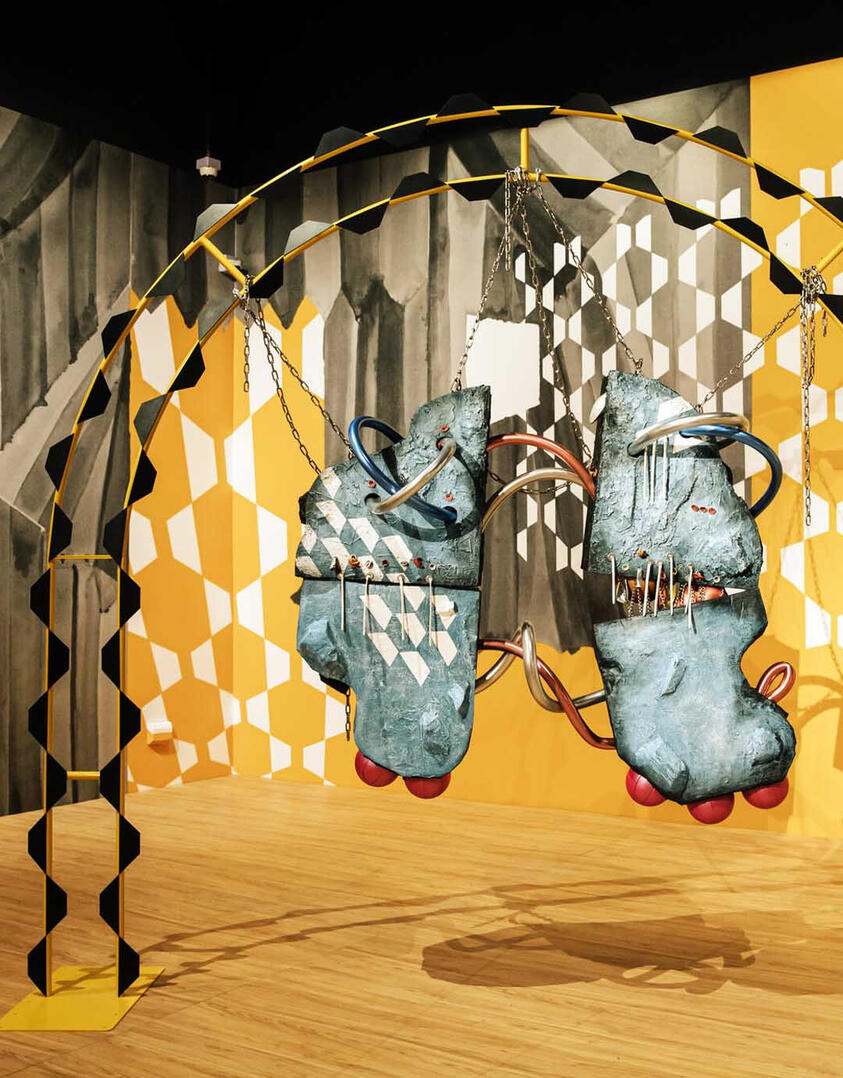
Glue Your Eyelids Together is a sculptural object designed to deform and destroy over time. A large block of rock is structured around hidden balloons. As the balloons deflate, the work self-activates, gradually deforming and collapsing. Its remains stay tethered to knitted chains, like nerves.The objects are left with an air of anticipation—of something about to happen. They move along processes of metamorphosis, on the way to the formation of something else. This preoccupation with constant revival and evolution generates different resonances, where new dimensions and modes of experiencing the works arise.
Within their moribund nature, the works are designed to deform and destroy over time. When the balloons are allowed to deflate, the rock succumbs and crumbles, leaving behind forms tethered by knitted chains, akin to intact nerves. These destructive elements give rise to a kind of divine or ghostly presence residing within the objects.There is something liberating in witnessing these inanimate death-objects transforming amidst such mordantly physical activity. It becomes a visceral spectacle that viewers can empathise with and become entwined in. These violent manipulations are conceived so that transformation can occur and aesthetic pleasure can be derived. A veil of familiarity masks the potential for violence that the objects’ disposability instils within them.The scene prompts the question: are they decorated, worn out, fragmented, or burnt? Do they resist destruction and decay? Perhaps these objects emerge as metaphors to us, siphoned from the value we place upon materials.
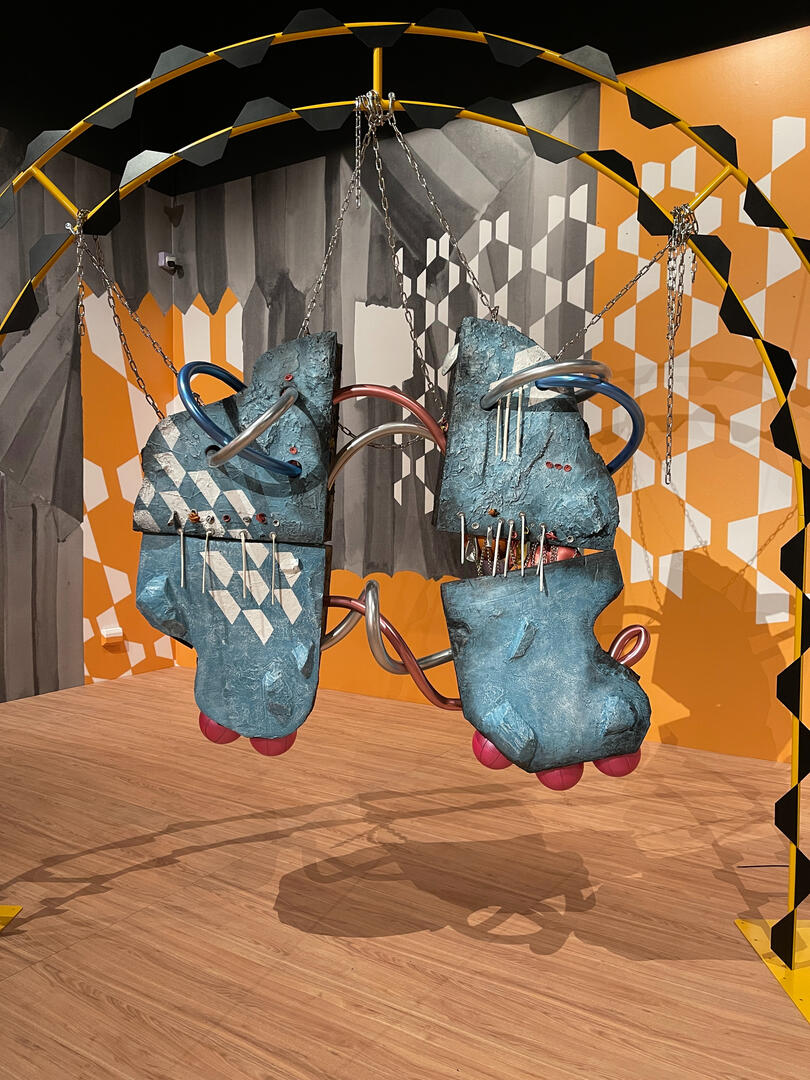
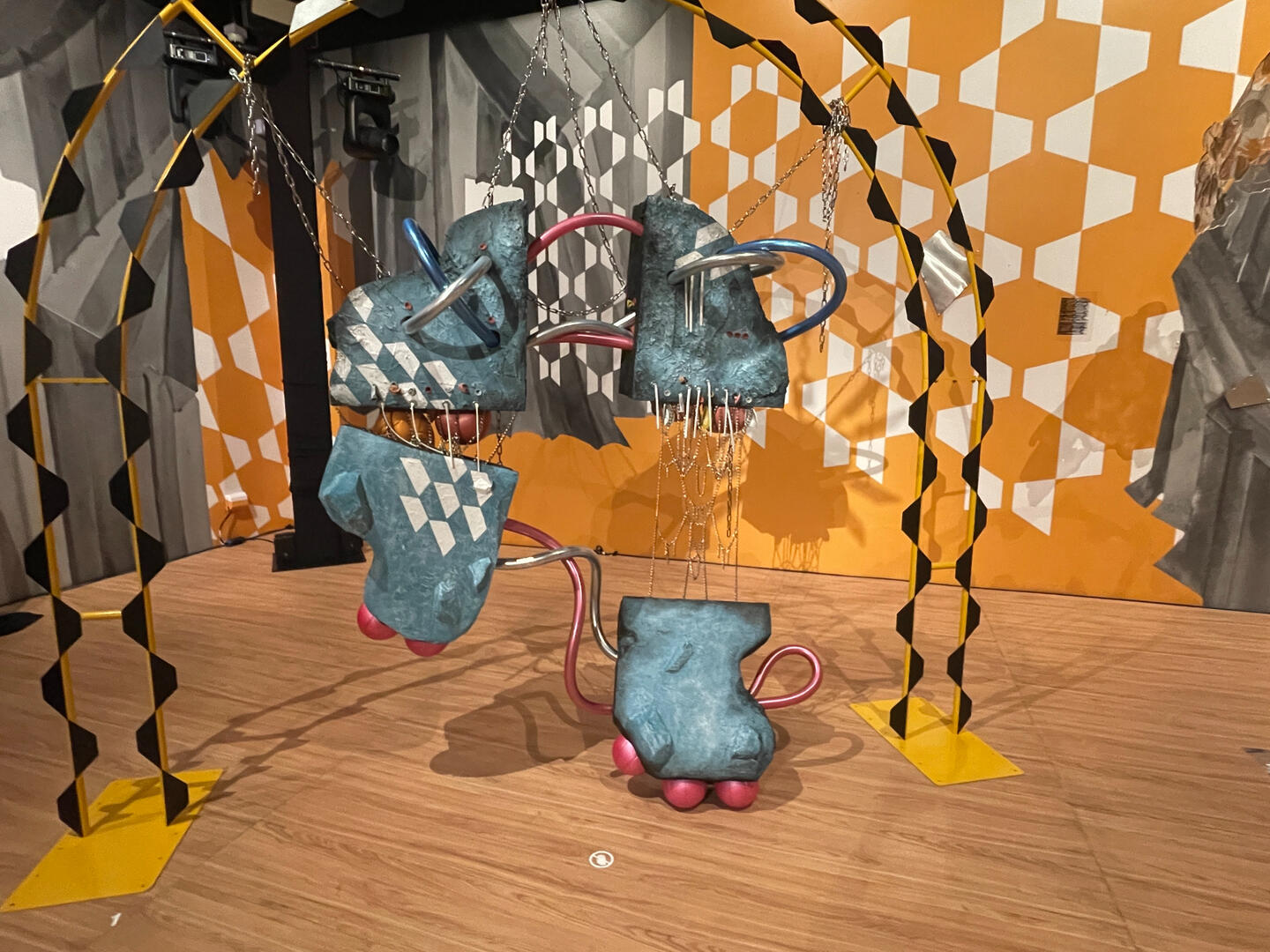
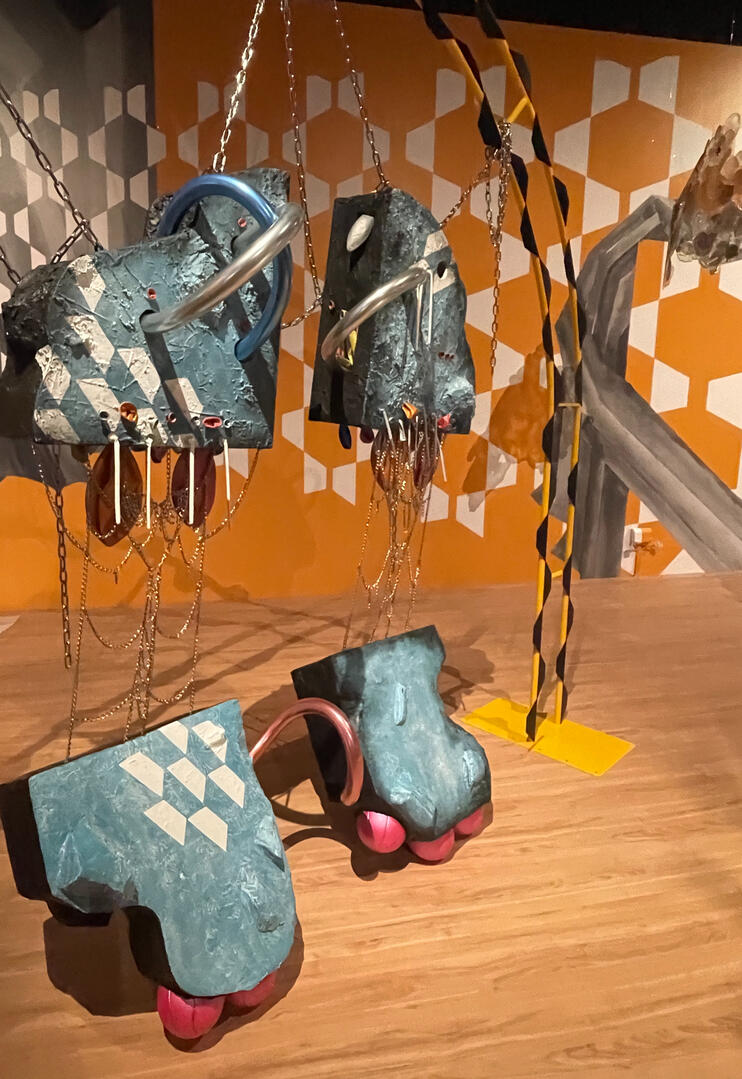
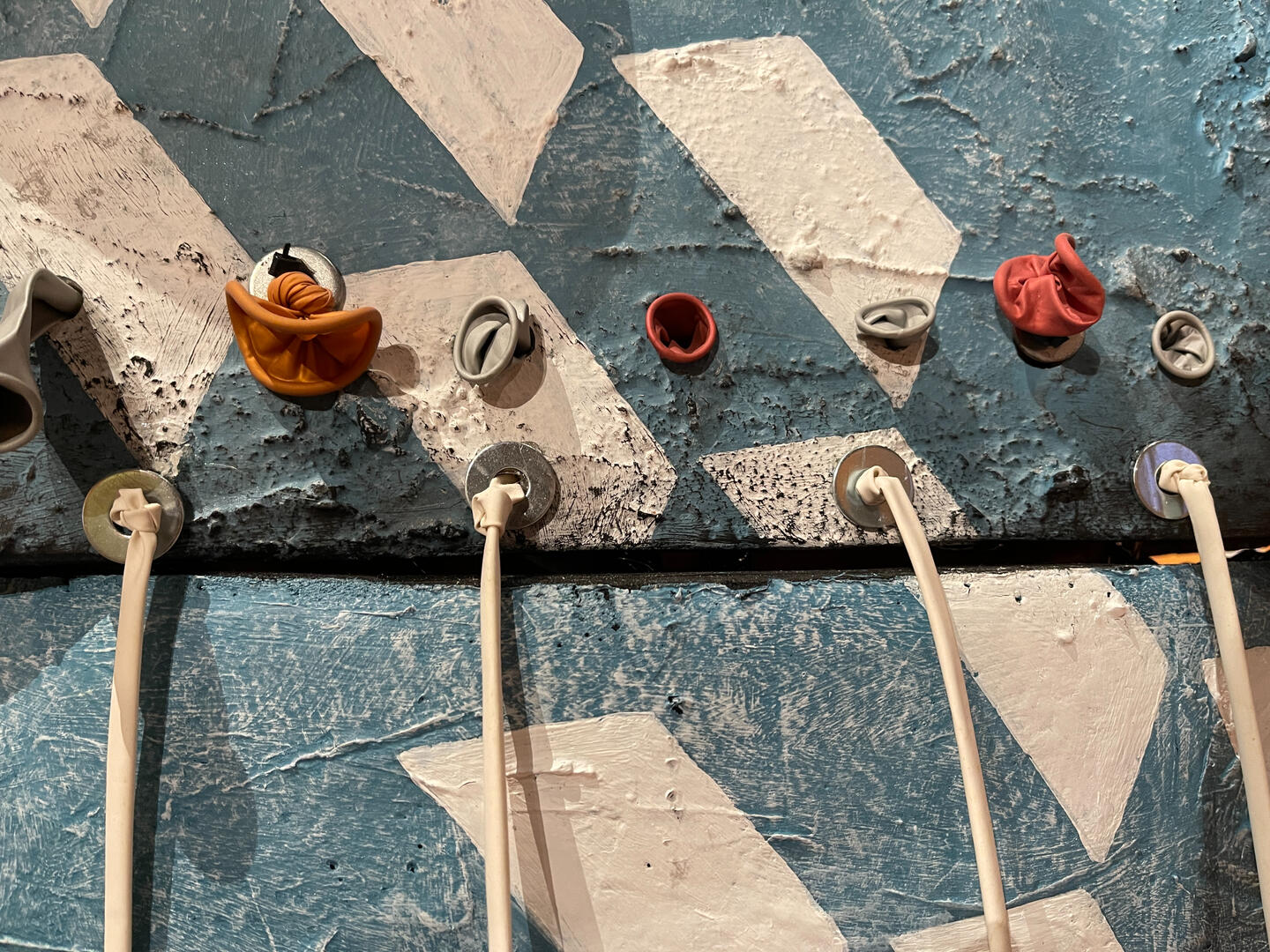
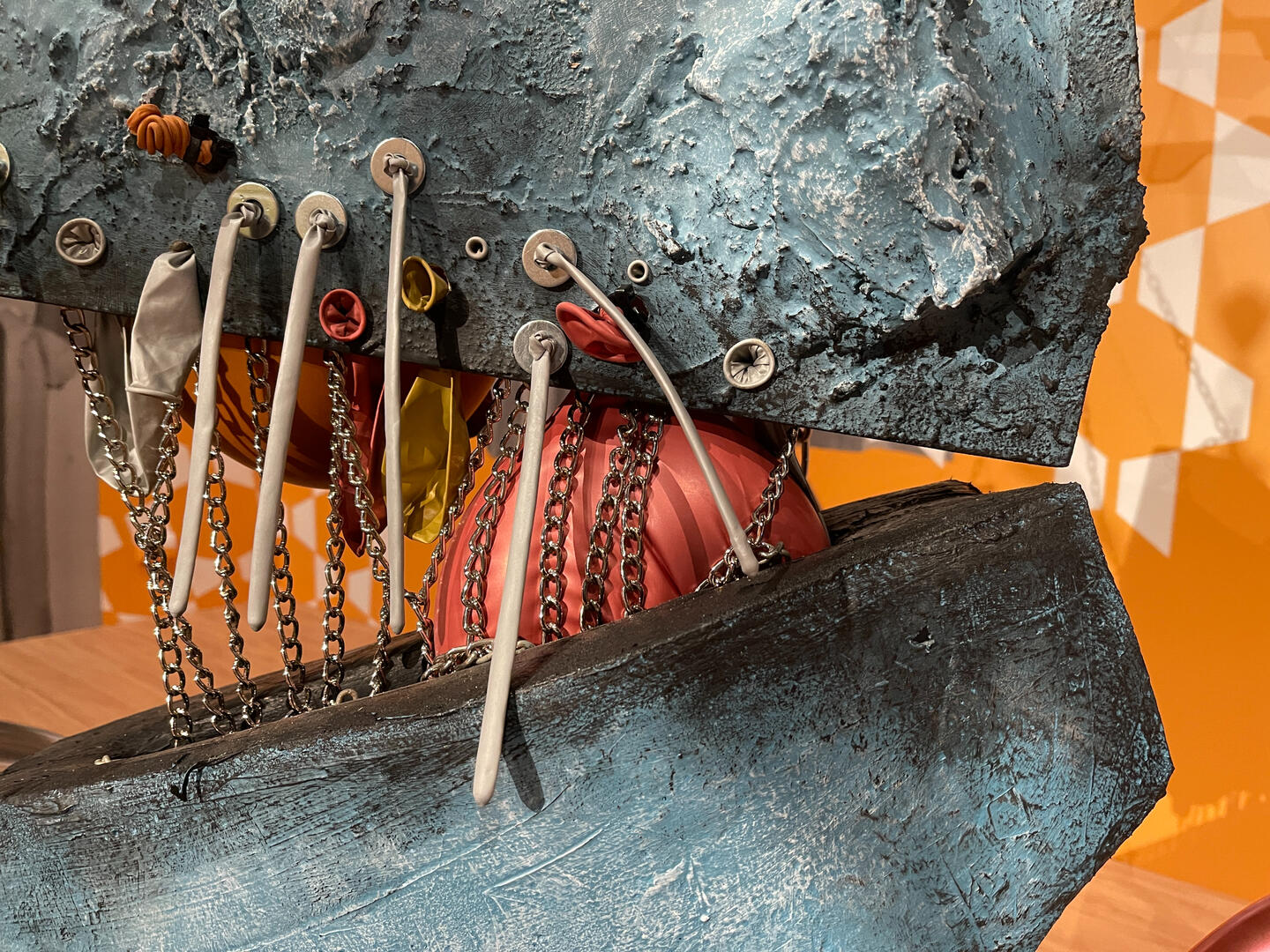
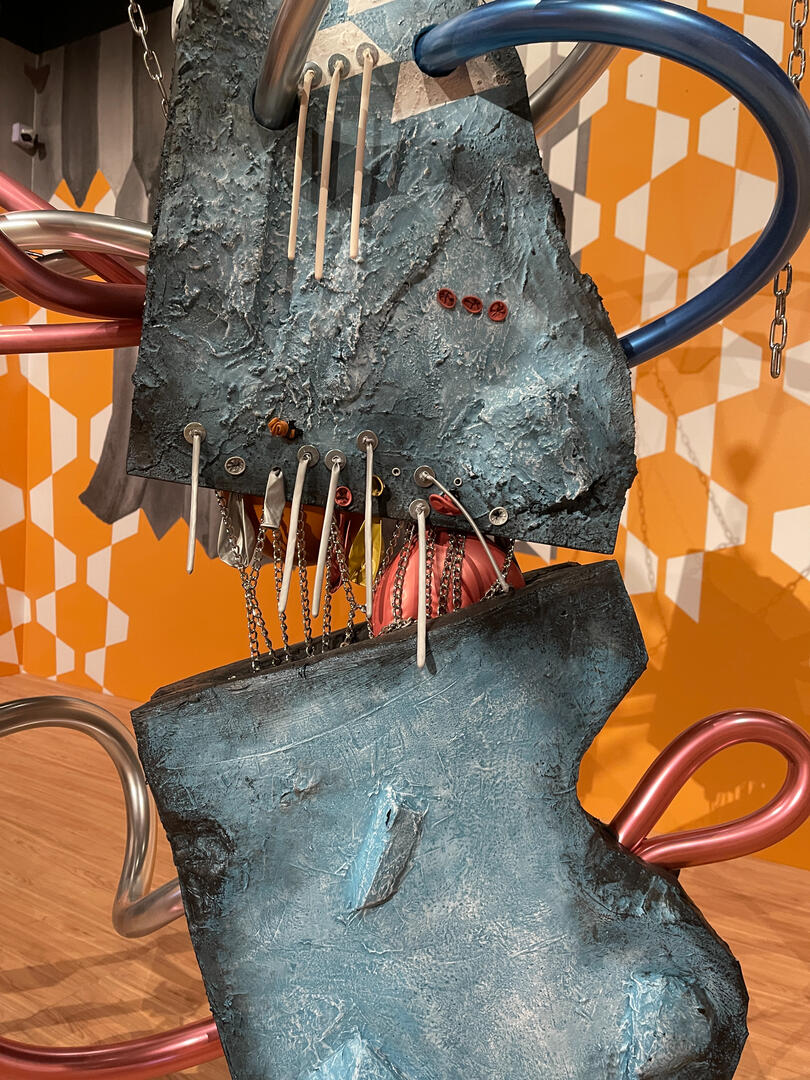
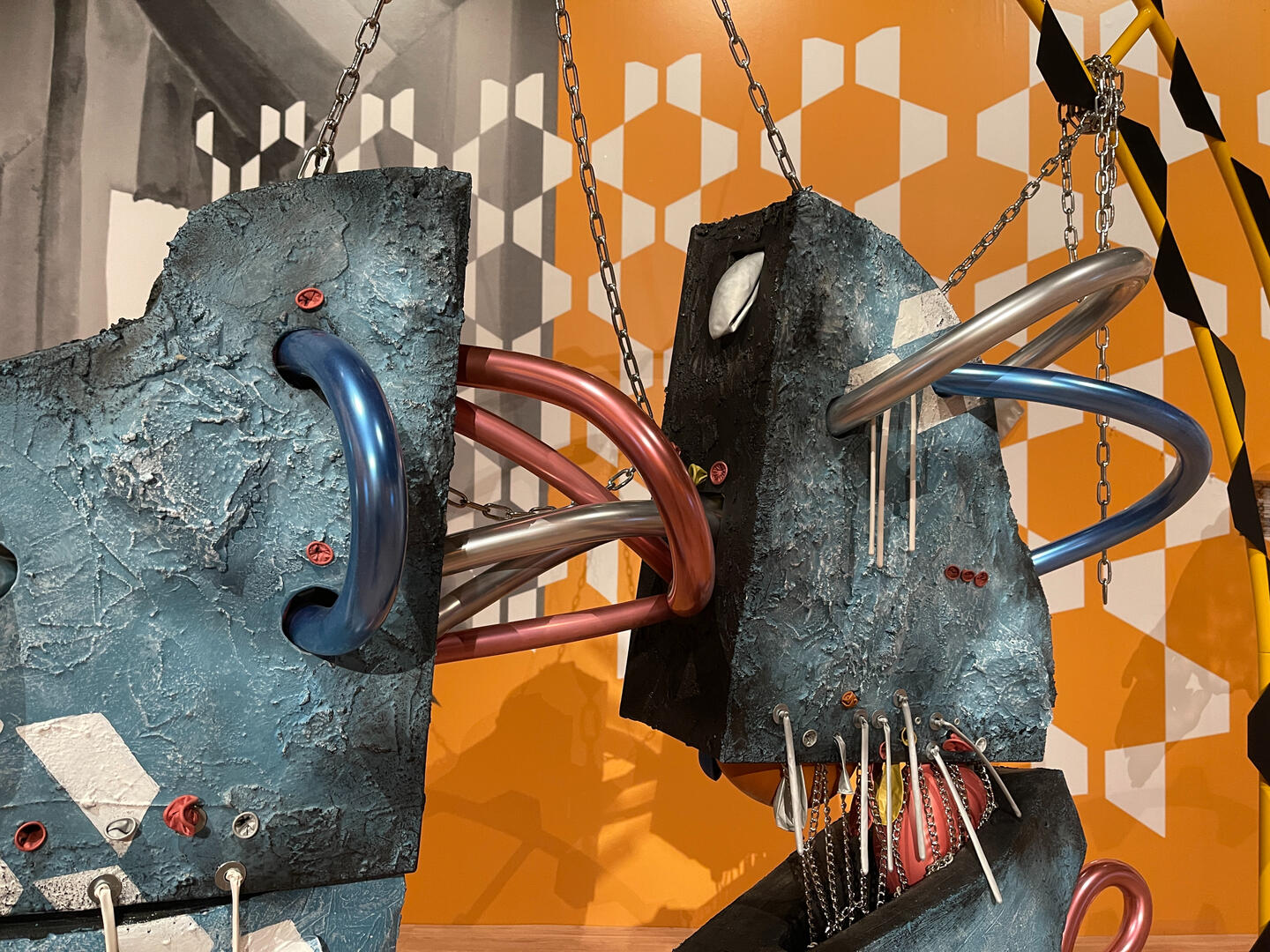
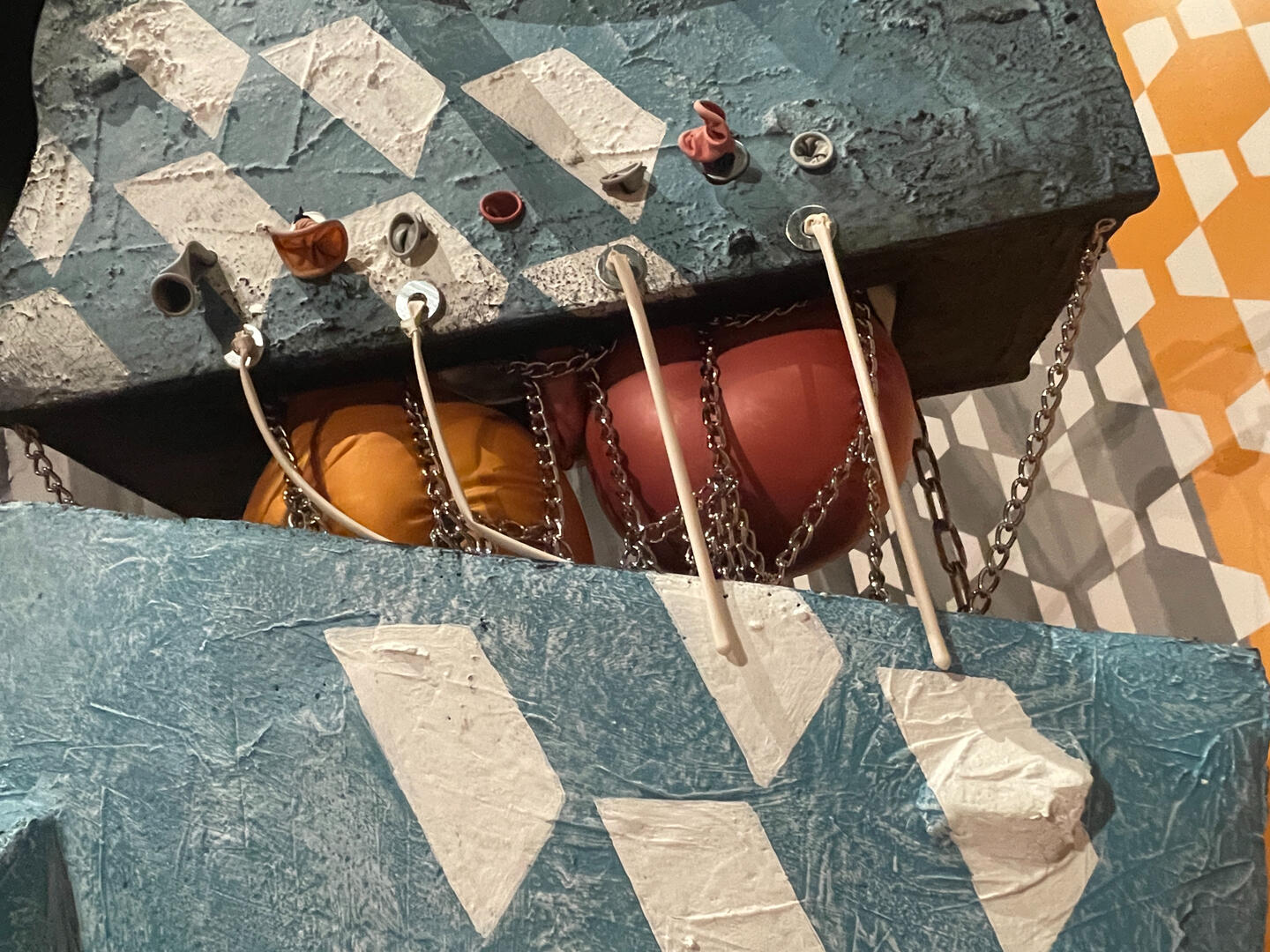
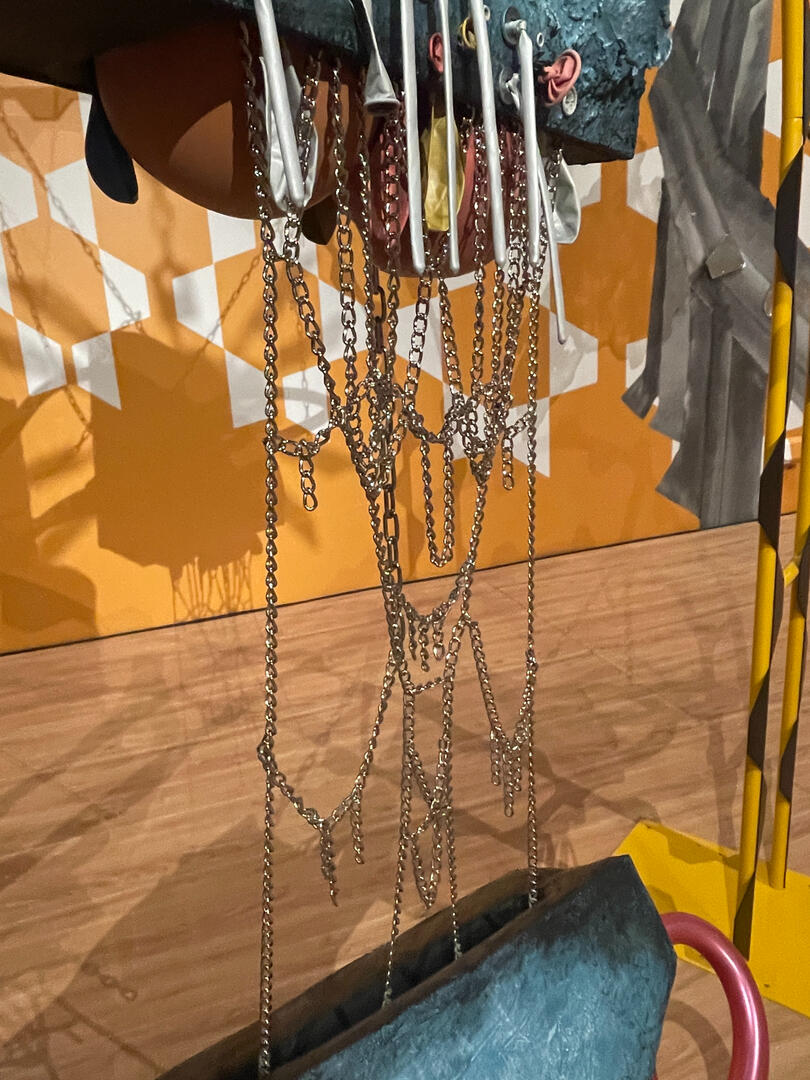
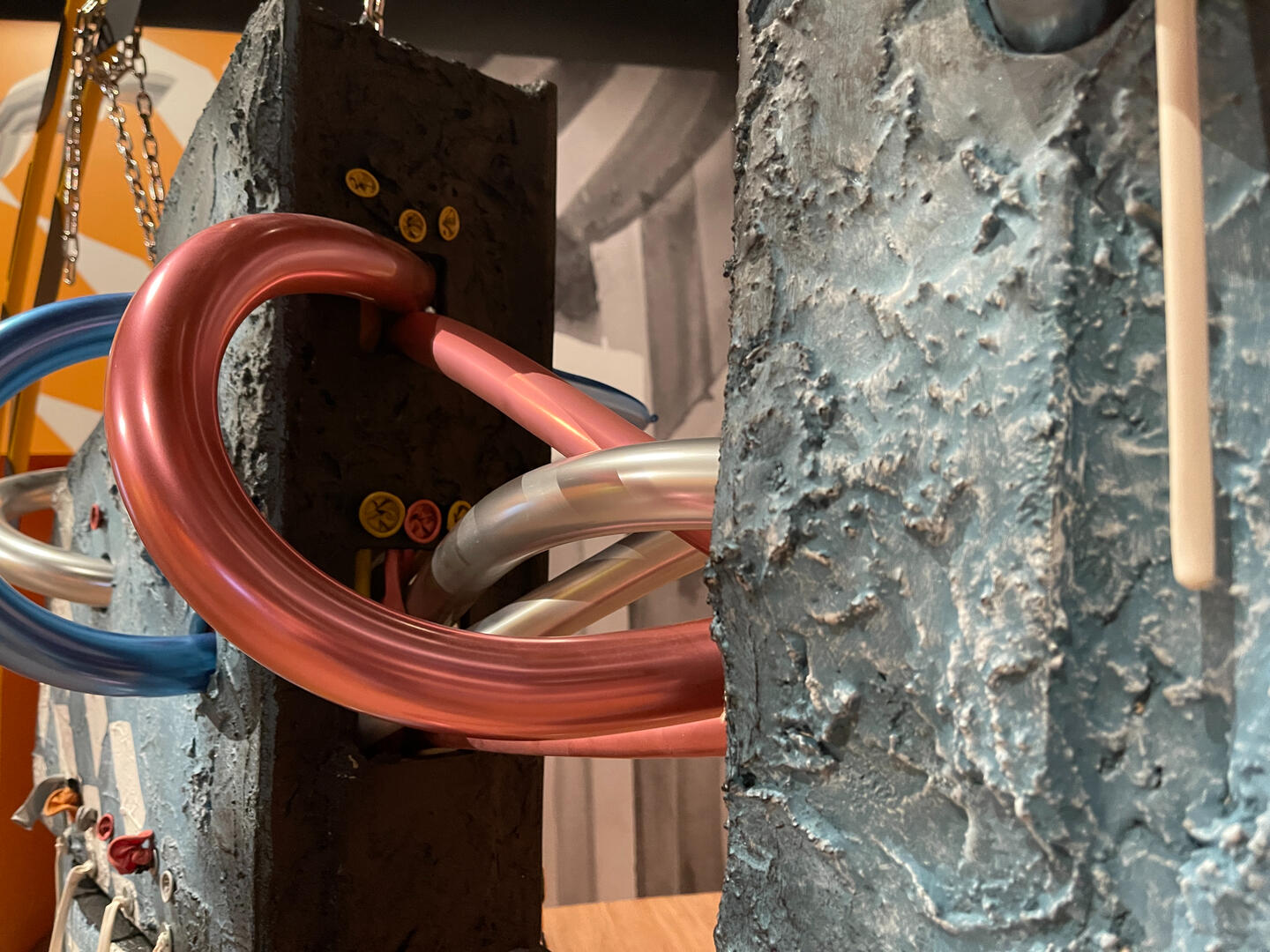
Glue Your Eyelids Together is in response to the film The Wild Eye (1967, Paolo Cavara). The first iteration was made in 2017, and the latest iteration in Dance in the Destruction Dance continues as a development of this work.
© Joo Choon Lin. All rights reserved.
Beatific Perfume (Gold/Black),
Tarp Sculptures,
on-going series
Solo Exhibition: Dance in the Destruction Dance, Singapore Art Museum, 2023
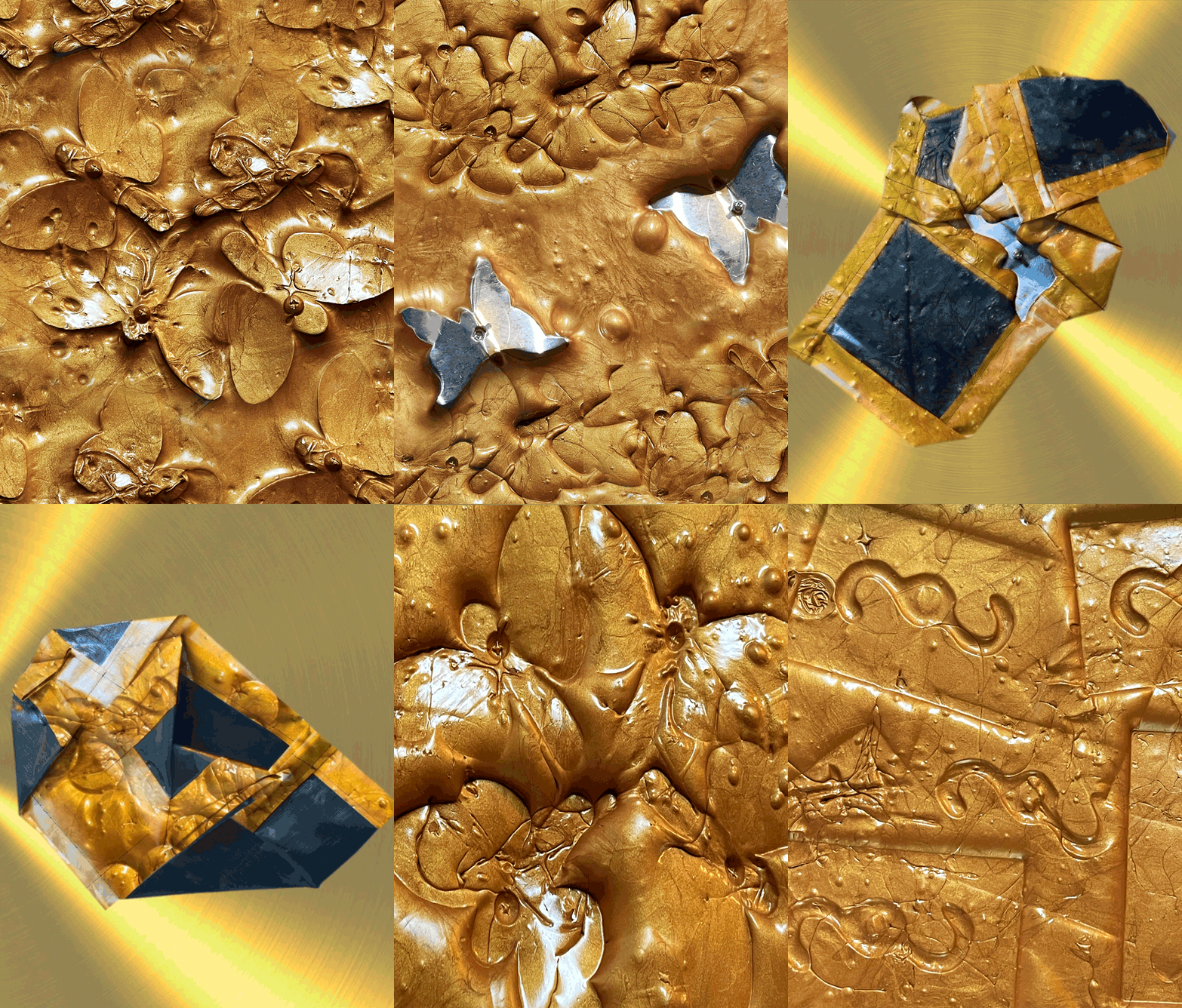
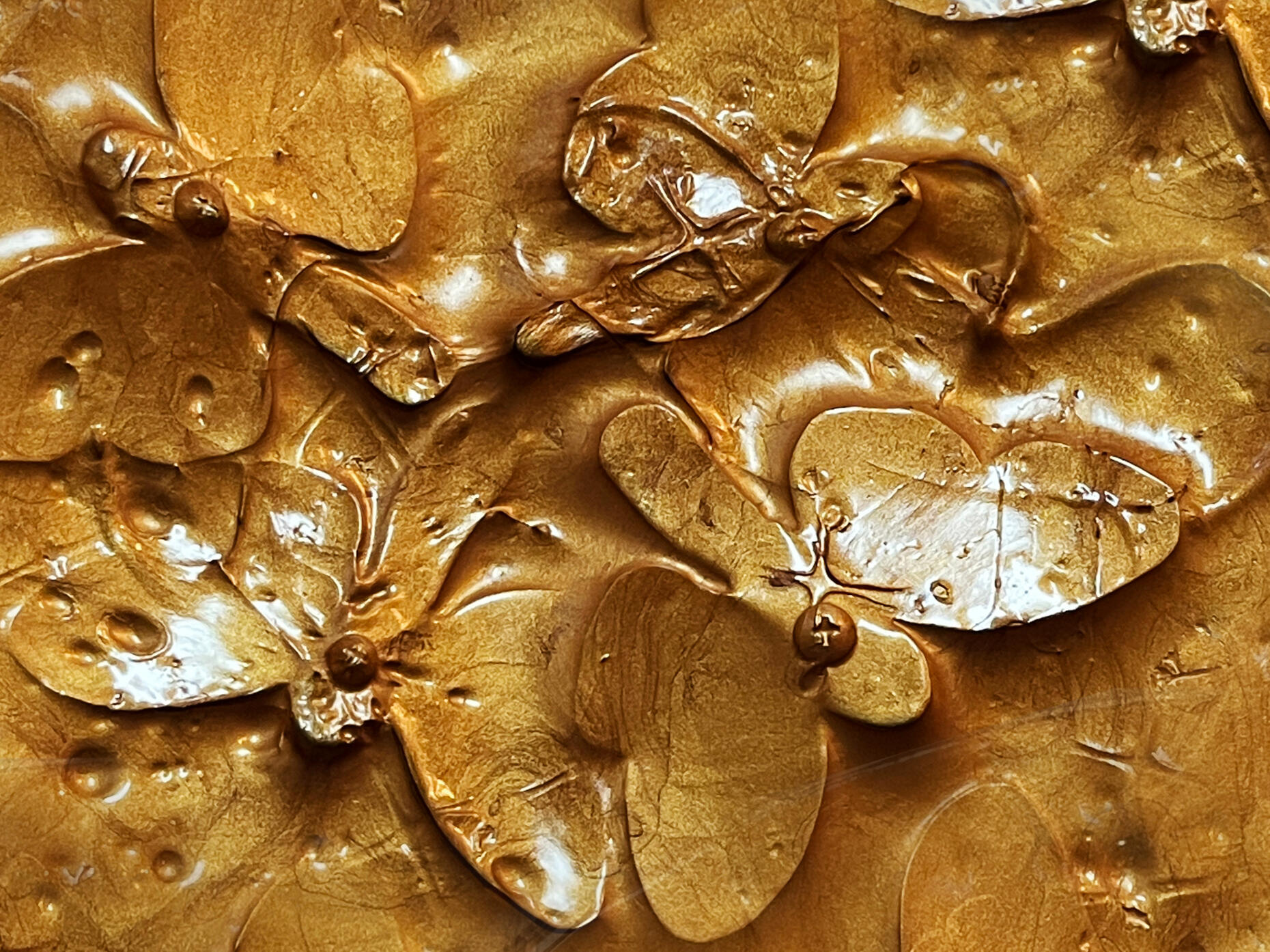
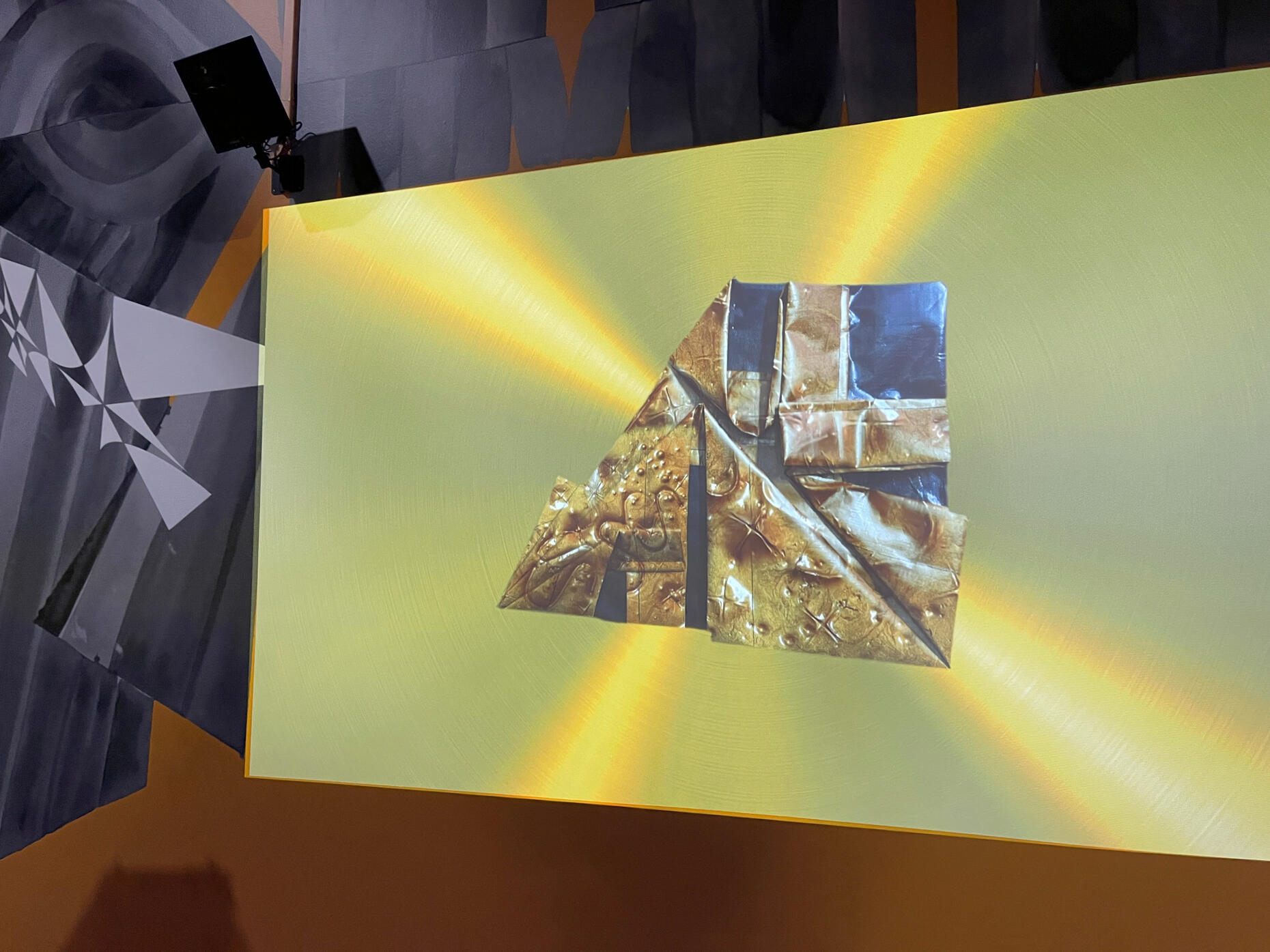
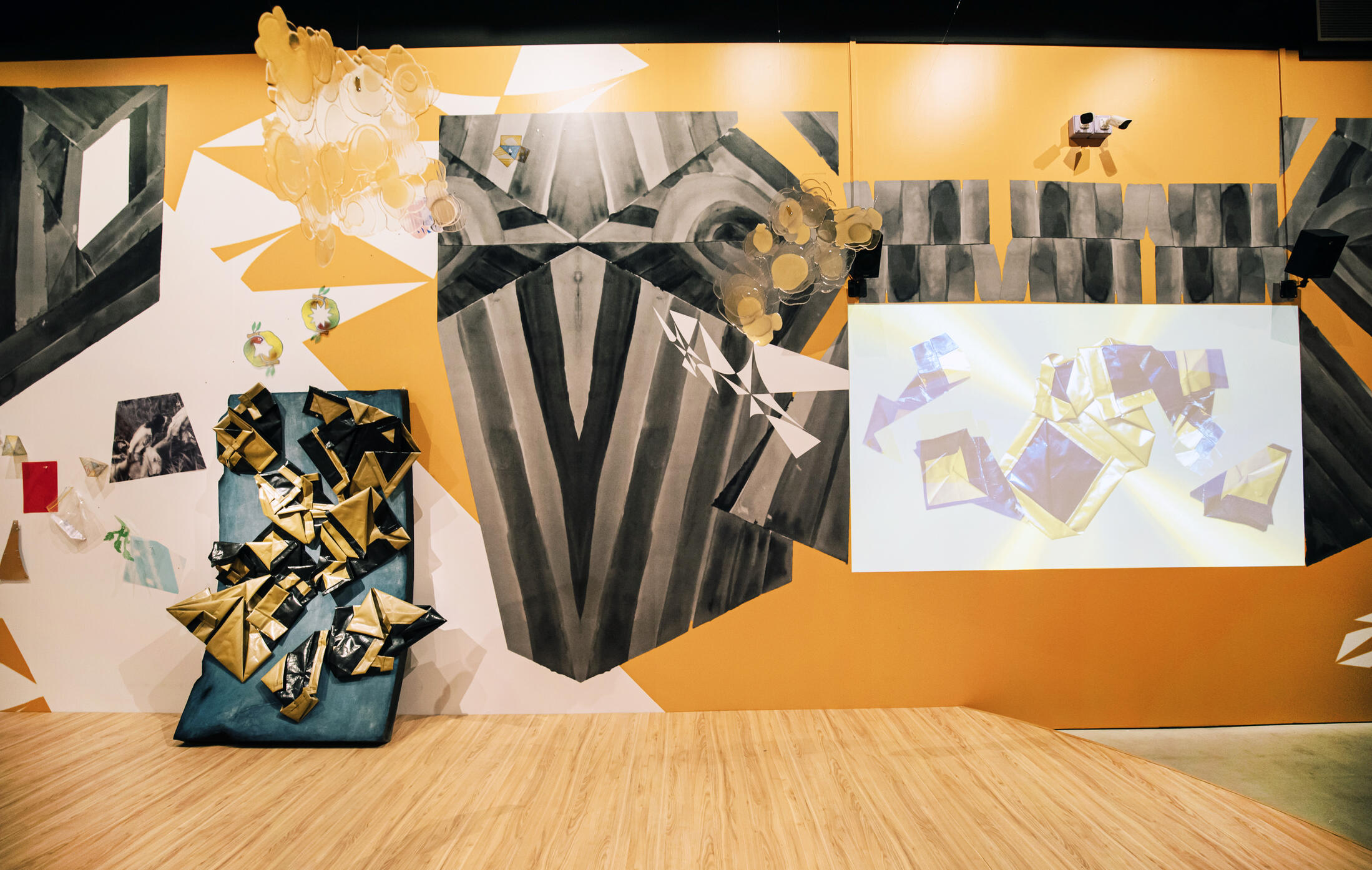
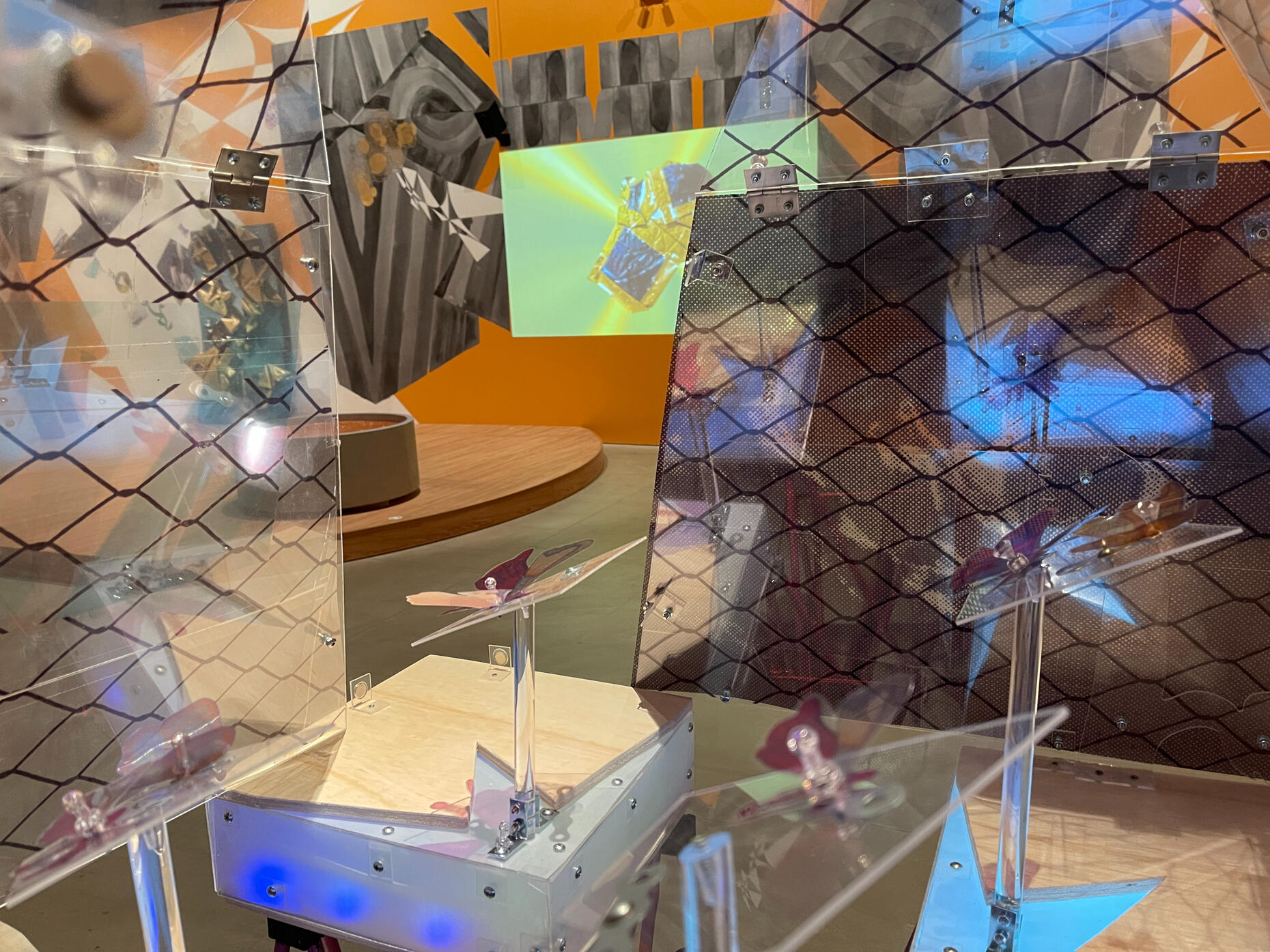
Beatific Perfume (Gold/Black) is an ongoing sculptural and animated series that continues my exploration of consciousness, perception, and the superimposition of reality through mutable material forms.In this iteration, I work with gold and black tarpaulin, gold on the frontal surface and black on its reverse, extending my earlier investigations with blue and orange tarpaulin paired with ocean and sand imagery. The material’s duality becomes both symbolic and perceptual: gold suggests illumination, divinity, memory, and transcendence, while black evokes obscurity, void, concealment, and the unknown. These opposing surfaces exist simultaneously within the same structure, unfolding through continuous transformation.Onto these folded tarpaulin sculptures, I superimpose animated imagery of viscous gold and black slime, creating an unstable, throbbing skin that appears to pulse across the sculptural body. The slime functions as both surface and metaphor, an amorphous field where memory, sensation, and consciousness imprint themselves onto perceived reality. Embossed butterfly textures emerge across this fluid membrane, symbolizing the delicate yet persistent traces of memory as they become inscribed onto the unstable fabric of existence. Like psychic imprints, these butterflies suggest how experiences leave behind subtle residues that shape perception, even as reality itself remains in flux.The animated surface vibrates, throbs, and shimmers, destabilizing fixed perception. Material solidity dissolves into pulsation and pattern. Through this interplay, the work questions whether reality is ever truly static, or whether it is continuously formed through layers of projection, memory, and interpretation.As with previous works in the Beatific Perfume series, the folding structures resist singular definition. They morph through repetition, collapse, and reconfiguration, becoming mutable vessels for layered associations. Here, however, the introduction of gold and black intensifies the metaphysical dimension, suggesting cycles of revelation and concealment, purity and corruption, materiality and transcendence.Beatific Perfume (Gold/Black) reflects on how consciousness projects form onto fluid existence, how memories emboss themselves upon our lived experience, and how perception itself may be a vibrating surface where multiple realities are continuously superimposed, dissolved, and reimagined.Through these shifting sculptural matrices, I seek to reveal reality not as fixed objecthood, but as an ever-transforming field of becoming.

The works are always in transition, moving through metamorphosis toward something else. They begin to resemble living forms—constantly changing, exceeding function, and breaking from appearances into their own worlds, an infinite reality.In this process, one reality is continuously superimposed onto another—surface over depth, image onto material, perception onto what is there. What we perceive is never fixed. Everything arises and shifts. Matter and perception are not separate; they appear together as name and form, within a deeper, unified field of consciousness. There is no final, solid “thing”—only ongoing experience, where one state of reality is always appearing over another.
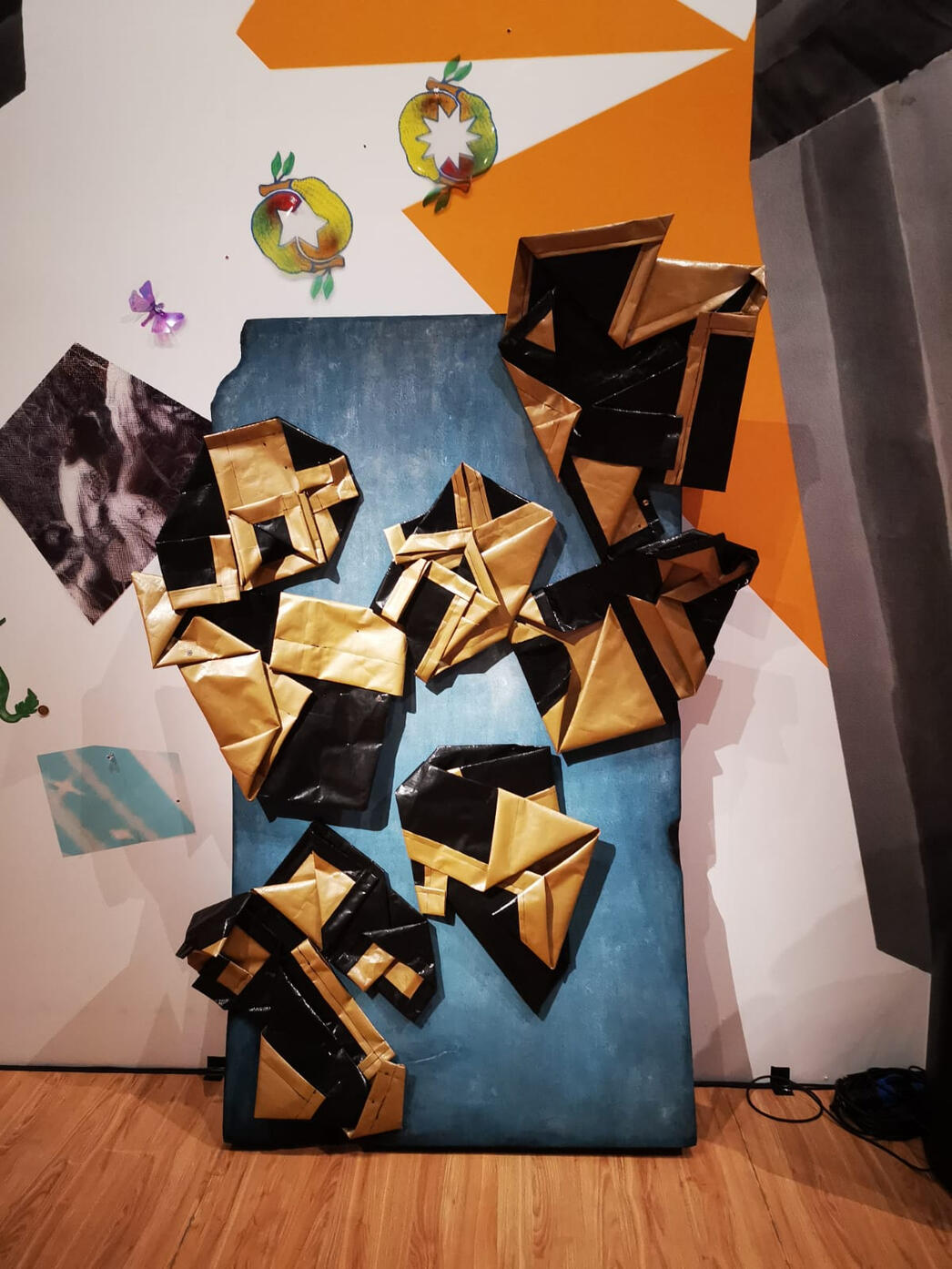

© Joo Choon Lin. All rights reserved.
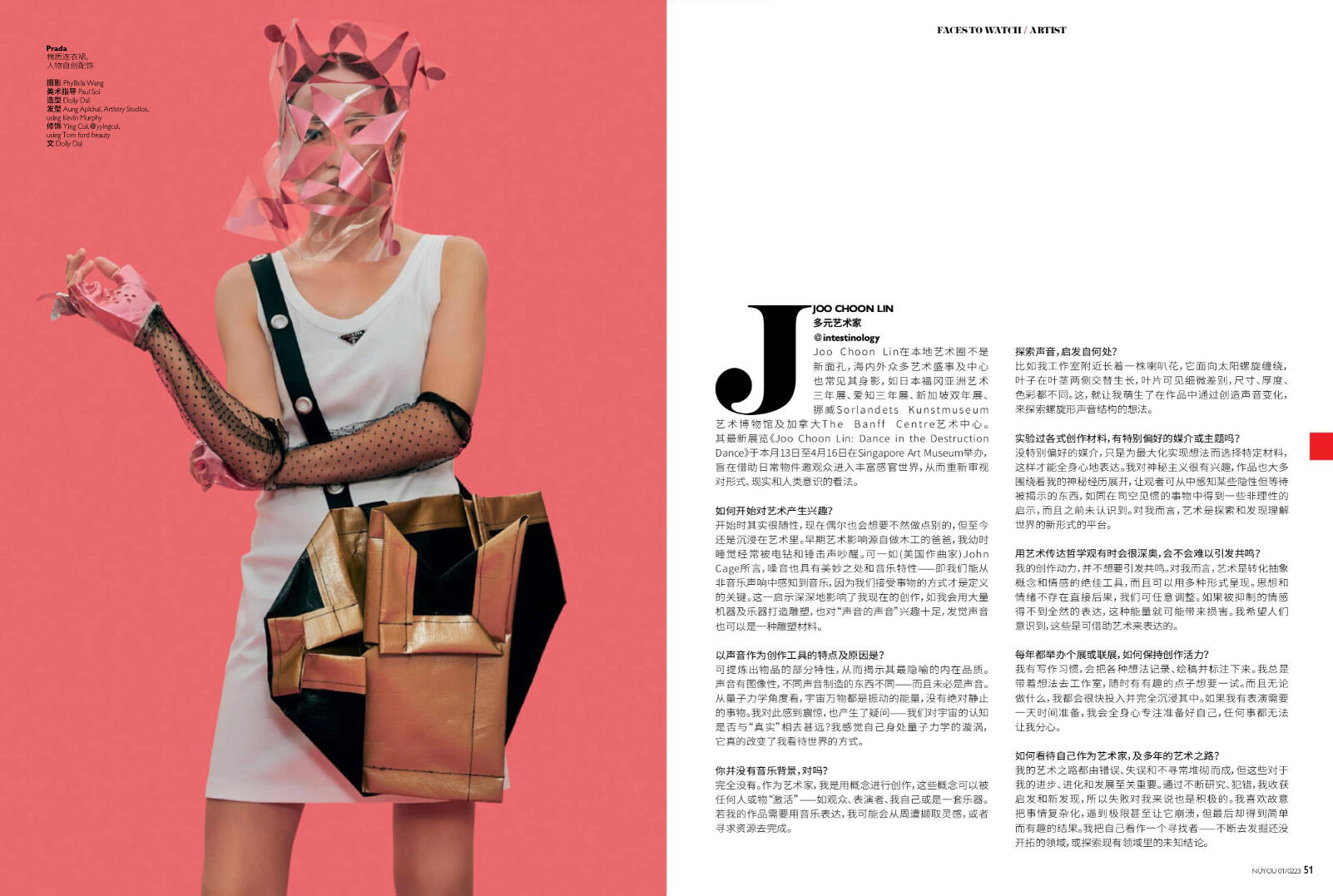
Interview - NUYOUSINGAPORE《女友》
NUYOU: FACES TO WATCH - JOO CHOON LIN JAN 2023
© Joo Choon Lin. All rights reserved.
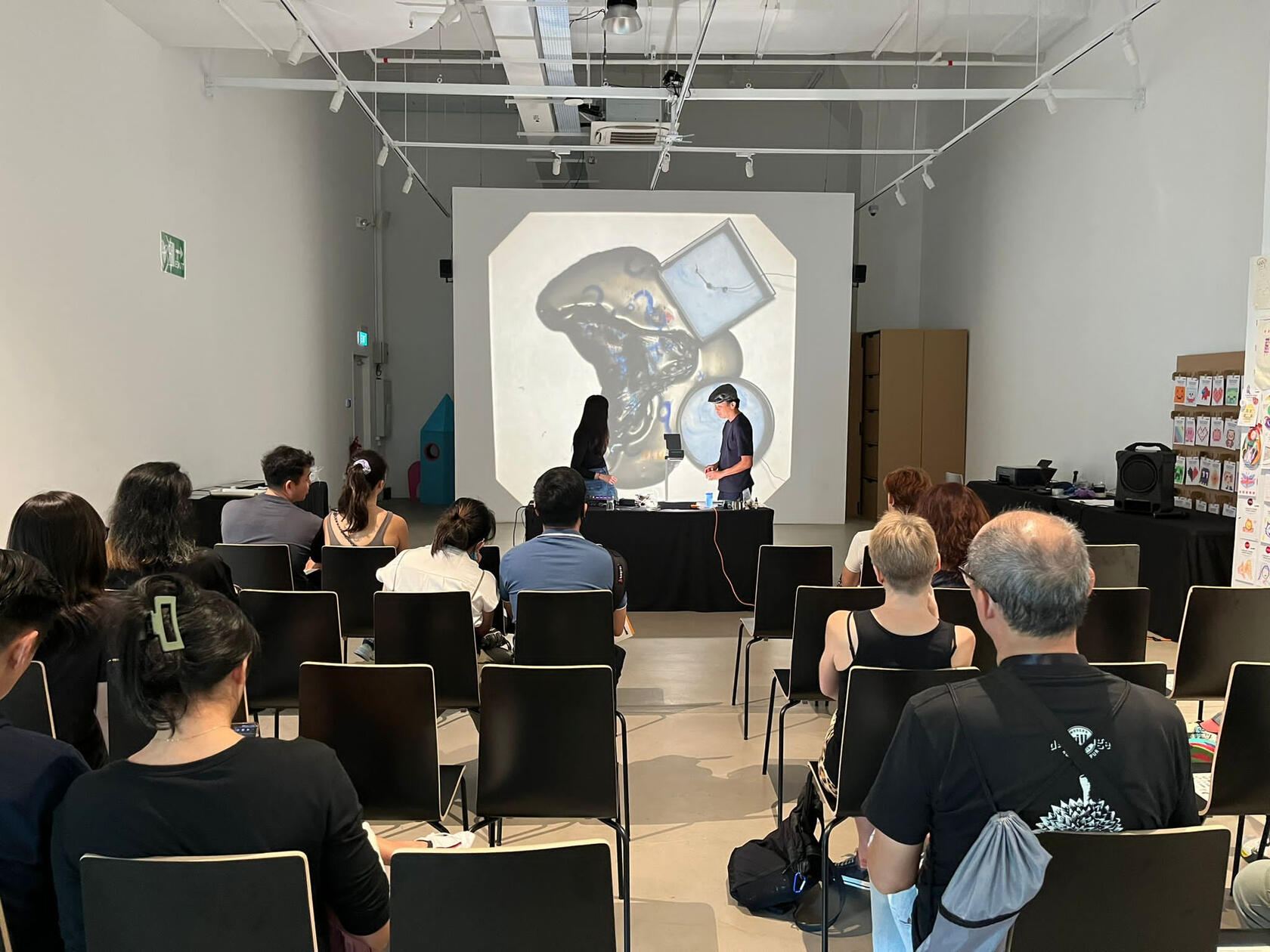
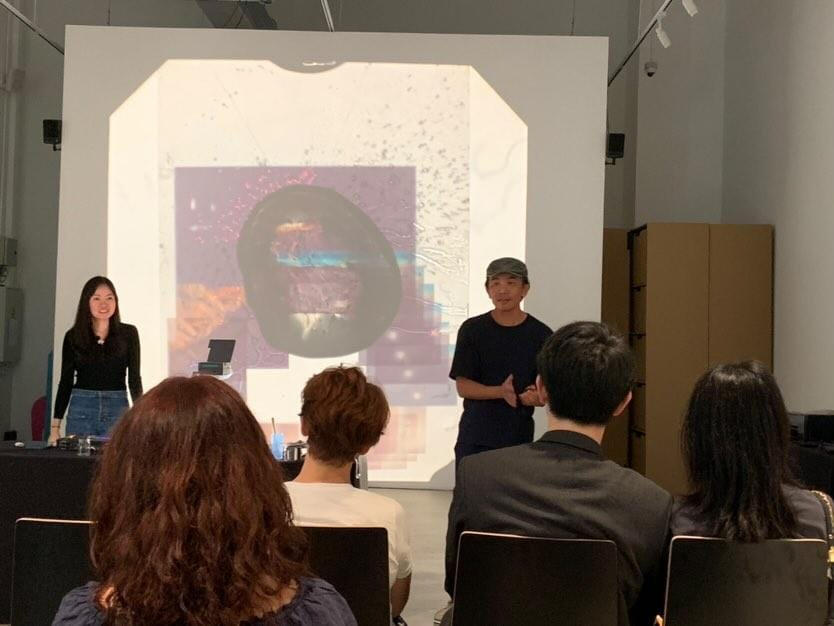
The Sound of Sound:
Over-Under-In-Out-Head Projection
It is presented as part of Dance of Destruction Dance, a solo exhibition at Singapore Art Museum, 2023.
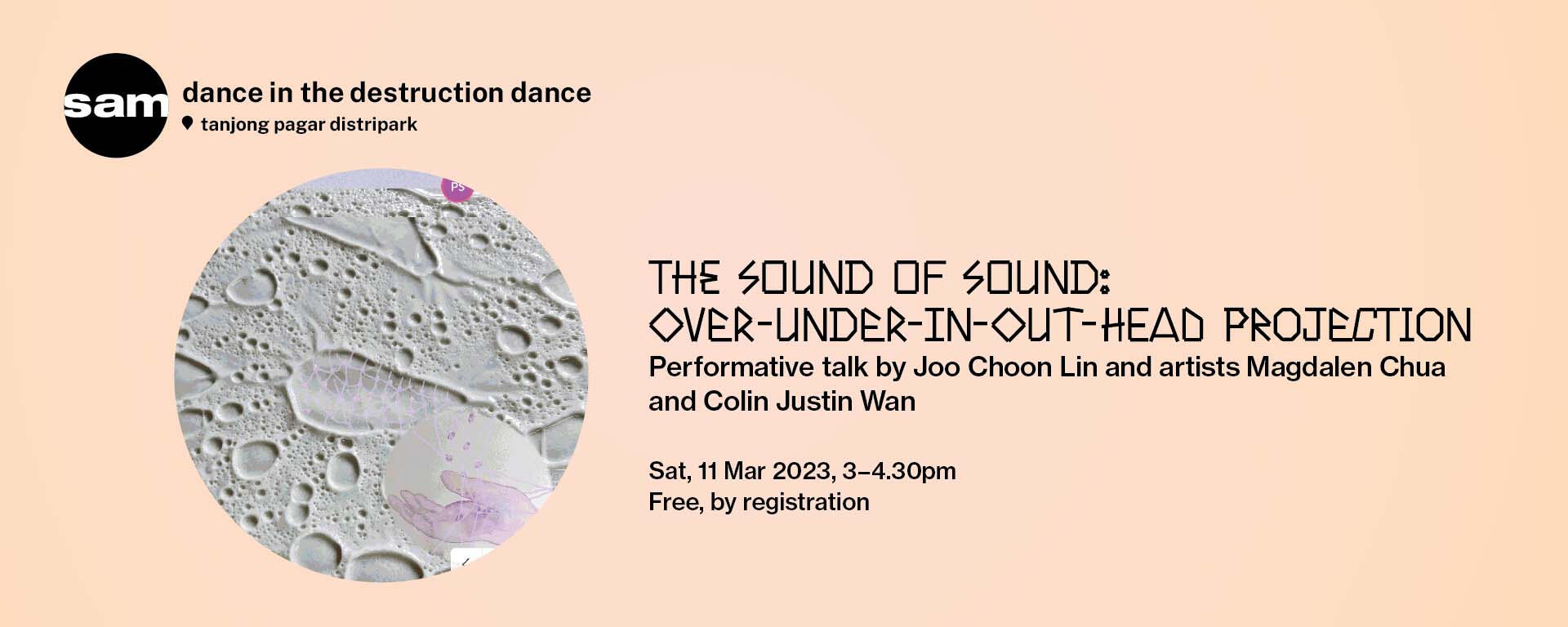

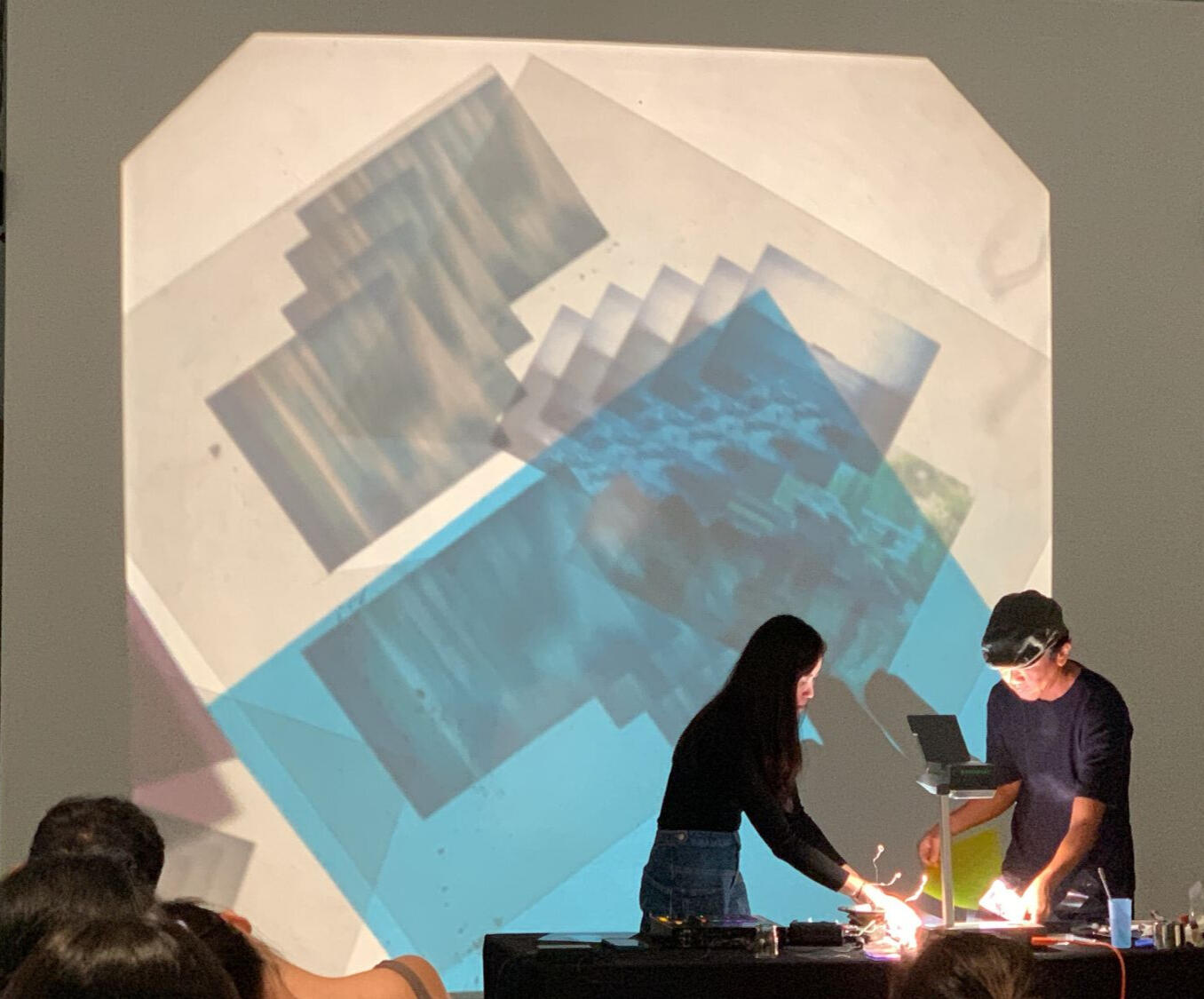
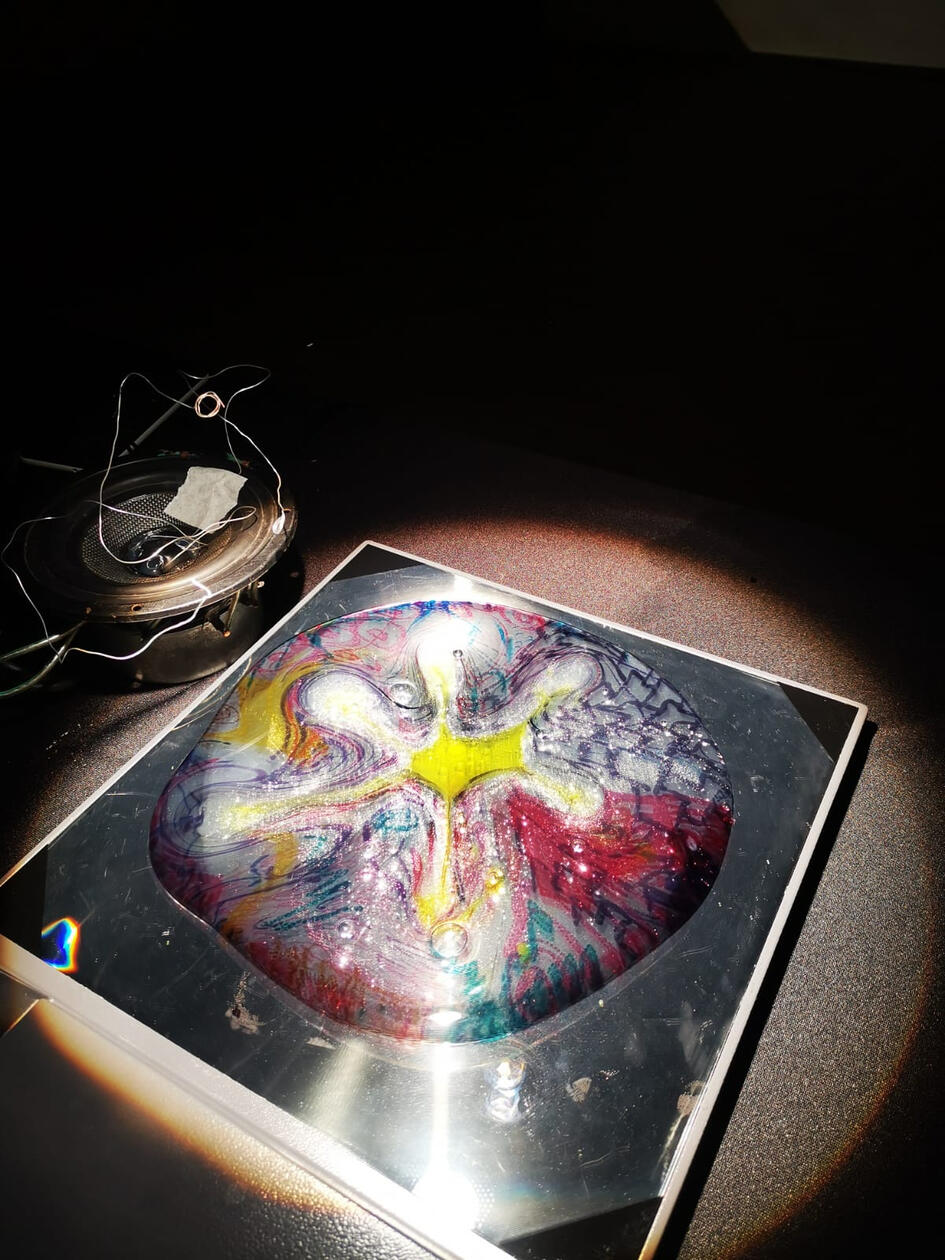
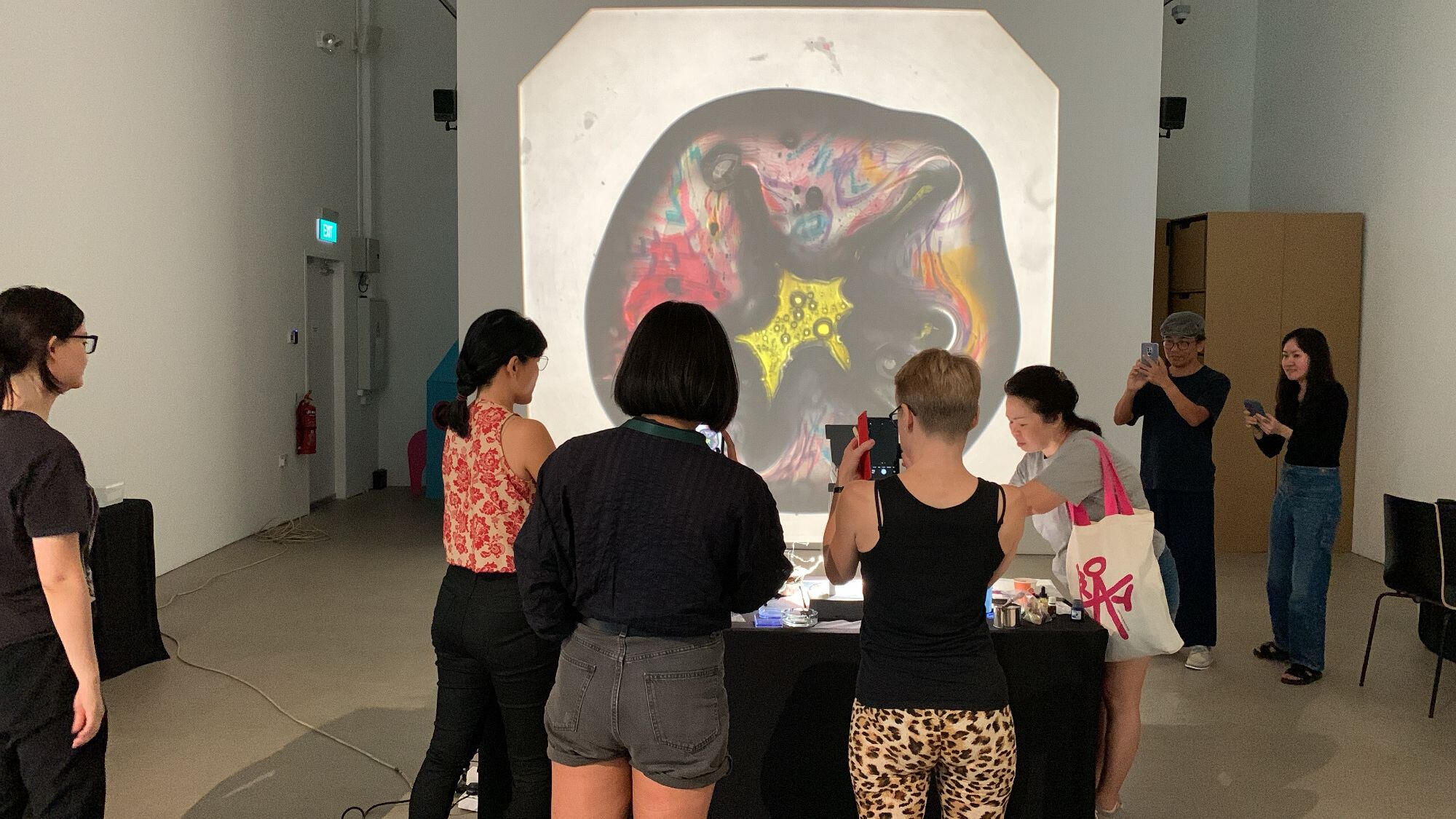
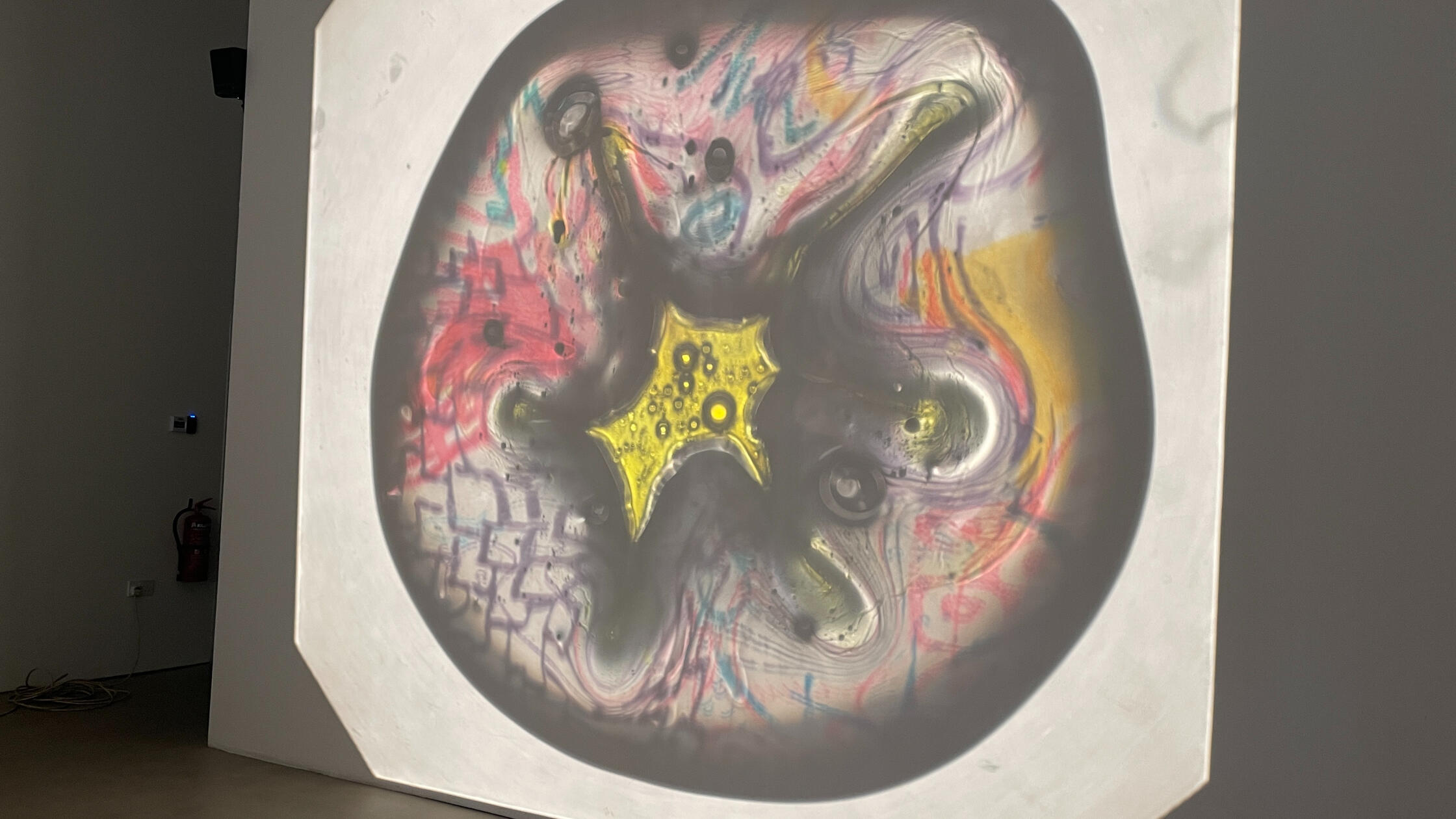
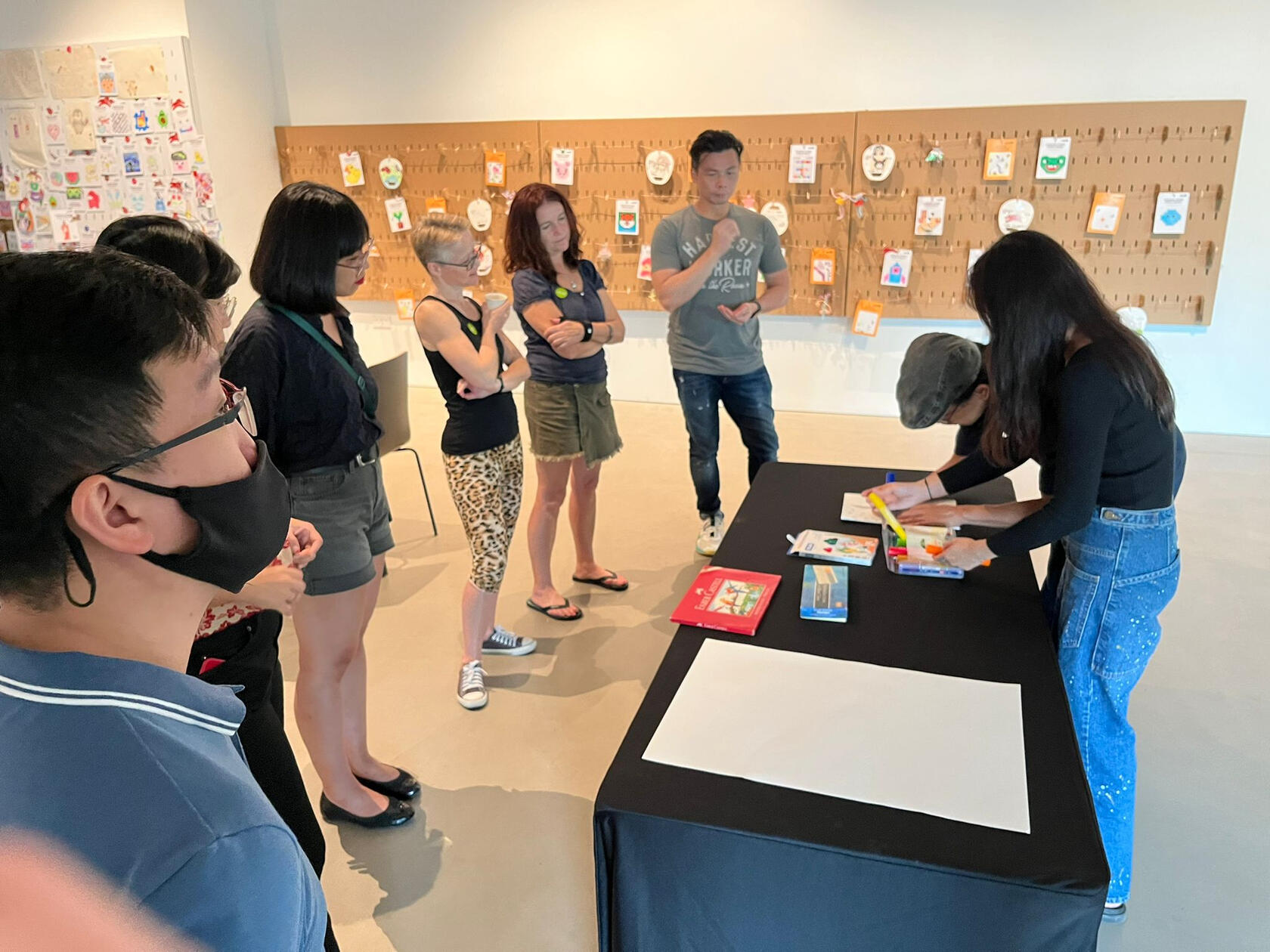
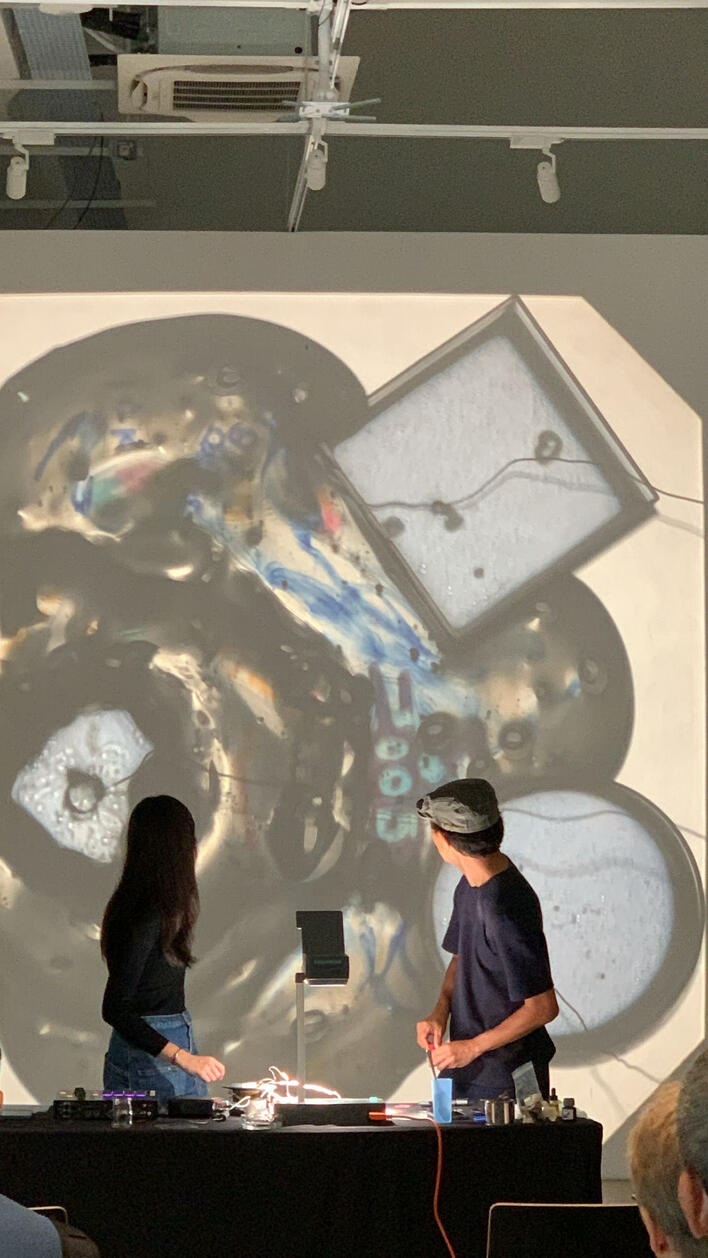
This performative talk is initiated by Joo Choon Lin, in collaboration with artists Magdalen Chua and Colin Justin Wan. We explore the overhead projector as a metaphor for consciousness. Our ongoing discussions around the representation of memories and dreams in this collaborative work often return to the question of the “mind’s eye”—the mental faculty through which imagined or recollected scenes are formed.Using media technologies of representation, The Sound of Sound builds a shared repository of images, sounds, emotions, and sensations, summoning a collective and shared existence.Audiences are invited to submit drawings, prints, and photographic contributions for inclusion in the performative talk.
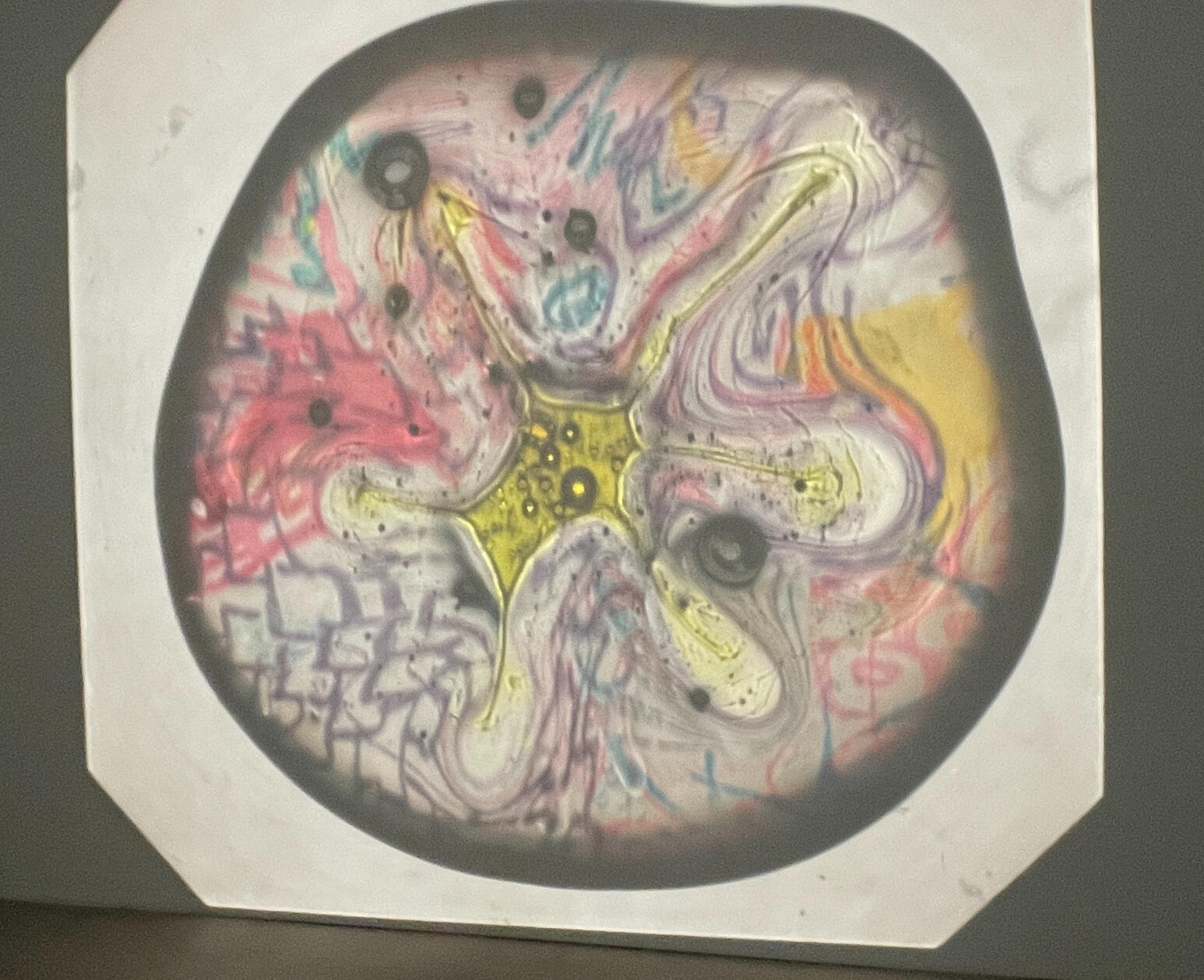
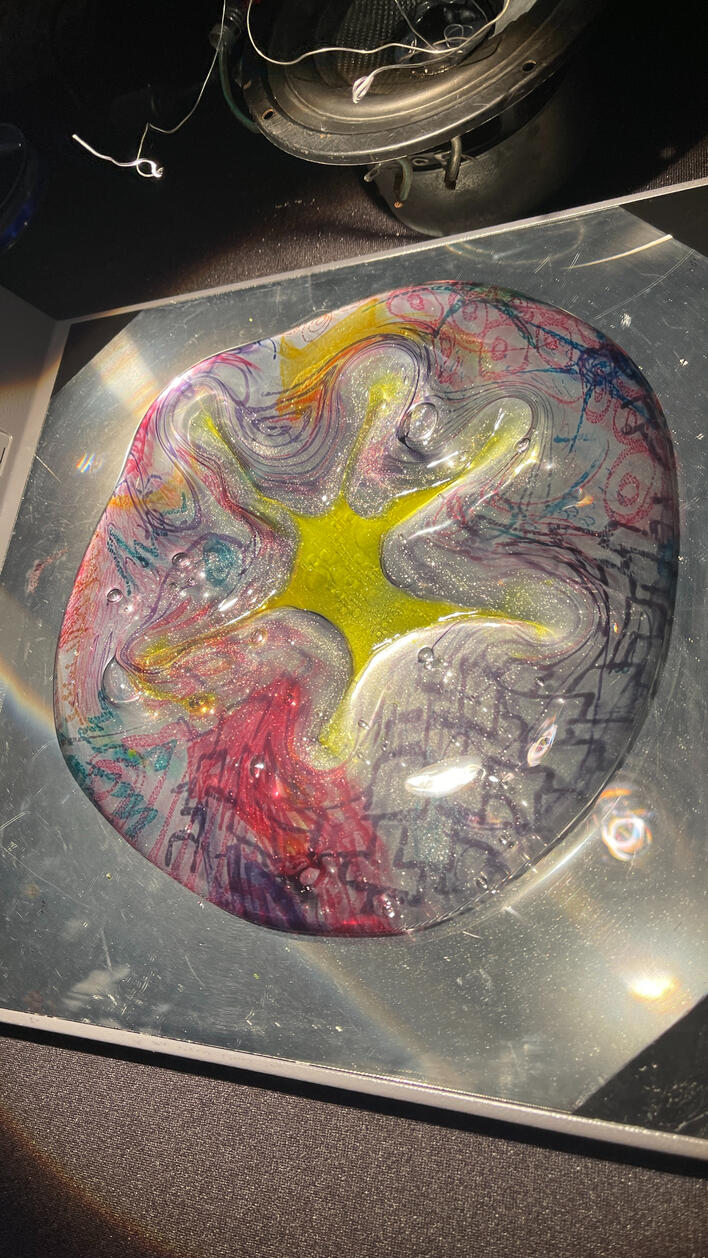
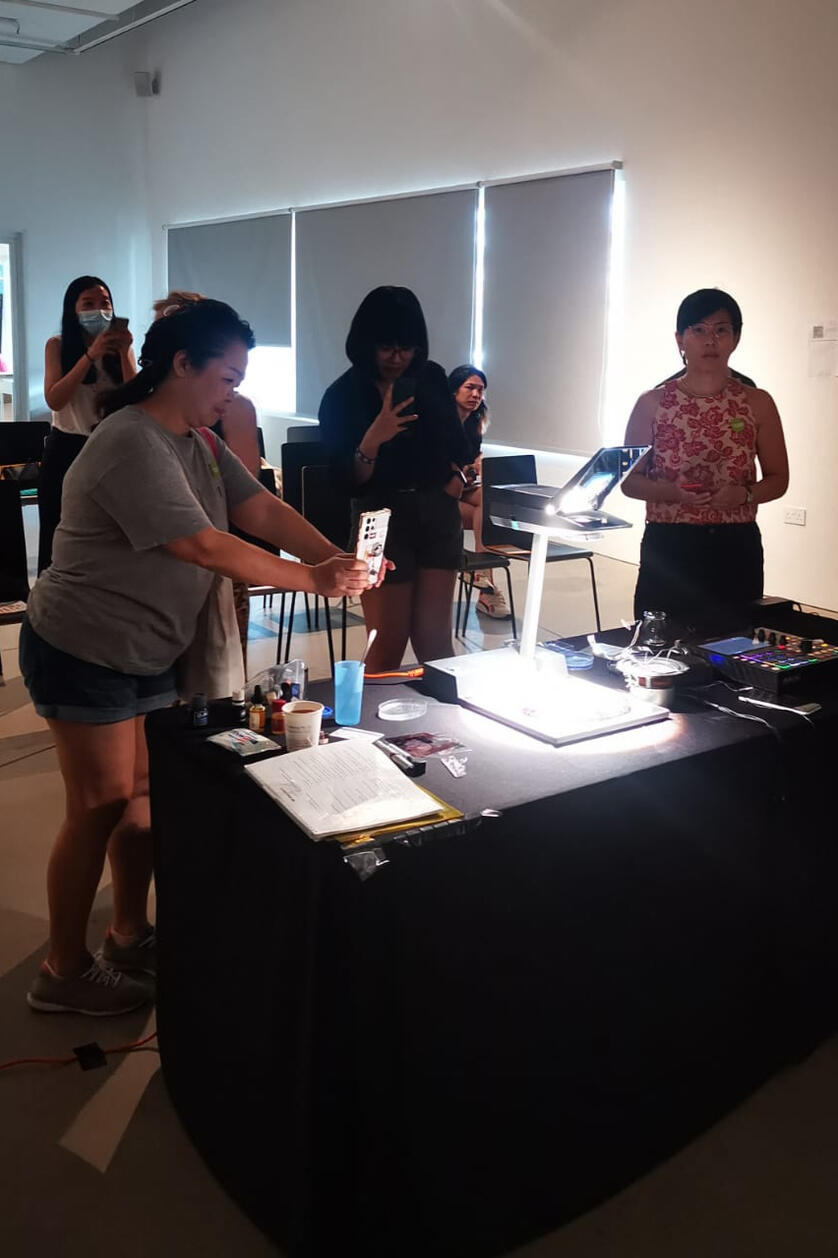
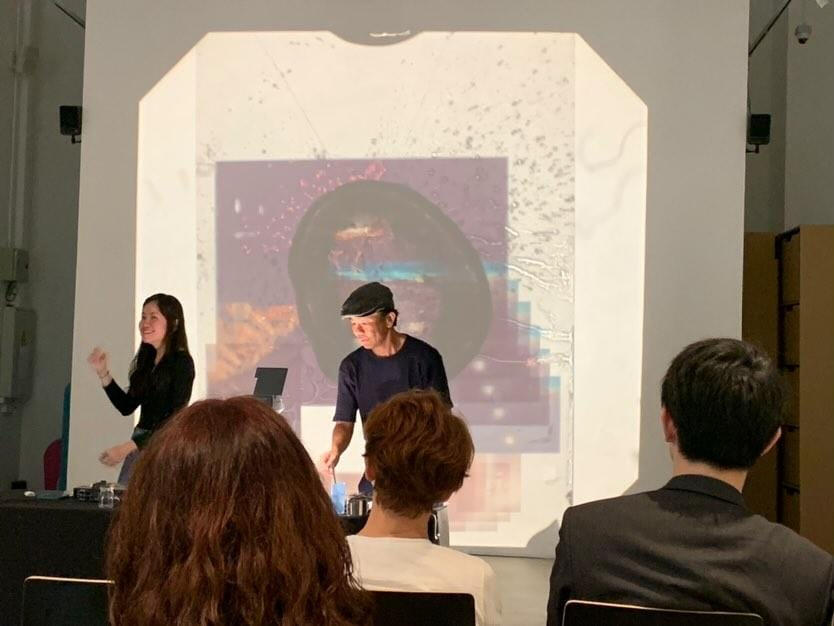
© Joo Choon Lin. All rights reserved.
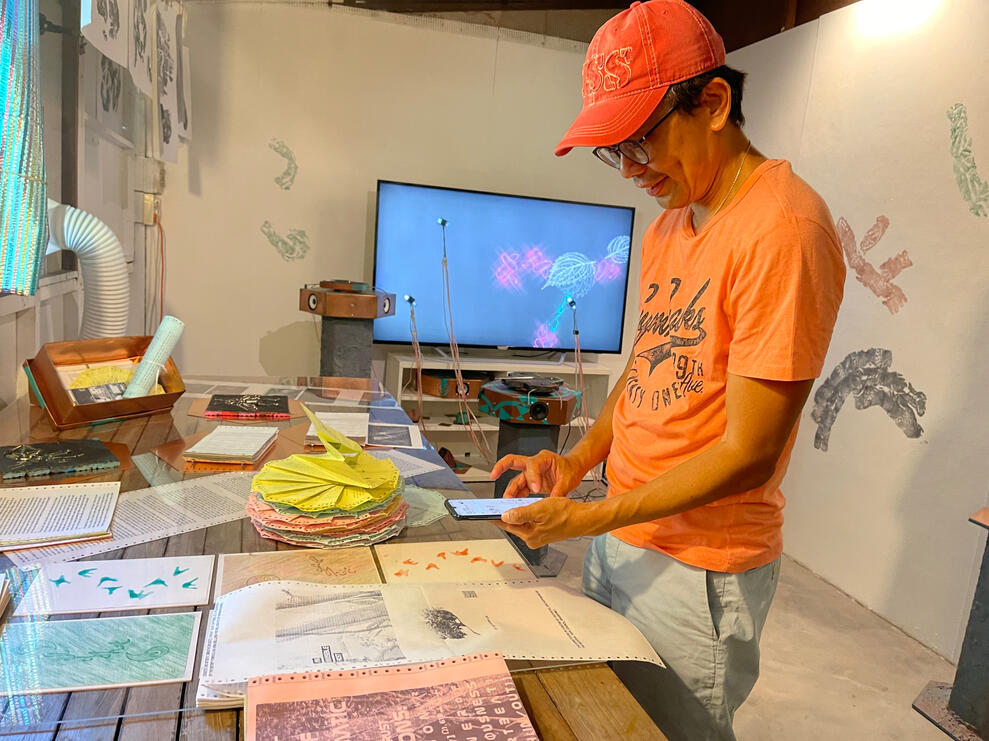
The Cold Purity of Mathematic Love/Trust Equations: {¢arbonHz[¢x(HOH)y]Ω1.618-+ Flower of ¢ФnsciФusness [HEARTBEAT] Breaths [In/out] }
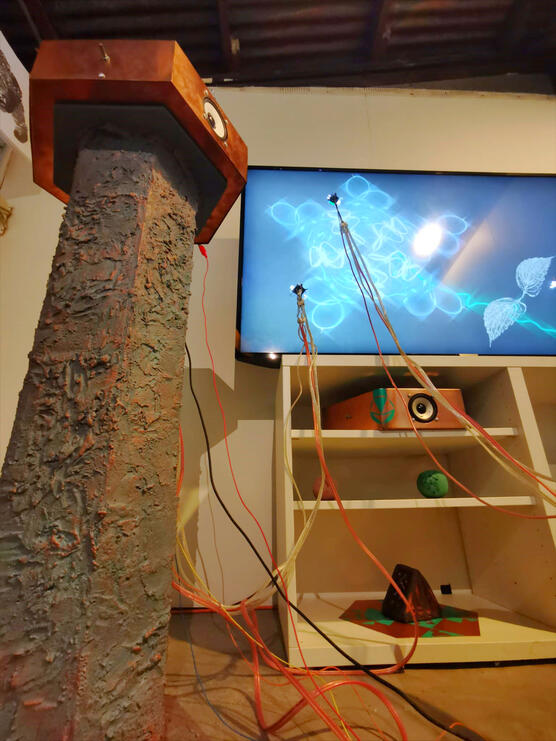
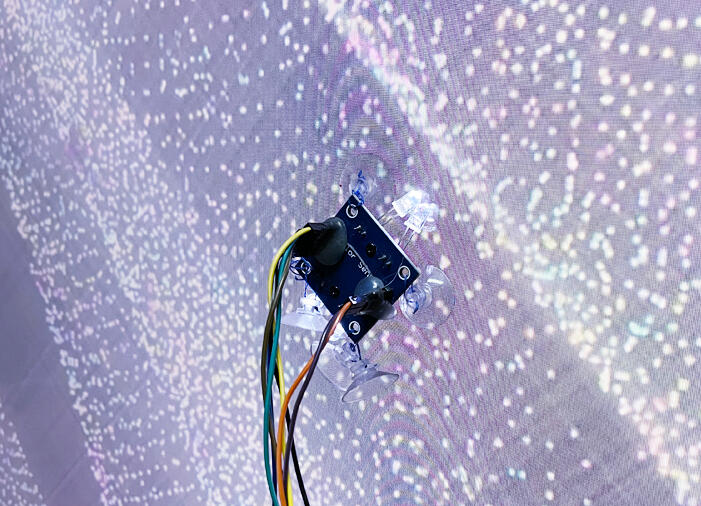
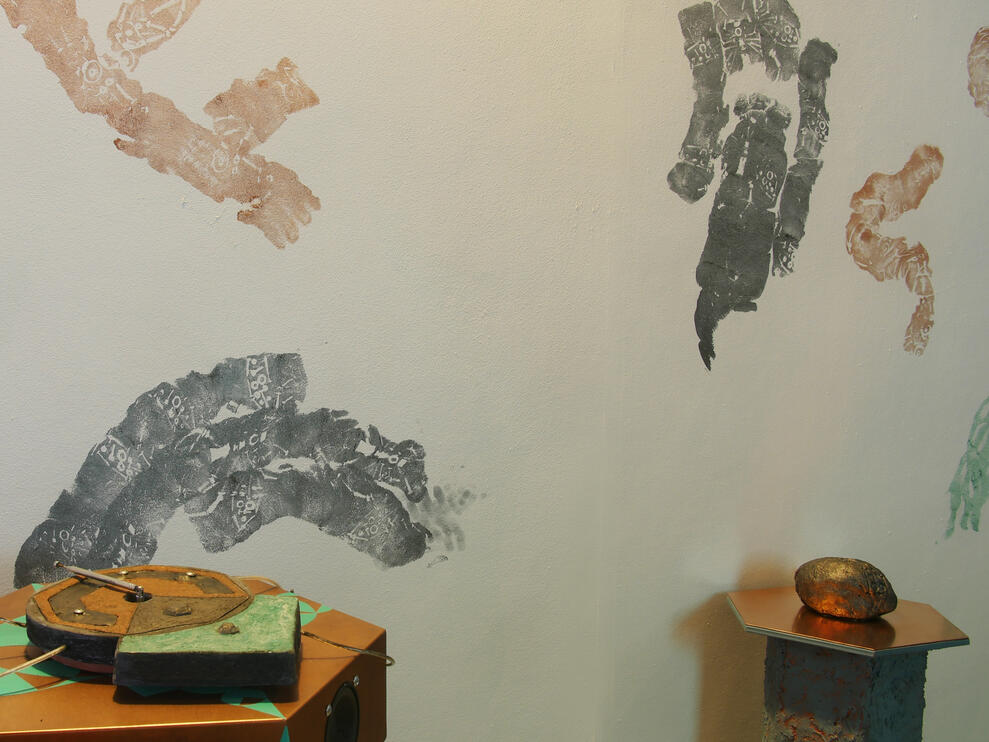
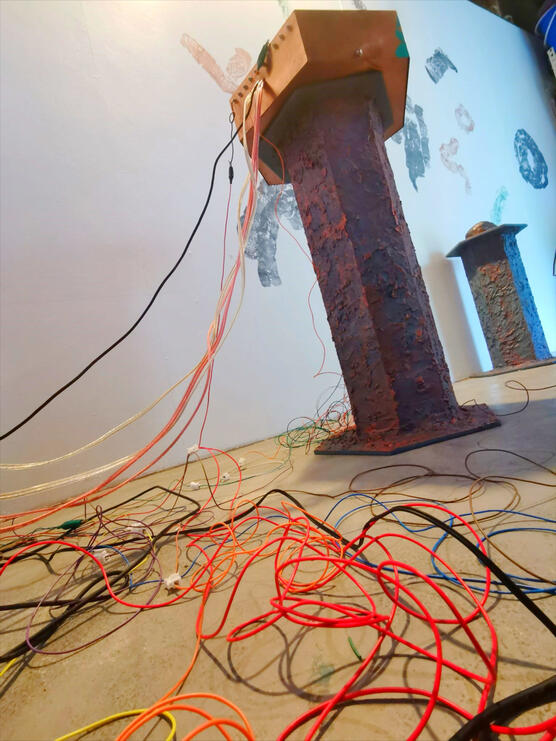
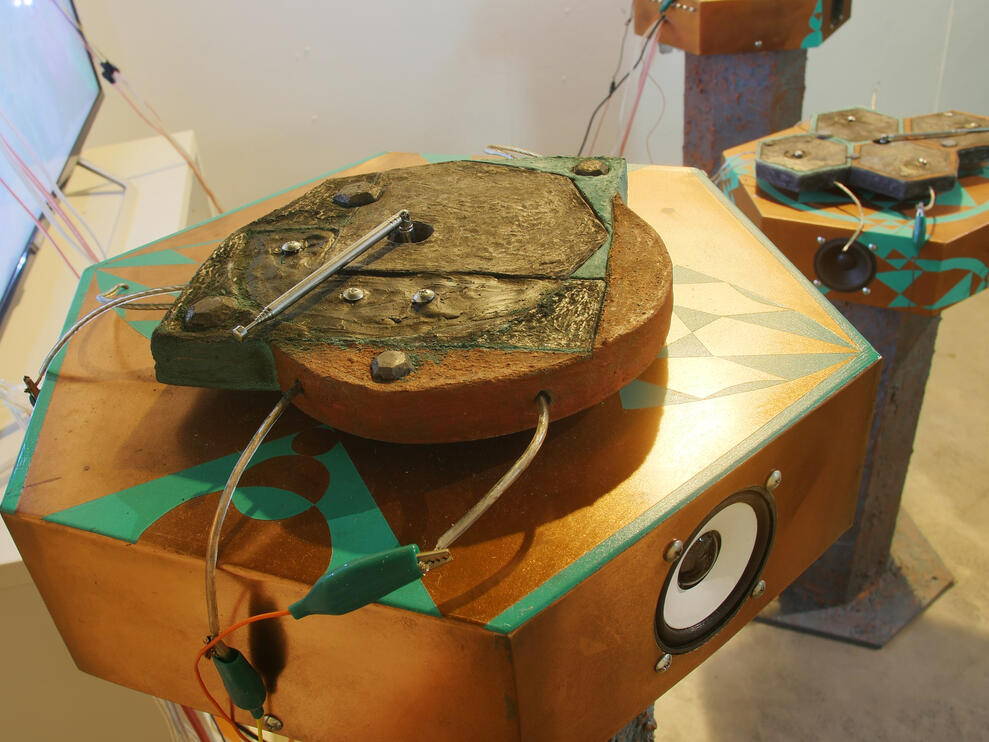
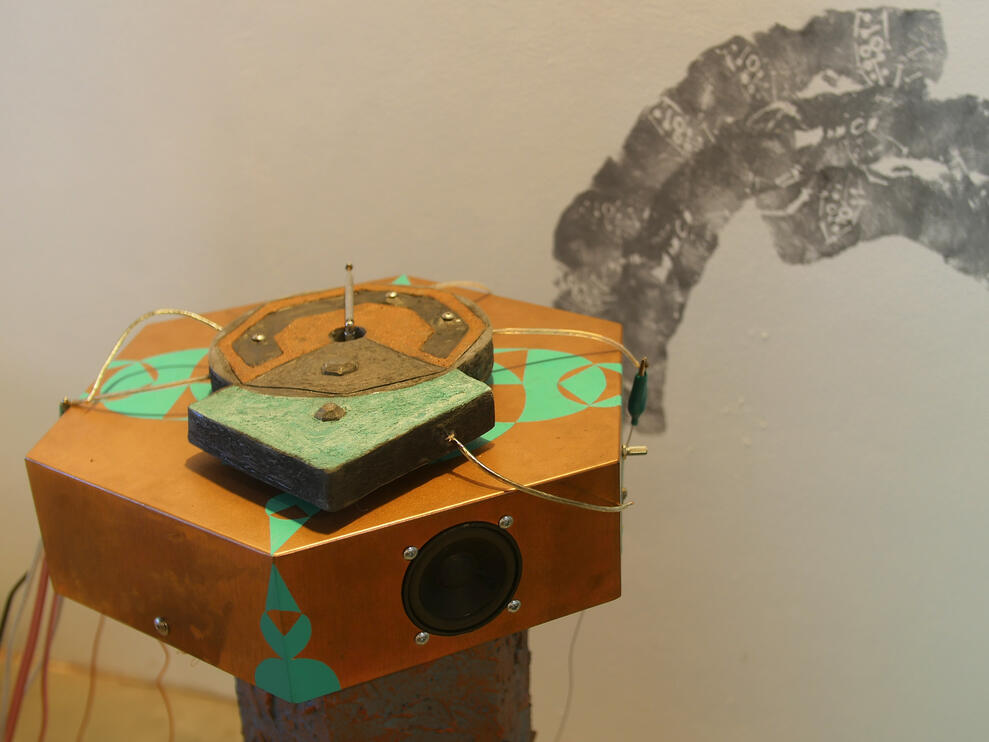
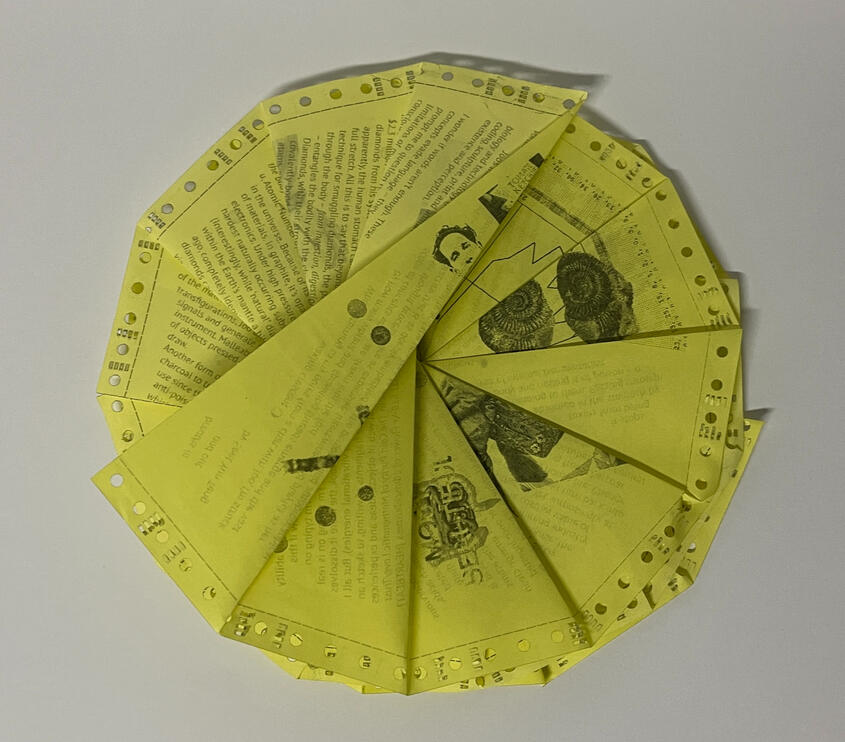
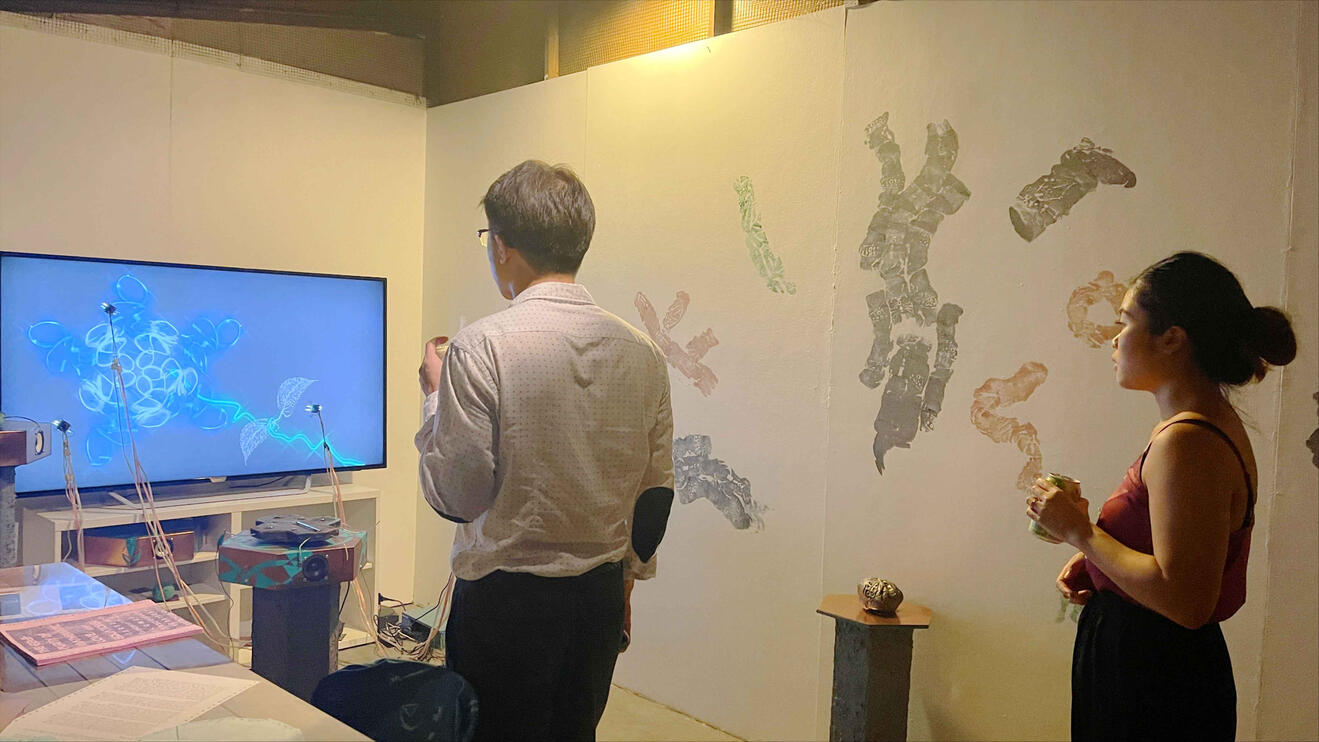
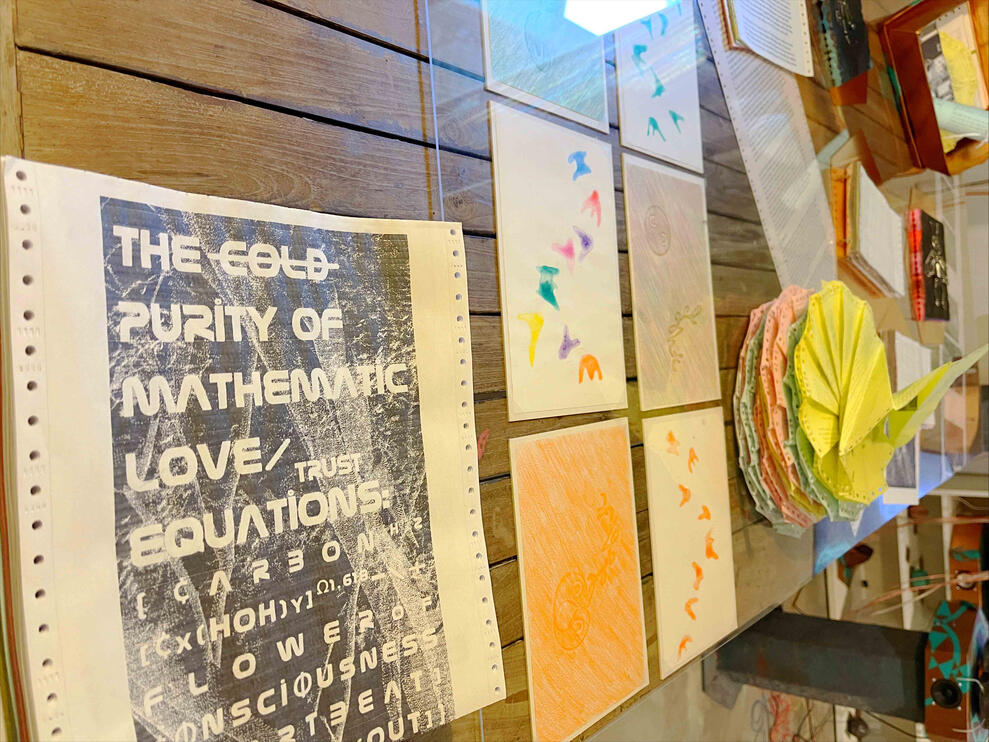
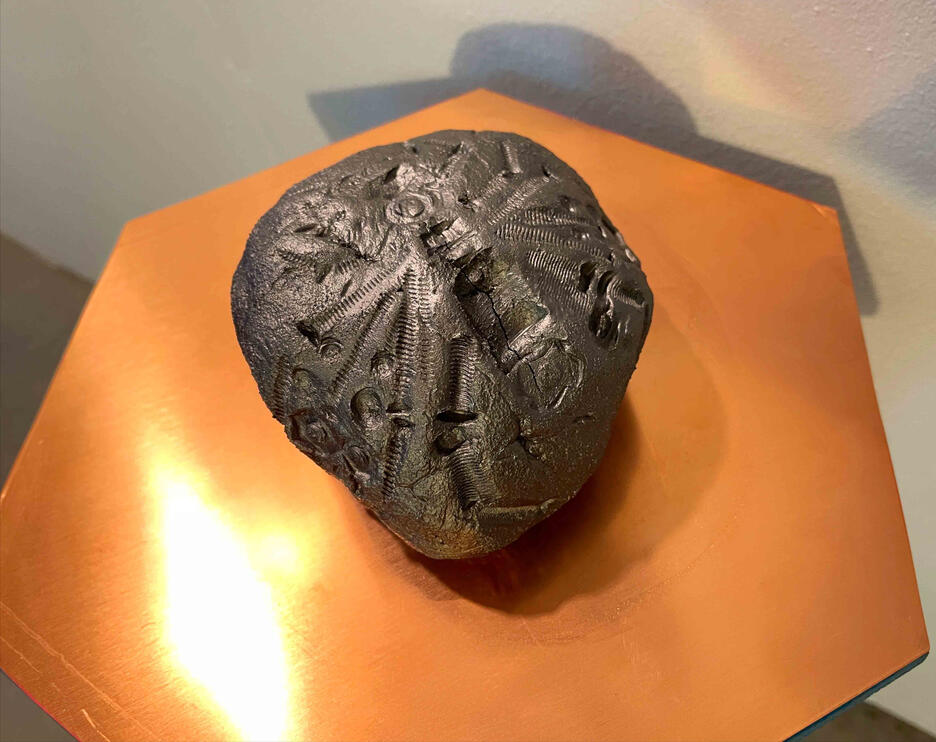
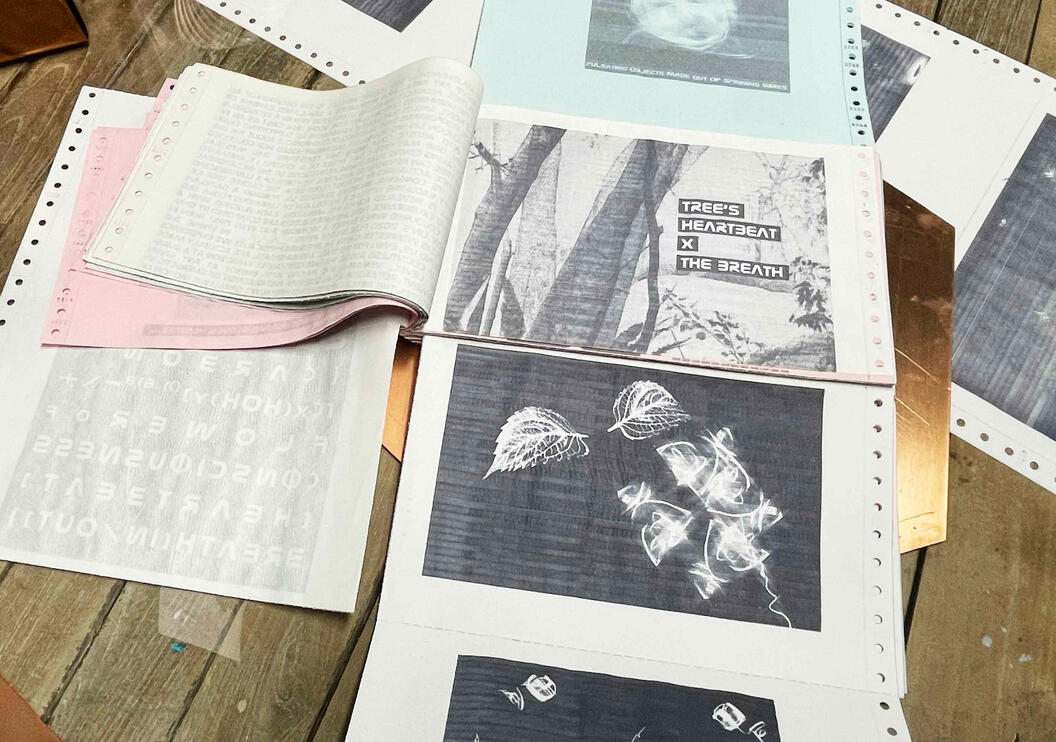
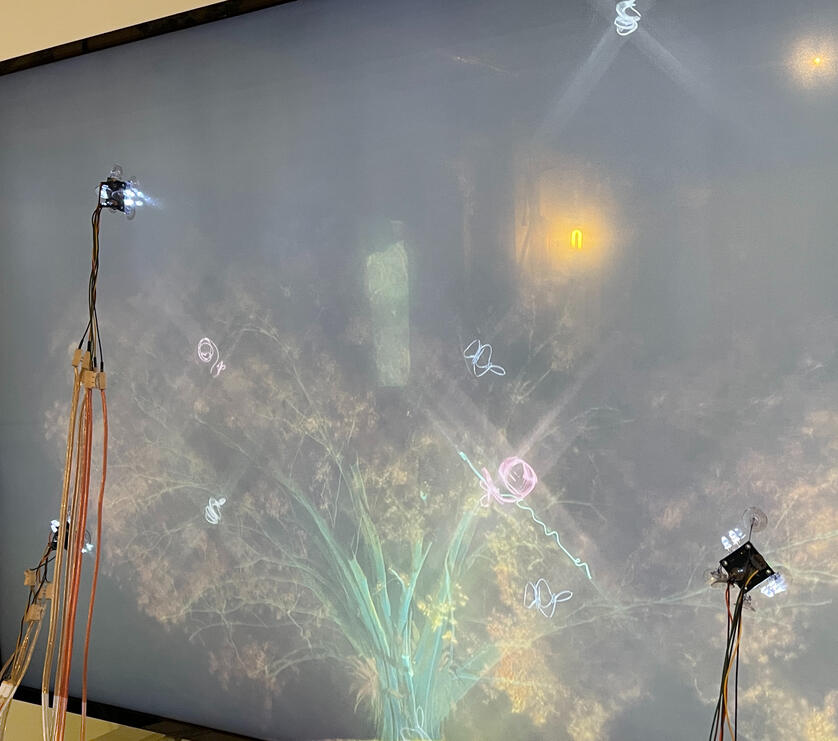
Open Studio: 16–23 JulyThe open studio immerses audiences into a mystical garden, which houses impressions of a Bodhi tree and a variety of living organisms, as well as several hand-made carbon-based apparatuses. Widely known for its spiritual symbol of enlightenment; of awakening; of expanded consciousness; and of wisdom, the Bodhi tree, which acts as an invisible host to this garden, has formulated much of the artist’s muse since the beginning of her research-based project. Through a combination of computational, methodical and intuitive processes, the observed circadian pattern of the tree and its corresponding data were arranged and manipulated by the artist into different mixed-media pieces that simulate the tree’s heartbeat and bring the garden to life.Central to the exhibition is the exploration of perennial rhythms that weave through our environment like an eternal cycle of manifestation and un-manifestation. Most apparently, there are the life-supporting circadian patterns found in nature, such as the correlated actions of pulses, breaths and digestion, the undulating dynamics of ocean waves, and in the case of this project — the periodic oscillation of tree branches on the Bodhi tree induced by turgor pressure of internal water flow. In the same vein, there are mathematical properties from the Fibonacci sequence and the Golden Ratio that ubiquitously govern the various growth patterns found in plants. And at a quantum level, there are the countless energetic atoms that vibrate and pulsate at varying frequencies, which give forms to the physicality we experience. Joo imagined the possibilities of these transcendental rhythms and patterns in connecting the different aspects of our cosmos as she attempted to materialise them in ocular and audible ways, resulting in a zestfully animated video and several ornate sound inducing kinetic sculptures.
![The Cold Purity of Mathematic Love/Trust Equations: {¢arbonHz[¢x(HOH)y]Ω1.618-\+ Flower of ¢ФnsciФusness [HEARTBEAT] Breaths [In](assets/videos/video39_thumbnail.jpg?v=1a2b47b9)
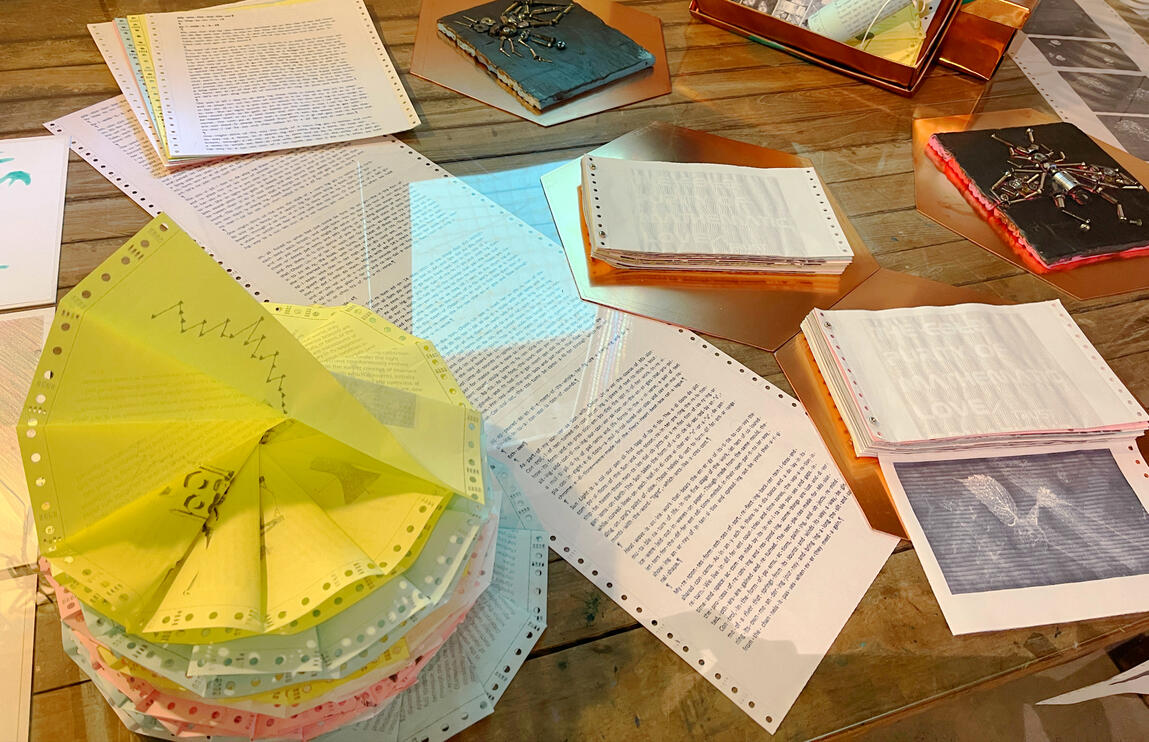
© Joo Choon Lin. All rights reserved.
The Cold Purity of Mathematic Love/Trust Equations: {¢arbonHz[¢x(HOH)y]Ω1.618-+ Flower of ¢ФnsciФusness [HEARTBEAT] Breaths [In/out] }
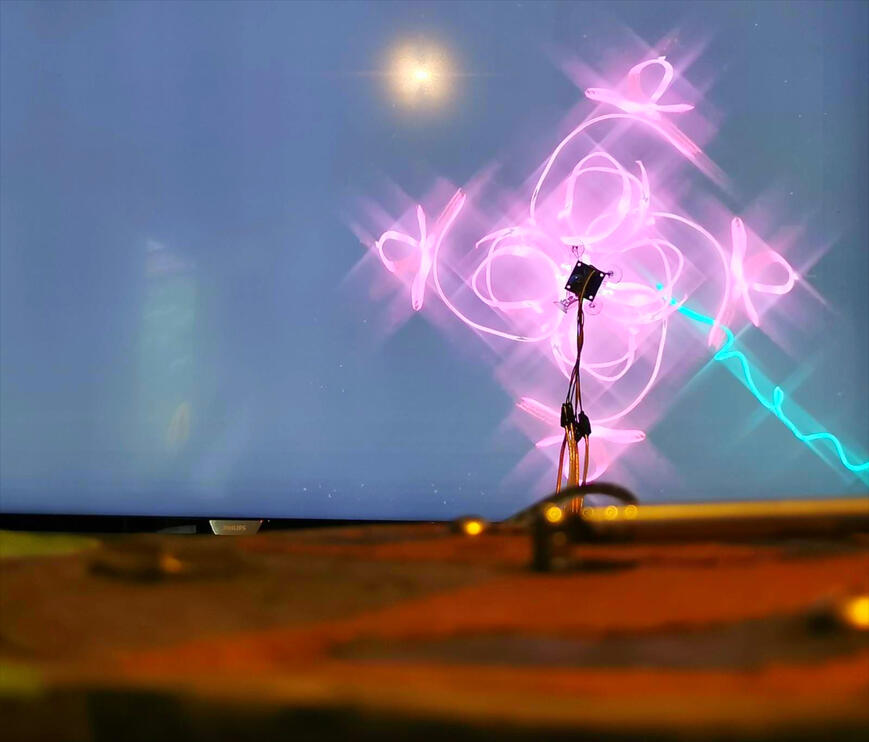
Audiences are invited to immerse within a wondrous array of uninhibited lifeforms, with the Bodhi tree cast as an invisible host, and its surrounding inhabitants as supporting characters, performing to us an undisclosed chronicle about the universe. Choon Lin has ingeniously metamorphosed her collected data into artistic components that constitute this mystical garden. One may firstly take notice of a zestfully animated video taking centre stage, where impressions of the incorporeal Bodhi tree can be visualised. Assuming the form of a luminescent presence actualised by the point cloud data, the sacred tree extends its congenial branches towards us, forging a dazzling canopy radiating with life. A miscellany of luminous flora and fauna is revealed across the animation, each buzzing with a unique exuberance. These animate subjects are composed by spinning coloured wires rapidly, a technique that was first seen in Choon Lin’s 2020 film trilogy pEARs ' _/_/_/_ ' in §pring. The artist is interested in how the different physicality we experience around us, even for the static and inanimate, are actually made up of countless atoms that are constantly in motion at a quantum level, vibrating and pulsing with energy at any given moment. Reimagining this quantum phenomenon of energetic vibrations, the artist experimented with swift spiralling motion of wires, capturing them on camera as nebulous entities, and subsequently reconfiguring and augmenting the images expressively into the likes of lifeforms akin to flowers, insects and plants. These illuminated subjects prance around the screen, pulsating and dancing in resonance with the periodic oscillation of the tree’s branches.
![The Cold Purity of Mathematic Love/Trust Equations: {¢arbonHz[¢x(HOH)y]Ω1.618-\+ Flower of ¢ФnsciФusness [HEARTBEAT] Breaths [In](assets/videos/video37_thumbnail.jpg?v=1a2b47b9)
© Joo Choon Lin. All rights reserved.
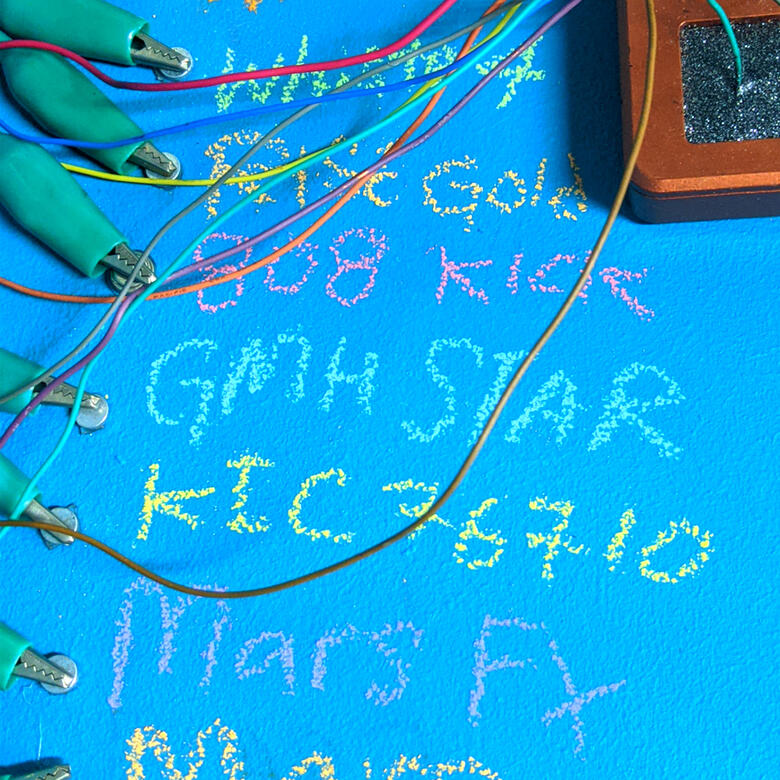
Mission Control by Joo Choon Lin, Episode 01, LIVE on YouTube 30 Nov 2020 (Full Moon day), 8pm
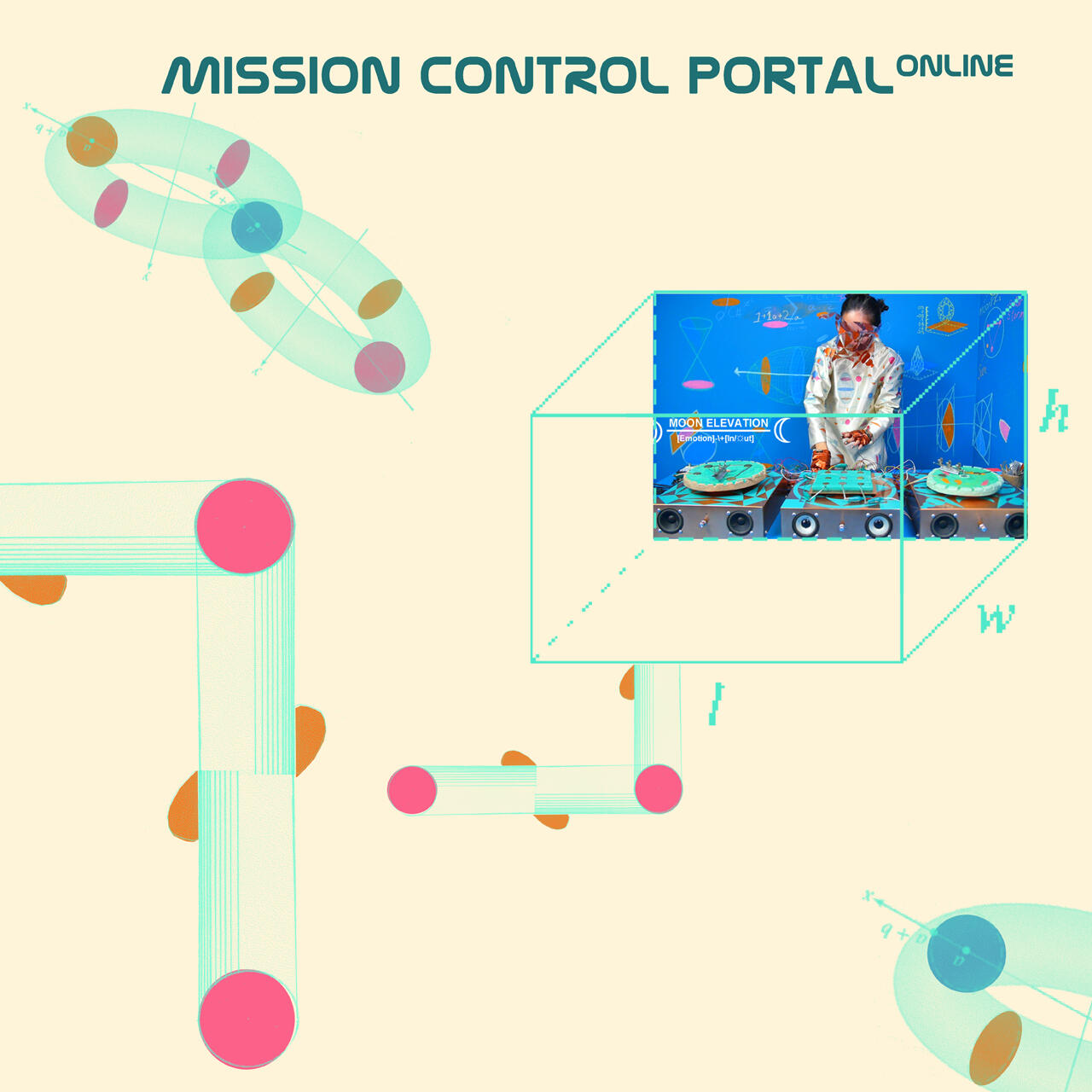
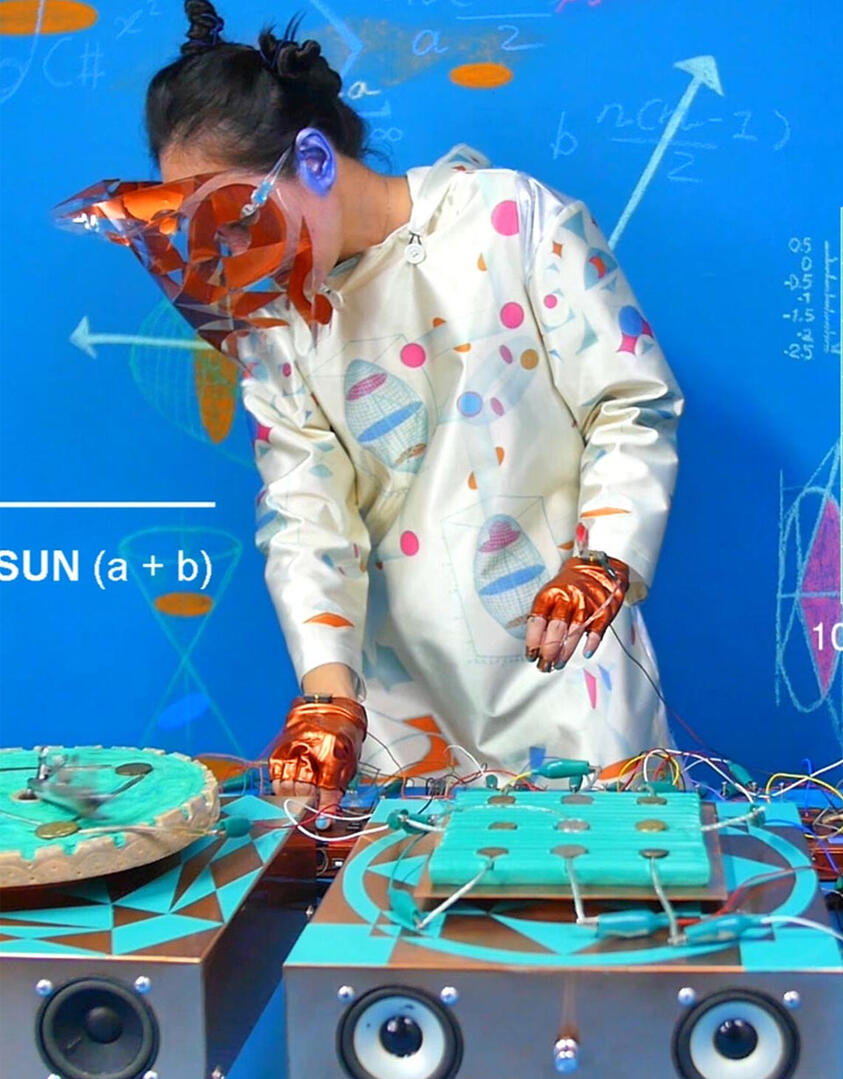
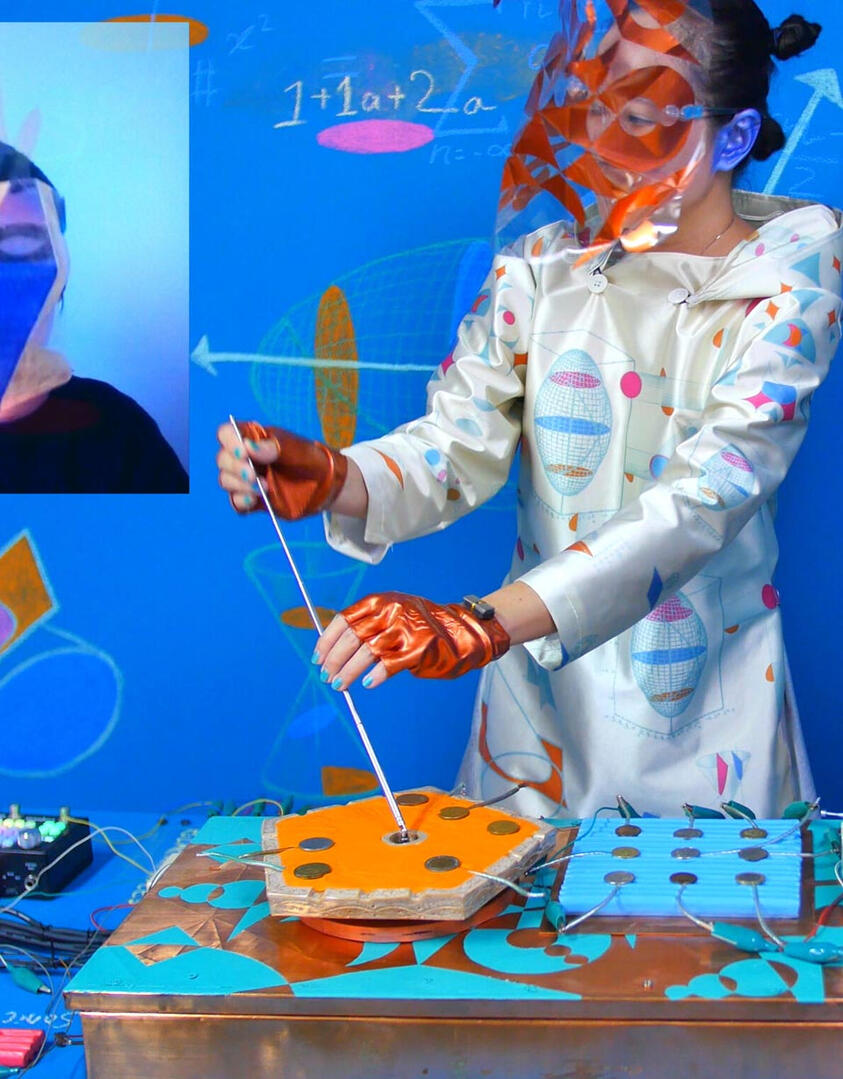
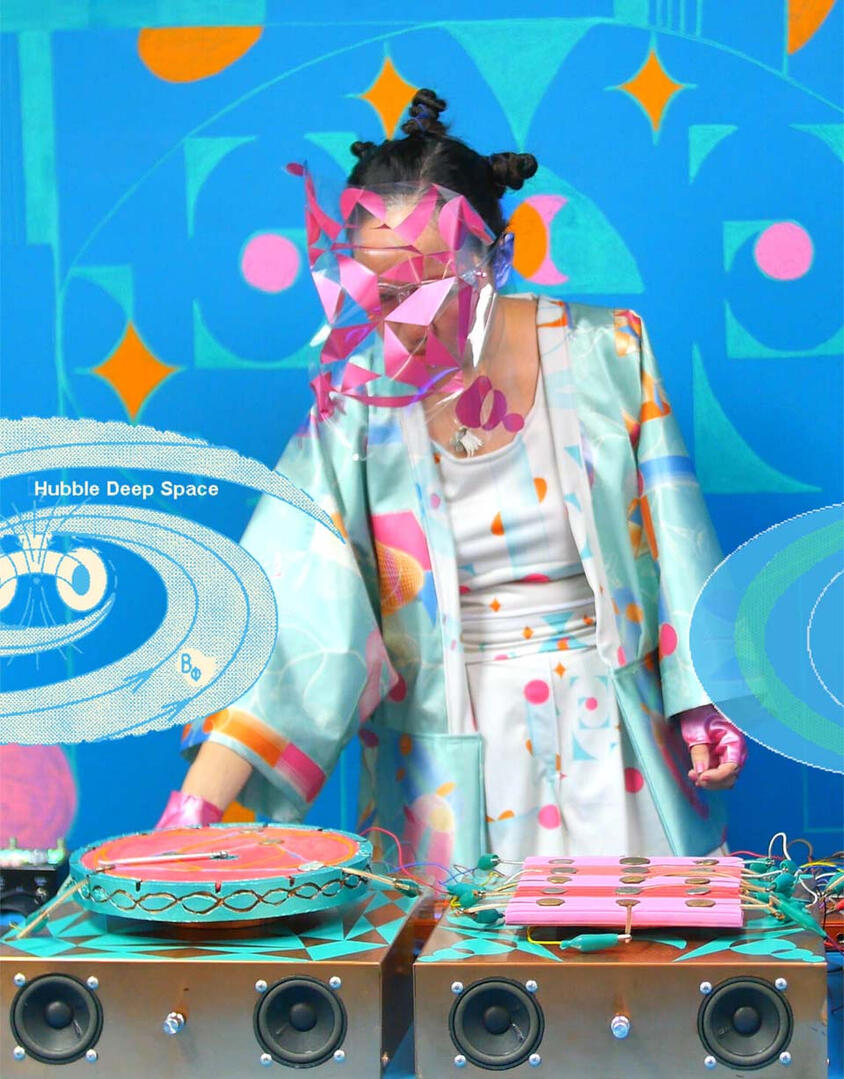
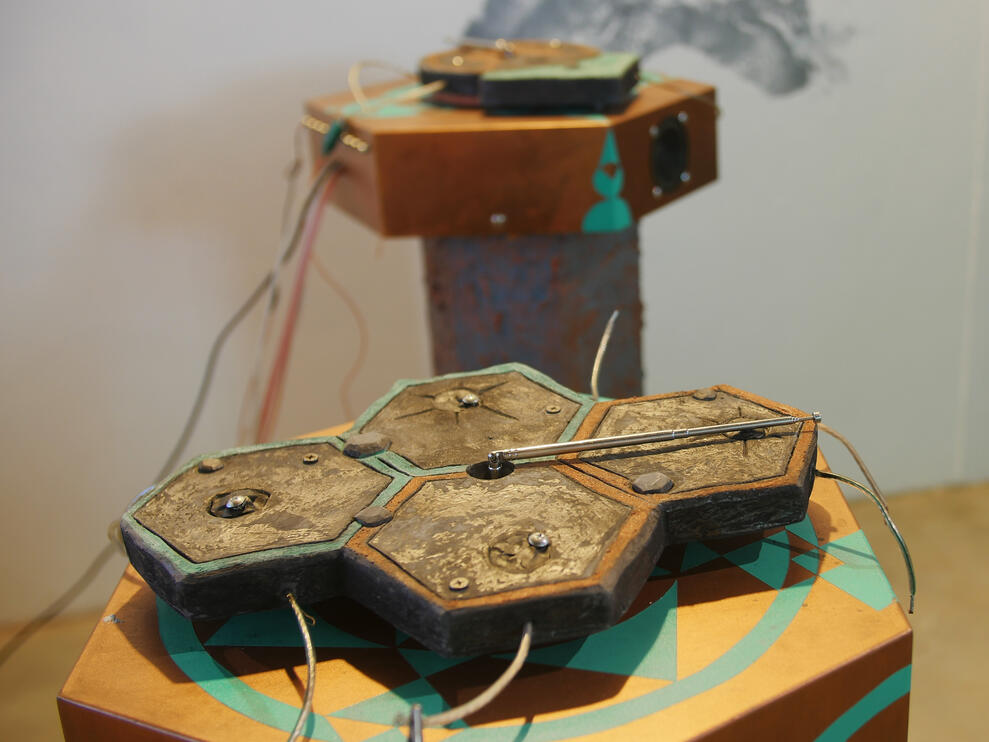
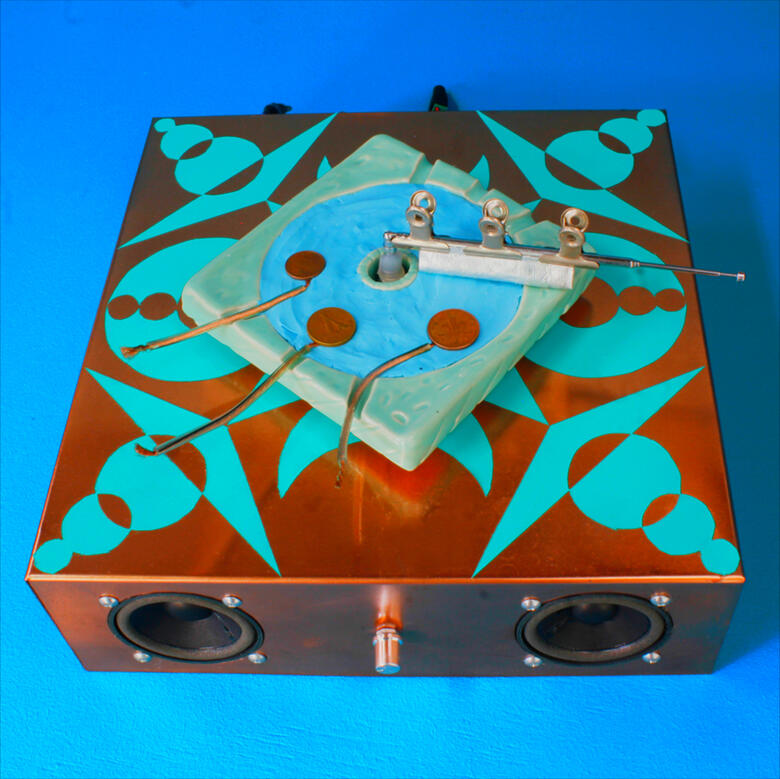
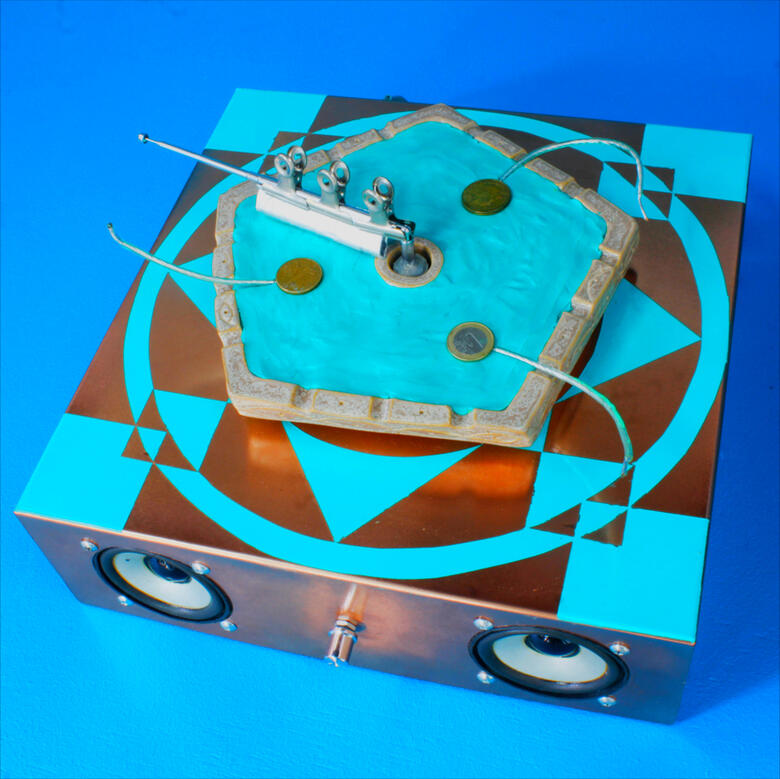
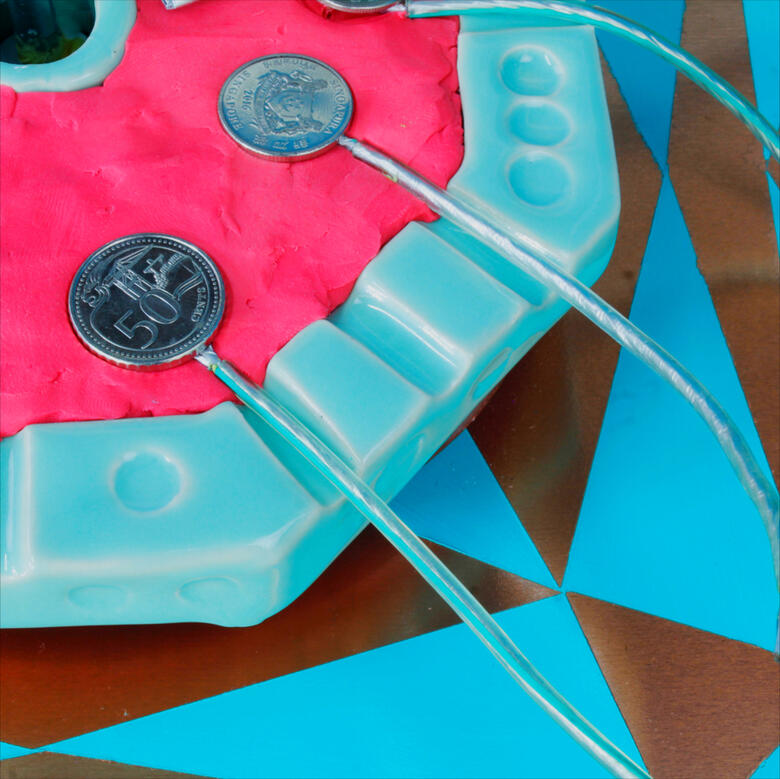
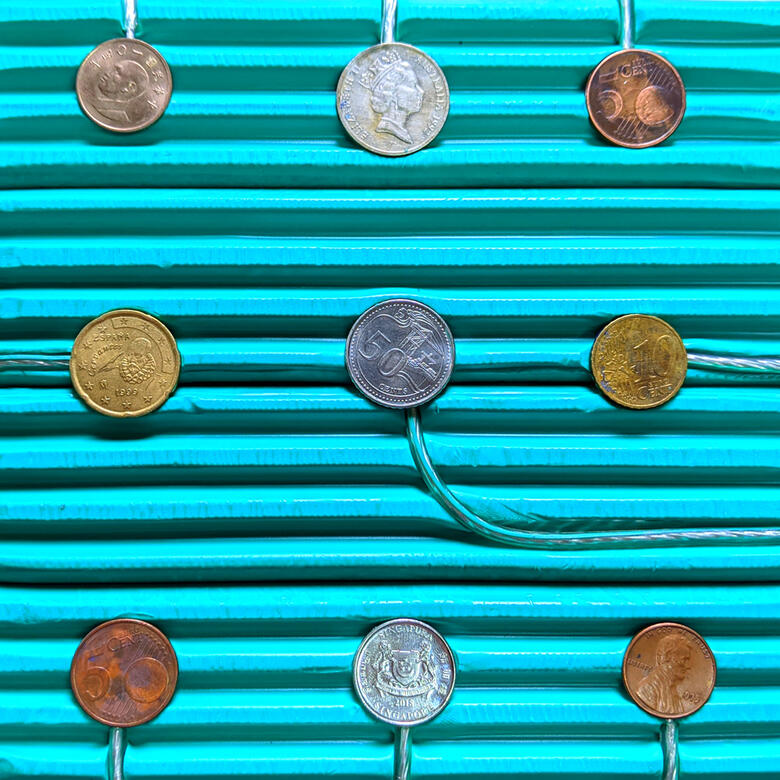
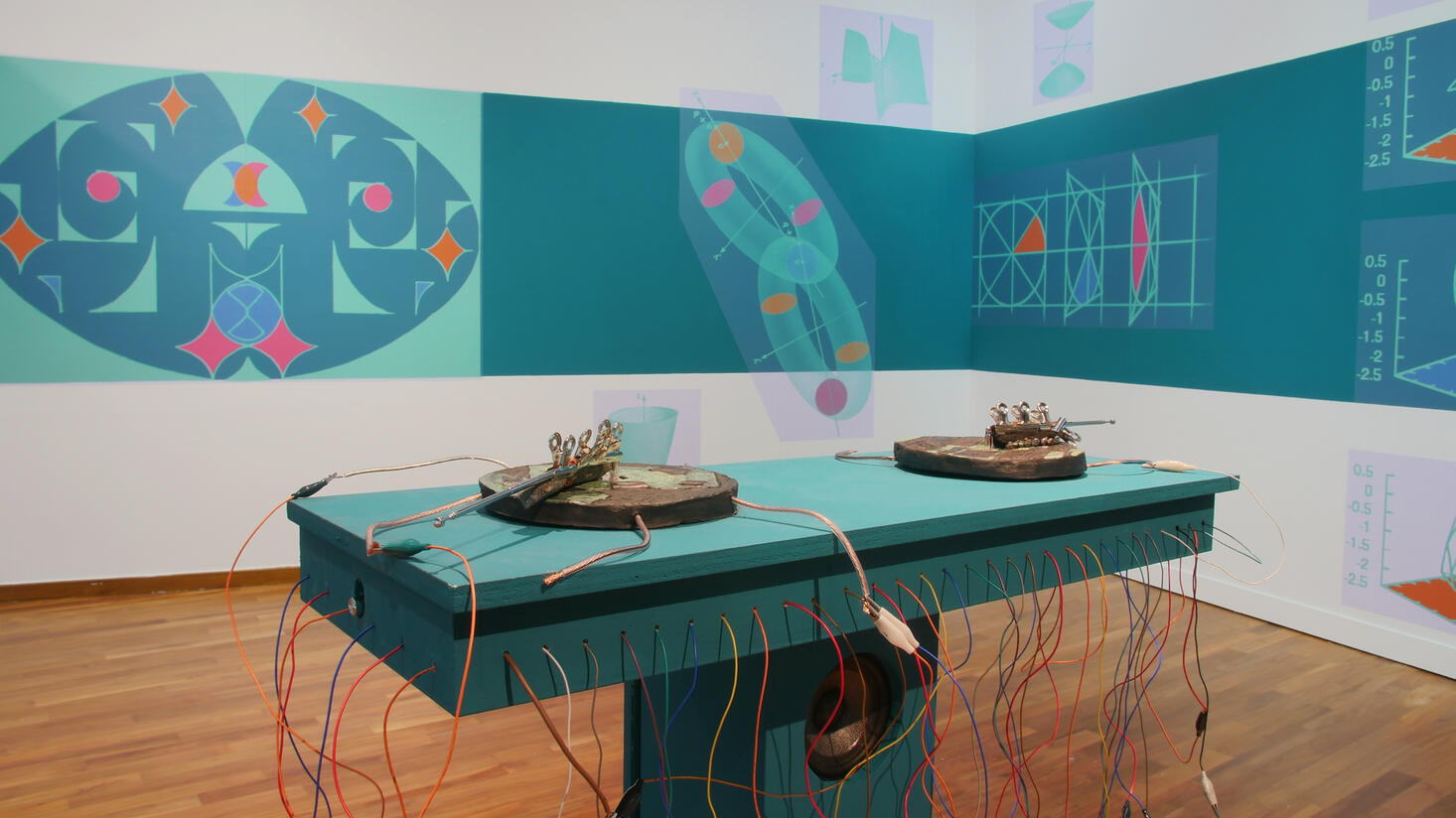
Mission Control is part of INTESTINOLOGY, a process of art-making and an organ of experimentation for materials to be digested and transformed, releasing and unearthing discoveries that lie beneath the surface of things. Broadly arranged in series since 2014, Mission Control is an exploration of human systems, perception, and sound phenomena using new technology and mixed media.The seed of the artist’s exploration in each episode lies in her own particular set of tools, and the methods and techniques in wielding them, informed by a certain mathematical basis or geometric structure and her inquiry into numerical systems as a bridge to enter the complexity and wonders of the invisible realm. The copper pennies—acting as conductors of electricity—on her disc-shaped clay sculptures are arranged into geometric configurations, and her 9-pad angular sculptures are inspired by the golden ratio as well as the magic square, a grid in which the numbers in the rows, columns, and diagonals all add up to the same. These sound sculptures, alongside mechanical turntables and modified digital electronics, form several of the experimental musical instruments in the artist’s expanding toolkit of sound-producing objects and techniques.The possibilities in deploying these tools evolve as the artist plays and replays her collection of sounds in a series of musical exercises in her studio. It is a process in which intuition and logic converge into one. She assigns sounds to positions in a numerical system, assembles sound pitches together based on the mathematical relationship between their visualized lines, and constructs sets of collages with sound. The compositions that emerge resemble waves and spirals that are constantly changing, freed from their original geometric forms and numerical bases, and channeled into a different dimension.One might think of the way the stalk of a morning glory twines and curls its way up a fence, as if searching for something above. Or how our breath, through a series of inhalations and exhalations, can usher in a state in which we feel at one with the cosmos. Or the strike of a bell giving way to a succession of overtones, perceptible only when we hold on, attuned to what had just come before. Its origin—the vibration of each seed, each breath, and each tone—has its own system of construction and set patterns, as one might observe under a microscope. Yet, out of these ordered patterns and sets spring unending streams of sensations and rhythms. It is this dance of possibility and state of timelessness that Choon Lin is after. In each performance, as geometry transforms into poetry, the hues, textures, and beat of these spirals unfold as she immerses herself within the vibration of life. The outcome of each episode, be it interrupted or discordant, will reverberate in subsequent performances, as echoes of a journey in a digital, expansive, indefinite domain. Mixed with NASA’s transmissions from space and archival audio tracks, the sounds spiraling from the sculptures blend with the planetary and celestial acoustic flow, composing a sonic orchestra of the universe.

© Joo Choon Lin. All rights reserved.
Mission Control by Joo Choon Lin, Episode 02, LIVE 08 Dec 2020, 8pm
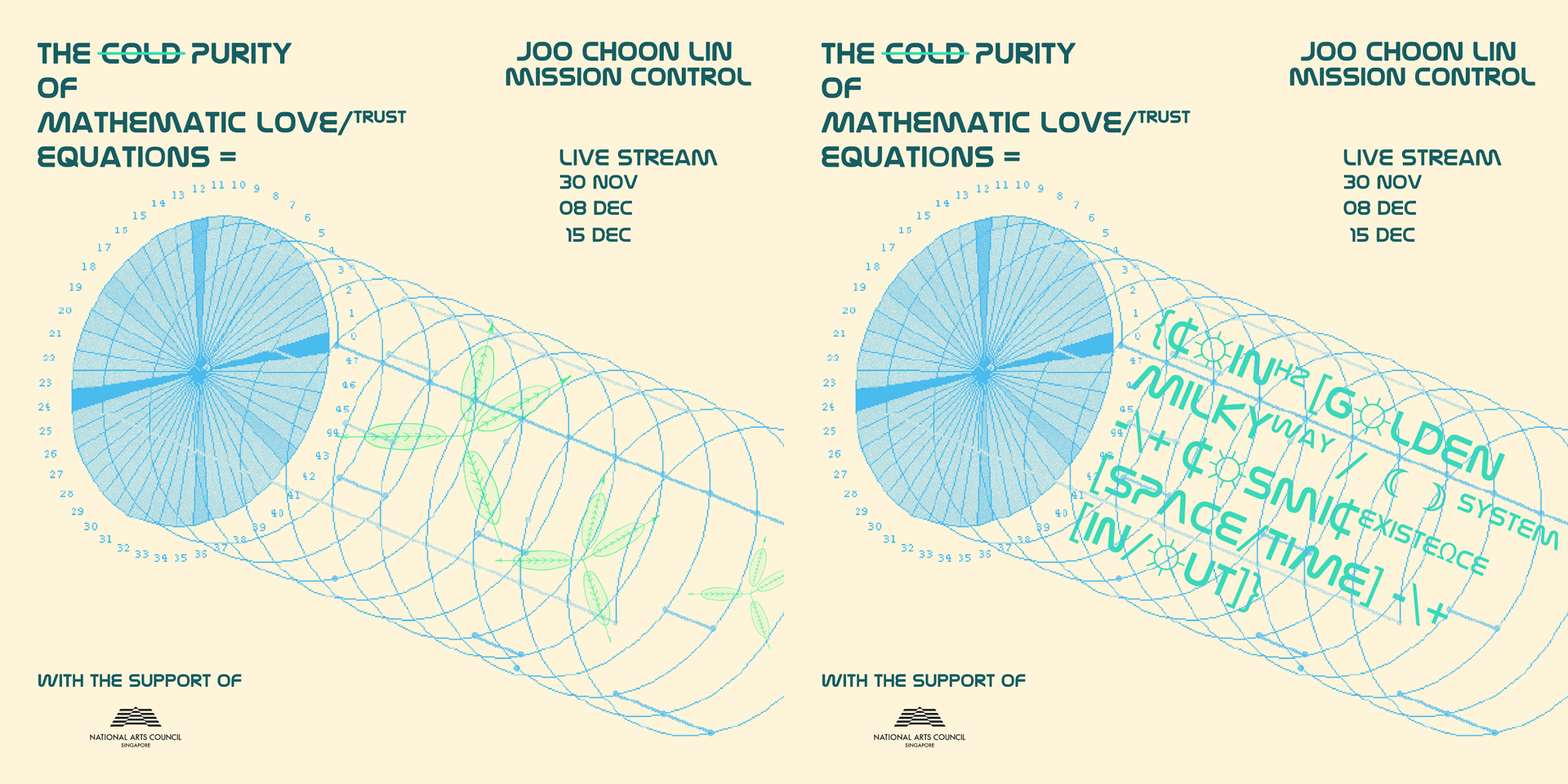
Mission Control by Joo Choon Lin will launch upon the rise of the full moon on 30 November, a trip to the beat of the cosmos and the churn of the salty seas. Live streamed on YouTube, each performance will be a discovery of the potential of materials and objects to transmit and generate sound.The seed of the artist’s exploration in each episode lies in her own particular set of tools, and the methods and techniques in wielding them, informed by a certain mathematical basis or geometric structure and her inquiry into numerical systems as a bridge to enter the complexity and wonders of the invisible realm. The copper pennies—acting as conductors of electricity—on her disc-shaped clay sculptures are arranged into geometric configurations, and her 9-pad angular sculptures are inspired by the golden ratio as well as the magic square, a grid in which the numbers in the rows, columns, and diagonals all add up to the same. These sound sculptures, alongside mechanical turntables and modified digital electronics, form several of the experimental musical instruments in the artist’s expanding toolkit of sound-producing objects and techniques.Join the live chat during the performances! Selected comments posted during the live chat will be reassembled and transposed into constellations of sounds and shapes using the 9-pad sculptures, which pairs letters of the alphabet with numbers.Live streamed on YouTube:
30 November 2020,
08 December 2020,
15 December 2020,
and there’s more to come!All episodes begin at 8pm (GMT+8) on Joo Choon Lin’s YouTube Channel.

© Joo Choon Lin. All rights reserved.
Mission Control by Joo Choon Lin, Episode 03, LIVE 15 Dec 2020 (New Moon day), 8pm, GMT+8
Mission Control is part of INTESTINOLOGY, a process of art-making and an organ of experimentation for materials to be digested and transformed, releasing and unearthing discoveries that lie beneath the surface of things. Broadly arranged in series since 2014, Mission Control is an exploration of human systems, perception, and sound phenomena using new technology and mixed media.The seed of the artist’s exploration in each episode lies in her own particular set of tools, and the methods and techniques in wielding them, informed by a certain mathematical basis or geometric structure and her inquiry into numerical systems as a bridge to enter the complexity and wonders of the invisible realm. The copper pennies—acting as conductors of electricity—on her disc-shaped clay sculptures are arranged into geometric configurations, and her 9-pad angular sculptures are inspired by the golden ratio as well as the magic square, a grid in which the numbers in the rows, columns, and diagonals all add up to the same. These sound sculptures, alongside mechanical turntables and modified digital electronics, form several of the experimental musical instruments in the artist’s expanding toolkit of sound-producing objects and techniques.The possibilities in deploying these tools evolve as the artist plays and replays her collection of sounds in a series of musical exercises in her studio. It is a process in which intuition and logic converge into one. She assigns sounds to positions in a numerical system, assembles sound pitches together based on the mathematical relationship between their visualized lines, and constructs sets of collages with sound. The compositions that emerge resemble waves and spirals that are constantly changing, freed from their original geometric forms and numerical bases, and channeled into a different dimension.One might think of the way the stalk of a morning glory twines and curls its way up a fence, as if searching for something above. Or how our breath, through a series of inhalations and exhalations, can usher in a state in which we feel at one with the cosmos. Or the strike of a bell giving way to a succession of overtones, perceptible only when we hold on, attuned to what had just come before. Its origin—the vibration of each seed, each breath, and each tone—has its own system of construction and set patterns, as one might observe under a microscope. Yet, out of these ordered patterns and sets spring unending streams of sensations and rhythms. It is this dance of possibility and state of timelessness that Choon Lin is after. In each performance, as geometry transforms into poetry, the hues, textures, and beat of these spirals unfold as she immerses herself within the vibration of life. The outcome of each episode, be it interrupted or discordant, will reverberate in subsequent performances, as echoes of a journey in a digital, expansive, indefinite domain. Mixed with NASA’s transmissions from space and archival audio tracks, the sounds spiraling from the sculptures blend with the planetary and celestial acoustic flow, composing a sonic orchestra of the universe.

© Joo Choon Lin. All rights reserved.
Mission Control by Joo Choon Lin, Episode 04, 2021
Public Announcement:
Mission Control is traveling to✫ klingt gut KLG 2020/21, 5th International Symposium klingt gut!, Hamburg, Germany, 12-15 May 2021✫ "Cyber Labyrinth", part of LightNight Liverpool 2021, arts festival, UK, 21 May 2021
Joo Choon Lin’s Mission Control returns with Episode 4, presented at the klingt gut! KLG 2020/21, 5th International Symposium on Sonic Art and Spatial Audio, Hamburg. Her recent investigations have cast her in the role of a sound-maker, exploring the properties of materials and crafting them into extraordinary tools to tap into the sounds that permeate and surround us, yet remain invisible to the naked ear. These are the sounds produced from phenomena as magnificent as the churning of the galaxies or as miniscule as the curve of a flower’s stem as it twines towards the sun. At the heart of Choon Lin’s inquiry lies the question of how the unseen sound reveals the forces that energize and flow throughout all parts of the universe.

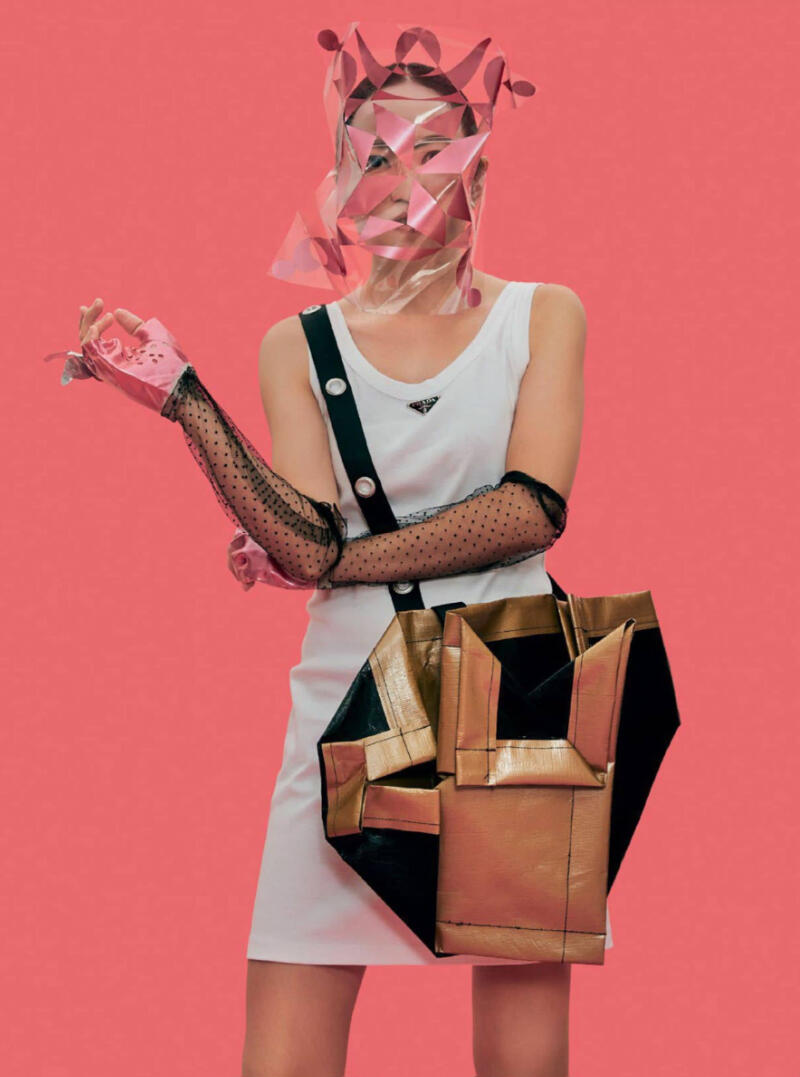
For this latest production, Choon Lin continues her exploration of the spiral, researching into its historical associations with patterns and sequences and appropriating them as methods for artmaking. She draws upon numerical patterns connected to a spiral, such as the Fibonacci sequence and the Golden Ratio, using them as notations for variations and improvisations. This episode features a new segment, where the keyboard becomes an instrument to meditate on the pitch and loudness of sounds inspired by the Fibonacci sequence. Alongside the performance is a new series of videos, which centre on Choon Lin’s recent sound sculptures that reference the angles and diagrams of the Golden Ratio.As before, the work is performed by the artist, masked, gloved, and fitted in a garment, all specially designed for the performance. Printed with the symbols and patterns that float around the Mission Control set, the costume becomes a filter through which the artist appears as an element of the whole, her figure emerging and dissolving into a constellation of sounds.

© Joo Choon Lin. All rights reserved.
Beatific Perfume On-Going Series, Substation, 2020
Image courtesy of Substation.
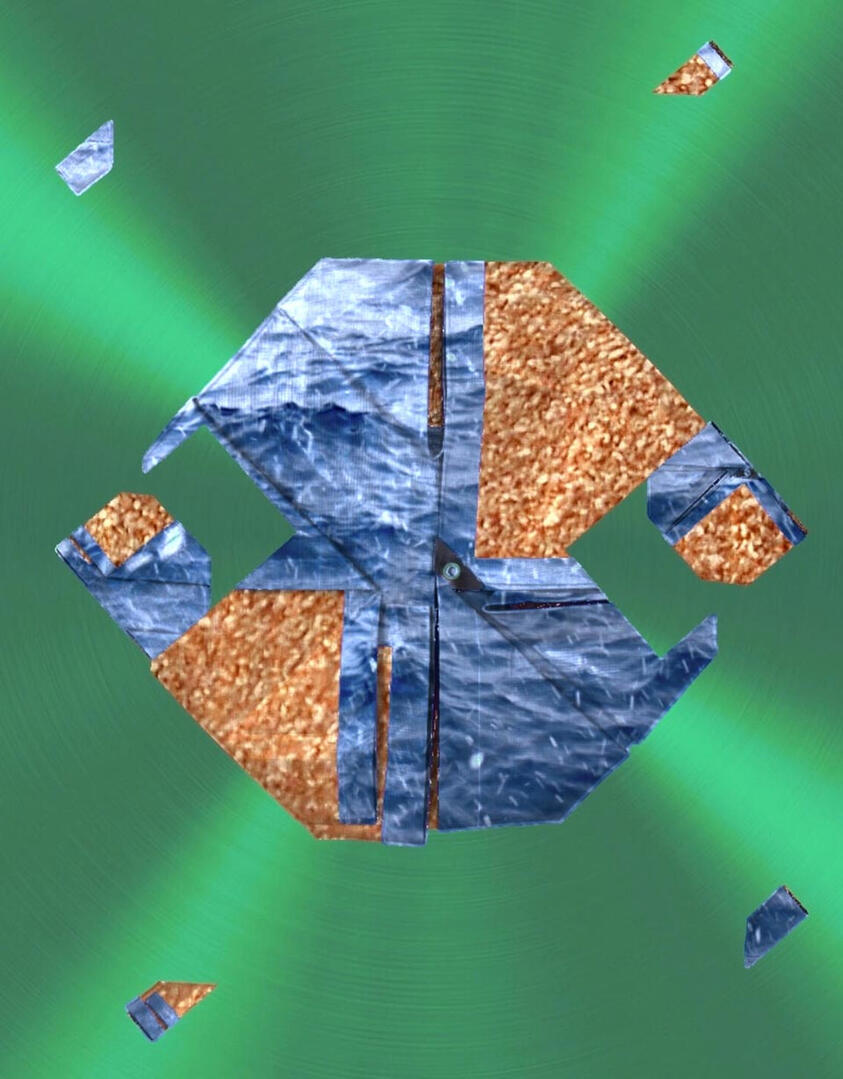
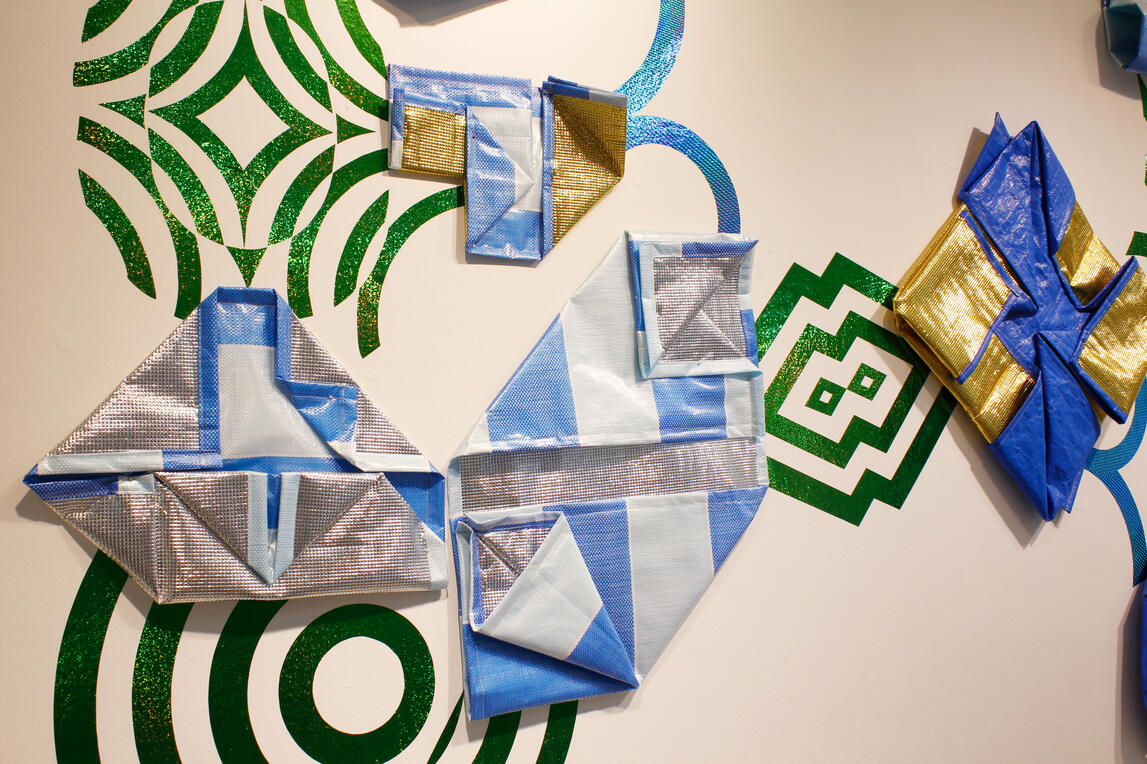
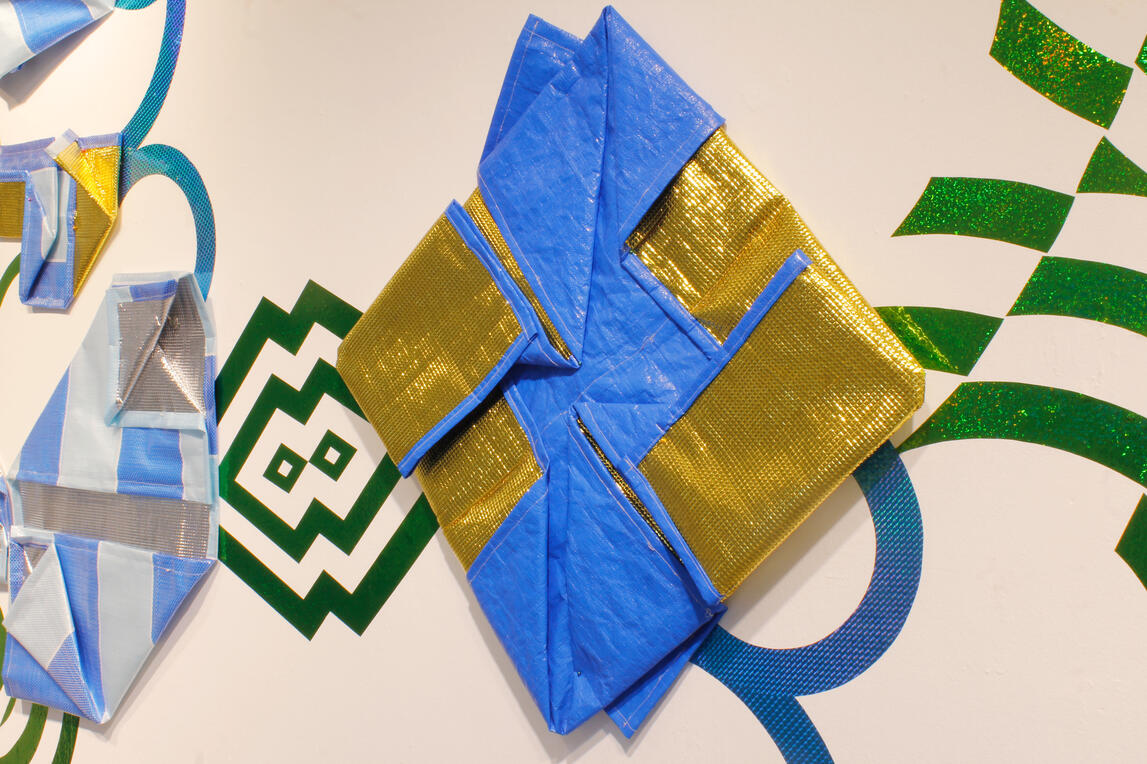
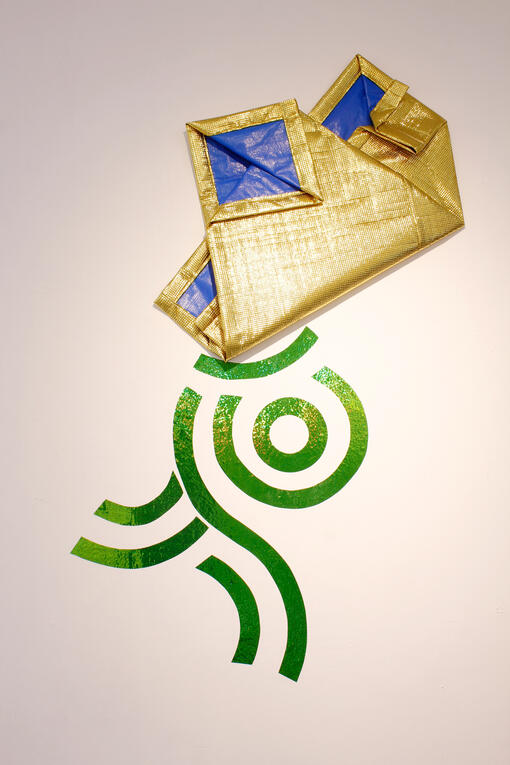
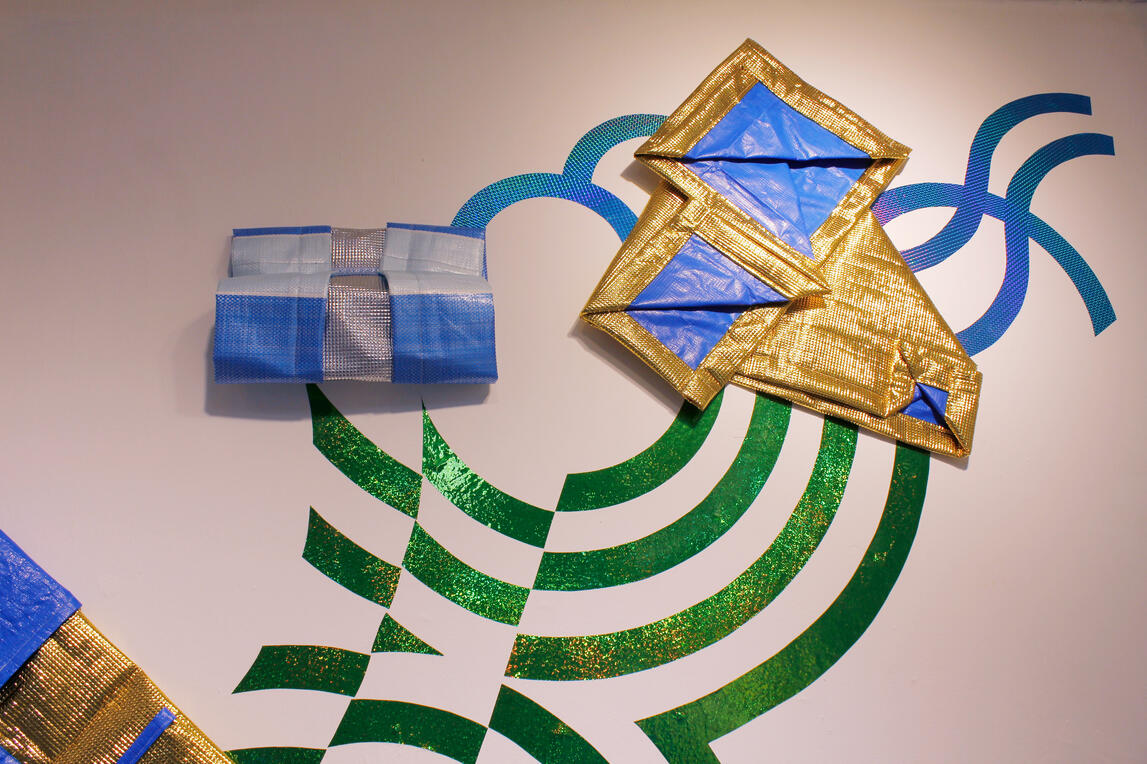
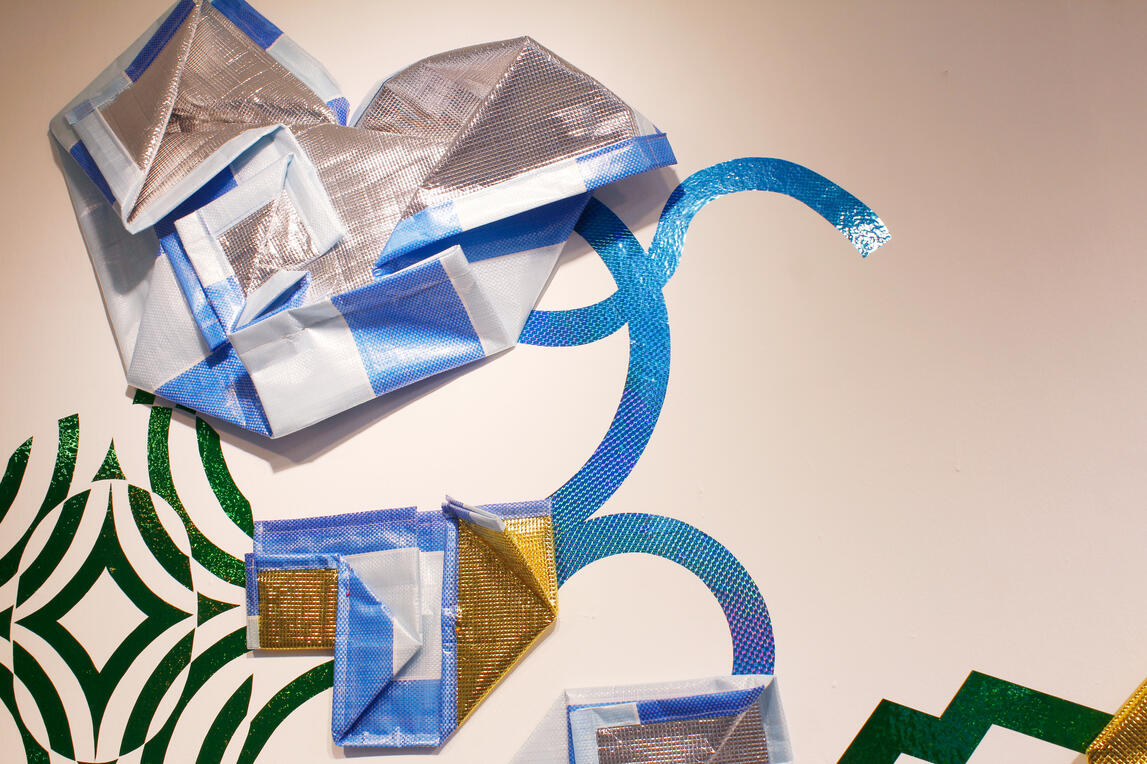
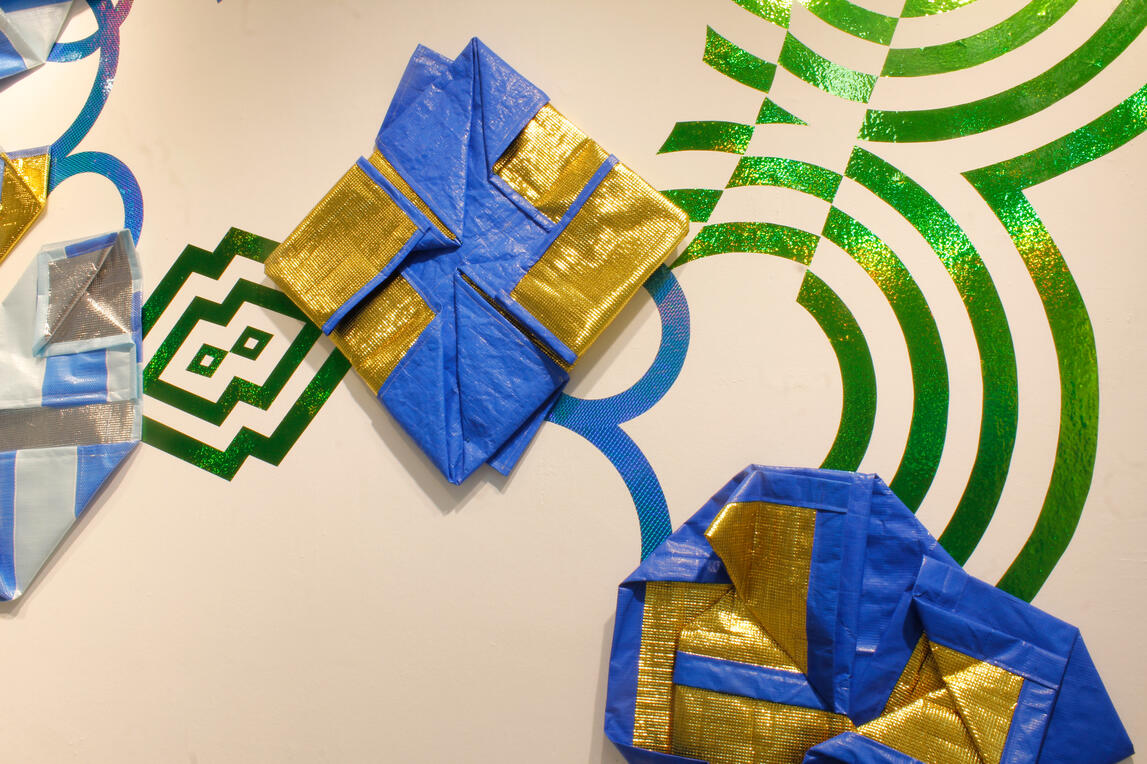
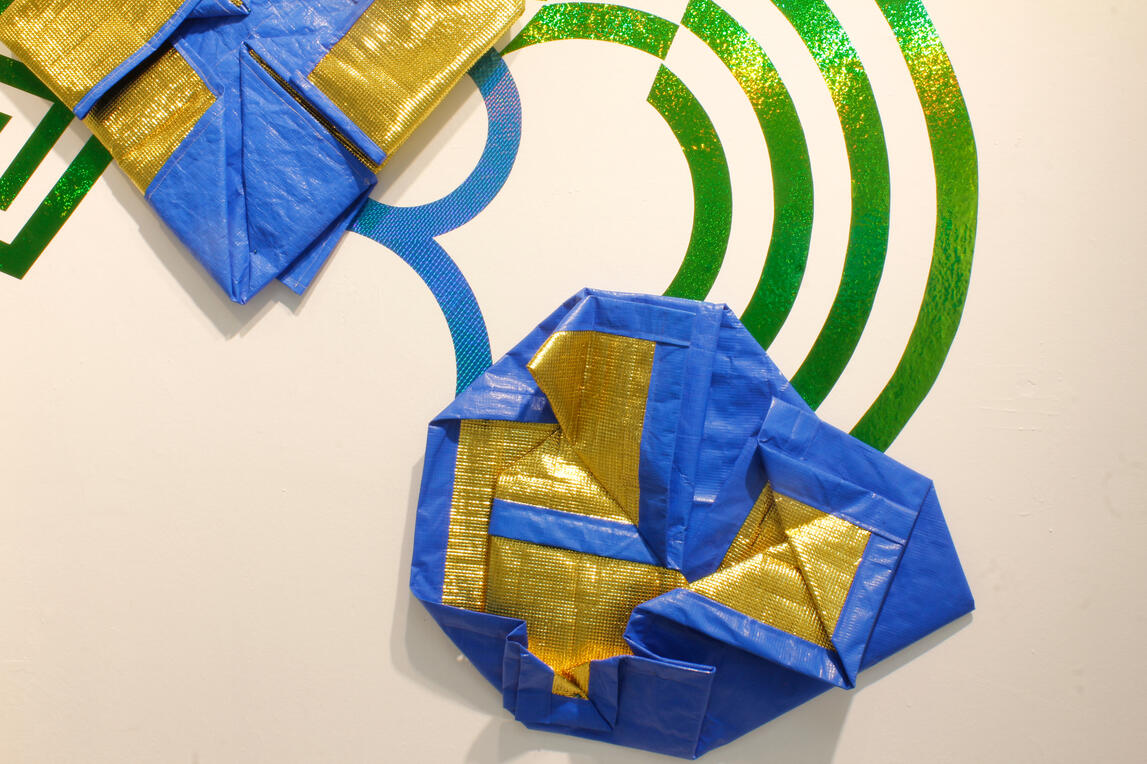
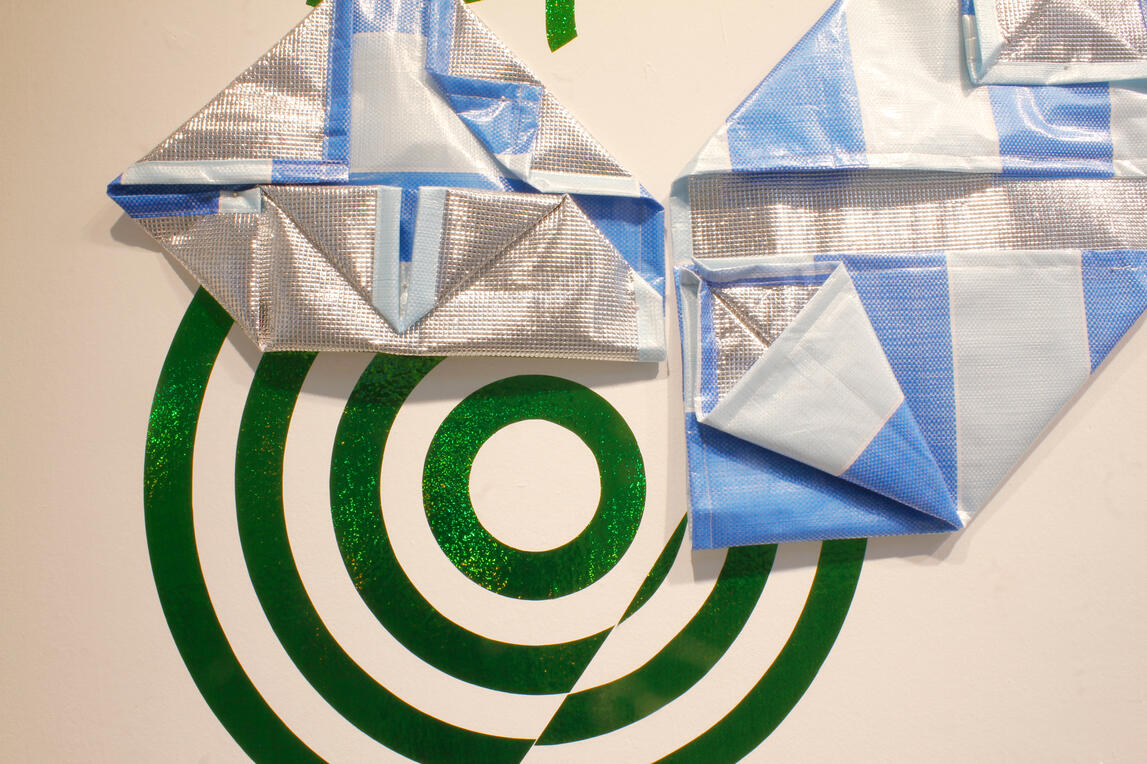
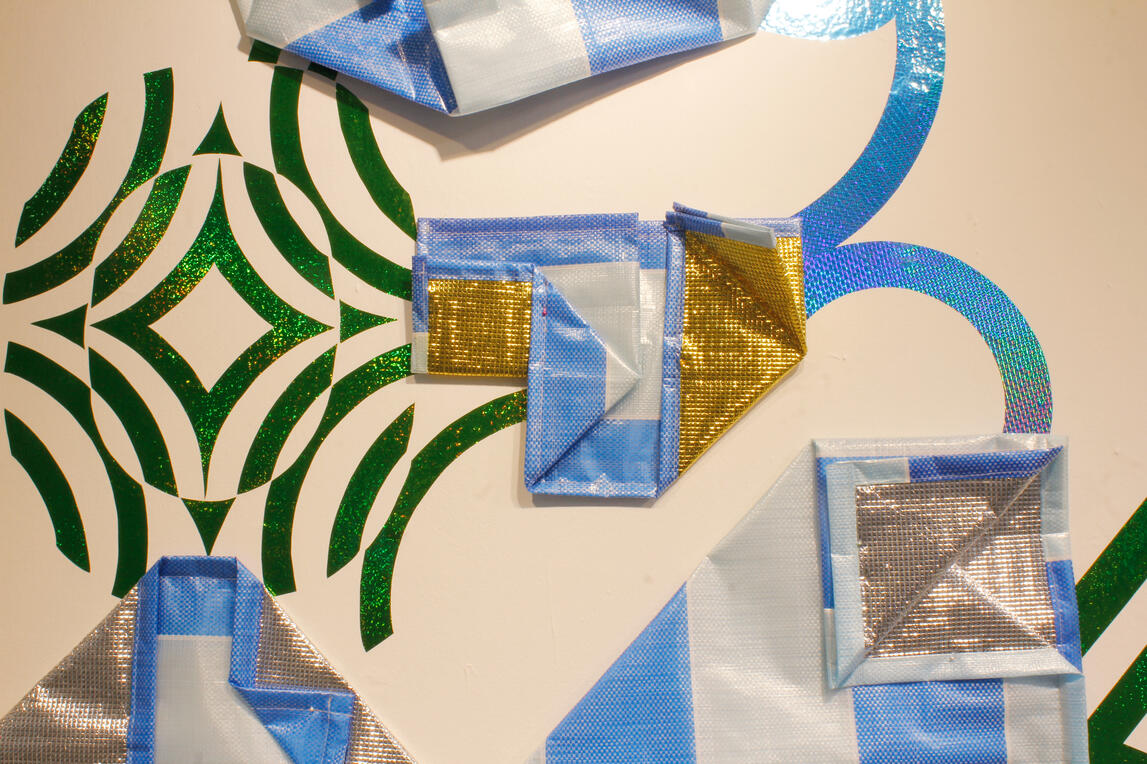
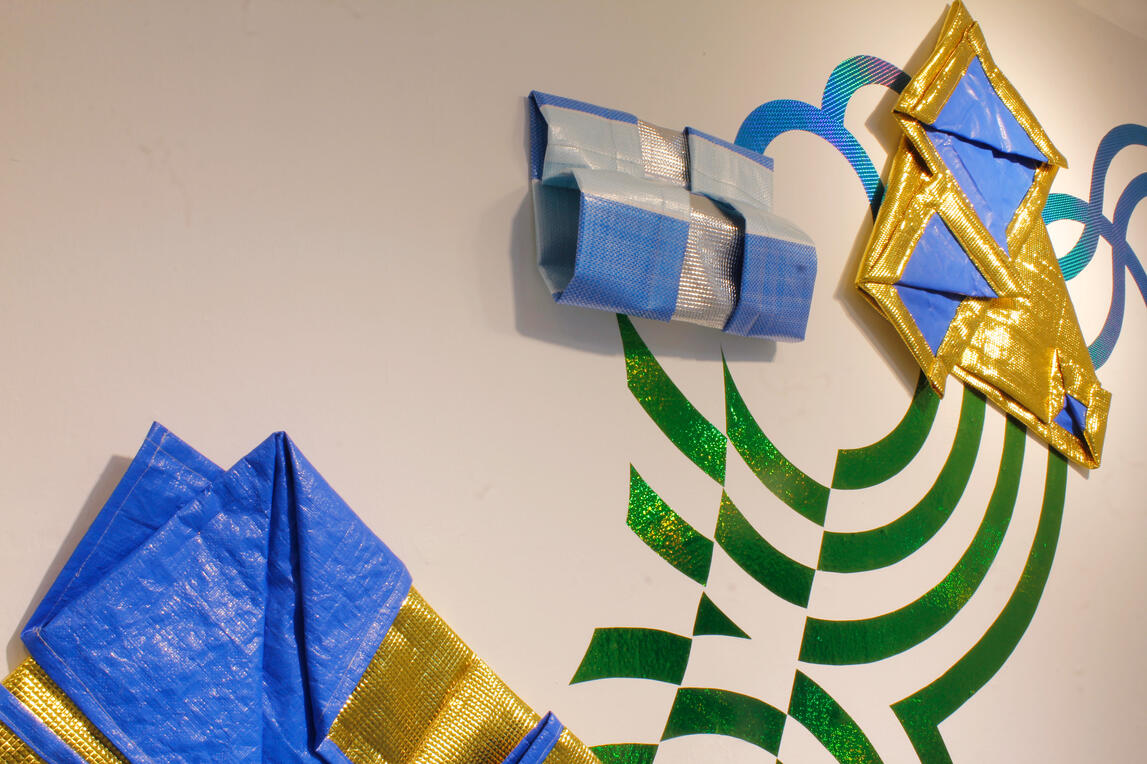
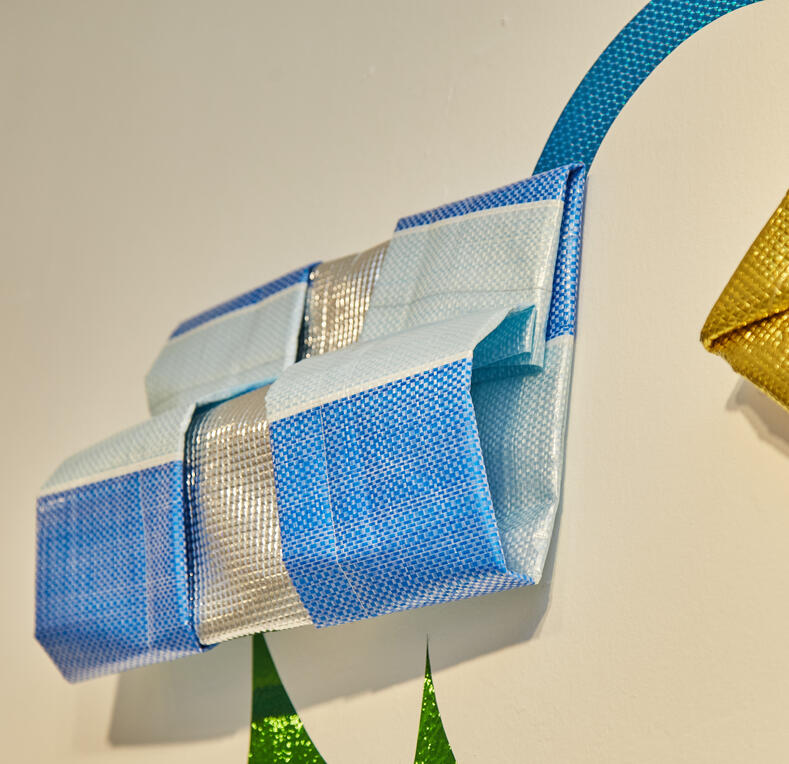
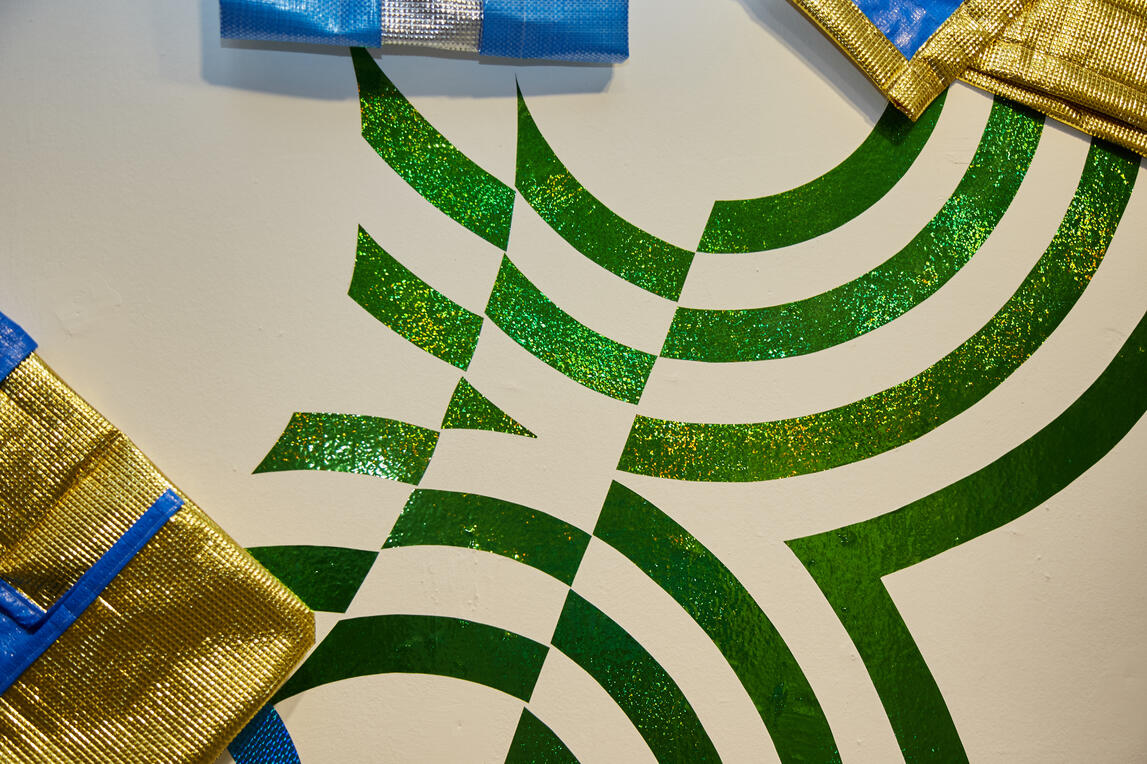
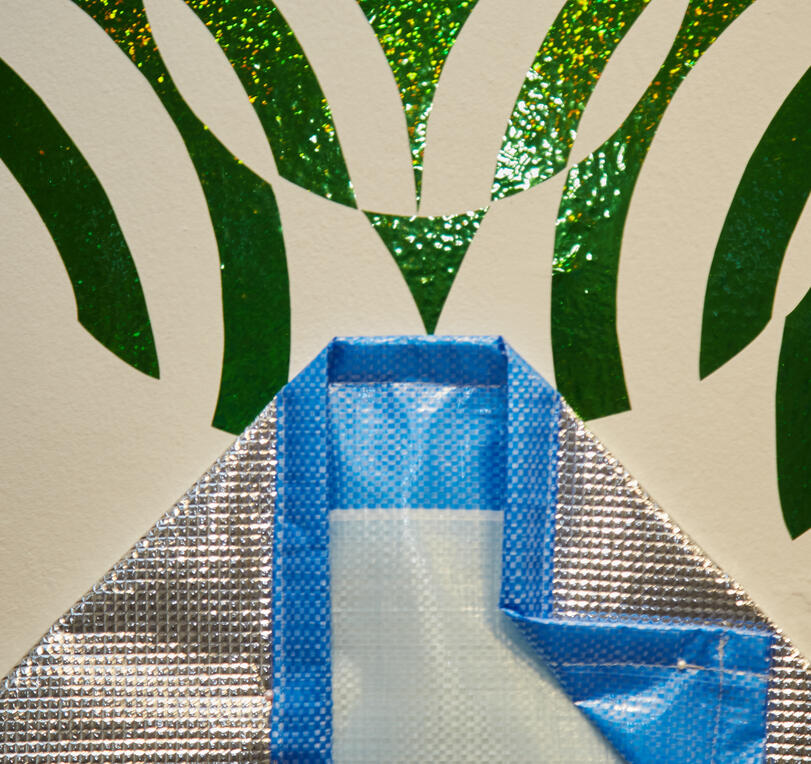
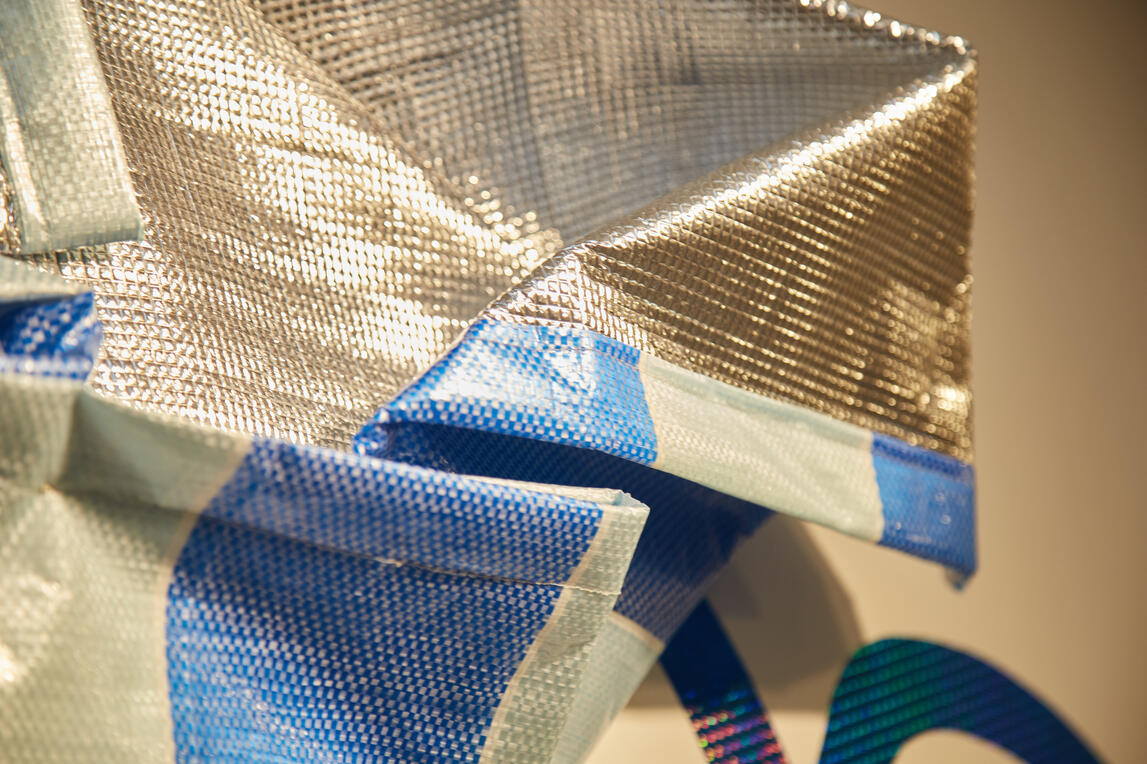
Beatific Perfume is an ongoing series that explores the spontaneity of form and the shifting boundaries between reality and appearance. Using industrial materials such as tarpaulin and synthetic goo, I fold, unfold, and refold surfaces through improvised gestures, allowing each configuration to emerge, collapse, and reappear in new shapes. The process becomes a meditation on transformation, where matter and meaning are never fixed, but constantly in flux.The work asks whether what we perceive is truly real, or simply an interpretation of our senses and projections of the mind. Each fold holds the tension between the manifest and the unmanifest, between what is seen and what is becoming.In recent iterations, video, sound, and material experimentation expand the installation into a living system. Wood-grain silkscreened on water, grass swaying in the wind, and sand vibrating into cymatic patterns animate the static sculptures, revealing the unseen forces that shape both physical and psychic space.Beatific Perfume continues to evolve across exhibitions—from The Substation and the Tzu Chi Humanistic Youth Centre (2020) to Dance in the Destruction Dance at the Singapore Art Museum (2023)—each iteration unfolding into new possibilities of metamorphosis and perception.
© Joo Choon Lin. All rights reserved.
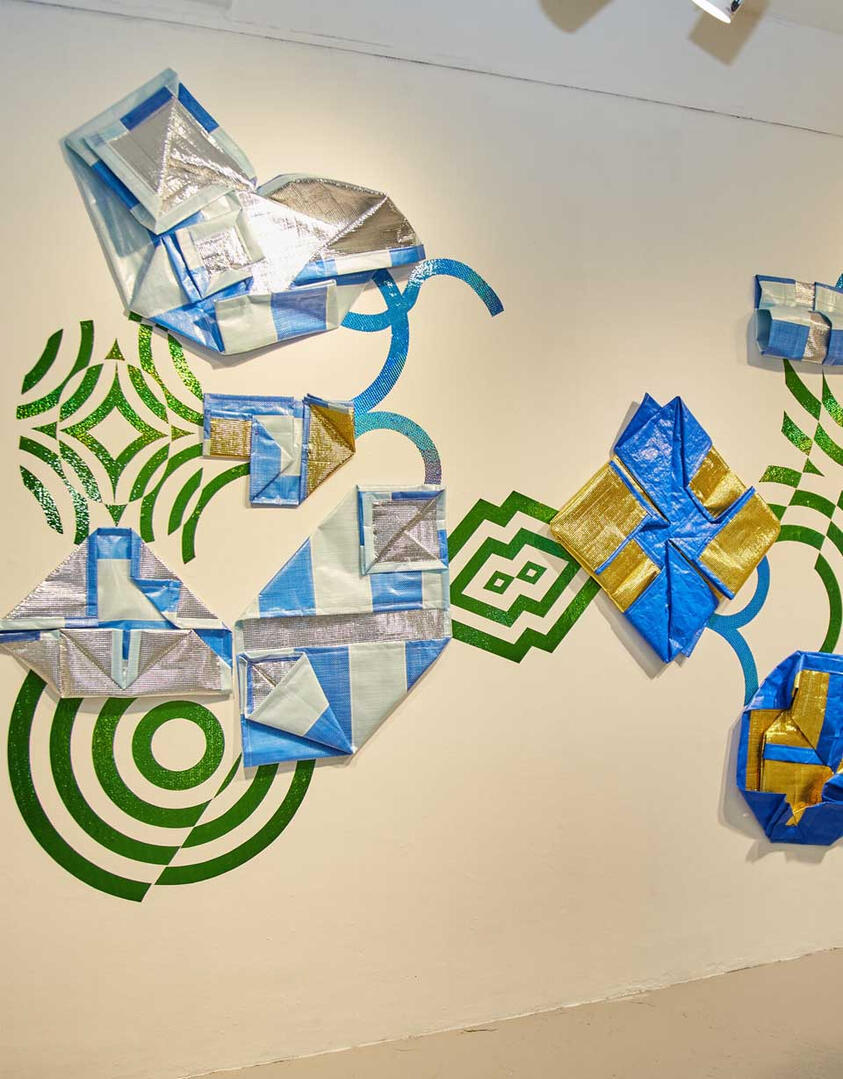
Beatific Perfume (Blue/Orange), On-Going Series, Tarpaulin Sculptures, 2020
Joo Choon Lin created folding sculptures using tarpaulin that are unfolded and refolded endlessly into geometric shapes in a rhythmic arrangement. Choon Lin is interested in the possibilities of collapsing them into something metaphorically loaded form. Morphing one form into another in a process of metamorphosis as they are layered, angled and bends at shifting folds. Moving images of ocean, geometric sand patterns, grass swaying in wind and wood grain silkscreened on water are superimposed on folded tarpaulin sculptures. The superimposed image is a matrix of presences that appear and disappear into the surface of tarpaulin which can change our perceptions, through the alteration of what happens on the surface. The preoccupation with its repeating, revealing and concealing generate the different resonances of becoming presence in ever-changing and expanding forms. Essences unfold, new dimensions arise and new modes of experiences emerge.

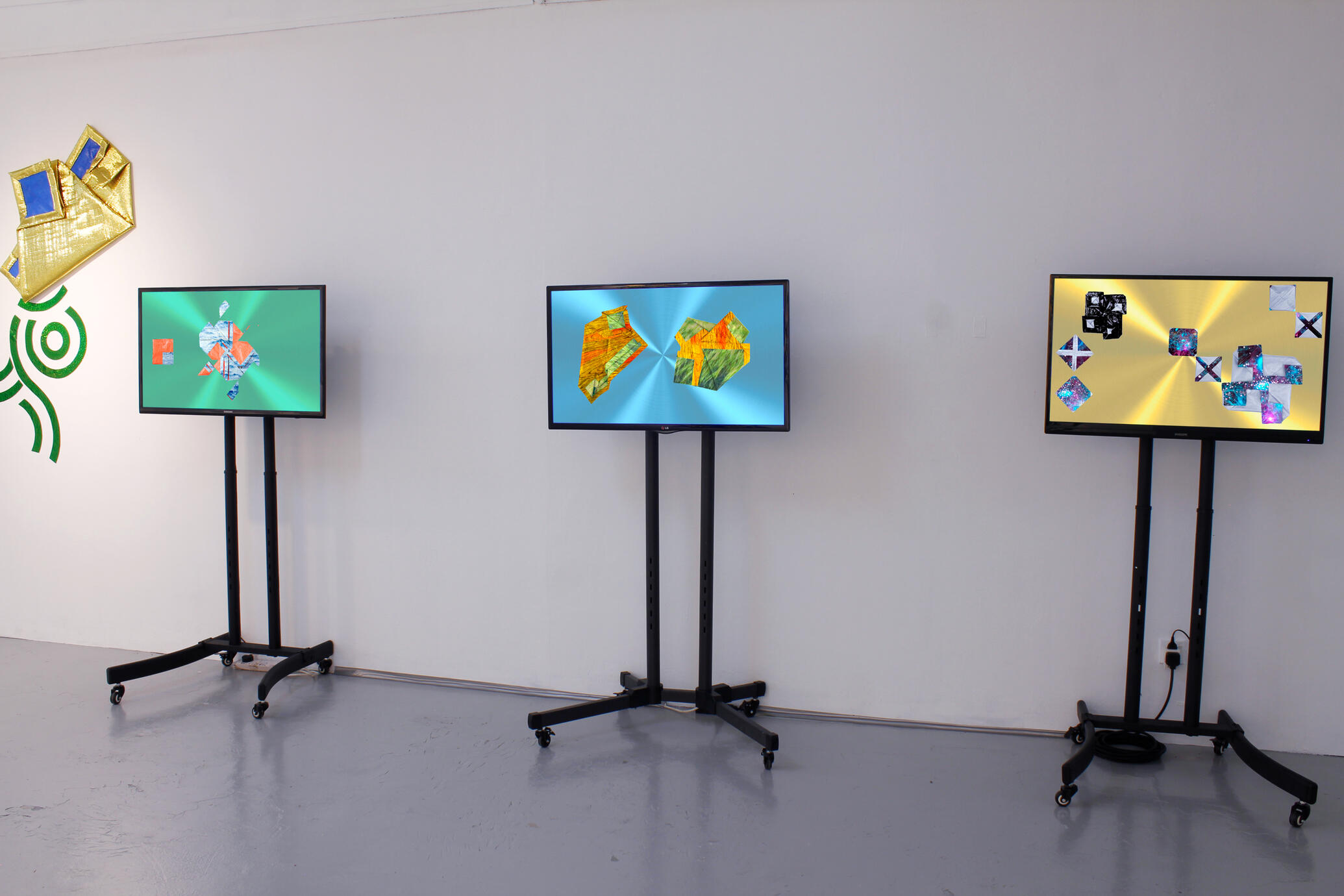
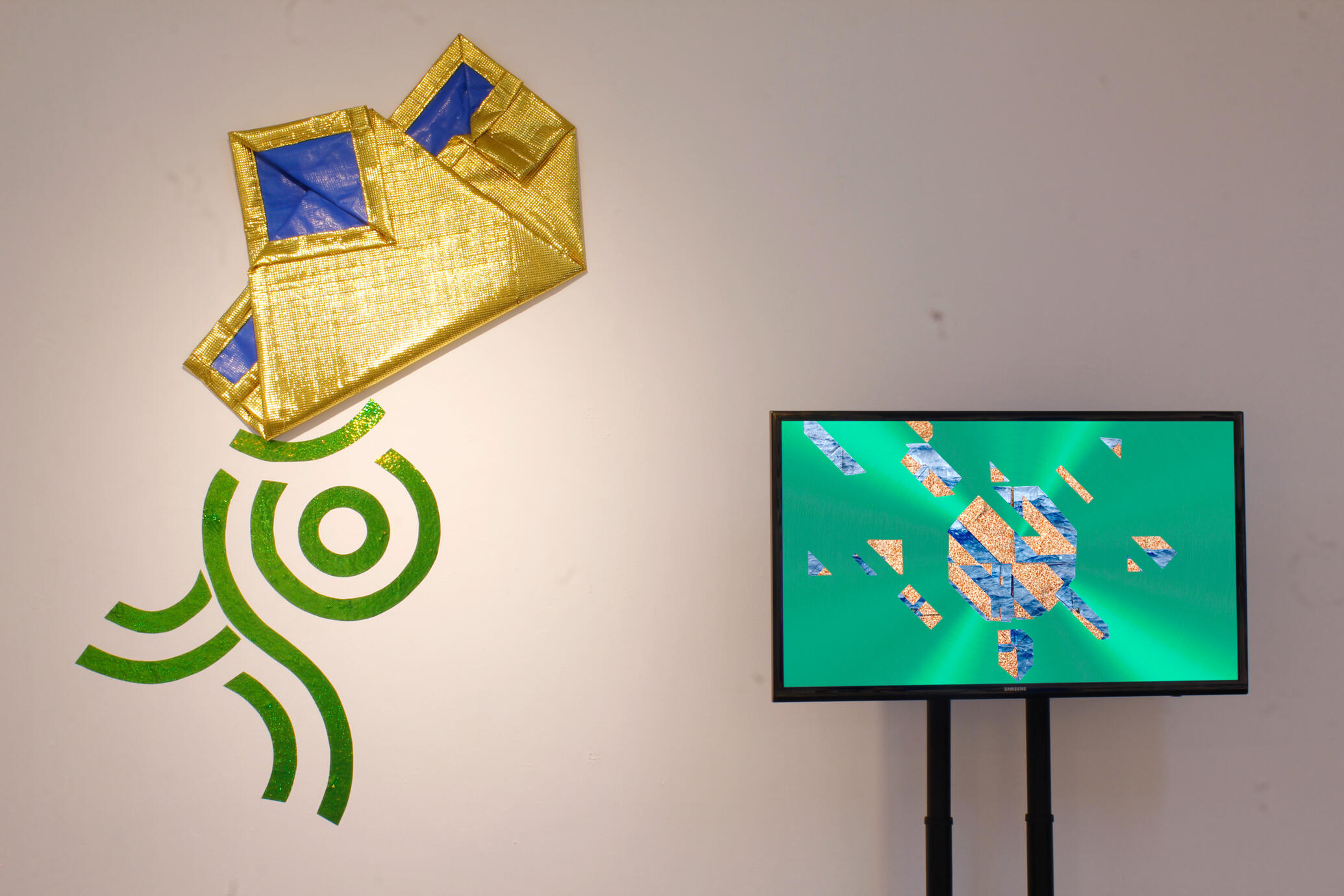
Image courtesy of Substation
© Joo Choon Lin. All rights reserved.
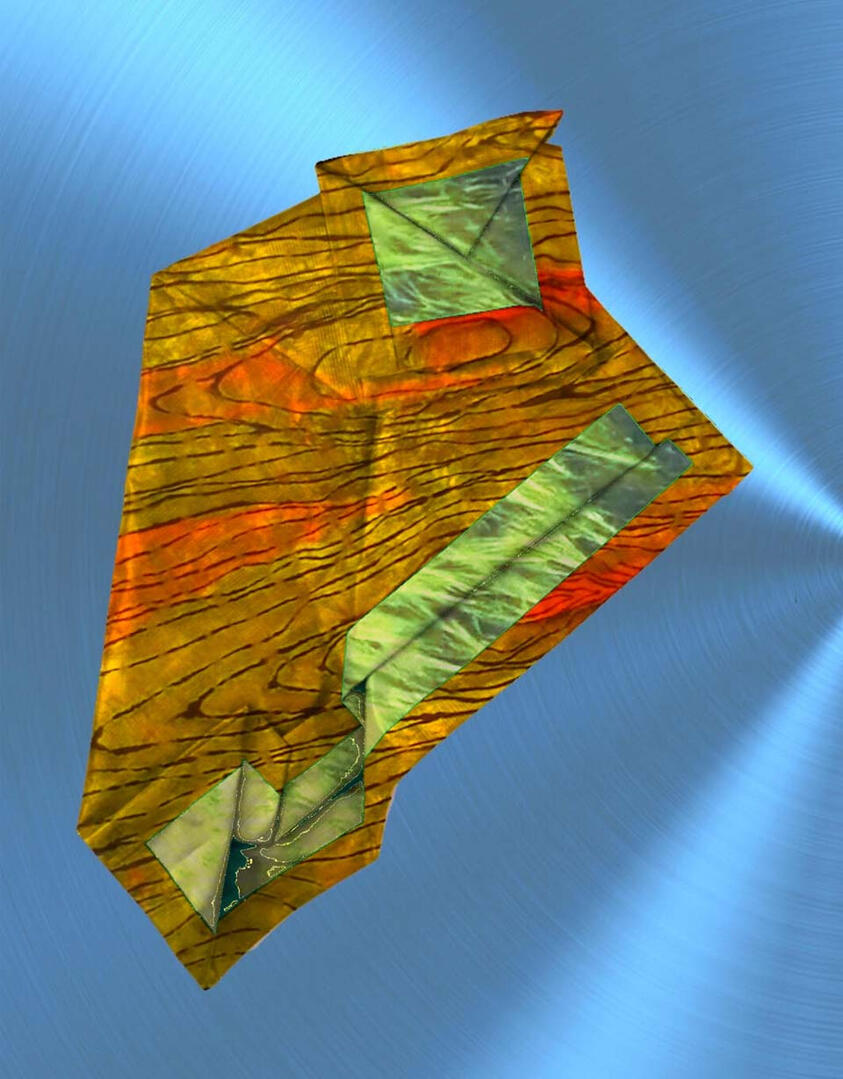
Beatific Perfume (Green/Orange), On-Going Series, Tarpaulin Sculptures, 2020
Joo Choon Lin created folding sculptures using tarpaulin that are unfolded and refolded endlessly into geometric shapes in a rhythmic arrangement. Choon Lin is interested in the possibilities of collapsing them into something metaphorically loaded form. Morphing one form into another in a process of metamorphosis as they are layered, angled and bends at shifting folds. Moving images of ocean, geometric sand patterns, grass swaying in wind and wood grain silkscreened on water are superimposed on folded tarpaulin sculptures. The superimposed image is a matrix of presences that appear and disappear into the surface of tarpaulin which can change our perceptions, through the alteration of what happens on the surface. The preoccupation with its repeating, revealing and concealing generate the different resonances of becoming presence in ever-changing and expanding forms. Essences unfold, new dimensions arise and new modes of experiences emerge.

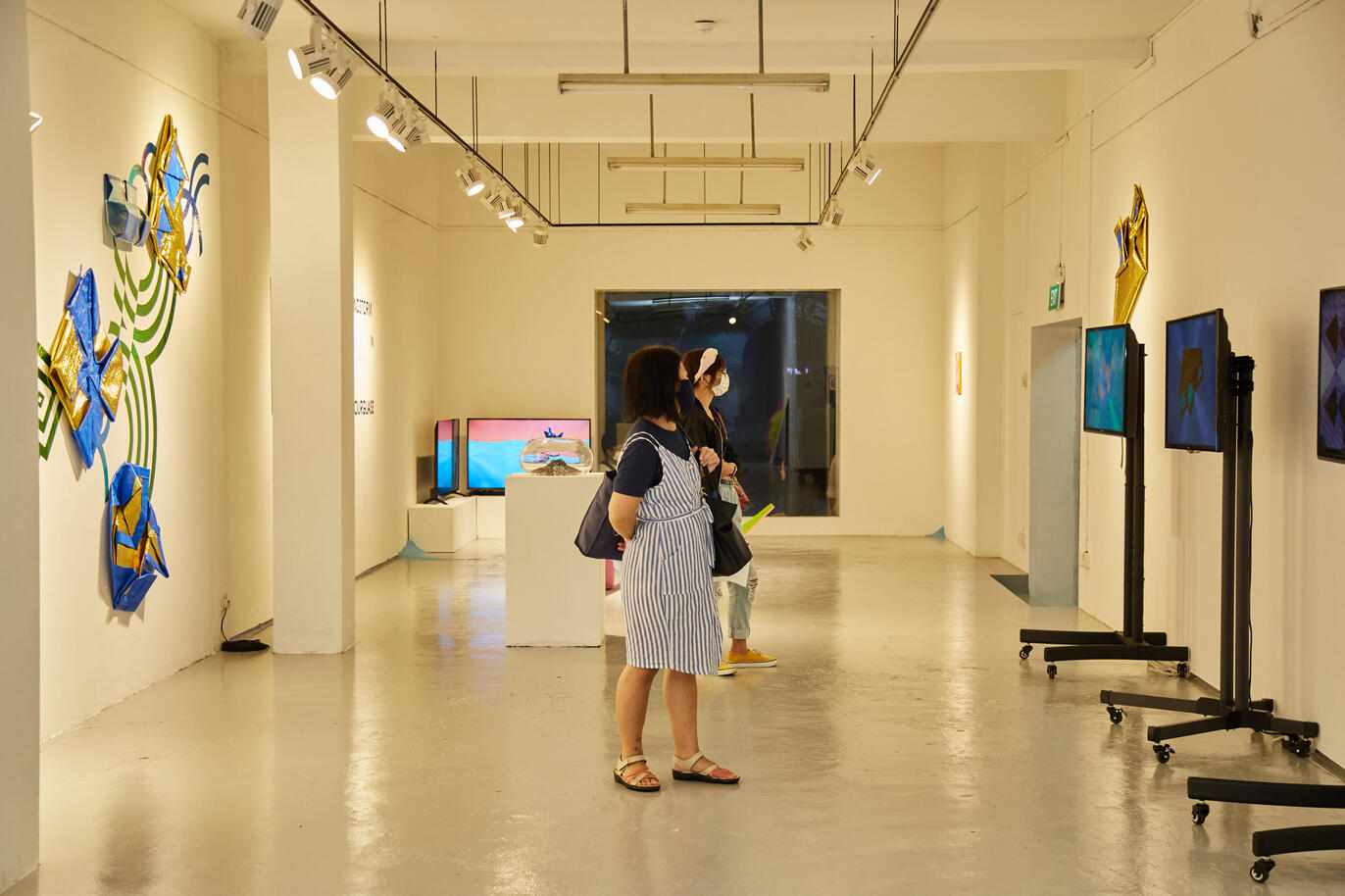
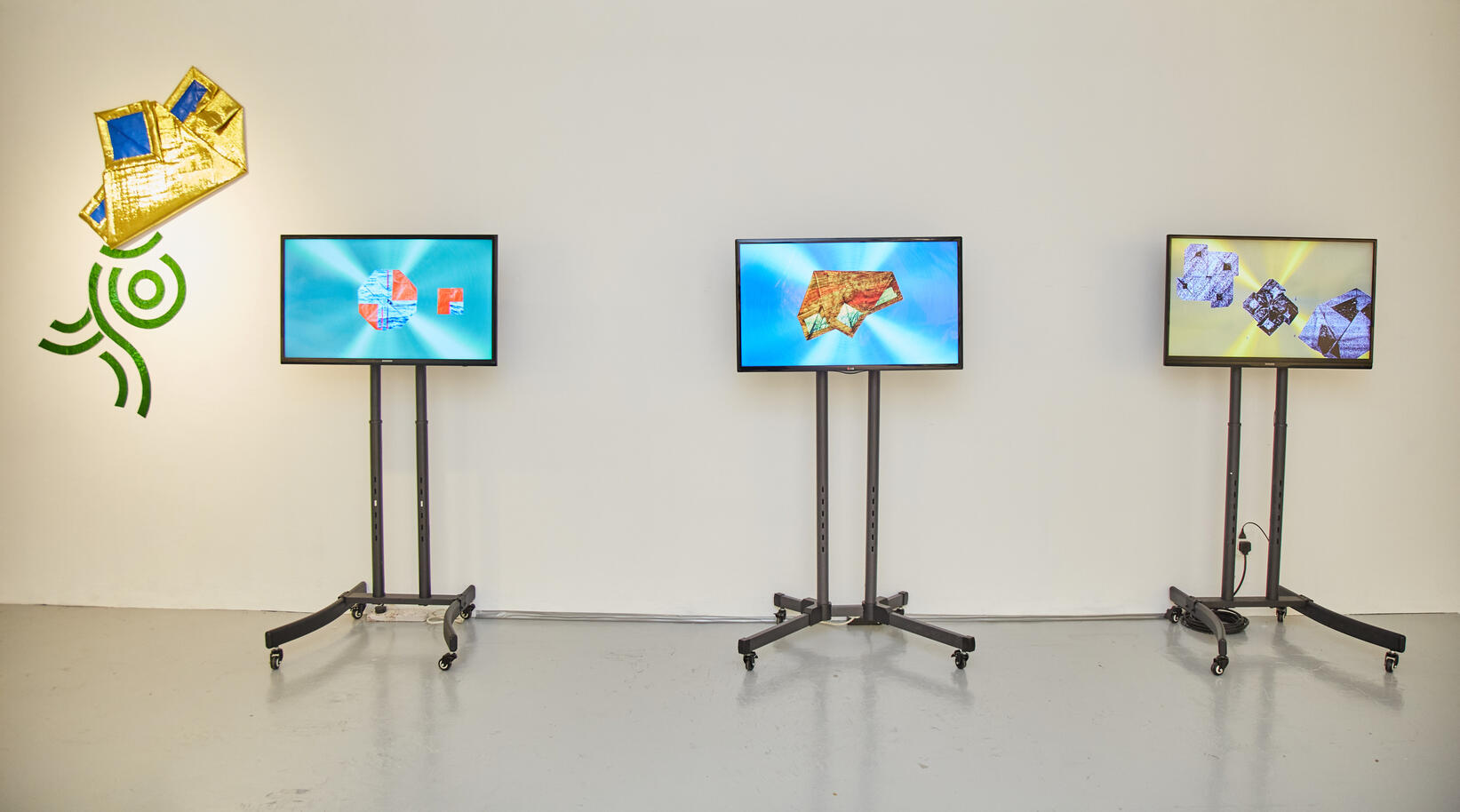
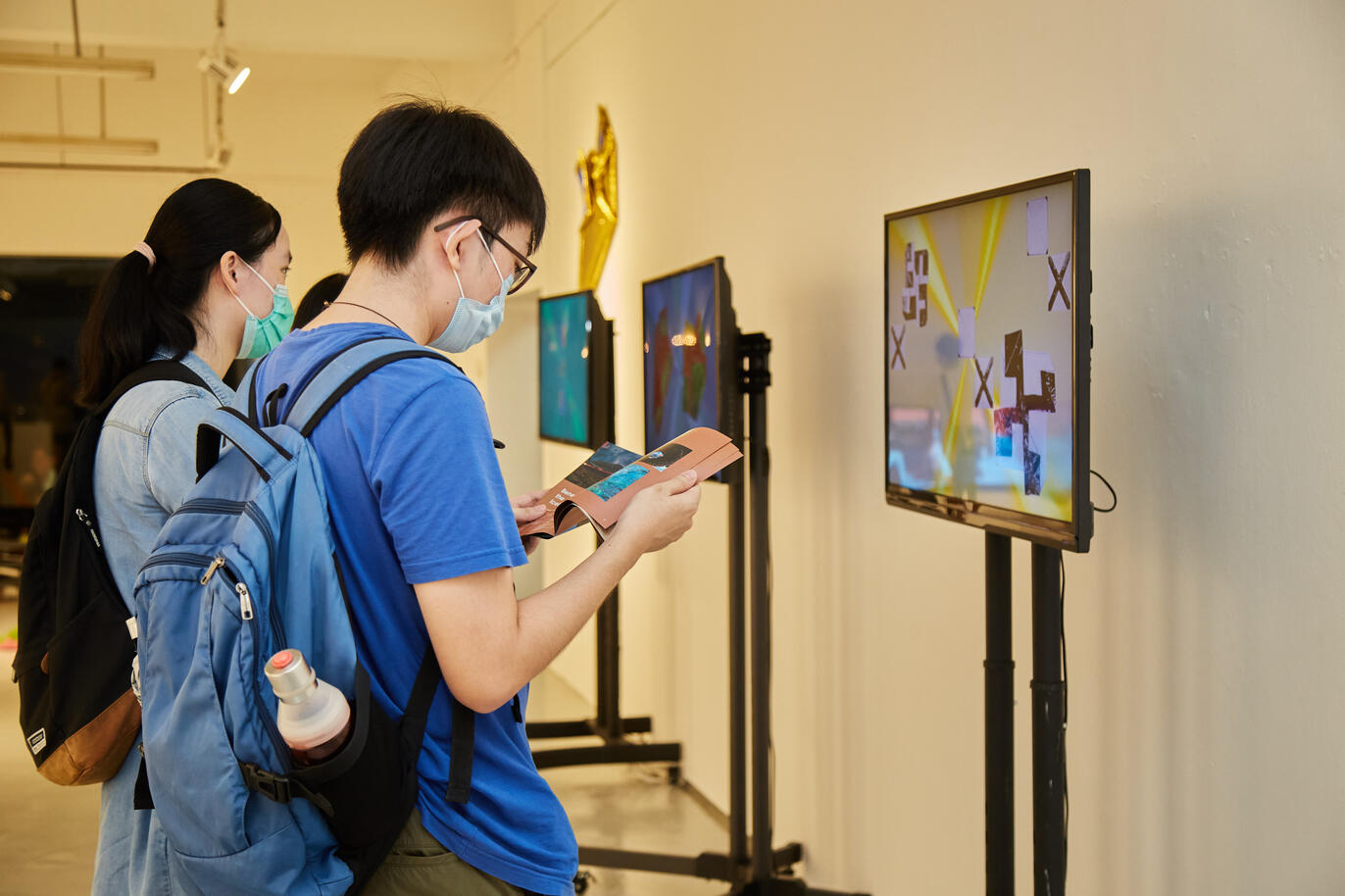
Image courtesy of Substation
© Joo Choon Lin. All rights reserved.
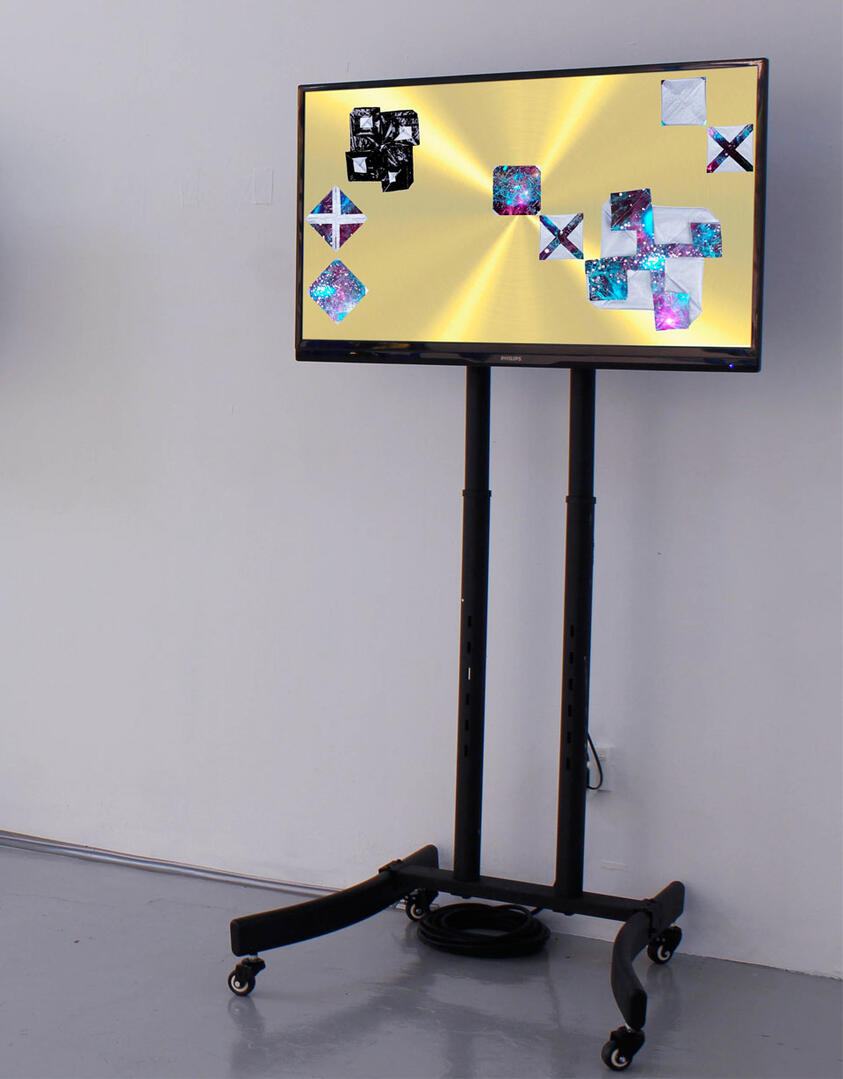
Beatific Perfume (Silver/Black), On-Going Series, Tarpaulin Sculptures, 2020
Joo Choon Lin created folding sculptures using tarpaulin that are unfolded and refolded endlessly into geometric shapes in a rhythmic arrangement. Choon Lin is interested in the possibilities of collapsing them into something metaphorically loaded form. Morphing one form into another in a process of metamorphosis as they are layered, angled and bends at shifting folds. Moving images of ocean, geometric sand patterns, grass swaying in wind and wood grain silkscreened on water are superimposed on folded tarpaulin sculptures. The superimposed image is a matrix of presences that appear and disappear into the surface of tarpaulin which can change our perceptions, through the alteration of what happens on the surface. The preoccupation with its repeating, revealing and concealing generate the different resonances of becoming presence in ever-changing and expanding forms. Essences unfold, new dimensions arise and new modes of experiences emerge.

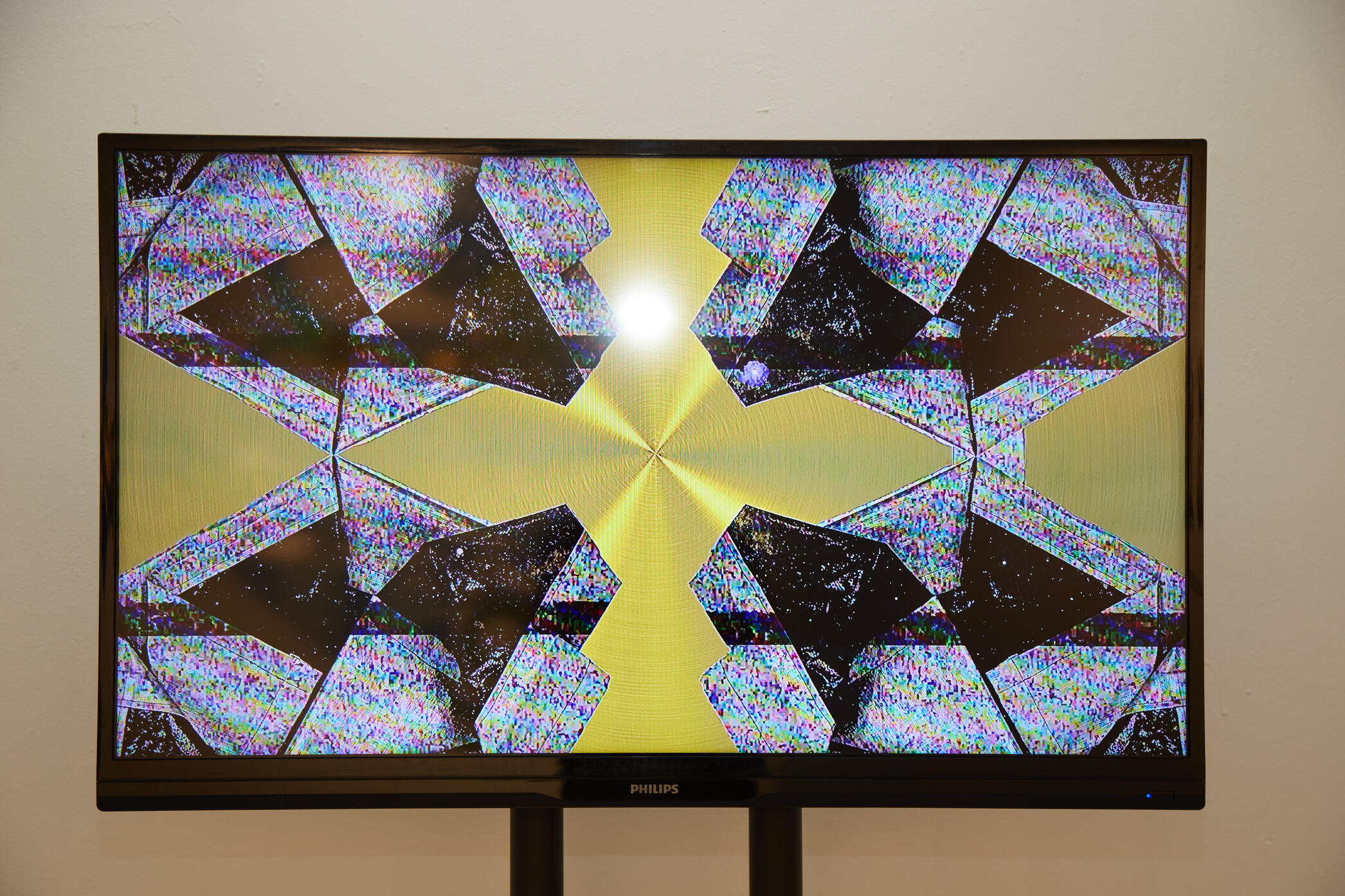
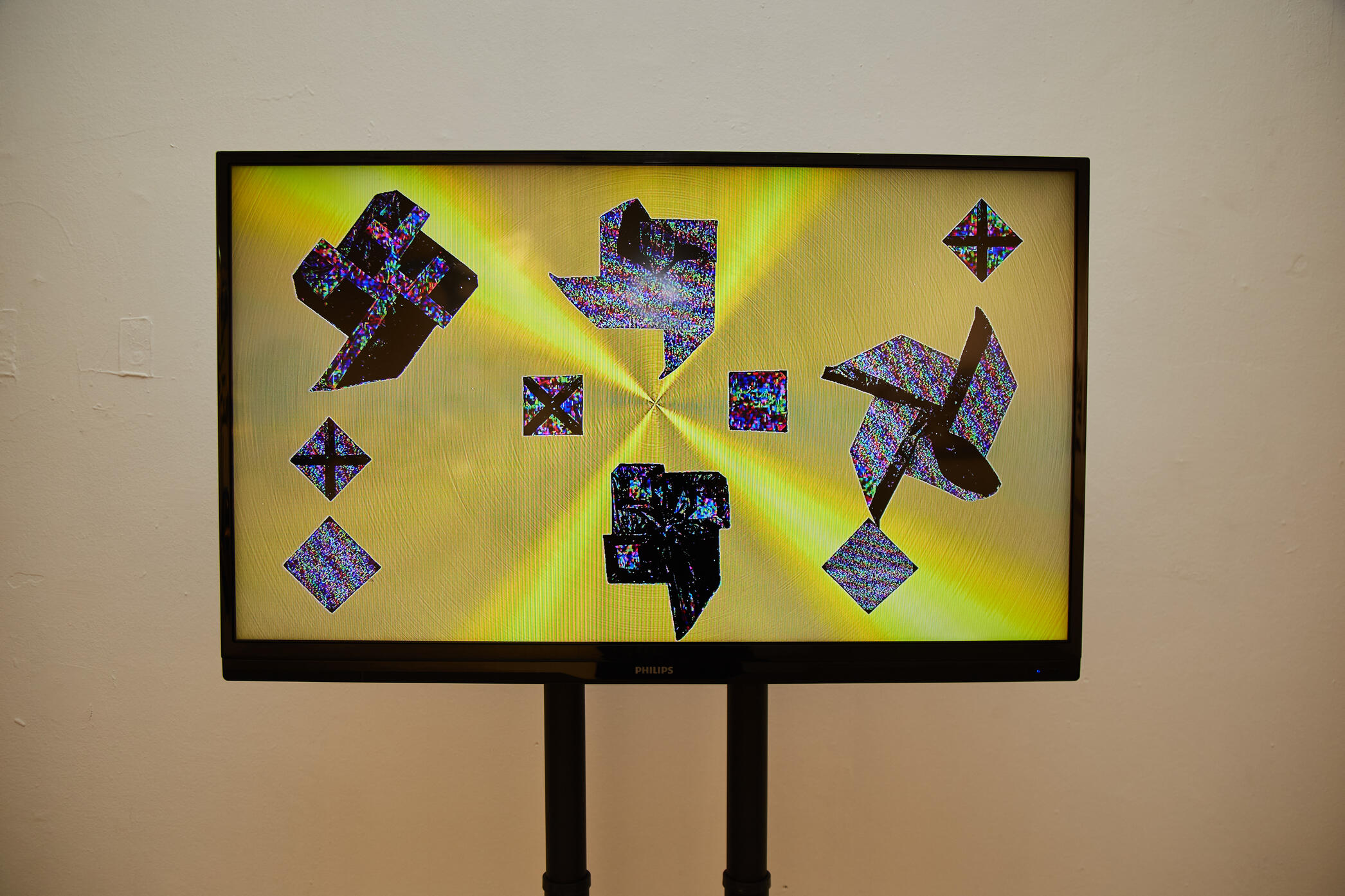
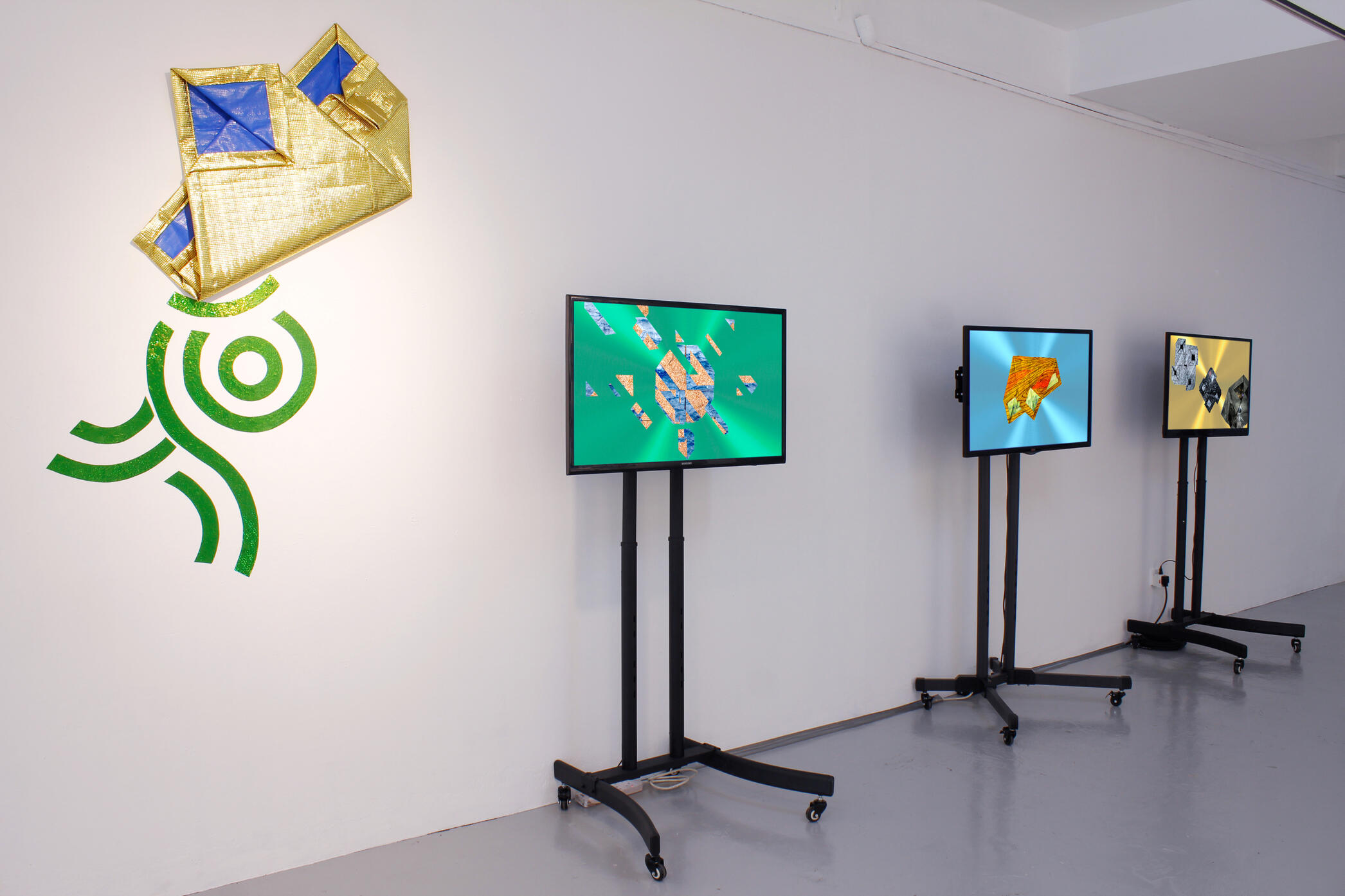
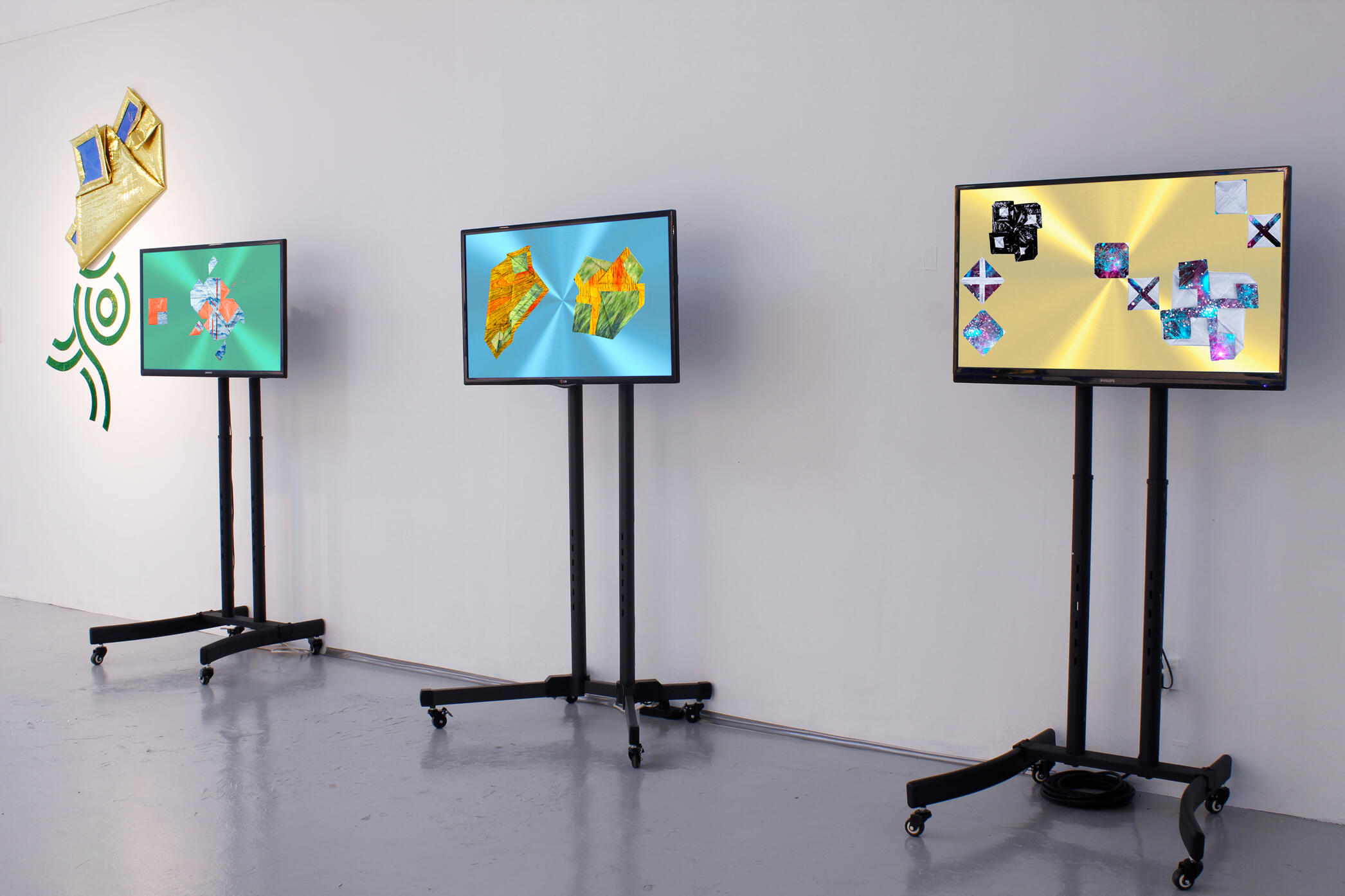
Image courtesy of Substation
© Joo Choon Lin. All rights reserved.
Solo Exhibition, Intestinology 04 X The Cold Purity of Mathematic Love/Trust Equations,
ADM Gallery NTU, Singapore, 2019
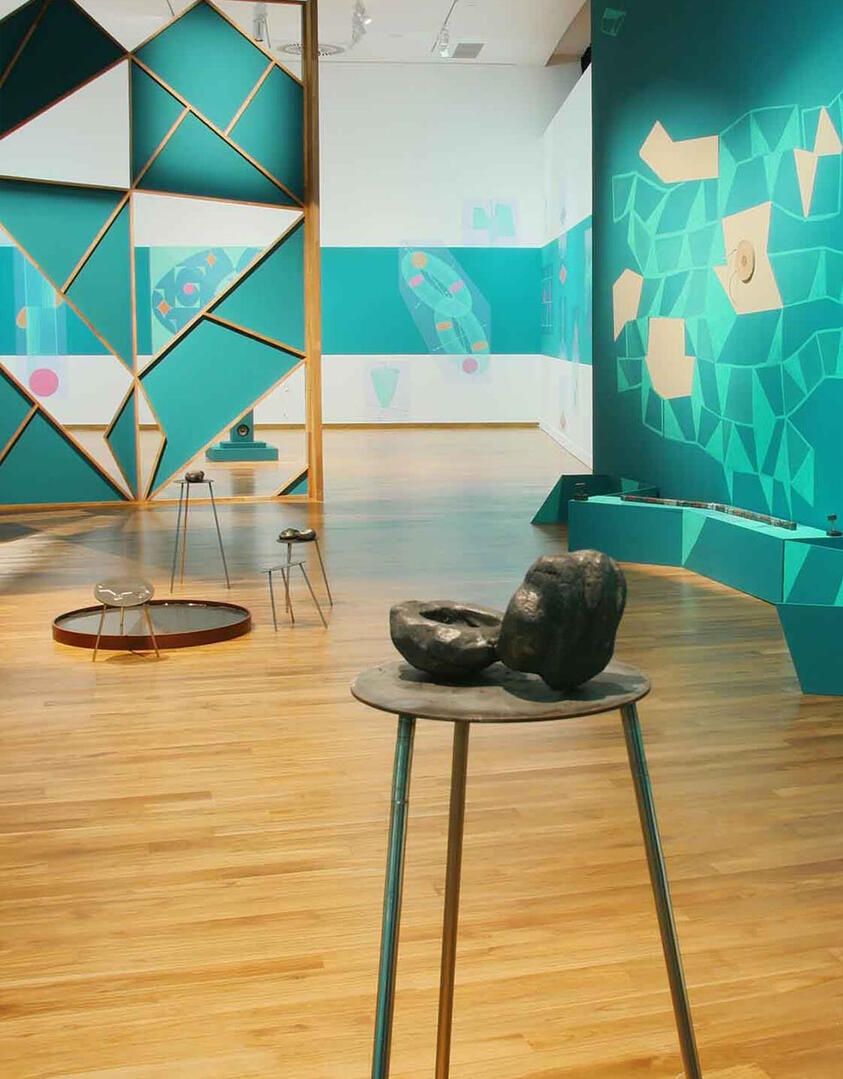
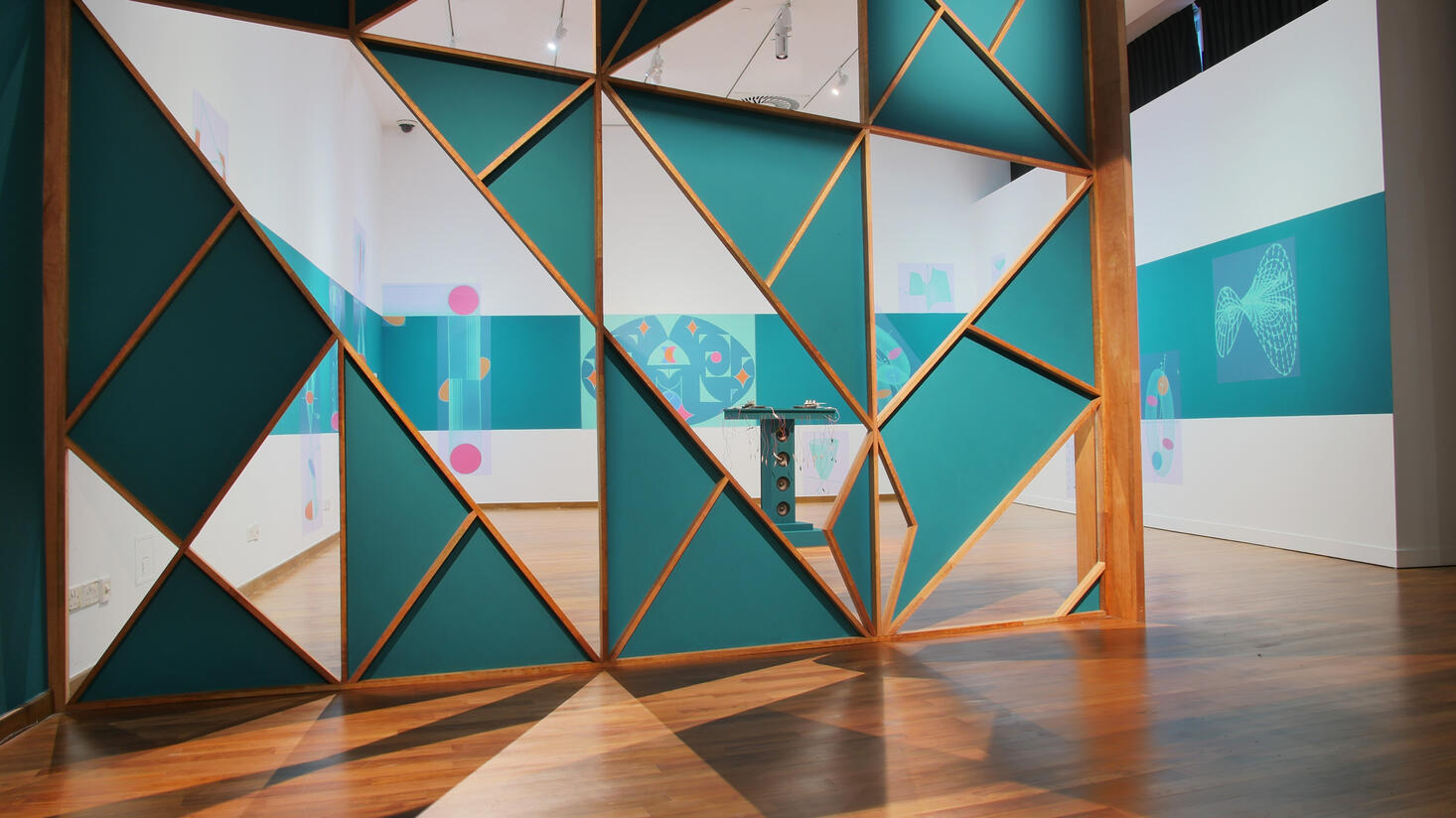
Since 2014, my Intestinology series has explored the processes of transformation—how materials, like the human body’s digestive system, can metabolise what they absorb into new forms of meaning. Each work in the series distills the base elements of matter and thought, translating them into unexpected configurations that reveal the interconnectedness between substance, perception, and value.In Intestinology 04: The Cold Purity of Mathematic Love/Trust Equations, I investigate the element carbon—its dual manifestations as graphite and diamond, two materials identical in composition yet opposite in form and worth. This polarity reflects the tension between materiality and perception, prompting the question: how do we assign value to what we see, touch, or feel?Through graphite–casein sculptures, geometric drawings, and kinetic sound structures, the work seeks to make visible and audible the rhythms that bind the physical and metaphysical. Sound becomes a conduit for transformation, where “transcendental rhythms” resonate through vibrating disks and sculptural forms, materialising the invisible frequencies of existence.Like carbon unfolding from graphite to diamond, the work meditates on change as both a chemical and spiritual process—a continual movement from density toward illumination, from the measurable to the ineffable.
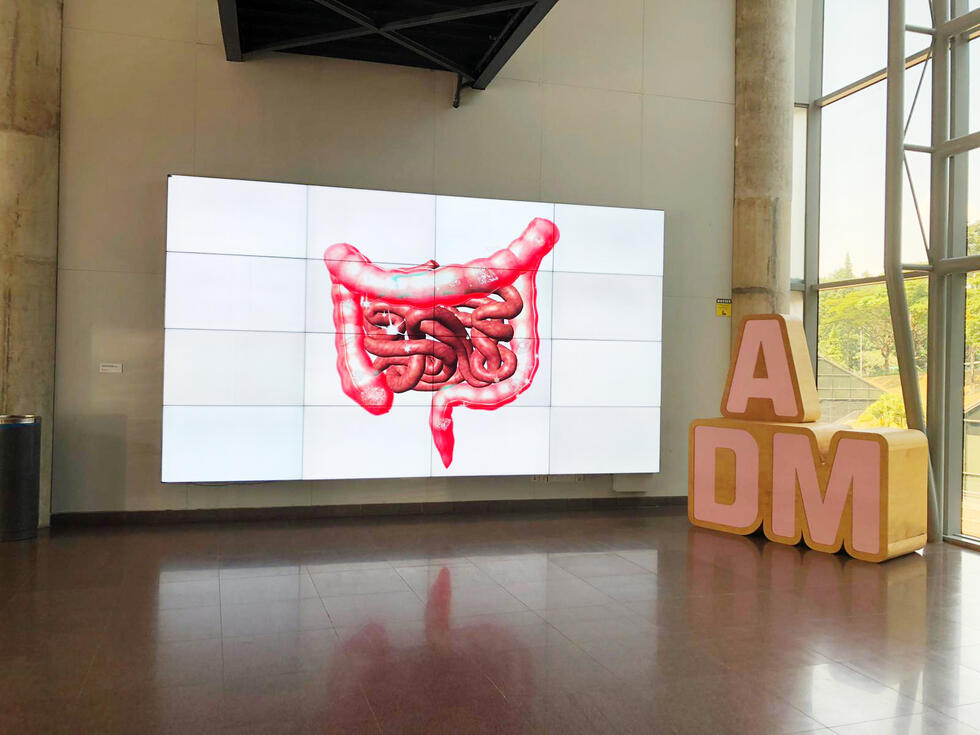
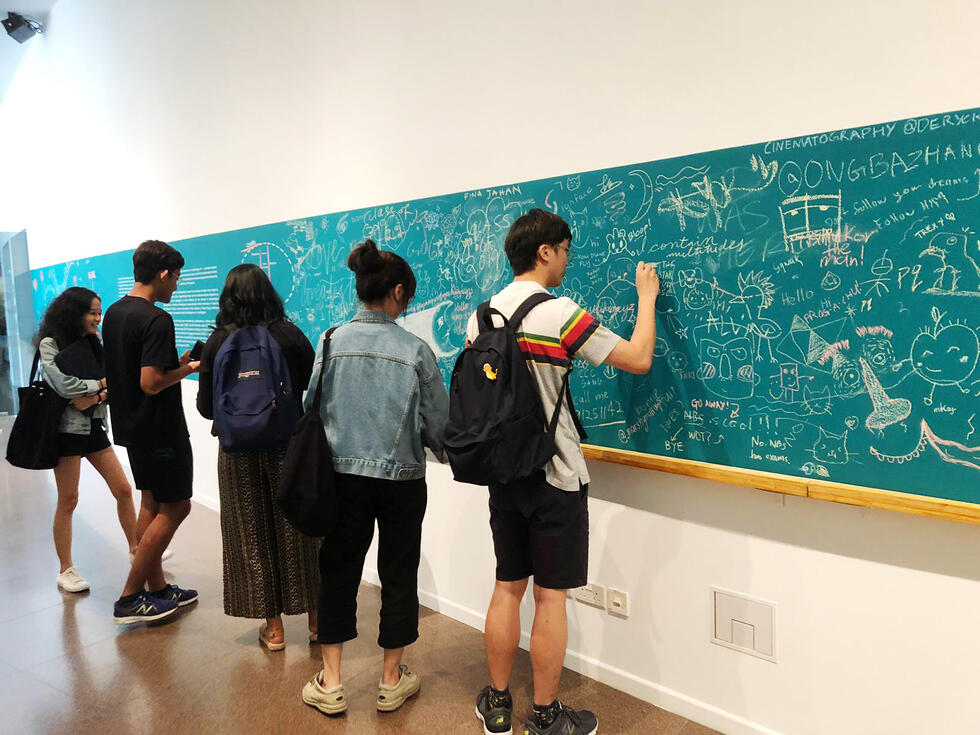
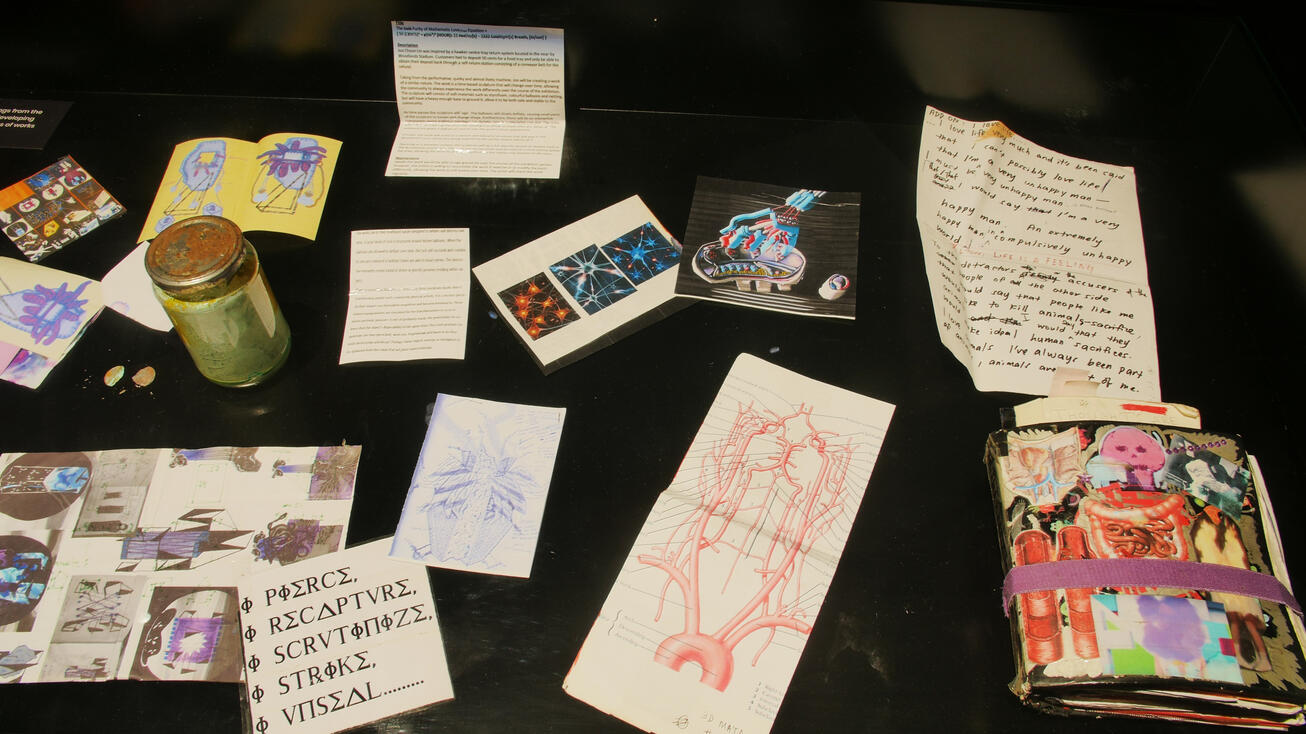
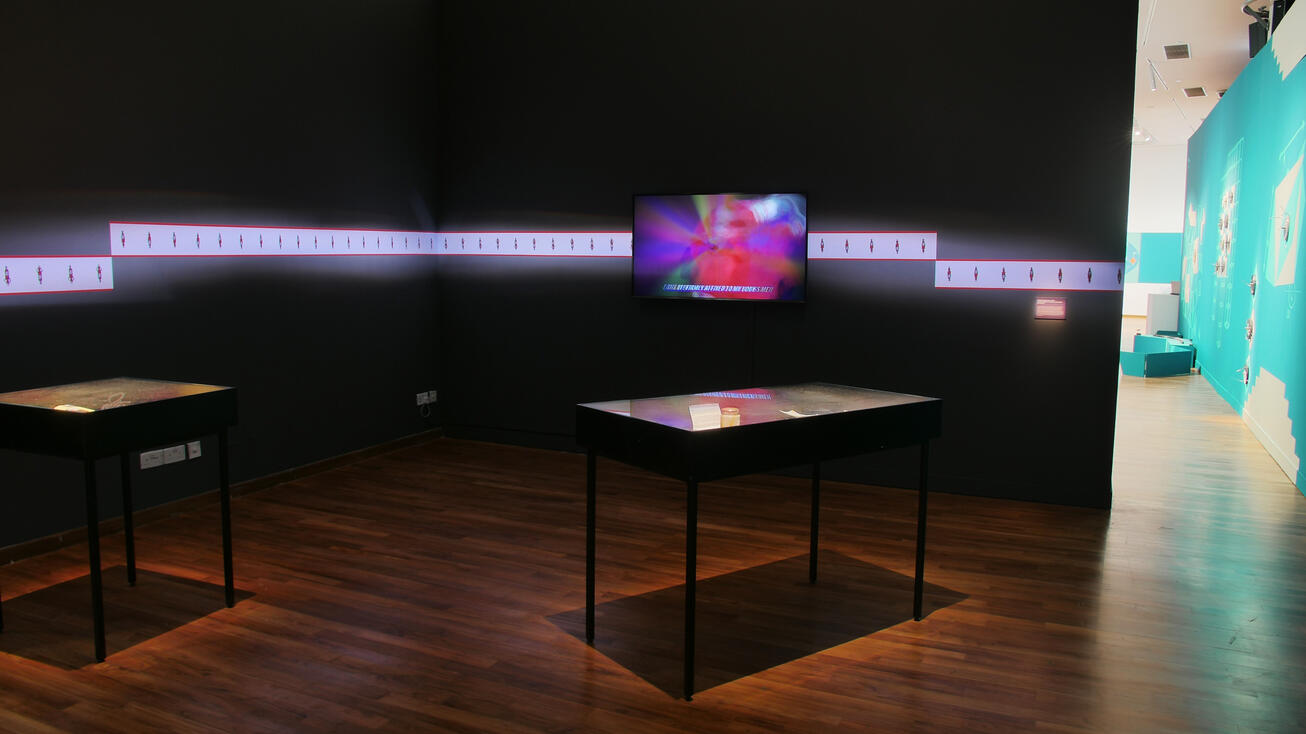
Image courtesy of ADM, NTU Singapore.
© Joo Choon Lin. All rights reserved.
Documentation of Sound Discs Objects - Intestinology 04 X The Cold Purity of Mathematic Love/Trust Equations,
ADM Gallery NTU, Singapore, 2019

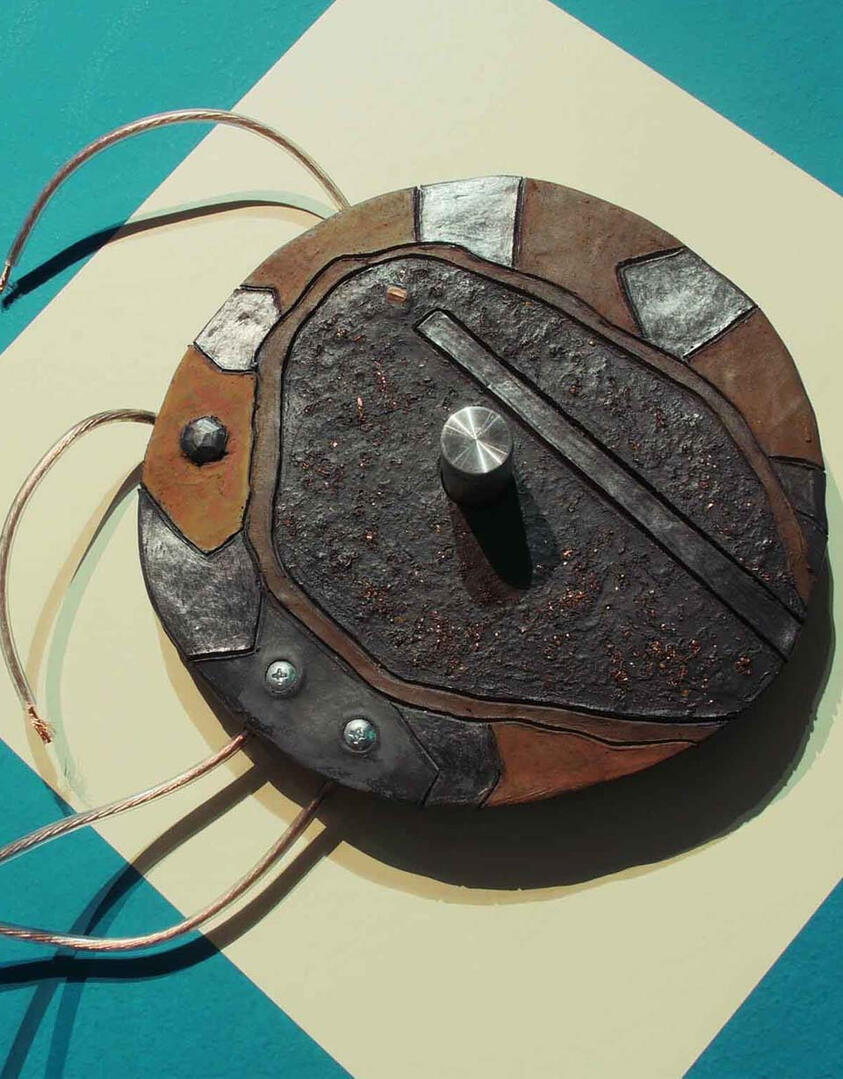
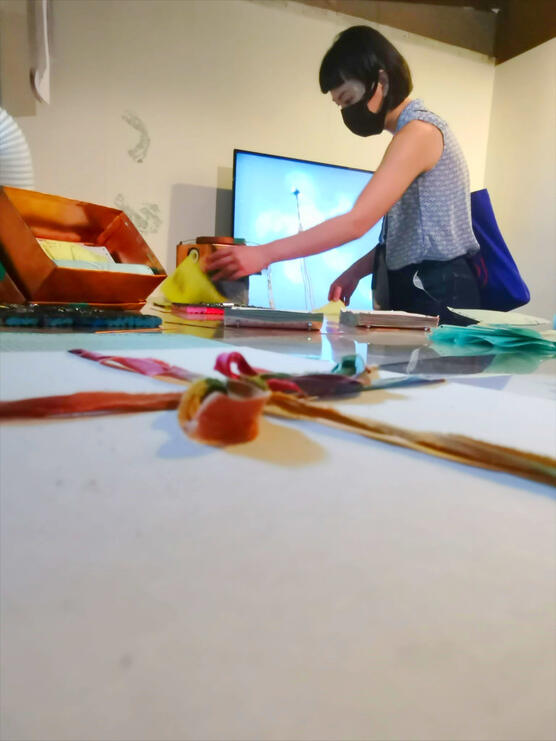
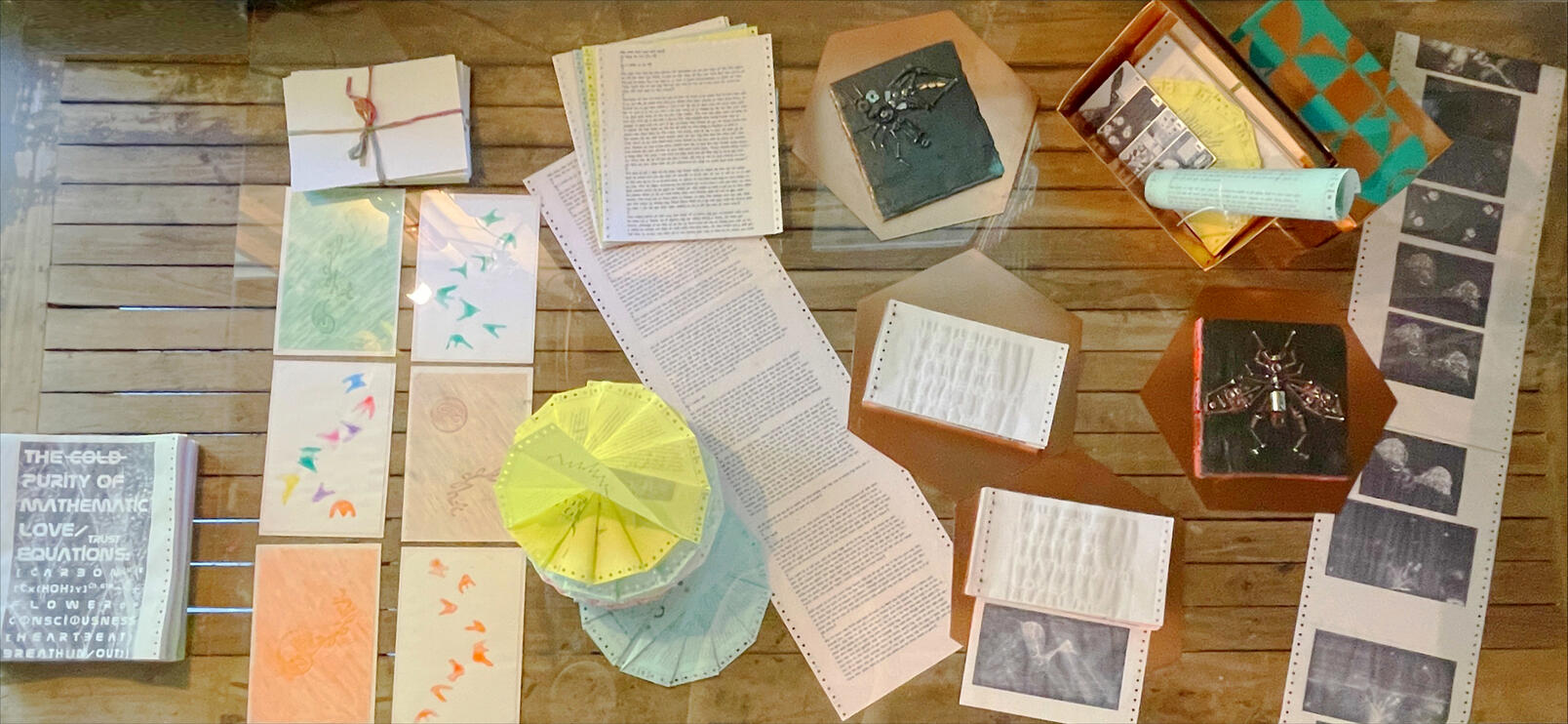
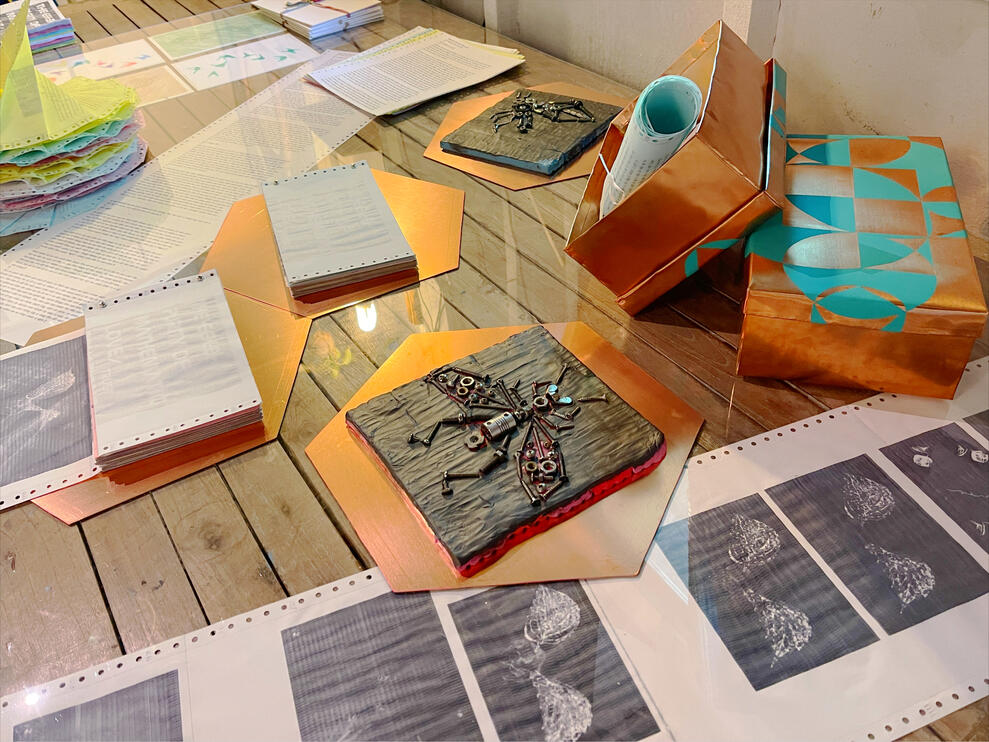
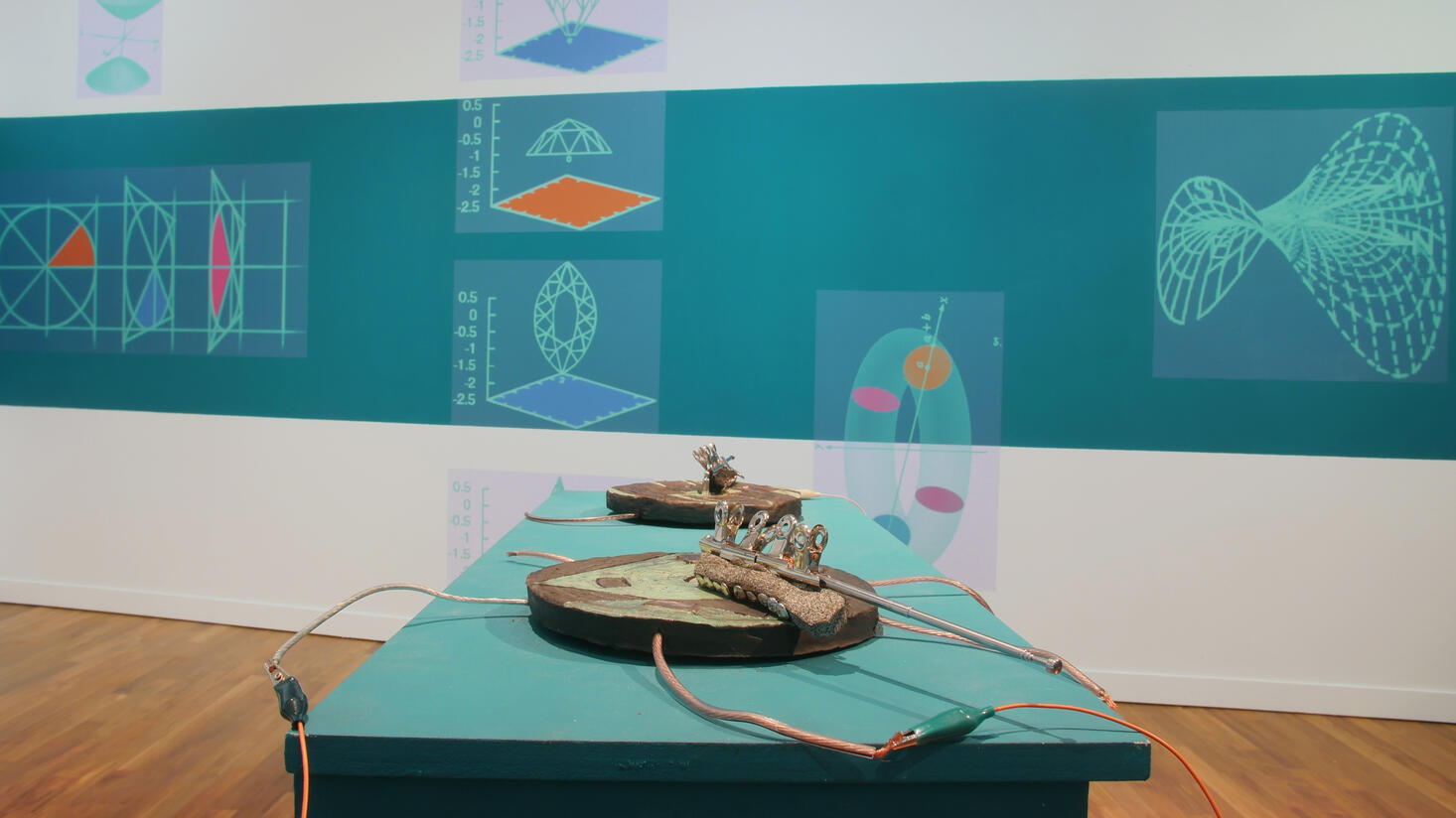
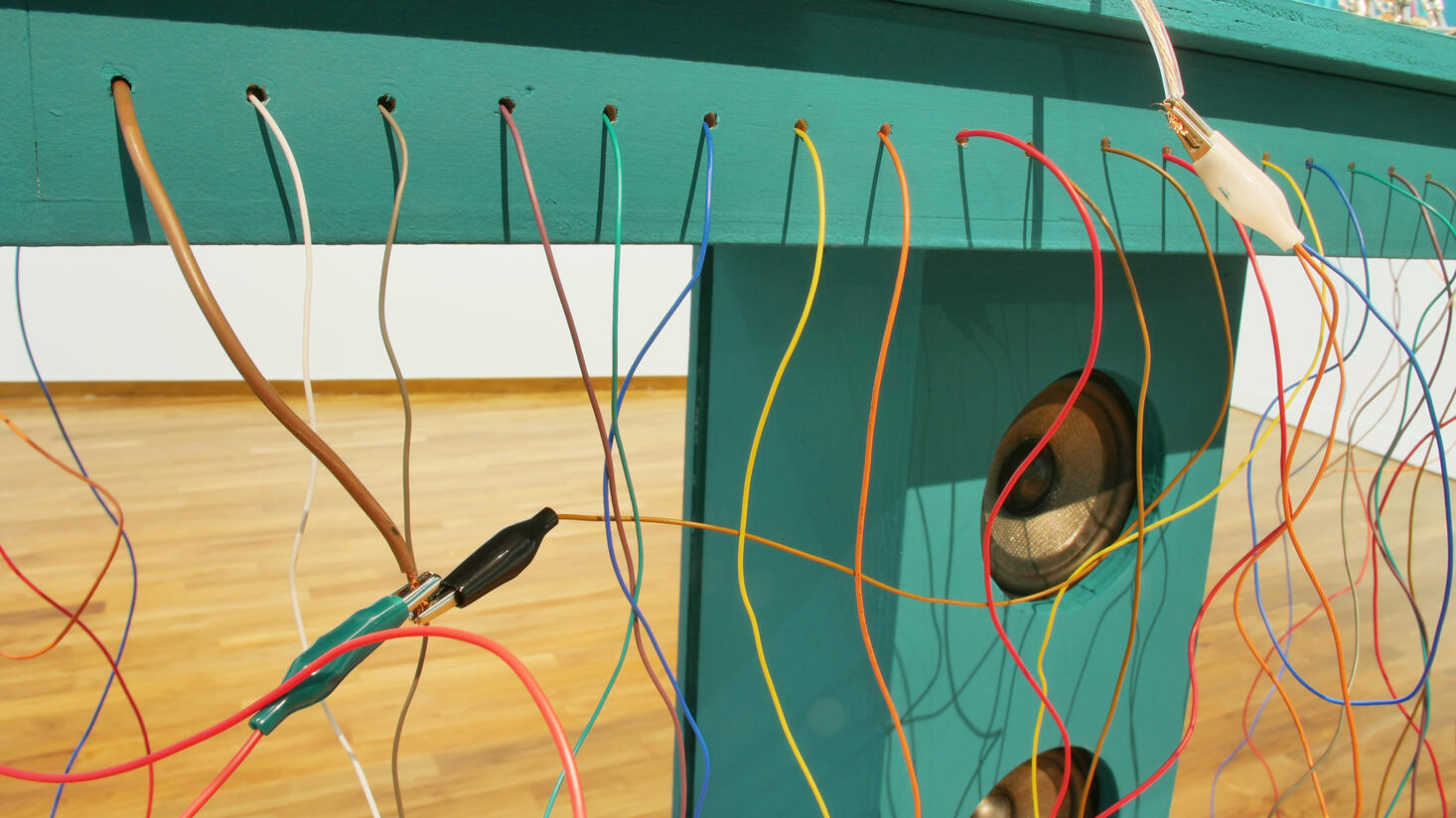
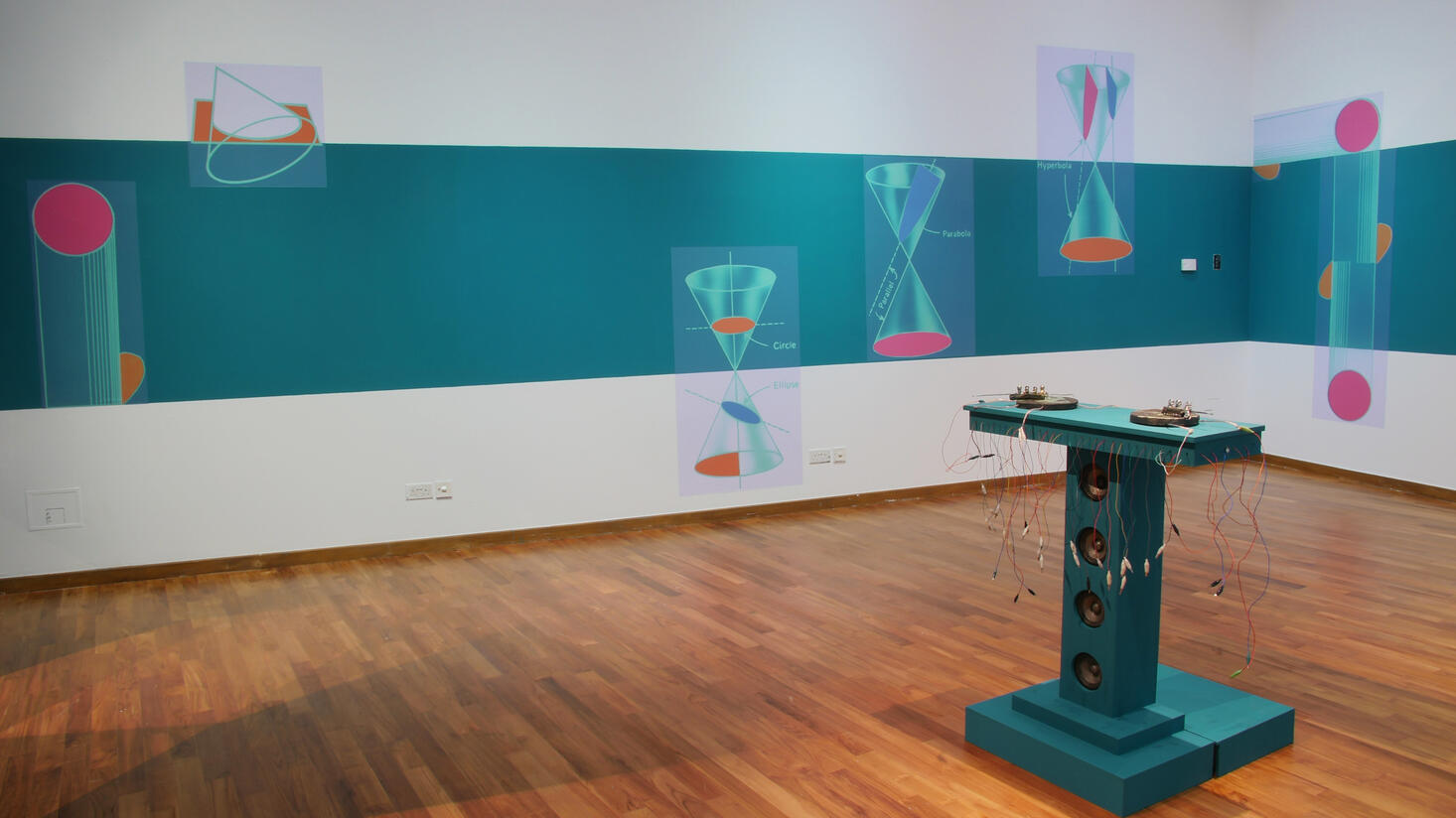
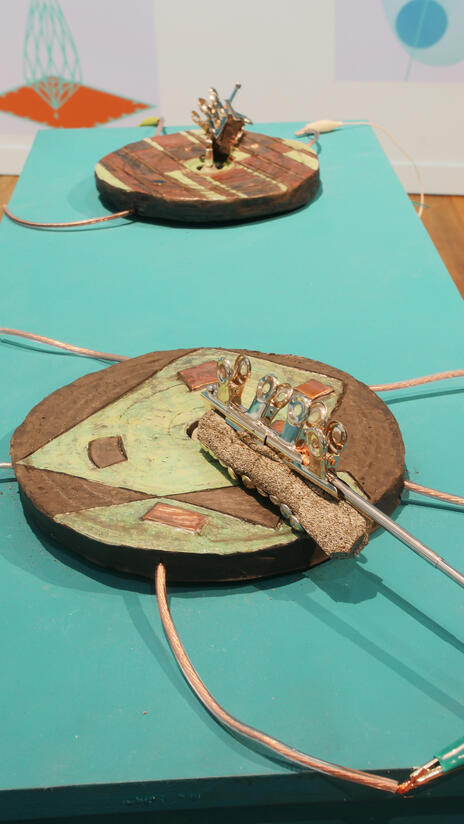
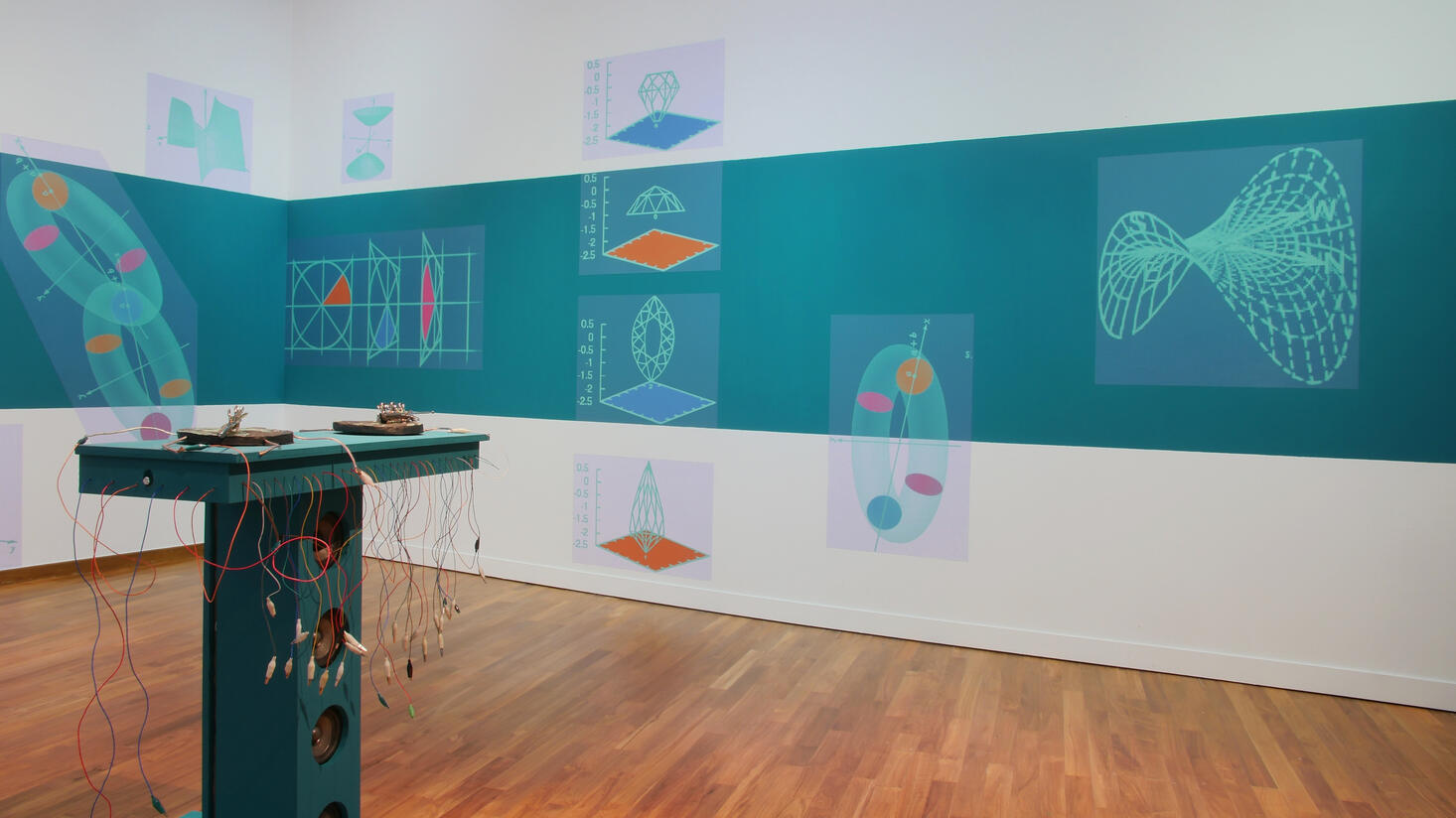
Joo’s approach to sculpting and creating objects in her art marking is an exemplar of embodiment and tacit knowledge, a form of resistance in the face of the circularity of the propositional logic of the Stoics. In the third instalment of Intestinology Series 04 entitled The Cold Purity of Mathematic Love/Trust Equation 3 ={¢arbonHz [Golden Milk / Ω 1.618 -+ Se{E}d of ¢ФnsciФusness [TIME/MOT IOΩ] [In/out]}, Joo produced a set of ornate circular discs and mechanical turntables. By allowing us to interact with the sculptures, she invites us to form new symbolic relations with the moving objects that emit sounds intermittently, as if tapping into the mystery of the cosmos.The discs are encrusted with patina, achieved through electroplating using copper penny coins as a source. The material used to create the discs themselves is a mixture of UHT milk baked with graphite. The discs are mounted on the turntable fashioned like old record players, they rotate and the graphite in the discs acts as conductor of electricity, closing and opening circuits built into the mechanical-kinetic sculpture. Joo is interested in the transmutation of these materials, altering our perception of their value in our daily socio-economic activities. What is a penny away from its face value? What is milk that is beyond the association of protein and calcium?
© Joo Choon Lin. All rights reserved.
Sound Discs Objects X The Cold Purity of Mathematic Love/Trust Equations,
ADM Gallery NTU, Singapore, 2019
MEDIUM: GRAPHITE CLAY, COPPER ELECTROPLATING FROM PENNIES, COPPER GREEN PATINA, COPPER SULPHATE, COPPER WIRE, SCREWs
INTESTINOLOGY is a serial attempt to rupture the beholder’s mundane sense of reality and “[to establish] fluid continuities, [highlight] forms of solidarity and continuity, precisely where we set up boundaries and differences of natures.”Joo Choon Lin’s INTESTINOLOGY Series of works is the artist’s attempt to articulate processes and principles that inform her approach towards materials, and how they are transformed through her art-making. Just as how the body’s digestive system converts that which is consumed into nutrients required to support the body, Joo seeks to distill the base elements of the materials that she works with and present them in renewed contexts. Beginning in 2014, works in this series have taken the form of anecdotes, concepts and musings that have been translated into unexpected form, in response to sites and situations that create unlikely relationships, and played out in elaborate settings of installation, sculpture and video.The Cold Purity of Mathematic Love/Trust Equations is the latest iteration of her INTESTINOLOGY works, where the artist explores the forms that the element carbon can take, with graphite sculptures that interact with geometric drawings representing the unfolding of a diamond’s many facets. Drawn to the similarity and polarity that graphite and diamond - both made of carbon, and both conduct electricity – share, central in her work is also the question of the subjective value of things.Joo’s approach to sculpting and creating objects in her art marking is an exemplar of embodiment and tacit knowledge, a form of resistance in the face of the circularity of the propositional logic of the Stoics. She produced a set of ornate circular disc and mechanical turntable. She invites us to form new symbolic relations with the moving objects that emit sounds intermittently, as if tapping into the mystery of the cosmos. Joo is interested in the transmutation of these materials, altering our perception of their value in our daily socio-economic activities. The graphite disc is encrusted with copper and patina, achieved through electroplating using copper penny coins as a source. It is mounted on the turntable fashioned like old record players, they rotate and the carbon in the graphite disc acts as both a resistor and a good conductor of electricity and, closing and opening circuits built into the mechanical-kinetic sculpture. The disc ‘vibrates’ or ‘hums’ in a repetitive rhythm as the electric current flow. In a timer setting, the rhythm is produced and last for 15mins in every hour. The viewers are also part of the act, but their participation required is subtle, but of great significance, in term of the viewer’s participation in the act of anticipation, observing, noticing the unpredictable little twitches of the machine.

© Joo Choon Lin. All rights reserved.
Solo Exhibition, Intestinology 04 X The Cold Purity of Mathematic Love/Trust Equations,
ADM Gallery NTU, Singapore, 2019
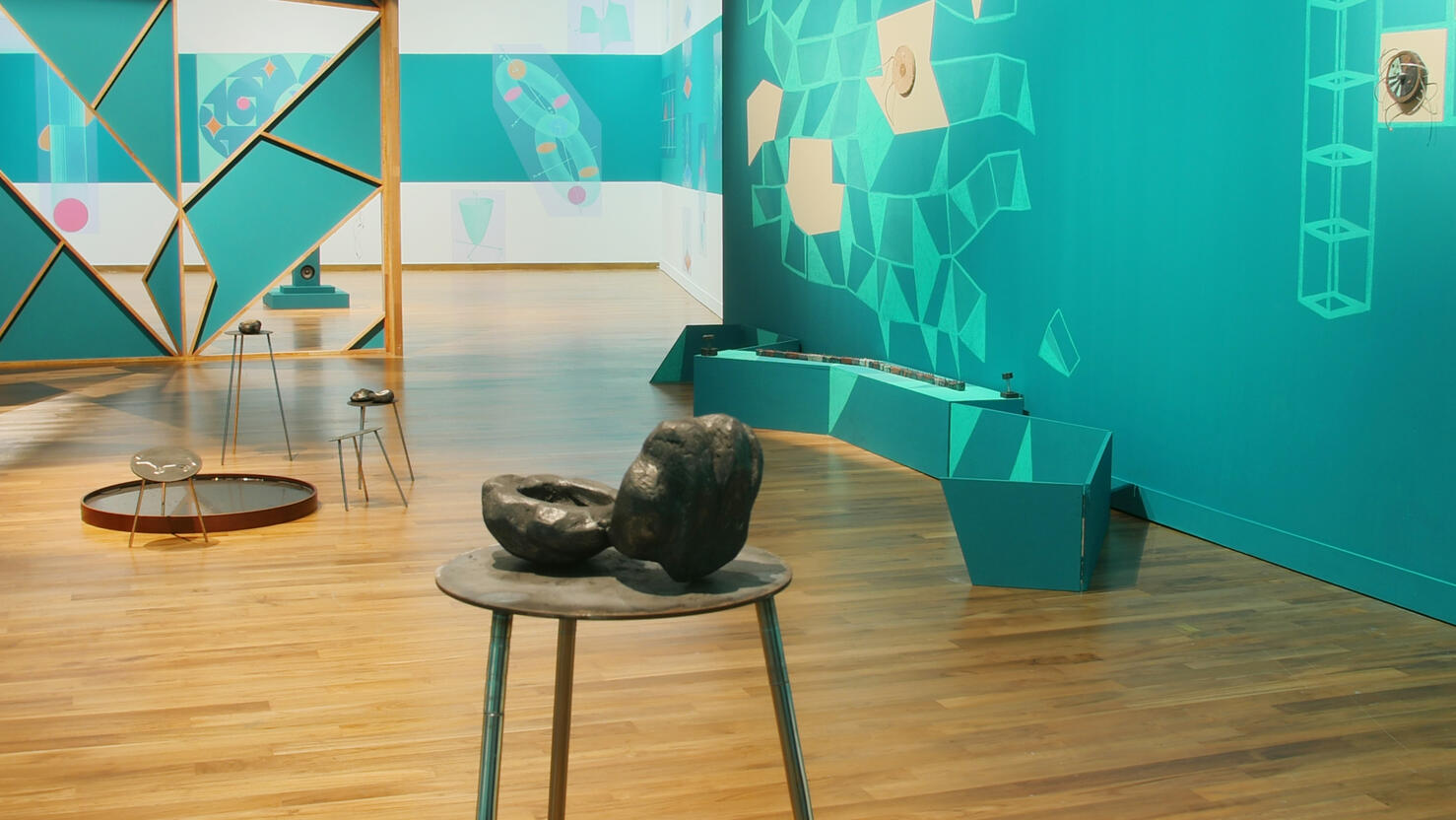
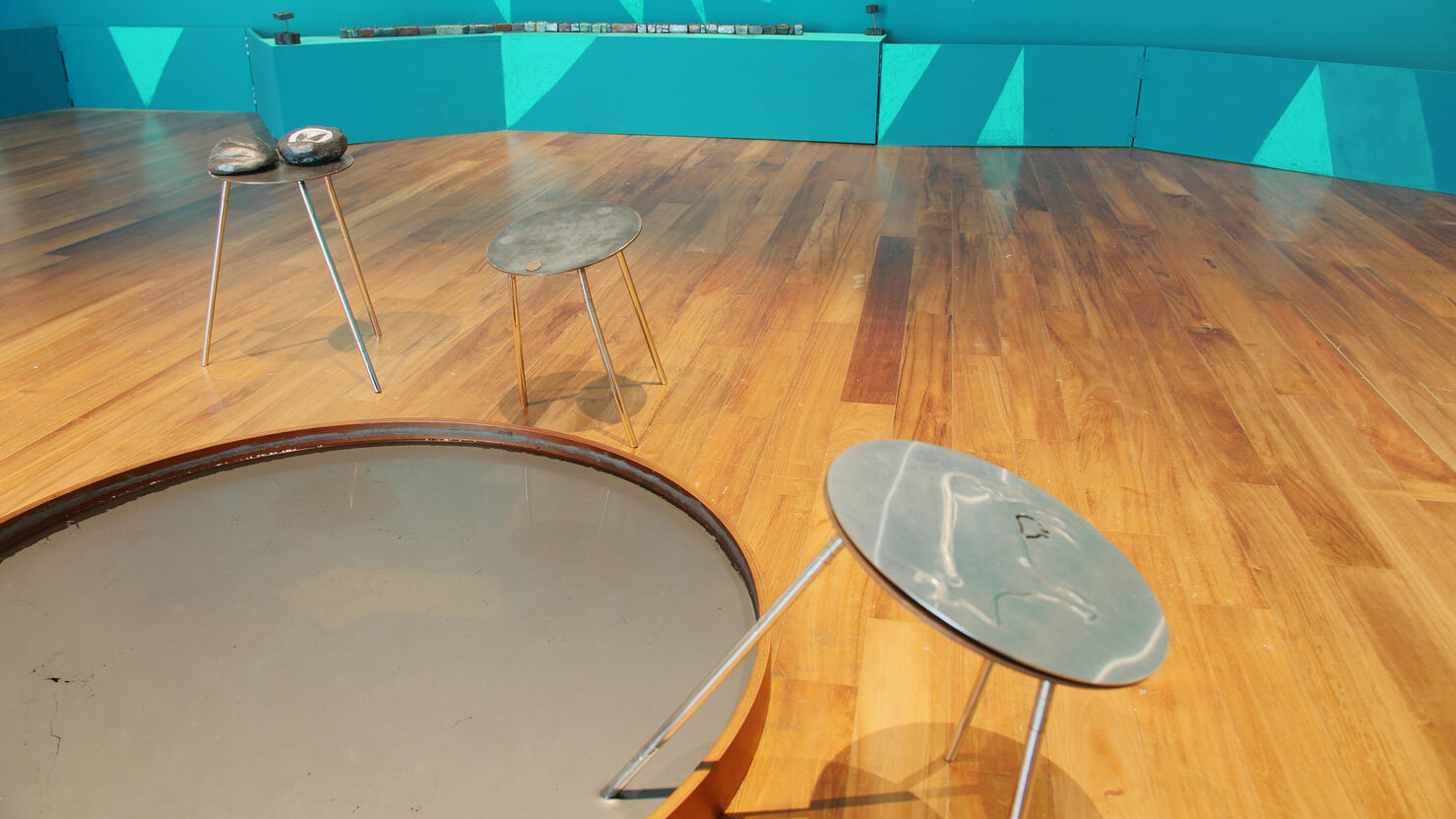
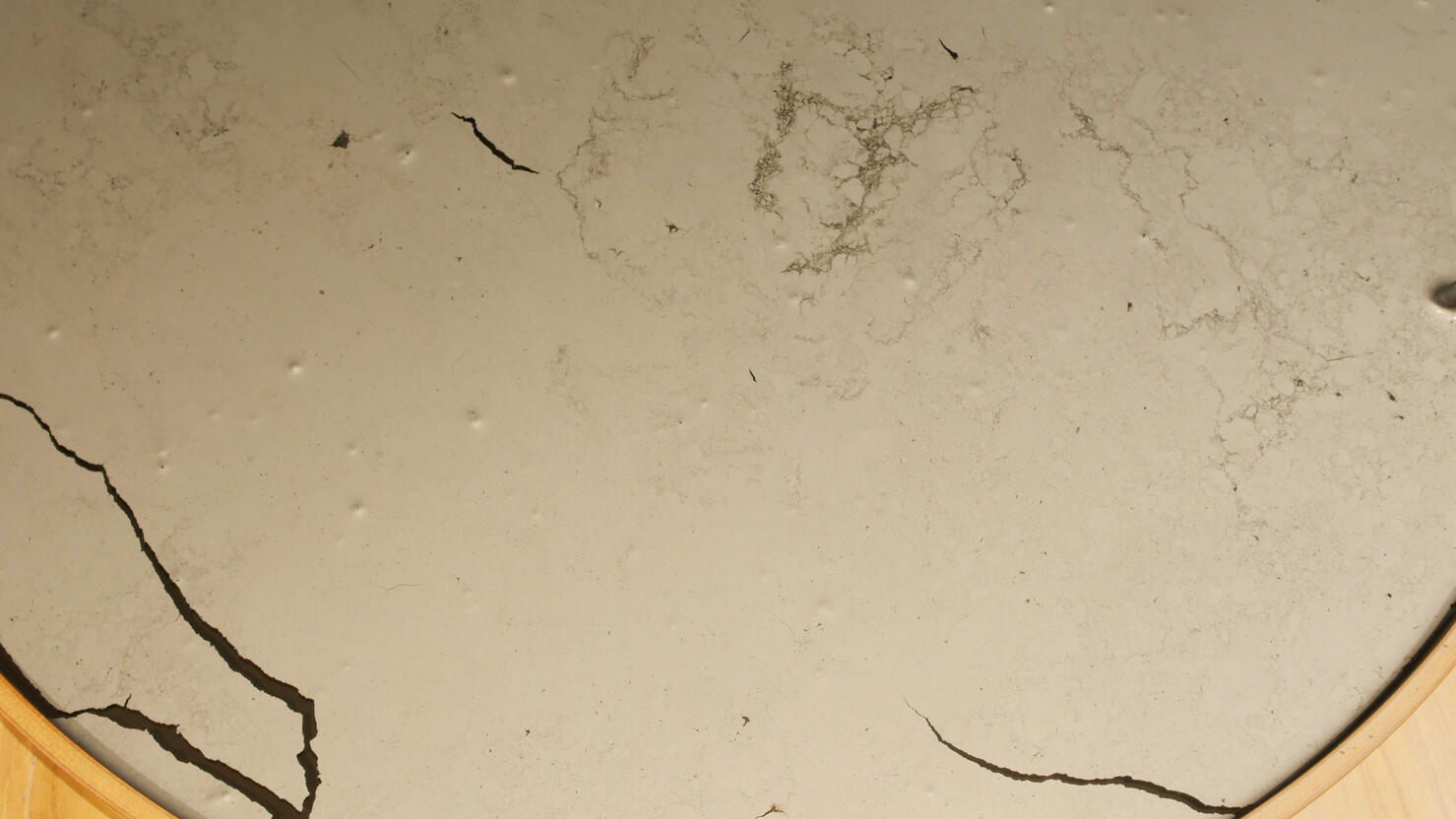
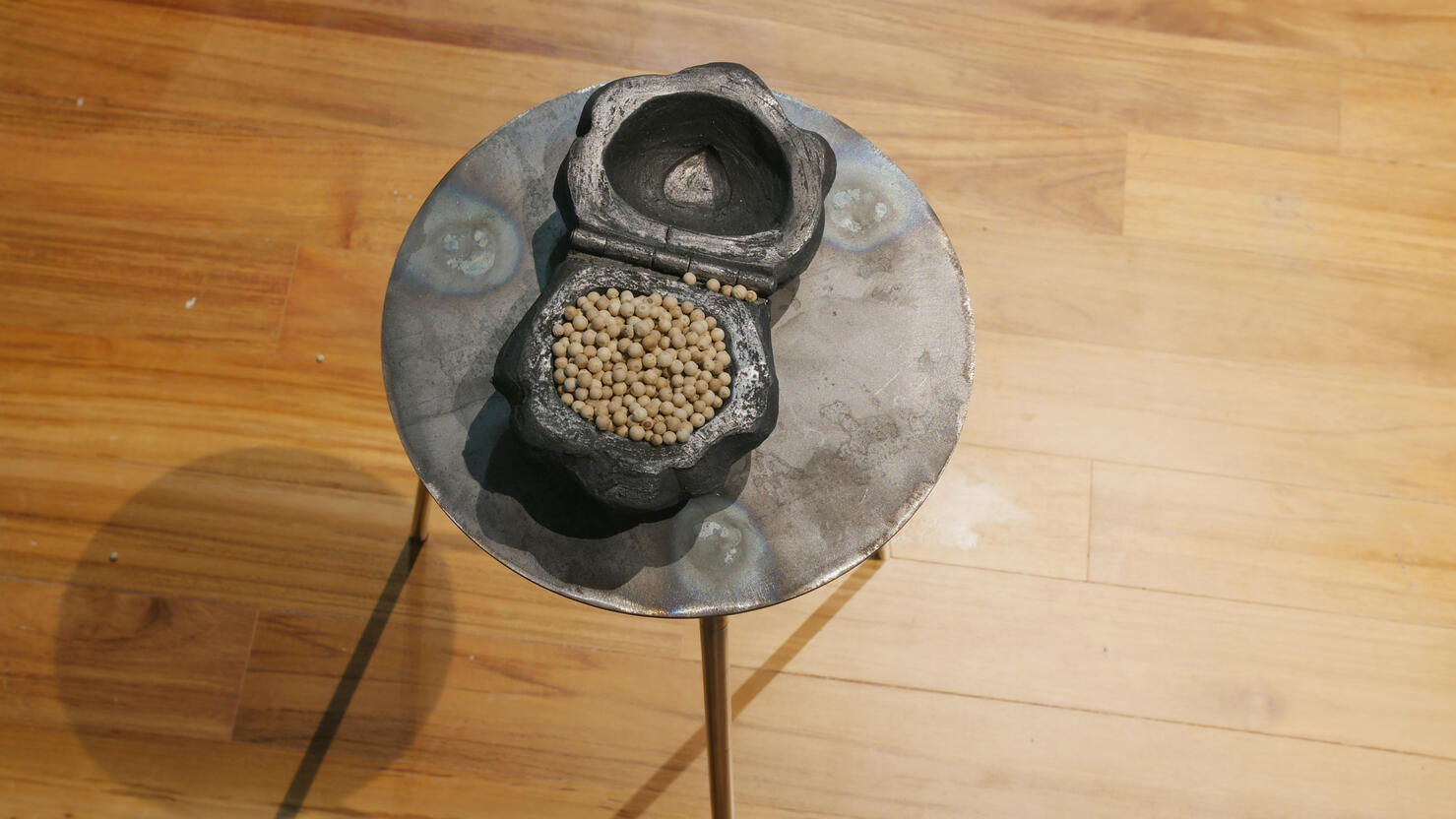
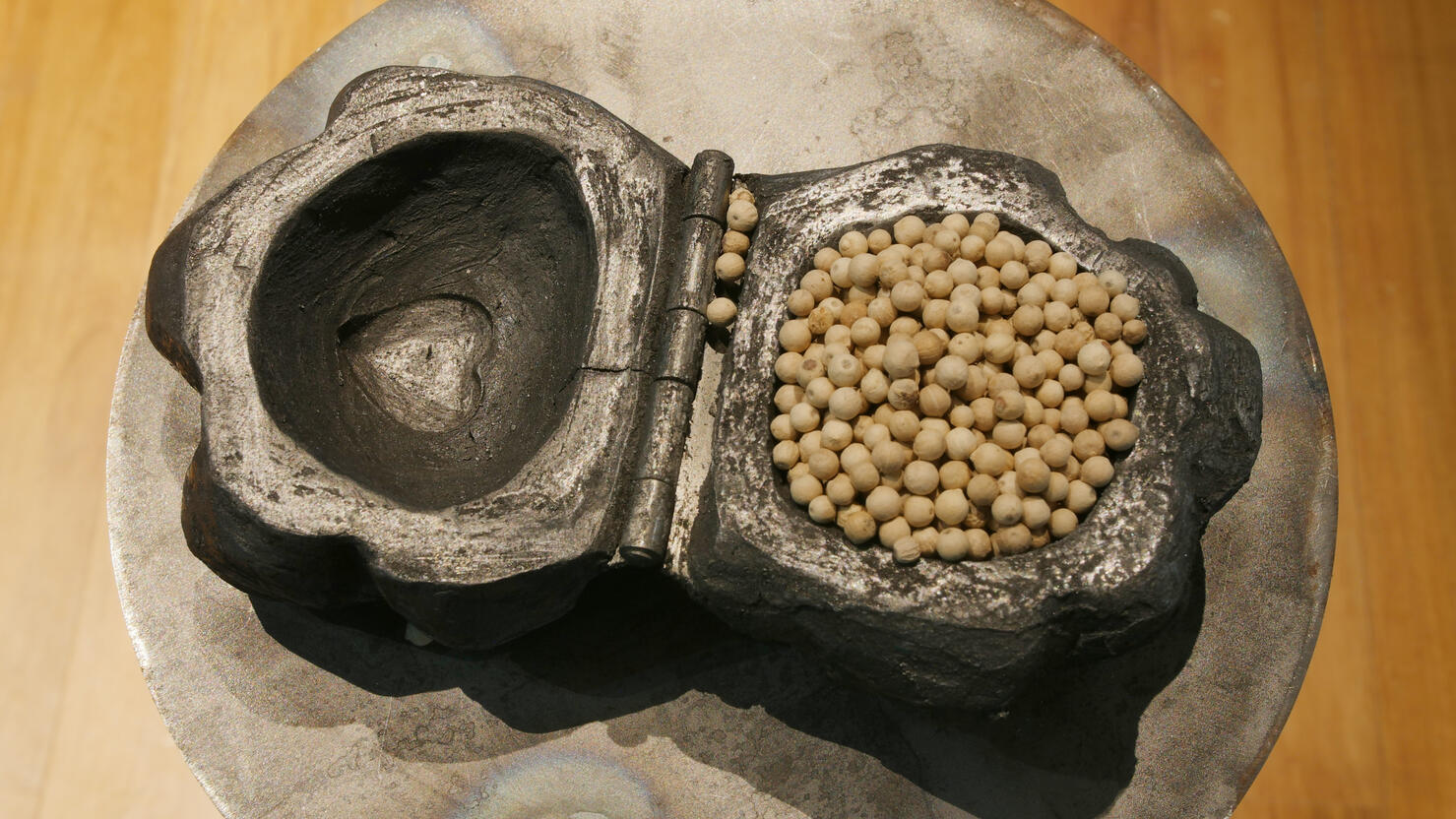
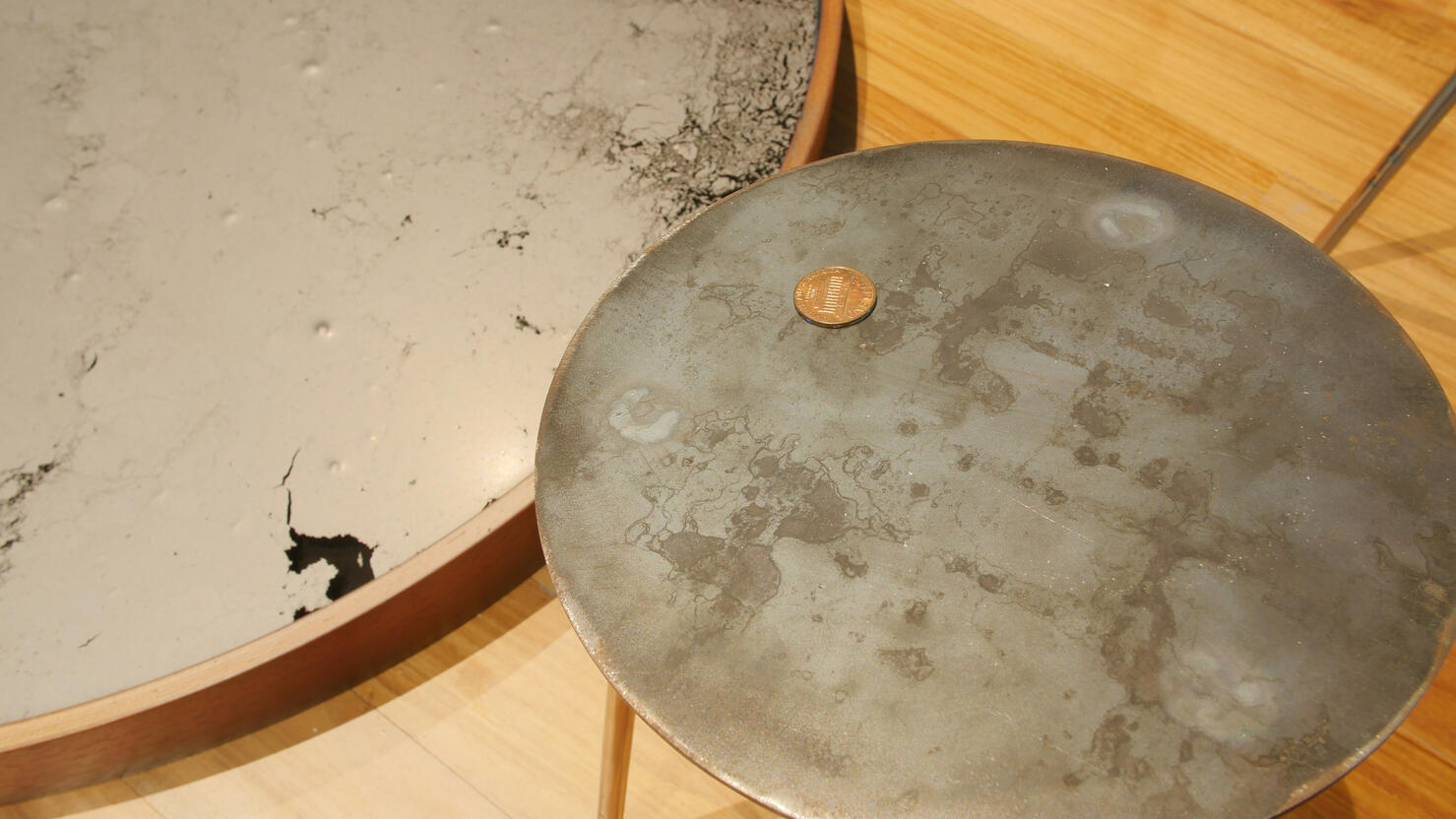
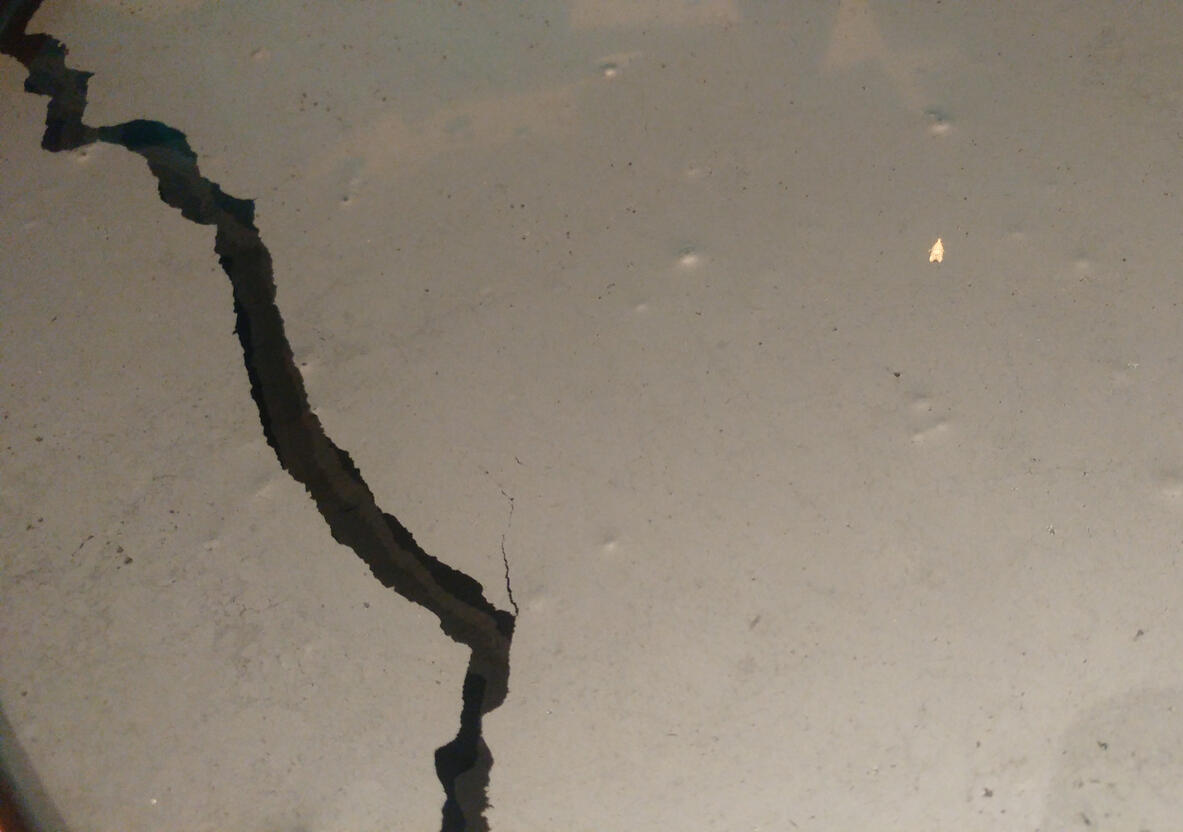
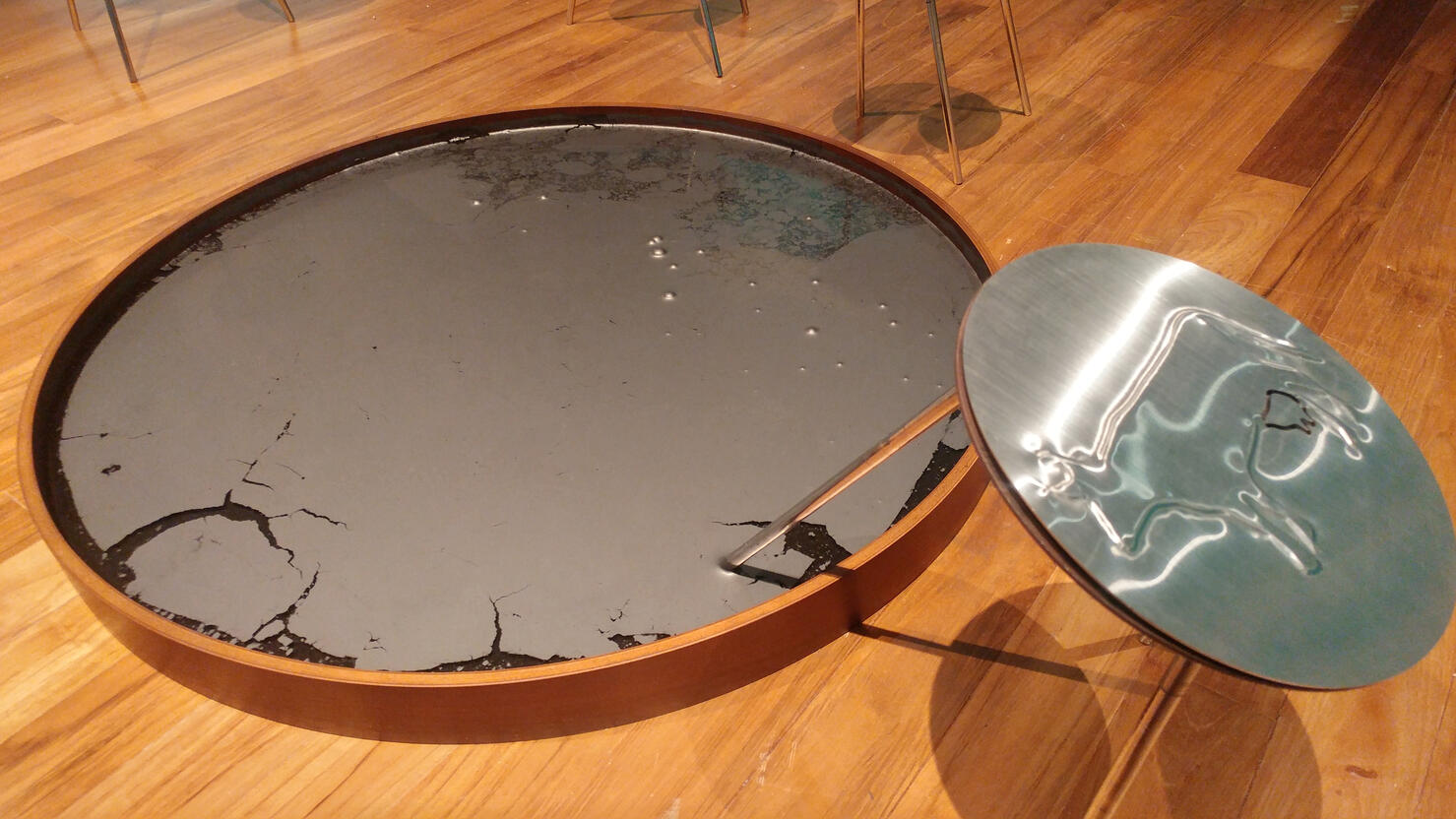
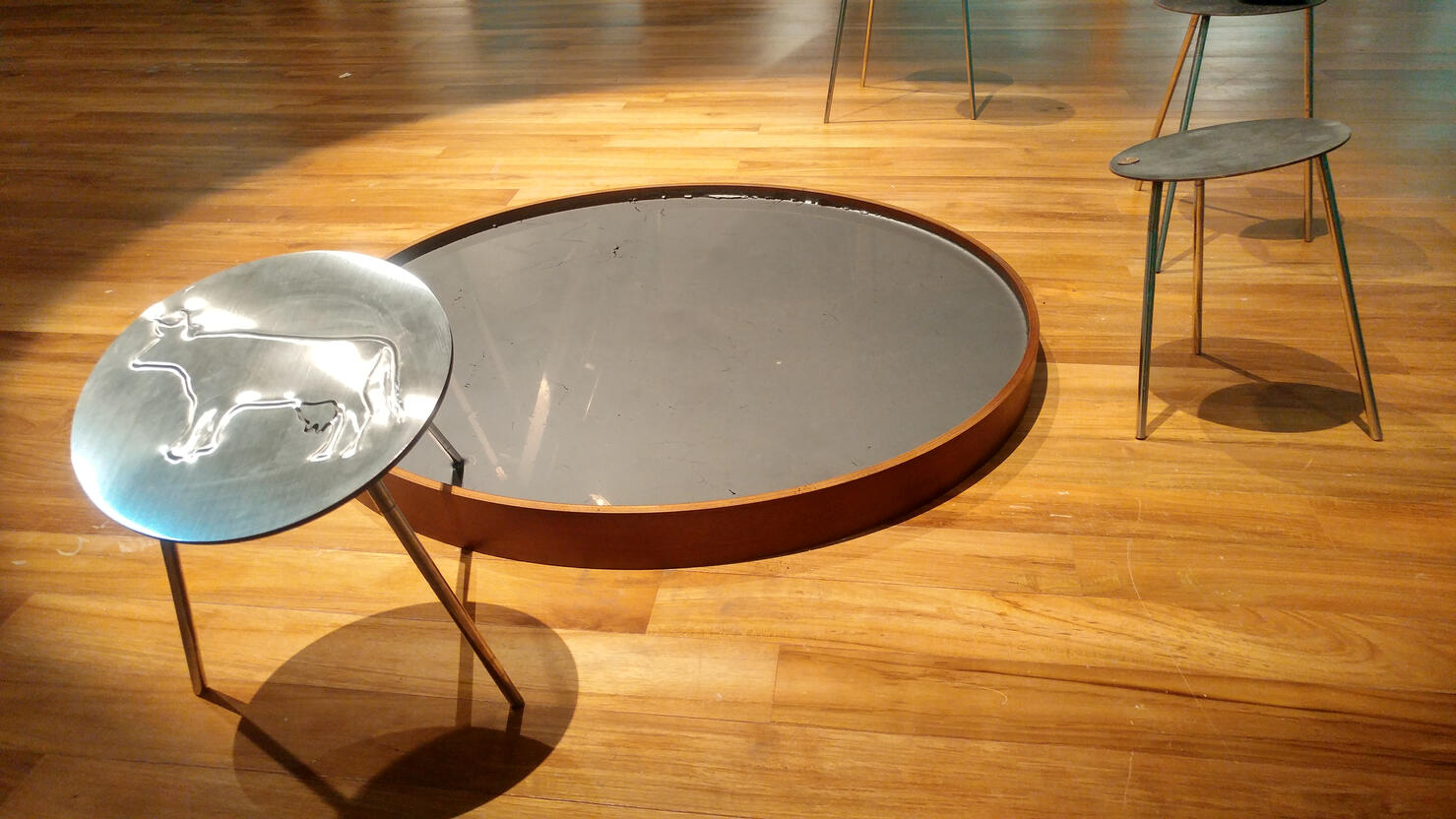
In this work, a shallow pool of water is covered with a fine layer of graphite powder. The graphite floats, forming a delicate, reflective skin that shimmers with subtle movements of air and time. What appears stable is in fact precarious—an equilibrium sustained only by surface tension.Over the duration of the exhibition, the water slowly evaporates. As it recedes, the graphite film begins to drift, fragment, and eventually crack. These fissures map a gradual collapse of cohesion, tracing the passage of time as both a physical and metaphysical force.The work unfolds as a temporal drawing—an evolving surface where matter reorganizes itself beyond control. It stages a quiet negotiation between stability and entropy, between holding and letting go. The title invokes a “trust equation,” where relationships—like this suspended surface—depend on fragile balances that are never fixed, only continuously recalibrated.Graphite, a form of carbon, carries associations of inscription and measurement, while water resists containment, slipping between states. Together, they propose a system that is at once precise and unstable, echoing the tension between rational structures and lived experience.As the surface transforms, the work does not arrive at a final form but remains in a state of becoming—where dissolution is not an end, but a condition for change.
© Joo Choon Lin. All rights reserved.
The Hot Purity of Mathematic Love/Trust Equations=
{[IMPRINT]x Compression∞Expansion [+]Wiggly [Lumen]1.618[Memory] -/+[TIME/SPACE] [In/out]} , 2019

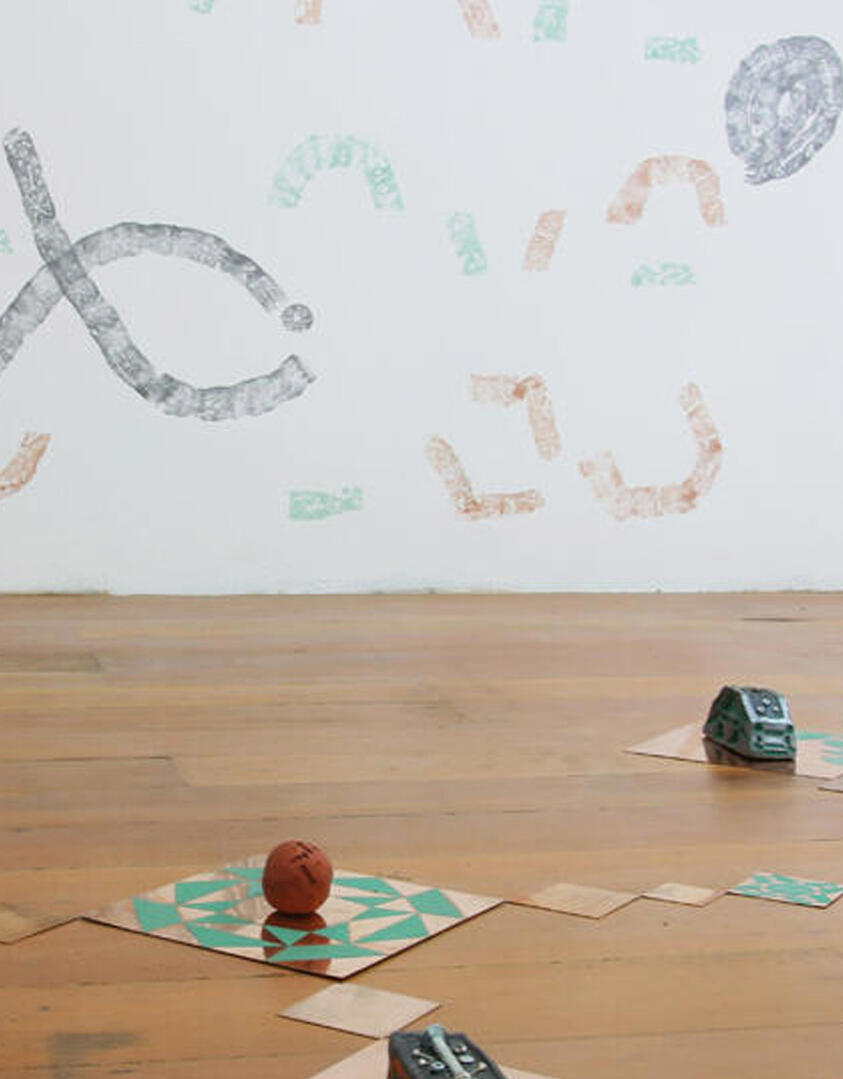
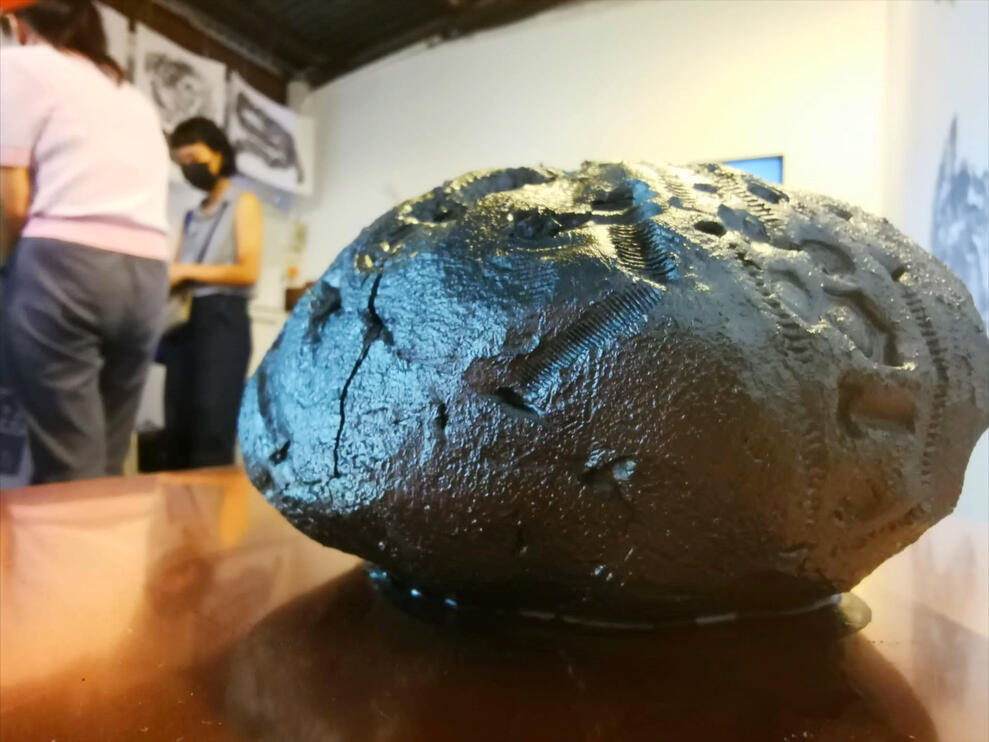
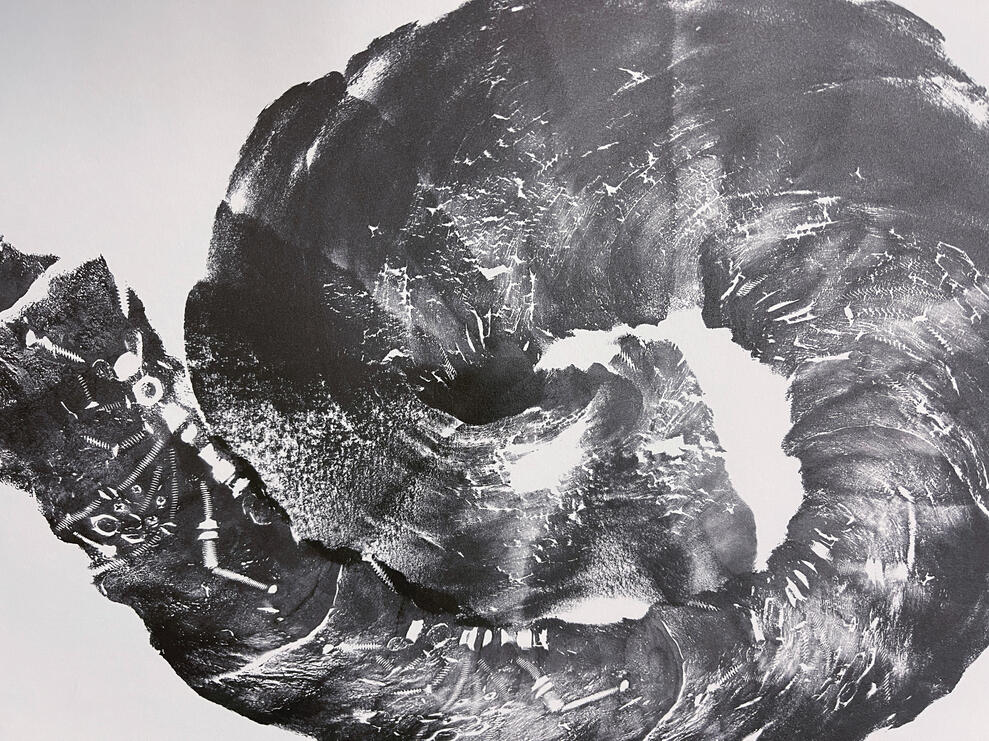
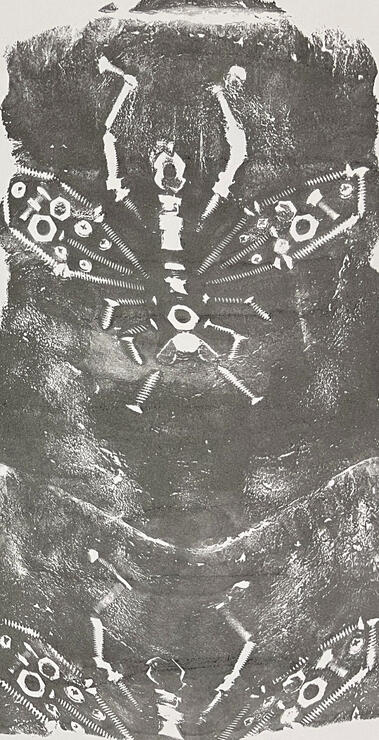
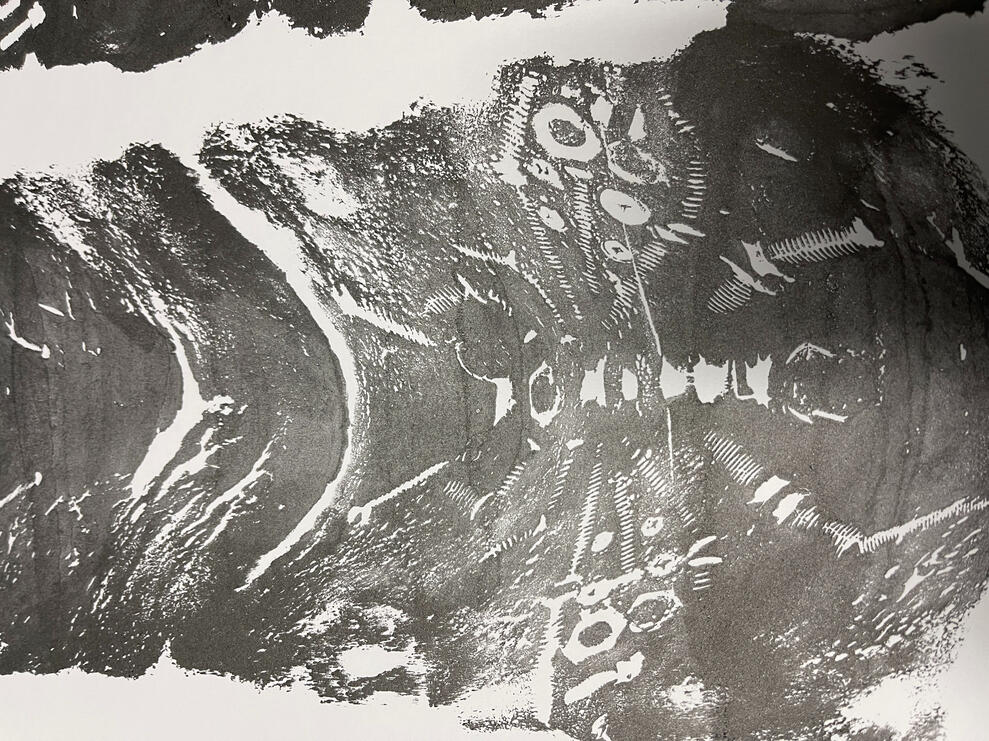
Within the logic of Choon Lin’s practice, which entangles bodily systems and organs with seemingly disparate materials, biology is a form of technology. This is especially since the human body is, as she describes, the most sophisticated machine. Whether an echo of her father’s work as a carpenter, or propelled forward by her sister swallowing a rusty screw (it emerged in her stool, clean, shiny, brand new), her body of work is ultimately driven by an innate interest in materials and what they have to say.In The Hot Purity of Mathematic Love /Trust Equations=, the fourth iteration of her series titled Intestinology, this interest manifests as clay sculptures and mark-making. Screws, nuts, and bolts are pressed in symmetrical arrangements into blocks, mounds, and spheres of clay. While the clay blocks and mounds retain these metal implements, stabilizing in presentation as sculptures, the spheres are emptied of theirs, becoming fresh fossil. Negative space, which with its absence recalls presence, conjures the object through the empty space left behind. The binary is overtaken by a continuity from which new object relations might arise. This sensibility is articulated by clay, which Choon Lin points out is vulnerable and fragile, yet indestructible since it can be reconstructed.The clay contains metal particles. When the spheres are rolled across a surface, the memory is transferred as a trailing, glittering mark—a performance that parallels the digital storage of memory, in which an entity can be essentialized, compressed, transferred in crystallized form. Beyond the shapes of screws, nuts, and bolts that are imprinted, the marks also capture the movement and labour behind their creation. They remember the pressure placed by your hands; they remember the curl and unfurl of your wrists. They reveal anatomy, hesitation, energy, dexterity. The body is thus extended through its hands into clay, into technological and material marks that articulate the nature of co-existence.The process is one of re-fleshing, as the ex vivo is revealed as organism, as living memory, as bodily extension that breathes and breathes. And these technological appendages of the body in turn reflect the soft technology that shapes our bodies, whether as systems, algorithms, or formulas. They reveal the clay-like quality of flesh.Text by Kia Yee
© Joo Choon Lin. All rights reserved.
The Hot Purity of Mathematic Love/Trust Equations=
{[IMPRINT]x Compression∞Expansion [+]Wiggly [Lumen]1.618[Memory] -/+[TIME/SPACE] [In/out]} , 2019

Within the logic of Choon Lin’s practice, which entangles bodily systems and organs with seemingly disparate materials, biology is a form of technology. This is especially since the human body is, as she describes, the most sophisticated machine. Whether an echo of her father’s work as a carpenter, or propelled forward by her sister swallowing a rusty screw (it emerged in her stool, clean, shiny, brand new), her body of work is ultimately driven by an innate interest in materials and what they have to say.In The Hot Purity of Mathematic Love /Trust Equations=, the fourth iteration of her series titled Intestinology, this interest manifests as clay sculptures and mark-making. Screws, nuts, and bolts are pressed in symmetrical arrangements into blocks, mounds, and spheres of clay. While the clay blocks and mounds retain these metal implements, stabilizing in presentation as sculptures, the spheres are emptied of theirs, becoming fresh fossil. Negative space, which with its absence recalls presence, conjures the object through the empty space left behind. The binary is overtaken by a continuity from which new object relations might arise. This sensibility is articulated by clay, which Choon Lin points out is vulnerable and fragile, yet indestructible since it can be reconstructed.The clay contains metal particles. When the spheres are rolled across a surface, the memory is transferred as a trailing, glittering mark—a performance that parallels the digital storage of memory, in which an entity can be essentialized, compressed, transferred in crystallized form. Beyond the shapes of screws, nuts, and bolts that are imprinted, the marks also capture the movement and labour behind their creation. They remember the pressure placed by your hands; they remember the curl and unfurl of your wrists. They reveal anatomy, hesitation, energy, dexterity. The body is thus extended through its hands into clay, into technological and material marks that articulate the nature of co-existence.The process is one of re-fleshing, as the ex vivo is revealed as organism, as living memory, as bodily extension that breathes and breathes. And these technological appendages of the body in turn reflect the soft technology that shapes our bodies, whether as systems, algorithms, or formulas. They reveal the clay-like quality of flesh.Text by Kia Yee
© Joo Choon Lin. All rights reserved.
The Hot Purity of Mathematic Love/Trust Equations=
{[IMPRINT]x Compression∞Expansion [+]Wiggly [Lumen]1.618[Memory] -/+[TIME/SPACE] [In/out]} , 2019

Within the logic of Choon Lin’s practice, which entangles bodily systems and organs with seemingly disparate materials, biology is a form of technology. This is especially since the human body is, as she describes, the most sophisticated machine. Whether an echo of her father’s work as a carpenter, or propelled forward by her sister swallowing a rusty screw (it emerged in her stool, clean, shiny, brand new), her body of work is ultimately driven by an innate interest in materials and what they have to say.In The Hot Purity of Mathematic Love /Trust Equations=, the fourth iteration of her series titled Intestinology, this interest manifests as clay sculptures and mark-making. Screws, nuts, and bolts are pressed in symmetrical arrangements into blocks, mounds, and spheres of clay. While the clay blocks and mounds retain these metal implements, stabilizing in presentation as sculptures, the spheres are emptied of theirs, becoming fresh fossil. Negative space, which with its absence recalls presence, conjures the object through the empty space left behind. The binary is overtaken by a continuity from which new object relations might arise. This sensibility is articulated by clay, which Choon Lin points out is vulnerable and fragile, yet indestructible since it can be reconstructed.The clay contains metal particles. When the spheres are rolled across a surface, the memory is transferred as a trailing, glittering mark—a performance that parallels the digital storage of memory, in which an entity can be essentialized, compressed, transferred in crystallized form. Beyond the shapes of screws, nuts, and bolts that are imprinted, the marks also capture the movement and labour behind their creation. They remember the pressure placed by your hands; they remember the curl and unfurl of your wrists. They reveal anatomy, hesitation, energy, dexterity. The body is thus extended through its hands into clay, into technological and material marks that articulate the nature of co-existence.The process is one of re-fleshing, as the ex vivo is revealed as organism, as living memory, as bodily extension that breathes and breathes. And these technological appendages of the body in turn reflect the soft technology that shapes our bodies, whether as systems, algorithms, or formulas. They reveal the clay-like quality of flesh.Text by Kia Yee
© Joo Choon Lin. All rights reserved.
Exhibition View: The Hot Purity of Mathematic Love/Trust Equations= {[IMPRINT]x Compression∞Expansion [+]Wiggly [Lumen]1.618 xCarbon] -/+[TIME/SPACE] [In/out]}
MEDIUM: GRAPHITE CLAY, COPPER ELECTROPLATING FROM PENNIES, COPPER GREEN PATINA, COPPER SULPHATE, IRON OXIDE, COPPER WIRE, SCREWS, BOLTS, NUTS, COPPER PLATESText 1Within the logic of Choon Lin’s practice, which entangles bodily systems and organs with seemingly disparate materials, biology is a form of technology. This is especially since the human body is, as she describes, the most sophisticated machine. Whether an echo of her father’s work as a carpenter, or propelled forward by her sister swallowing a rusty screw (it emerged in her stool, clean, shiny, brand new), her body of work is ultimately driven by an innate interest in materials and what they have to say.In The Hot Purity of Mathematic Love /Trust Equations=, the fourth iteration of her series titled Intestinology, this interest manifests as clay sculptures and mark-making. Screws, nuts, and bolts are pressed in symmetrical arrangements into blocks, mounds, and spheres of clay. While the clay blocks and mounds retain these metal implements, stabilizing in presentation as sculptures, the spheres are emptied of theirs, becoming fresh fossil. Negative space, which with its absence recalls presence, conjures the object through the empty space left behind. The binary is overtaken by a continuity from which new object relations might arise. This sensibility is articulated by clay, which Choon Lin points out is vulnerable and fragile, yet indestructible since it can be reconstructed.The clay contains metal particles. When the spheres are rolled across a surface, the memory is transferred as a trailing, glittering mark—a performance that parallels the digital storage of memory, in which an entity can be essentialized, compressed, transferred in crystallized form. Beyond the shapes of screws, nuts, and bolts that are imprinted, the marks also capture the movement and labour behind their creation. They remember the pressure placed by your hands; they remember the curl and unfurl of your wrists. They reveal anatomy, hesitation, energy, dexterity. The body is thus extended through its hands into clay, into technological and material marks that articulate the nature of co-existence.The process is one of re-fleshing, as the ex vivo is revealed as organism, as living memory, as bodily extension that breathes and breathes. And these technological appendages of the body in turn reflect the soft technology that shapes our bodies, whether as systems, algorithms, or formulas. They reveal the clay-like quality of flesh.
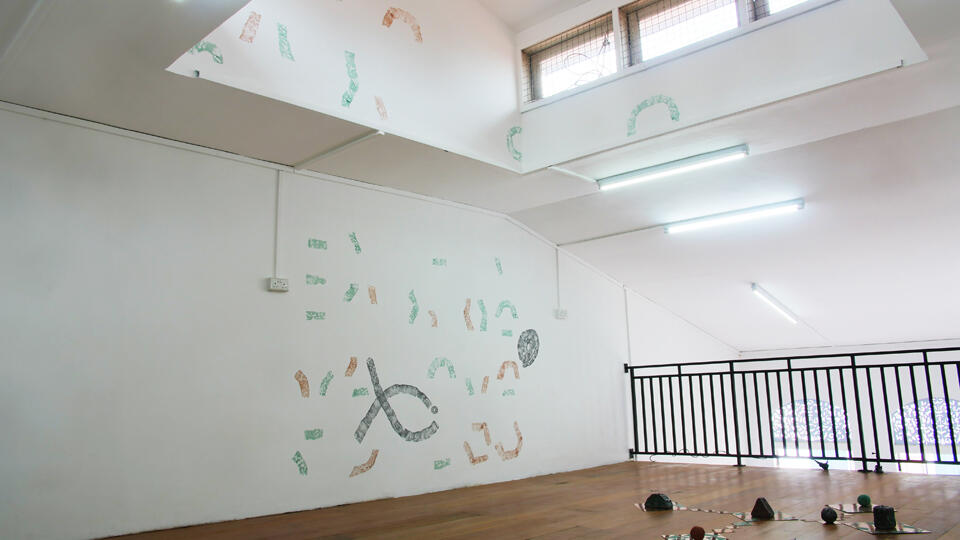
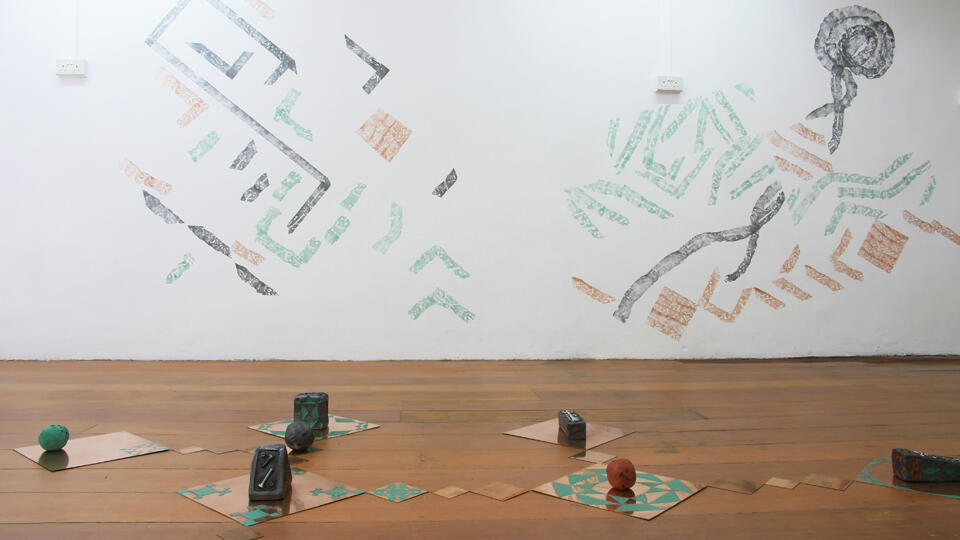
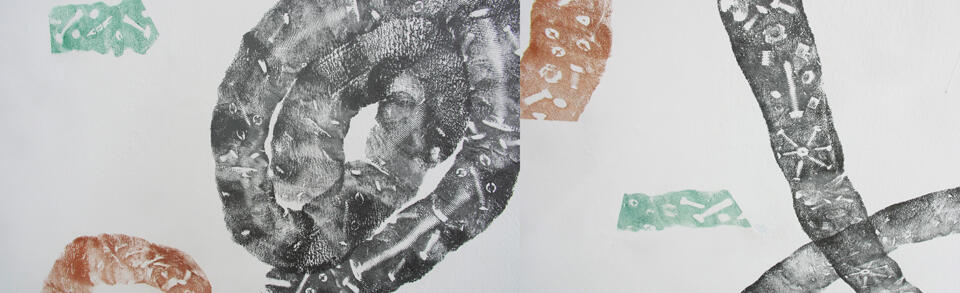
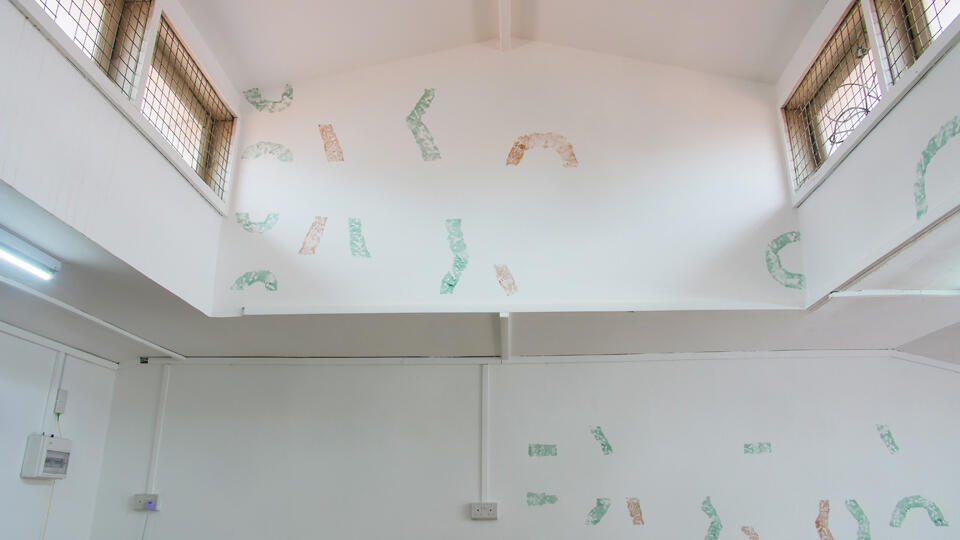
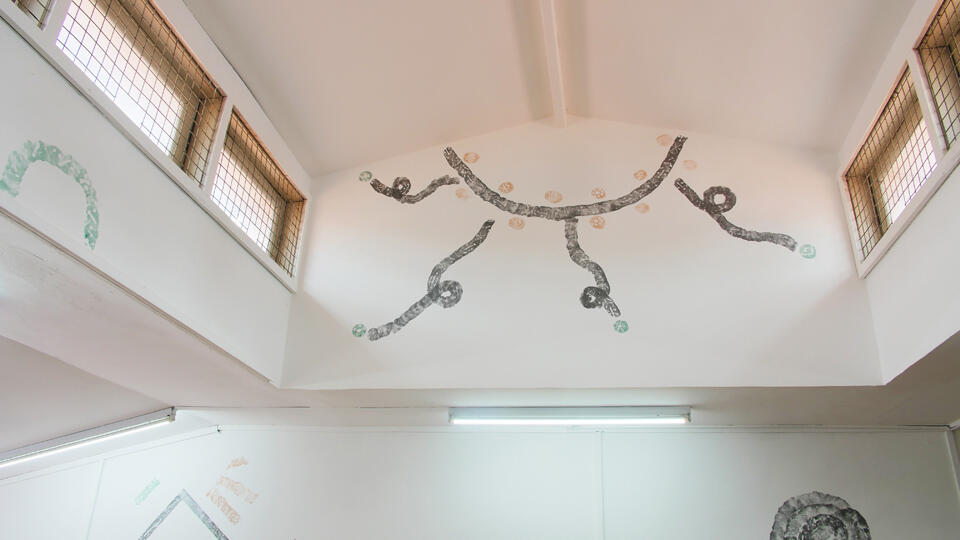
Text 2When prompted to discuss the philosophical slant expressed in her bio, Choon Lin turns away from it, says she now sees it all as “life”. Perhaps that is a truer way into her work, which excites me with its mixture of hot, cold, soft, hard materials. While it doesn’t give in easily to cognitive meaning, it makes immediate sense to my body. I want to touch it. I want to play.(But something about this setup, this writer meeting artist, makes me nervous to act on these impulses. So I angle the voice recorder a little more toward her and focus on our conversation. She tells me about her past works, and taking things apart as a child. The snakes she’s seen in the vicinity of her studio. Our encounter is open, but also contained, like a song that progresses certainly toward an end. Verse, verse, chorus, verse, verse, chorus, chorus, bridge, chorus, chorus, chorus… I am thankful to have been let into her world for a little bit.)The impulse to play is matched by a sense that The Hot Purity of Mathematic Love /Trust Equations= is also a meditation. The soft stillness of clay feels slow. The turquoise and gold feel regal, reverent. The work may, as Choon Lin said, be set up to confuse the viewer, to resist easy interpretation. But the work is patient. It makes me slow down. It makes me give in.(She tells me at one point that she loves music, enough that she wonders if visual art is, in comparison, an affair. But she has no talent in music, she says. She lets me hear some of the sounds she has made, like a track for the first iteration of her Intestinology series: We Have The Most Beautiful Intestine. She gestures to (what I’m guessing from memory was) a sequencer and sampler system, stored in its box under her work table. This thing saved my life, she laughs.)The tactile nature and malleability of the work renders a sensual, romantic undercurrent. Even with this distance, or maybe because of it, I am enamoured. I am shaped to remember it just as it is shaped to remember us. I belong to it as much as it belongs to us.(Choon Lin shows me the sound disc she made that accompanies this work, though she’s working to improve it. Back home, I listen to it again, my hands longing the whole time for the touch of clay.)(The music plays.)Text by Kia Yee
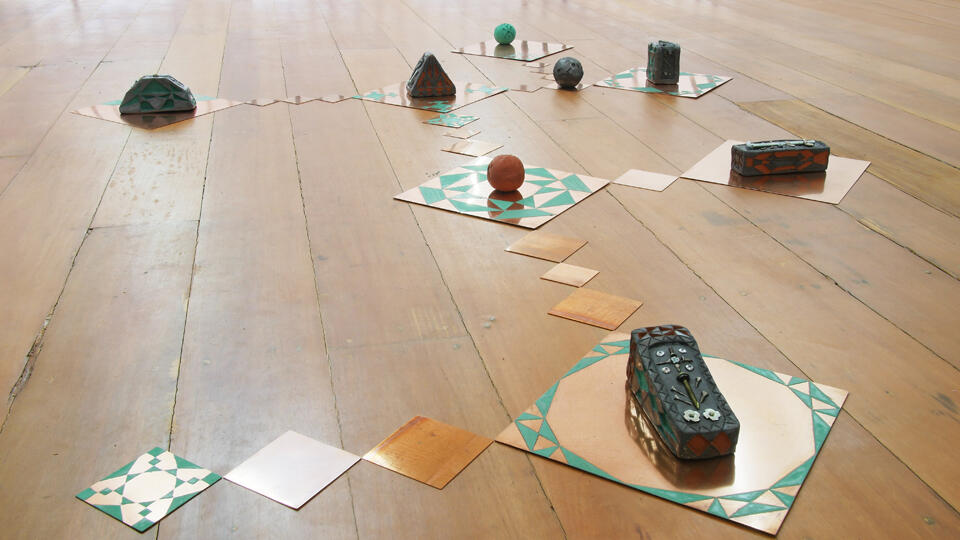
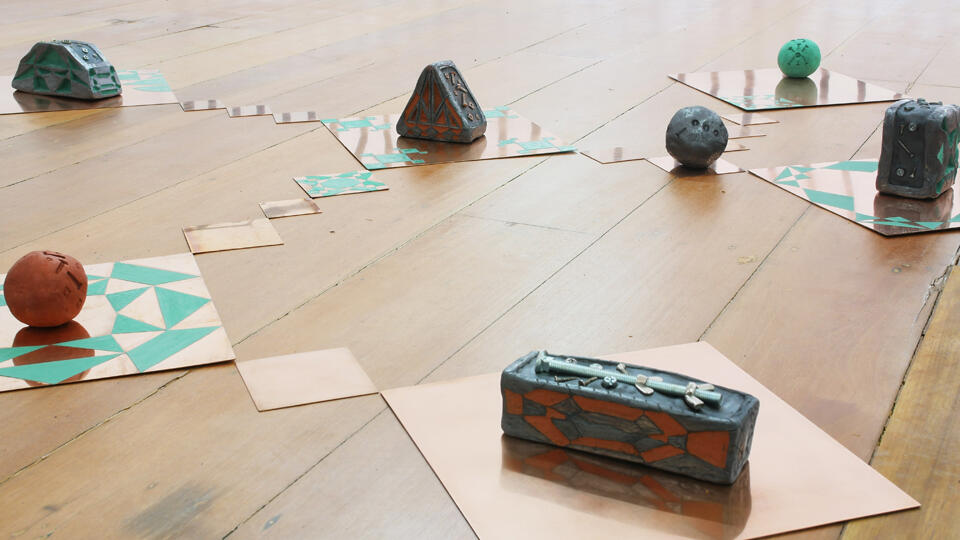
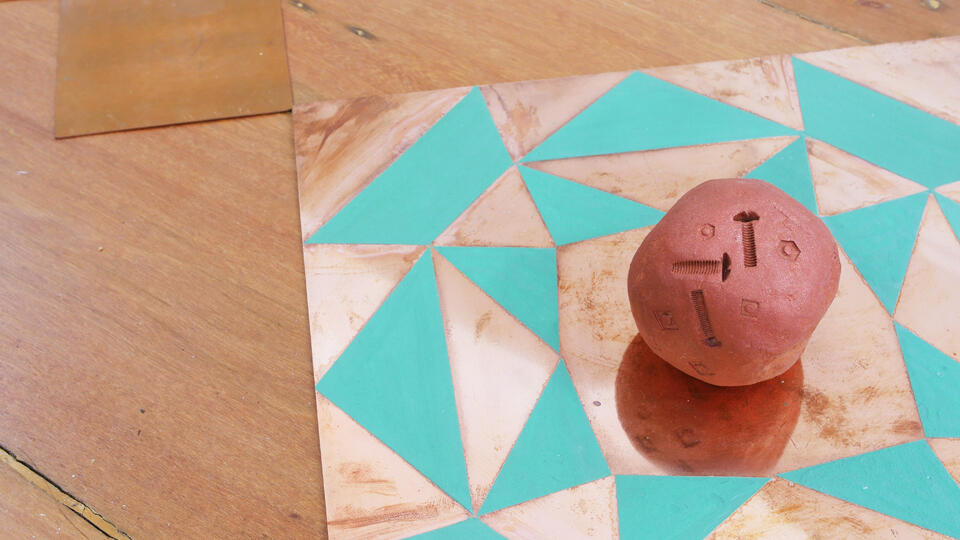
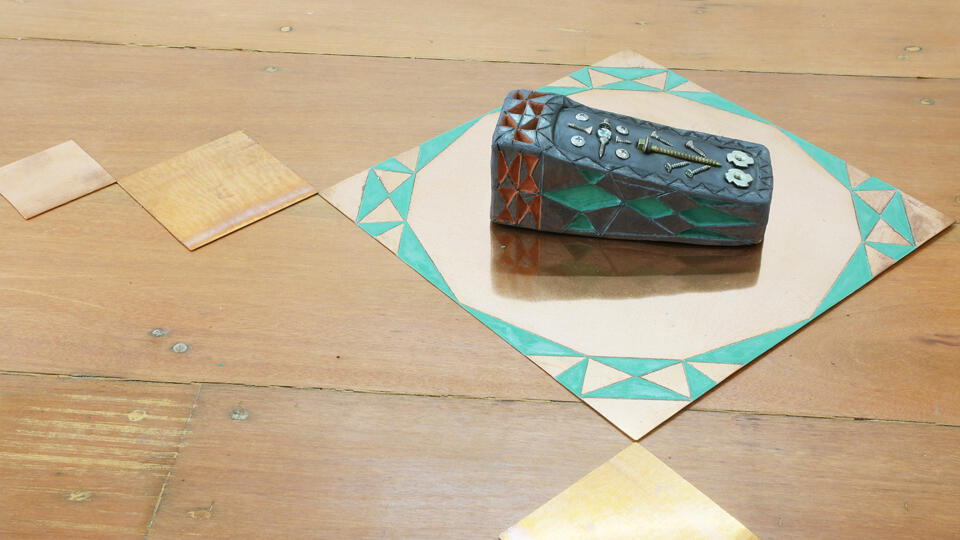
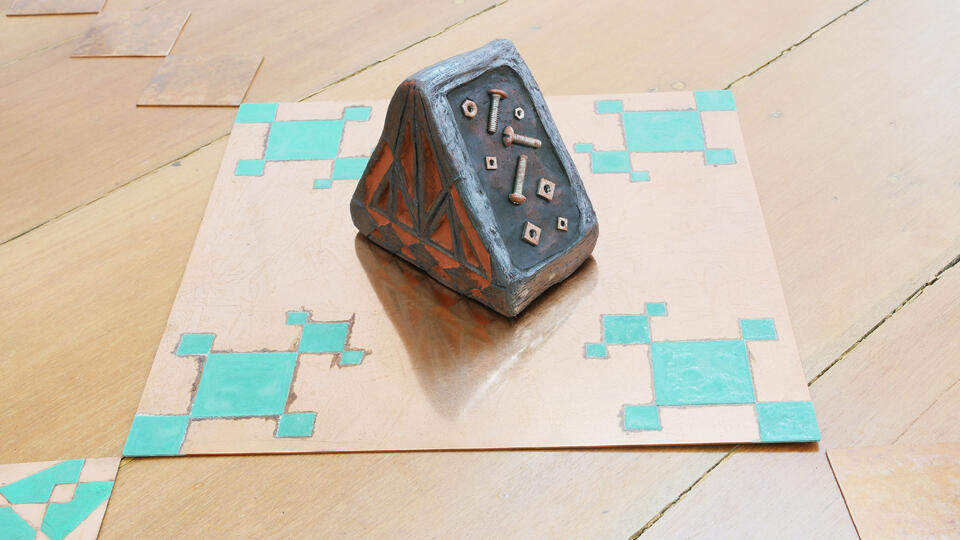
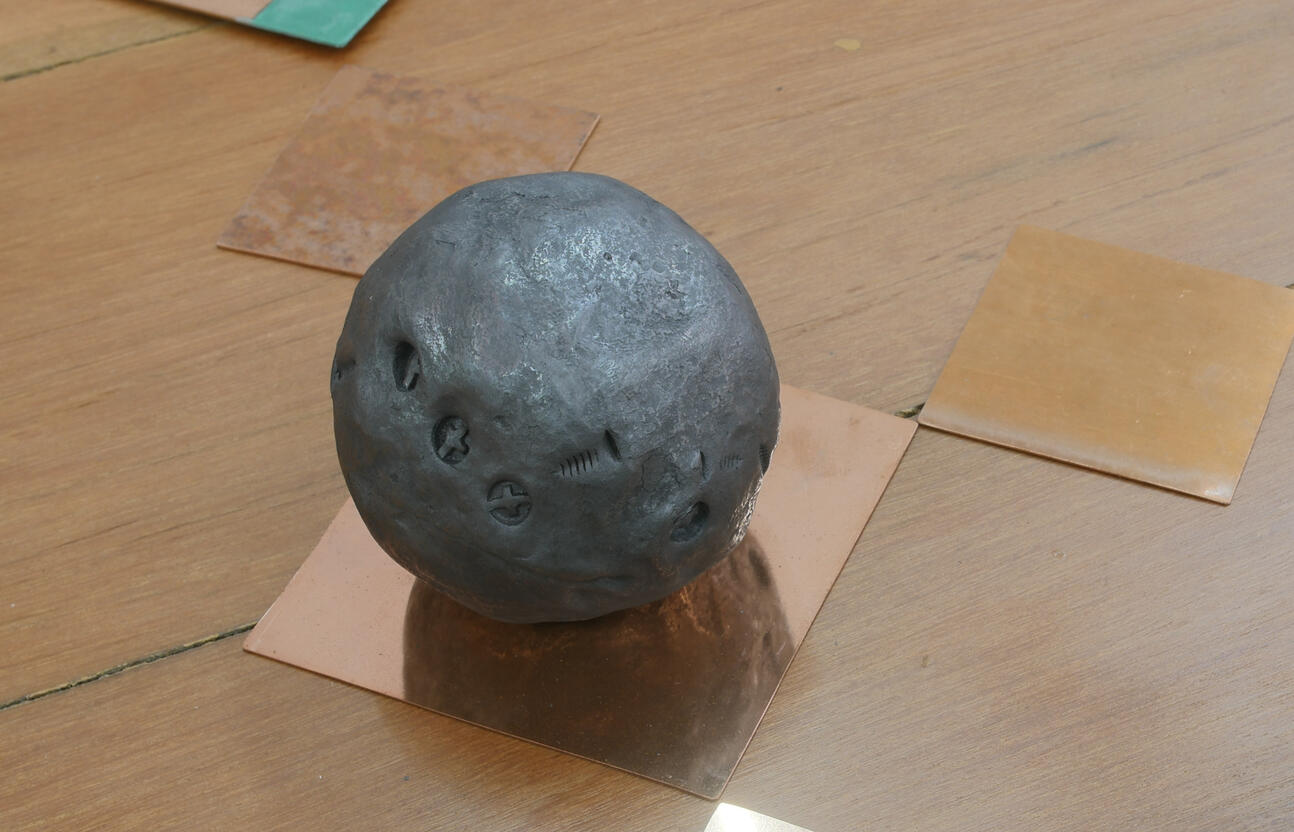
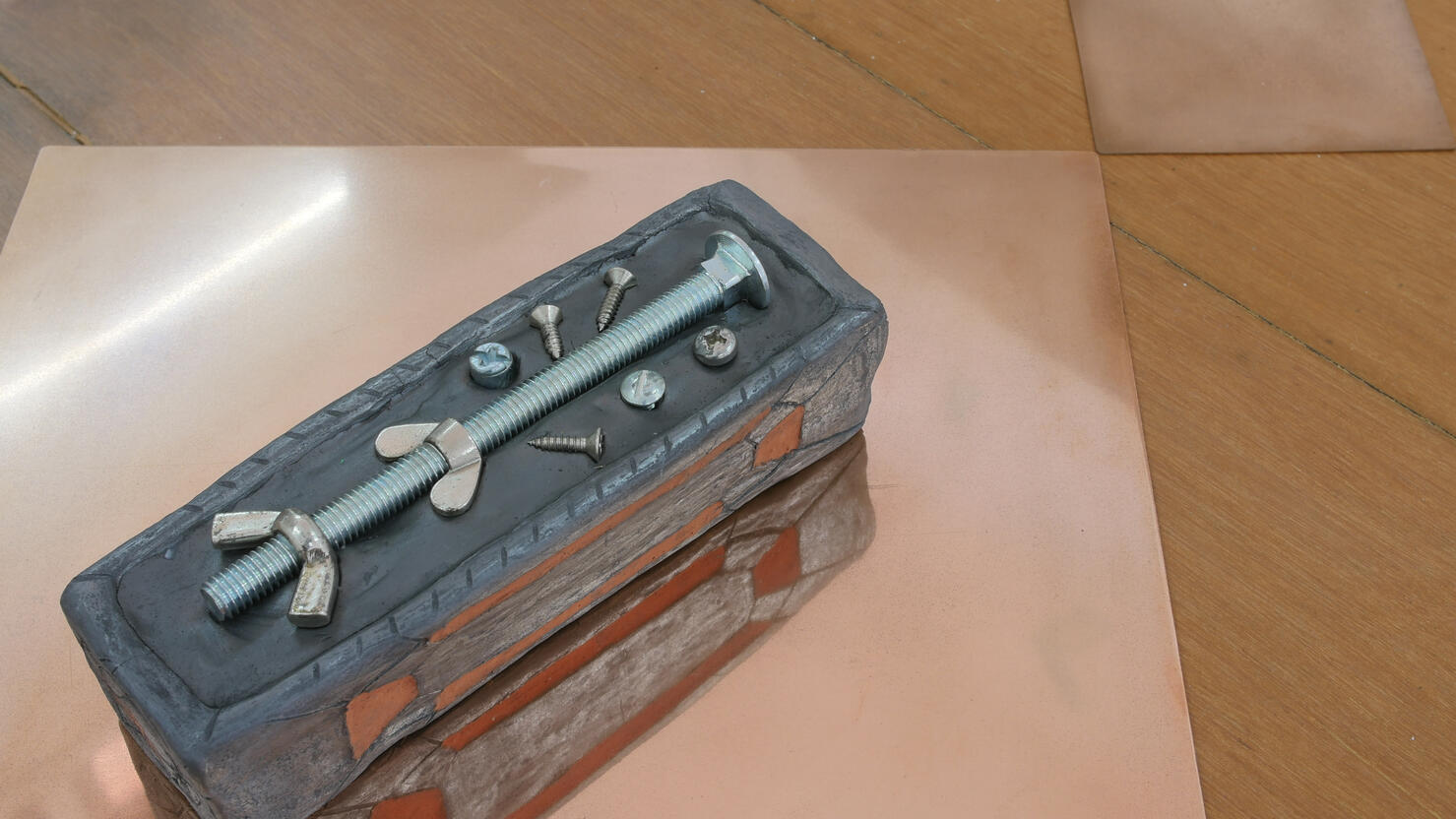
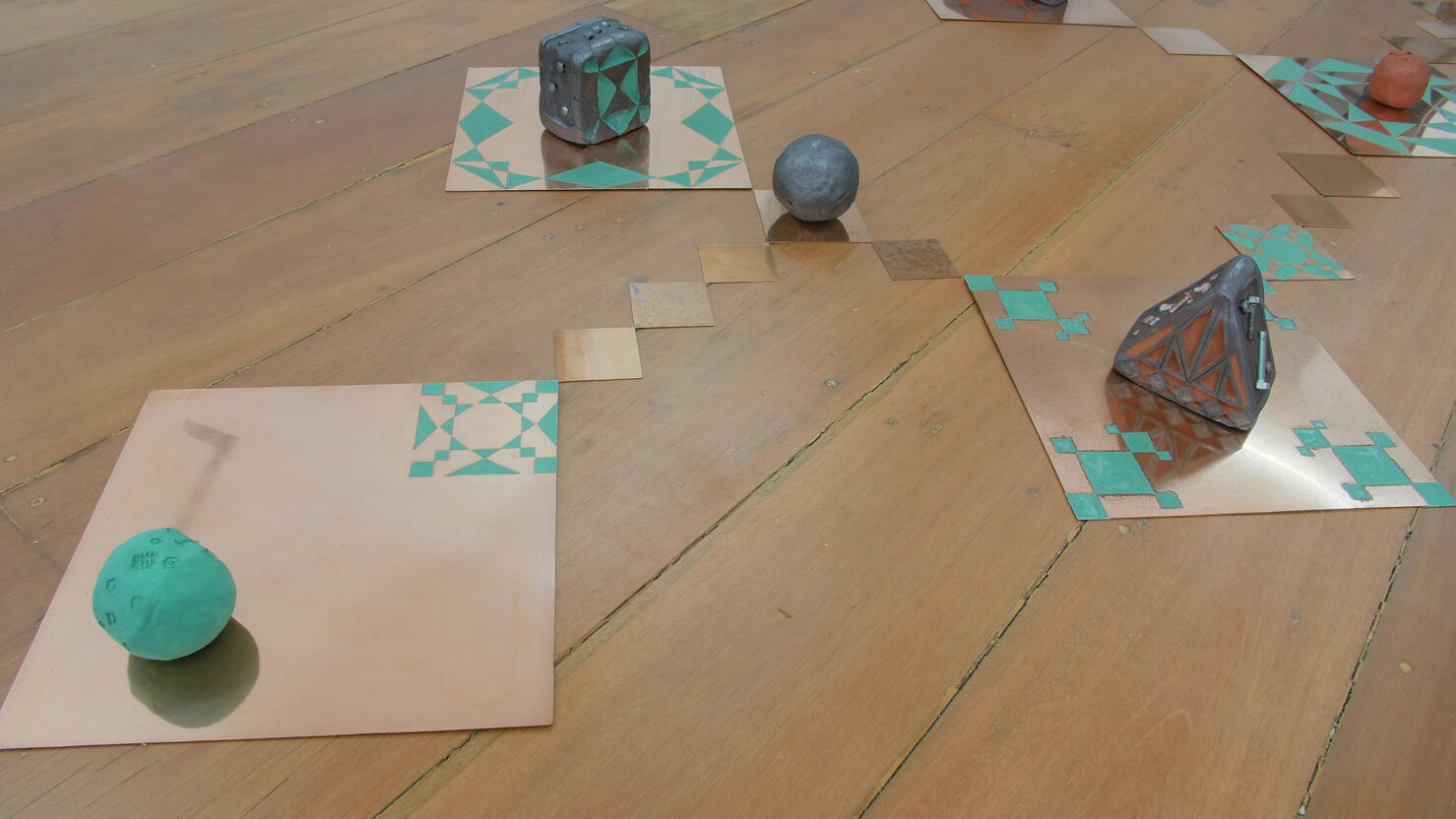
© Joo Choon Lin. All rights reserved.
Sound Disc of "The Hot Purity of Mathematic Love/Trust Equations

MEDIUM: GRAPHITE CLAY, COPPER ELECTROPLATING FROM PENNIES, COPPER GREEN PATINA, COPPER SULPHATE, COPPER WIRE, SCREWsINTESTINOLOGY is a serial attempt to rupture the beholder’s mundane sense of reality and “[to establish] fluid continuities, [highlight] forms of solidarity and continuity, precisely where we set up boundaries and differences of natures.”Joo Choon Lin’s INTESTINOLOGY Series of works is the artist’s attempt to articulate processes and principles that inform her approach towards materials, and how they are transformed through her art-making. Just as how the body’s digestive system converts that which is consumed into nutrients required to support the body, Joo seeks to distill the base elements of the materials that she works with and present them in renewed contexts. Beginning in 2014, works in this series have taken the form of anecdotes, concepts and musings that have been translated into unexpected form, in response to sites and situations that create unlikely relationships, and played out in elaborate settings of installation, sculpture and video.The Hot Purity of Mathematic Love/Trust Equations is the fourth iteration of her INTESTINOLOGY works, where the artist explores the forms that the element carbon can take, with graphite sculptures that interact with geometric drawings representing the unfolding of a diamond’s many facets. Drawn to the similarity and polarity that graphite and diamond - both made of carbon, and both conduct electricity – share, central in her work is also the question of the subjective value of things.Joo’s approach to sculpting and creating objects in her art marking is an exemplar of embodiment and tacit knowledge, a form of resistance in the face of the circularity of the propositional logic of the Stoics. She produced a set of ornate circular disc and mechanical turntable. She invites us to form new symbolic relations with the moving objects that emit sounds intermittently, as if tapping into the mystery of the cosmos. Joo is interested in the transmutation of these materials, altering our perception of their value in our daily socio-economic activities. The graphite disc is encrusted with copper and patina, achieved through electroplating using copper penny coins as a source. It is mounted on the turntable fashioned like old record players, they rotate and the carbon in the graphite disc acts as both a resistor and a good conductor of electricity and, closing and opening circuits built into the mechanical-kinetic sculpture. The disc ‘vibrates’ or ‘hums’ in a repetitive rhythm as the electric current flow. In a timer setting, the rhythm is produced and last for 15mins in every hour. The viewers are also part of the act, but their participation required is subtle, but of great significance, in term of the viewer’s participation in the act of anticipation, observing, noticing the unpredictable little twitches of the machine.
© Joo Choon Lin. All rights reserved.
The Cold Purity of Mathematic Love/Trust Equation 1= { [He] 2s22p2 [CENTS]x = y(C)4points [HOUR]s [+]SUN[-]Moon[z] Breaths [In/out] }
Medium: graphite clay, copper electroplating from pennies, copper sulphate, iron oxide, copper green patina, copper rod
The Cold Purity of Mathematic Love/Trust Equation 1=
{ [He] 2s22p2 [CENTS]x = y(C)4points [HOUR]s[+]SUN[-]Moon[z] Breaths [In/out] }‘My sister ate a rusty nail once and it came out shiny and polished.’Drawing parallels to the small intestine and the process where we ‘digest’ information and through the processes in creating the work, it aims to complicate this ‘digestive’ process by re-programming the way we draw associations, disrupting hierarchies and questioning value placements to materials and objects; namely pennies; and diamonds and graphite.Upright and stiff, the sculpture re-presents our innards being the exact length of a small intestine. It is modular, consisting of one-inch hand-moulded cuboids of graphite-clay with variations. It’s secured to a graphite base with a copper spine. Arranged orderly the units are occasionally disrupted and re-programmed.Each unit is a functional diamond mould; it made from graphite presents two objects at odds on the value spectrum, but marries two materials of carbon. The sculpture is evocative of a line of pitted fruits – the flesh and the seed as two different parts of a similar whole; or of infected intestines, pearl-like swells that are moulded from irritation.The notion of value compounds further as some units are layered with copper from pennies through electrolysis, literally eroding its surface and devaluing itself. Or have their diamond moulds filled with molten pennies. The value system becomes complicated by using the lowest unit of currency, it reassigns value.The work consists of layers of contradictions – polarities and similarities. It is its own logic, but also is its own eco system, of surfaces; textures; metals; and processes inherent to the work – the intestine. Inherent is also the idea of processes both within and outside of its boundaries – internal and external. Ideas of value, materiality and similarities layer into a cloud of indistinguishable polarities – there are no more direct opposites to the work, the work is re-programmed.
© Joo Choon Lin. All rights reserved.
pEARs ‘ ___ ___ ___‘ in §pring, a solo exhibition and theatrical play, Fogstand Gallery, Minnesota US, 2018
Installation view before activation
Installation view after activation
© Joo Choon Lin. All rights reserved.
pEARs ‘ ___ ___ ___‘ in §pring, a solo exhibition and theatrical play, Fogstand Gallery, Minnesota US, 2018

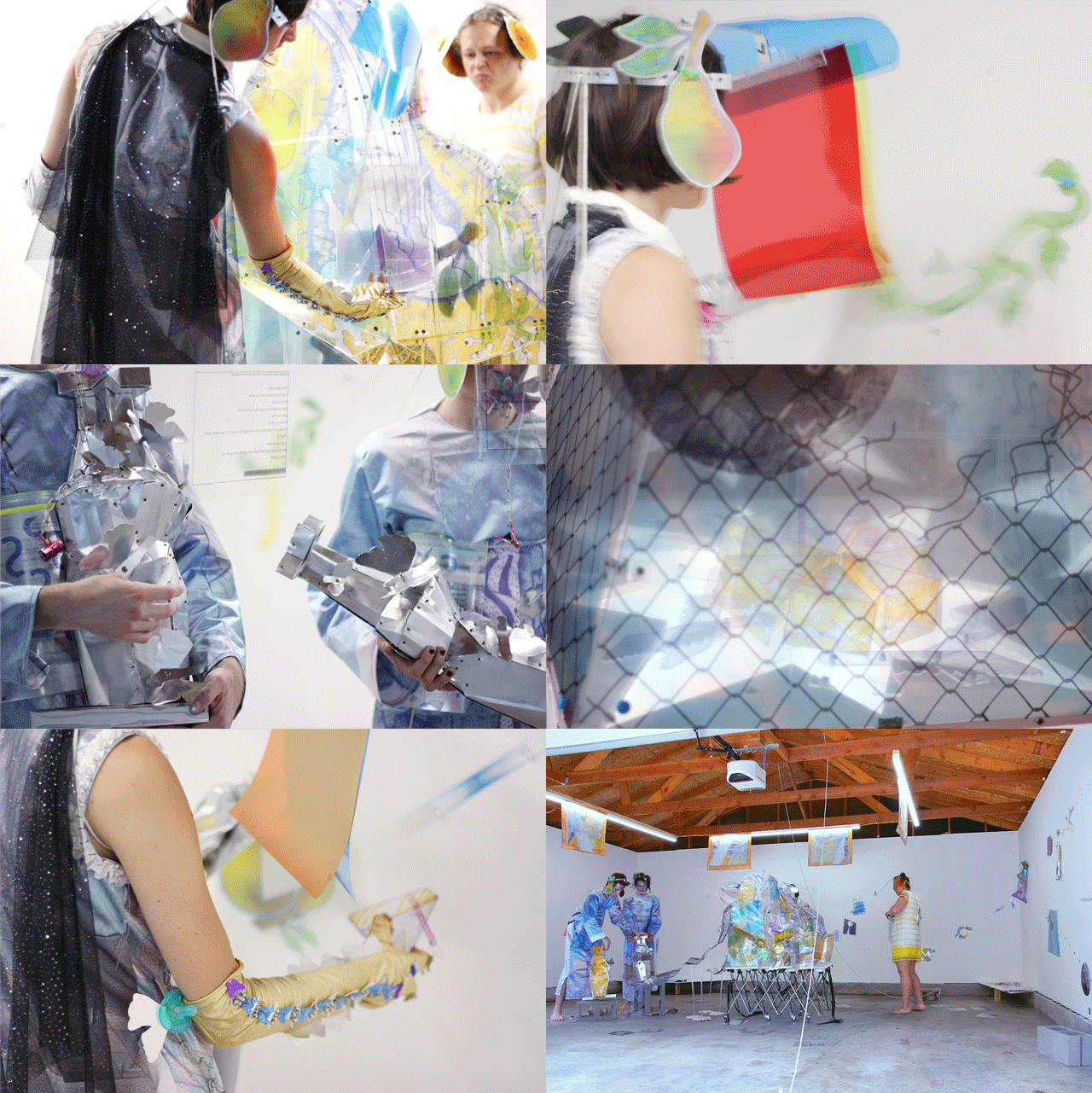
© Joo Choon Lin. All rights reserved.
pEARs ‘ ___ ___ ___ ‘ in §pring, a solo exhibition and theatrical play, Fogstand Gallery, Minnesota US, 2018
Public Announcement Video

© Joo Choon Lin. All rights reserved.
Poster of
pEARs ‘ ___ ___ ___ ‘ in §pring, a solo exhibition and theatrical play, Fogstand Gallery, Minnesota US, 2018
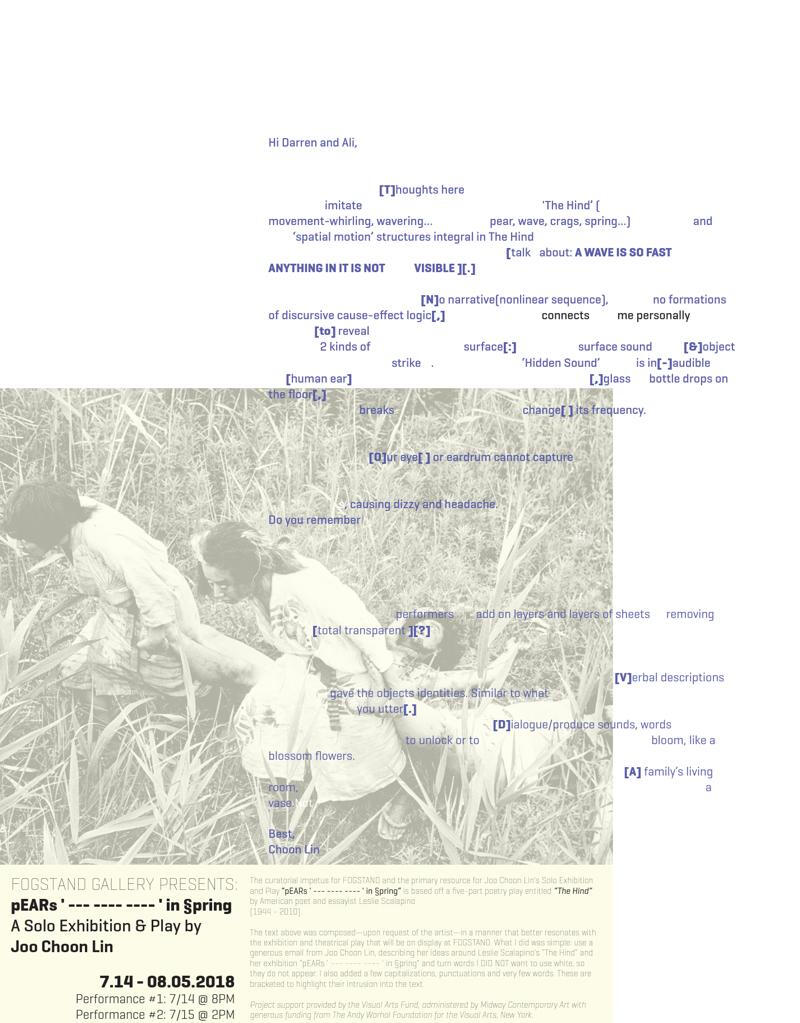
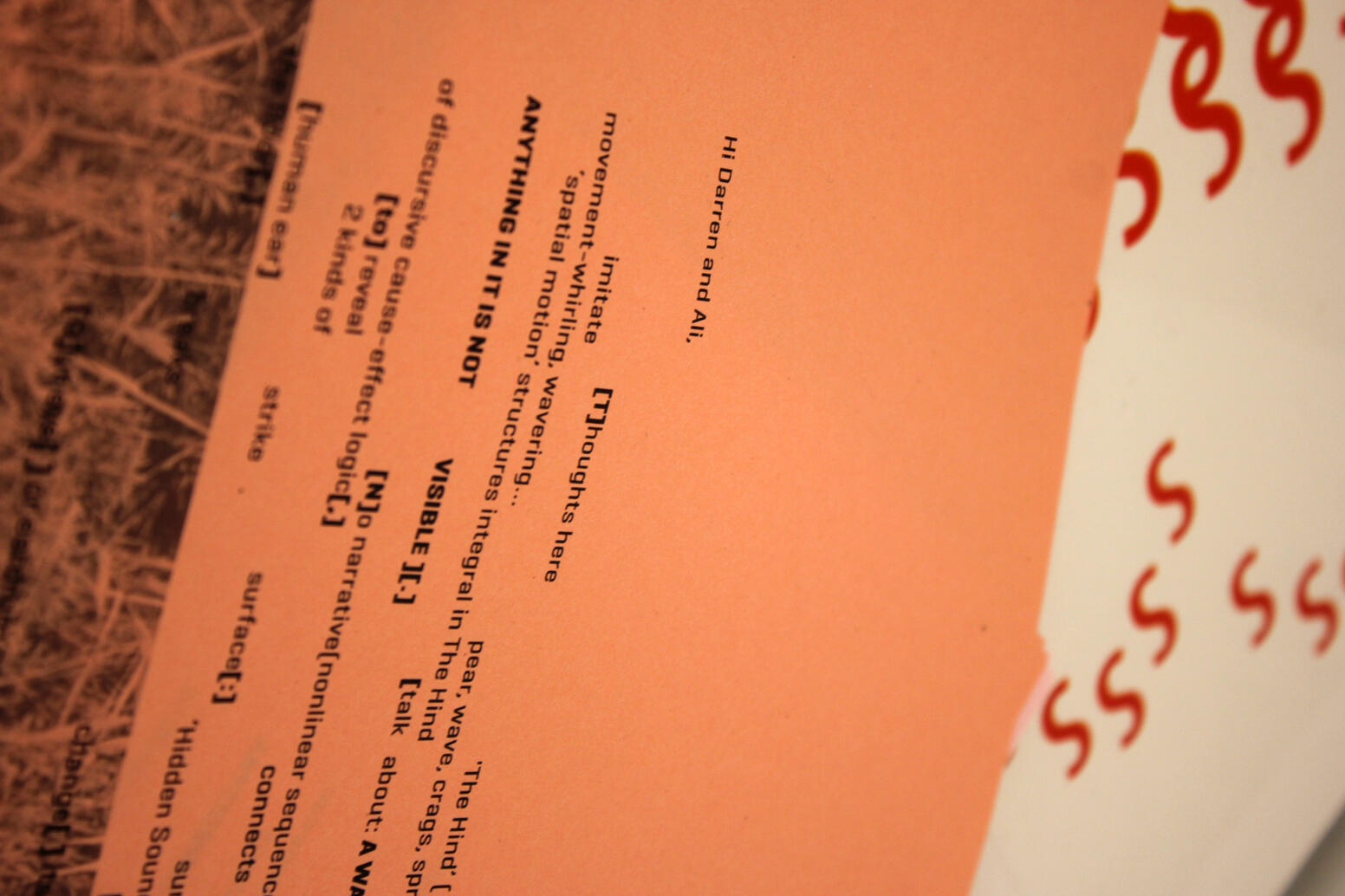
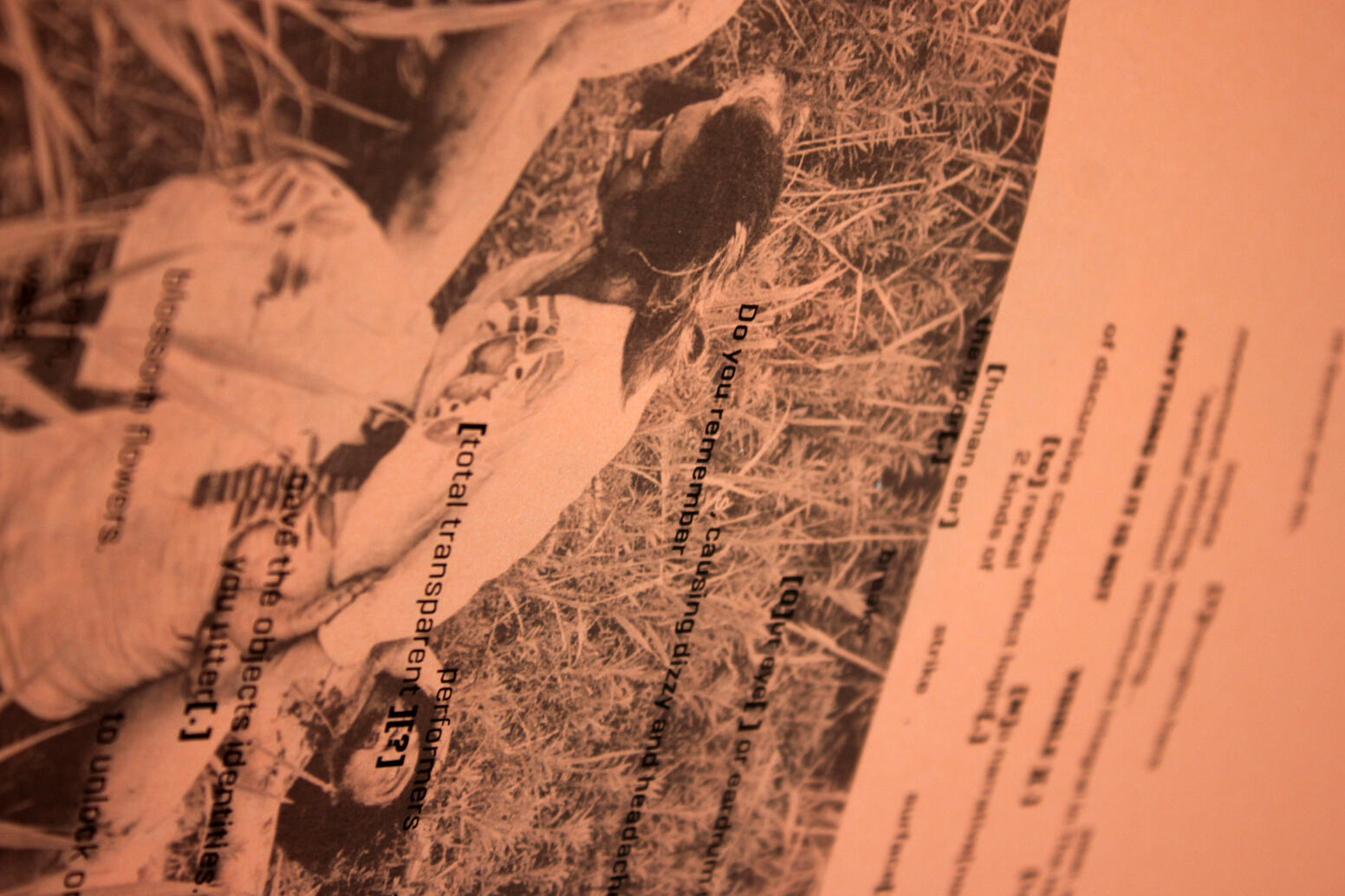
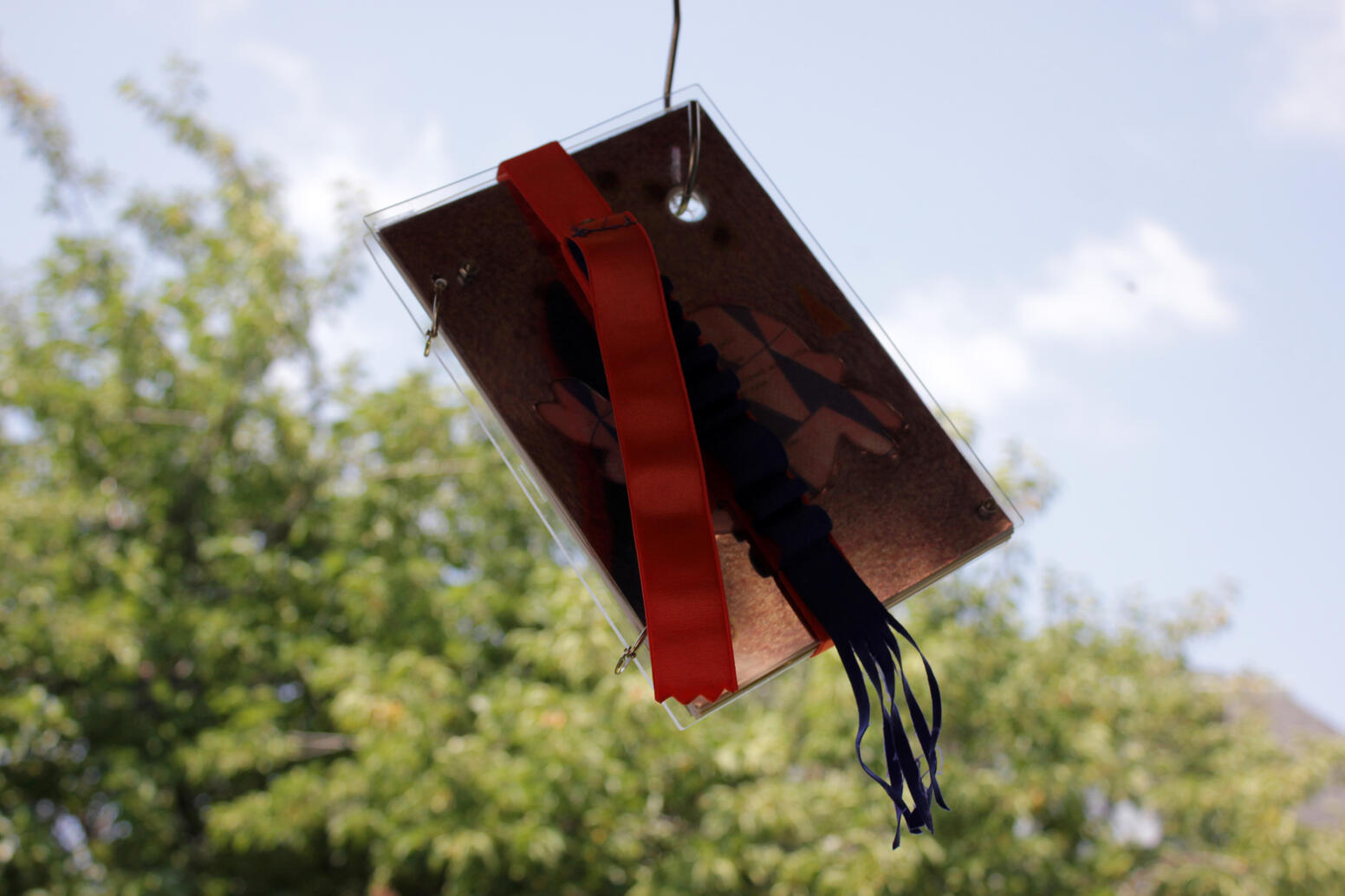
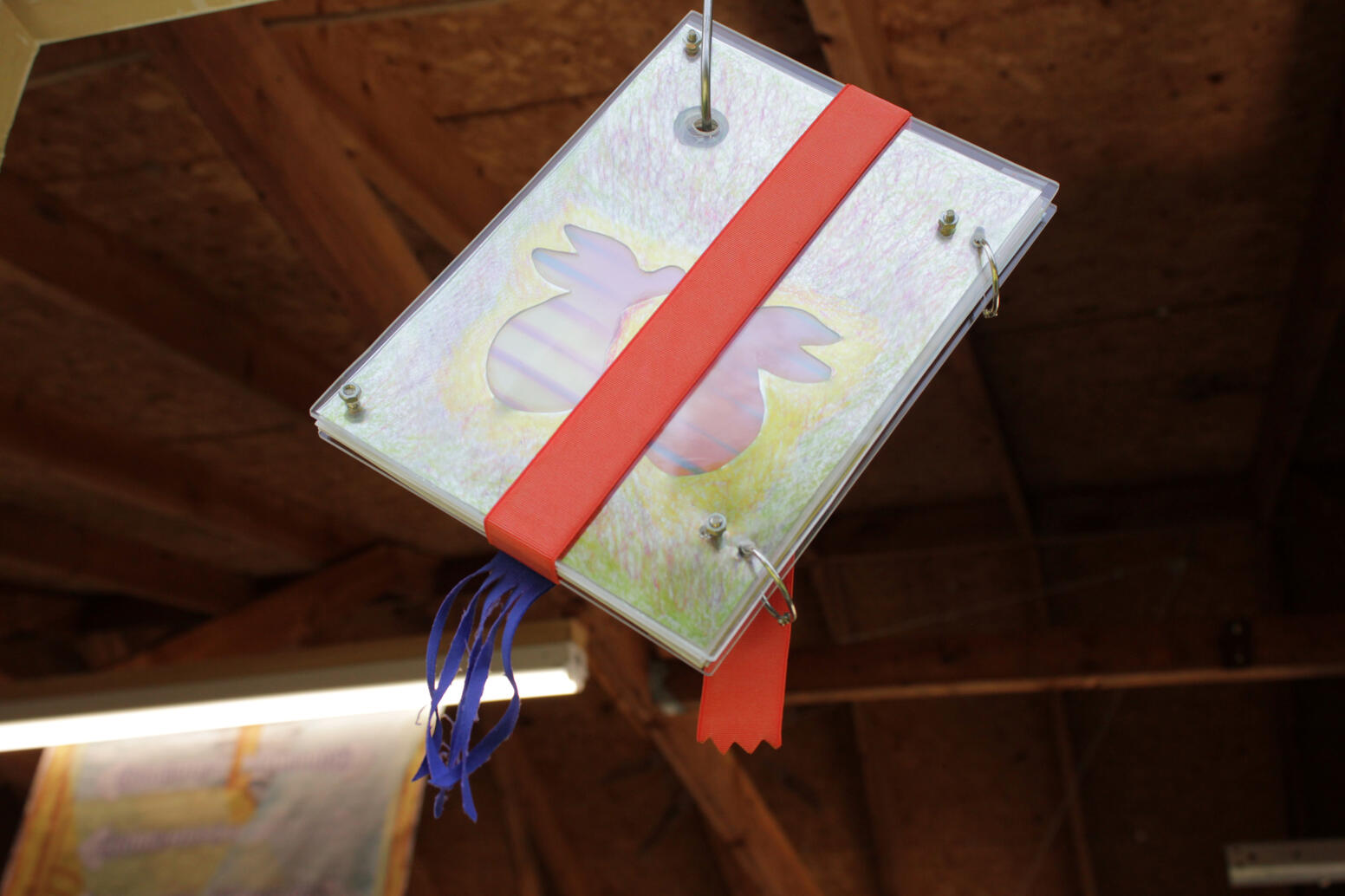
© Joo Choon Lin. All rights reserved.
Glue Your Eyelids Together ✫ State of Motion 2017 ✫ Hong Lim Park ✫ Singapore Art Week 2017
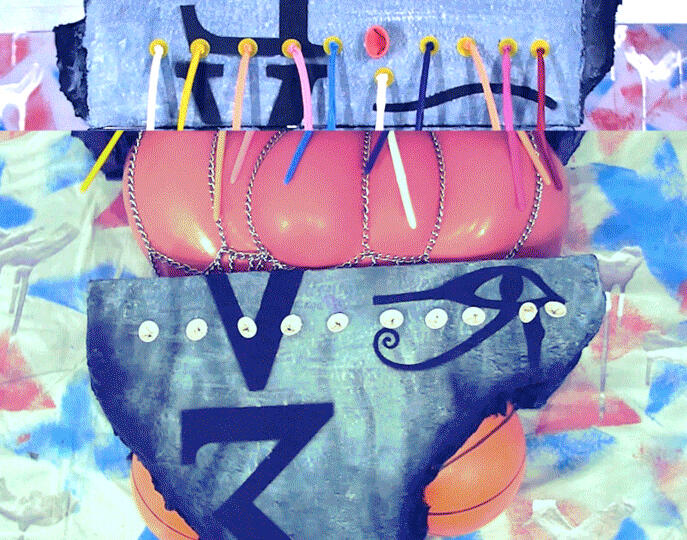
Time-based sculpture: Balloons, Cement, Wood, Knitted chains, Resin, Paint, Sponge, Mini basketballs, Silicone, Washer screw, Carabiner Hooks
The works are in their moribund nature designed to deform and destroy over time. A large block of rock is structured around hidden balloons. When the balloons are allowed to deflate over time, the rock will succumb and crumble. Its remains tethered to knitted chains are akin to intact nerves. The destructive elements create a kind of divine or ghostly presence residing within objects.There is something liberating in witnessing these inanimate death-objects transforming amidst such a mordantly physical activity. It is a visceral spectacle that viewers can themselves empathise and become entwined in. These violent manipulations are conceived for the transformations to occur to derive aesthetic pleasure. A veil of familiarity masks the potentiality for violence that the object’s disposability instils upon them.The scene prompts the question; are they decorated, worn out, fragmented and burnt or do they resist destruction and decay? Perhaps these objects emerge as metaphors to us, siphoned from the value that we place upon materials.
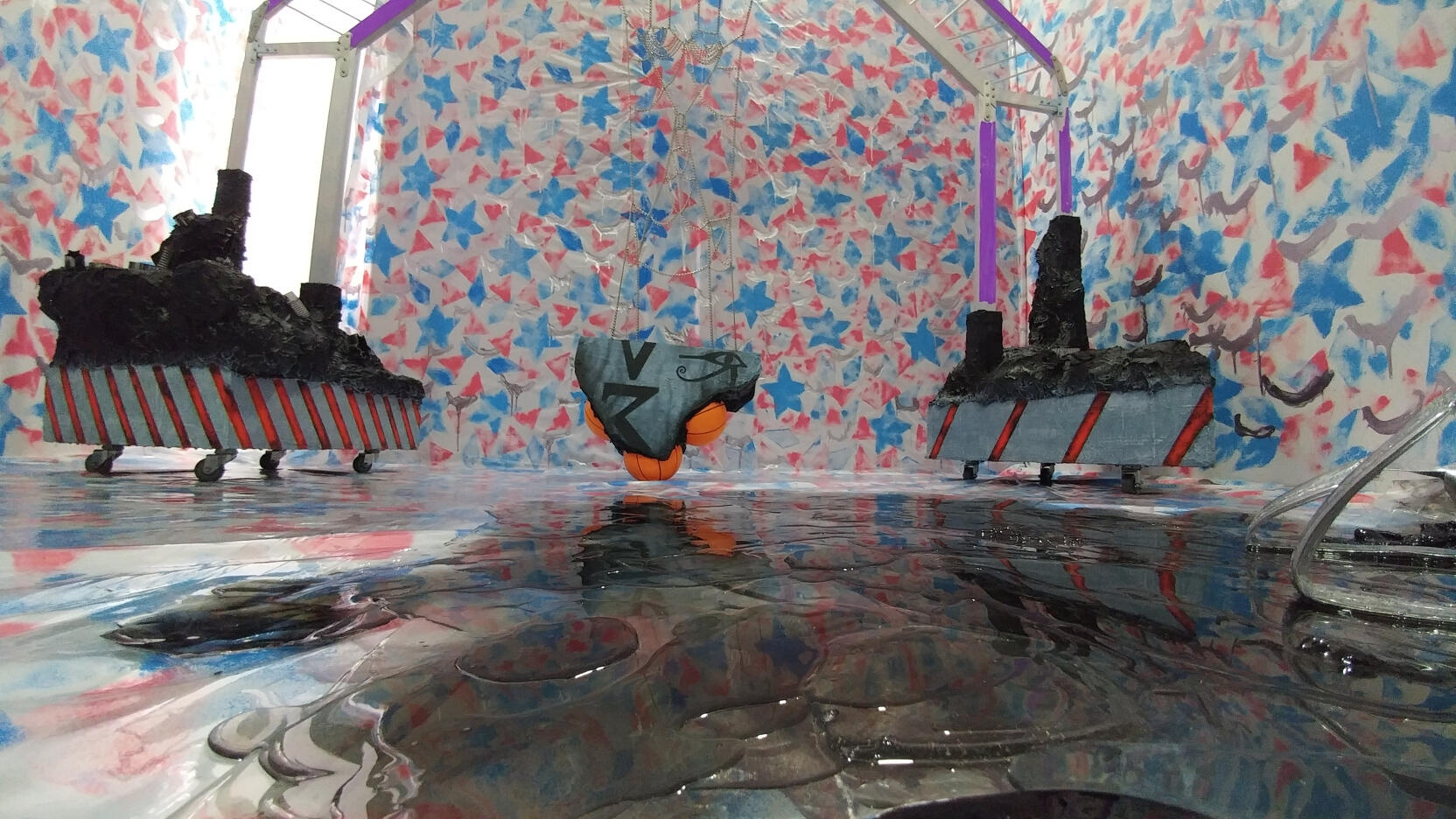
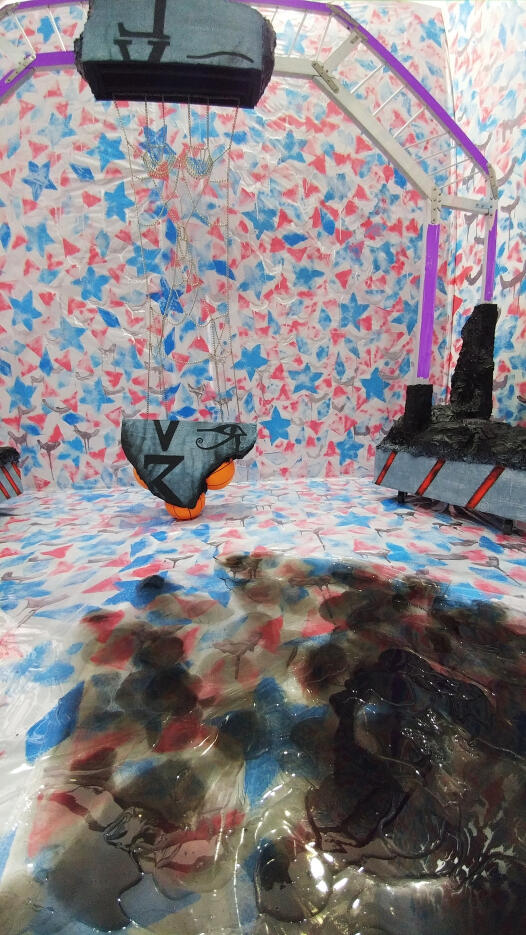
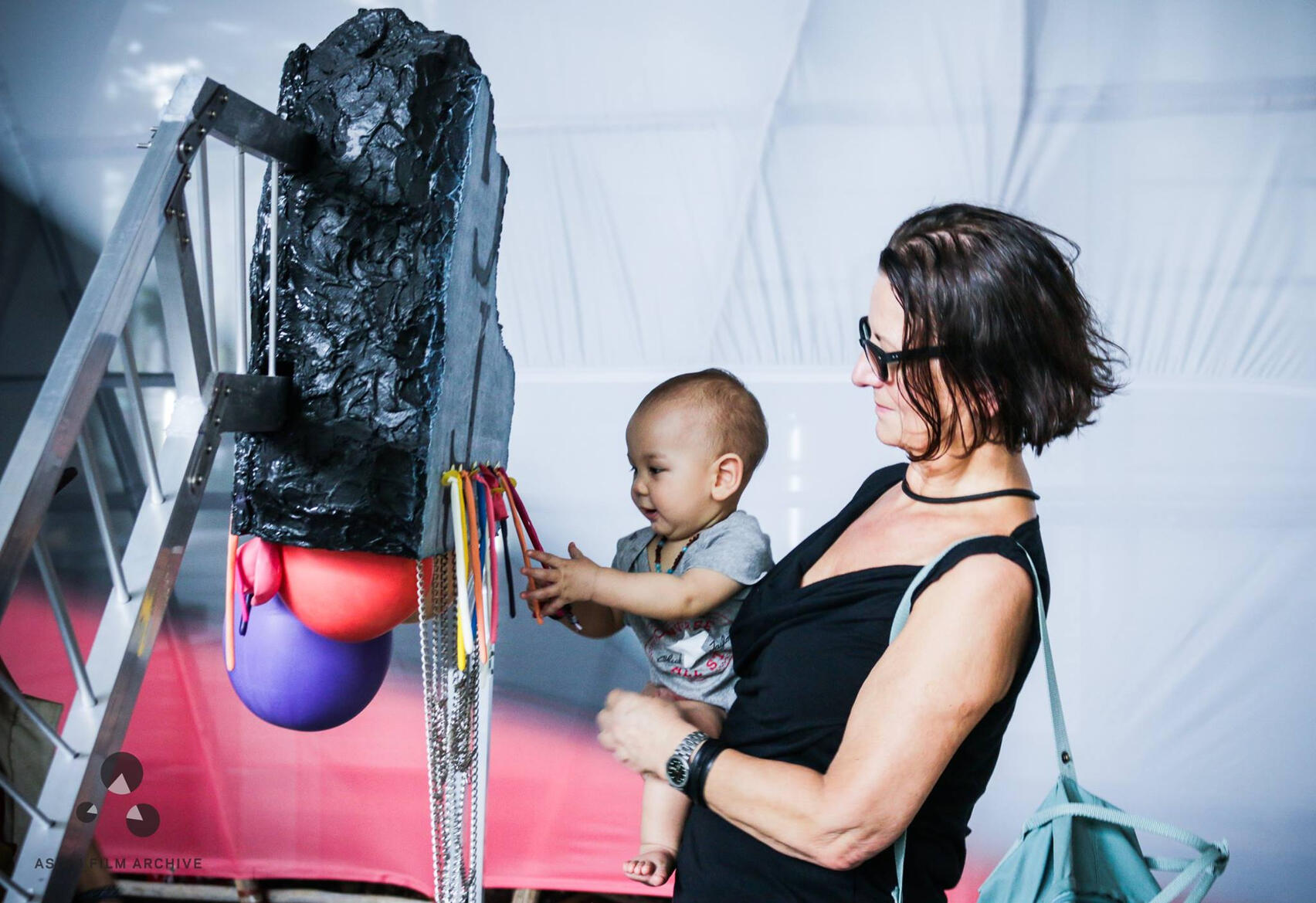
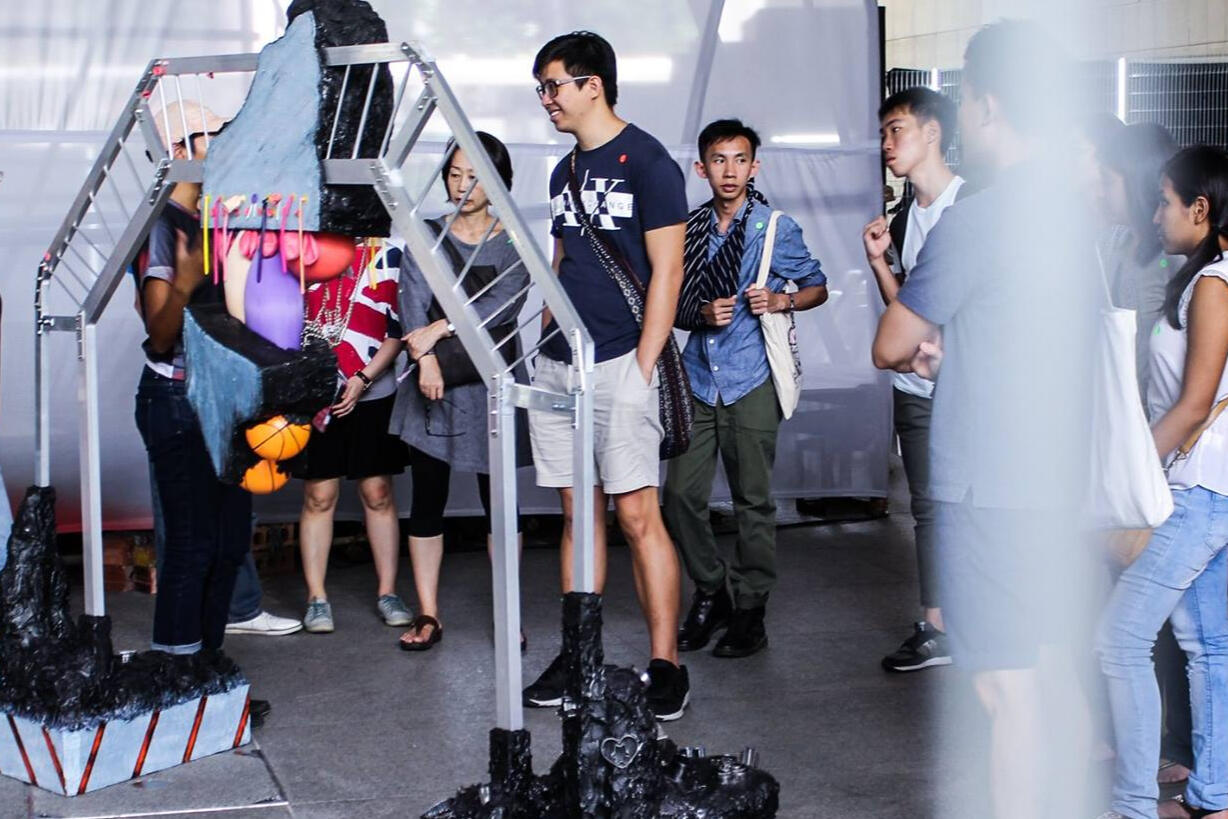
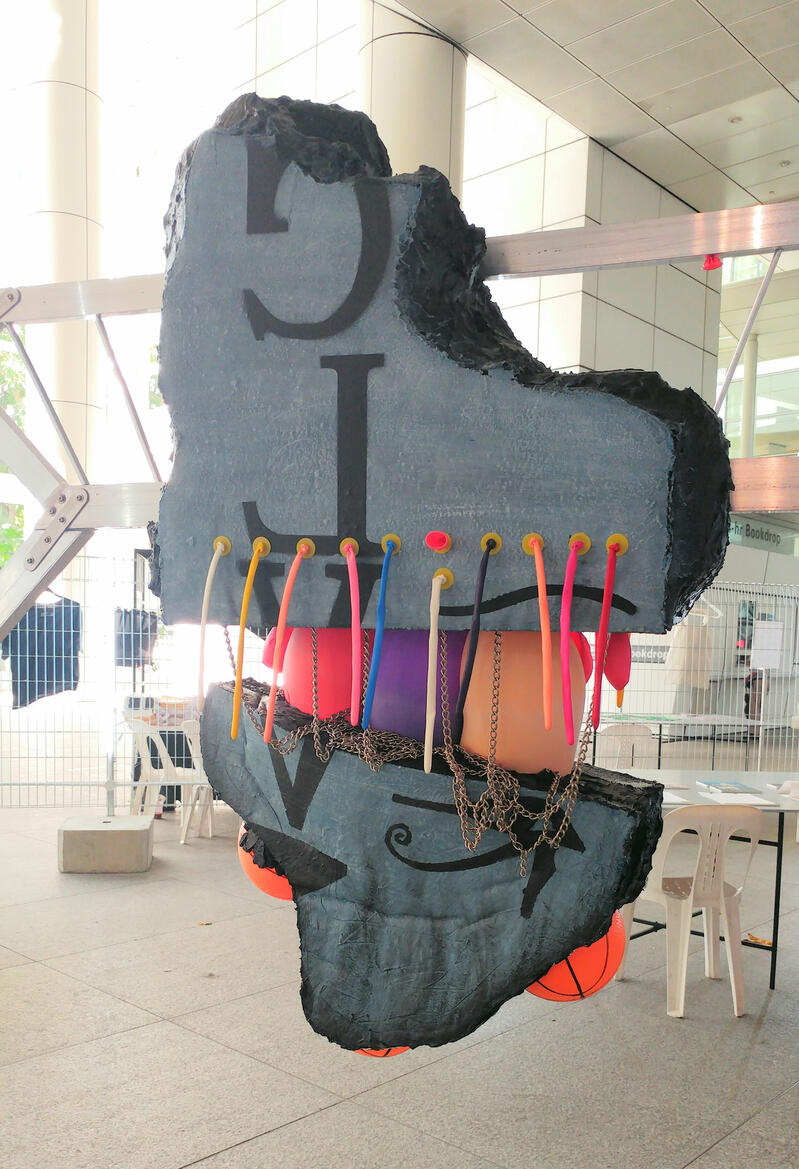
© Joo Choon Lin. All rights reserved.
Glue Your Eyelids Together ✫ State of Motion 2017 ✫ Hong Lim Park ✫ Singapore Art Week 2017
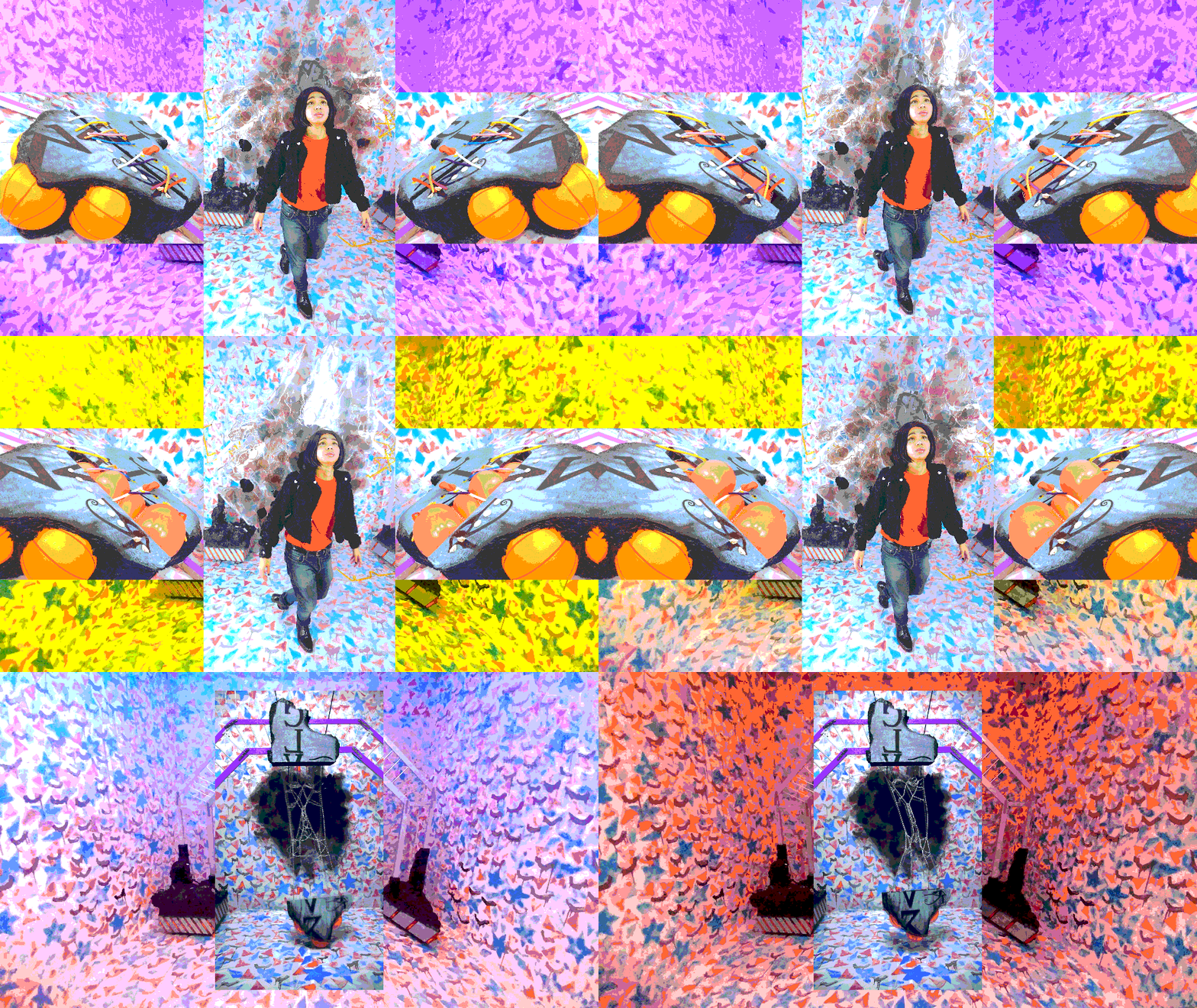
Time-based sculpture: Balloons, Cement, Wood, Knitted chains, Resin, Paint, Sponge, Mini basketballs, Silicone, Washer screw, Carabiner Hooks
The works are in their moribund nature designed to deform and destroy over time. A large block of rock is structured around hidden balloons. When the balloons are allowed to deflate over time, the rock will succumb and crumble. Its remains tethered to knitted chains are akin to intact nerves. The destructive elements create a kind of divine or ghostly presence residing within objects.There is something liberating in witnessing these inanimate death-objects transforming amidst such a mordantly physical activity. It is a visceral spectacle that viewers can themselves empathise and become entwined in. These violent manipulations are conceived for the transformations to occur to derive aesthetic pleasure. A veil of familiarity masks the potentiality for violence that the object’s disposability instils upon them.The scene prompts the question; are they decorated, worn out, fragmented and burnt or do they resist destruction and decay? Perhaps these objects emerge as metaphors to us, siphoned from the value that we place upon materials.
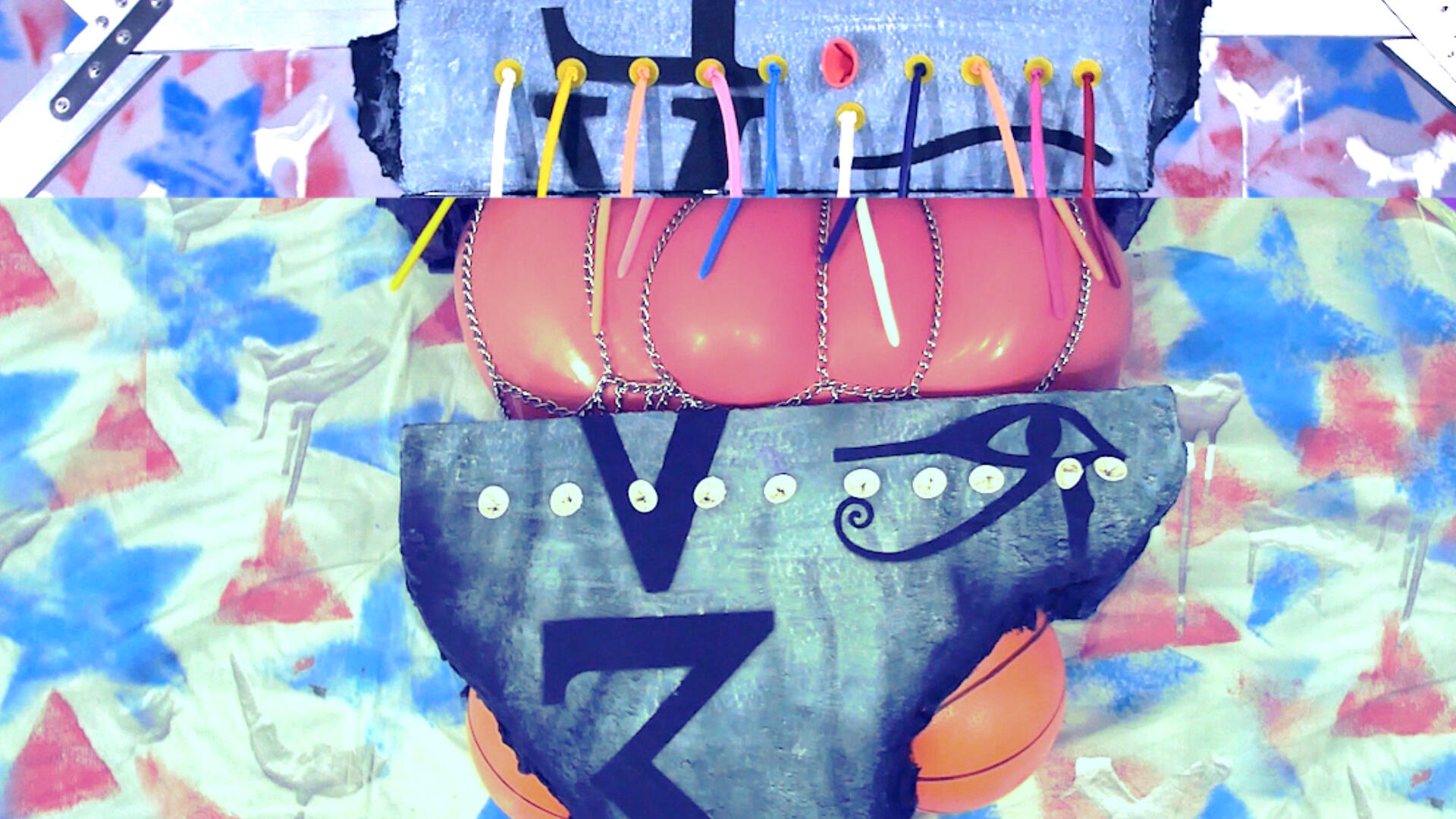
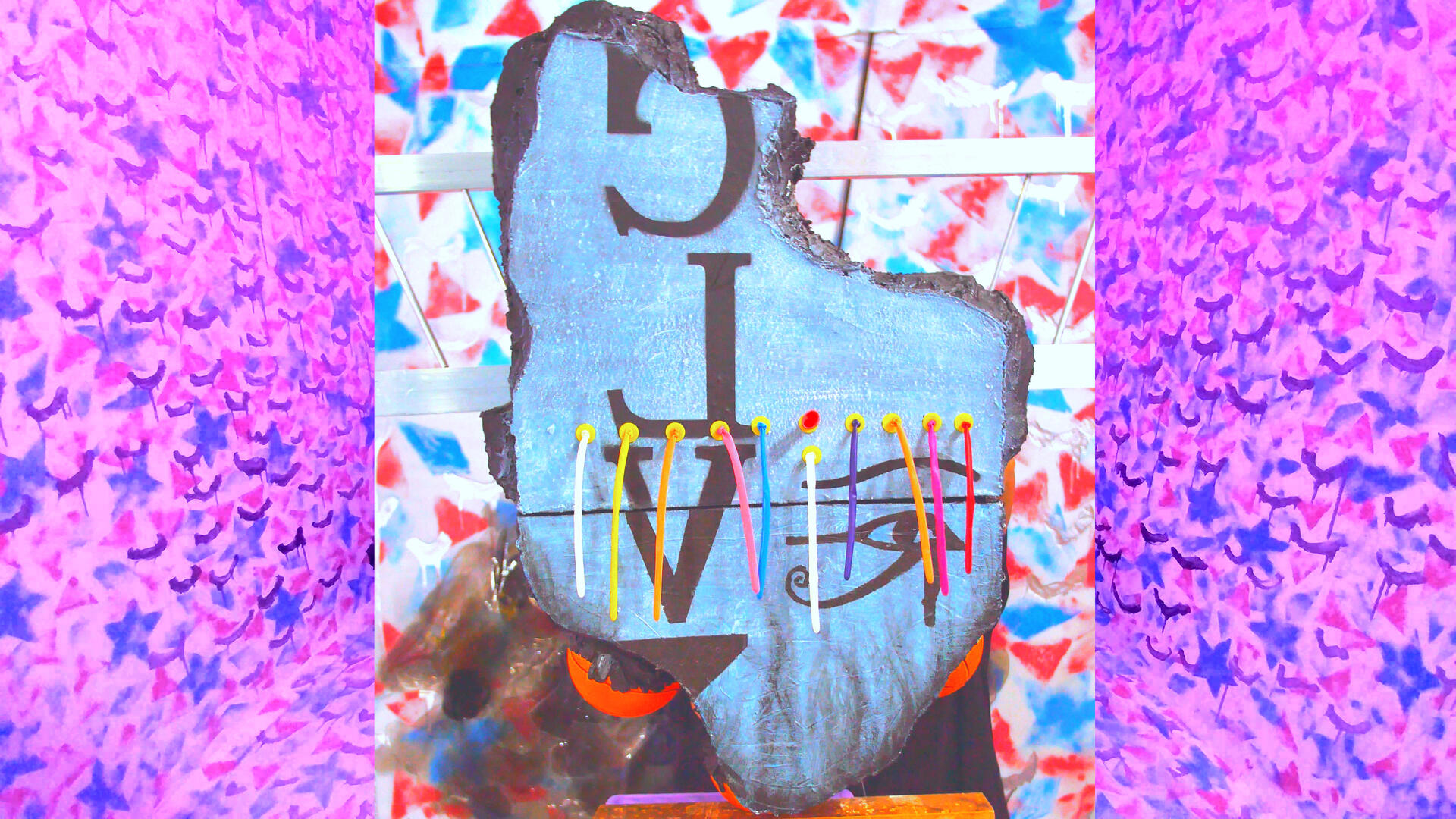
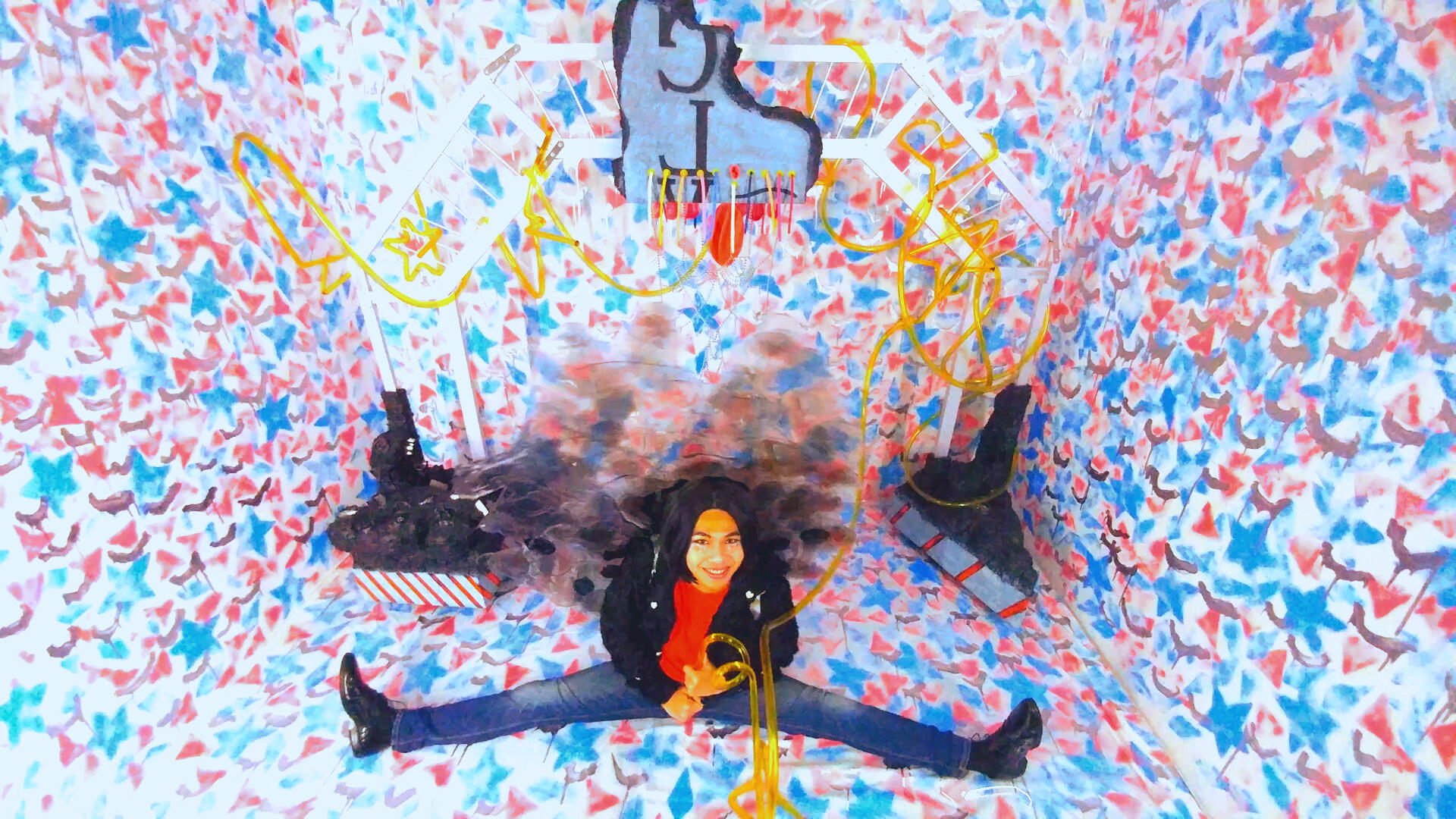
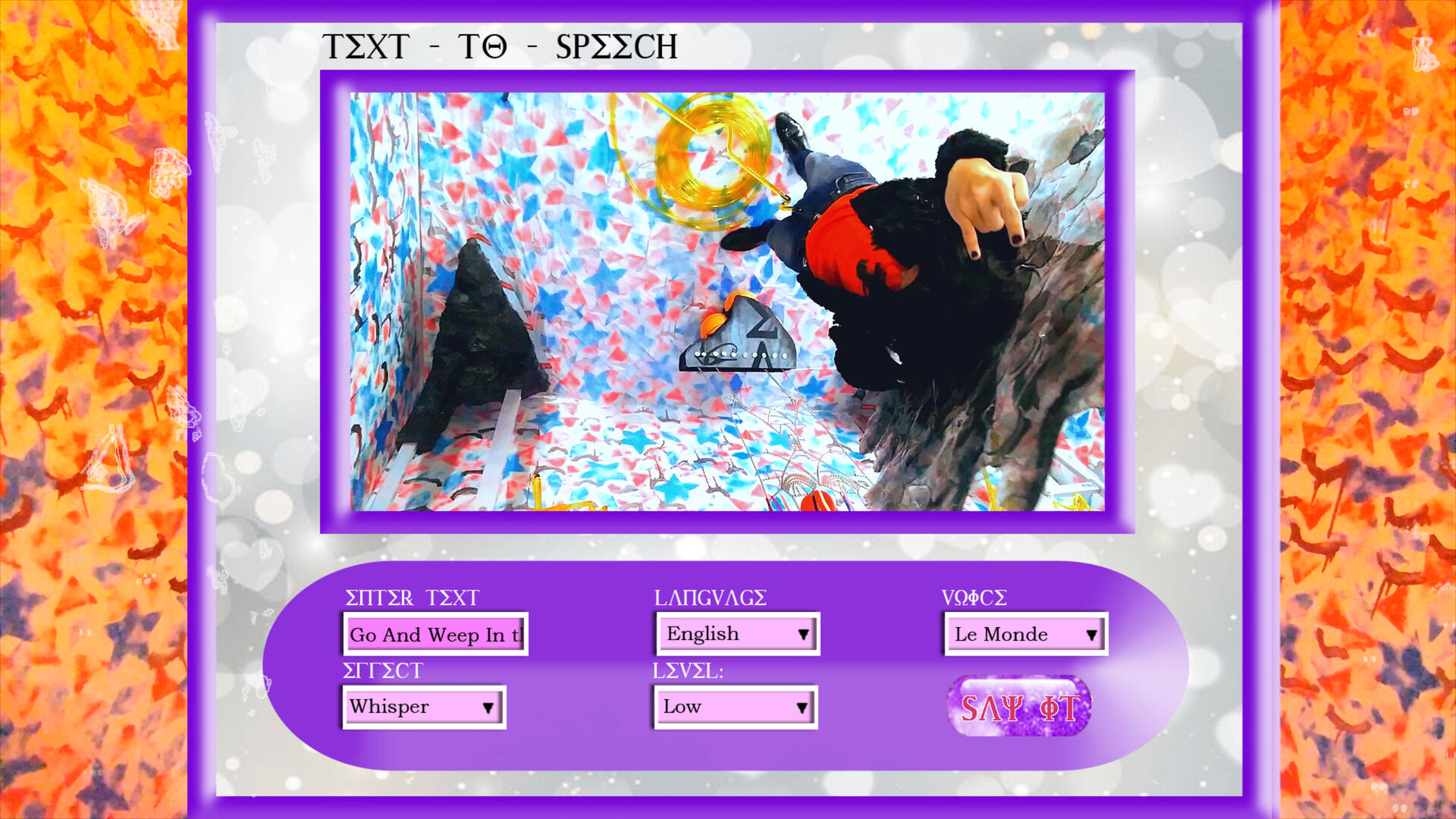
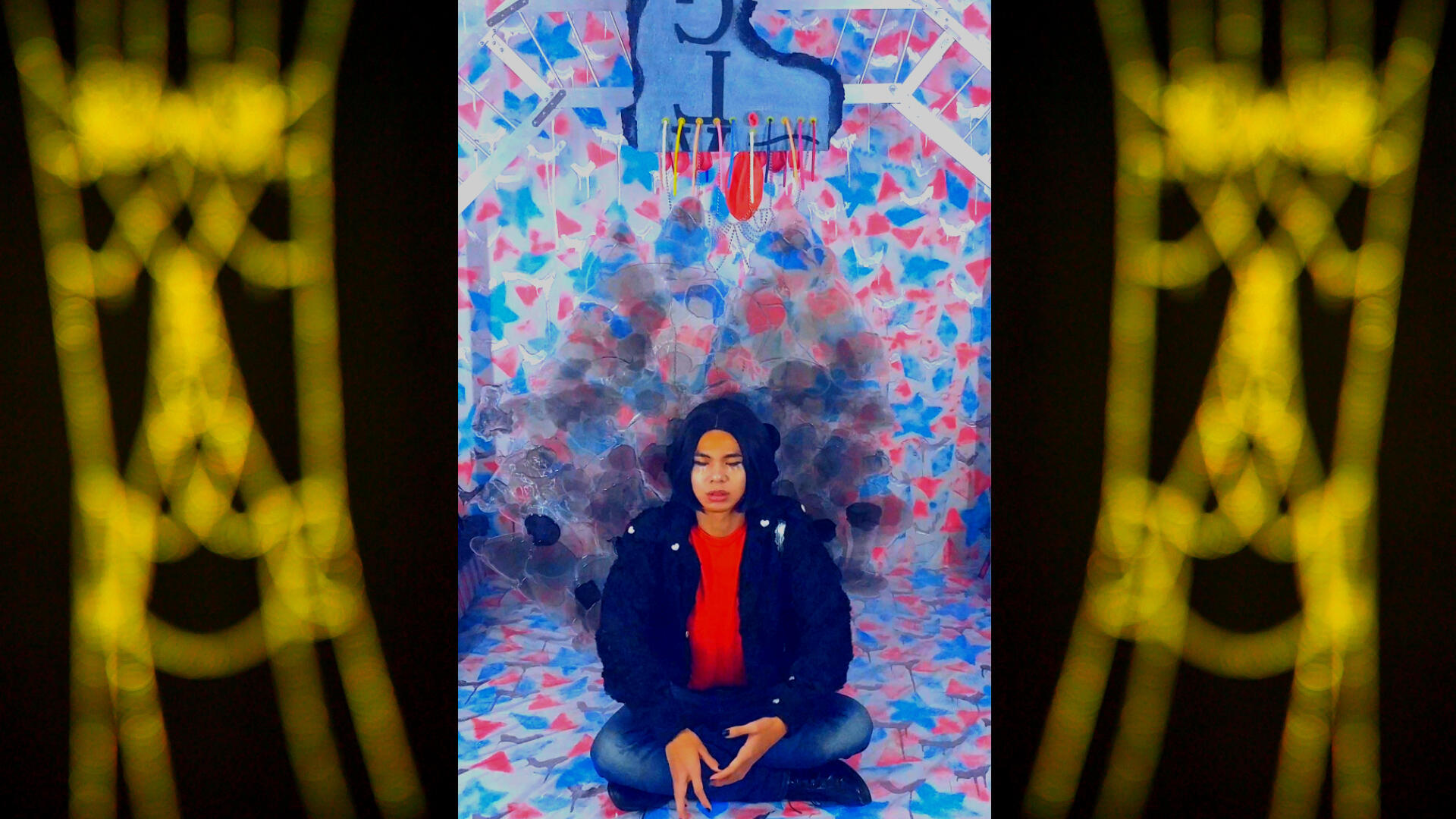
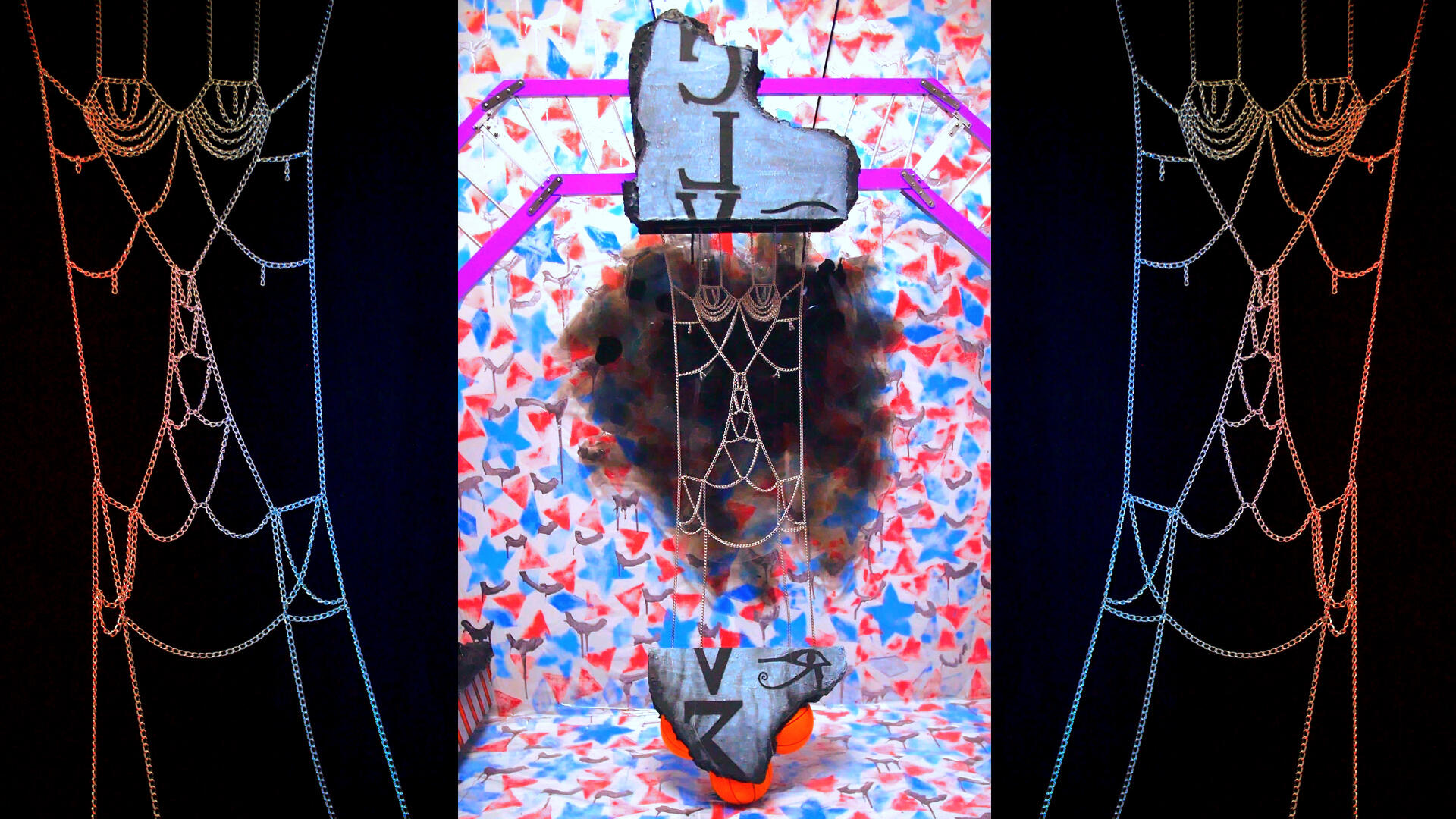
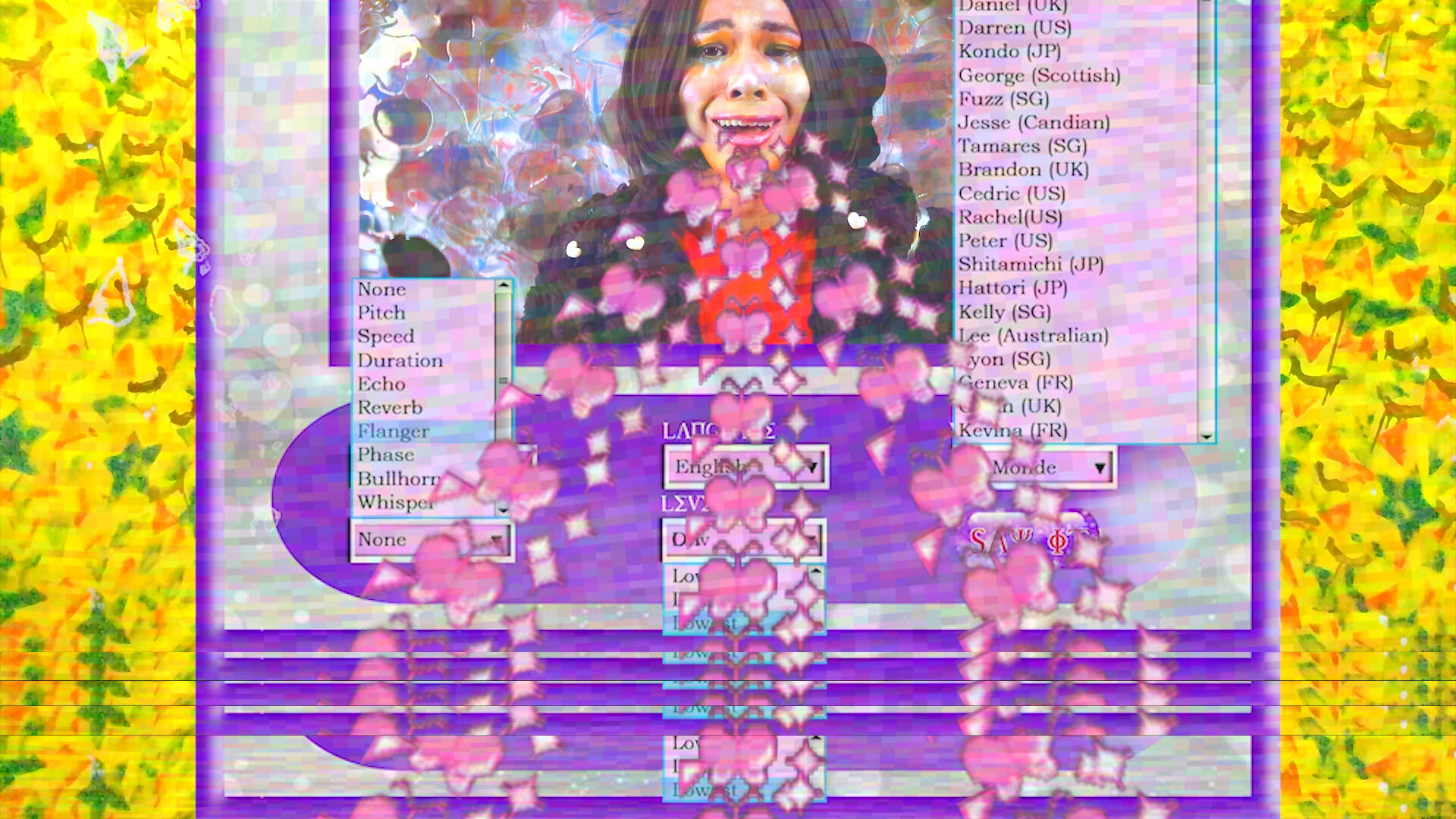
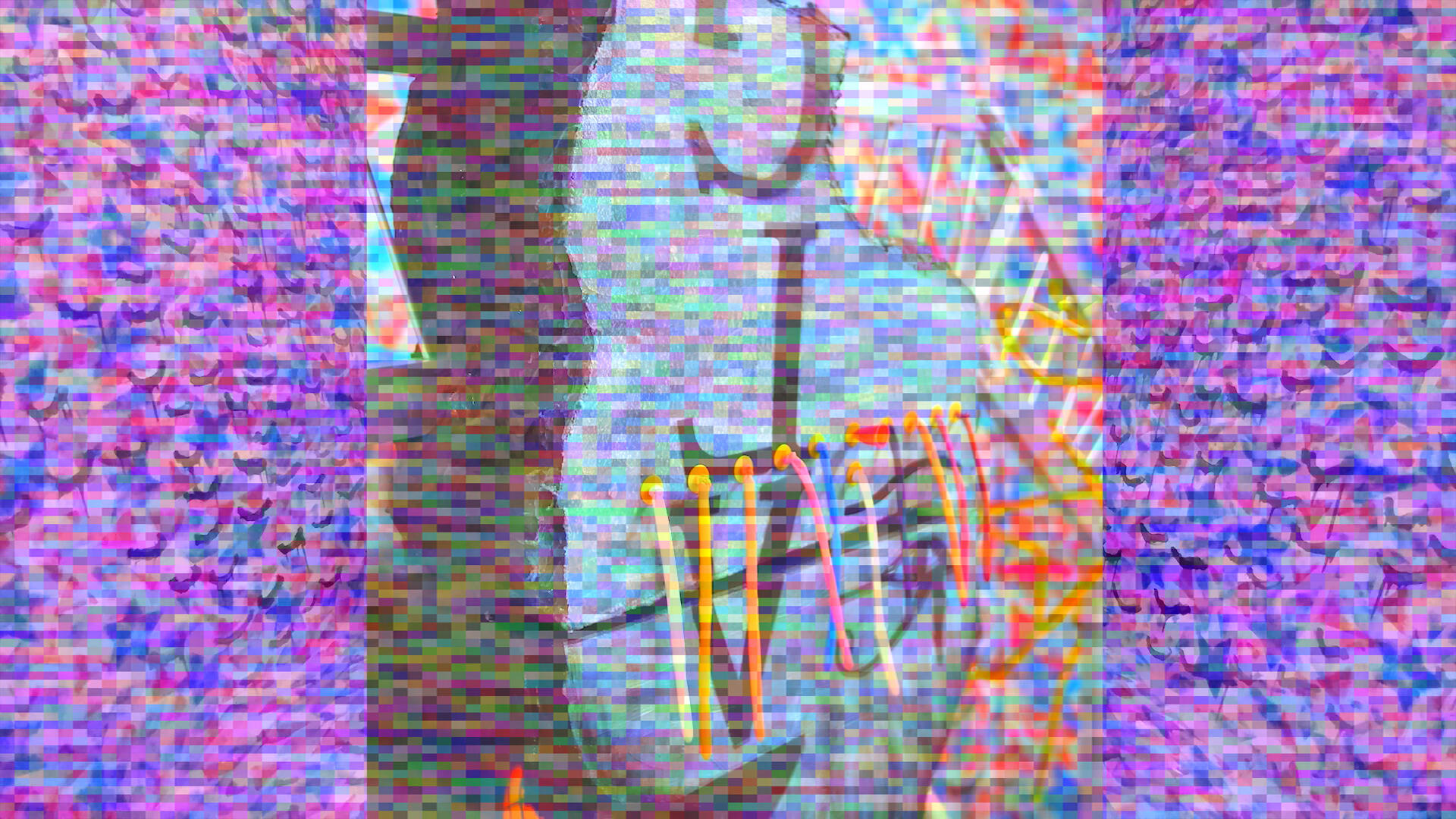
Glue Your Eyelids Together is in response to the film The Wild Eye (1967, Paolo Cavara). This is the first iteration, and the latest iteration in Dance in the Destruction Dance 2023 and Singapore Biennale 2025 continues as a development of this work.
© Joo Choon Lin. All rights reserved.
The Blinking Organisms - You SPLEEN Me’ Round X OPERATION 1, 2017

+ 。 ゚ ,。 . ✹ 。 ✧ , .。
☆ 。, ゚ . 。 。+ 。 . , 。+ ゚. 。。 ゚. .✺ + ☆ ゚。 。. ̽.
✧ 。 。 。 , + 。. , 。 ✸ , o 。.
゚ , ̤ , ̽。 . . .✶ ゚ . ゚ +. 。゚ 。 ★ , + 。. , 。✸ , o , ゚. 。゚. ゚. o ゚ 。 . ✧ , . . 。 .゚✶ .+。 ∗ 。+ 。゚ ☆ ゚. + 。 ゚ ,。 . ✹ 。 ✧ , .。
☆ 。, ゚ . 。 。+ 。 . , 。+ ゚. 。。 ゚. .✺Inspired by Canadian media theorist Marshall McLuhan, Joo Choon Lin feels that “[we are] like astronauts in the processed world of technology, beings who are fascinated with the unknown, mysterious land”.As the world’s natural resources are being depleted rapidly to meet the demands of a growing human population, more technologies have been devised to capture the likeness of things and to mimic nature and its forms.For example, what appear to be wooden park benches are actually made of concrete, while objects that appear to be precious stones and marble are actually made of plastic resin. Joo believes that the physicality of the material world can influence our thoughts and emotions as well as social relations and behaviour. As advances in technology bring about drastic changes in our lifestyles and living habits, these subtle changes may slowly effect a biological evolution, and Joo is fascinated with how the human race may evolve through hyper-adaptation.
Her three-part series, The Blinking Organisms, is likened to a morphogenesis process where the spleen (the organ in the human body most associated with depression and anxiety, and which was used by Shakespeare to represent melancholy and hysteria evolves and morphs into new, mutated forms, set to a rhythm of lights and low frequency sounds, pulsating and blinking as if they are alive-breathing, growing and evolving.

The Blinking Organisms - You SPLEEN Me’ Round

The Blinking Organisms - You SPLEEN Me’ Round

The Blinking Organisms - You SPLEEN Me’ Round

The Blinking Organisms - You SPLEEN Me’ Round

The Blinking Organisms - You SPLEEN Me’ Round

The Blinking Organisms - You SPLEEN Me’ Round

The Blinking Organisms - You SPLEEN Me’ Round

The Blinking Organisms - You SPLEEN Me’ Round

The Blinking Organisms - You SPLEEN Me’ Round

The Blinking Organisms - You SPLEEN Me’ Round

The Blinking Organisms - You SPLEEN Me’ Round

The Blinking Organisms - You SPLEEN Me’ Round

The Blinking Organisms - You SPLEEN Me’ Round

The Blinking Organisms - You SPLEEN Me’ Round

The Blinking Organisms - You SPLEEN Me’ Round

The Blinking Organisms - You SPLEEN Me’ Round

The Blinking Organisms - You SPLEEN Me’ Round

The Blinking Organisms - You SPLEEN Me’ Round

The Blinking Organisms - You SPLEEN Me’ Round

The Blinking Organisms - You SPLEEN Me’ Round

The Blinking Organisms - You SPLEEN Me’ Round

The Blinking Organisms - You SPLEEN Me’ Round

The Blinking Organisms - You SPLEEN Me’ Round
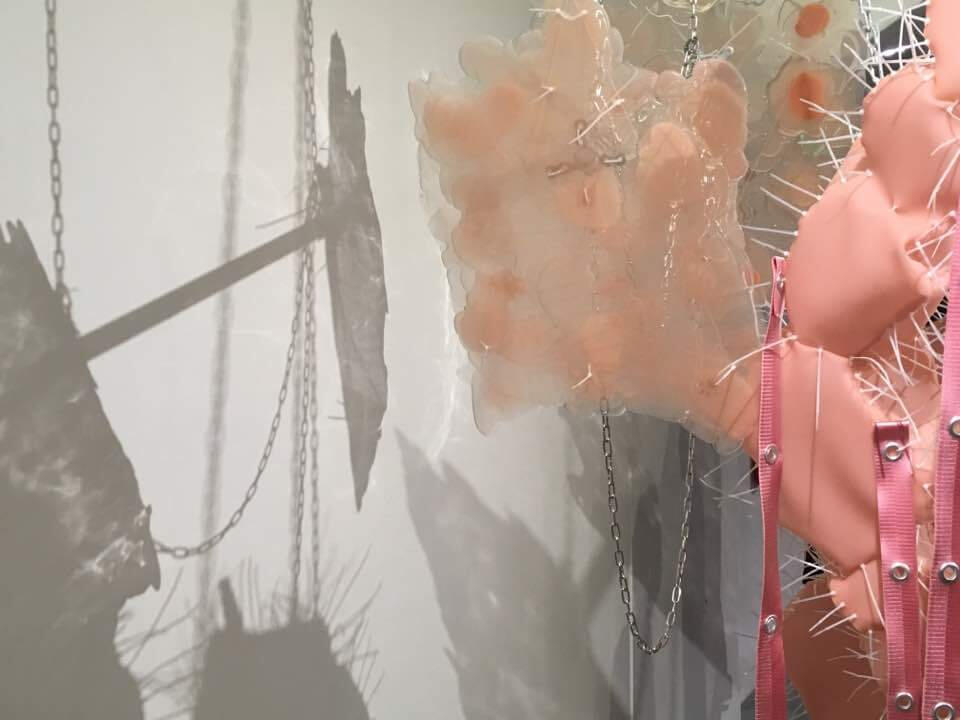
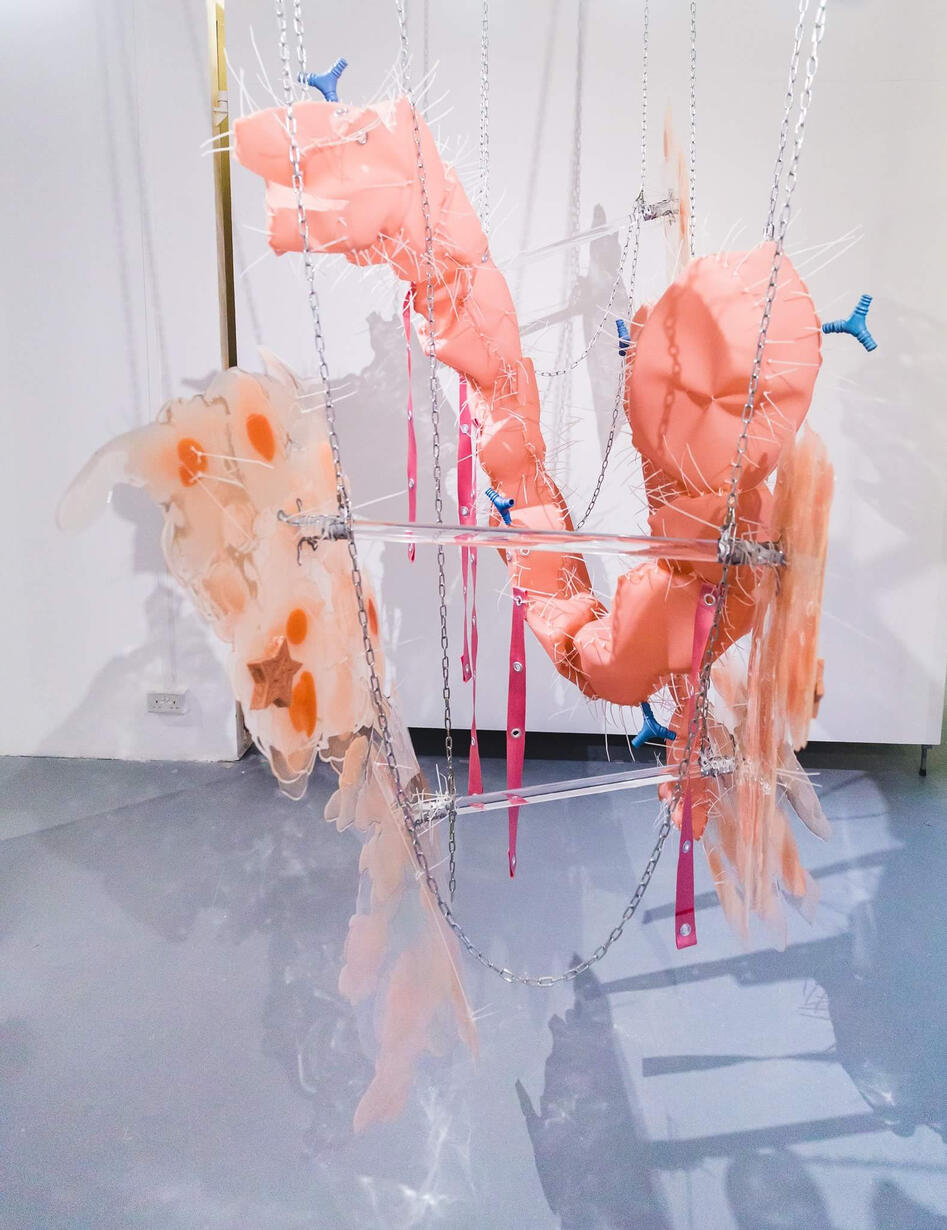
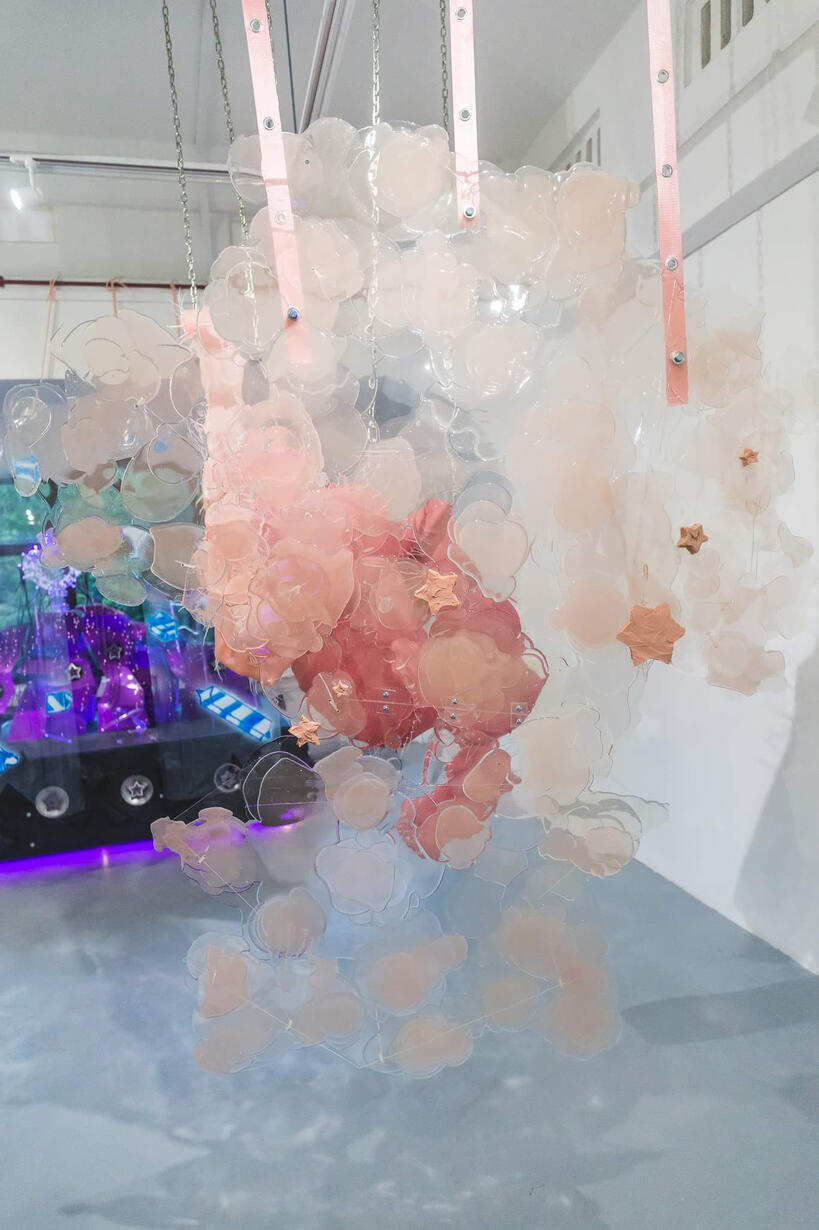
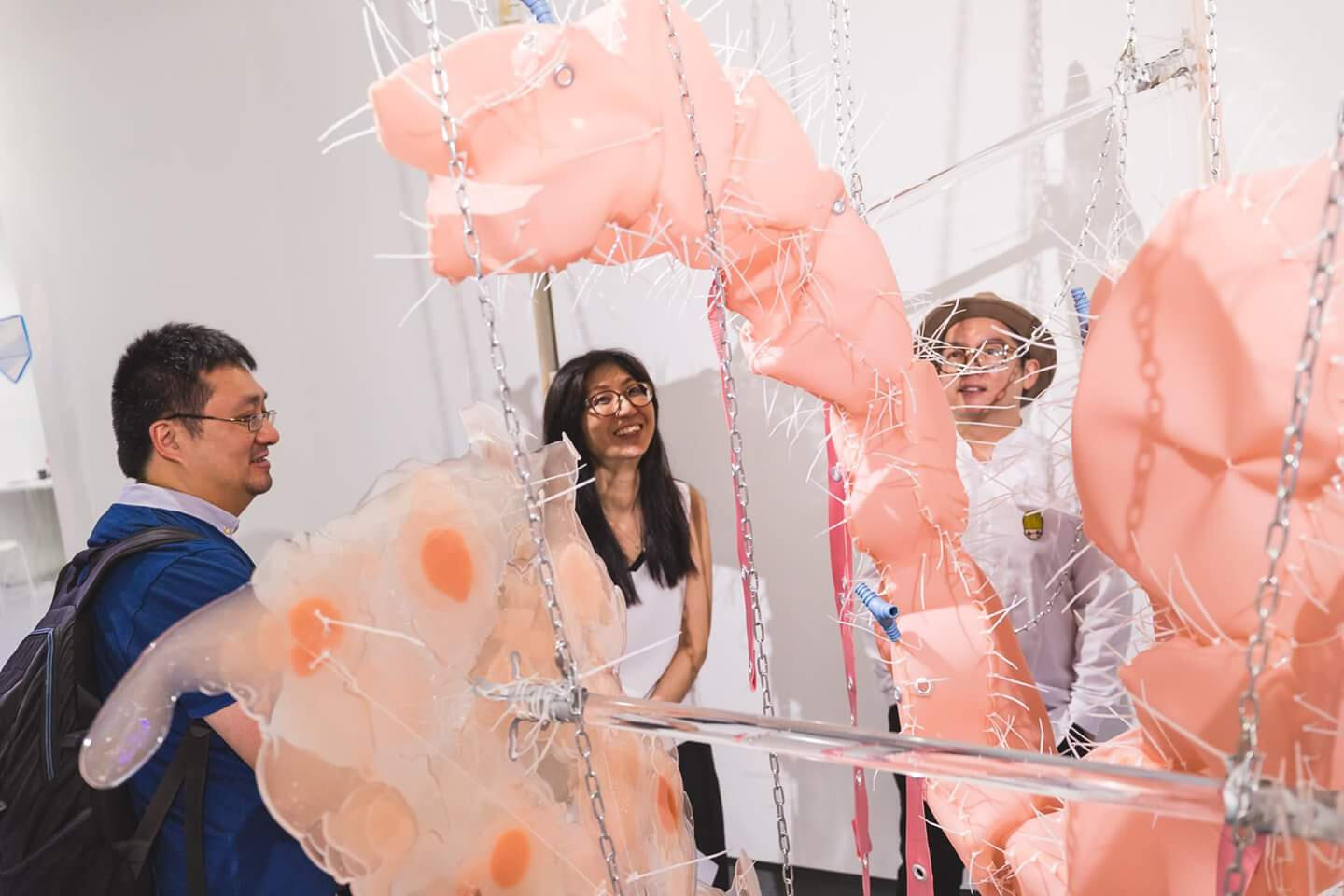
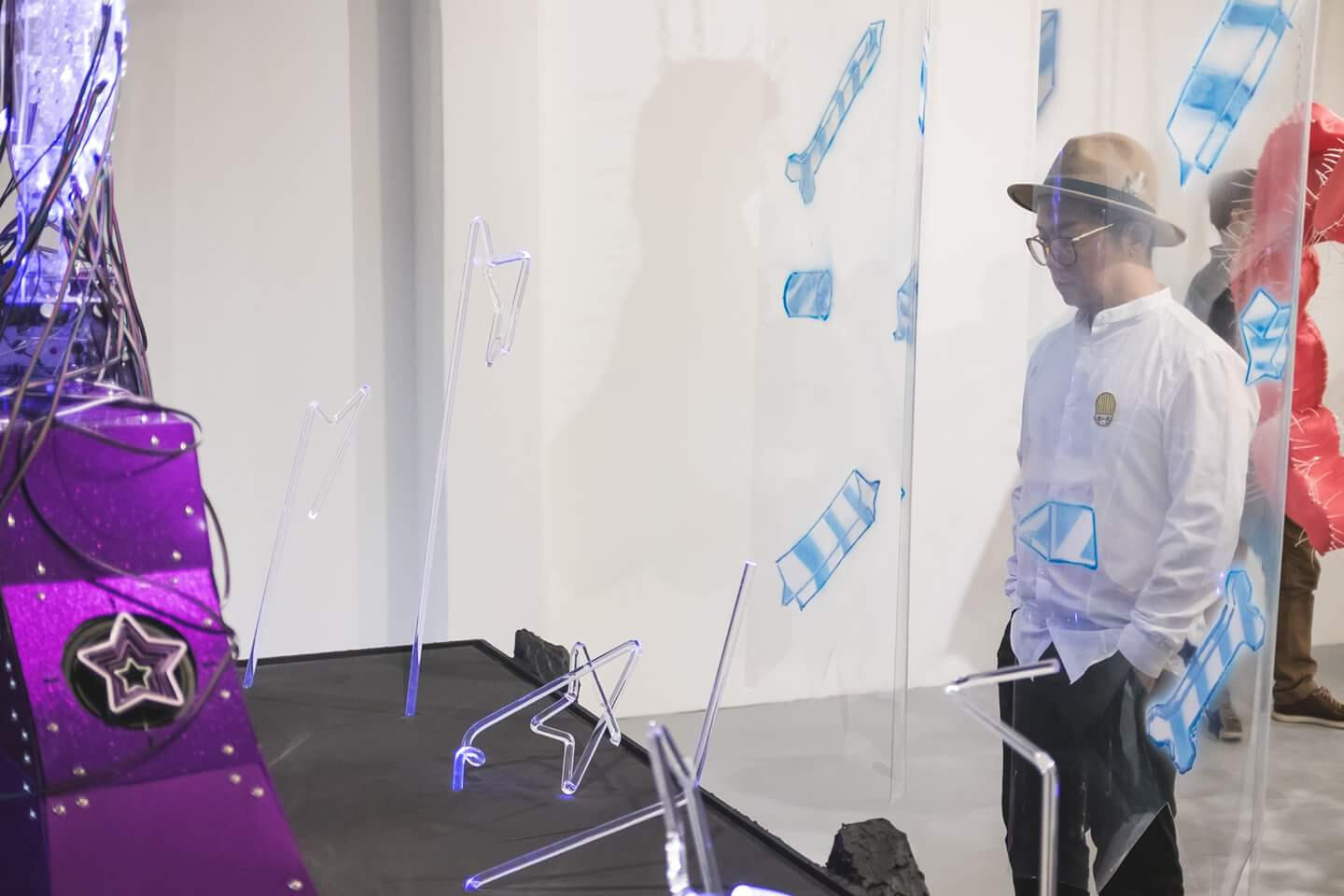
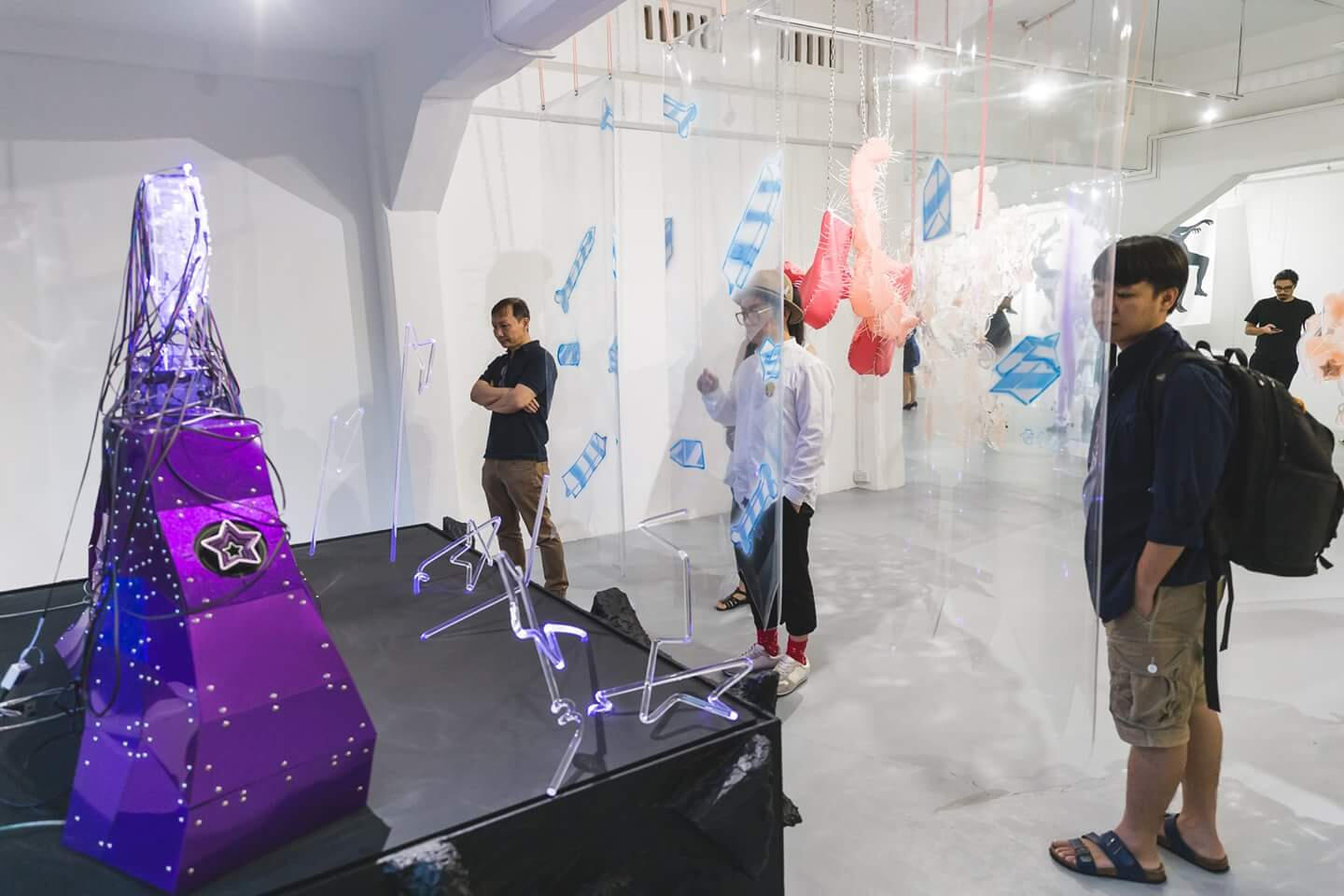
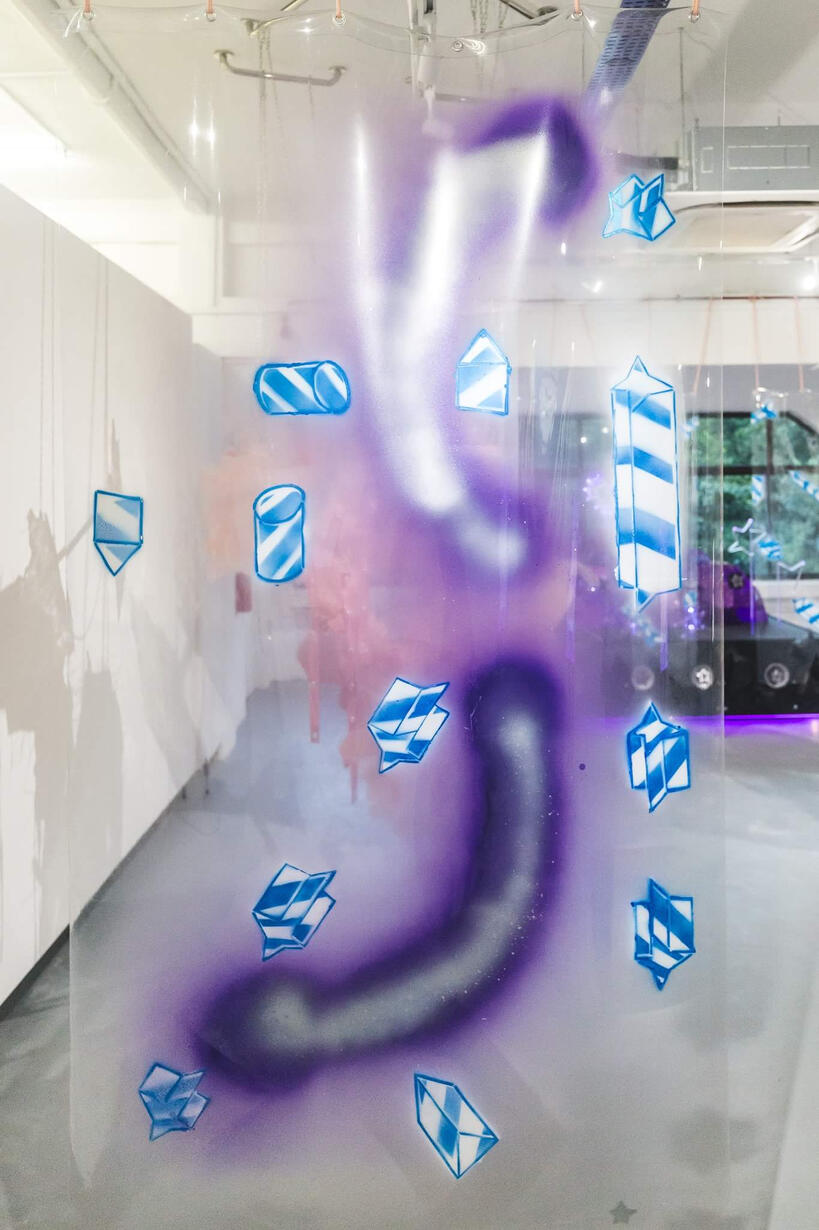
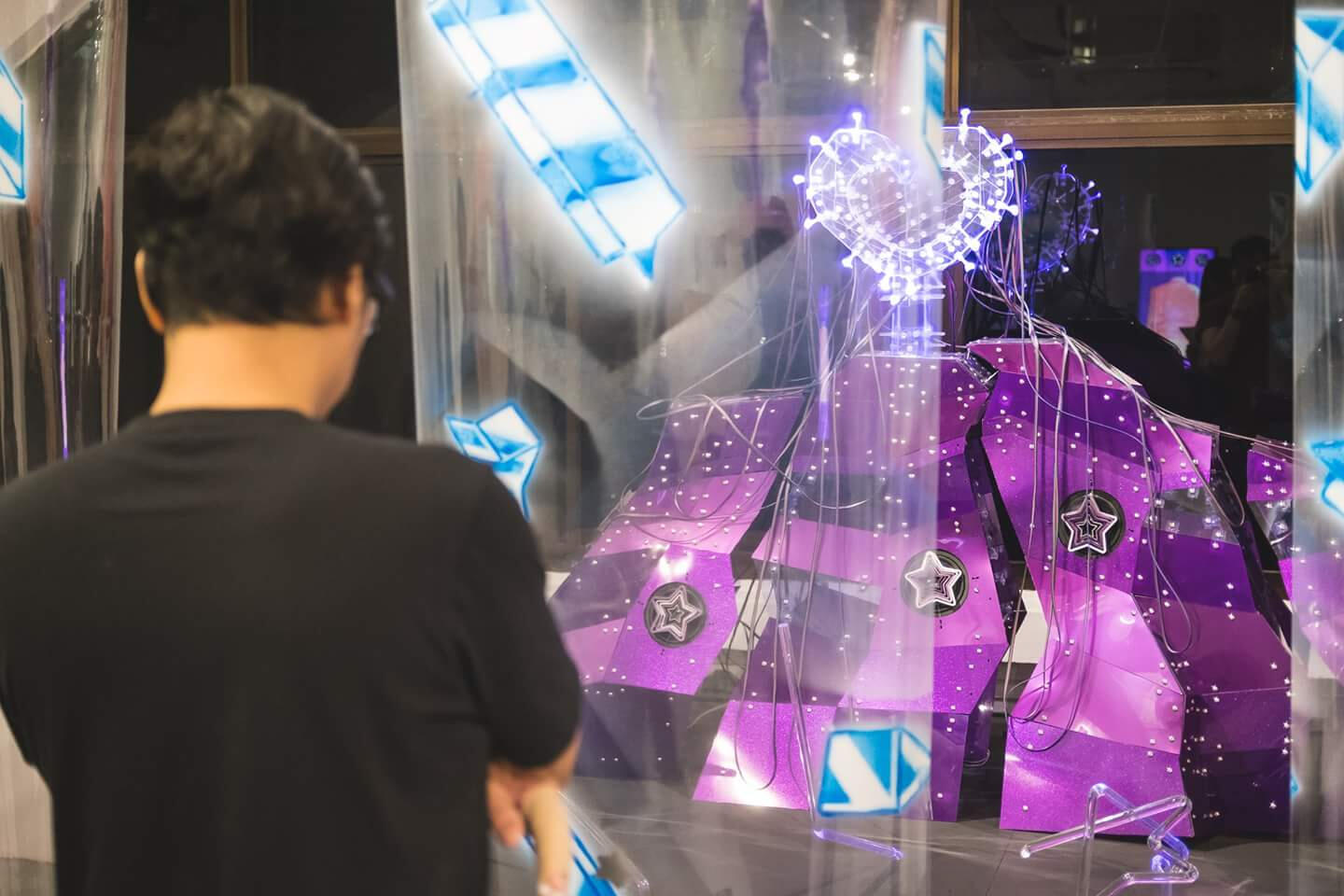
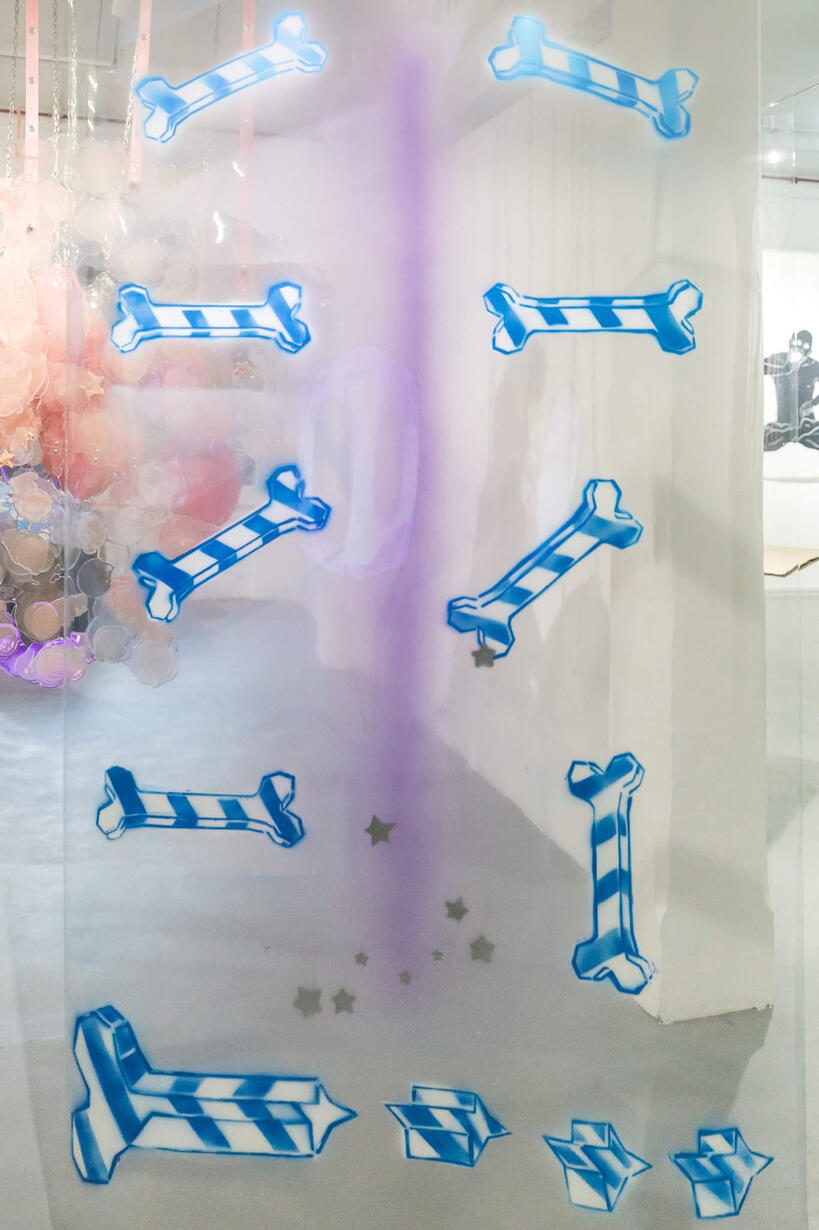
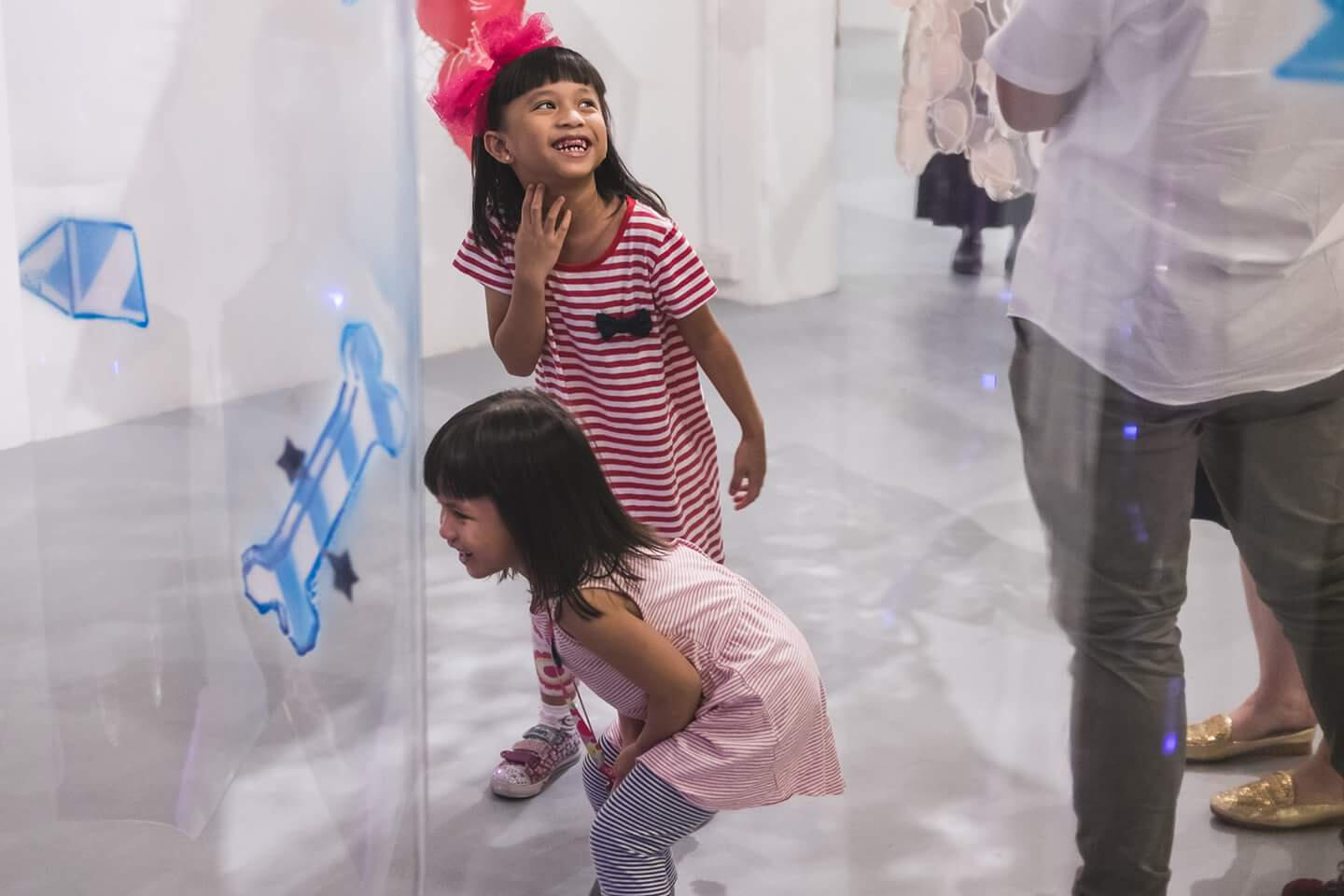
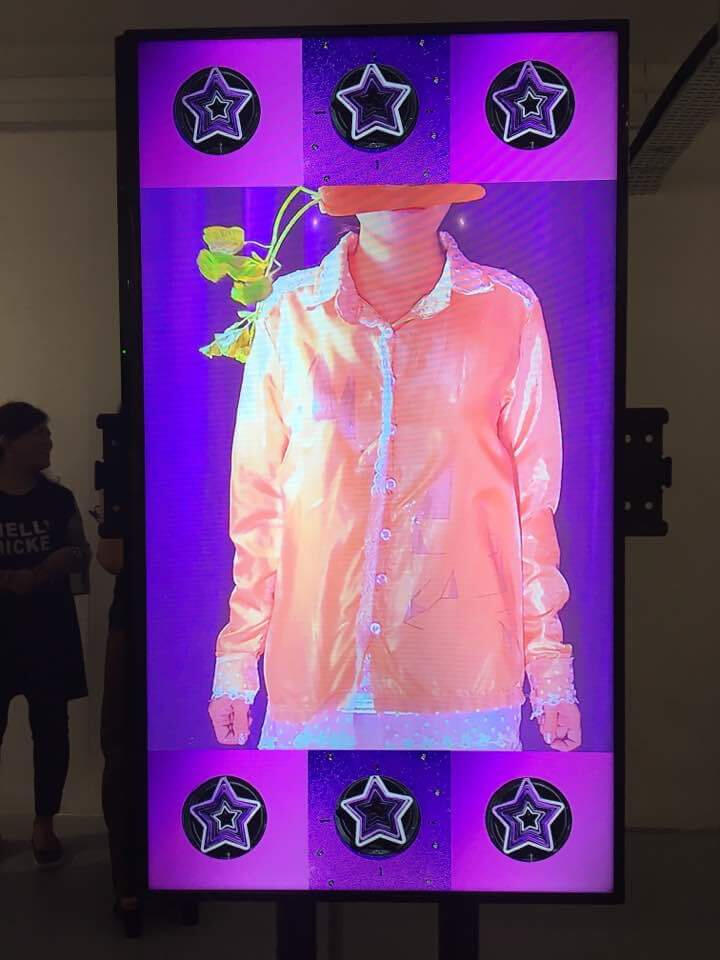
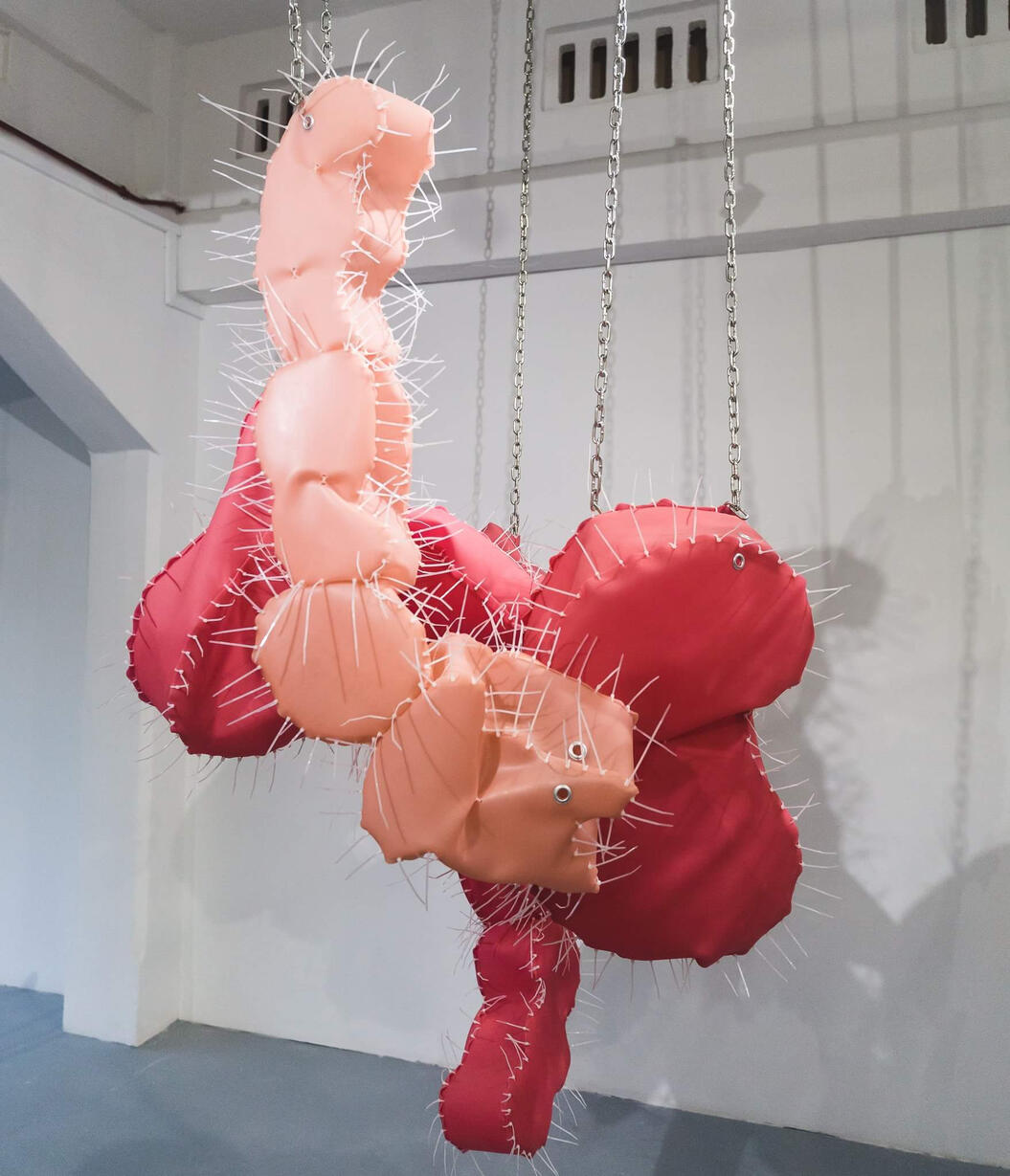
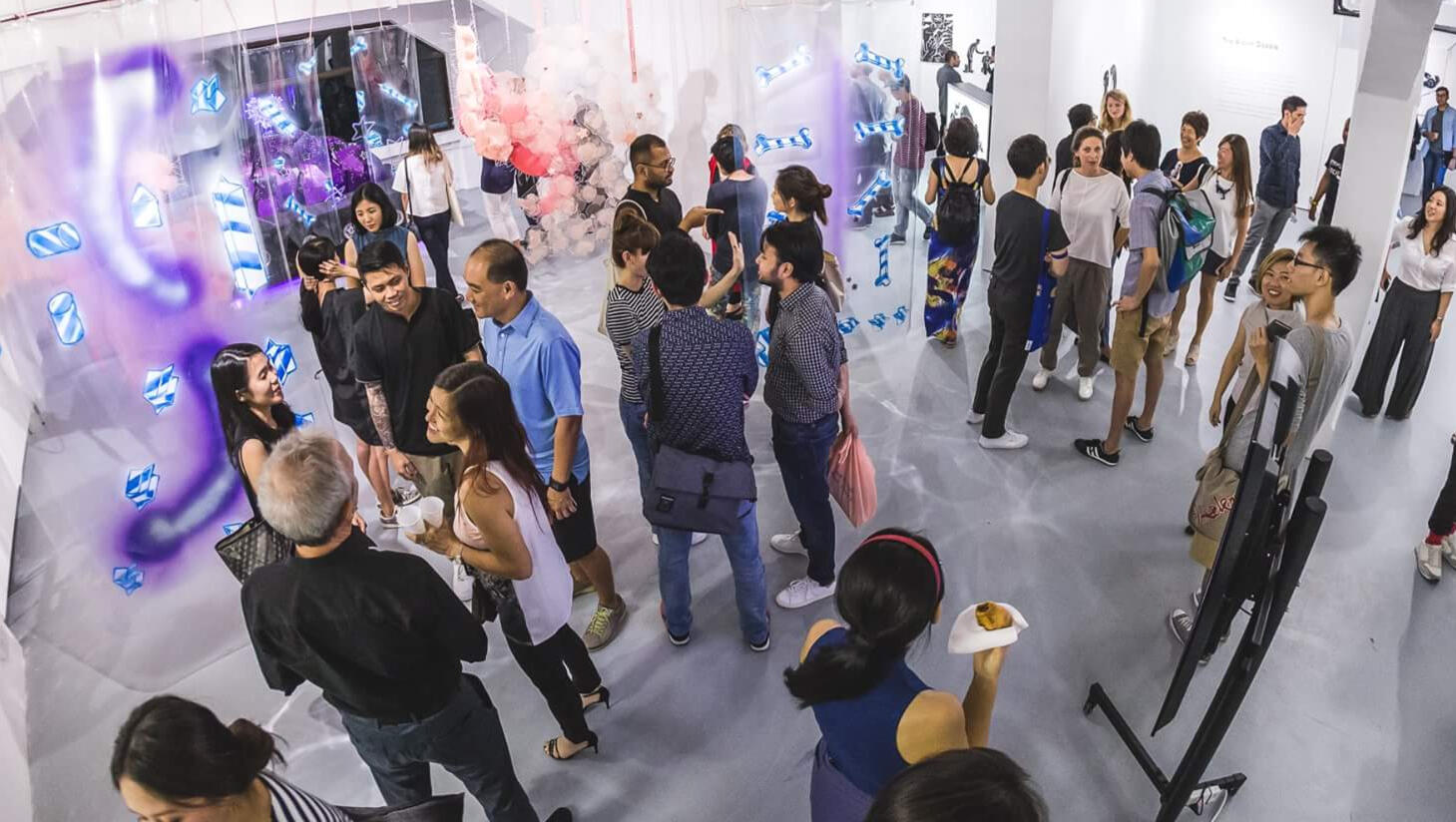
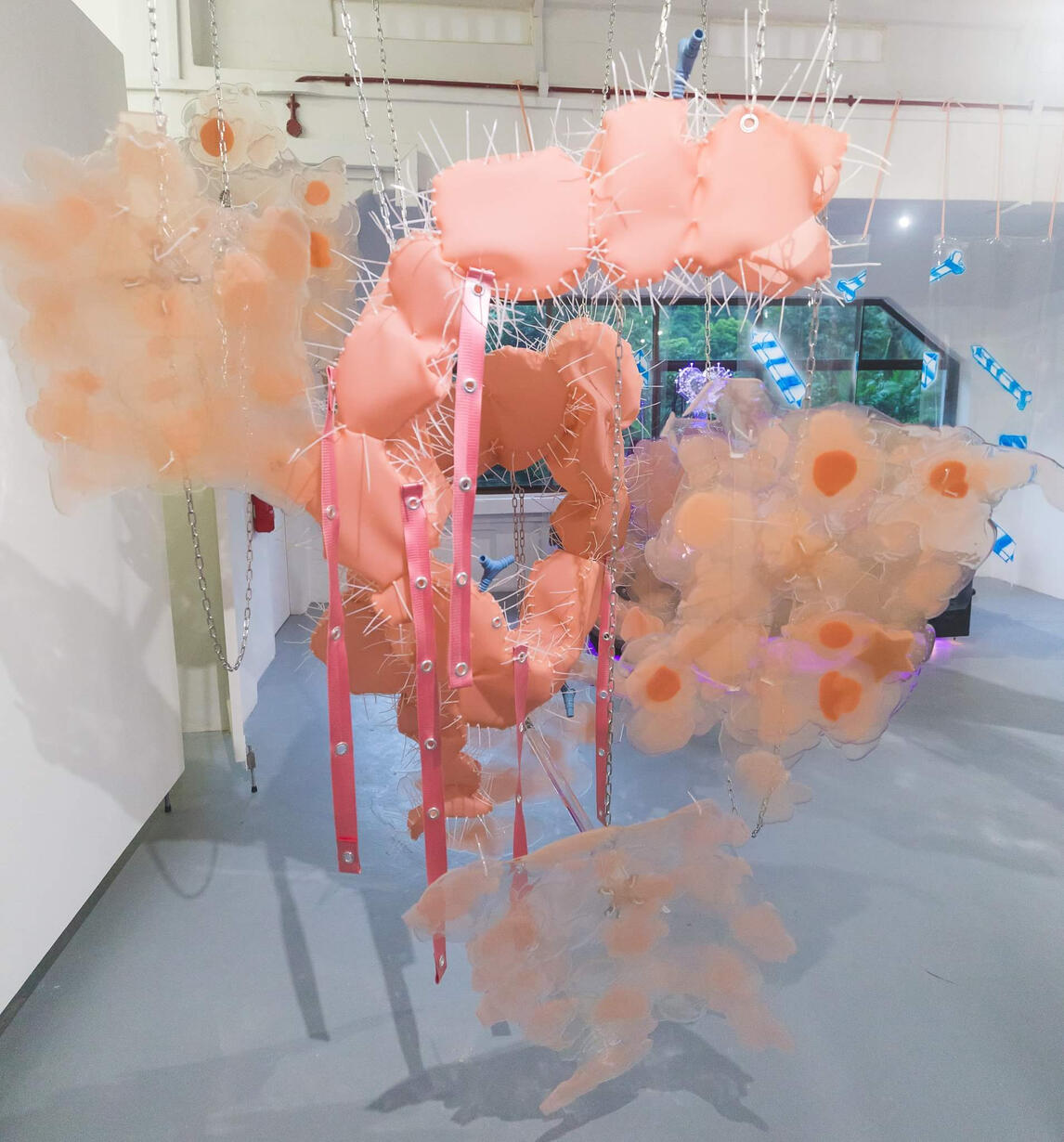
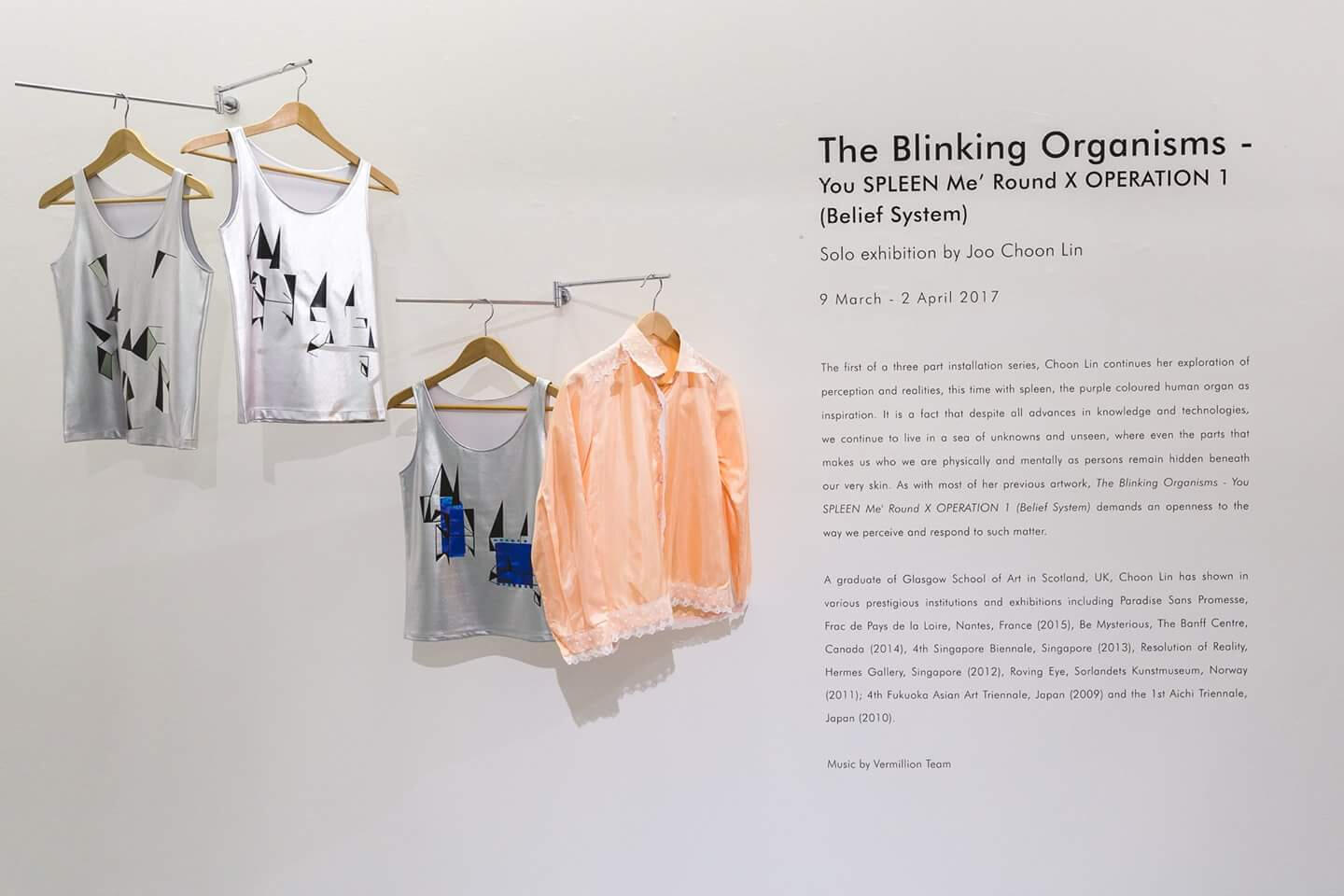
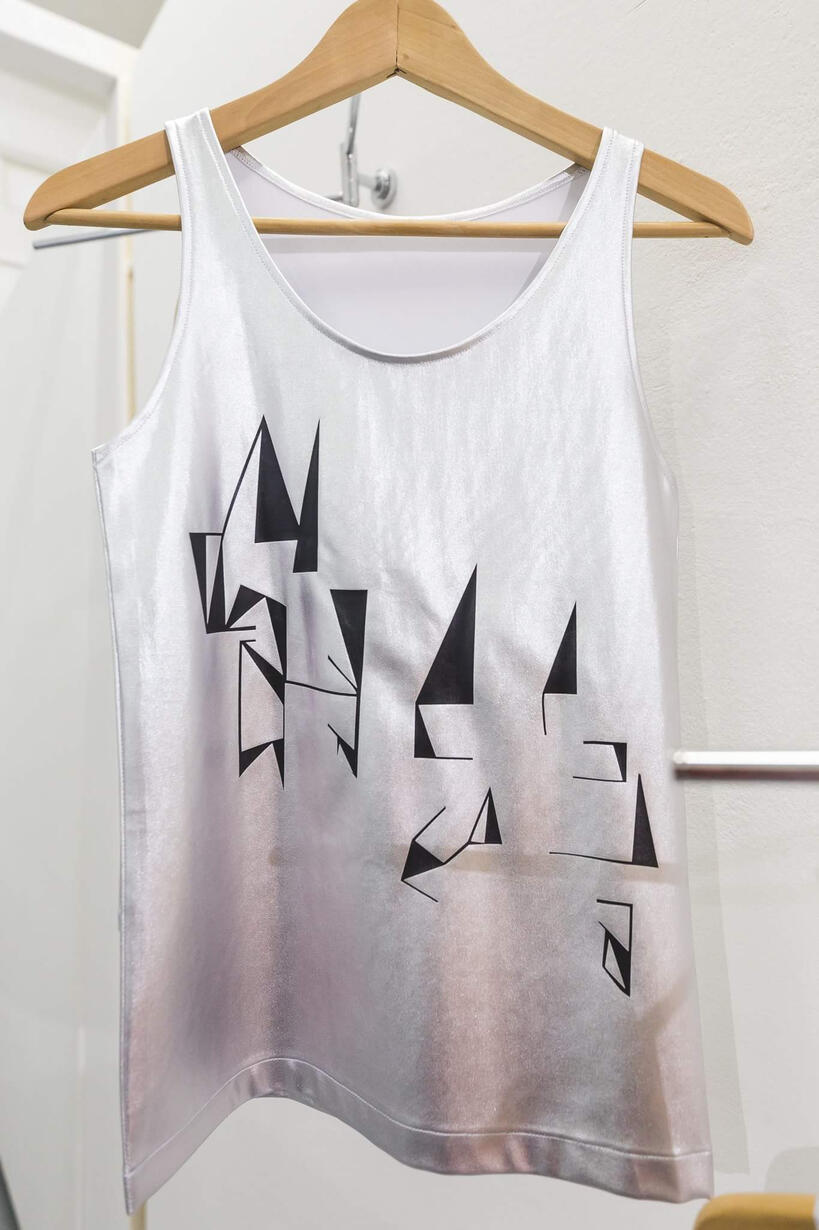
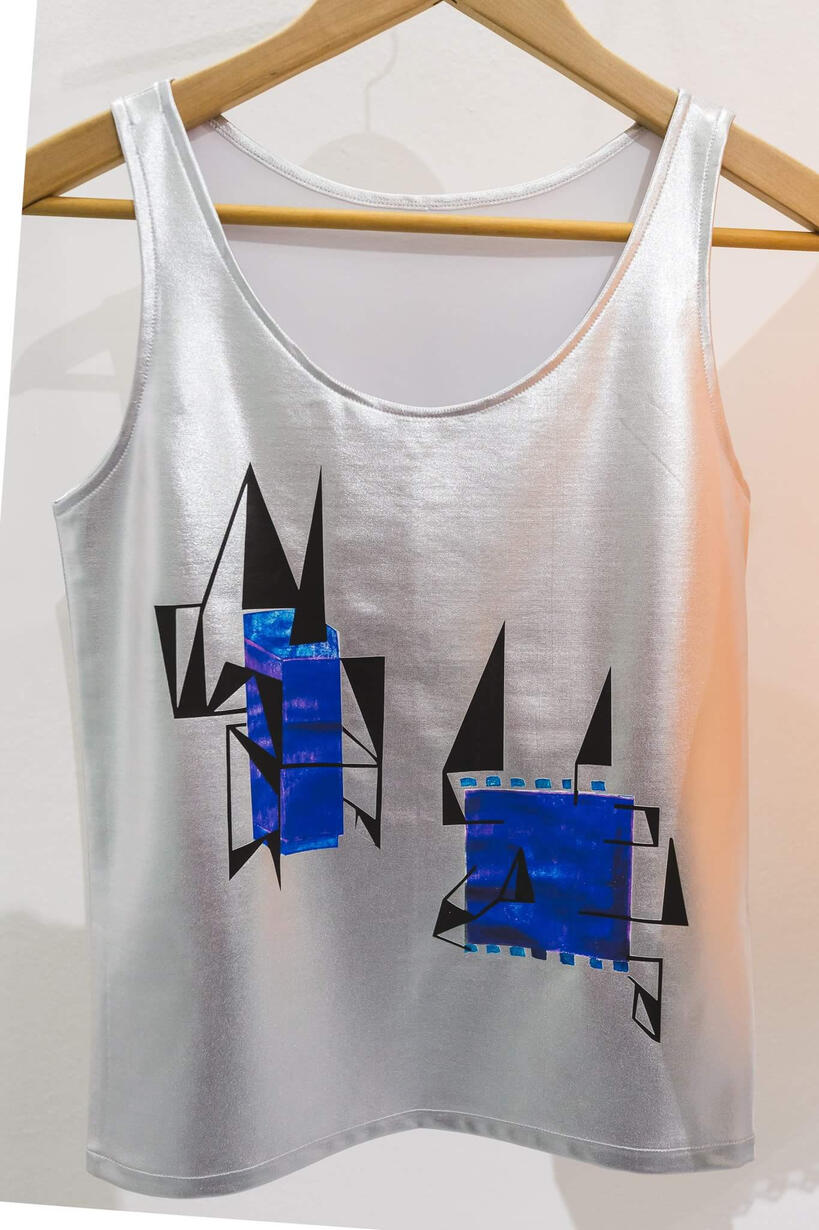
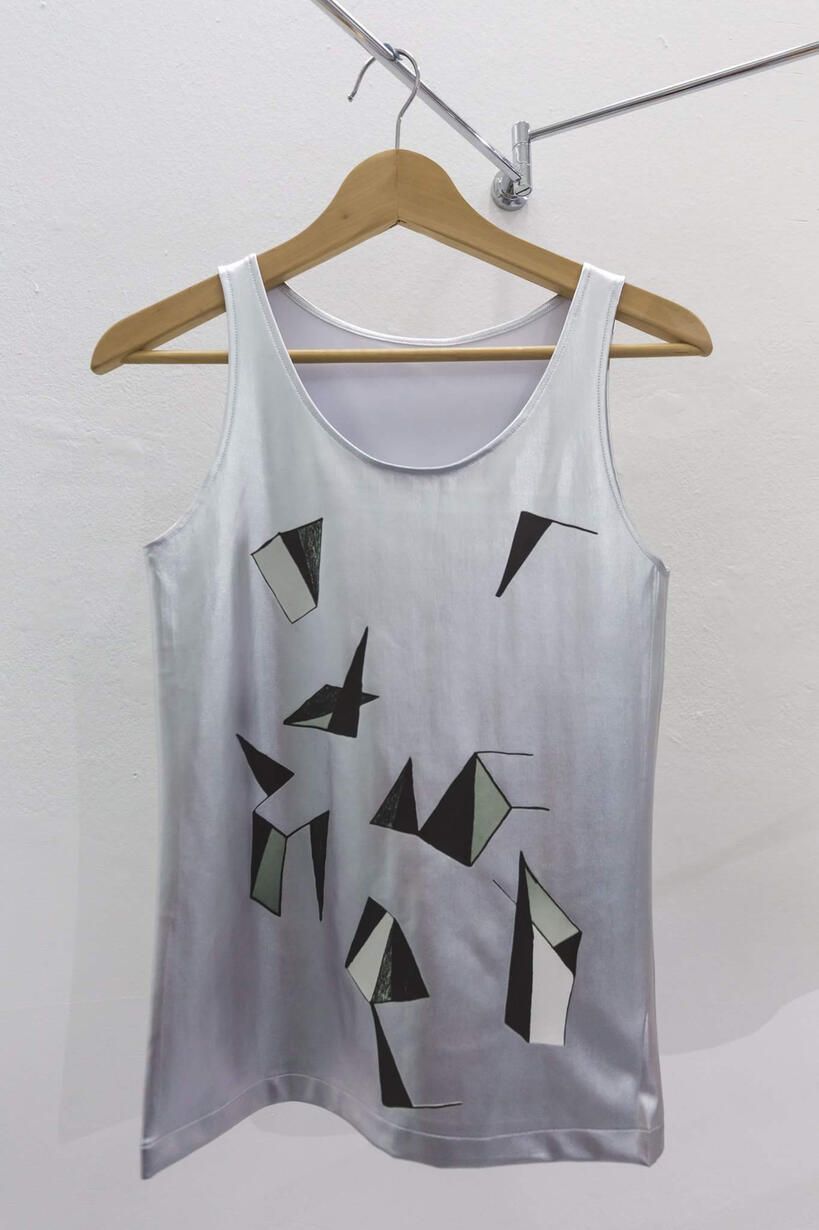
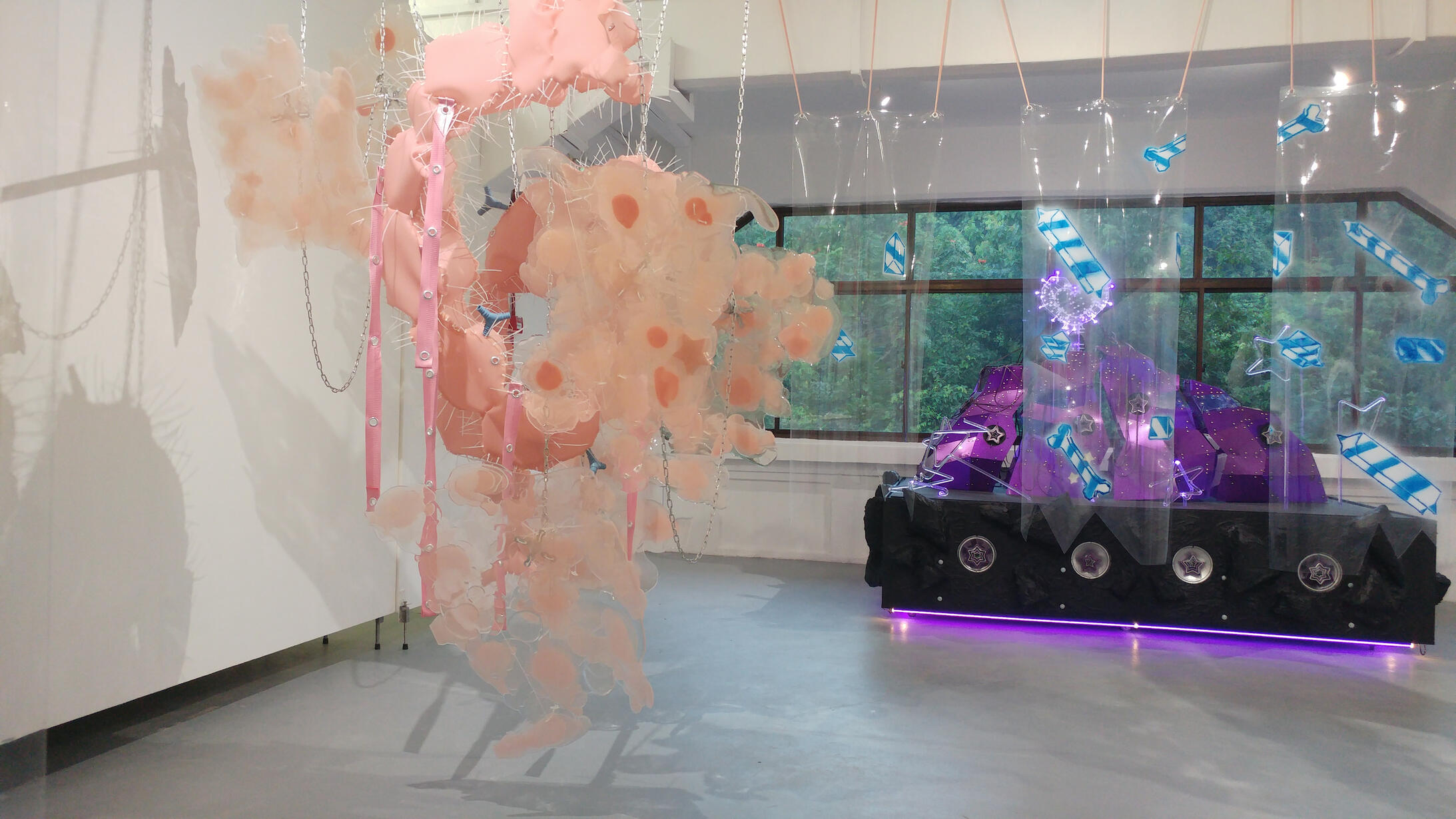
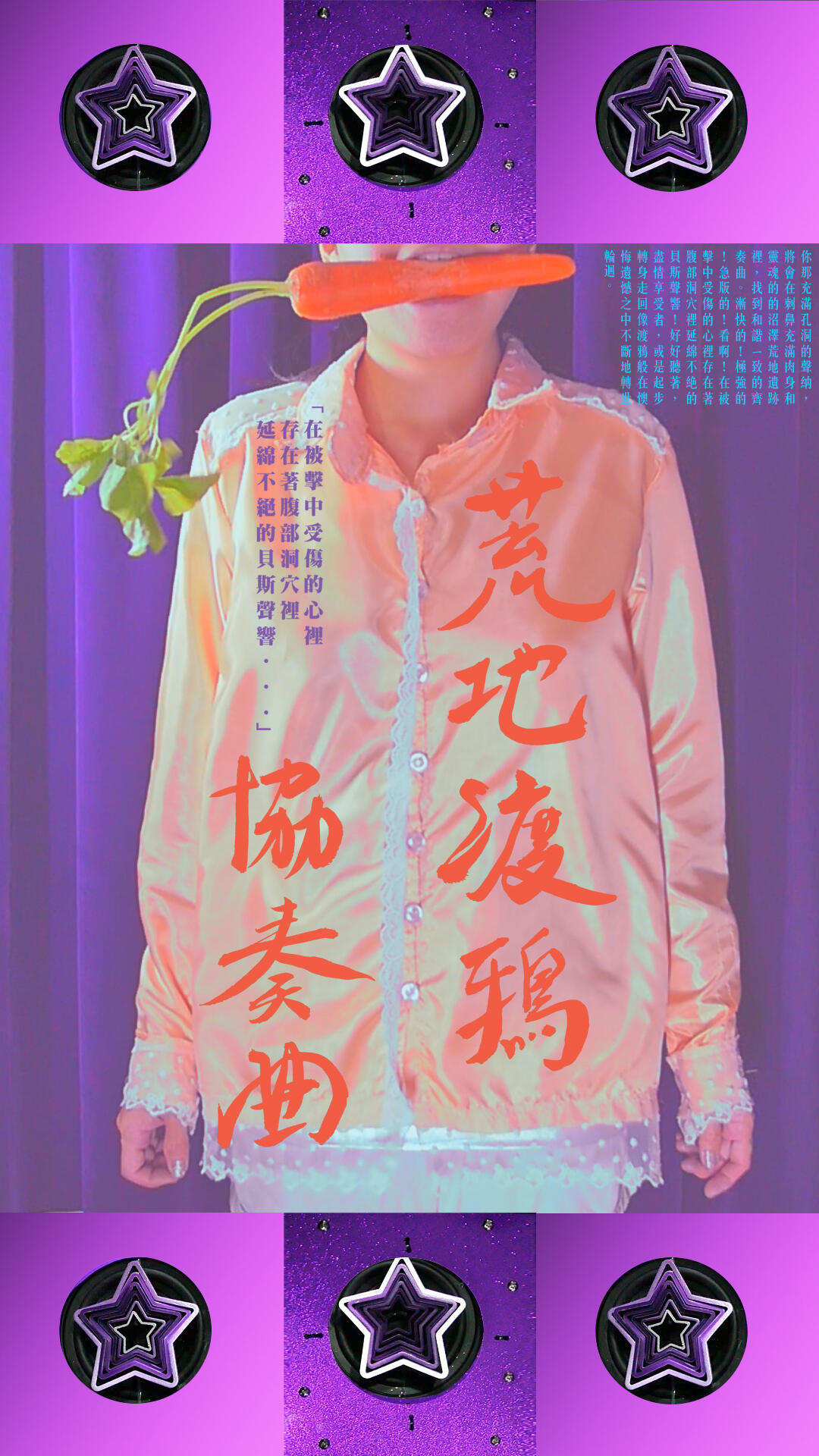
© Joo Choon Lin. All rights reserved.
The Blinking Organism - You SPLEEN Me’ Round X
Operation 2
Solo Exhibition x Performance, Esplanade Concourse, Singapore 2017
. . ゚ 。 . 。 ゚ ☆。 , ゚. 。 。+ 。゚ ☆ ゚.☆ ゚。 。. ̽.
✧ 。 。 。 , + 。. , 。 ✸ , o 。.
゚ , ̤ , ̽。 . . .✶ ゚ . ゚ +. 。゚ 。 ★ , + 。. , 。✸ , o , ゚. 。゚. ゚. o ゚ 。 . ✧ , . . 。 .゚✶ .+。 ∗ 。+ 。゚ ☆ ゚. + 。 ゚ ,。 . ✹ 。 ✧ , .。
☆ 。, ゚ . 。 。+ 。 . , 。+ ゚. 。。 ゚. .✺
Inspired by Canadian media theorist Marshall McLuhan, Joo Choon Lin feels that “[we are] like astronauts in the processed world of technology, beings who are fascinated with the unknown, mysterious land”.As the world’s natural resources are being depleted rapidly to meet the demands of a growing human population, more technologies have been devised to capture the likeness of things and to mimic nature and its forms.For example, what appear to be wooden park benches are actually made of concrete, while objects that appear to be precious stones and marble are actually made of plastic resin. Joo believes that the physicality of the material world can influence our thoughts and emotions as well as social relations and behaviour. As advances in technology bring about drastic changes in our lifestyles and living habits, these subtle changes may slowly effect a biological evolution, and Joo is fascinated with how the human race may evolve through hyper-adaptation.Her three-part series, The Blinking Organisms, is likened to a morphogenesis process where the spleen (the organ in the human body most associated with depression and anxiety, and which was used by Shakespeare to represent melancholy and hysteria evolves and morphs into new, mutated forms, set to a rhythm of lights and low frequency sounds, pulsating and blinking as if they are alive-breathing, growing and evolving.゚ , ̤ , ̽。 . + ゚ 。 。゚ ⭐️ 。Performers ⭐️ 。 . ゚ 。, ☆ ゚ 。, ☆。✧Black Bile: Lyon Sim + Kai Lam + Joo Choon Lin + Michelle Lim + Fuzz Lee ★ 。゚ ✧ . . ゚ 。 . Star: Abigail Chay 。 ゚ ☆。 , ゚. 。 ∗ 。+ 。゚ ☆ ゚. ✨ + 。 ゚ ,。Ancient Bone/Sweeper: Shu Heing . ✹ 。 ✧ , .。
☆ 。, ゚ . 。 ⭐️ 。+ 。 . , 。+ ゚. 。*。 ゚. .✺ . . . ゚.Music by: Vermillion Team
。゚。 ∗
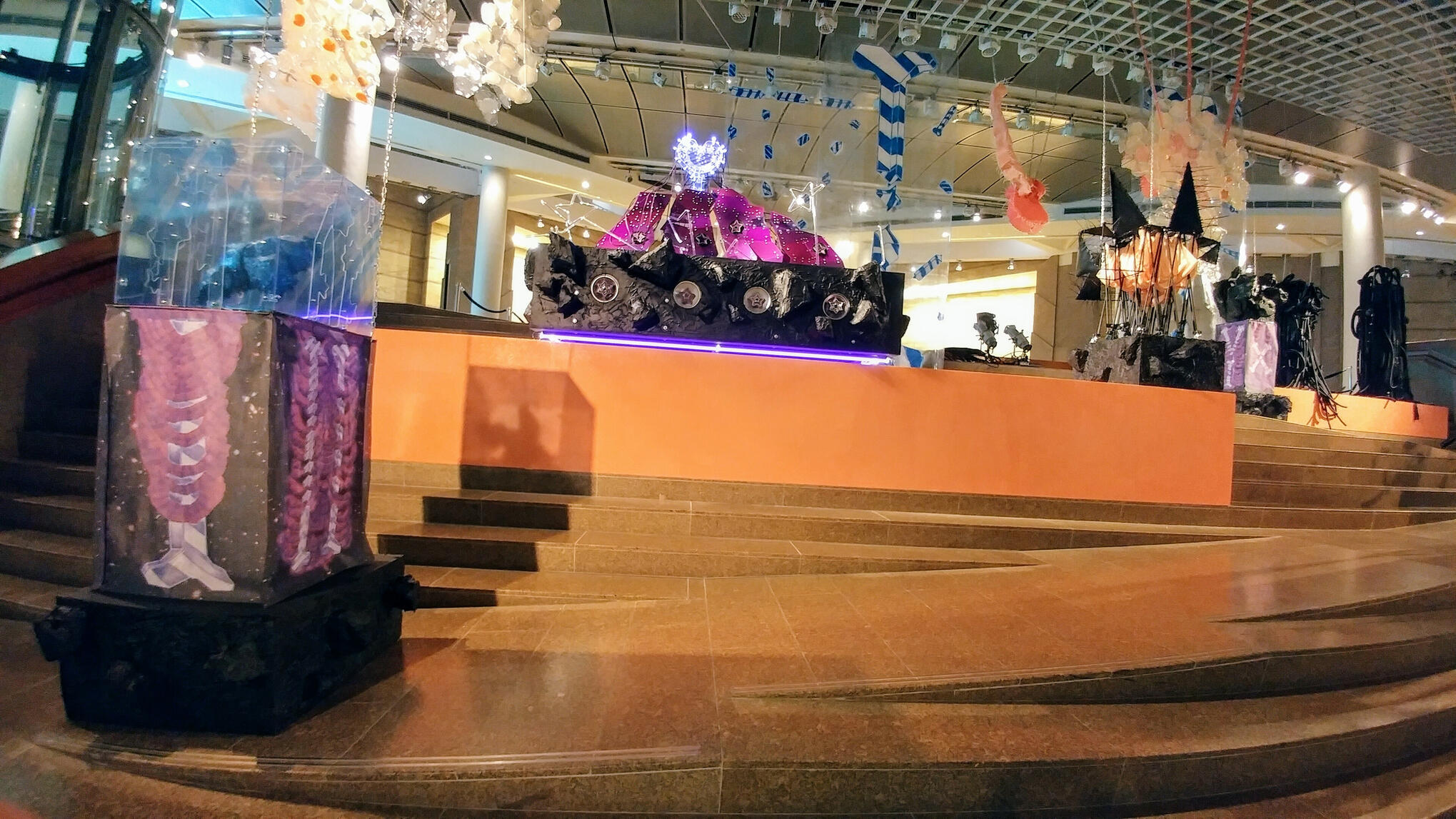
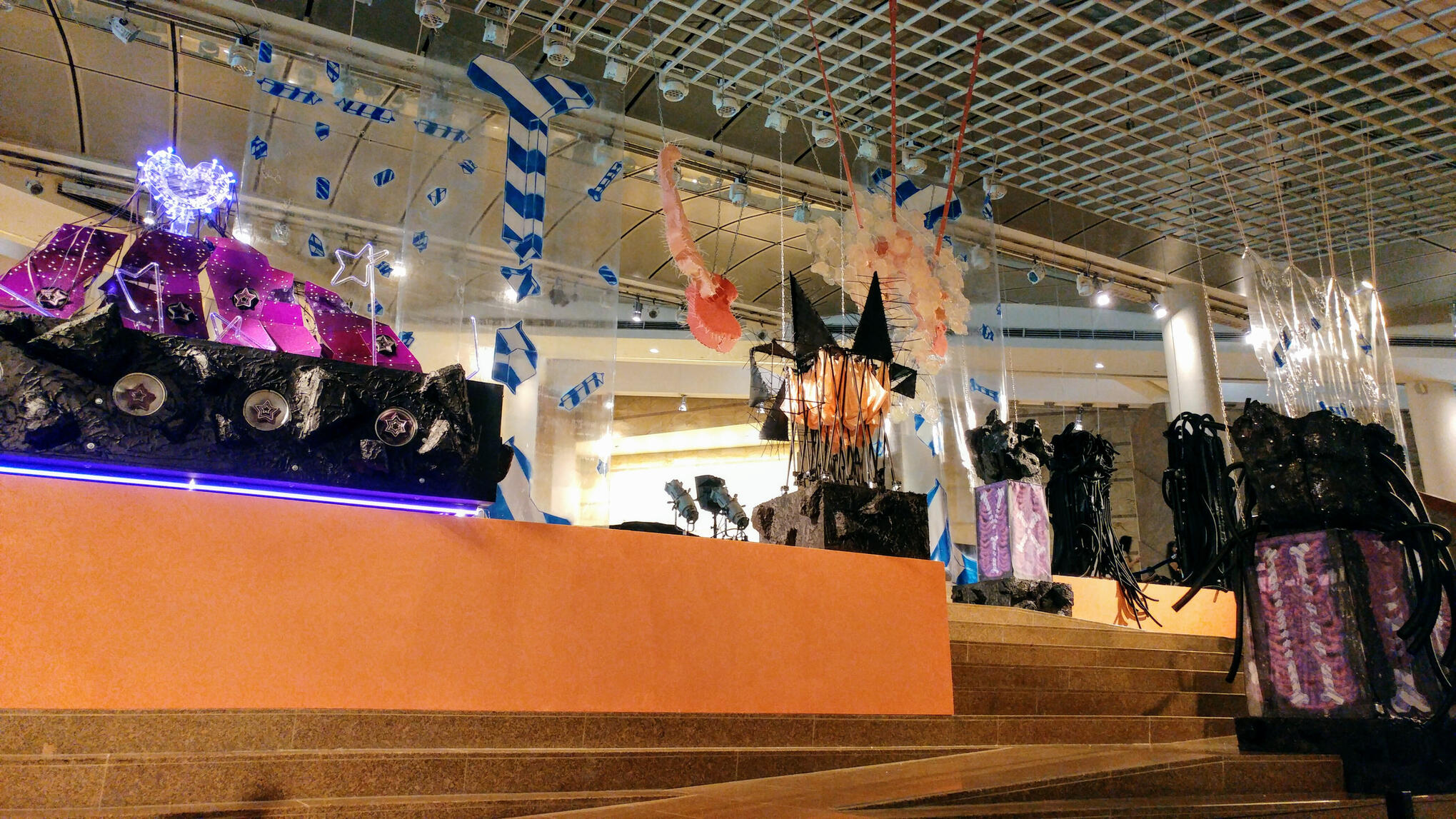
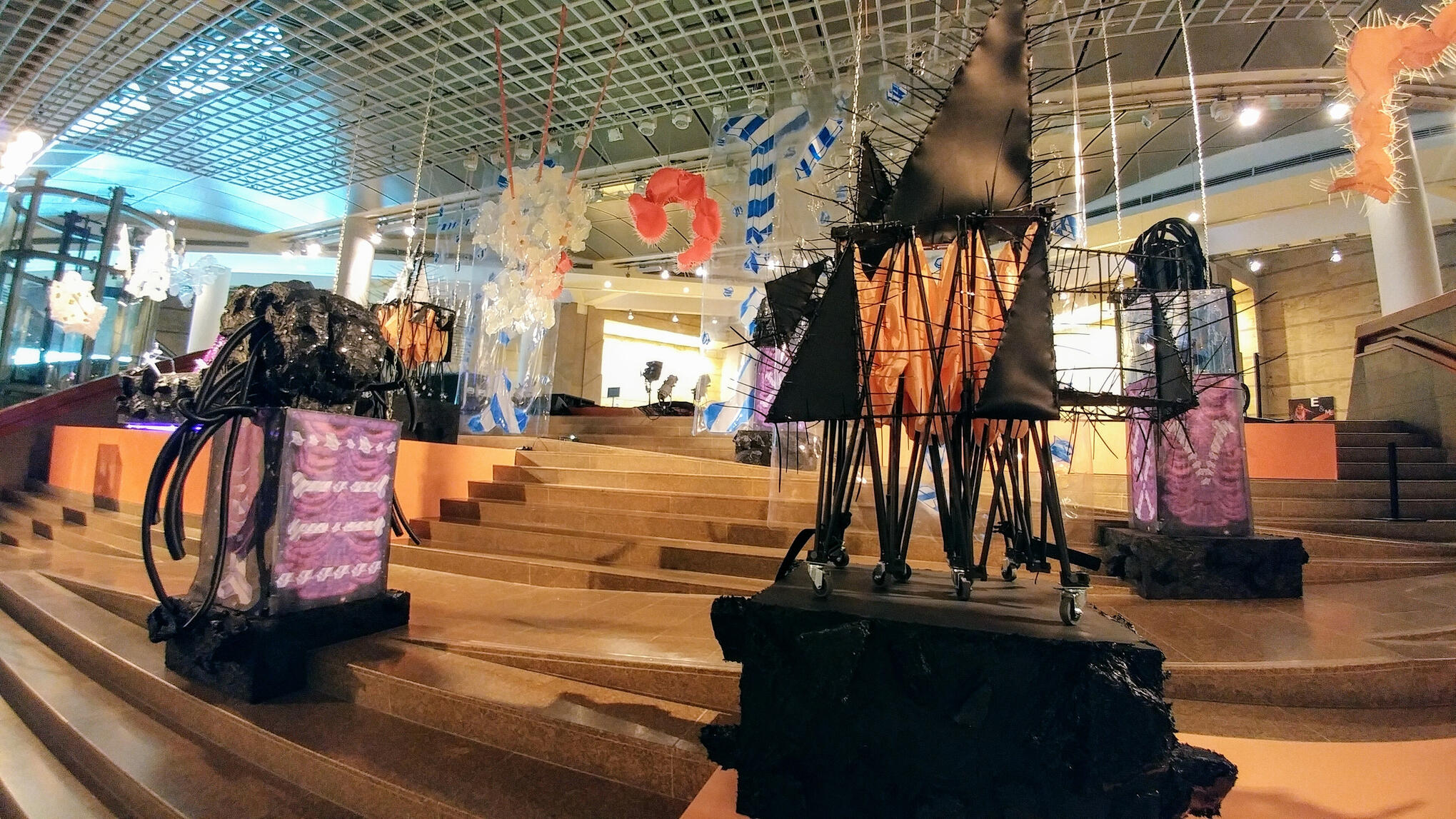
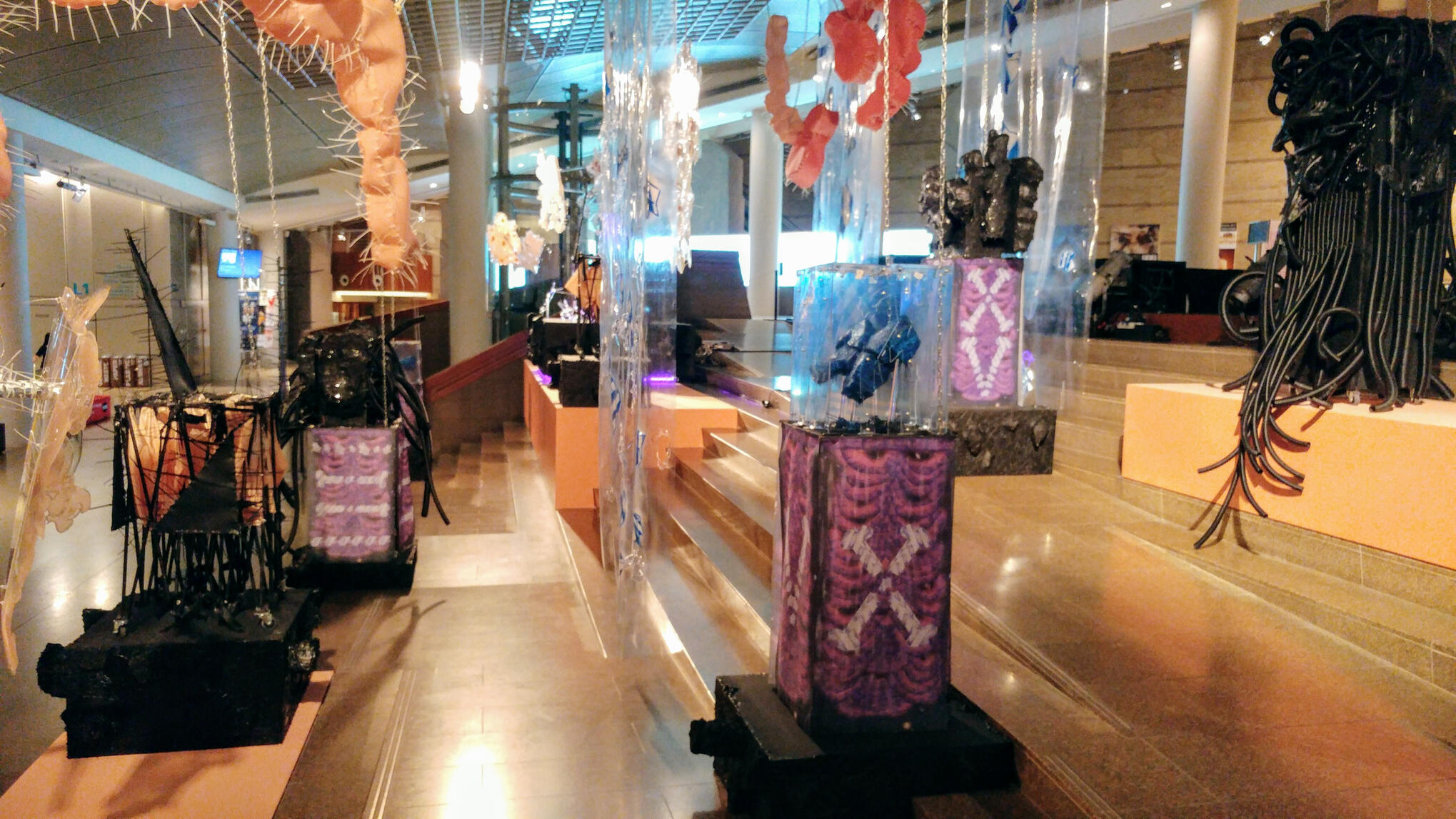
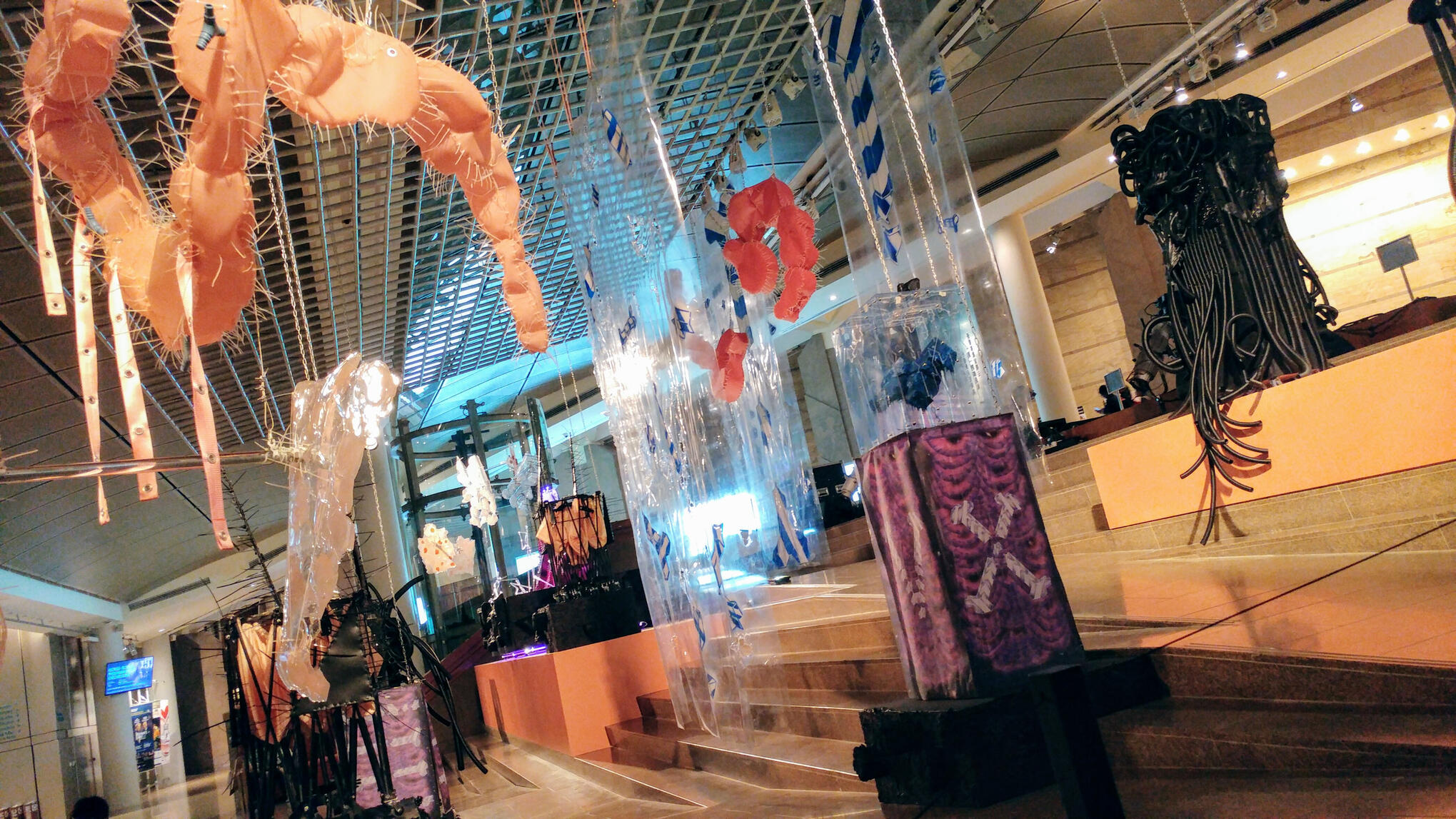
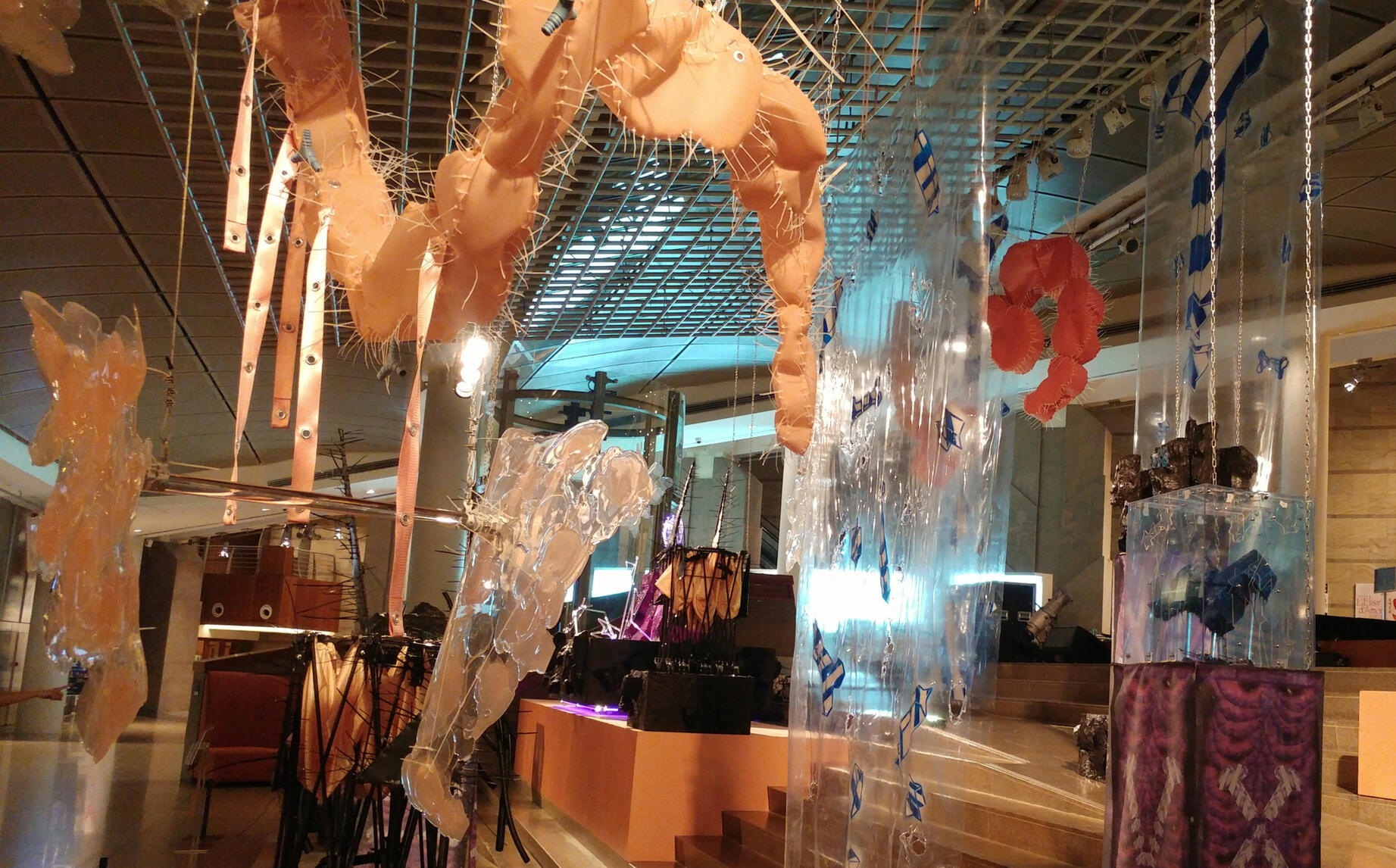
© Joo Choon Lin. All rights reserved.
Performance X The Blinking Organism - You SPLEEN Me’ Round X Operation 2
Solo Exhibition x Performance, Esplanade Concourse, Singapore 2017
. . ゚ 。 . 。 ゚ ☆。 , ゚. 。 。+ 。゚ ☆ ゚.. . ゚ 。 . 。 ゚ ☆。 , ゚. 。 。+ 。゚ ☆ ゚.☆ ゚。 。. ̽.
✧ 。 。 。 , + 。. , 。 ✸ , o 。.
゚ , ̤ , ̽。 . . .✶ ゚ . ゚ +. 。゚ 。 ★ , + 。. , 。✸ , o , ゚. 。゚. ゚. o ゚ 。 . ✧ , . . 。 .゚✶ .+。 ∗ 。+ 。゚ ☆ ゚. + 。 ゚ ,。 . ✹ 。 ✧ , .。
☆ 。, ゚ . 。 。+ 。 . , 。+ ゚. 。。 ゚. .✺
The performers interact with collapsible sculptures that expand through collective effort, unfolding into shifting backdrops. Through push and pull, the structures blink into motion, dividing and reassembling, revealing the vulnerability of social systems and the constant need for renewal.A group of staged audience members, dressed in identical skin-toned clothing and holding carrots in their mouths, appear exposed and restrained. Mostly still, they clap or boo at intervals, reflecting suppressed individuality and the tension between participation and passivity.Informed by Marshall McLuhan’s idea of navigating a processed world of technology, the work reflects my interest in materiality, adaptation, and how technological environments shape perception and behaviour. At the centre is a purple sculpture embedded with subwoofers and star-shaped elements. Activated by low-frequency sound, it vibrates and blinks as if alive. This form represents the spleen, a site of transformation, evolving through rhythm, light, and repetition.゚ , ̤ , ̽。 . + ゚ 。 。゚ ⭐️ 。Performers ⭐️ 。 . ゚ 。, ☆ ゚ 。, ☆。✧Black Bile: Lyon Sim + Kai Lam + Joo Choon Lin + Michelle Lim + Fuzz Lee ★ 。゚ ✧ . . ゚ 。 . Star: Abigail Chay 。 ゚ ☆。 , ゚. 。 ∗ 。+ 。゚ ☆ ゚. ✨ + 。 ゚ ,。Ancient Bone/Sweeper: Shu Heing . ✹ 。 ✧ , .。
☆ 。, ゚ . 。 ⭐️ 。+ 。 . , 。+ ゚. 。*。 ゚. .✺ . . . ゚.Music by: Vermillion Team
。゚。 ∗
. . ゚ 。 . 。 ゚ ☆。 , ゚. 。 。+ 。゚ ☆ ゚.. . ゚ 。 . 。 ゚ ☆。 , ゚. 。 。+ 。゚ ☆ ゚.☆ ゚。 。. ̽.
✧ 。 。 。 , + 。. , 。 ✸ , o 。.
゚ , ̤ , ̽。 . . .✶ ゚ . ゚ +. 。゚ 。 ★ , + 。. , 。✸ , o , ゚. 。゚. ゚. o ゚ 。 . ✧ , . . 。 .゚✶ .+。 ∗ 。+ 。゚ ☆ ゚. + 。 ゚ ,。 . ✹ 。 ✧ , .。
☆ 。, ゚ . 。 。+ 。 . , 。+ ゚. 。。 ゚. .✺

. 。 ゚ ☆。 , ゚. 。 。+ 。゚ ☆ ゚.. . ゚ 。 . 。 ゚ ☆。 , ゚. 。 。+ 。゚ ☆ ゚.☆ ゚。 。. ̽.
✧ 。 。 。 , + 。. , 。 ✸ , o 。.
゚ , ̤ , ̽。 . . .✶ ゚ . ゚ +. 。゚ 。 ★ , + 。. , 。✸ , o , ゚. 。゚. ゚. o ゚ 。 . ✧ , . . 。 .゚✶ .+。 ∗ 。+ 。゚ ☆ ゚. + 。 ゚ ,。 . ✹ 。 ✧ , .。
☆ 。, ゚ . 。 。+ * 。 .
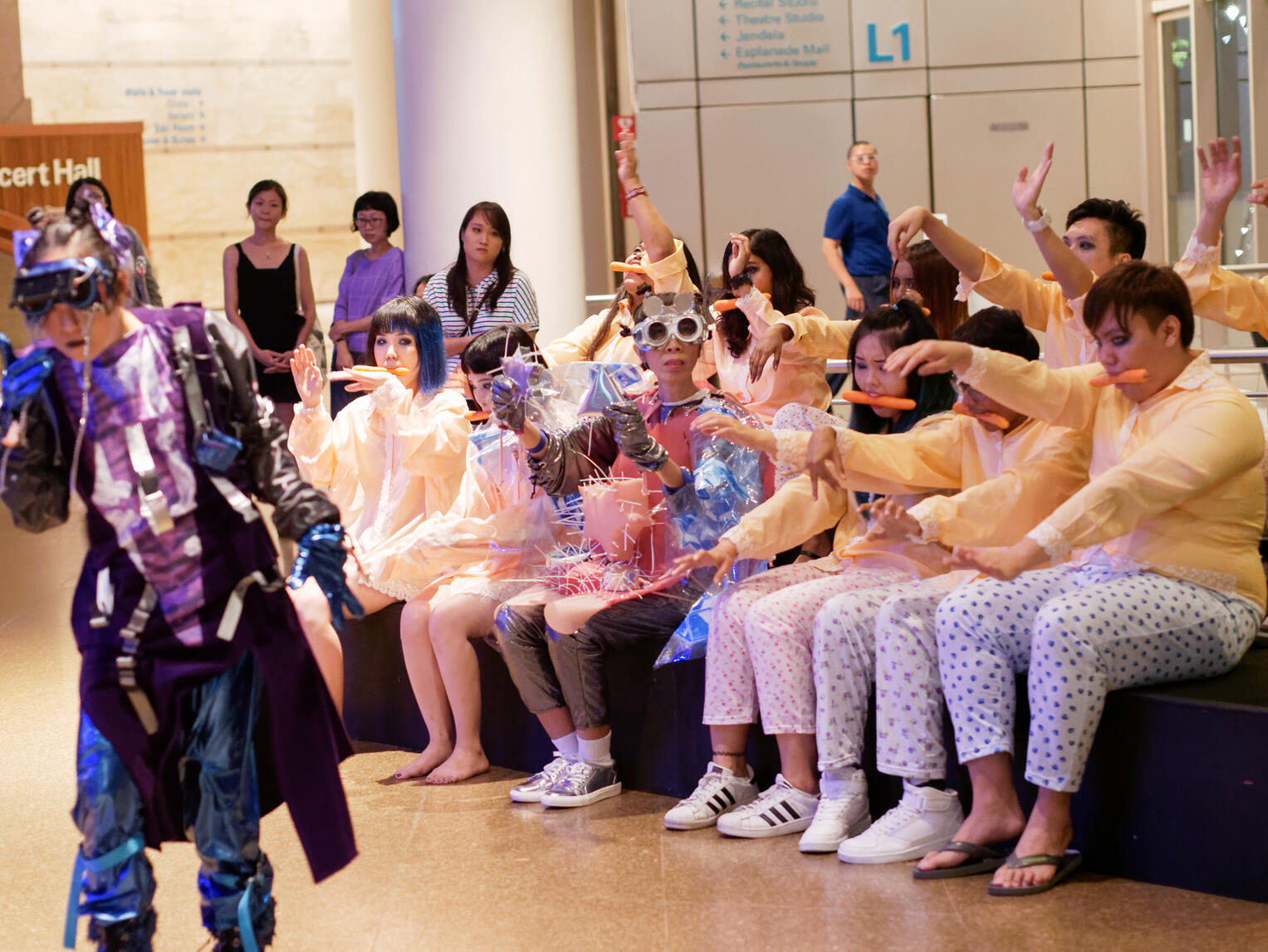
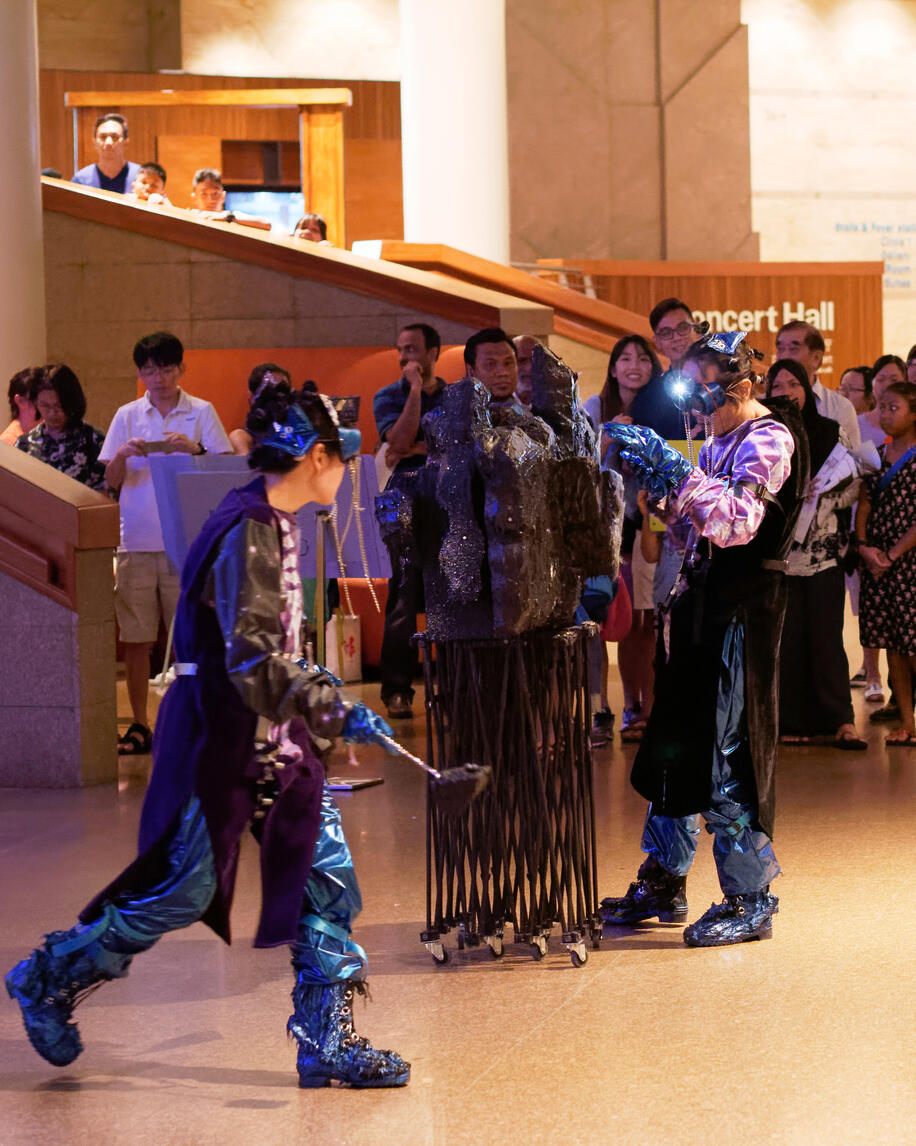
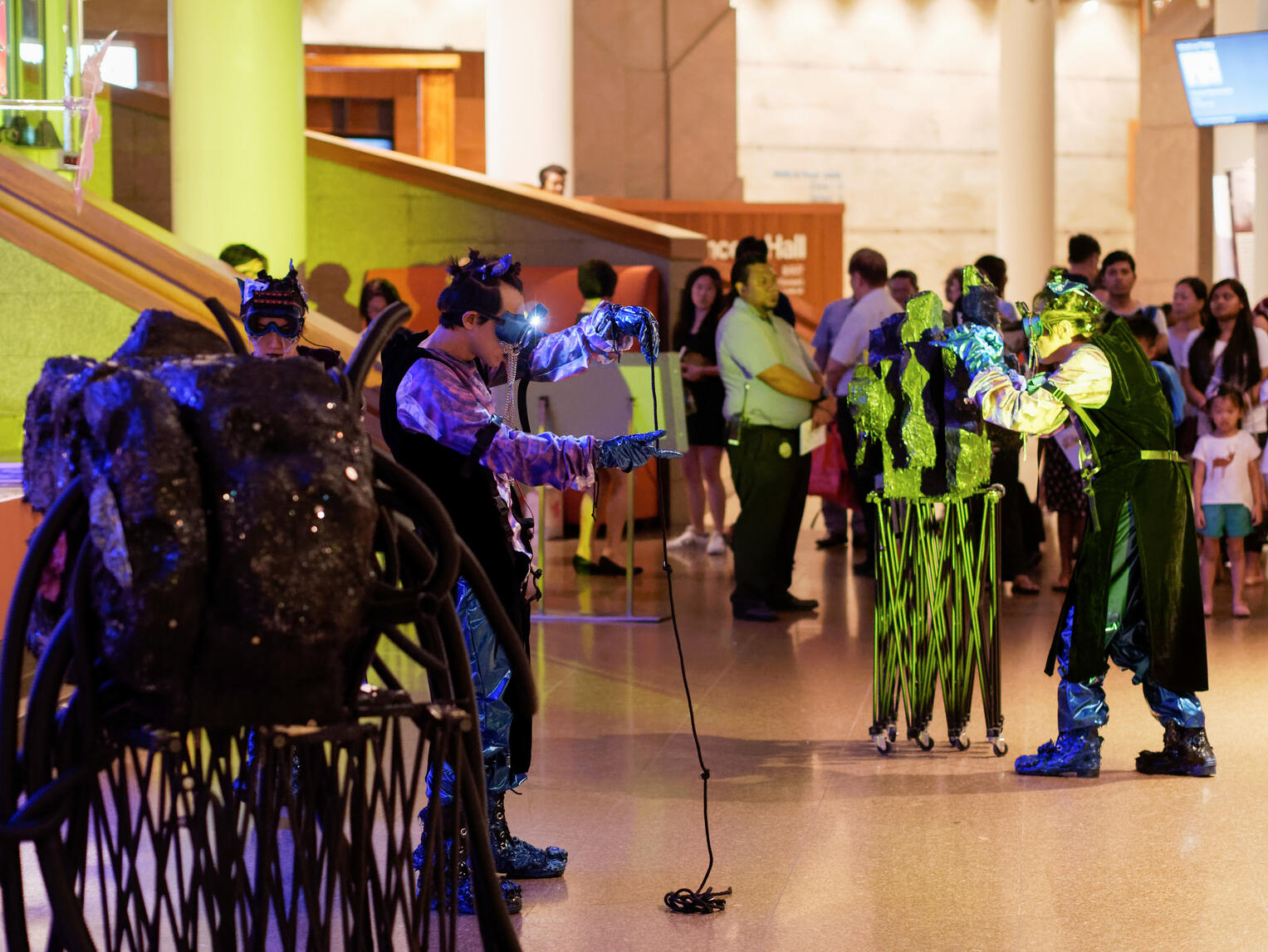
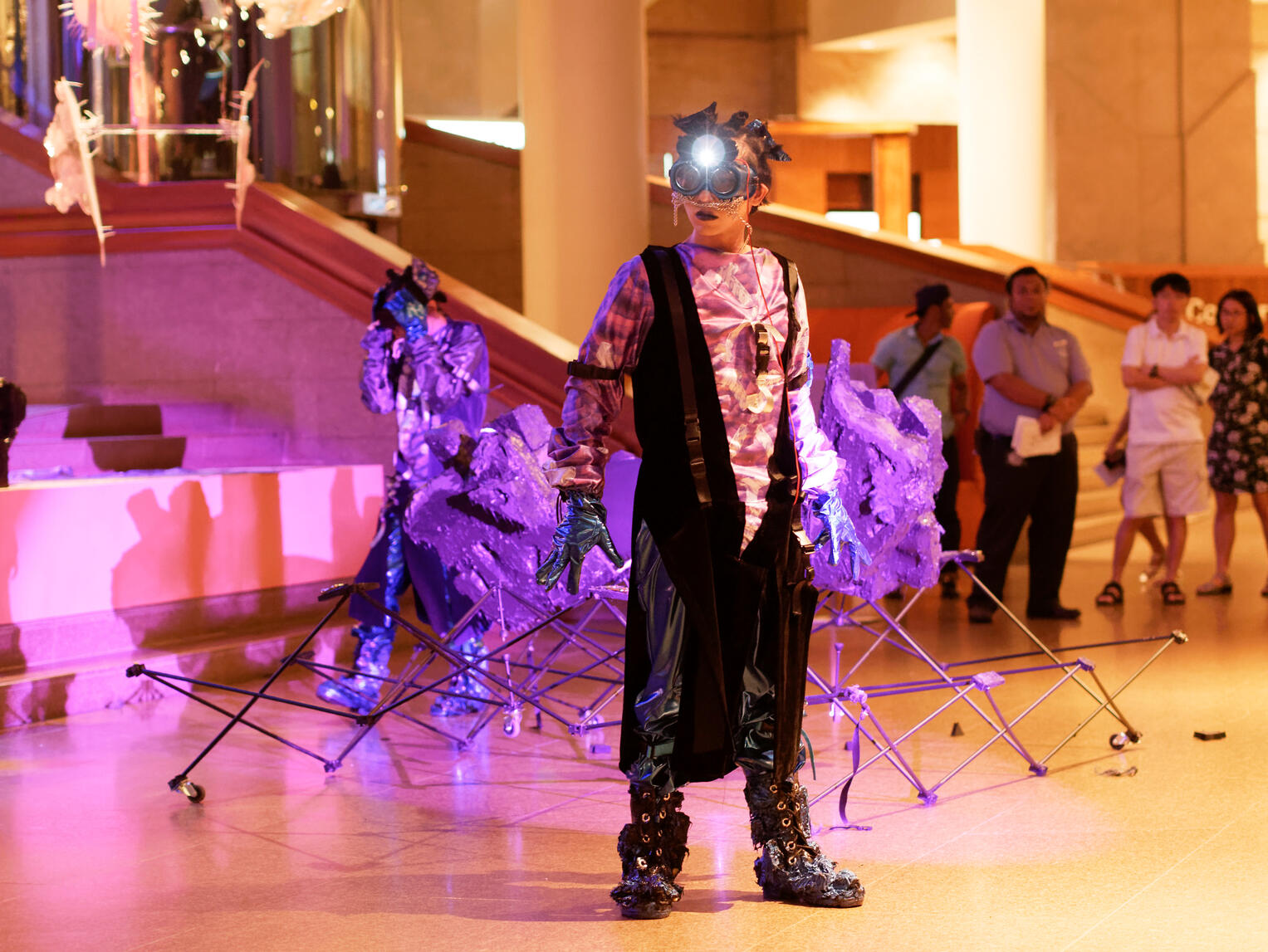
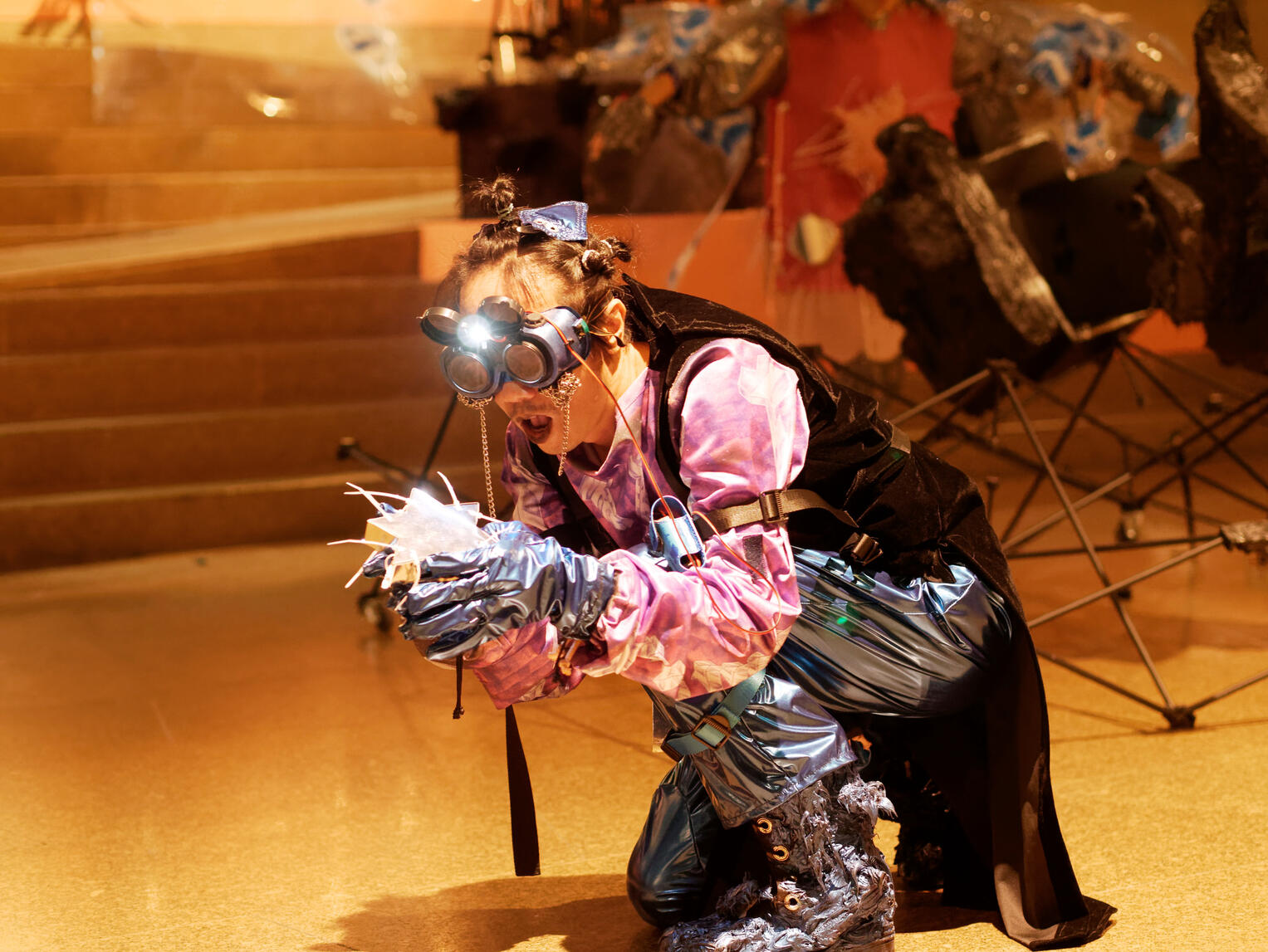
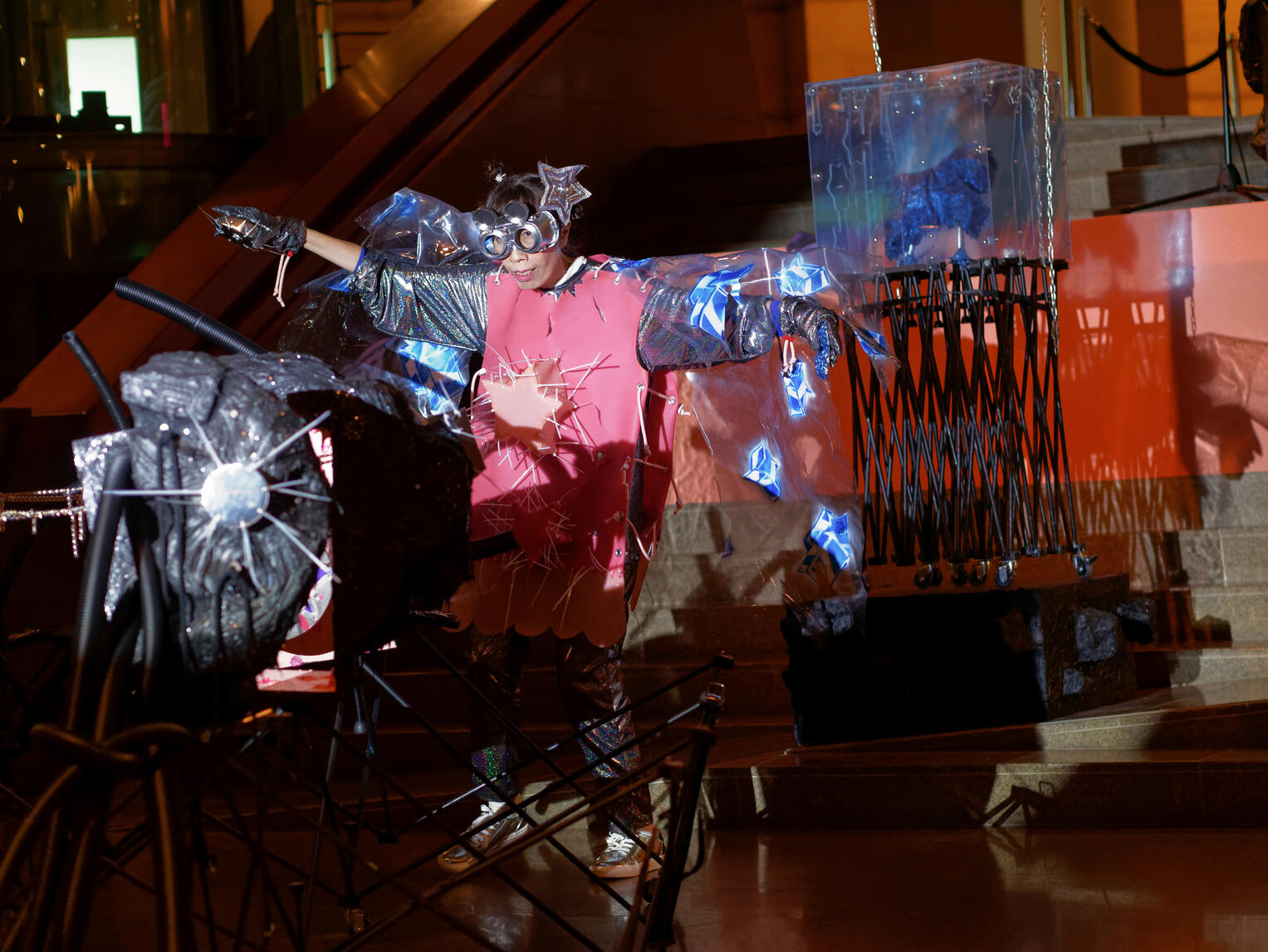
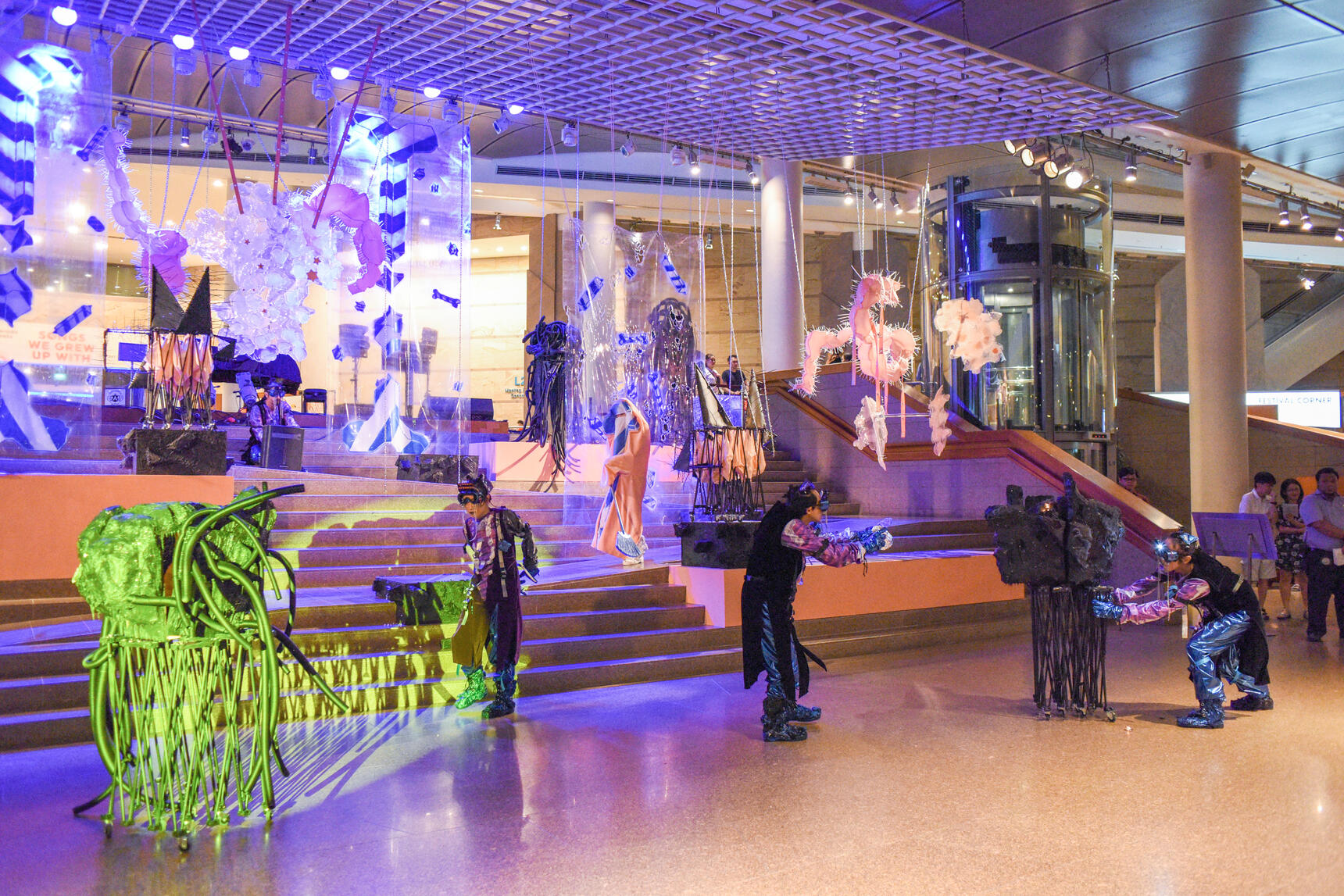
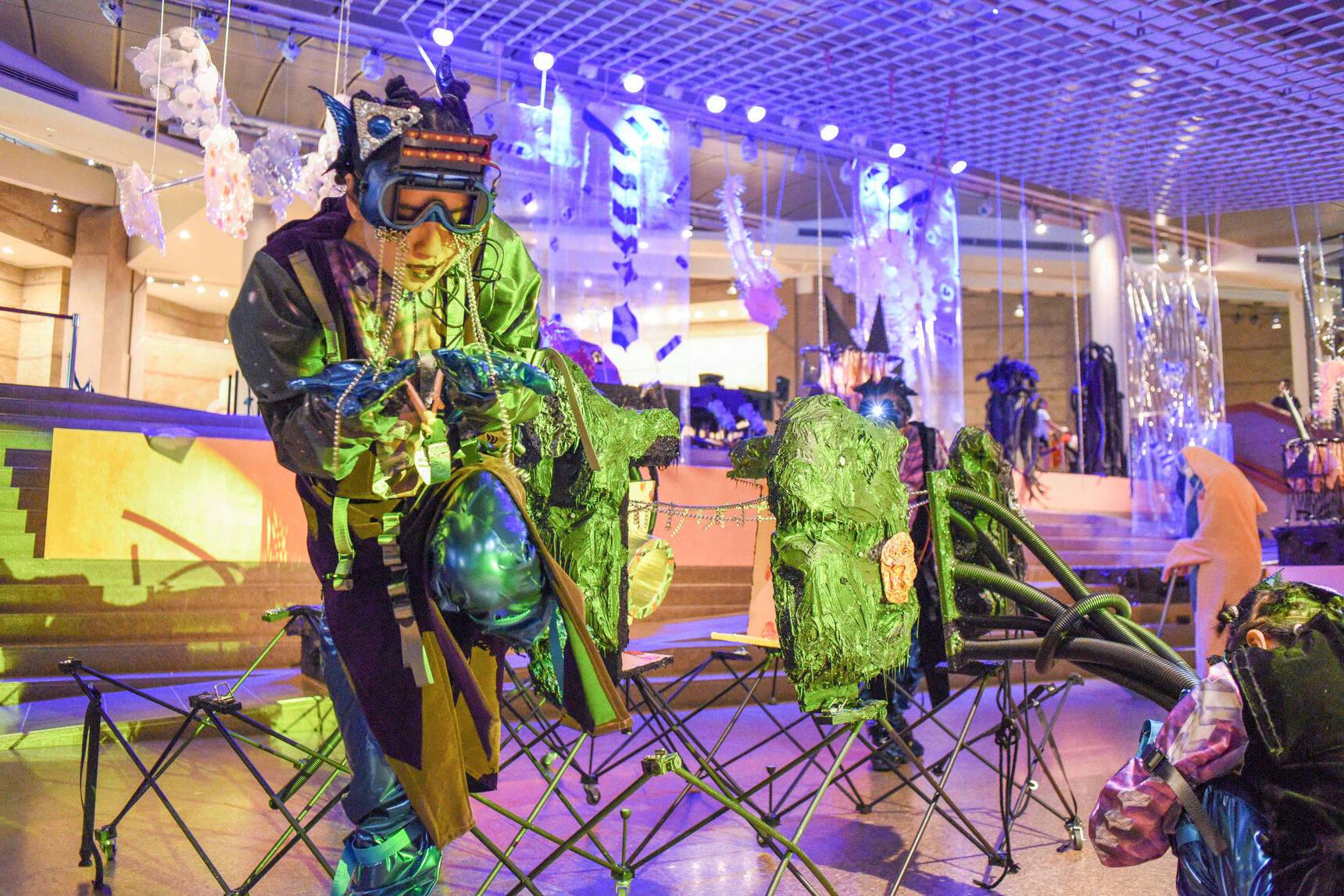
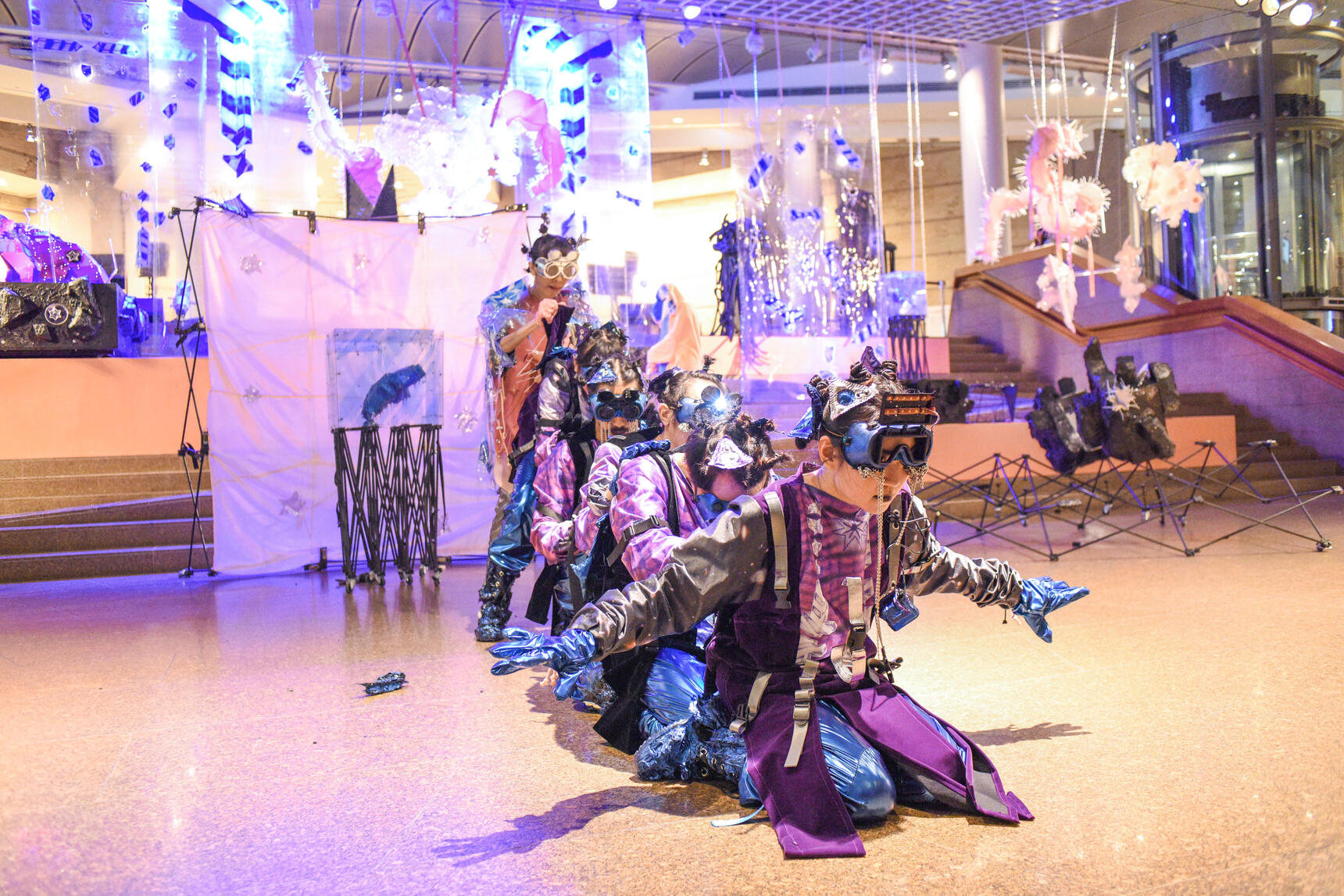
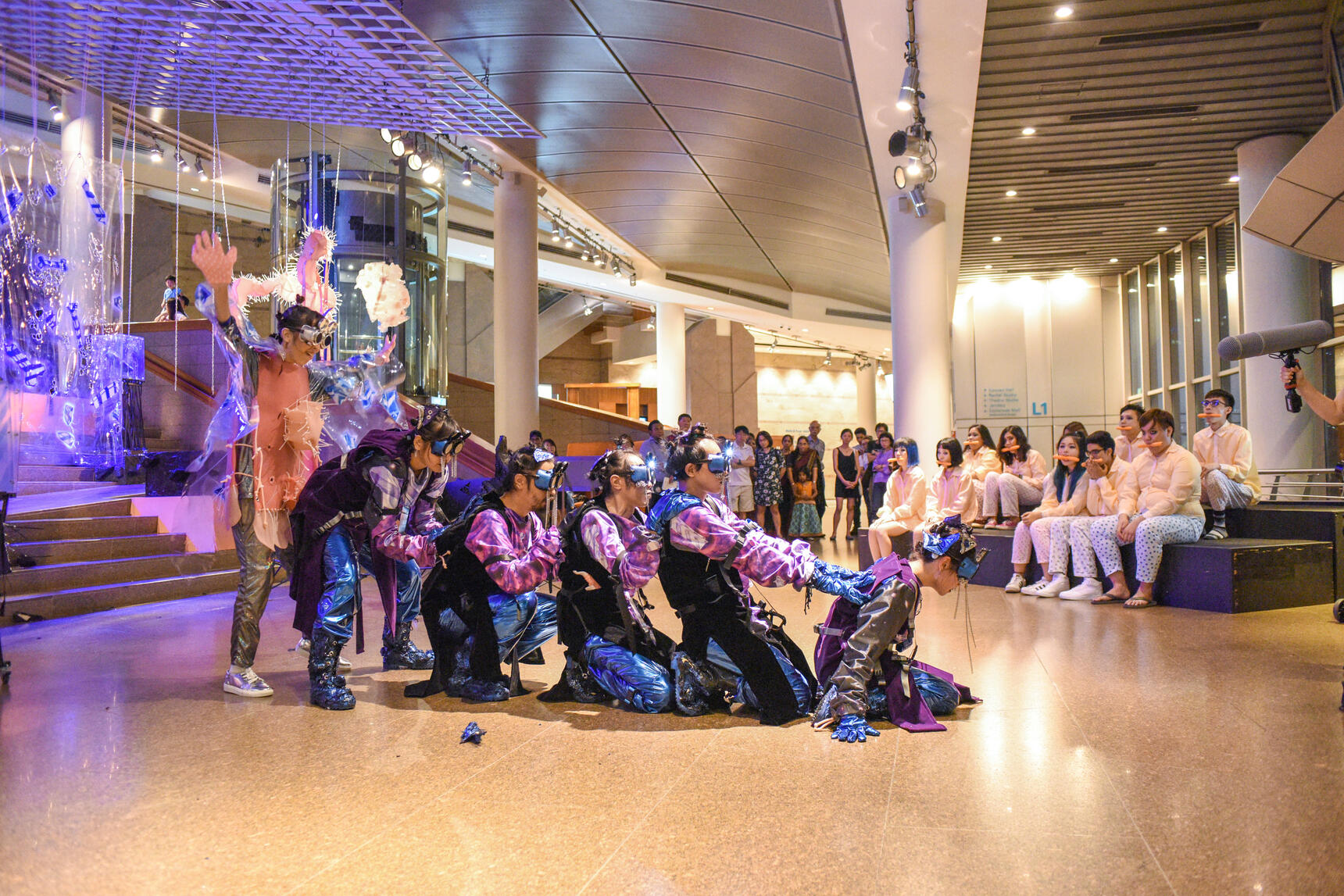
© Joo Choon Lin. All rights reserved.
Roller Disco Rink✧The Blinking Organism X You SPLEEN Me’ Round✧OPERATION 00100✧2017
✫ Singapore Night Festival 2017 ✫

★Performance 26 Aug 2027 8PM★Sound and Music Design by Joe Ng★Performers: Lyon Sim, Michelle Lim, Joo Choon Lin, Kok Shu Heing, Abigail Chay, Koh Hong Peng, Lin Swee Choo, Chen Chee Fee, Tan Geok Chan, Tan Hean, Lee Tiang Chu★Videographer + Editor: Nate Eileen Tjoeng | Chinese Calligraphic Design: Wen-Li Tesar
As an extension of my three-part series The Blinking Organism X You Spleen Me Round, this work continues my exploration of the human system and its internal rhythms, tensions, and instabilities.At the centre of the work is a purple sculptural form based on the spleen, an organ historically associated with anxiety, melancholy, and emotional imbalance. Reimagined using everyday materials such as plastic and foam, the sculpture is bathed in purple light and driven by deep bass, becoming both bodily and machine-like.Performers skate with inflatable wings, supported by roller skate walkers that function as both movement aids and sculptural elements. When not in use, the walkers are arranged into star-shaped formations, remaining as installations after the performance ends.The roller rink becomes a diagram of social space. The audience is invited to rent skates and enter the rink, sharing the space with performers and sculptures. Through repetition, effort, and endurance, movement gradually gives way to fatigue. The performance ends with bodies collapsing and skate walkers breaking apart, revealing how anxiety, exhaustion, and power are inscribed within the human system.
© Joo Choon Lin. All rights reserved.
The Blinking Organism - You SPLEEN Me’ Round X
Operation 3, 2017
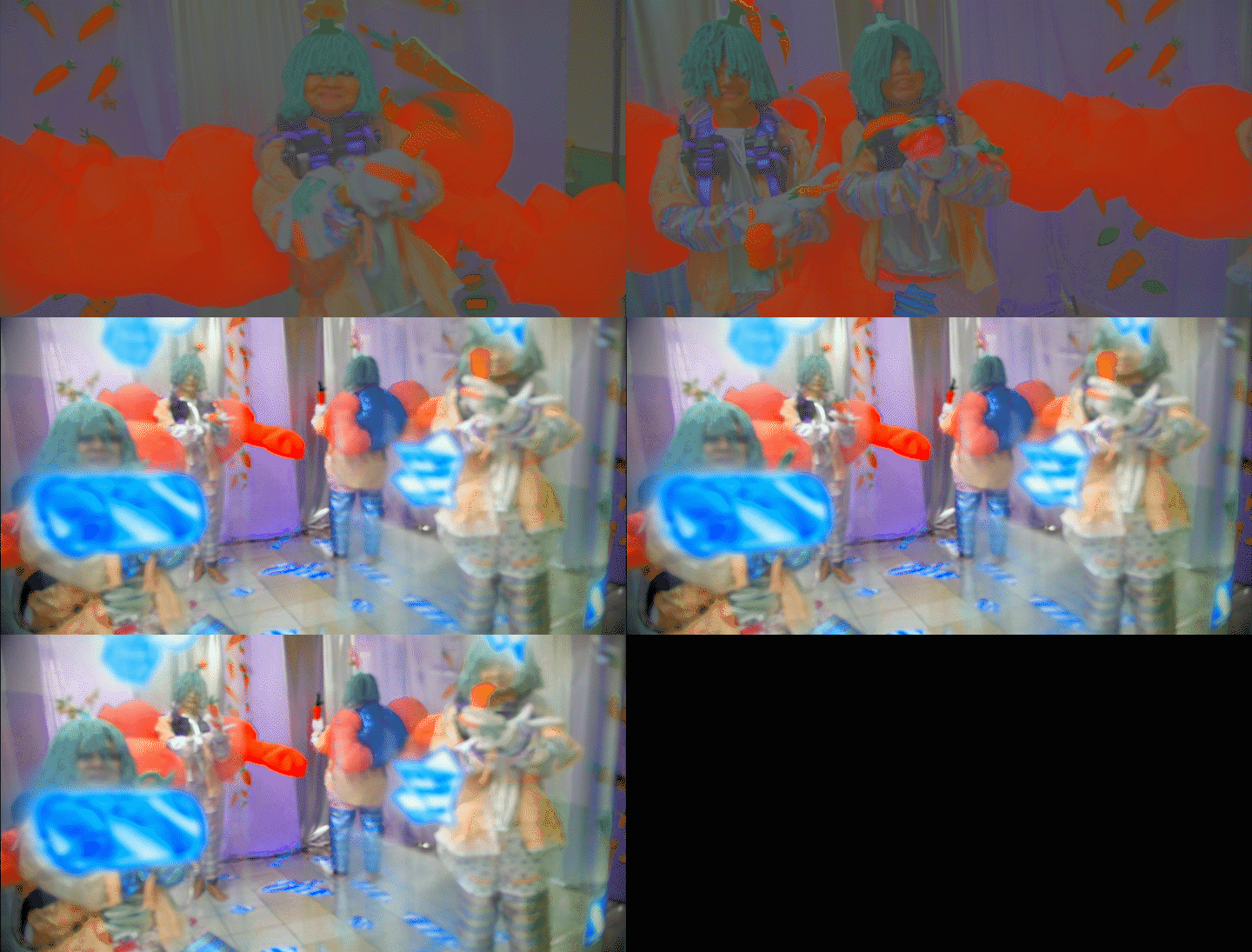
This work is an extension of my three-part series The Blinking Organism X You Spleen Me Round. The video was created in collaboration with residents of Serangoon, Singapore, including a group of elderly participants who painted carrot motifs onto gloves worn by the characters in the film.In the video, these gloved hands interact with a foldable silver metal sculpture. When opened through collective effort, the structure forms a star-like shape, animated through push and pull, blinking into motion. At moments, hands join together through finger gloves to form a complete carrot image; when they separate, the carrot breaks apart. These gestures point to the vulnerability of social systems, and the constant need for renewal in order to sustain a more stable and inclusive society.The inflatable sculptures carried on the participants’ backs function as symbolic burdens, reflecting how individuals carry expectations, conditioning, and invisible pressures imposed by society. Through repetitive group actions and seemingly futile attempts to assemble or stabilise forms, the work gestures toward the struggle for social positioning and recognition.
This urge to dominate through representation operates not only at the level of personal relations, but also within broader micropolitical, nationalistic, and imperial impulses to master, domesticate, and control otherness.
© Joo Choon Lin. All rights reserved.
Abdominal BASS Cavern Of A Stricken HEART, 2016
LIVE PERFORMANCE X Installation | Gillman Barracks | 22 Jan 2016, 8pm
"Across the desolate swamps of these military wastelands; today, you people are no longer maggots. You will emerge from your chrysalis, a new tautness of mind, from the deadly emanations of this performance. Your perforated sonar will scavenge on the acrid remains of swampland flesh and soul in concerto unison – accelerando! fortissimo! presto!… Behold, The Abdominal Bass Cavern of a Stricken Heart! Listen well, feast and fester, or turn on your heels and go back like a raven reincarnated in regret."In collaboration with:Performers:
Lyon Sim, Abby L. Kahei, Mario Chan, RaehaMusic by: Vermillion Team (Fuzz Lee)Videographer \ Michy WitchyText Editor \ Euginia Tan

Watch your blood the next time you are cut. Look at the blood. Depending on the size of the wound, you will not be able to see into the cut recess, but, instead, observe the pooled up blood —puffed— on the edges of your skin. Bring the wounded area up to eye level so you can see the elevation the blood pulls out from within your body and sits —suspended— until it spills over and down intact skin.You let me violate youYou let me desecrate youYou let me penetrate youYou let me complicate you(Help me) I broke apart my insides(Help me) I've got no soul to sell(Help me) The only thing that works for meHelp me get away from myselfYou cannot see into your own body because the draw of blood is always a permeable, yet opaque veil keeping the gaze from the source. Let us move past the figure of bleeding and into the figuration of participation.Endless participation floods forth. Decor to the antecedentnal tendency. No, not just covering, ornamenting inside a just opened unpredictability. I like what Gerald Granel said: “It is always a detail, and nothing but a detail in the great immense population of things that provokes this infinitesimal suspension”.I want to fuck you like an animalI want to feel you from the insideI want to fuck you like an animalMy whole existence is flawedYou get me closer to GodYou can have my isolationYou can have the hate that it bringsYou can have my absence of faithYou can have my everythingTaken to its detrimental end, I think of Aldous Huxley —high on mescaline— as he attempted to observe his observations of glints gathering on, say, the fluted lip of a golden chalice. He could never predict the wane of his interest during the relation. Therefore, responsibility is almost always on the opposite side of relation that ends the relation creating the positive unfulfillment of what we come to know as inspiration (in this case the lessening affects of mescaline).(Help me) Tear down my reason(Help me) It's your sex I can smell(Help me) You make me perfectHelp me become somebody elseI want to fuck you like an animalI want to feel you from the insideI want to fuck you like an animalMy whole existence is flawedYou get me closer to GodThe inspired subject confuses his or her own agency within the relation to such a degree that she or he experiences a pleasure that would never be able to finish himself/herself off. When, in actuality, it is more accurate to say the subject could never be able to finish herself/himself off. It is a permissive could, taken for a possible would or, better still, a misinterpretation of one’s responsibility within a relation.Through every forest, above the treesWithin my stomach, scraped off my kneesI drink the honey inside your hiveYou are the reason I stay aliveText / Darren Tesar (Lyrics from Closer by Nine Inch Nails)
© Joo Choon Lin. All rights reserved.
Abdominal BASS Cavern Of A Stricken HEART, 2016
Solo Exhibition at Fogstand Gallery X Activities with local resident, Hualien Taiwan
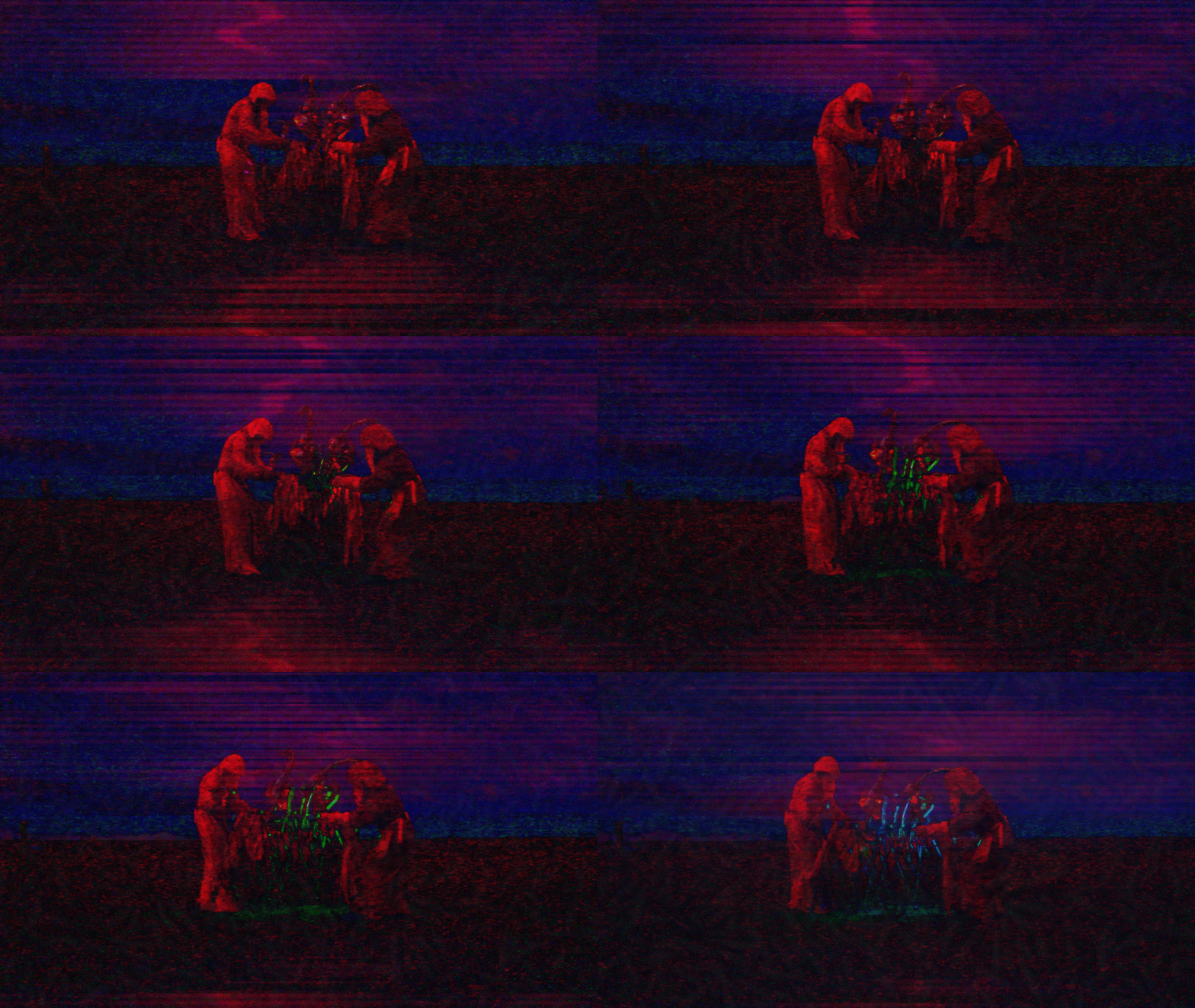
Watch your blood the next time you are cut. Look at the blood. Depending on the size of the wound, you will not be able to see into the cut recess, but, instead, observe the pooled up blood —puffed— on the edges of your skin. Bring the wounded area up to eye level so you can see the elevation the blood pulls out from within your body and sits —suspended— until it spills over and down intact skin.You let me violate youYou let me desecrate youYou let me penetrate youYou let me complicate you(Help me) I broke apart my insides(Help me) I've got no soul to sell(Help me) The only thing that works for meHelp me get away from myselfYou cannot see into your own body because the draw of blood is always a permeable, yet opaque veil keeping the gaze from the source. Let us move past the figure of bleeding and into the figuration of participation.Endless participation floods forth. Decor to the antecedentnal tendency. No, not just covering, ornamenting inside a just opened unpredictability. I like what Gerald Granel said: “It is always a detail, and nothing but a detail in the great immense population of things that provokes this infinitesimal suspension”.I want to fuck you like an animalI want to feel you from the insideI want to fuck you like an animalMy whole existence is flawedYou get me closer to GodYou can have my isolationYou can have the hate that it bringsYou can have my absence of faithYou can have my everythingTaken to its detrimental end, I think of Aldous Huxley —high on mescaline— as he attempted to observe his observations of glints gathering on, say, the fluted lip of a golden chalice. He could never predict the wane of his interest during the relation. Therefore, responsibility is almost always on the opposite side of relation that ends the relation creating the positive unfulfillment of what we come to know as inspiration (in this case the lessening affects of mescaline).(Help me) Tear down my reason(Help me) It's your sex I can smell(Help me) You make me perfectHelp me become somebody elseI want to fuck you like an animalI want to feel you from the insideI want to fuck you like an animalMy whole existence is flawedYou get me closer to GodThe inspired subject confuses his or her own agency within the relation to such a degree that she or he experiences a pleasure that would never be able to finish himself/herself off. When, in actuality, it is more accurate to say the subject could never be able to finish herself/himself off. It is a permissive could, taken for a possible would or, better still, a misinterpretation of one’s responsibility within a relation.Through every forest, above the treesWithin my stomach, scraped off my kneesI drink the honey inside your hiveYou are the reason I stay aliveText / Darren Tesar (Lyrics from Closer by Nine Inch Nails)


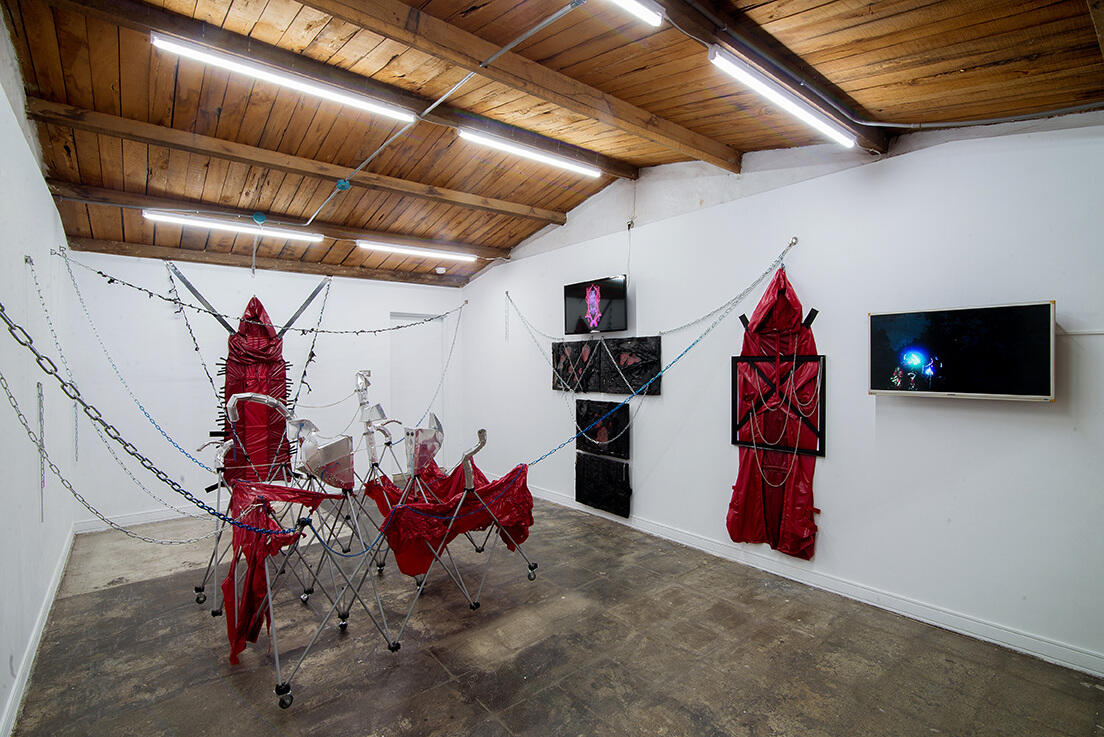
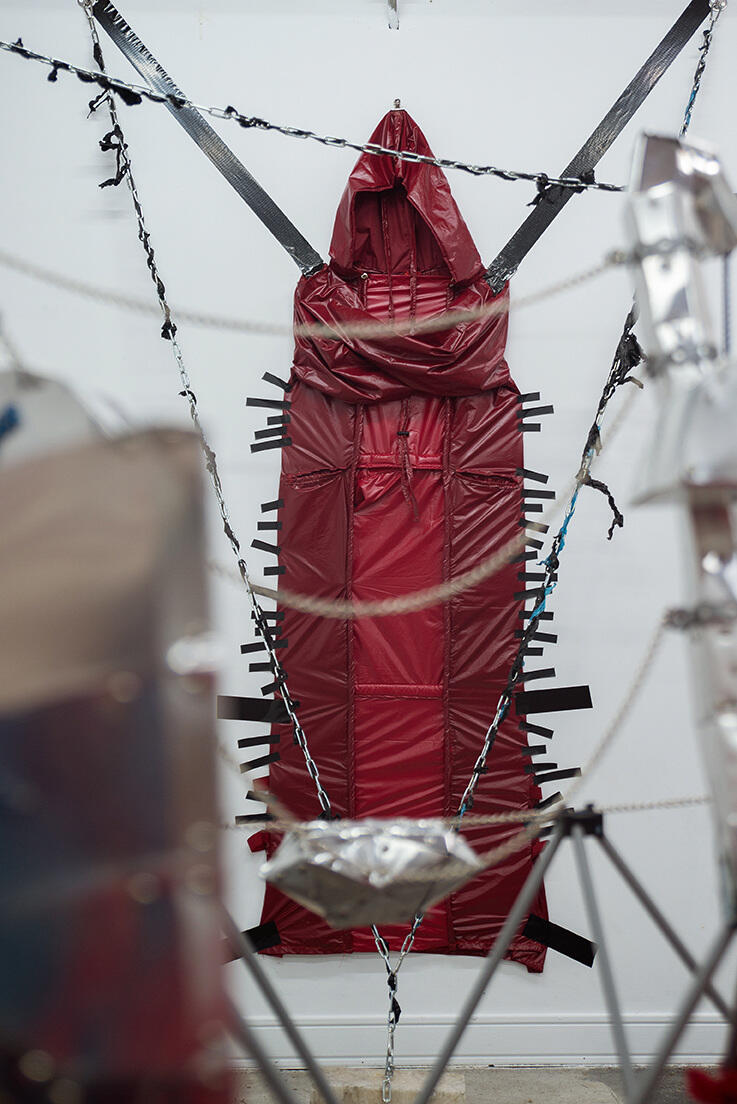
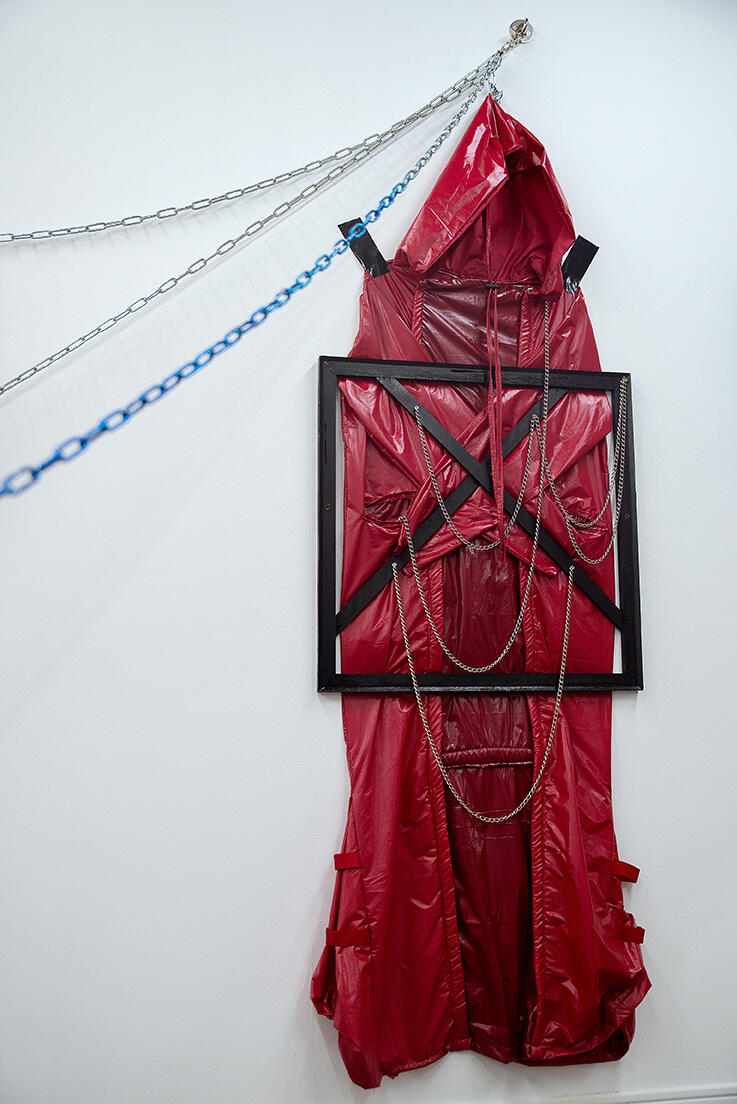
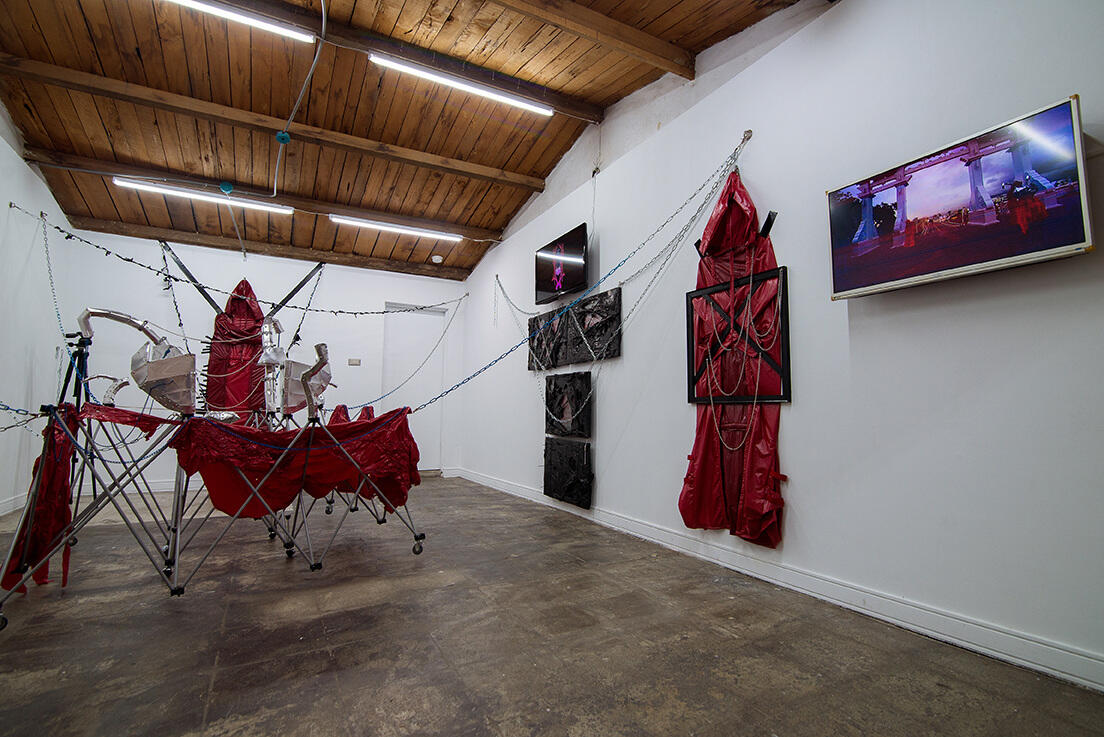
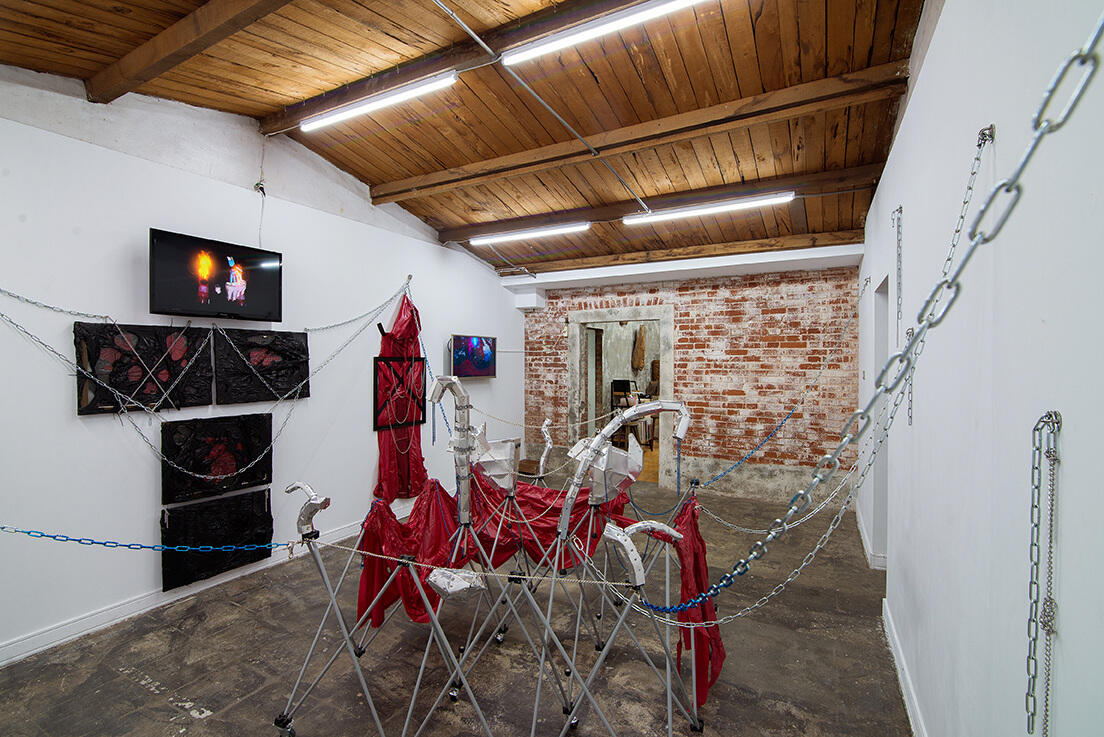
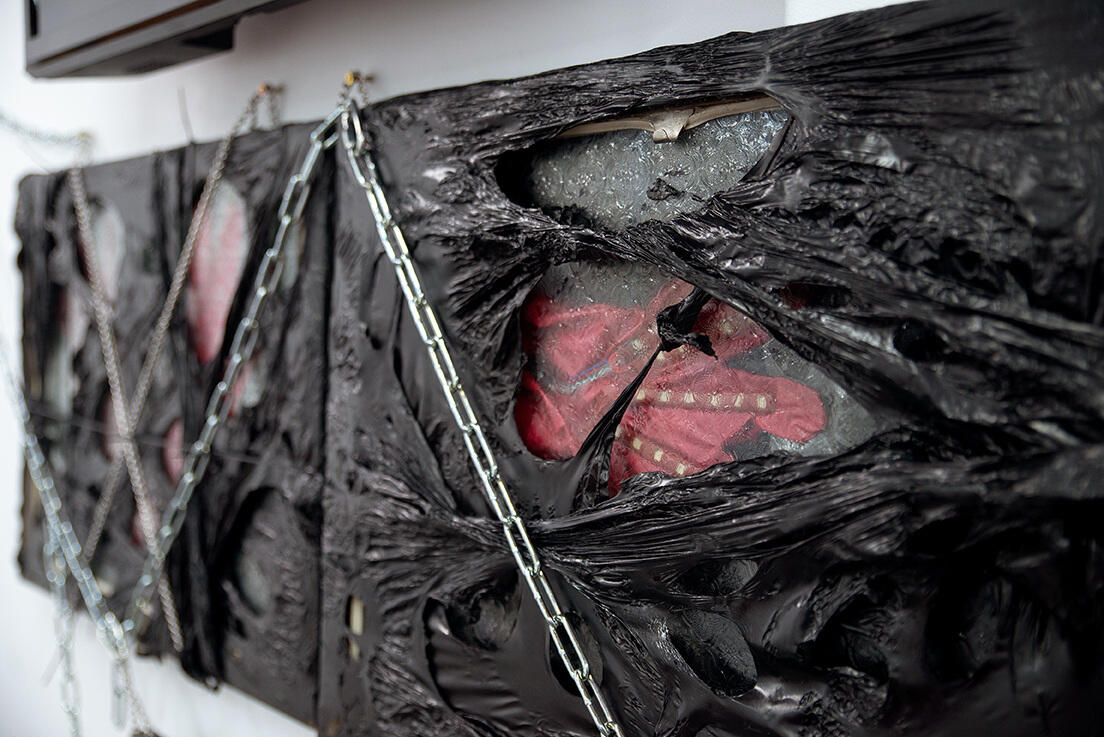
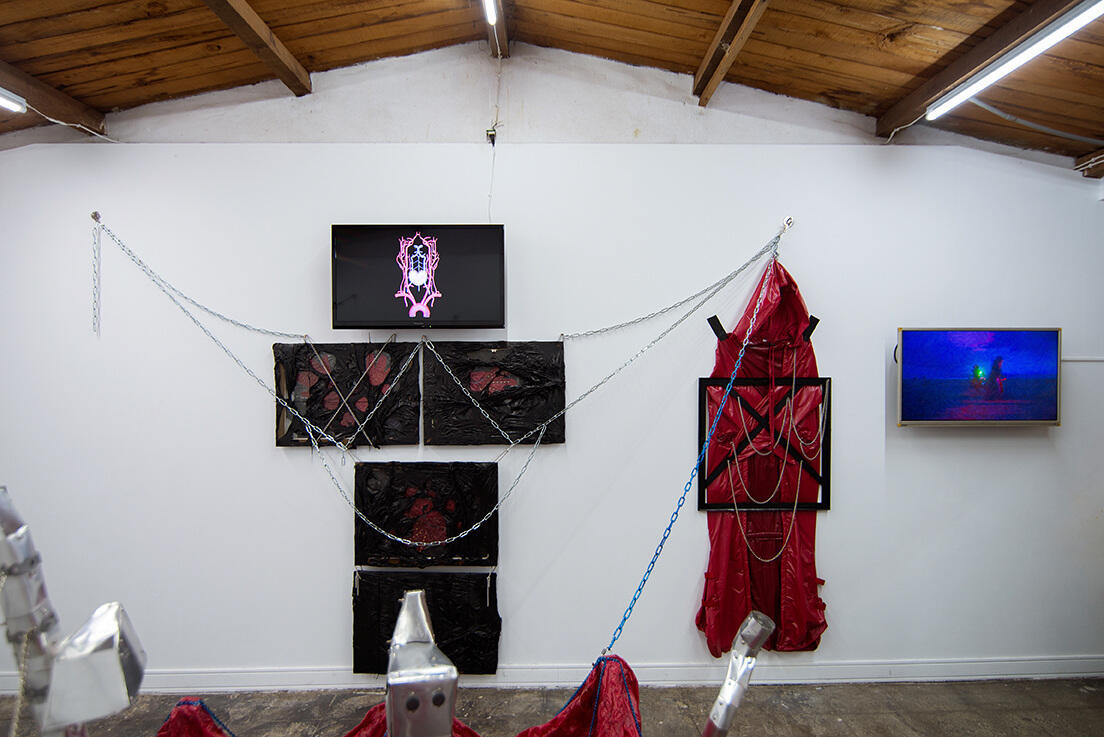
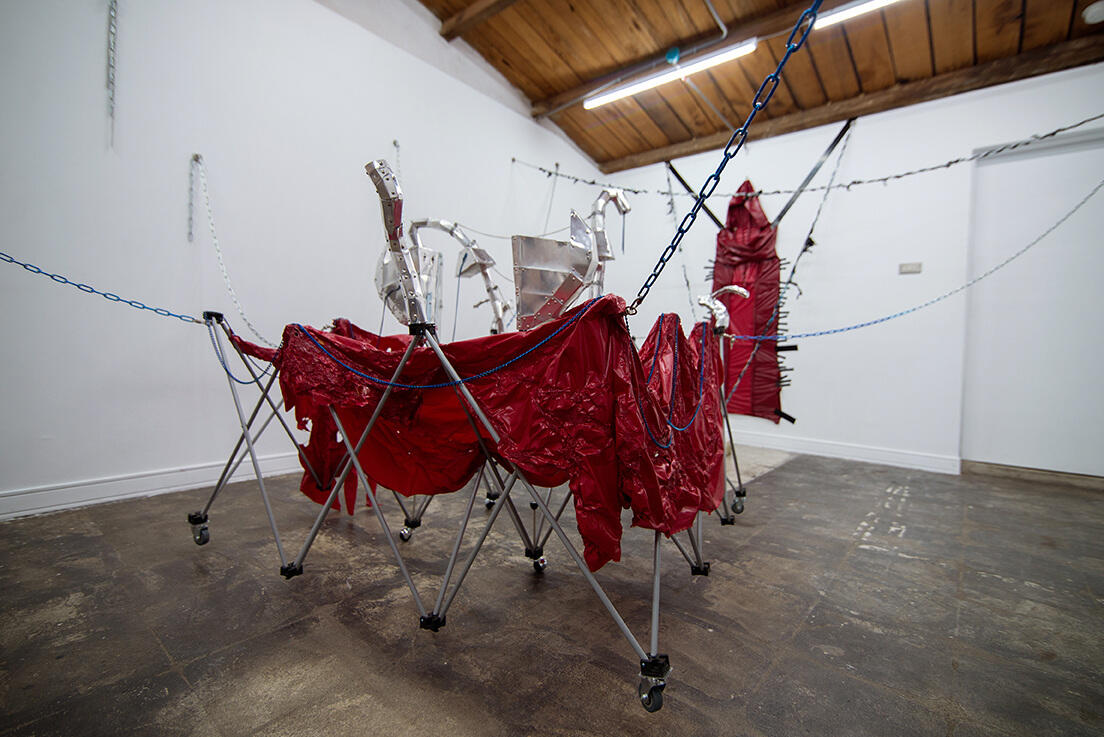
© Joo Choon Lin. All rights reserved.
INTESTINOLOGY SERIES #02: The Black Paraphernalia, FRAC Des Pays de la Loire, Nantes, France, 2015
Mixed Media Installation
Photos credit Fanny Trichet
Hanging installation, household knives, gloves, shower curtain, eyelets, PVC cloths, PVC pipes, basin waste stopper, ropes, chains, belts, safety pins, synthetic resin and garbage bags
TEXT 1
By Choon LinThe works draw inspiration from the Black Museum in Scotland; it is a collection of criminal memorabilia kept at the New Scotland Yard. I am investigating how certain objects can affect a material echo which creates fear in people. How are they able to withhold retentions from the past, so to communicate to future events and actions? How is remembrance precipitated in objects?There are many objects in this world that would seem a perfect fit to a crime scene. A pair of gloves, a rope or a knife has become the essential props used in horror films. I set out to liberate these objects of their ‘evil’ reputations and through my self-established philosophy of art-making, termed as Intestinology, to ‘redigest’ them with a more pleasant intonationHowever, to what extent can we change the fate of an object? Similar to our digestion system, there are things that our bodies can never break down. For example, we can mostly digest food and if we were to swallow a metal screw, it will probably make it through our digestive system as one piece. Certain objects are universally recognised as symbols of evilness, deeply imprinted in our subconscious. They are scarcely able to escape their own destiny; even after ‘defecation’, they still reeked of their filthy origin.Objects are condemned to such a tragedy, as they are habitually ill-used by human beings. A knife is stained with blood when it is used to slaughter a cow for our food consumption. With good intentions, a kitchen knife can also be a common tool that helps us in our daily activities. When an object lands in the hands of a murderer, sullied by blood, it would then be forever convicted and remembered as an object of sin.The Black Museum exhibited the belongings of criminals, found on them, when they were being apprehended. For example, even if it was a mere bottle of ketchup recovered from the infamous The Great Train Robbery. By displaying such objects, the criminal accounts are resurrected in the museum. Hence, a bland bottle of ketchup becomes condemned, even if it just faintly traces the representation of its felonious owner. Some of these exhibits could continue to upset or traumatize surviving relatives of victims. On the contrary, the objects in turn become a grieving mediation for the relatives of the perpetrators.The work in this exhibition is about commemoration, like a wreath for condemned objects. I have made sculptures and installation using objects that is closely associated to crime paraphernalia or horror films. Perhaps, it is in the eye of the beholder, to venture into other forms of perception, granting these condemned objects a passage to a new lease of life.
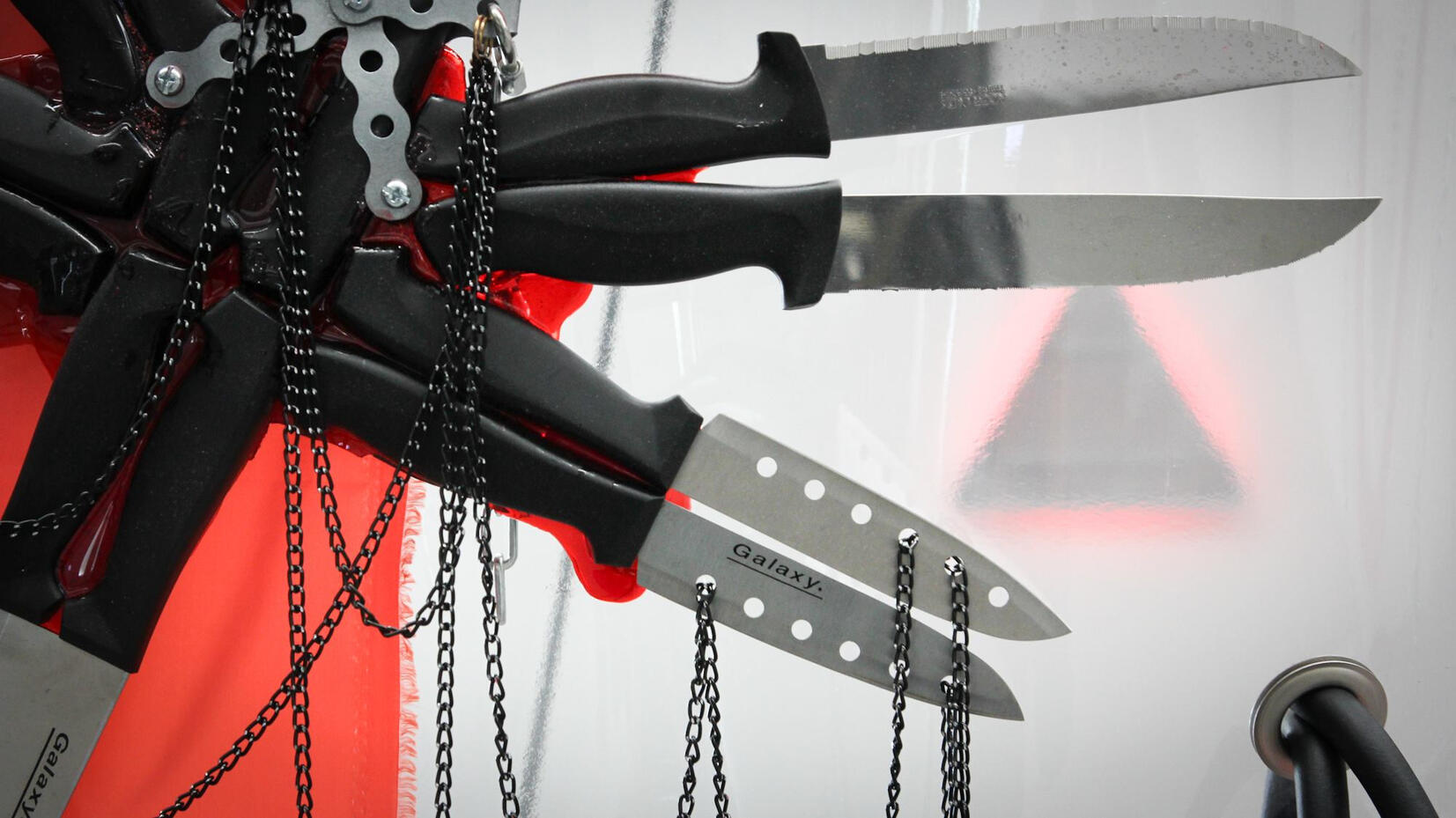
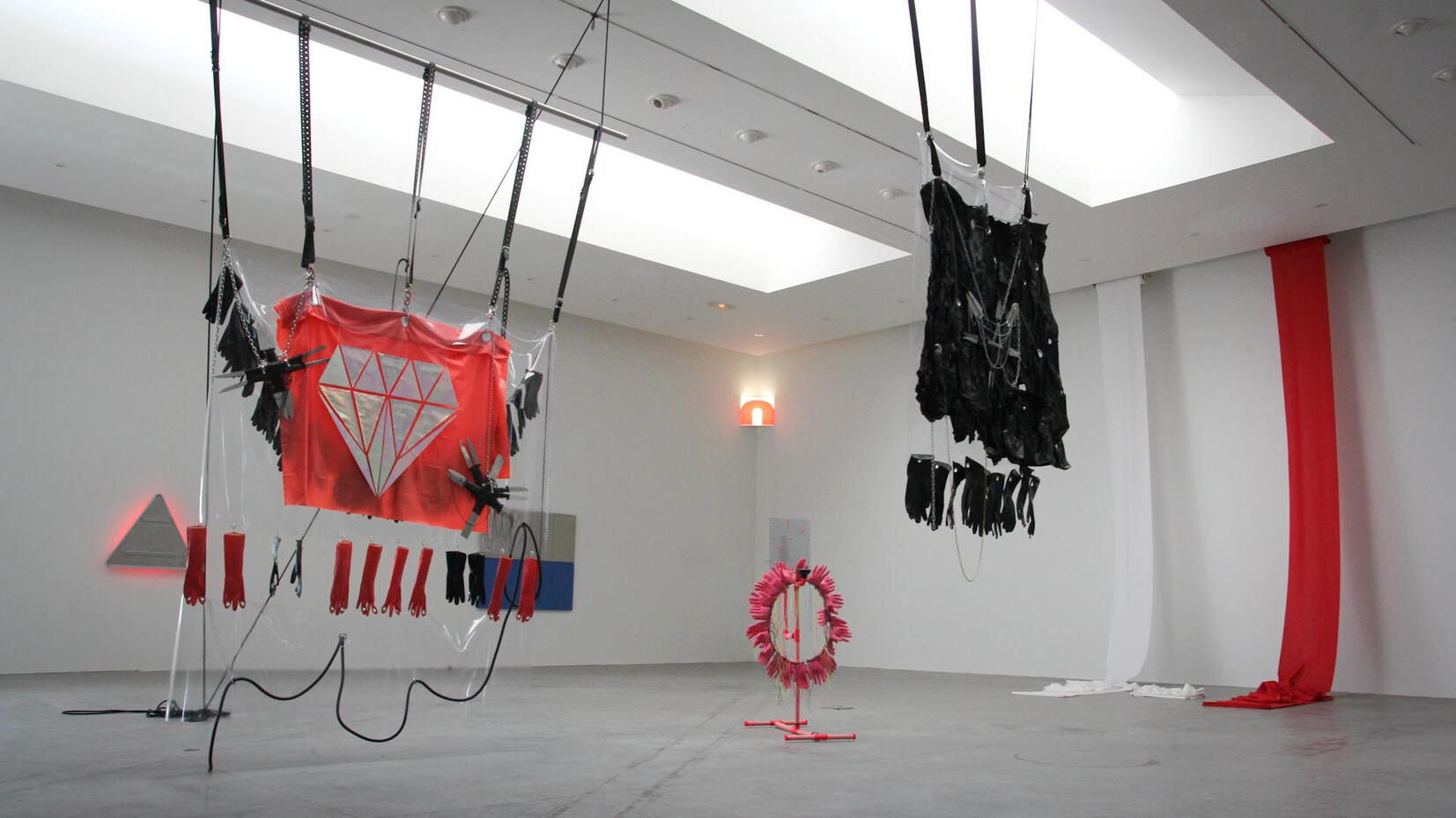
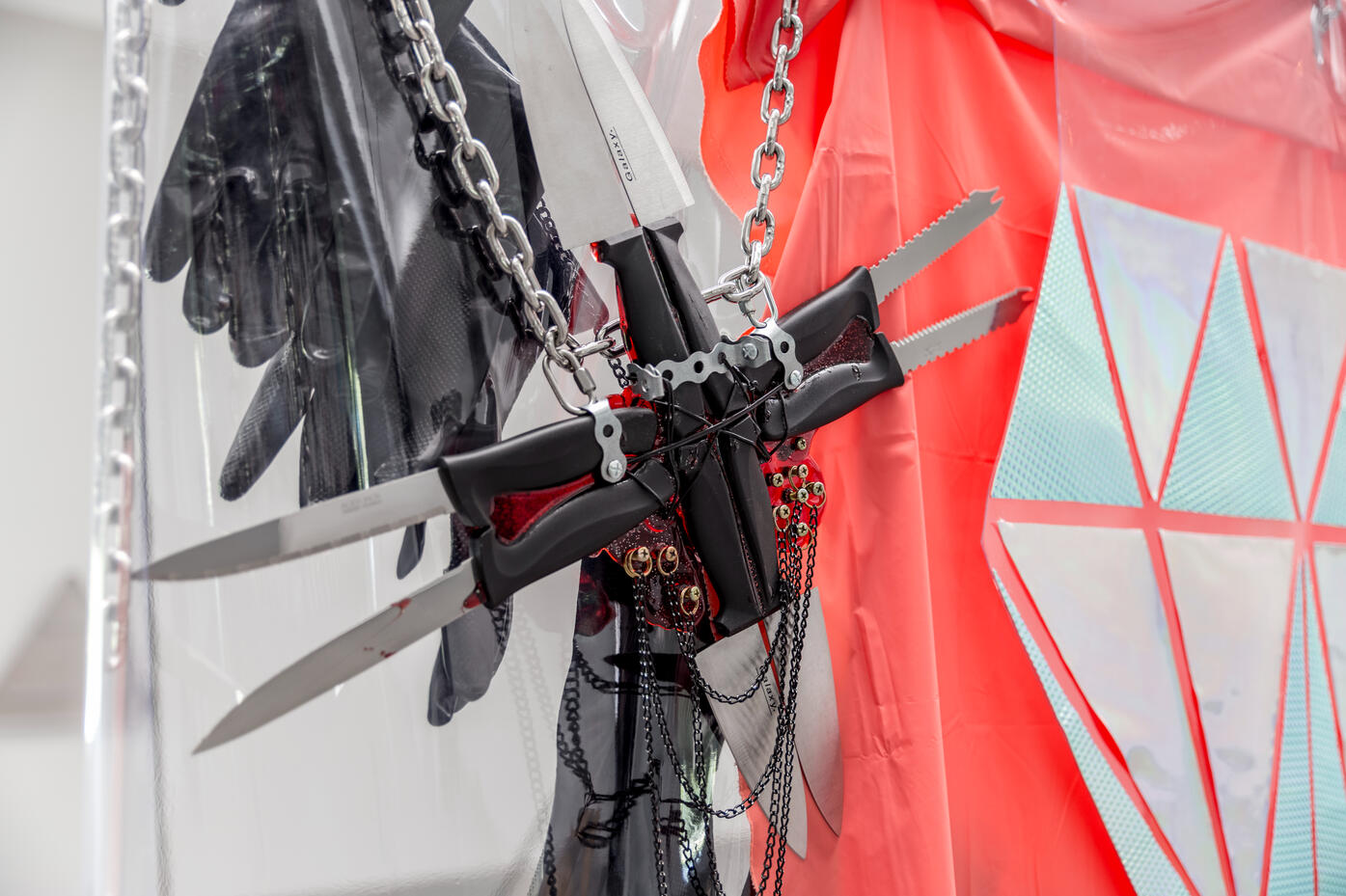
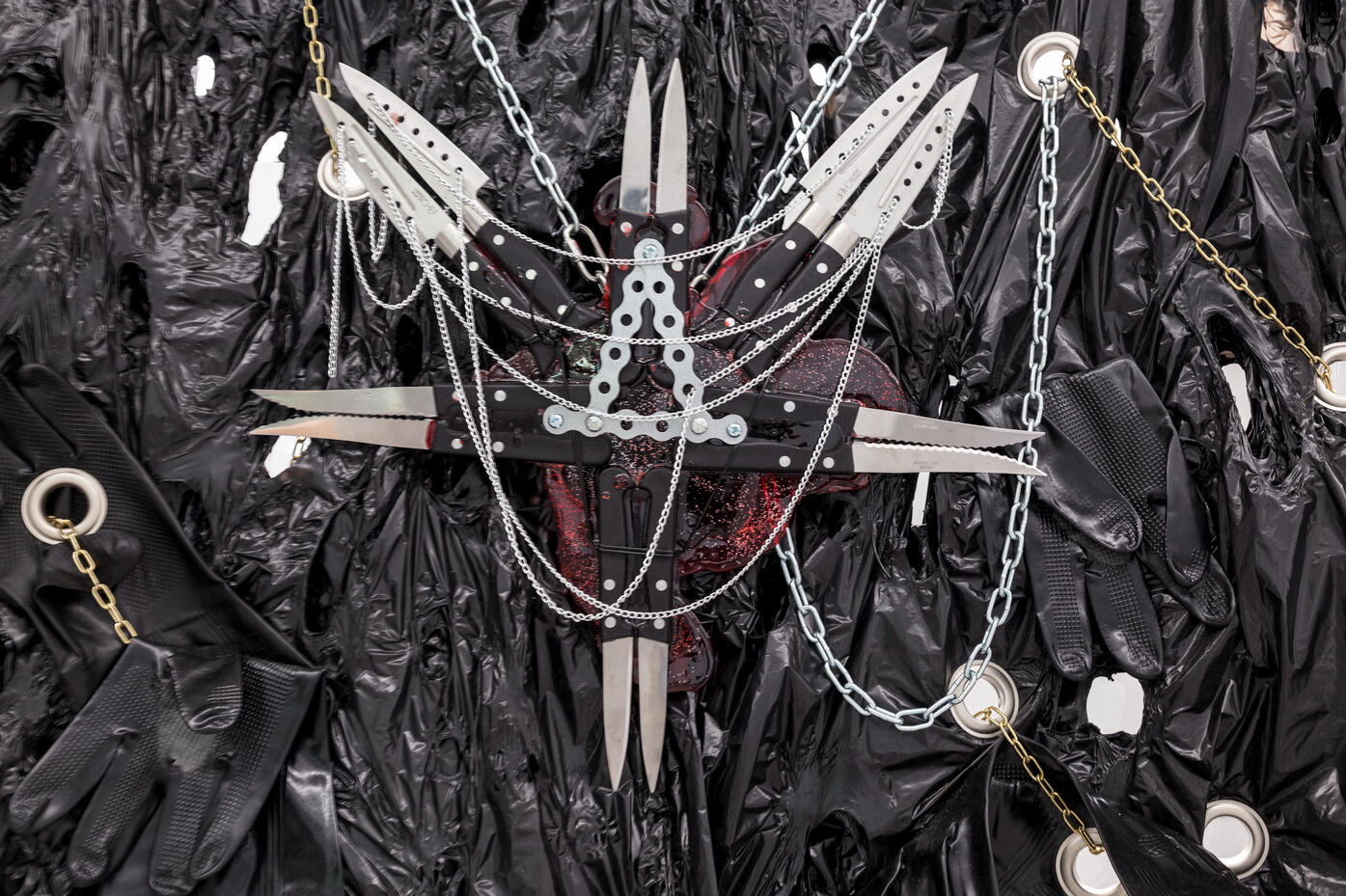
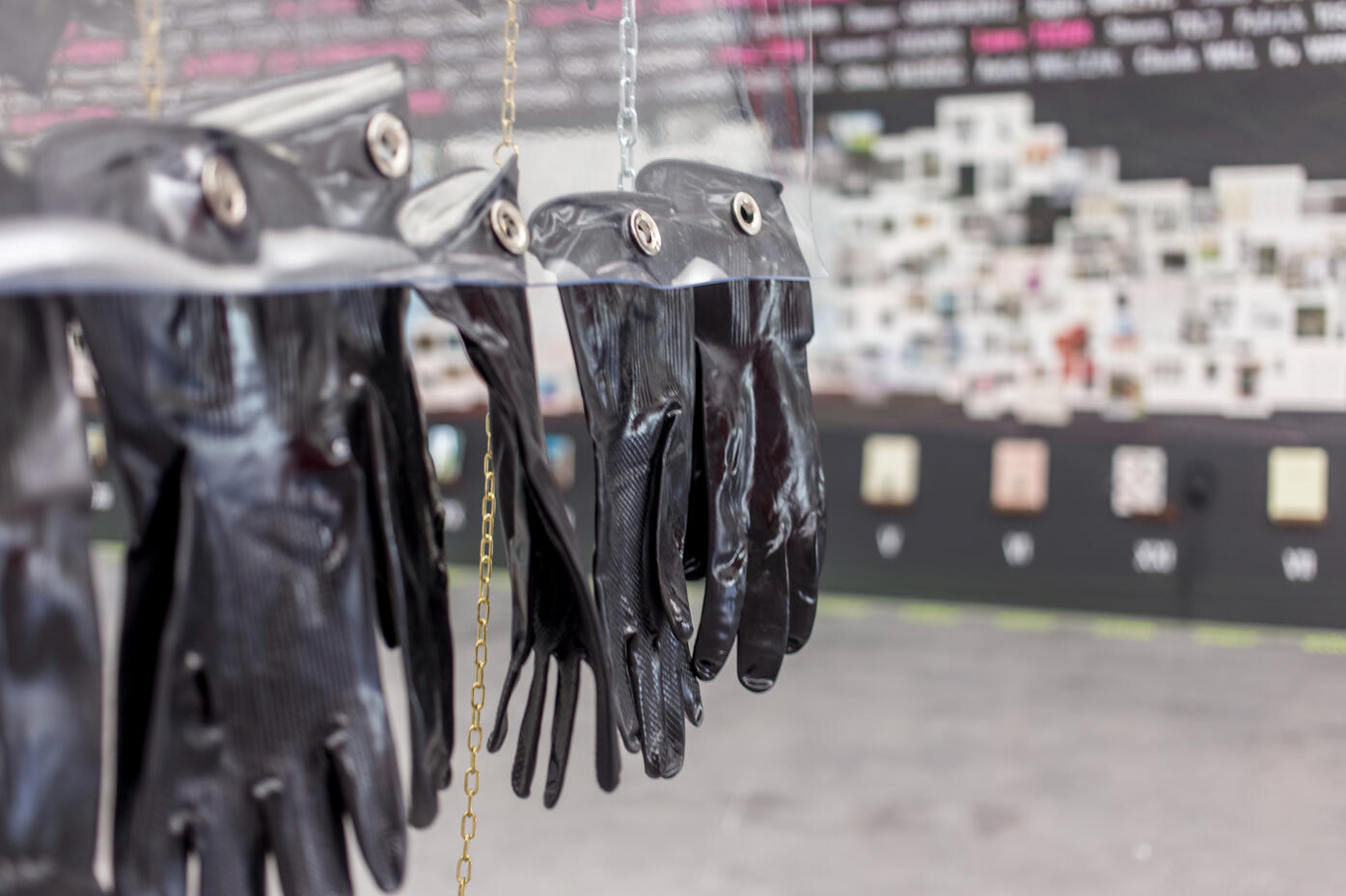
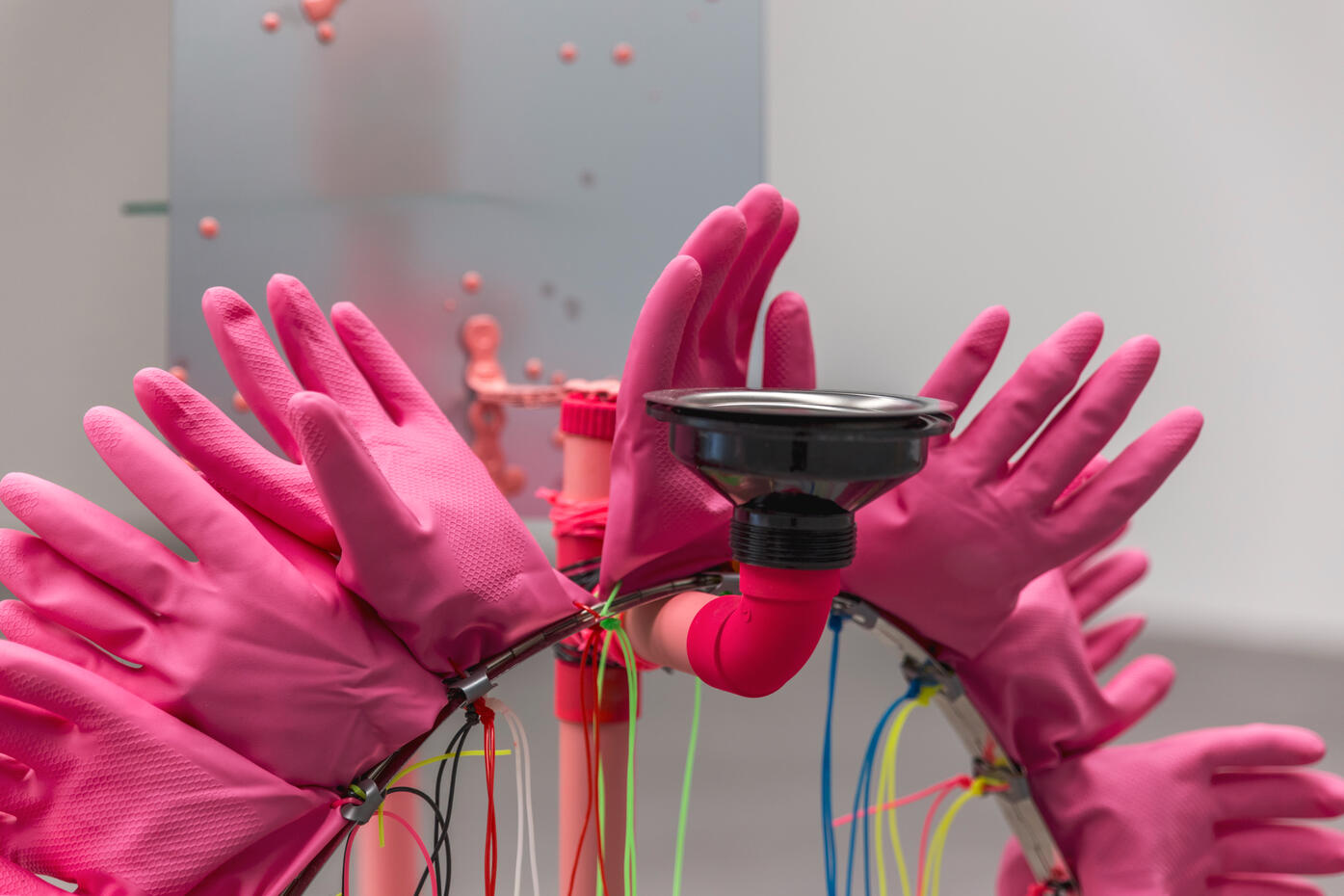
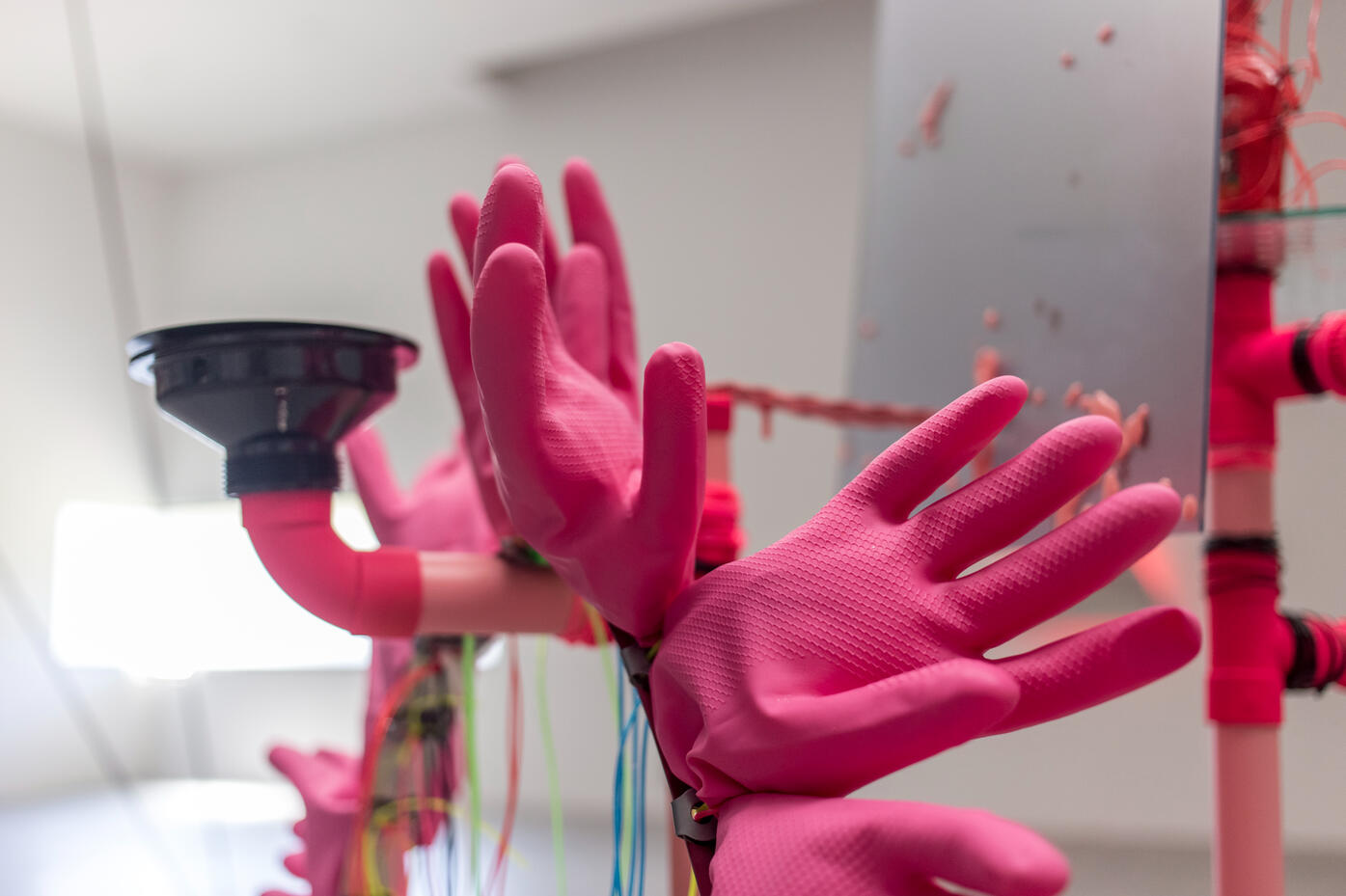
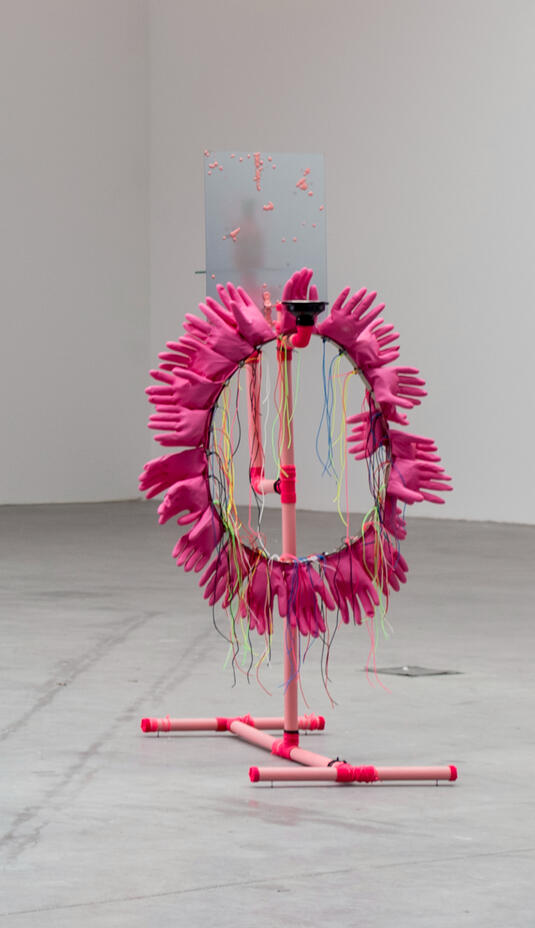
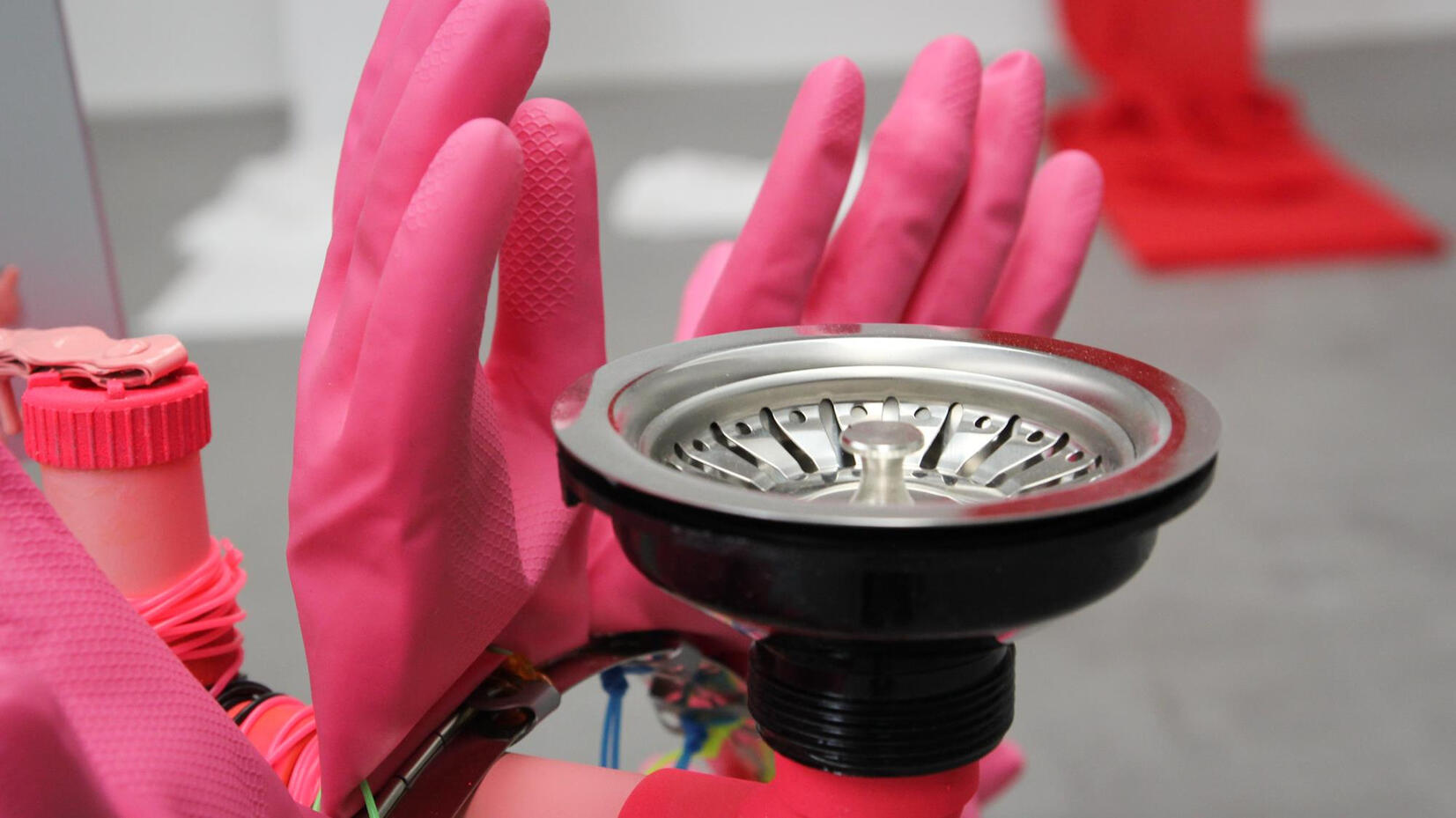
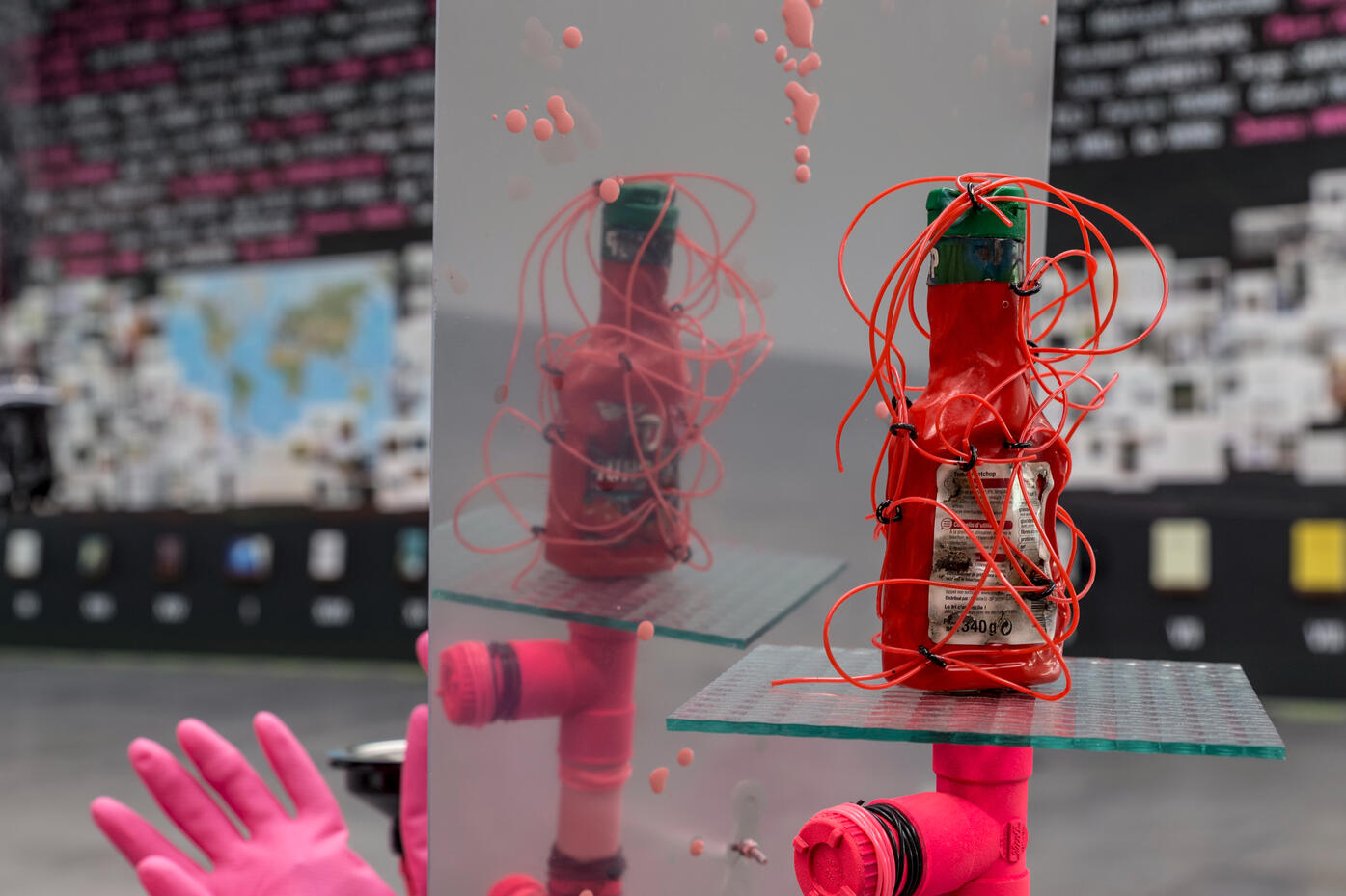
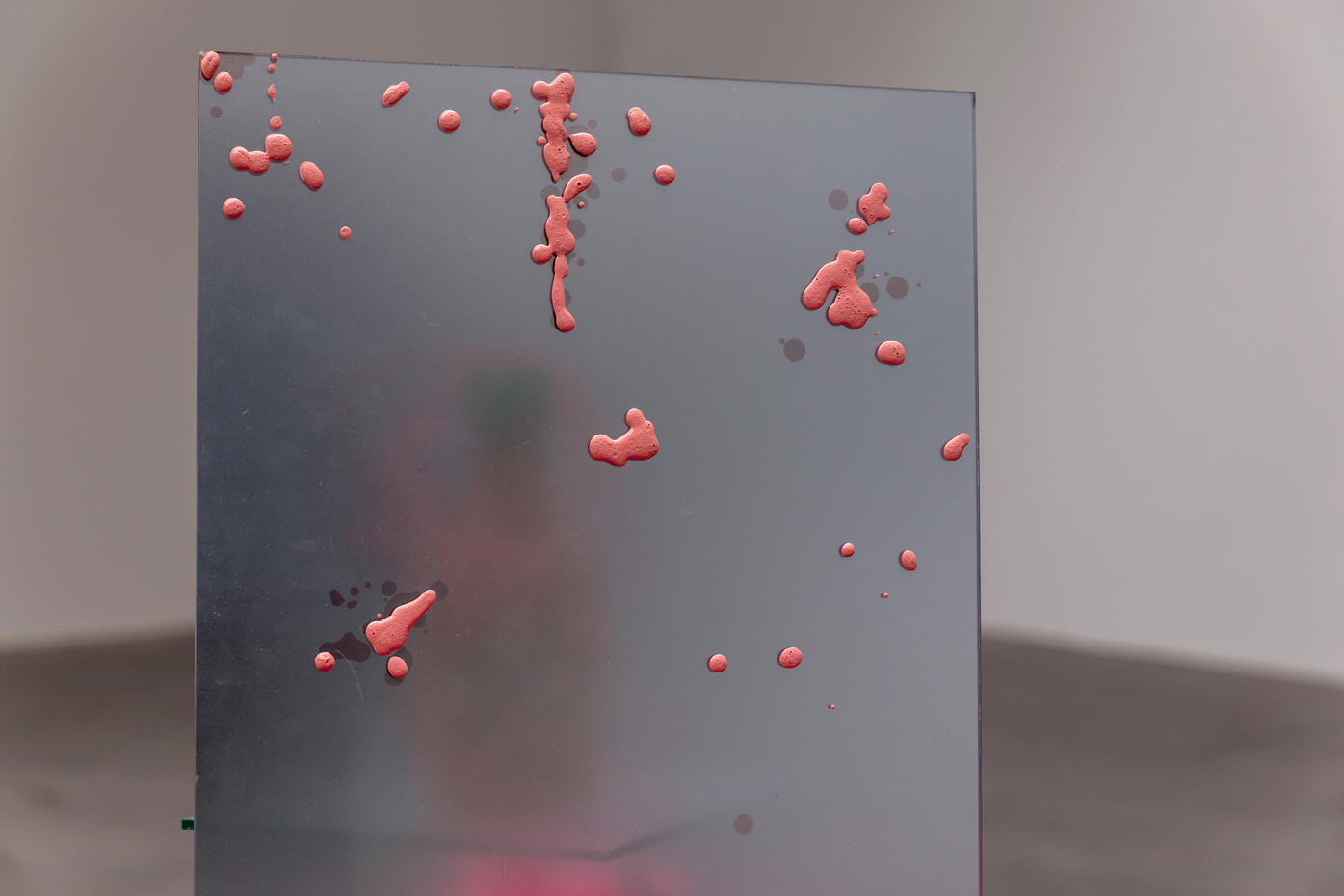
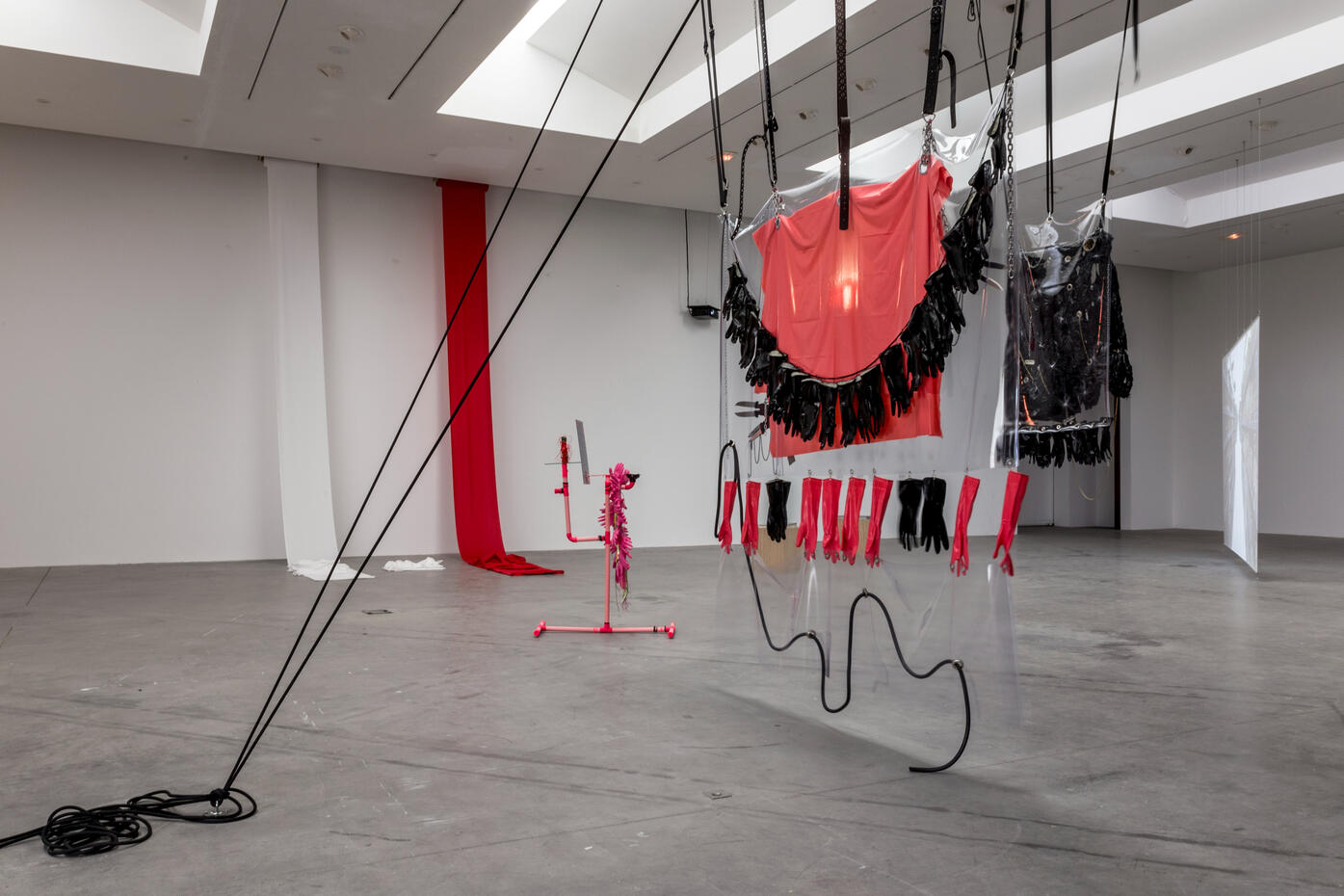
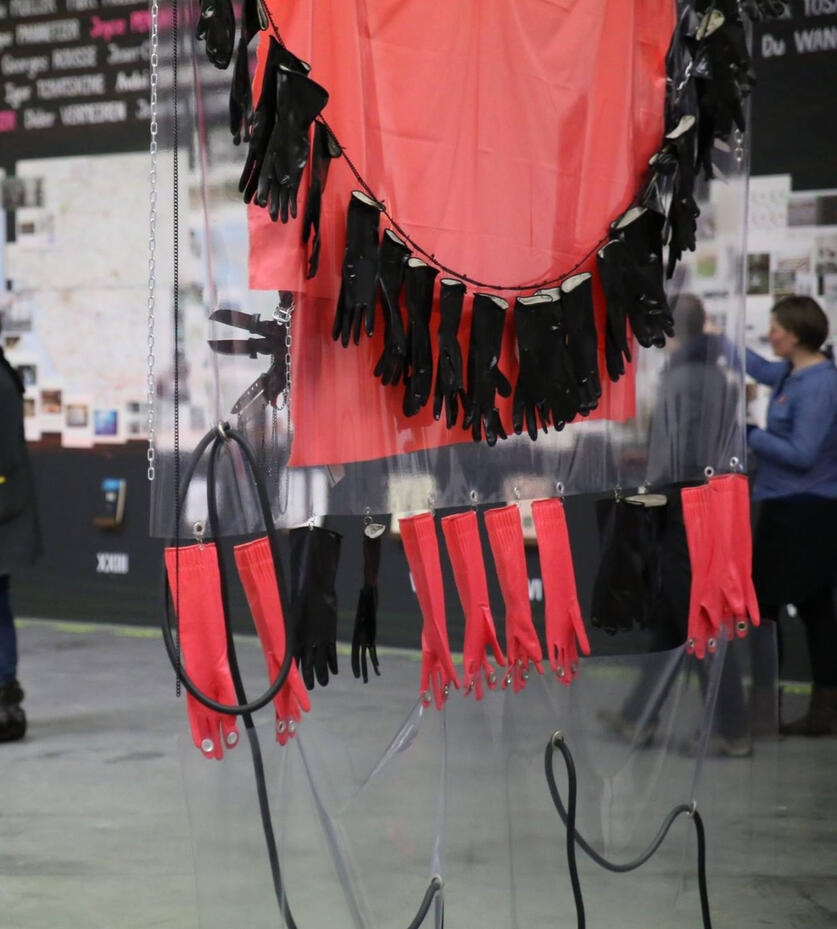
TEXT 2
By Julien ZerboneJoo Choon Lin
The Black ParaphernaliaDo objects lie, asks Joo Choon Lin, or are they the victims of our lies, of our ulterior motives, of the evil which lives in us? There is this book which I have brought with me, Black Museum, written by Jonathan Goodman and Bill Waddell, which refers to the museum of the same name, created in the late 19th century by an inspector working at Scotland Yard, who had collected a large number of objects at crime scenes, with the purpose of teaching new recruits how to detect and prevent crimes. More than 500 souvenirs are kept in it, hidden from the public eye, ranging from letters attributed to Jack the Ripper to fake banknotes made by Charles Black, one of the most famous forgers in modern history, by way of a bottle of ketchup, which was present at the Great Train Robbery. These objects are the involuntary accomplices to the infamy of their users, and at times their creations. In this museum, they are doomed to eternal damnation, without one day being able to wash away the guilt which weighs over them. But are they bad by nature? In the manner of Edgar Allan Poe’s short story The Purloined Letter, our relation to the world is established under the seal of suspicion, like detectives, we look for the early warning signs of an imminent tragedy. So the kitchen knife and the kitchen glove become fetishes, the avatars of the murderer, of persons wishing to protect their anonymity, in a world where everything ends up being like a murder, where suspicion is ever present.Fetishes
Our conception of fetishism stems from the contrast, peculiar to the humanist ideology, between the “human person” and the “thing”, which prompted Marx to consider that fetishism consists in—wrongly—perceiving social relations in the form of relations between objects, in “marketing” human relations, implying that there are relations which are purely human and not mediatized. In so doing—like Michael Fried when, in his famous essay, he talks about the objecthood of Anthony Caro’s sculpture–, we confuse the formal, “immediate”, phenomenological property of the fetish object and the status, the aura which is conferred upon it within the social structure. Where fetish is concerned there is just faitiche,9 to use Bruno Latour’s fortuitous expression, Joo Choon Lin tosses at me, the fact that currency makes it possible to have access to objects in the market does not have to do with its own properties, just as the fear inspired by the kitchen knife is only indirectly the fact of its physical characteristics, but rather of a set of socio-symbolic relations in which they are caught, and which gives them the ambiguous capacity of speaking for us, of acting for us, of making puppets of us: thus the murderer who, caught in the act, lets go of his weapon as if he was previously possessed, and thus the masks that we wear during carnivals.Intestinology
I want to build a monument, a retable, an altar to the glory of the objects of this world, to everything we have, through our conduct and by way of our creations made “objects”. The cow is first of all considered for the milk and the meat that it provides, wheat has no reason for being other than providing the matter necessary for flour: the whole world, Joo Choon Lin explains, has been reconfigured, reality is now modelled in accordance with man’s needs, the objects and beings which surround him are judged and identified on the basis of their usefulness, discarded, abandoned, erased from our memories when they are no longer useable. Intestinology will be the name of this new approach, this cult, this discipline. Like an intestine, we will have to learn how to digest anew the world, testing it in our very flesh, trying to separate the wheat from the chaff. The intestine is thought of as dirty and impure, and yet the porousness of its membrane enables it to separate nutriments from toxic substances, and find in the world what is not only useful to us, but vital. Similarly, depending on the fate earmarked for it, the kitchen knife can become an instrument of death or a tool for life. This is not the case for this organ which may, on the face of it, be good or bad, it is the very organ of experimentation. The diamond will be its symbol, its paradoxical emblem: its whiteness, its transparency, and its hardness make it a paragon of purity and wealth, the object of all our desires; and yet is it not made of the same matter as coal, which, on the contrary, incarnates impurity, dirtiness, the suffering of miners, and the death which people inhale? We, humans, are endlessly separating good from evil, we are forever blaming the world which surrounds us for what resides in us. Intestinology, on the contrary, establishes fluid continuities, highlights forms of solidarity and continuity, precisely where we set up boundaries and differences of natures.
© Joo Choon Lin. All rights reserved.
INTESTINOLOGY SERIES: We Have The Most Beautiful Intestine, 2014
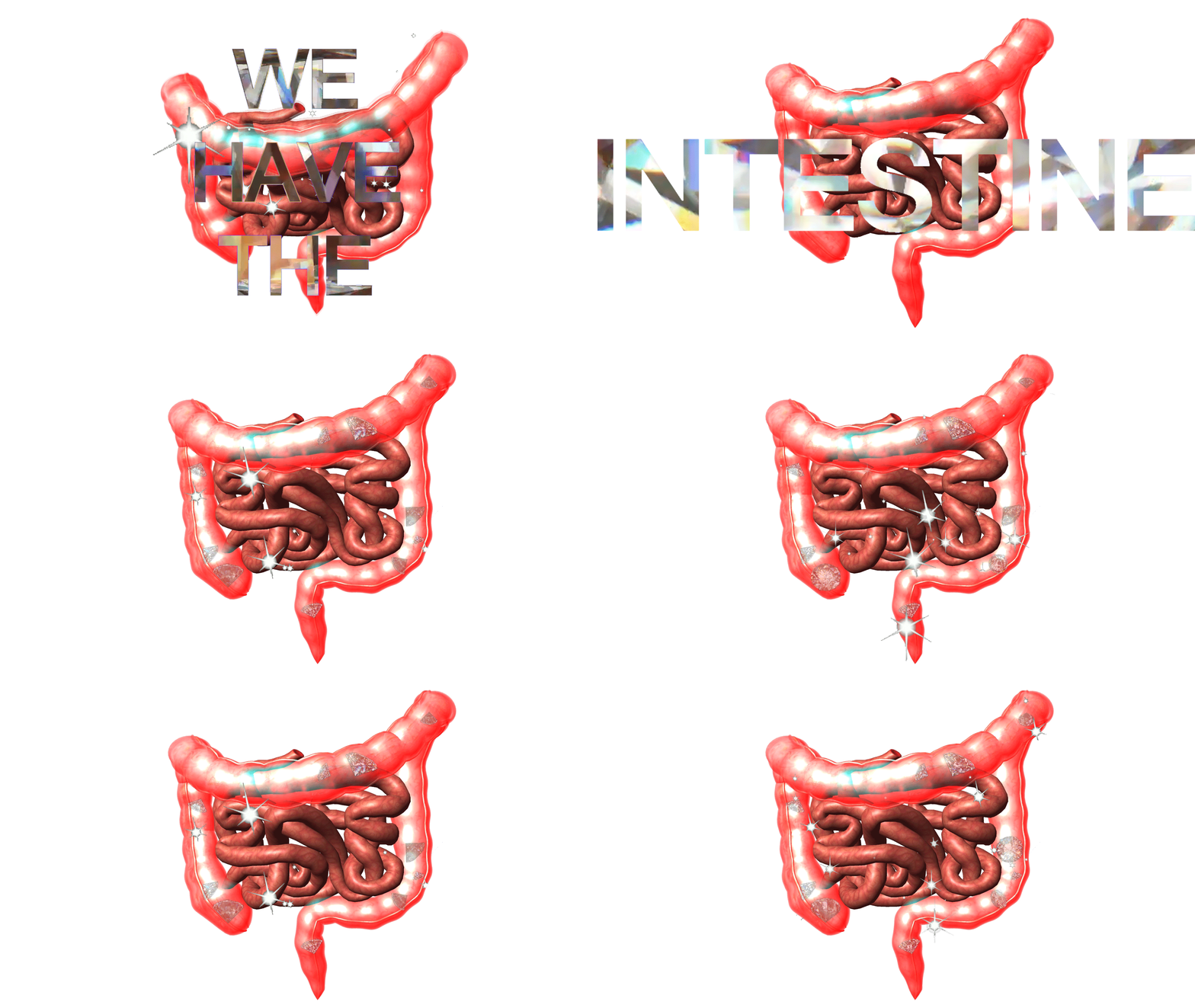
I remember when my sister accidentally swallowed a rusty screw during our childhood—how everyone was flustered, panicked, and rushed her to the doctor. Even after she took the prescribed medication, it still wasn’t enough to fully reassure my family. As an added precaution, my parents carefully searched through her excrement to ensure the screw had safely passed through her digestive tract. The experience stayed with me, particularly the transformation of the screw itself: entering the body corroded and emerging polished, tarnish-free.This memory became an early point of reflection on how objects are altered through systems and circumstance. Over time, it connected with my broader curiosity about the strange, often ironic ways ordinary objects become entangled in human ambition, error, or misfortune. I recall reading about a Swedish teenager who incriminated herself through a pre-robbery selfie, where an ordinary object was transformed into evidence, permanently marked by context.
Swedish Teen Sentenced After Incriminating Pre-Robbery Selfie
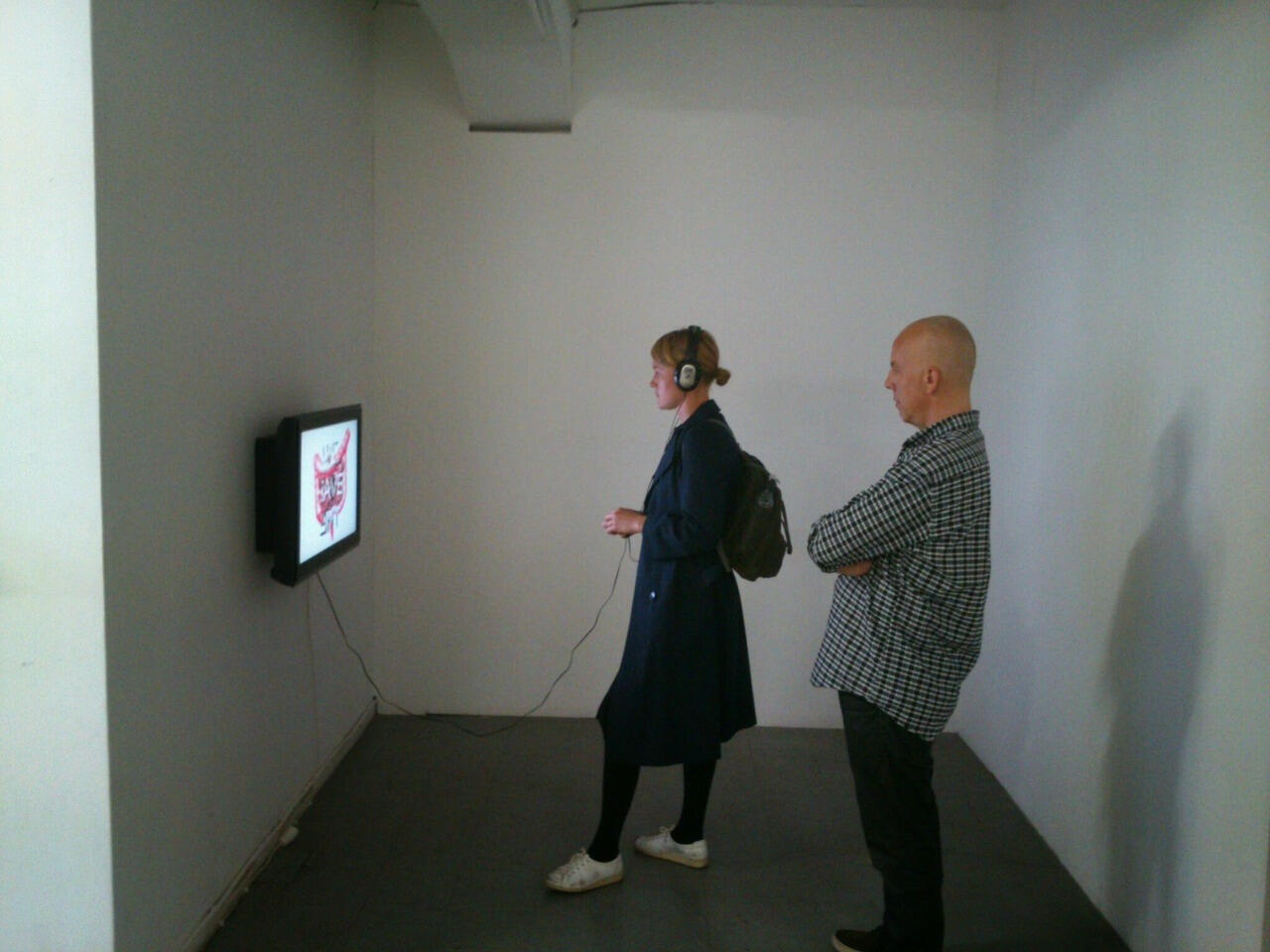
Skånes Konstförening, Malmö, SwedenINTESTINOLOGY Series #01: We Have The Most Beautiful Intestine
† 01:48 Min † 3D Modelling Video With Sound
These moments continue to shape how I think about material identity—how objects acquire meaning, stigma, or value through the systems they pass through, whether digestive, social, judicial, or economic. Material things are never fixed; they are constantly recoded by circumstance. This fluidity informs my practice and has led me to question how and why certain materials become elevated while others are dismissed.This line of thought is reflected in my recurring use of diamonds as a motif. Diamonds and charcoal share the same chemical properties, yet one is revered while the other is often disregarded. Their divergence reveals the invisible structures of labor, manufacturing, and cultural conditioning that shape contemporary perceptions of value.I imagine laborers mining charcoal from the earth, and perhaps those same workers later seated in rows crafting fine jewellery—both forms of labor synchronized to the relentless acid house rhythms that pulse through my videos. Through sound and imagery, I reflect on the unseen processes of extraction, production, and advertisement that define how value is constructed.This is perhaps also why internal organs have long fascinated me. We understand their existence anatomically, yet their constant labor remains largely abstract, hidden beneath the body’s surface. How do we truly comprehend what is inside us, beyond trust in its silent function? These inquiries form layered dialogues within my work, where I destabilize prescribed surfaces and challenge imposed meanings shaped by social pressure, external influence, and cultural expectation. Through this process, I examine transformation, perception, and the unseen forces that continuously define both objects and bodies.Text

© Joo Choon Lin. All rights reserved.
INTESTINOLOGY Series 3: With DIAMONDS You Repay I Don’t Care For Heaven
A group exhibition ‘Rendezvous’ at ICA, Singapore | June 19 – August 2 2015
I explore society’s obsession with consumer culture. Advertising images often aim to disempower and objectify the consumer. They promise that a product will make the consumer happy and enhance their quality of life. It is as if owning these products will bring the consumer closer to a more complete and happy state of being. The packaging of these products—their colour, endorsement by celebrities, and alignment with popular identities—are designed to make them appear more attractive. But there is another thing thatcan make a product appear more attractive; a non-physical intensifier (such as a ritual), which can give the process of consuming a product a mythical and even spiritual dimension. The work is a development of my INTESTINOLOGY series, which investigates how everyday objects like can take on a life of their own. The series explores how a change of context can ‘redigest’ an object originally used for a criminal purpose and transform it into an innocent and pleasant one. In the work, I explore this idea through tomato ketchup, a popular condiment that is frequently used to represent blood in film and theatre productions. In 1963, a bottle of tomato ketchup containing the fingerprints of English thief Ronnie Biggs became a key form of evidence during his trial for his role in the Great Train Robbery. The bottle is now displayed in the Black Museum, a collection of criminal memorabilia held at the headquarters of the Metropolitan Police Service in London. The way the ketchup was displayed asa criminal artefact made it seem as if it were condemned, sullied by the handsof its user. The work combines a PVC pop-up display with videos and objects that appear to advertise tomato ketchup. One of the videos, DIRTY deed KETCHUP done DIRT cheap, is an MTV-style video, whose music is based on the song ‘Bad Girl’ by Hong Kong singer and actress Anita Mui. In the video, the main character—dressed as Anton Lavey, the occult leader and founder of the Church of Satan—communicates that consuming ketchup as a ritual will make us happy. The pause (the moment in an advertisement when an actor deliberately holds the featured product in full view) and the work’s liturgic feel aim to increase the viewer’s desire for the ketchup, which in the video becomes an almost sacred object.

MTV style Video: DIRTY deed KETCHUP done DIRT cheap
MUSIC: Joe Ng
CAST: Abigail Chay | Adi Jamaludin | Lyon Sim

© Joo Choon Lin. All rights reserved.
Gliding Through ●▲◆, Gare Saint Sauveur Lille3000, Lille, France, 2015

Gliding Through ○△◇" is a multi-channel video installation by Singaporean artist Joo Choon Lin, featured at Gare Saint Sauveur for Lille3000 in France. This work featuring performer Abigail Chay, explores the transformation of everyday objects and sensory perceptions, often showcasing the artist's interest in how materials change shape, meaning, and appearance.
Cast:
Abigail Chay
Adi Jamaludin
Eudora Rusli
Gillian Tan
Lyon Sim
Nanda Yadav
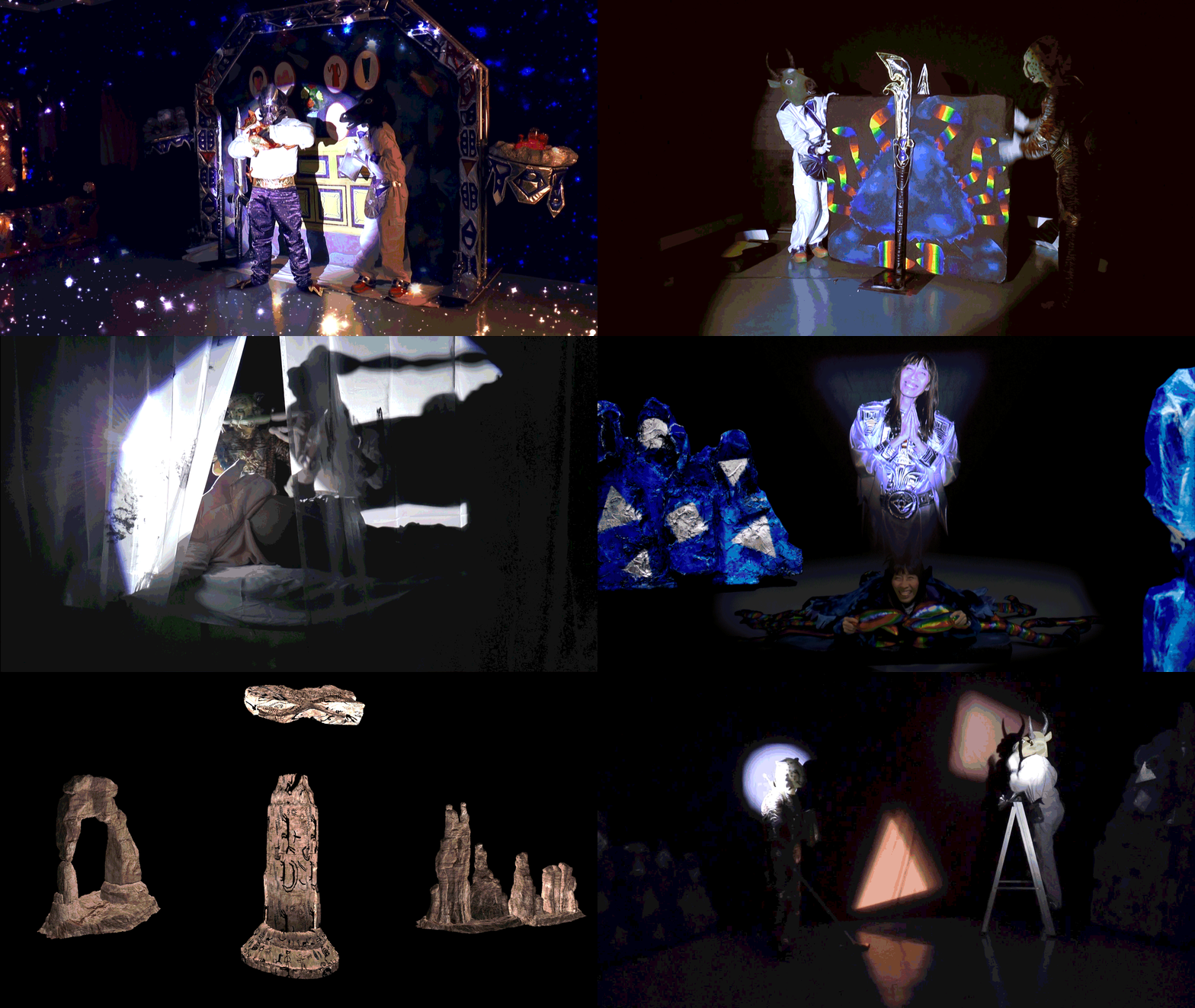
© Joo Choon Lin. All rights reserved.
I Just Want You to FEEL the FEELING I FELT, Liang Court Singapore, 2016

“I just want you to FEEL the FEELING I FELT” is a performance about how people and things are engaged in the process of remembering and to consider the role of material culture and the mnemonic effects objects produce on people.In Collaboration With:
Performer X Chanter: Lyon Sim
Music By: Kai Lam | Ghostscrawl
Composer/Lyrics: Digestion Machine & Underbelly
© Joo Choon Lin. All rights reserved.
Be Mysterious, Walter Phillips Gallery, The Banff Centre, 2014
Click to view a video documentation of I Only Make Friends With Money
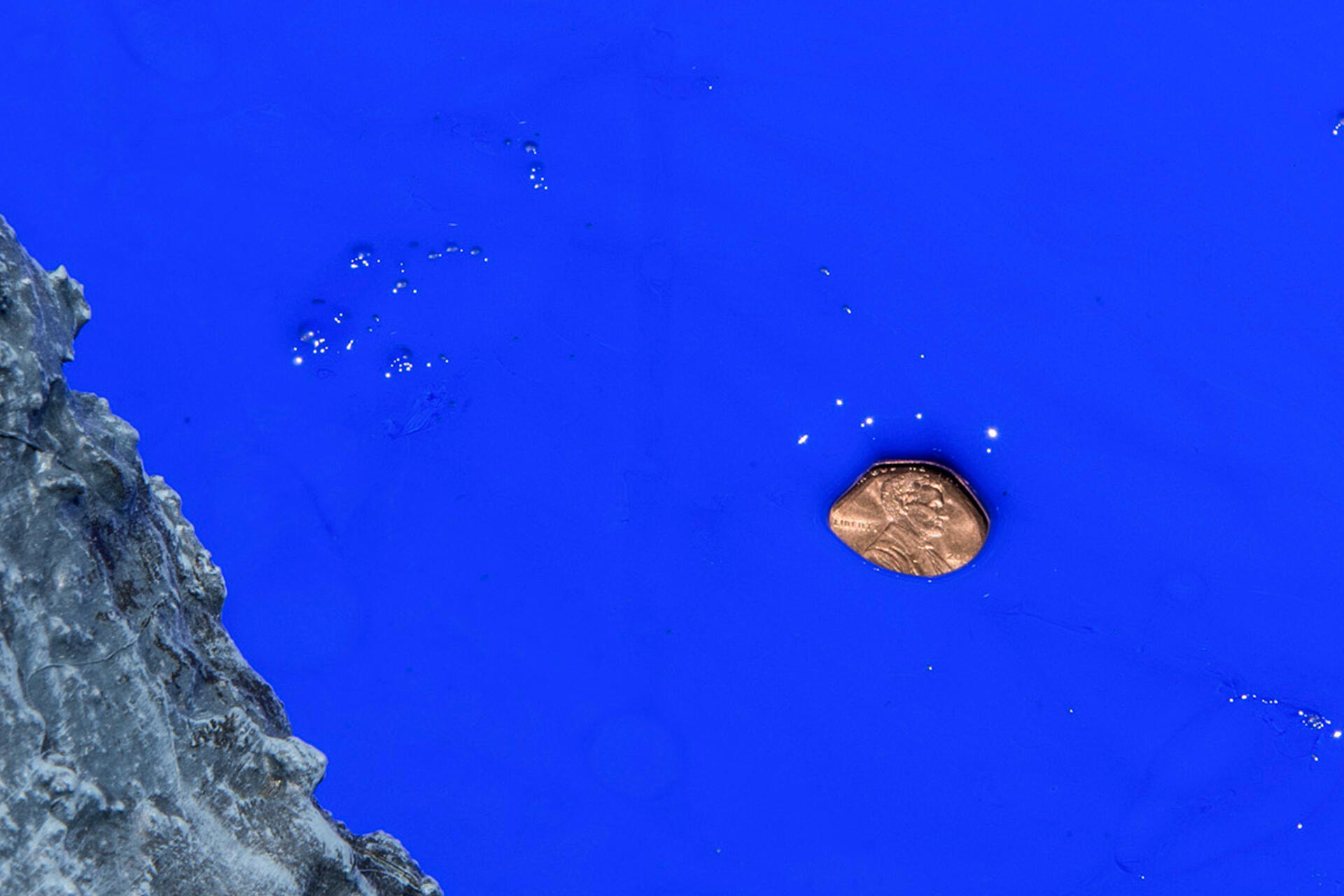
Joo Choon, Lin, detail of "I Only Make Friends With Money" (2013, remade in 2014). Synthetic goo, wood, cement. 120cm x 35cm x approx. Walter Phillips Gallery, Banff Centre.
Photograph by Rita Taylor.
Be Mysterious is an exhibition about objects. The objects you will meet in the exhibition, while being artworks in their own right, are there to disrupt our understanding of the things in our everyday life. Viewers will encounter a wishing-well filled with a peculiar blue substance, oversized mugs sprouting stalagmites, a houseplant made of clay, an oversize rag-rug the exact width of an oil pipeline. The lives of these artworks are imbued with personalities and tasks of their own. Some are deviant and poorly behaved, others shock and surprise, while some invite and provoke. The form of these works vary; there are videos by artists Joo Choon Lin and Daniel Jacoby, ceramics by Patrick Jackson and Alex Morrison, weavings by Brent Wadden and Rebecca Baird and a sculptural intervention by Mark Clintberg.The lobby of Walter Phillips Gallery becomes the initial site of the exhibition with Mark Clintberg's Vinyl RecordQuiet Disco (2013) playing the muffled bass of a party next door. A reference library of books and comedic scripts are also available during gallery hours. Art-rock albums such as Concert's Behave Like an Audience(2013) and Life Without Buildings' Any Other City (2001) are also on the set-list as part of the library, to be shuffled by gallery visitors and staff alike. This selection of albums and books are unexpected encounters - pointing to our preconceptions of what music and books can be.What all the artworks in Be Mysterious share is a healthy introspection, lightness and ability to invert the initial assumption of the viewer, asking them to think in new and strange ways. There is a recent trend in philosophical circles that asks us to better consider inanimate objects - things or tools - to alter their raw state and become multidimensional. Seemingly this is not that far-fetched, with our own networked communication devices collecting, processing and ultimately altering themselves into smarter objects. It is at this junction that Be Mysterious urges the multiple implications of each artwork, with no stone left unturned - history, form, humour, music, culture, craft and the very nature of what it means to be contemporary are all considered. So enter the exhibition with an open curiosity. Observe and interact with the artworks that take on the appearance of everyday objects and at the same time behave as extraordinary things.
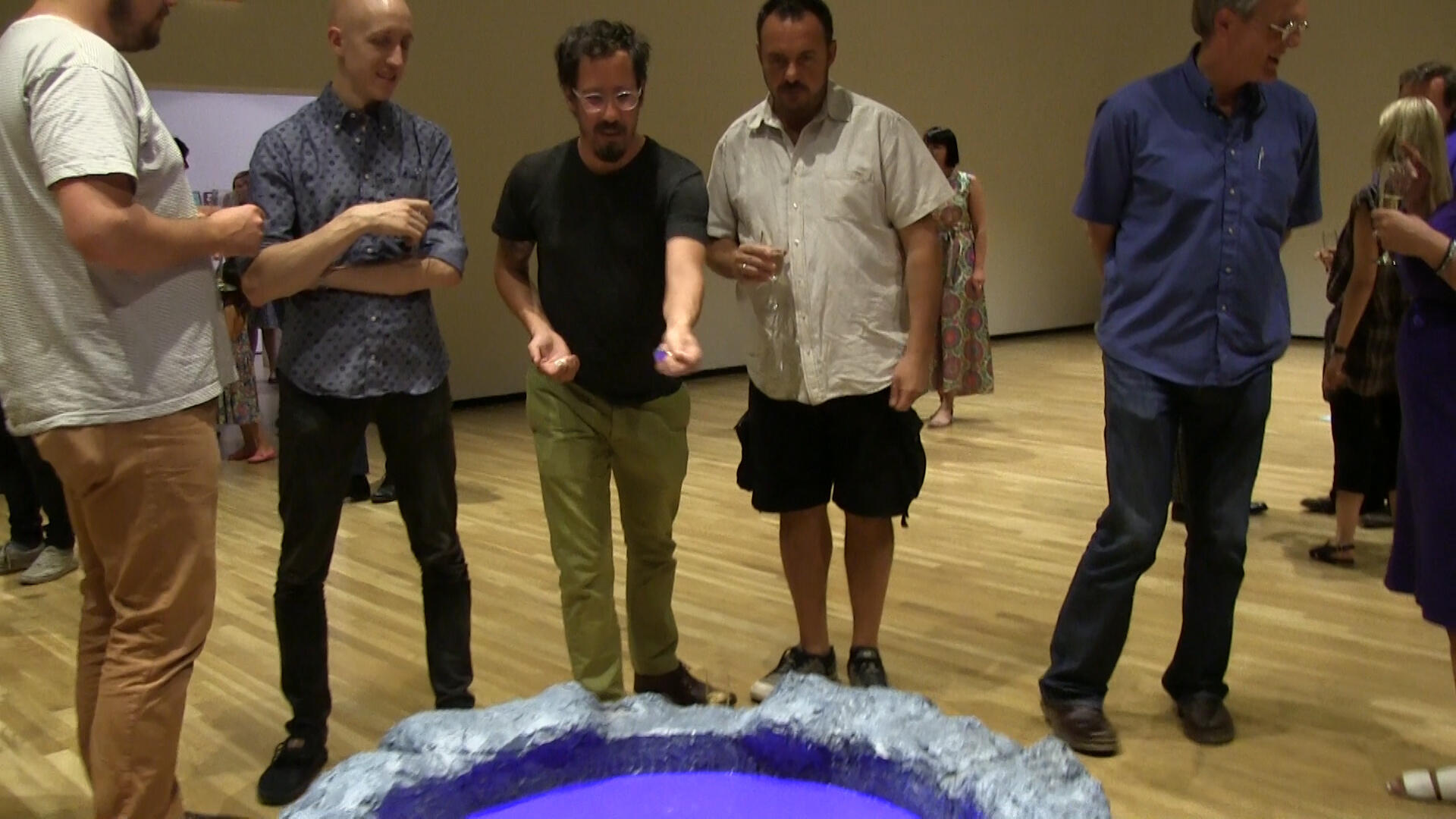
© Joo Choon Lin. All rights reserved.
Your Eyes are Stupid, Singapore Art Museum, Singapore Biennale 2013:
If the World Changed
Image courtesy of Singapore Art Museum
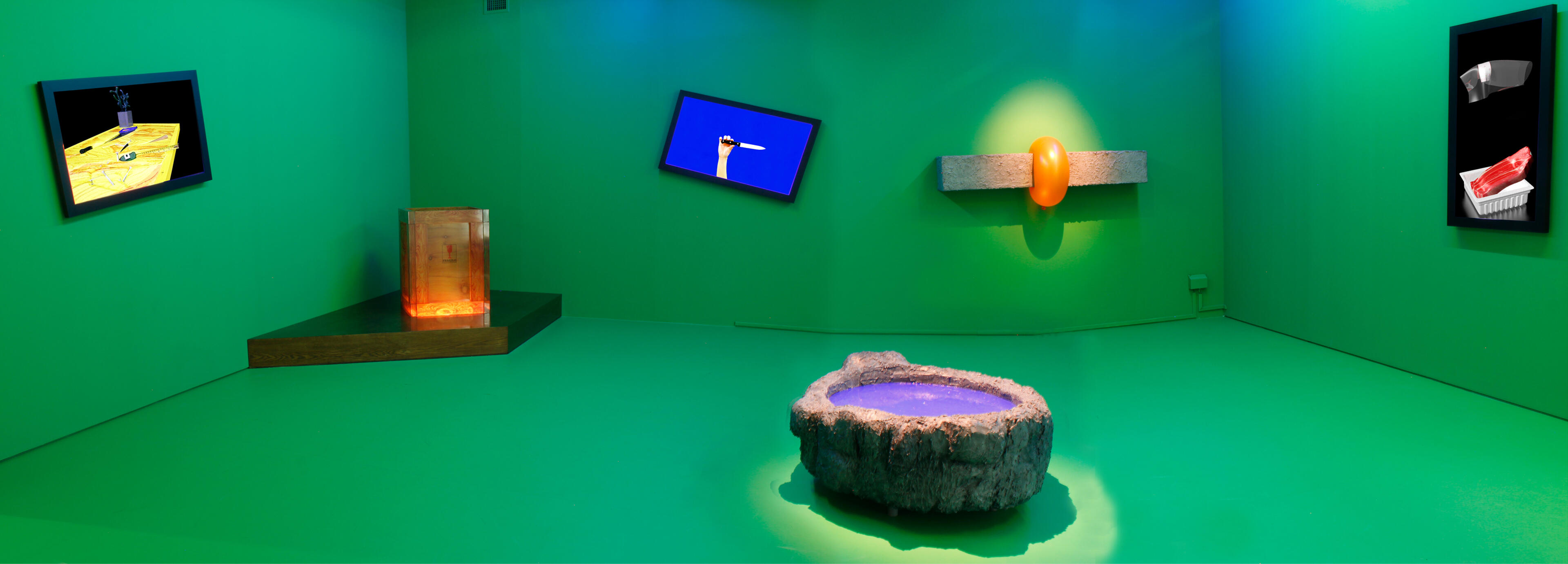
Mixed Media Installation
Dimension variable
Our perception of the world is greatly influenced by culture and social conditioning. Joo Choon Lin’s investigation of this is informed by her interest in technological developments. As various technologies of representation devise new ways of capturing the likeness of things (e.g. high-definition technology), so the quality of the surfaces of these things undergoes a transformation. Consequently, ‘reality is reconfigured and the natural state of objects is modified, degenerating the subject’s essence and reflexivity. Surfaces are replaced by another sense of ‘reality’-a glossy, hyper-real world that we sometimes choose to believe in over the tangible world.
In this video and sculptural work, three videos address the idea that objects have an alter-ego nature. In the first video, the nature of a knife is altered by the movements of user. The viewer no longer recognises the knife as a tool meant for cutting, as the knife highlights previously unknown peculiarities and is reincarnated from a hard to soft material. The viewer begins to disassociate him-or himself from the familiar, socially determined function of the knife and sees a new potential for the object. The knife is freed from its former role.The second video shows a plywood table that appears solid, but seconds later, tools are thrown into it and they slowly submerge into the plywood surface, which is now recognised as a mushy surface. The tools are a hand saw, screws, a screwdriver and a measuring tape. Once disposed into mushy surface, the presence and functionality of these tools are dislocated, akin to a body disappearing into quicksand. The viewer is prompted to think about salvaging them; it is at the verge of losing these objects that their presence and value seem the most visible.
The third video shows a piece of meat jolting out of its Styrofoam packaging as if its nerves are still intact, and it starts to make noises. Through the three videos, joo questions if objects have an independent life. Do or can they have a ‘natural’ voice once they are freed from their socially dictated purposes? Can these objects be there if we no longer need them, or do we miss them only when they are no longer available? Joo draws back from the everyday presence and original uses of these objects, to highlight the absurdity of social conditioning formed by our utilitarian habits.
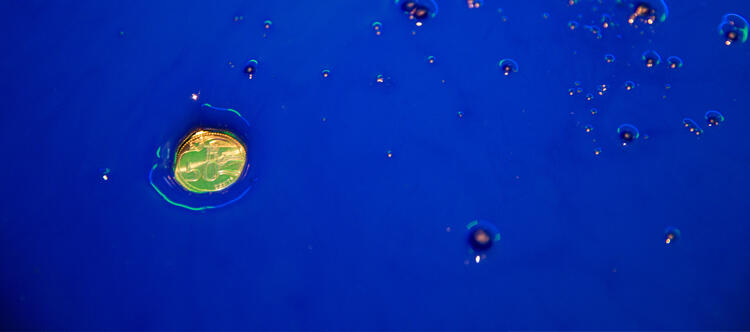
Only Make Friends With Money, 2013, Synthetic goo, wood, cement.
In I Only Make Friends With Money, I was interested in the capacity of the surface to provoke sensory experience and emotional responses. The work is an interactive piece, where audiences are invited to throw coins into a pool of synthetic goo, where the coins will slowly submerge. With the act of throwing coins, most people will immediately think of wishing wells. Maybe there's a sense of relief when we see money and objects that are burdened with meaning slowly disappear into the unknown. It's very different from watching it sink in water, because you can still see the coin even as it descends to the bottom of the well. In the goo, however, it is very slow. Sometimes, the coins will even bounce back as if it is rejecting your wishes. The material of goo takes on a very playful and strange quality, opening up a space for different interpretation and experiences.
In the first iteration, the colour of the slime was inspired by International Klein Blue, which was one of my references. The colour blue is associated with spirituality and mysticism in many cultures. Yves Klein was interested in the spiritual and emotional quality of blue, and he believed that it had a transcendent quality that could evoke a sense of the infinite and the spiritual.
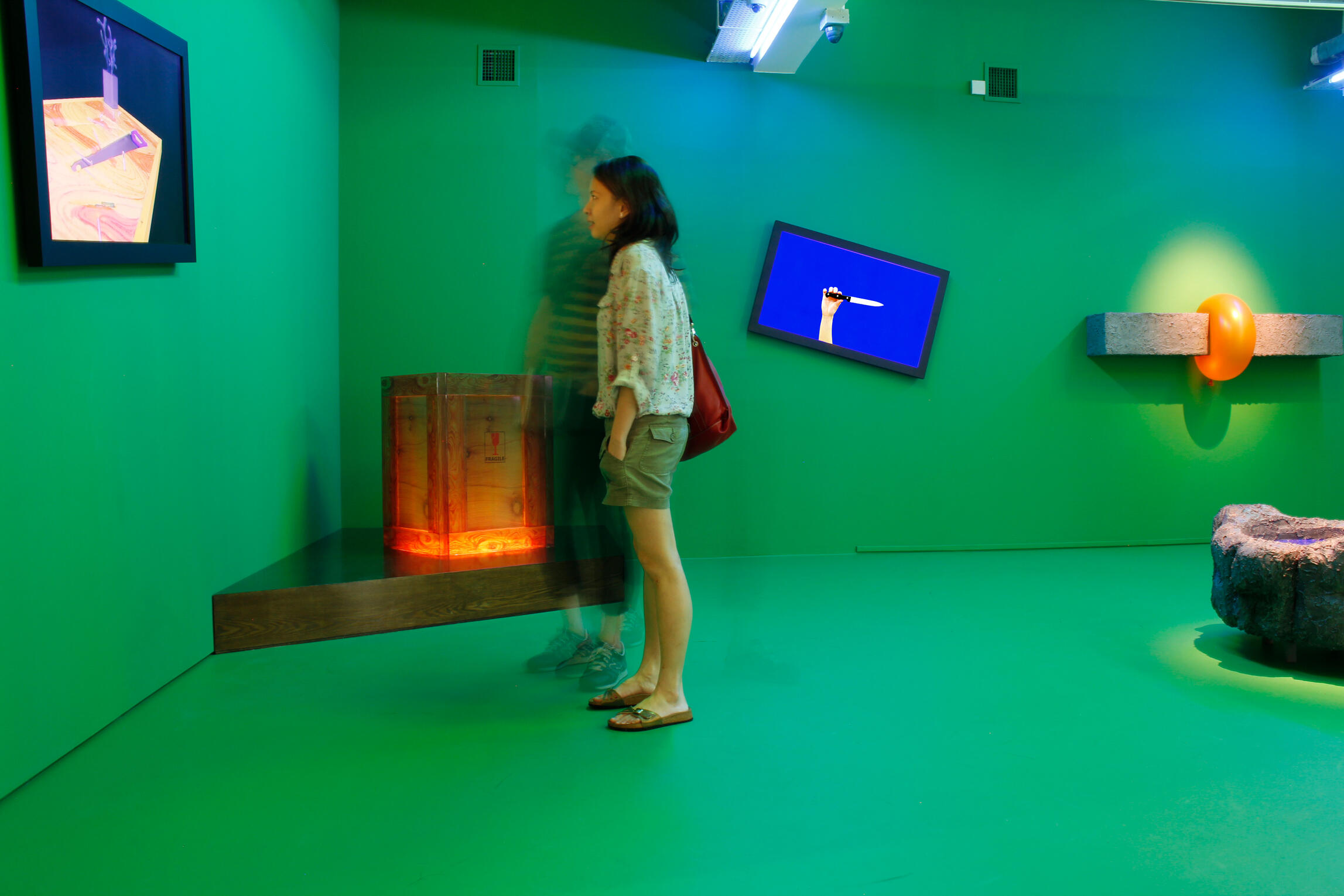
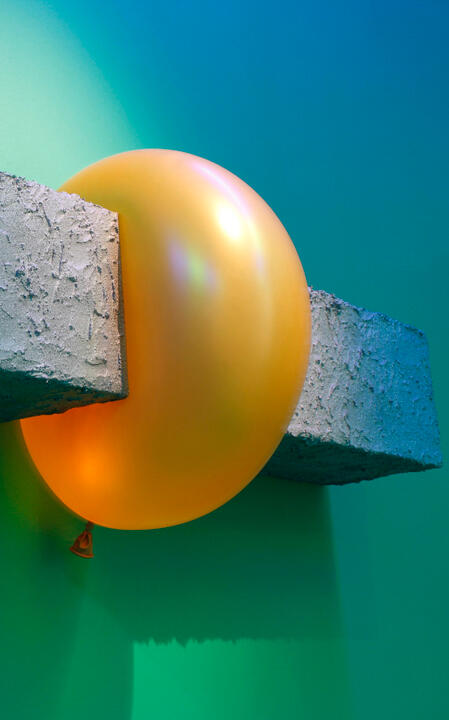
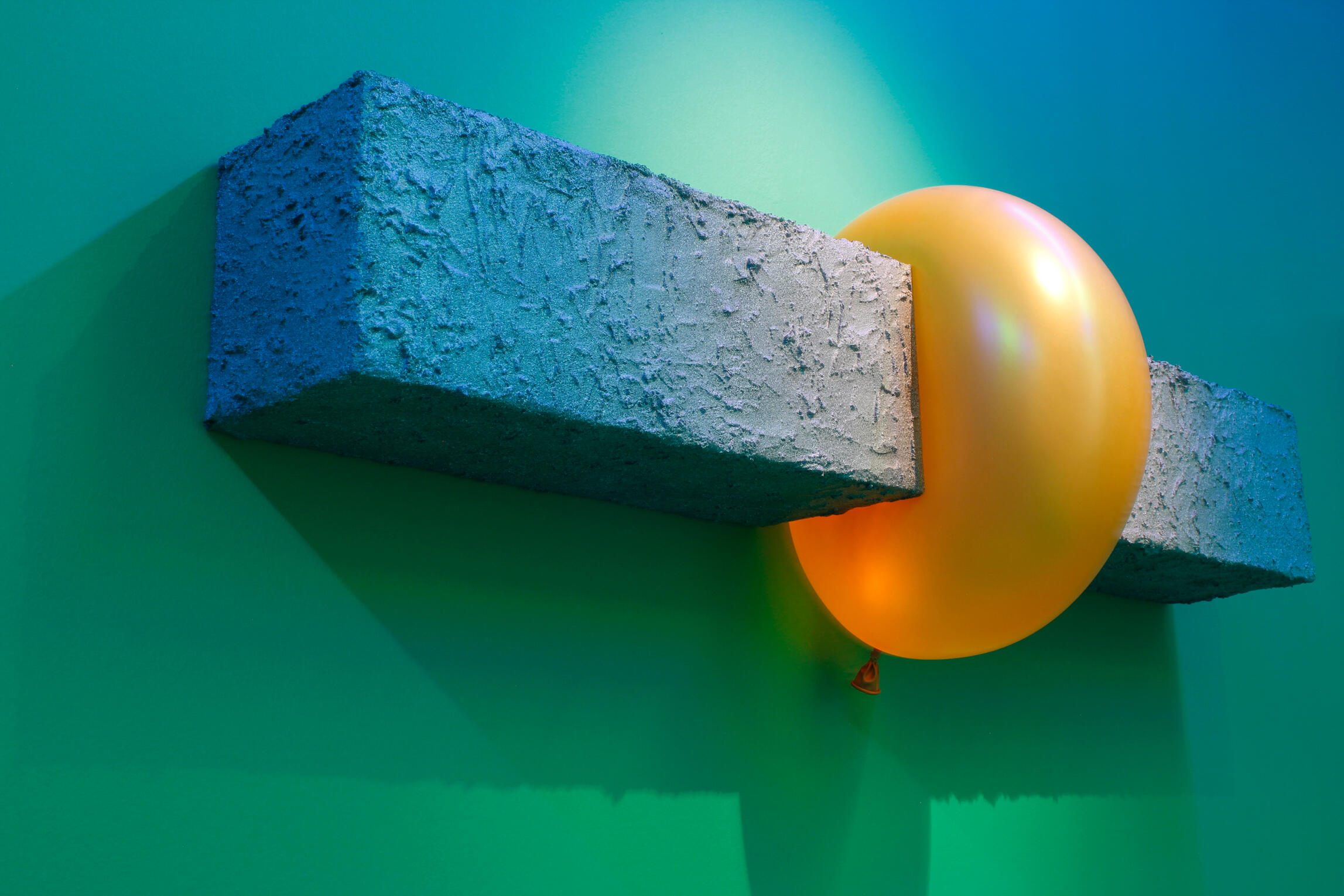
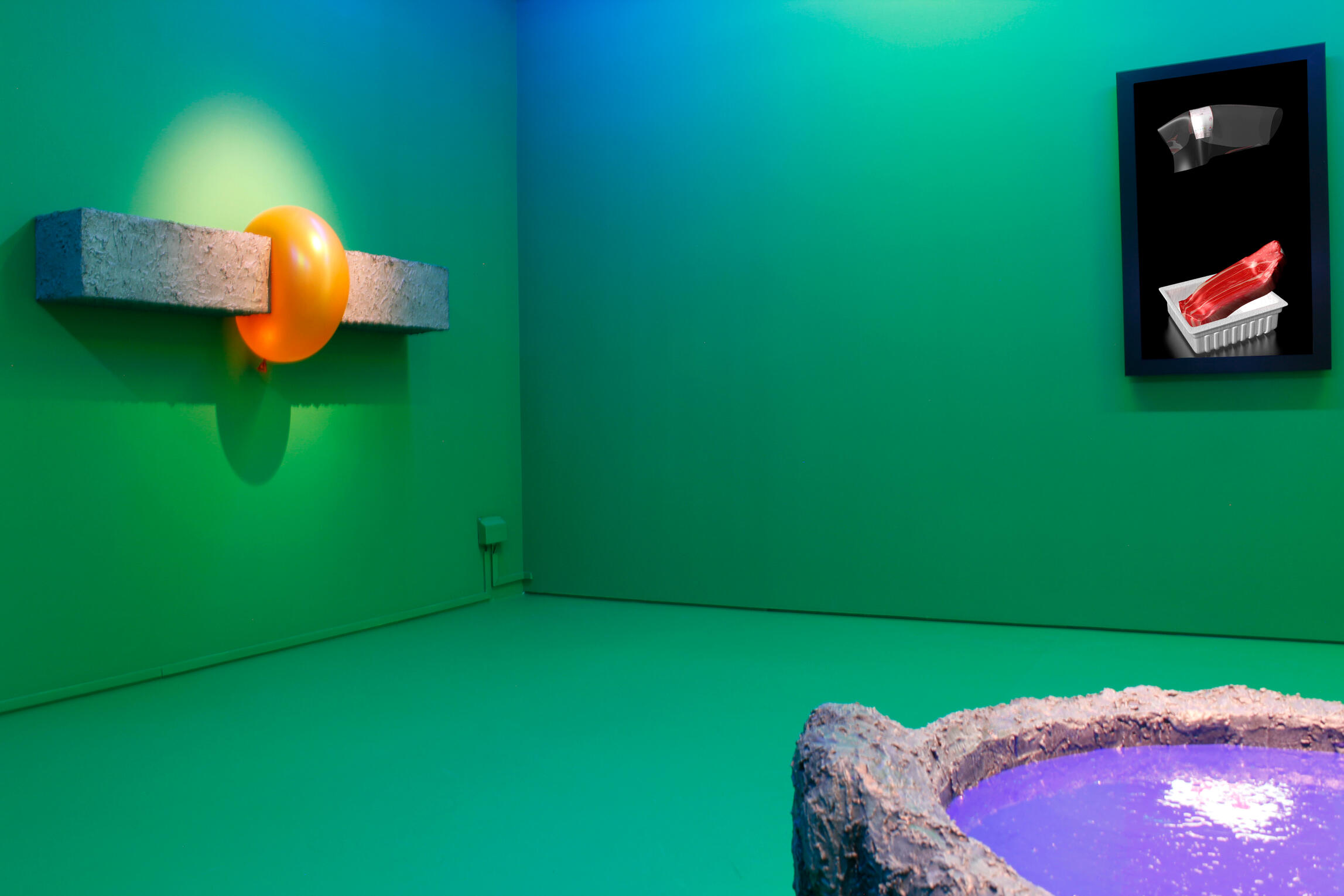
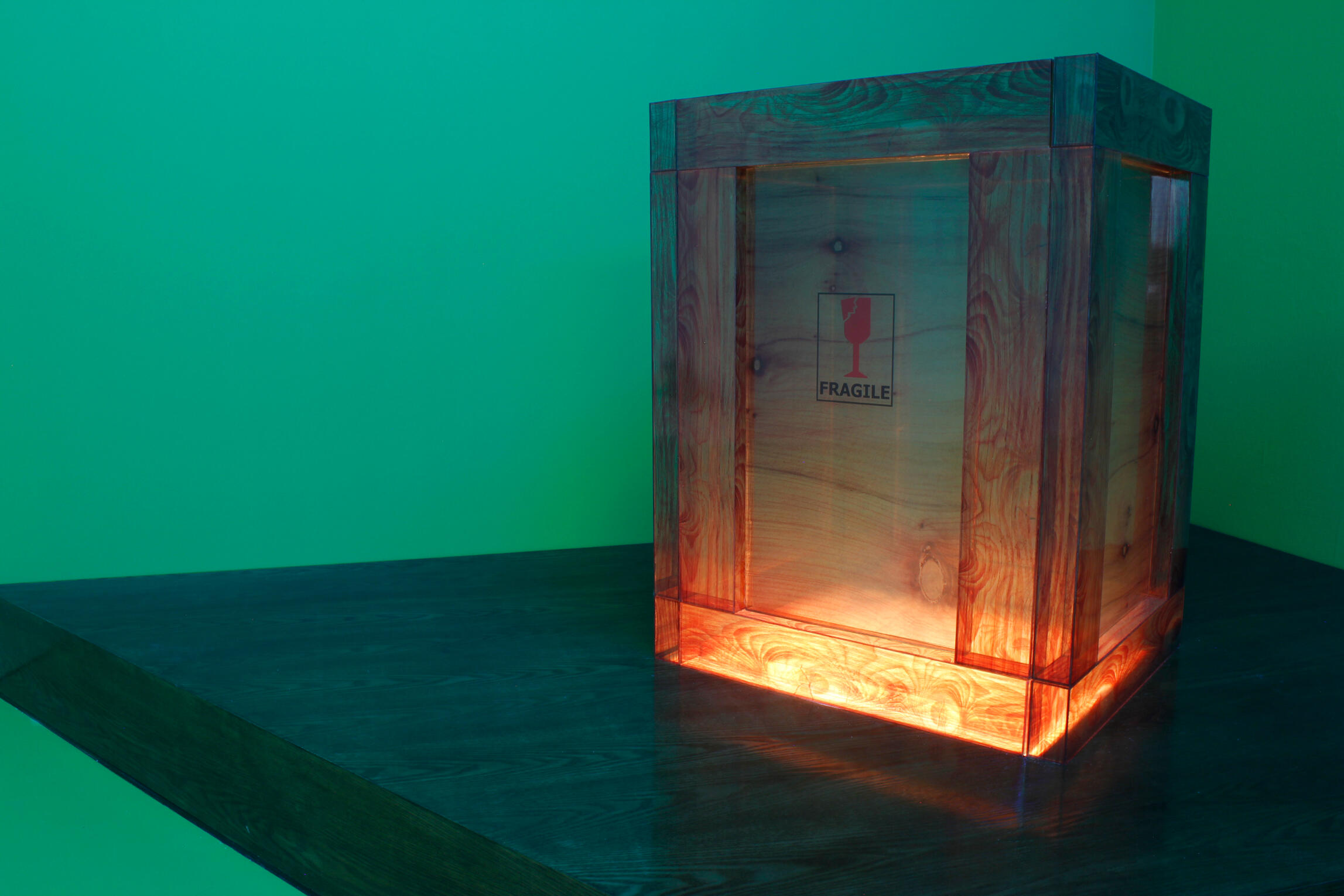
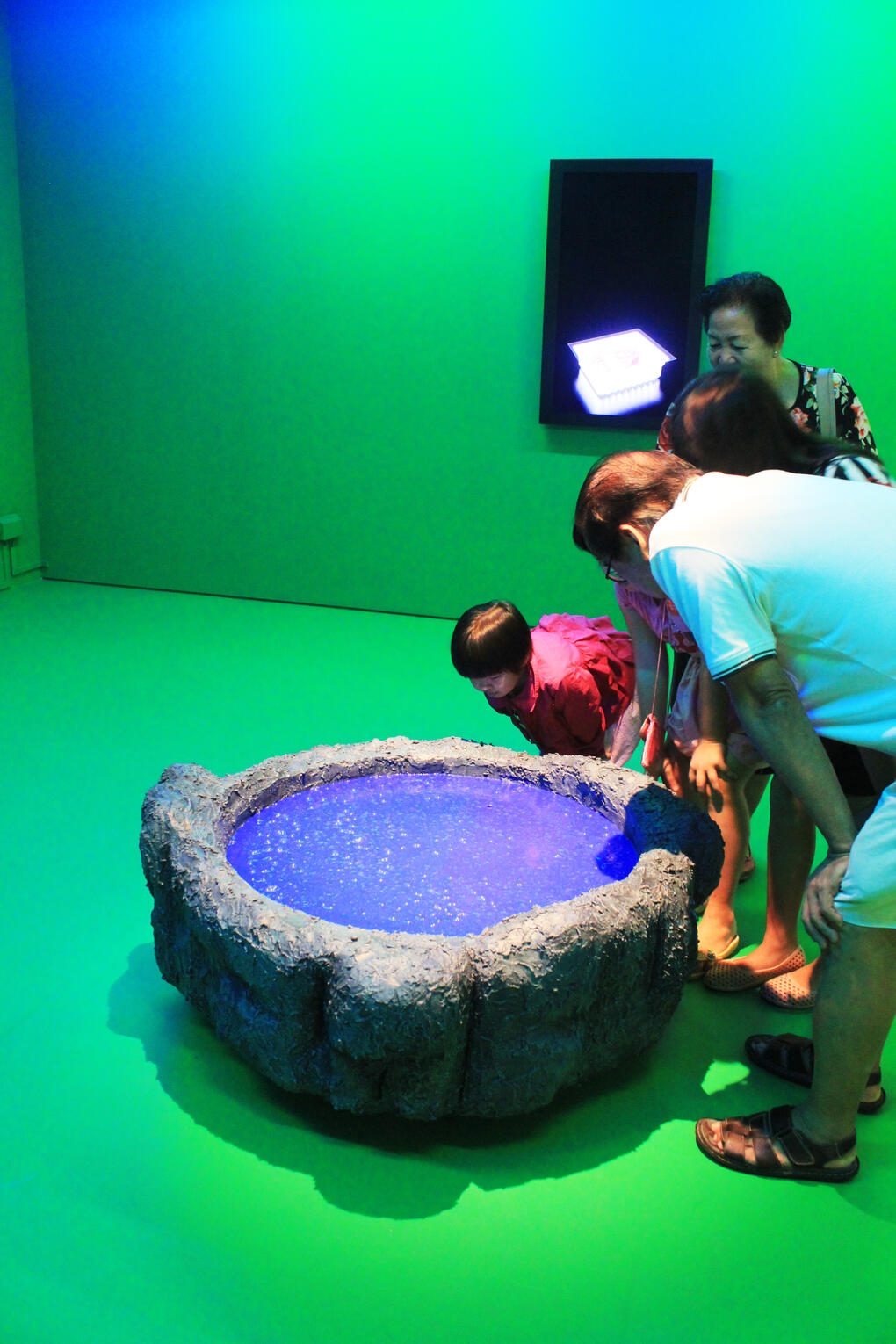
Videos:Broken Tools Series: If we’re Going to Die, We’ll All Die Together | Duration 3 minsBroken Tools Series: Your Eyes Are Stupid | Duration 1:31 minsWilhelm Scream | Duration 0:48 mins
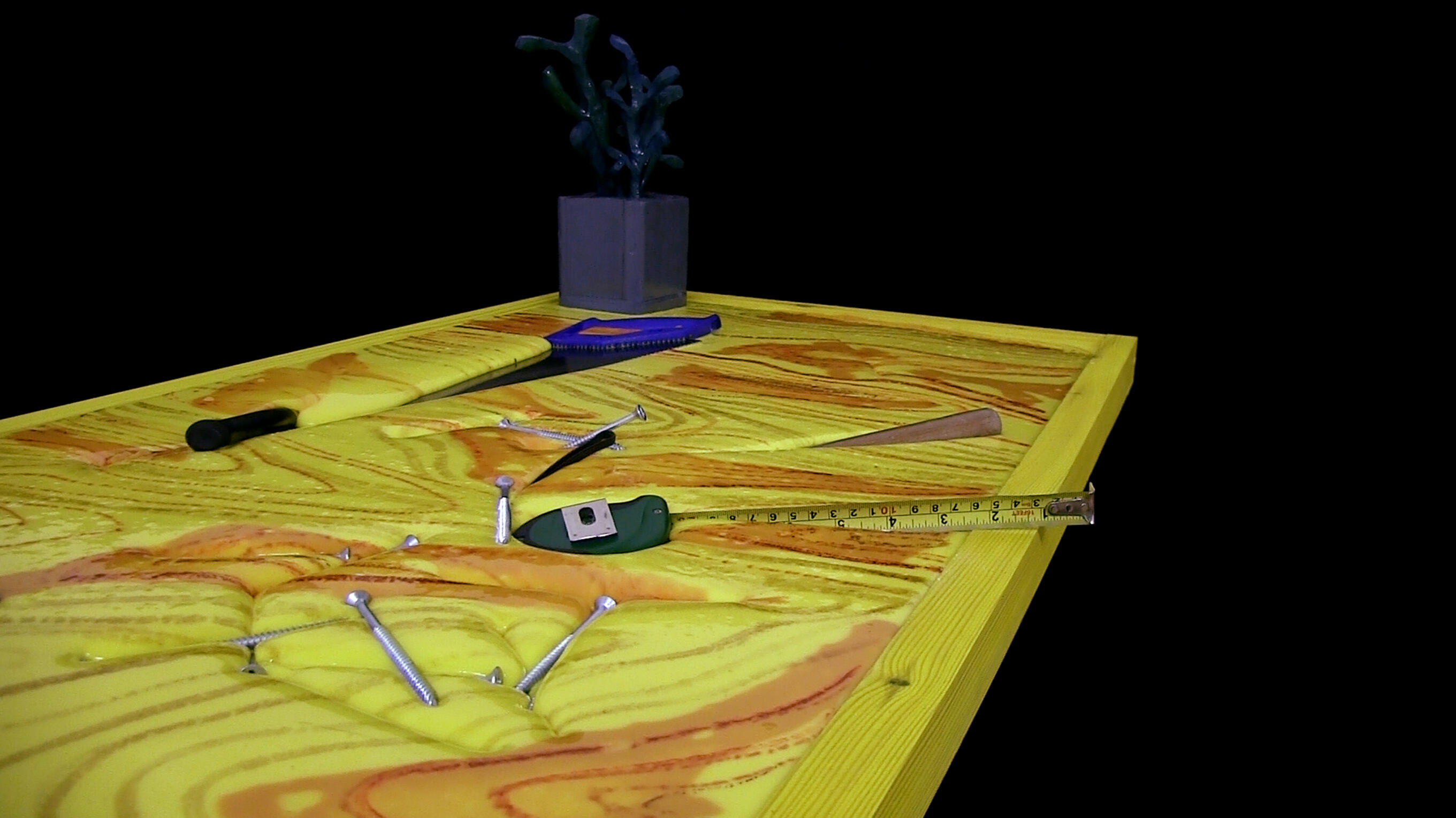
Broken Tools Series: If we’re Going to Die, We’ll All Die Together | Duration 3 minsI am challenging our perception of reality and breaking the familiar patterns of perception, to make known the nature of things, liberating them from their utilitarian function. In the video “Broken Tools”, fully functional tools such as hand-saw, screws, a screw driver and a measuring tape encounter an utterly uncut-able “wooden” plank made of synthetic goo, and the tools in turn become useless themselves. When tools break down, although no longer serviceable, they loudly announce their reality. It is typically in these moments that object first becomes strikingly visible and draws our attention to it.But underlying all of this, perhaps, is my philosophical interest in the nature of reality: this interest might be summarized in terms of the philosophers’ longstanding investigation into the relations between appearance (i.e. the surfaces of things as they present themselves to the eye and to the other human senses) and essence (i.e. the immutable identity of things as they are apprehended by the mind, rather than the senses).
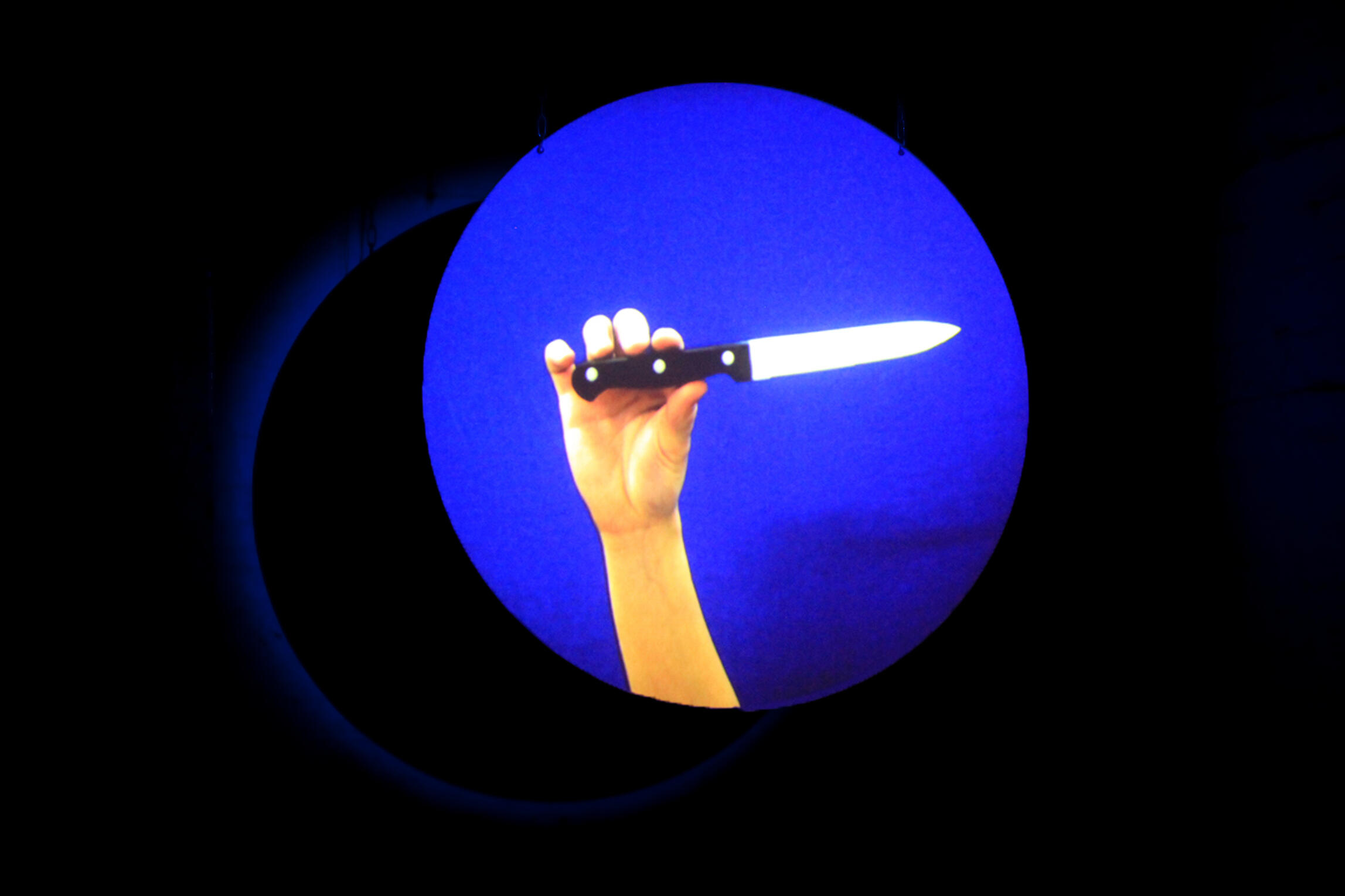
Broken Tools Series: Your Eyes Are Stupid | Duration 1:31 minsThe film is composed entirely of the knife turning from solid to rubbery. There is a quality of relentless persistence-of doing something over and over again- demonstration of almost persistent determination. I borrowed the repetitive element found in painting or sculpture.
The hand movement becomes sculptural material, showing how the hand can dynamically transform the material(Knife). The perception and bodily comportment can affected to the material form(from solid to soft) with an attempt to stimulate individual perception. An entities has different uses in different context. This Knife is not the same thing in a kitchen, or a prop used in theatrical drama. When a normal hard object such as knife is seen in a limp or wobbly state, this tool is now dysfunctional. The wobbly state gives the knife a form very different from its everyday incarnation.This knife suddenly performs in ways that highlight peculiarities that were unnoticed before.
I think solidity is perhaps the most baffling and incomprehensible of the qualities of everyday objects, and the one we most commonly use to reassure ourselves of their presence. In emptying them of the solidity, it opens to our apprehension a strangeness that was always hidden in everyday objects.
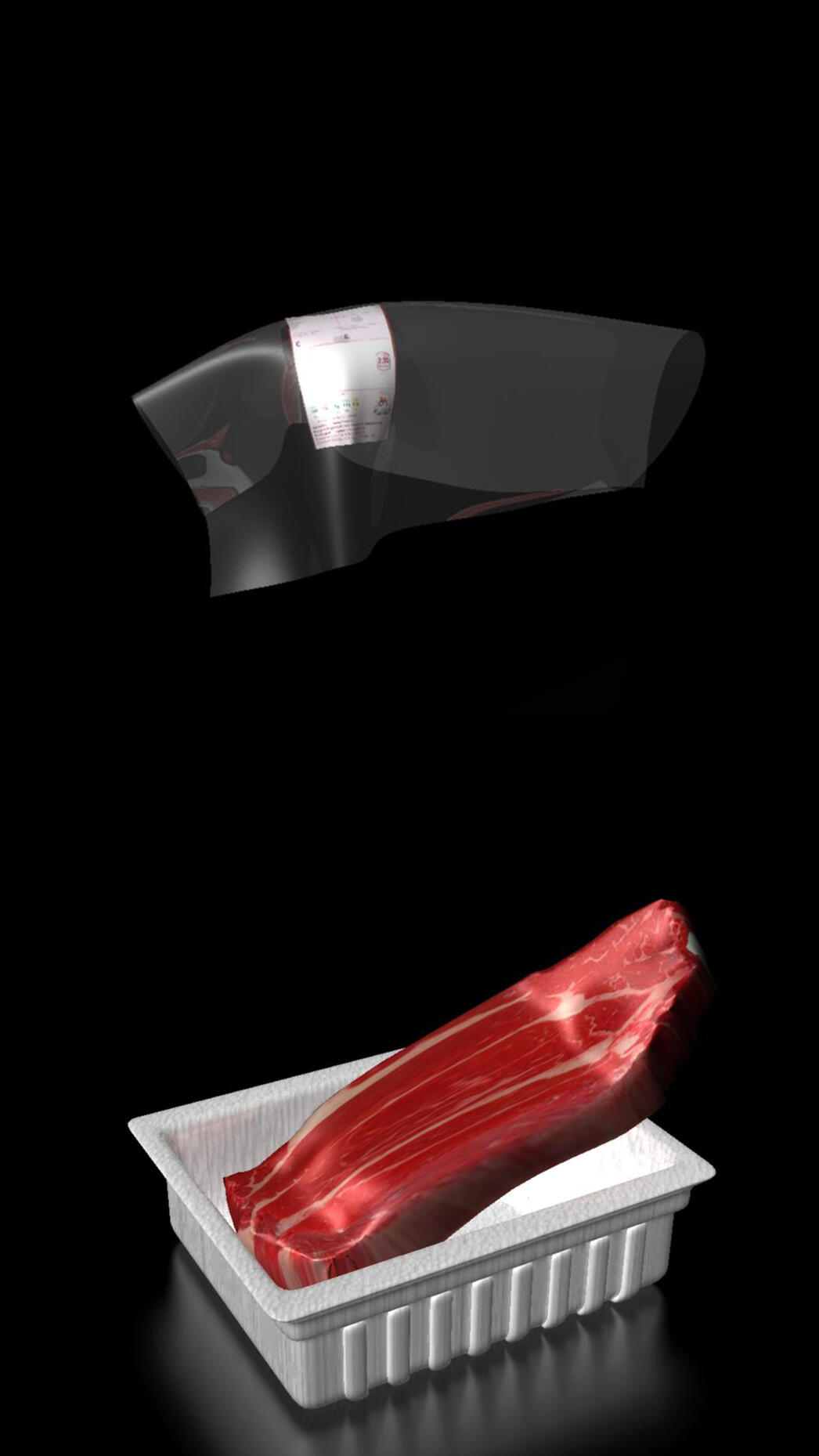
Wilhelm Scream | Duration 0:48 minsIn today’s world, violence is often made “acceptable” through packaging and framing. Political leaders may justify war or human rights violations through language such as “peacekeeping,” “security,” or “stability.” These words soften perception and move violence away from its physical reality.In the same way, the brutally, crudeness and violent of killing an animal are overshadowed by the packaging and the well-trimmed specialty cuts of meat. The violence is still there, but it is hidden behind design, systems, and presentation.Social media adds another layer to this condition. On one hand, it can increase visibility and awareness by making images of war, suffering, and death more accessible than ever before, bringing distant events into immediate view. On the other hand, this visibility is shaped by constant repetition and rapid circulation, where context is often reduced or lost. Violence becomes image—flattened into surfaces that move faster than they can be fully processed, reflected upon, or understood in relation to what is actually happening. Over time, this sustained exposure can lead not only to emotional fatigue or numbness, but also to a diminished capacity to register the full reality behind what is seen: we see more, but feel and comprehend less.Broken Tools Series: Wilhelm Scream reflects this condition. The “Wilhelm scream,” often reused in films and media, becomes a symbol of how pain and violence are recycled as sound, stripped of real consequence. It becomes a tool—repeated, stylized, and detached from the original body that produced it.In this work, empathy is not only about what we feel, but about how feeling is shaped, reduced, or redirected through systems of repetition, editing, and packaging. Whether in politics, media, or daily consumption, violence is not always removed—it is made presentable.
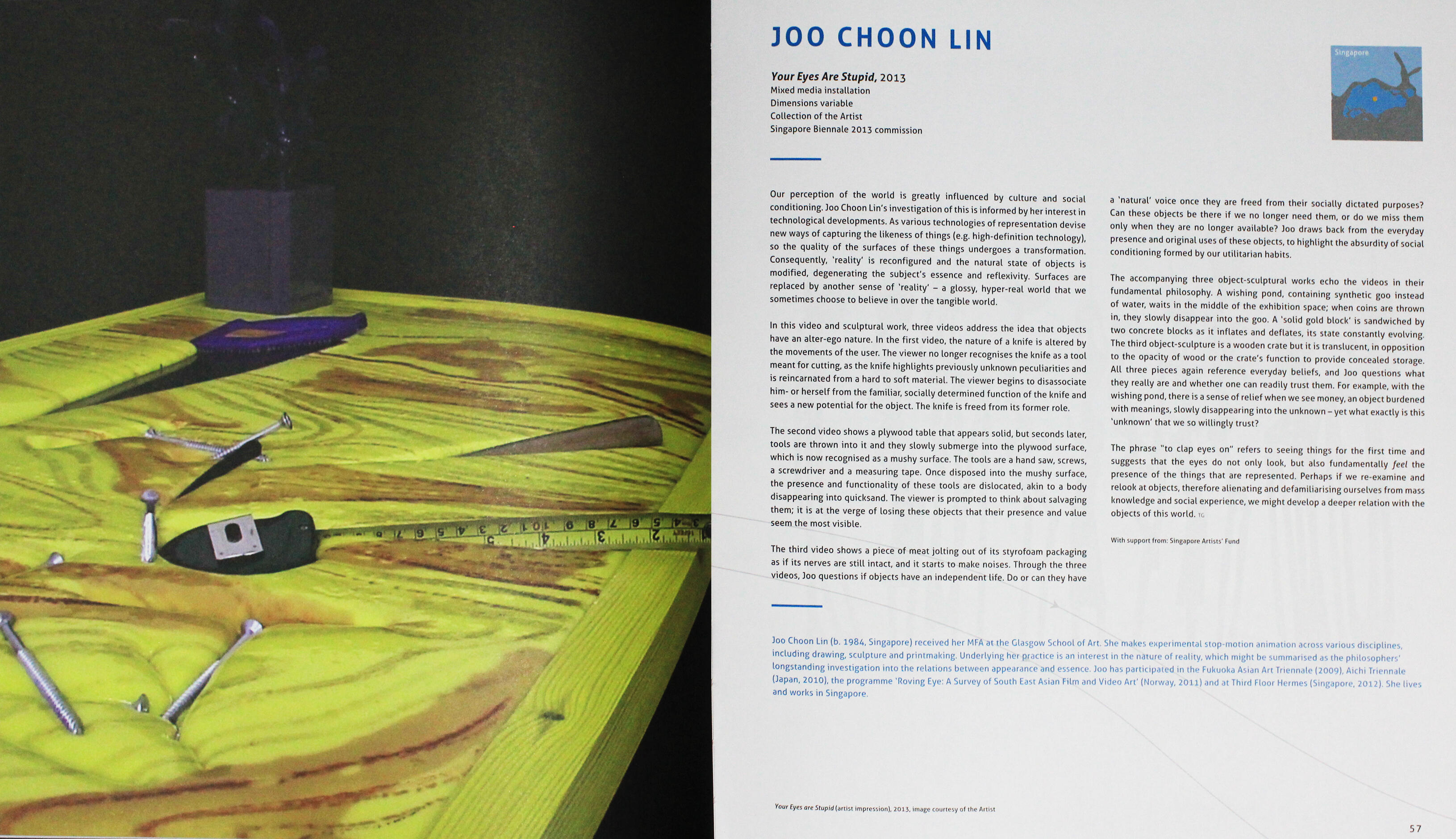
Catalogue, Singapore Biennale 2013: If the World Changed
© Joo Choon Lin. All rights reserved.
Broken Tools Series: If We're Going To Die, We'll All Die Together, Video 3 mins, Glue Factory, Glasgow, 2012
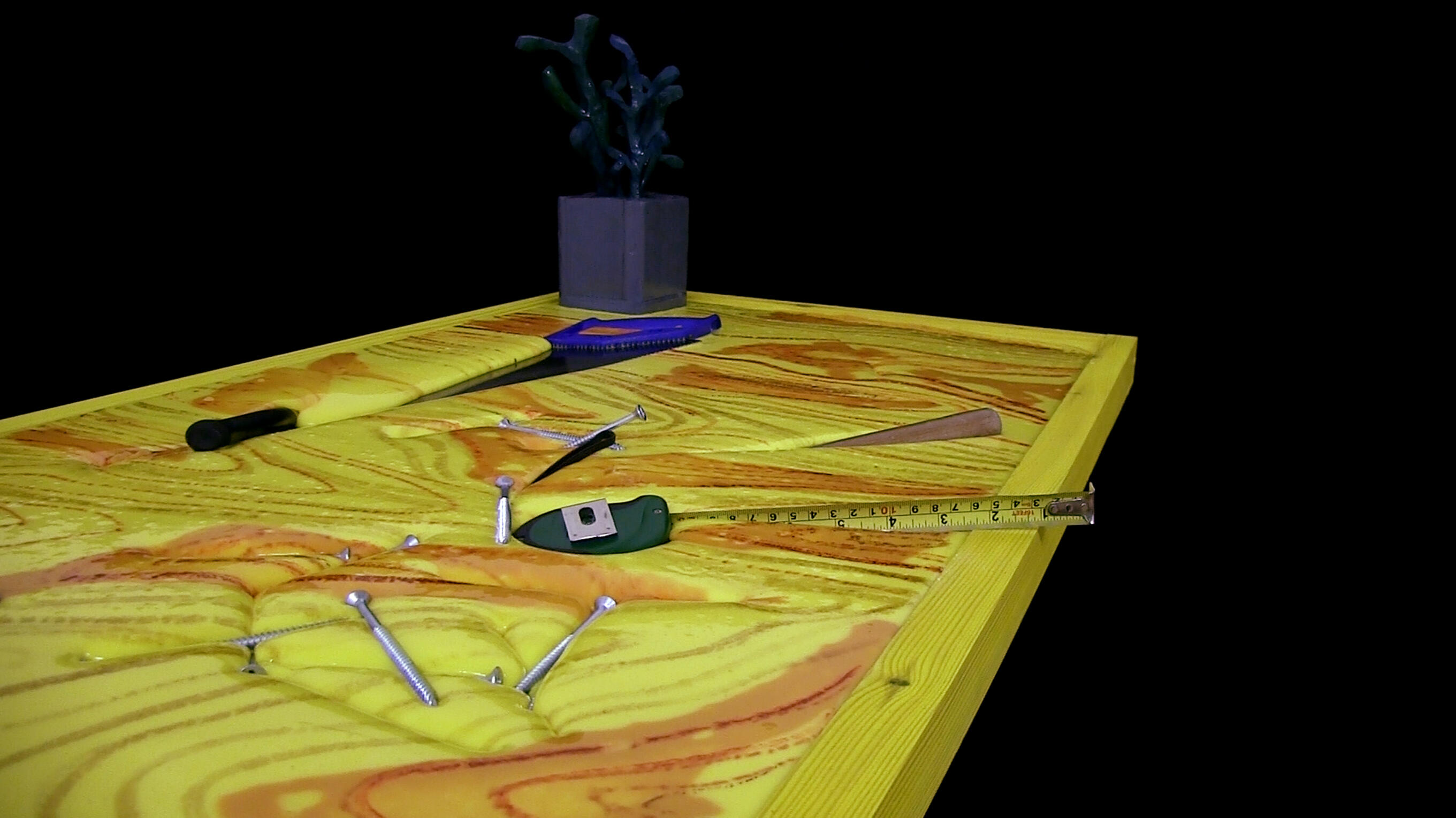
I am challenging our perception of reality and breaking the familiar patterns of perception, to make known the nature of things, liberating them from their utilitarian function. In the video “Broken Tools”, fully functional tools such as hand-saw, screws, a screw driver and a measuring tape encounter an utterly uncut-able “wooden” plank made of synthetic goo, and the tools in turn become useless themselves. When tools break down, although no longer serviceable, they loudly announce their reality. It is typically in these moments that object first becomes strikingly visible and draws our attention to it.But underlying all of this, perhaps, is my philosophical interest in the nature of reality: this interest might be summarized in terms of the philosophers’ longstanding investigation into the relations between appearance (i.e. the surfaces of things as they present themselves to the eye and to the other human senses) and essence (i.e. the immutable identity of things as they are apprehended by the mind, rather than the senses).

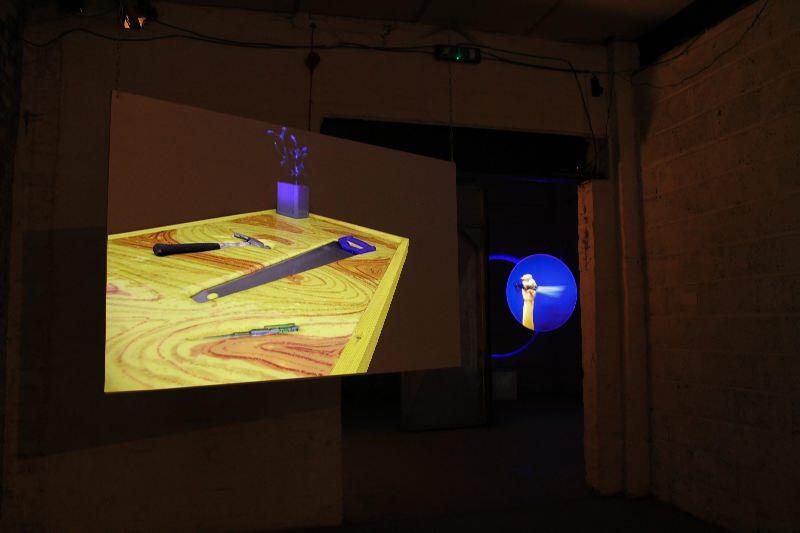
Broken Tools Series: If We're Going To Die, We'll All Die Together, Glue Factory, Glasgow, 2012
The Broken Tools Series draws philosophical reference from Martin Heidegger’s concept of the “broken tool,” in which an object, when functioning normally, recedes into invisibility through habitual use. It is only when the tool breaks down, when its function is interrupted, that its presence becomes strikingly visible. Stripped of functionality, the object reveals its inherent strangeness.Broken Tools Series exposes how perception itself is structured by utility, habit, and conceptual projection. When function collapses, objects become unfamiliar, revealing both the instability of perceived reality and the possibility of encountering a deeper ontological presence.
© Joo Choon Lin. All rights reserved.
Broken Tools Series: Your Eyes Are Stupid, Video, Glue Factory, Glasgow, 2012
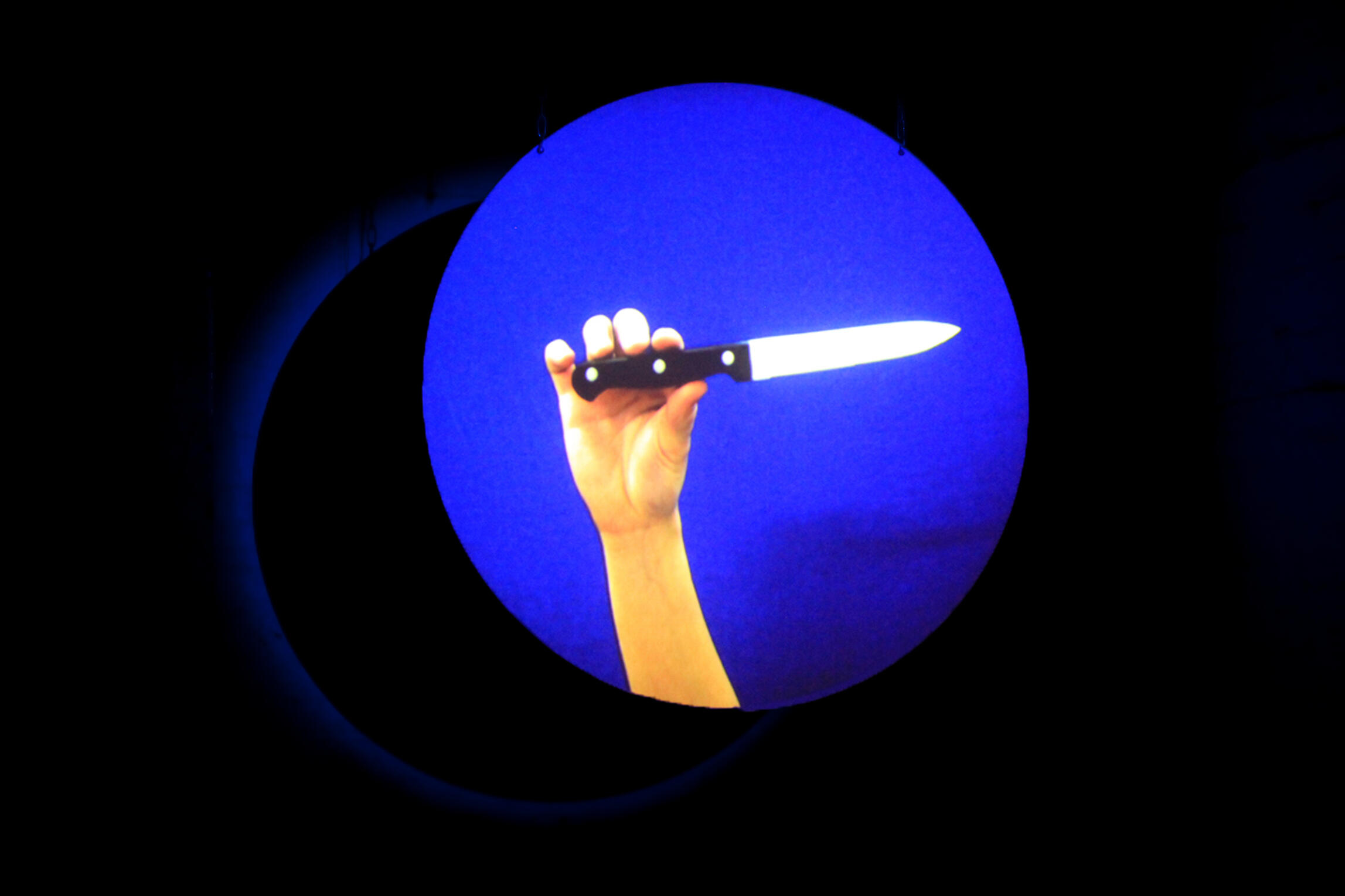
The film is composed entirely of the knife turning from solid to rubbery. There is a quality of relentless persistence-of doing something over and over again- demonstration of almost persistent determination. I borrowed the repetitive element found in painting or sculpture.The hand movement becomes sculptural material, showing how the hand can dynamically transform the material(Knife). The perception and bodily comportment can affected to the material form(from solid to soft) with an attempt to stimulate individual perception. An entities has different uses in different context. This Knife is not the same thing in a kitchen, or a prop used in theatrical drama. When a normal hard object such as knife is seen in a limp or wobbly state, this tool is now dysfunctional. The wobbly state gives the knife a form very different from its everyday incarnation.This knife suddenly performs in ways that highlight peculiarities that were unnoticed before.I think solidity is perhaps the most baffling and incomprehensible of the qualities of everyday objects, and the one we most commonly use to reassure ourselves of their presence. In emptying them of the solidity, it opens to our apprehension a strangeness that was always hidden in everyday objects.

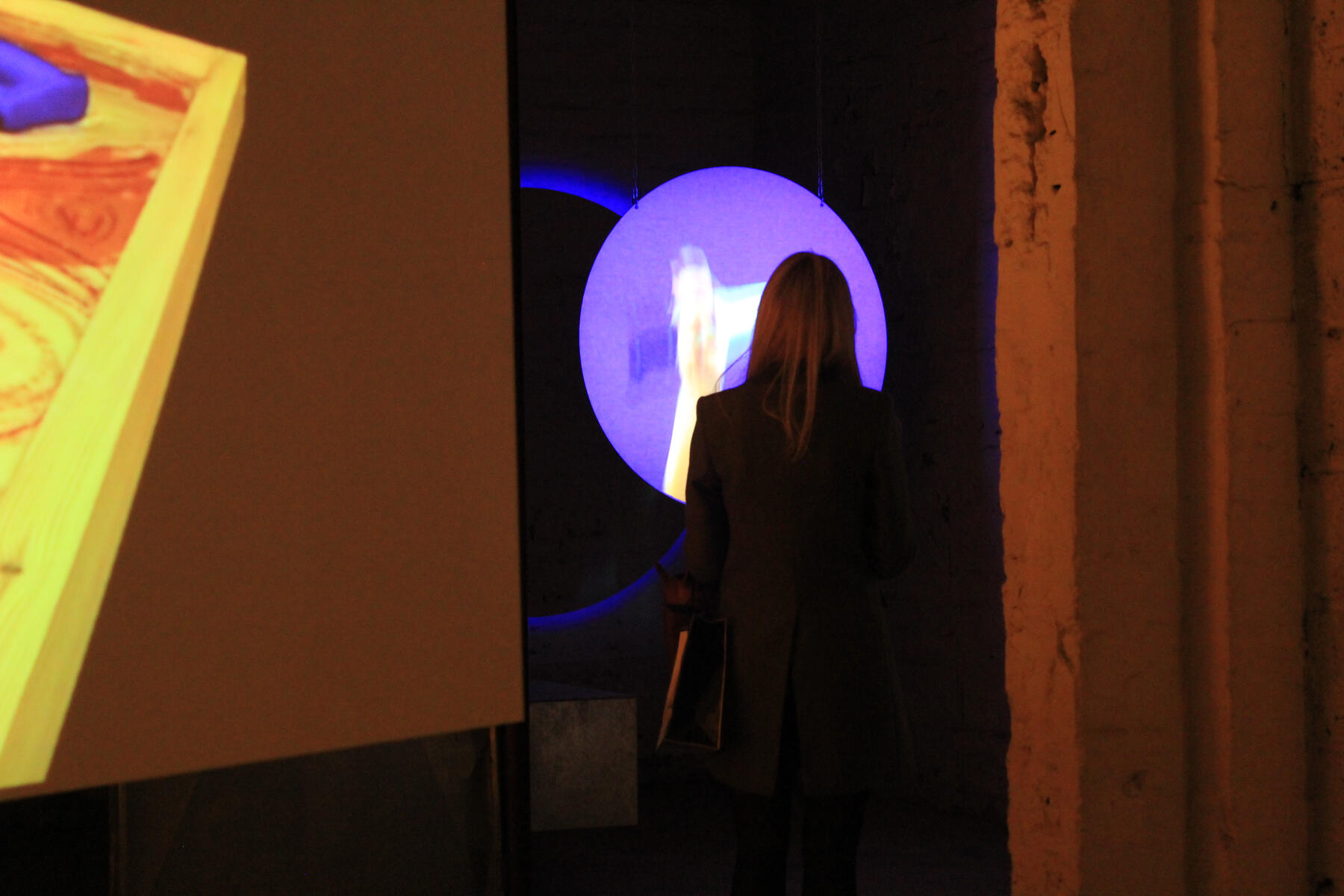
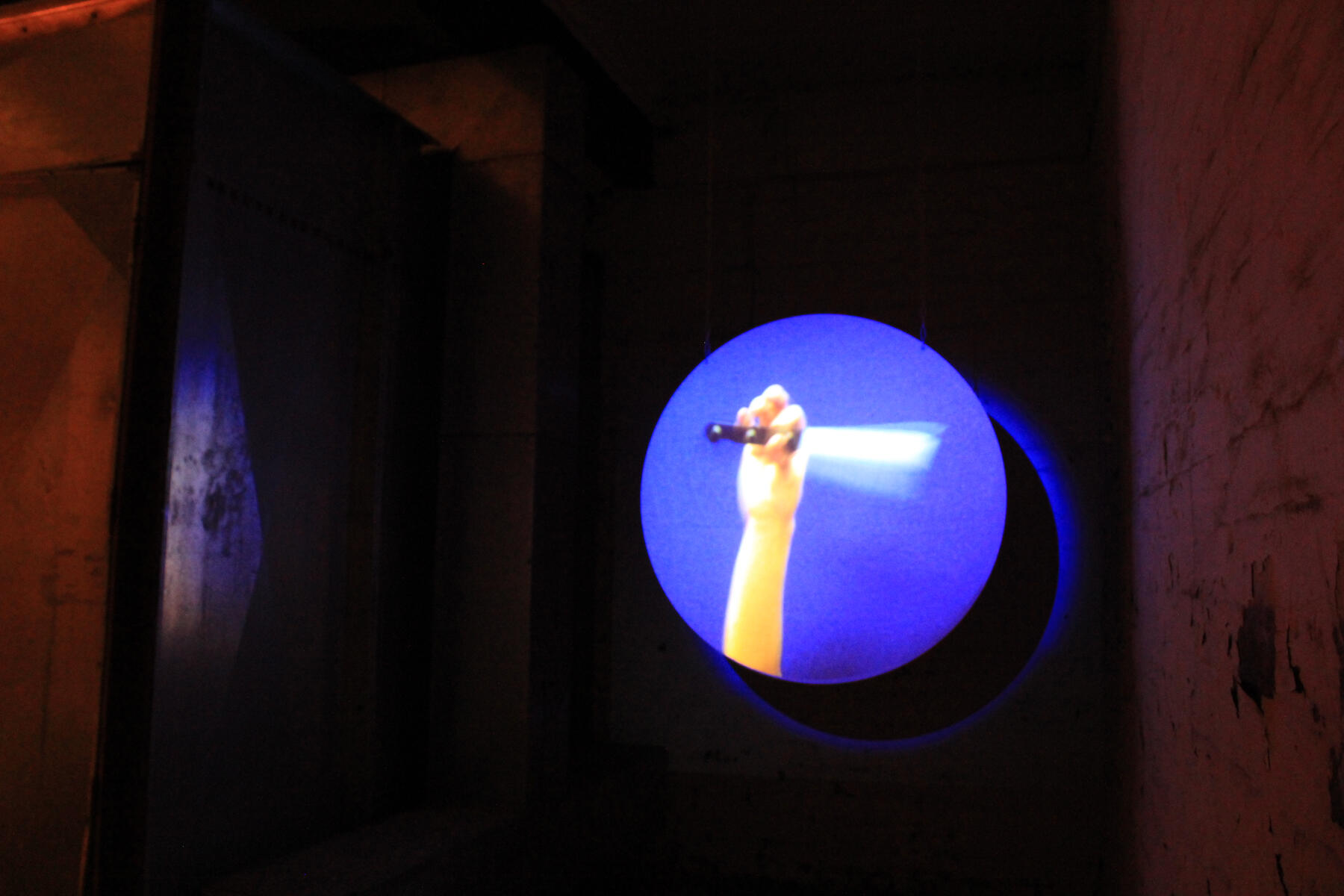
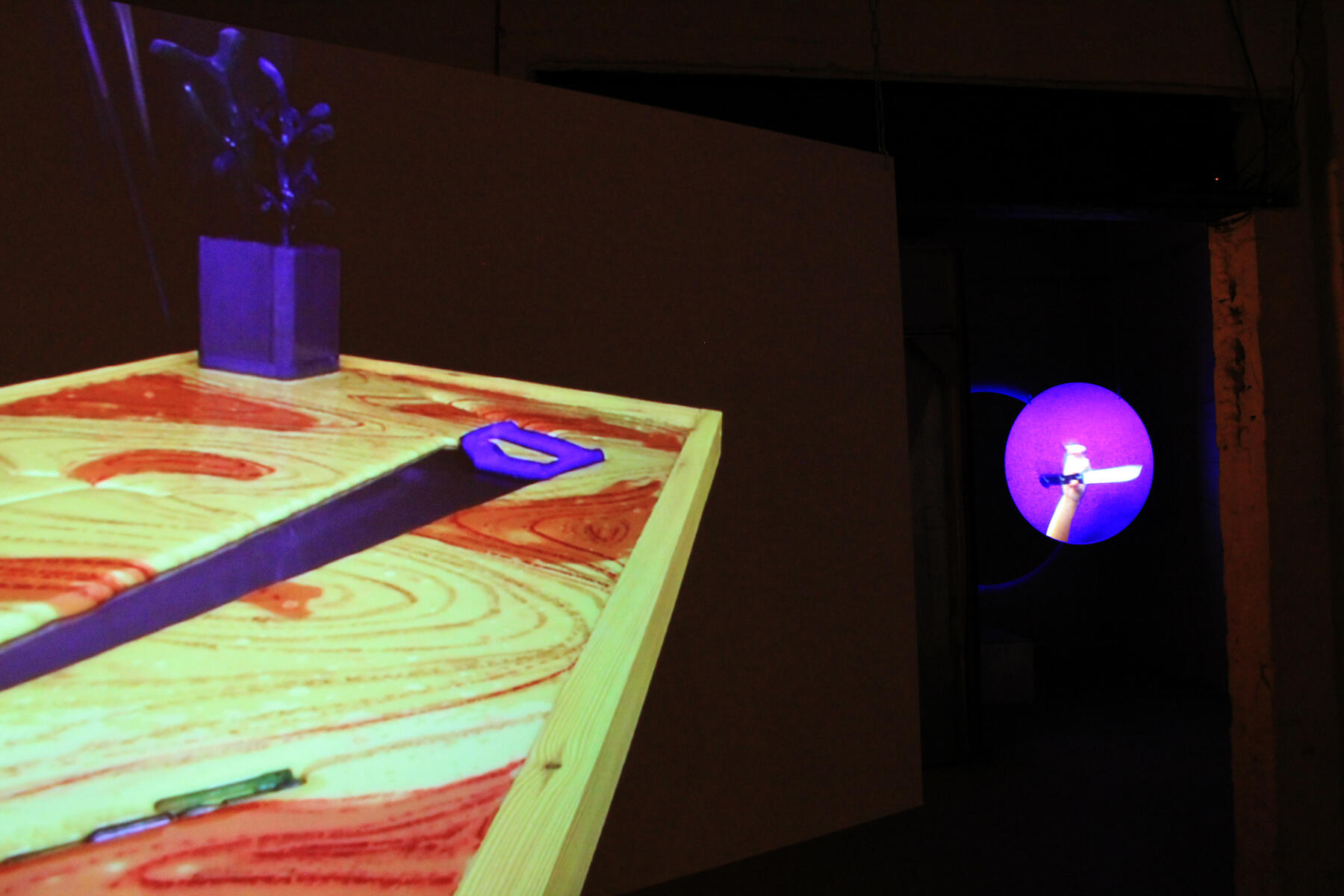
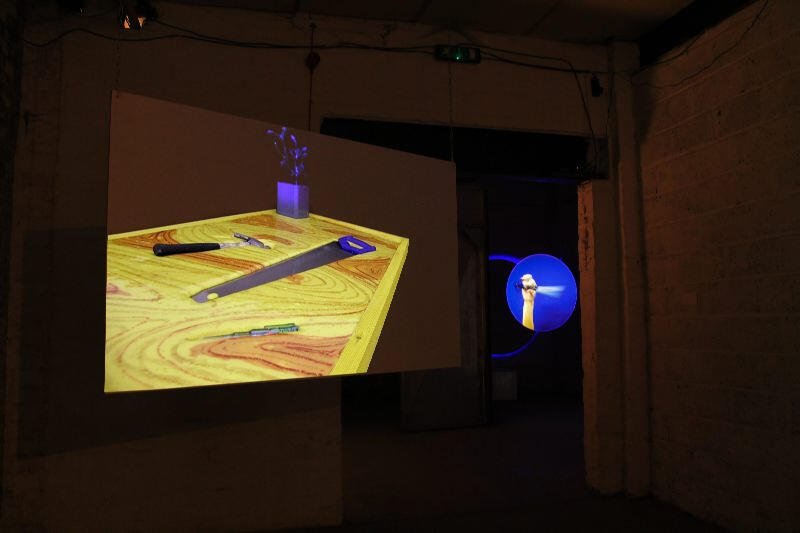
The Broken Tools Series draws philosophical reference from Martin Heidegger’s concept of the “broken tool,” in which an object, when functioning normally, recedes into invisibility through habitual use. It is only when the tool breaks down, when its function is interrupted, that its presence becomes strikingly visible. Stripped of functionality, the object reveals its inherent strangeness.Broken Tools Series exposes how perception itself is structured by utility, habit, and conceptual projection. When function collapses, objects become unfamiliar, revealing both the instability of perceived reality and the possibility of encountering a deeper ontological presence.
© Joo Choon Lin. All rights reserved.
Broken Tools Series: If We're Going To Live, We'll All Live Together
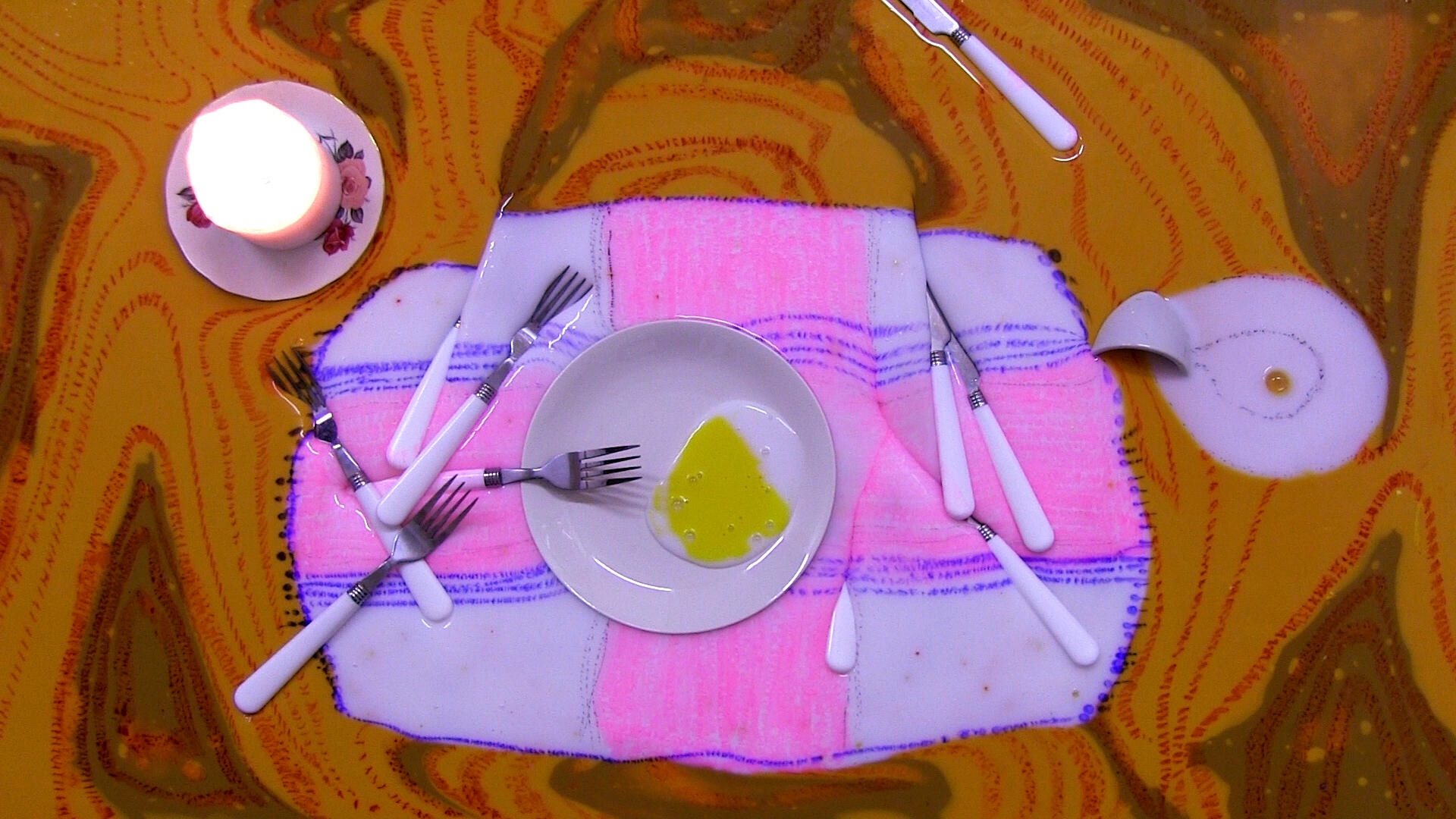
Broken Tools Series: If We’re Going To Live, We’ll All Live Together continues my investigation into the instability of perception, material function, and the fragile structures that shape human reality. In this series, I challenge familiar patterns of recognition by disrupting the utilitarian purpose of everyday domestic objects, liberating them from their expected functions and exposing their deeper existential presence.Where another series of Broken tool - If We’re Going To Die, We’ll All Die Together focused on functional tools—hand-saws, screws, screwdrivers, and measuring tapes—rendered useless against an uncuttable synthetic “wood,” this new iteration shifts into the communal and domestic sphere. Here, utensils such as plates, forks, knives, and cups are embedded, submerged, or consumed by a synthetic goo-like wooden dining table, transforming the site of gathering, nourishment, and social unity into one of instability and material contradiction.By collapsing the boundaries between object, surface, and purpose, these familiar instruments of togetherness lose their practical role and instead reveal their objecthood more intensely. In their breakdown, they become visible not merely as tools of use, but as entities with their own resistant reality. The dining table—traditionally a symbol of communion, survival, and collective life—becomes both host and devourer, suggesting the precariousness of shared existence.Underlying this work is my philosophical inquiry into the tension between appearance and essence: between how objects are perceived through habitual sensory understanding, and what they might reveal when stripped of function. Through acts of deformation and dysfunction, I expose the mutable conditions that govern reality, questioning the assumed permanence of social rituals, material identities, and systems of collective survival.If We’re Going To Live, We’ll All Live Together reflects on interdependence, vulnerability, and the unstable foundations of communal life. It proposes that living together, much like dying together, is bound by fragile systems that can collapse, mutate, or resist comprehension—forcing us to confront the uncertain material and philosophical conditions of existence itself.

The Broken Tools Series draws philosophical reference from Martin Heidegger’s concept of the “broken tool,” in which an object, when functioning normally, recedes into invisibility through habitual use. It is only when the tool breaks down, when its function is interrupted, that its presence becomes strikingly visible. Stripped of functionality, the object reveals its inherent strangeness.Broken Tools Series exposes how perception itself is structured by utility, habit, and conceptual projection. When function collapses, objects become unfamiliar, revealing both the instability of perceived reality and the possibility of encountering a deeper ontological presence.
© Joo Choon Lin. All rights reserved.
Broken Tools Series: Wilhelm Scream, Video 0:48 Min

In today’s world, violence is often made “acceptable” through packaging and framing. Political leaders may justify war or human rights violations through language such as “peacekeeping,” “security,” or “stability.” These words soften perception and move violence away from its physical reality.In the same way, the brutally, crudeness and violent of killing an animal are overshadowed by the packaging and the well-trimmed specialty cuts of meat. The violence is still there, but it is hidden behind design, systems, and presentation.Social media adds another layer to this condition. On one hand, it can increase visibility and awareness by making images of war, suffering, and death more accessible than ever before, bringing distant events into immediate view. On the other hand, this visibility is shaped by constant repetition and rapid circulation, where context is often reduced or lost. Violence becomes image—flattened into surfaces that move faster than they can be fully processed, reflected upon, or understood in relation to what is actually happening. Over time, this sustained exposure can lead not only to emotional fatigue or numbness, but also to a diminished capacity to register the full reality behind what is seen: we see more, but feel and comprehend less.Broken Tools Series: Wilhelm Scream reflects this condition. The “Wilhelm scream,” often reused in films and media, becomes a symbol of how pain and violence are recycled as sound, stripped of real consequence. It becomes a tool—repeated, stylized, and detached from the original body that produced it.In this work, empathy is not only about what we feel, but about how feeling is shaped, reduced, or redirected through systems of repetition, editing, and packaging. Whether in politics, media, or daily consumption, violence is not always removed—it is made presentable.
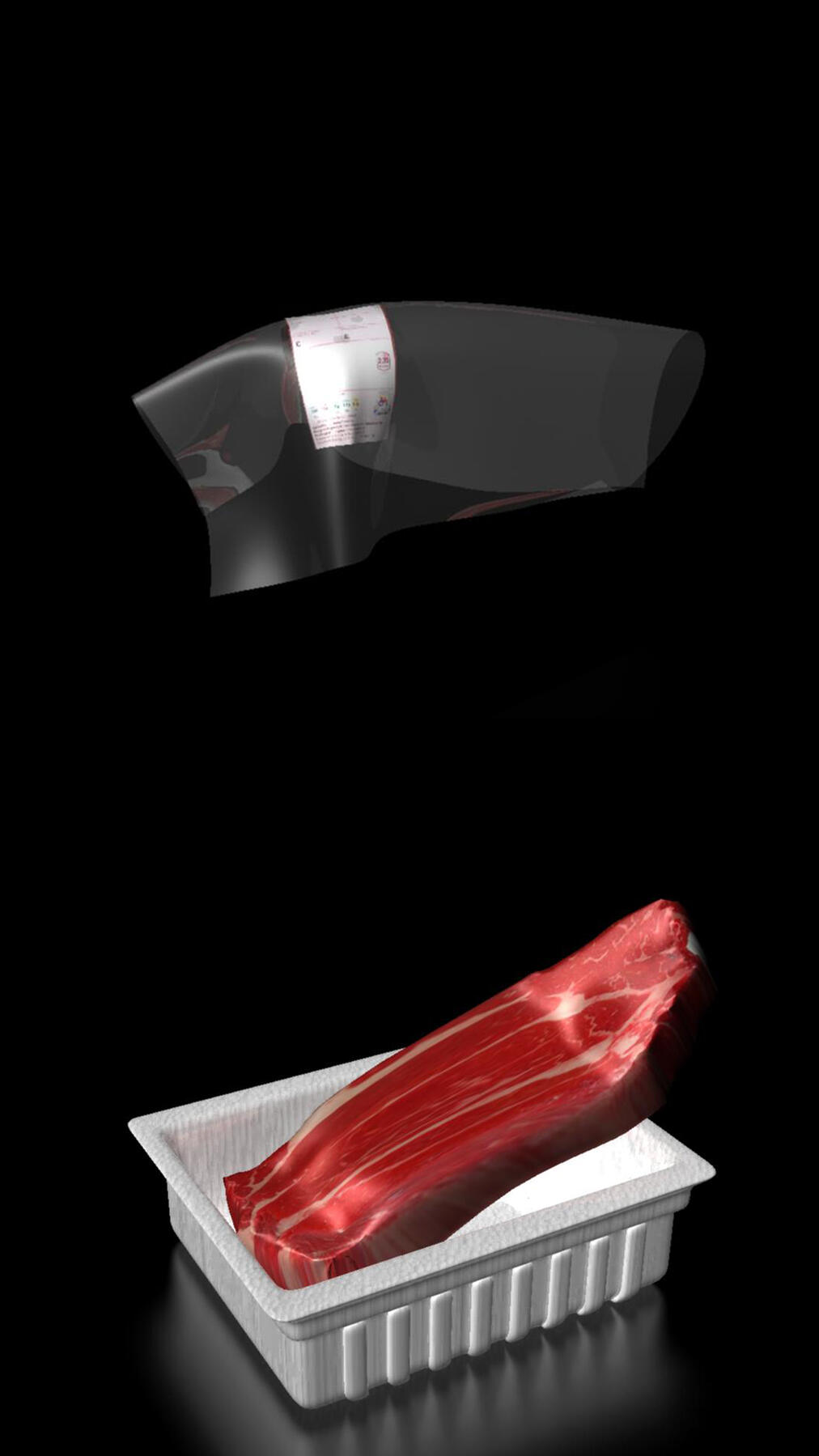
© Joo Choon Lin. All rights reserved.
Resolution of Reality, Solo exhibition at Third Floor Hermès, Singapore, 2012
FONDATION D’ENTREPRISE HERMÈS 2012
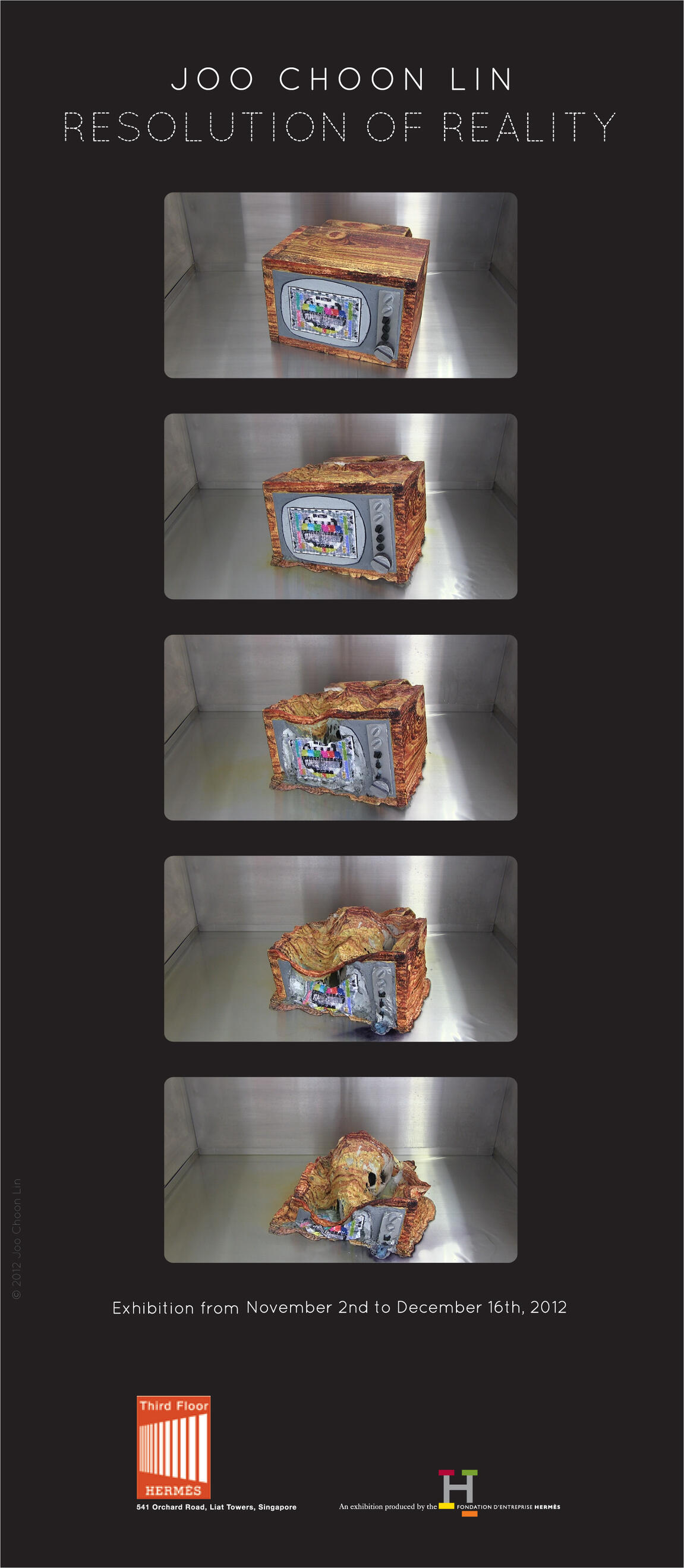
Image courtesy of Edward Hendricks
In Resolution of Reality, my 2012 solo exhibition at Third Floor Hermès, I explored the shifting boundaries between technology, material transformation, and human perception through processes of deconstruction, dissolution, and reconfiguration. By dismantling familiar objects, systems, and modes of representation, I challenged stable assumptions about reality and revealed the fragile structures underlying material and perceptual experience.
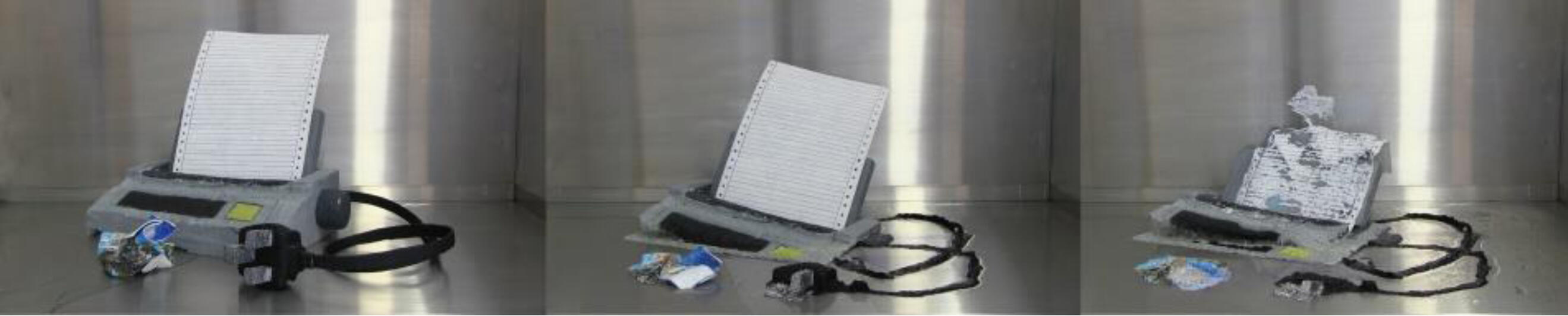
Video stills of Vaporised by Sunrise
In Vaporised by Sunrise, I created hand-sculpted Styrofoam replicas of obsolete electronic devices and subjected them to acetone, allowing them to slowly corrode and collapse into amorphous remains. I chose Styrofoam over the original objects because of its uncanny resemblance to human flesh—despite being highly artificial, it reacts to solvent in a disturbingly organic way. As the material melts, sizzles, and disintegrates, it evokes sensations akin to acid burning skin or flesh cooking on a heated surface, producing an unsettling bodily response in the viewer.By transforming synthetic material into something visceral and corporeal, I blurred the boundary between machine and body, suggesting that technological decay mirrors forms of physical vulnerability and mortality. The dissolution of these once-functional devices becomes more than an image of obsolescence; it becomes a meditation on breakdown itself. I am deeply interested in moments when tools and technologies fail, because it is through their collapse that they provoke reflection, revealing hidden fragilities and prompting us to reconsider our relationship to function, progress, and the structures that shape human experience.
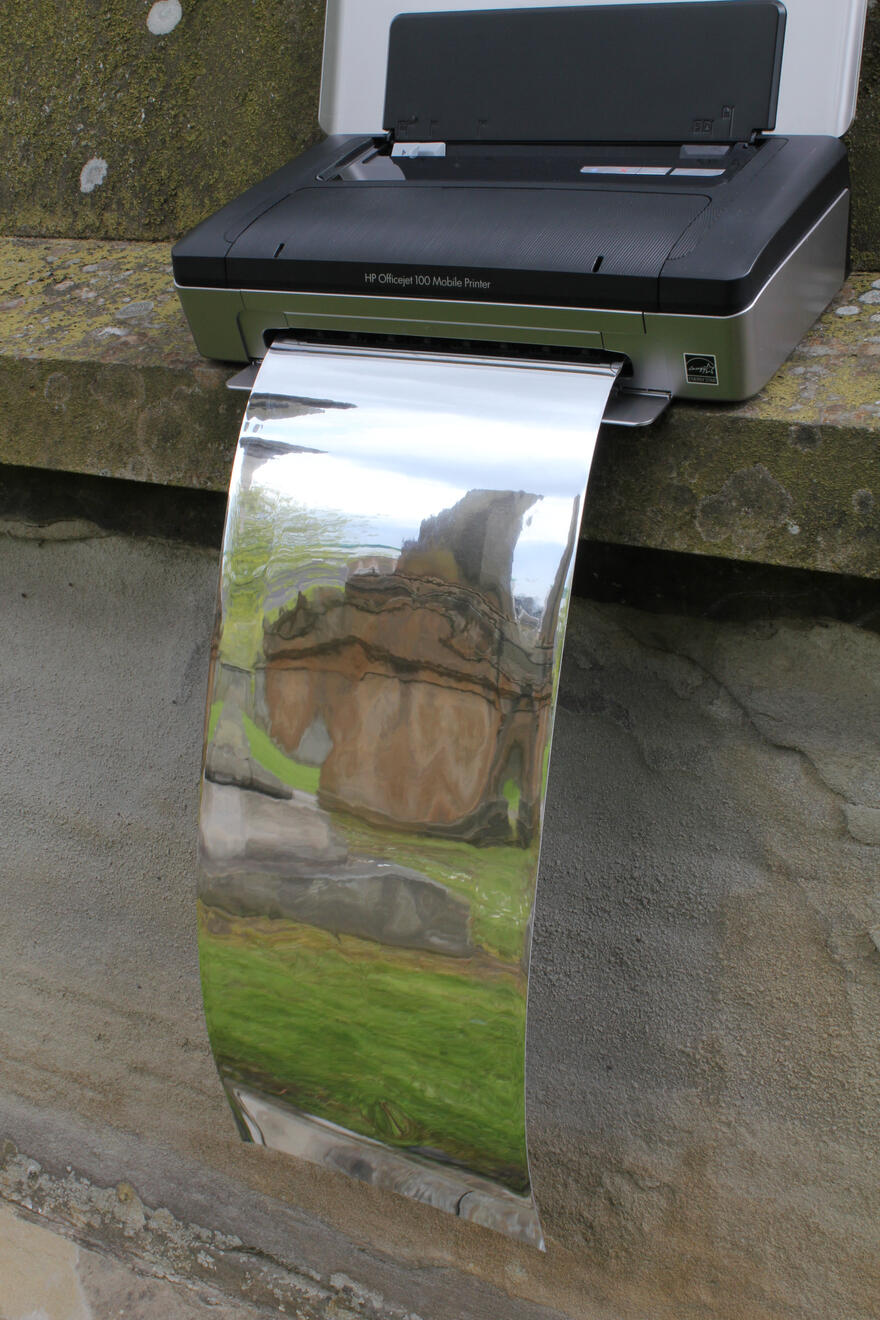
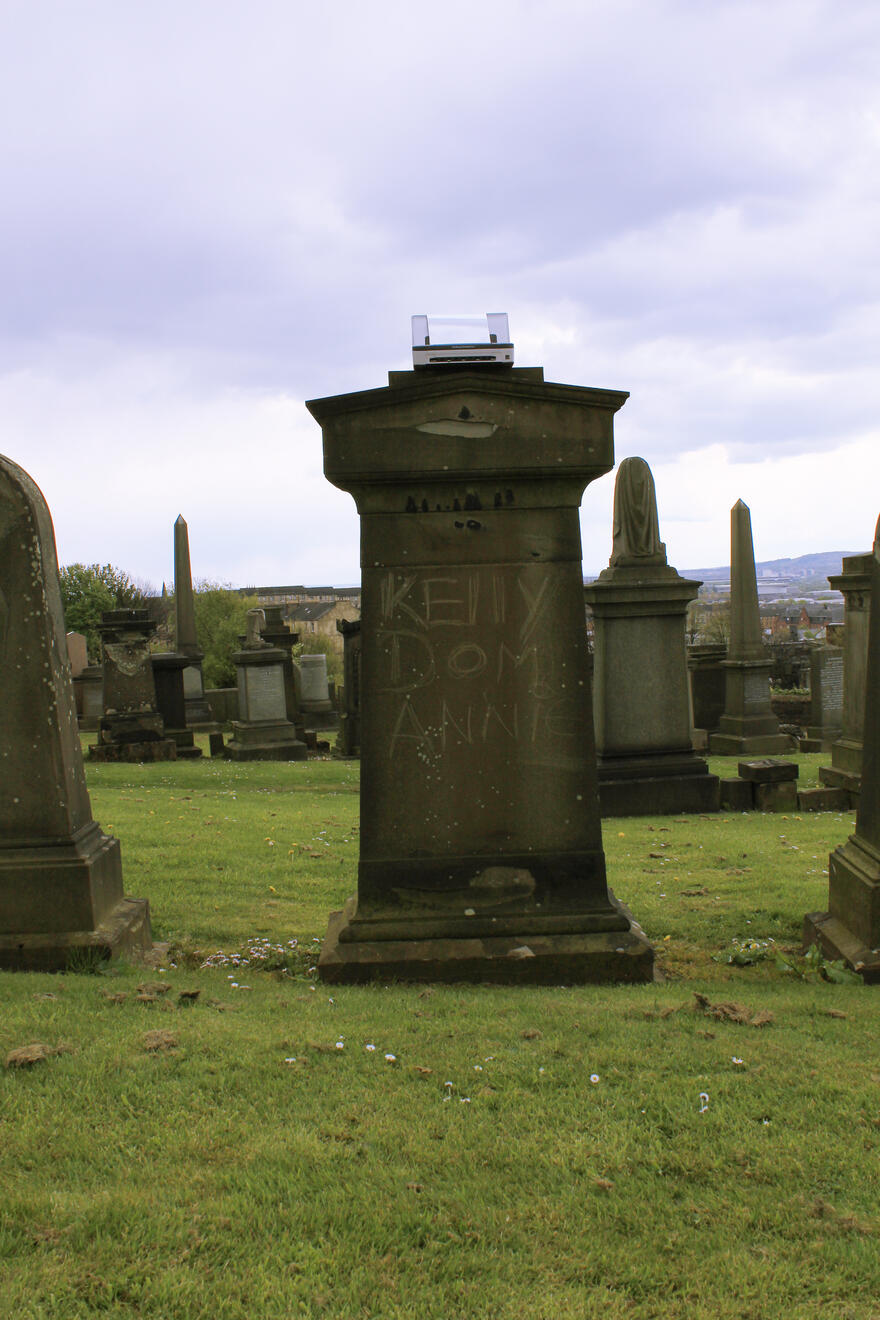
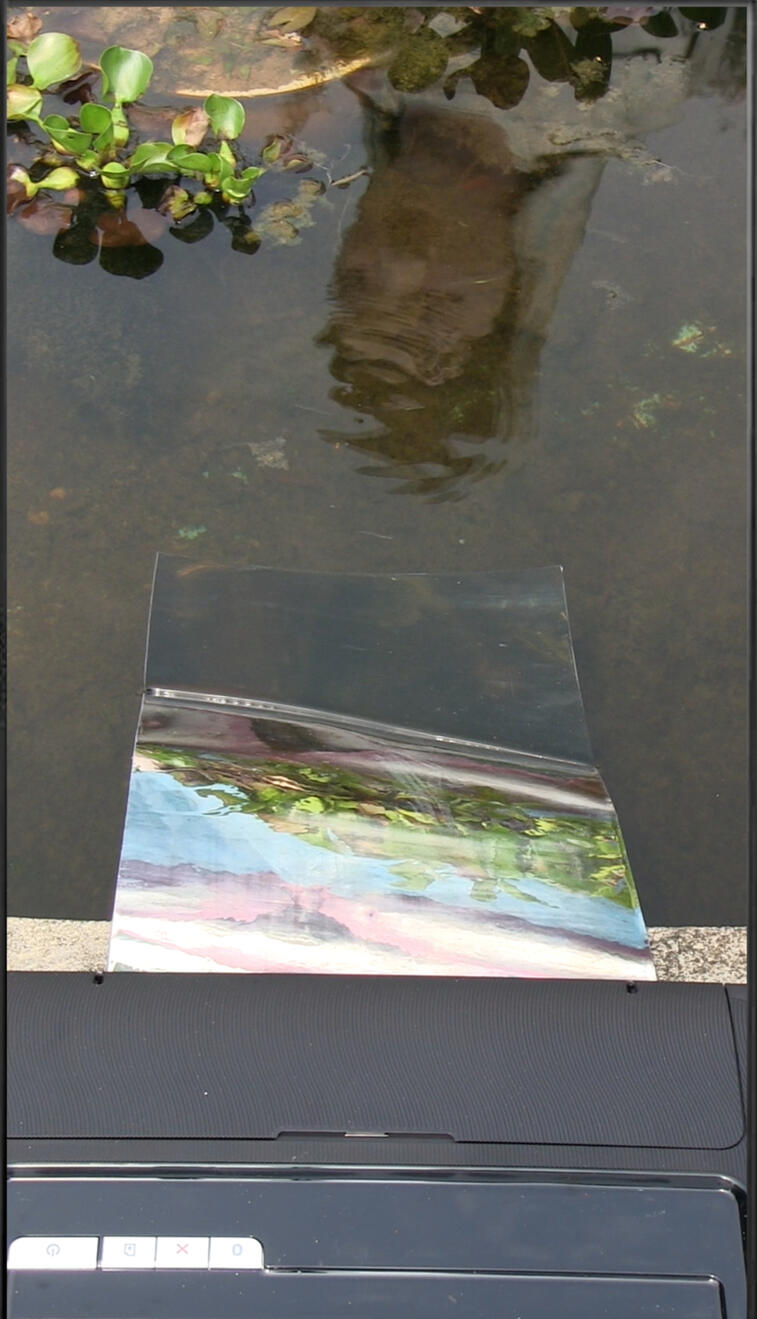
Video Stills of Resolution of Reality, presented three tv screens.
The title work, Resolution of Reality, presented three tv screens depicting laser printers producing reflective sheets in environments associated with life, death, and spirituality. Here, acts of mechanical reproduction became fragmented across symbolic landscapes, destabilizing fixed distinctions between the technological, natural, and metaphysical.
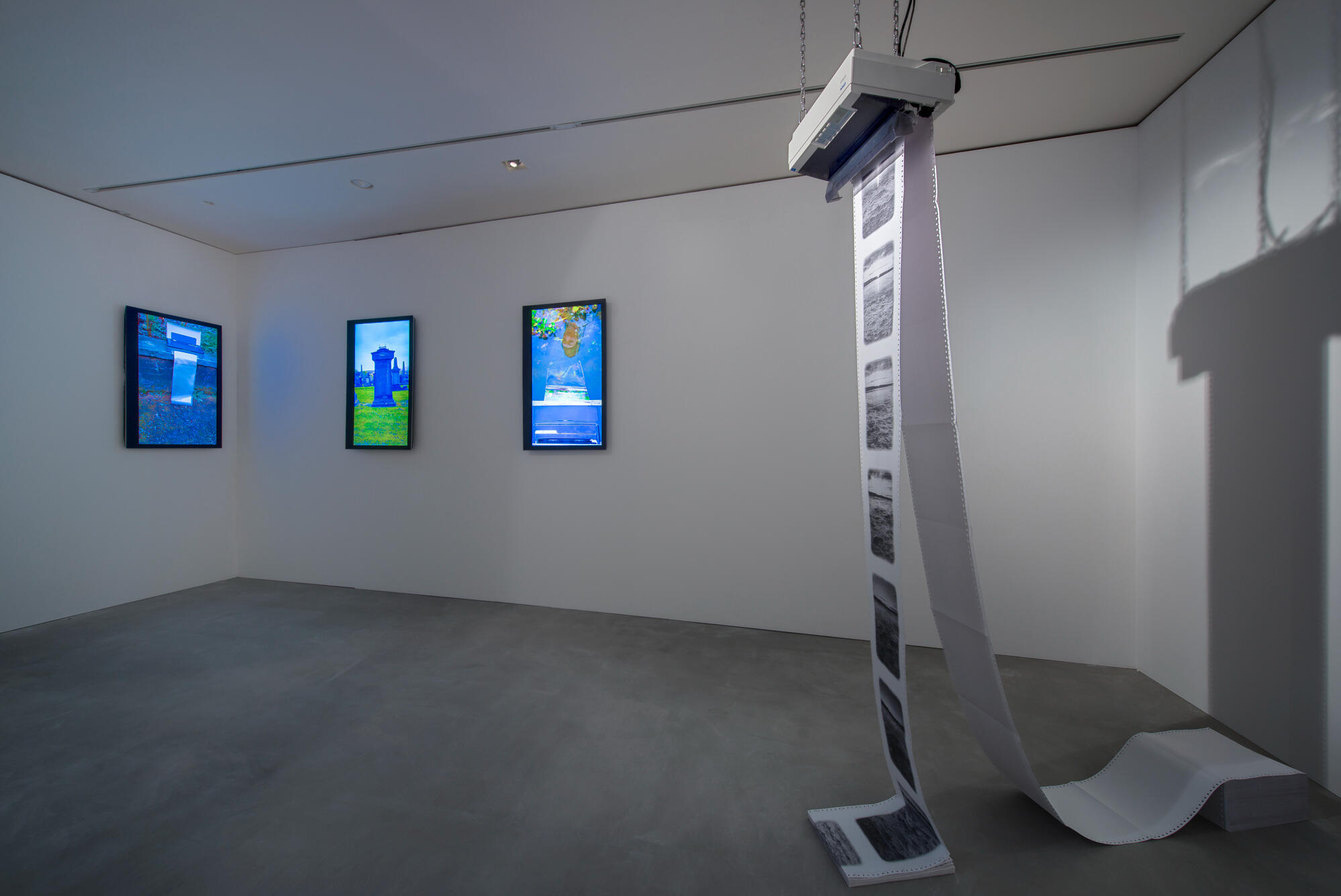
At the center of the exhibition, Multi-Tiered Falls featured a suspended dot matrix printer slowly producing sequential oceanic imagery on cascading continuous paper. By deconstructing cinematic temporality into an extended mechanical process, I transformed image production into a meditation on time, repetition, and the erosion of meaning.
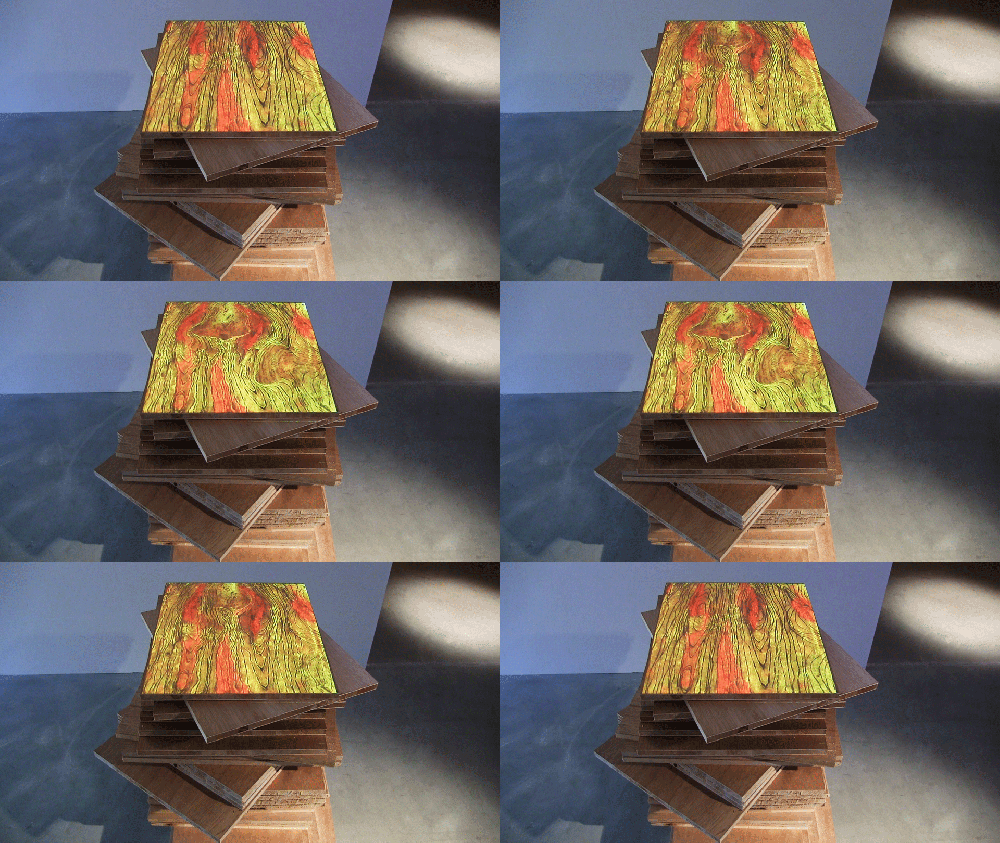
When Surface Betrays Solidity is a video that challenges perception by projecting fluid, moving images of silk onto a solid, stacked pile of wood. It explores the tension between material reality and technological representation, creating a multisensory experience where the expected solidity of an object is undermined by its visual surface. While filming in Haw Par Villa, I chanced upon a lake which is cover with a thick layer of green algae. The algae were so dense, that when from a distance it felt like it was concrete painted green. The water was so still and felt firm and solid. It changes our perception of water, from fluidity to solidity, through the alteration of what happens on the surface. It’s quite interesting how sometimes when we look at an object we can sense its weight without even lifting it. I am interested in this relation between surface and solidity. The video is made by silk-screening an image over water.
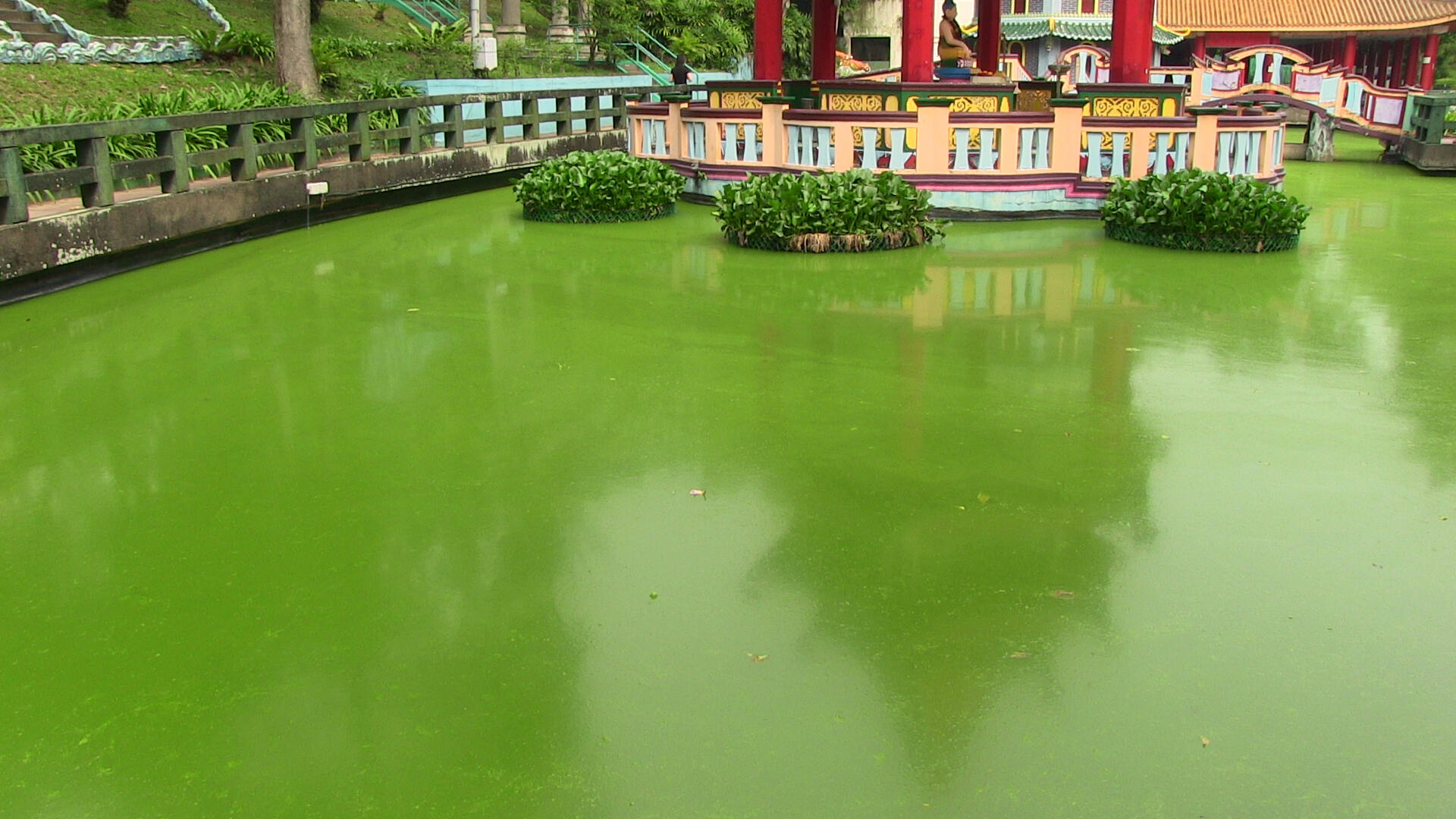
a lake covered with green algae at Haw Par Villa, Singapore
Across the exhibition, deconstruction functioned not merely as destruction, but as a method of revealing hidden systems, questioning utility, and unsettling habitual ways of seeing. Through the breakdown of technological objects and representational structures, Resolution of Reality proposed that reality itself is unstable—continuously shaped by processes of collapse, transformation, and reconstruction.
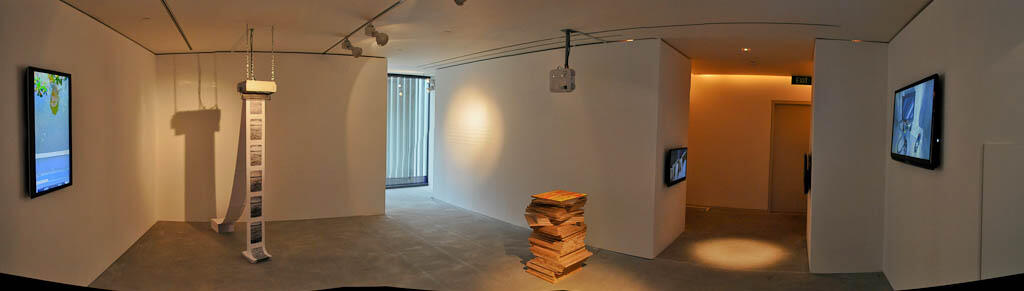
© Joo Choon Lin. All rights reserved.
Multi-Tiered Falls, installation view from Resolution of Reality, Third Floor Hermès, suspended dot matrix printer, 2012
FONDATION D’ENTREPRISE HERMÈS 2012
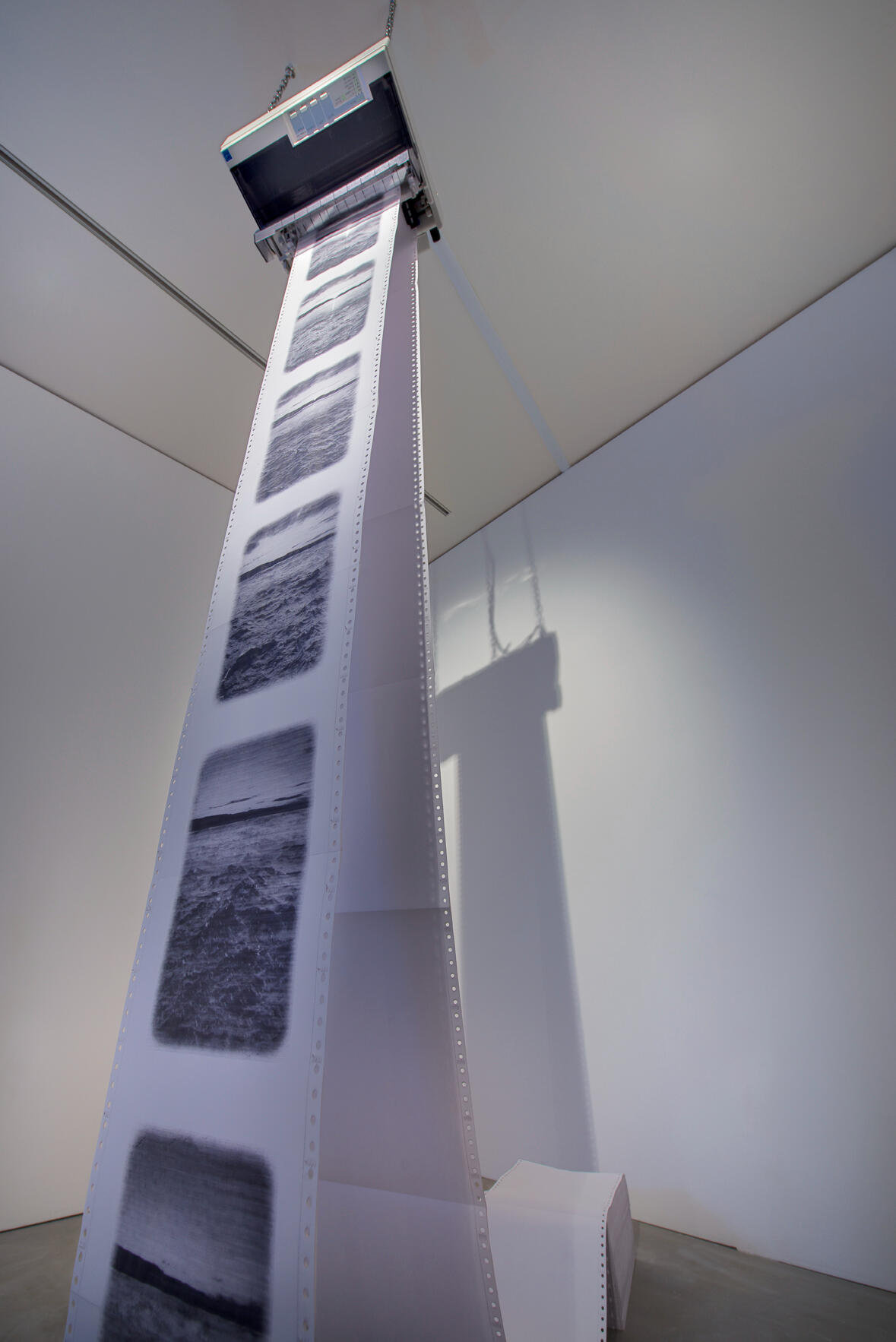
At the center of Resolution of Reality, I presented Multi-Tiered Falls, a suspended dot matrix printer that slowly generated a sequence of 14 ocean images onto continuous paper cascading to the floor. The work mimics the structure of film but shifts its time scale dramatically. Where conventional film runs at 24 frames per second, this installation produces one frame every 15 minutes, turning moving image into an extremely slow unfolding process.The work comes from my interest in consciousness as the condition through which reality is experienced, rather than something separate from it. What we call reality is formed through perception, but this perception is limited and selective. Much like how fast-spinning fan blades turn into blur when they exceed what the eye can register, there are limits to what we can clearly see or fully understand.In Multi-Tiered Falls, the dot matrix printer’s strike pins physically emboss the surface of the paper as it prints, leaving a pixelated, textured impression of each image. The mechanical process produces constant vibration and loud, repetitive noise, making the act of image-making physically present and unavoidable. These material traces—pressure, rhythm, and sound—become part of the work itself, collapsing the distance between image, object, and environment.By slowing the image down so drastically, I reverse habitual perception and draw attention to the act of seeing itself. The gradual appearance of ocean images suggests that what we experience as reality is not fixed, but continuously formed through what we believe is real based on sensory experience.Through this slowing and breakdown of cinematic structure, the work reflects how consciousness builds reality from fragments of perception. The embossing, vibration, and noise of the printing process further suggest that reality is not separate or stable, but constantly in motion—everything around us that appears solid is in fact in a state of continuous vibration and particulate flow, shaping and reshaping what we perceive as form.

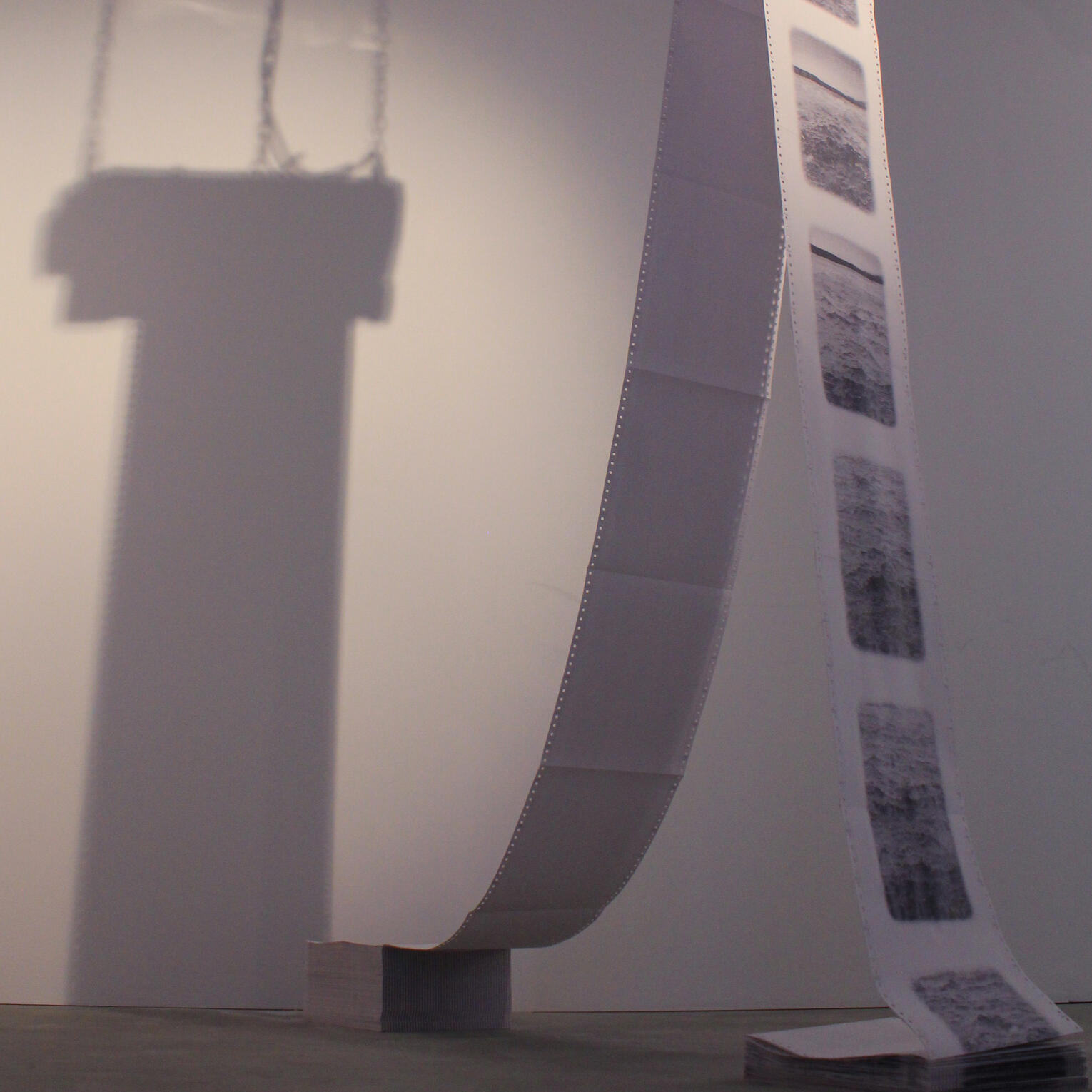
© Joo Choon Lin. All rights reserved.
When Surface Betrays Solidity, Solo Exhibition Resolution of Reality, Third Floor Hermès, 2012
FONDATION D’ENTREPRISE HERMÈS 2012
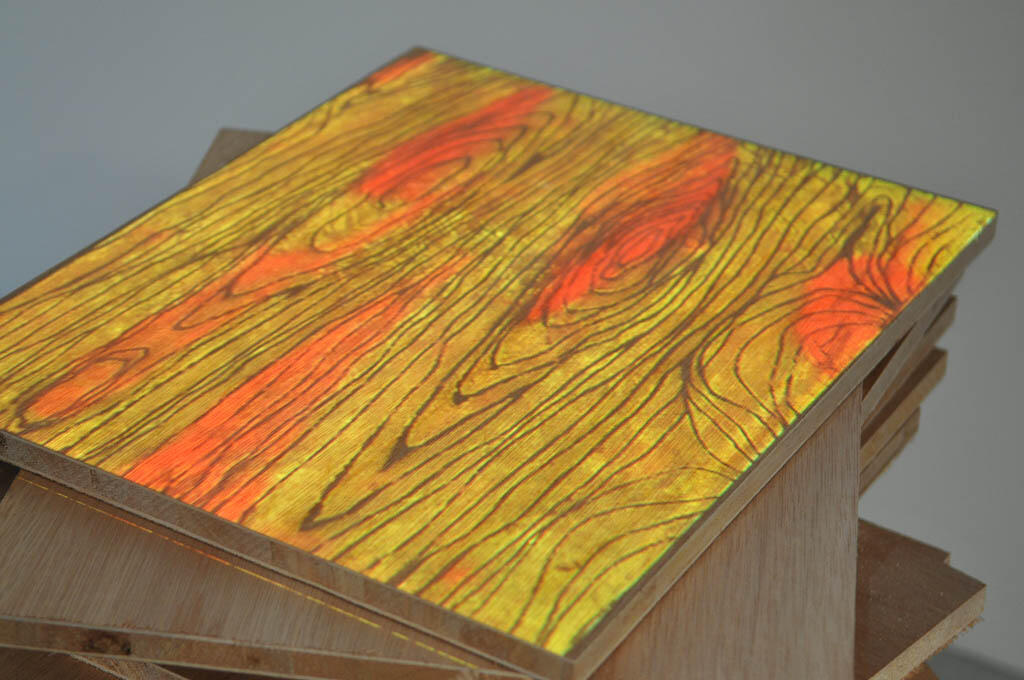
When Surface Betrays Solidity is a video projection installation presented as part of the Resolution of Reality solo exhibition at the Third Floor Hermès in 2012. The work explores the intersection of materiality, perception, and superimposition, examining how surface appearances shape and destabilize our understanding of physical properties.At first glance, the work appears as a projection of silk-screened wood grain textures onto a stacked arrangement of wooden planks. The imagery, however, is subtly disrupted by the presence of water, blurring distinctions between the solid and the fluid. This ambiguity draws from an encounter at Haw Par Villa, where a lake densely covered with green algae appeared, from a distance, like a slab of painted concrete. Its stillness and visual density lent the water an unexpected sense of firmness, challenging the inherent association of water with fluidity.The work reflects an interest in how surface conditions can alter perception—how we intuitively assign weight, density, or solidity to objects without physical contact. Through acts of superimposition, the installation shifts water from something perceived as fluid into something that appears solid. The video itself is created through the process of silk-screening imagery onto water, further collapsing the boundary between image and material.
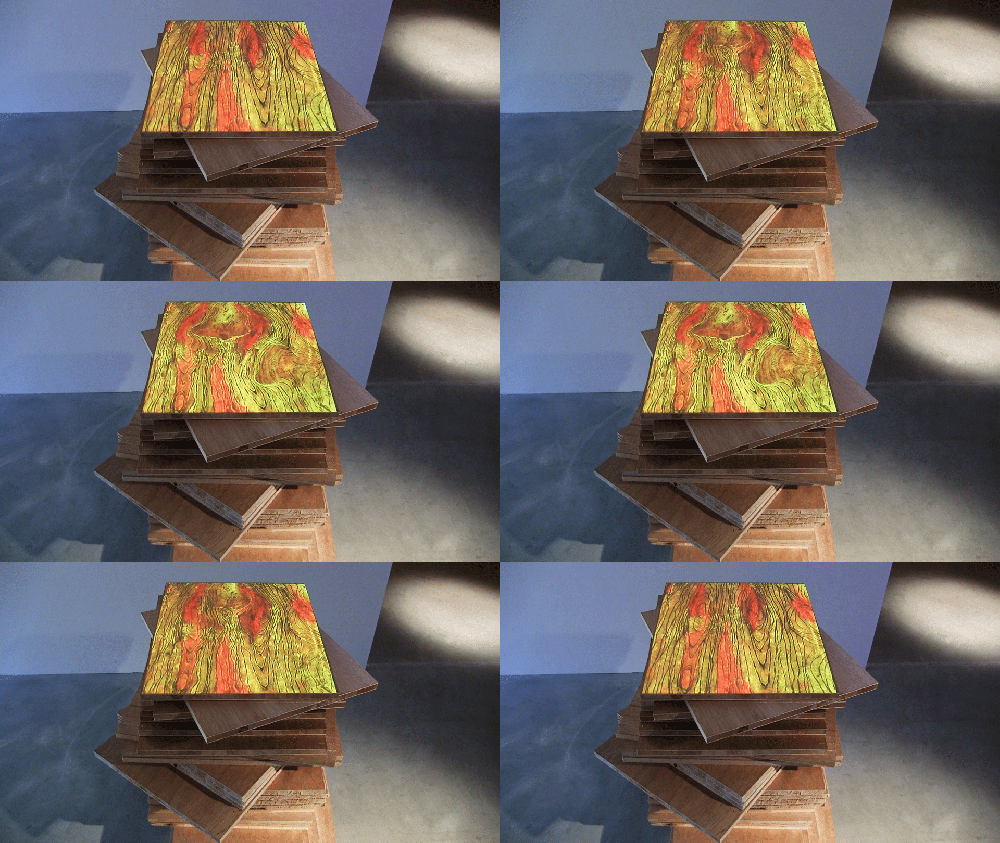
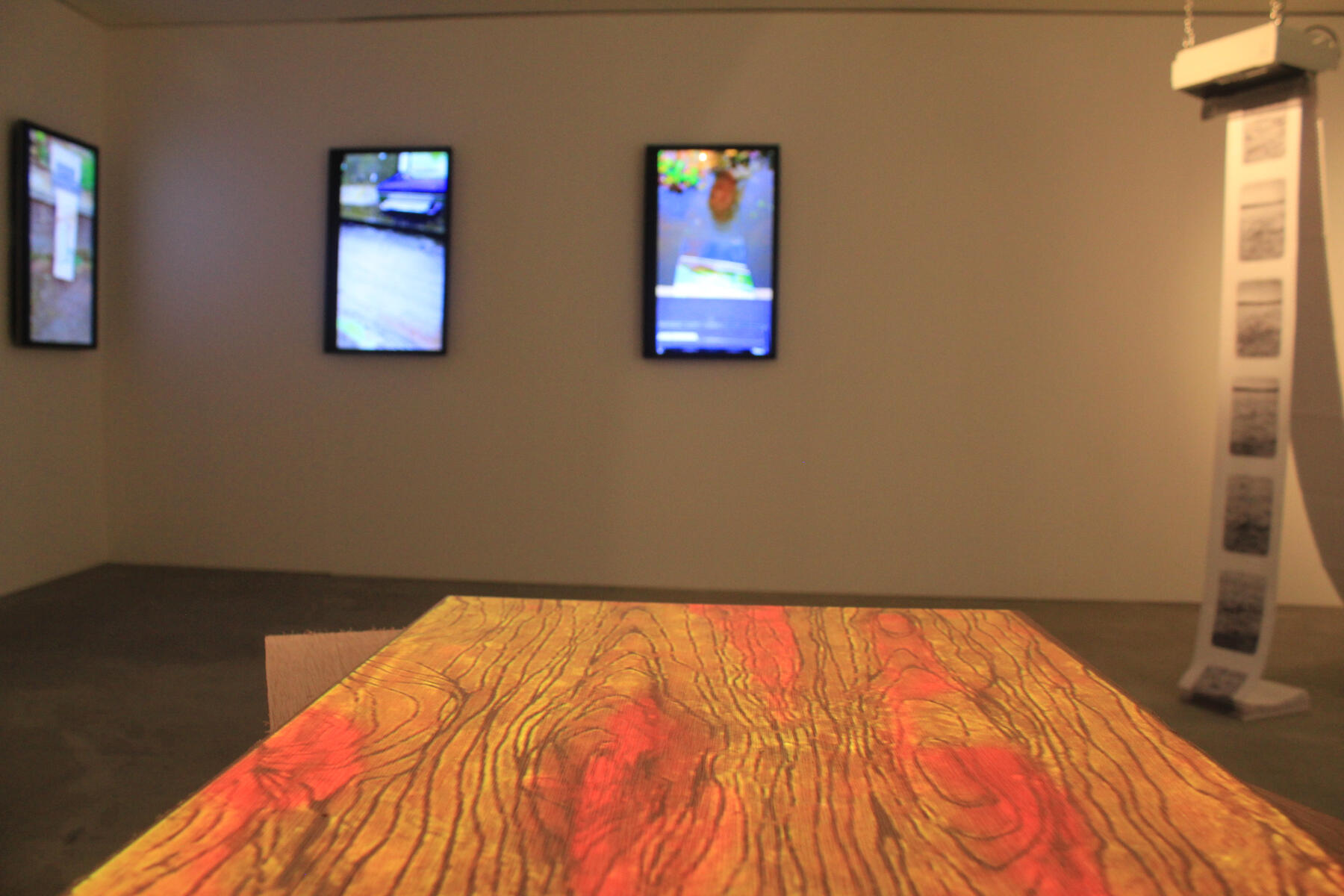
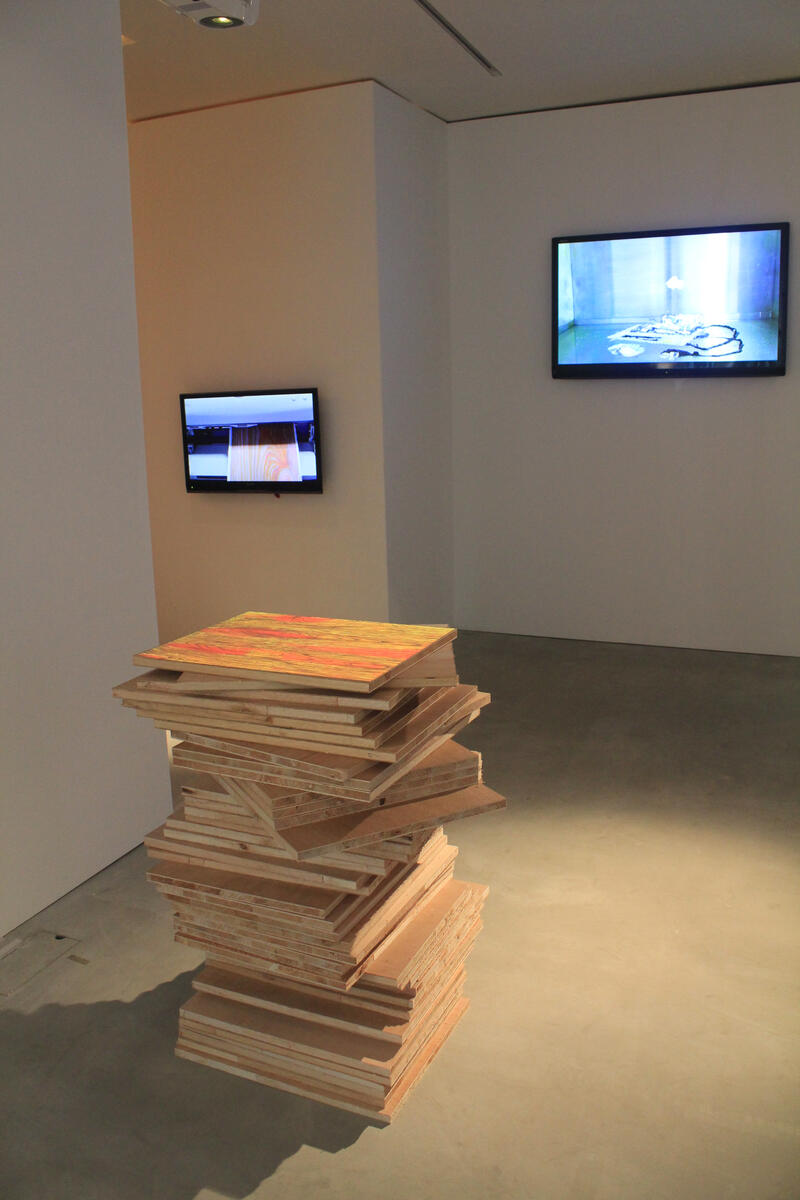
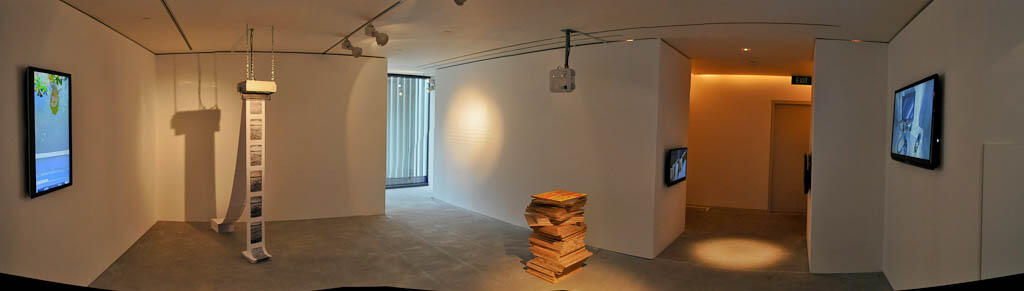
© Joo Choon Lin. All rights reserved.
Vaporised By Sunrise, Solo Exhibition Resolution of Reality, Third Floor Hermès, 2012
FONDATION D’ENTREPRISE HERMÈS 2012
This work is created for my solo exhibition “Resolution of Reality” at Third Floor Hermes. In the video, the objects are sculpted in Styrofoam as they are melted away using a solvent. The objects are of electronic and technological devices. The reason why I decided on using Styrofoam as a material instead of using the actual objects itself is because I found the foam very similar to the human flesh. When the foam is melted using the solvent, the process is very organic, and there is a sizzling sound to it, much like an acid-burn to the skin or meat being cooked on a hot-plate. Hence, the experience of watching the video is causing a bodily reaction. As if the objects are a part of us dissolving away, so I took the Styrofoam which is a highly artificial material, and used it like it was an organic material, like flesh. I am very interested in the way tools and equipment breakdown. And I think during these occurrences, they often provide a moment of questioning and reflection.
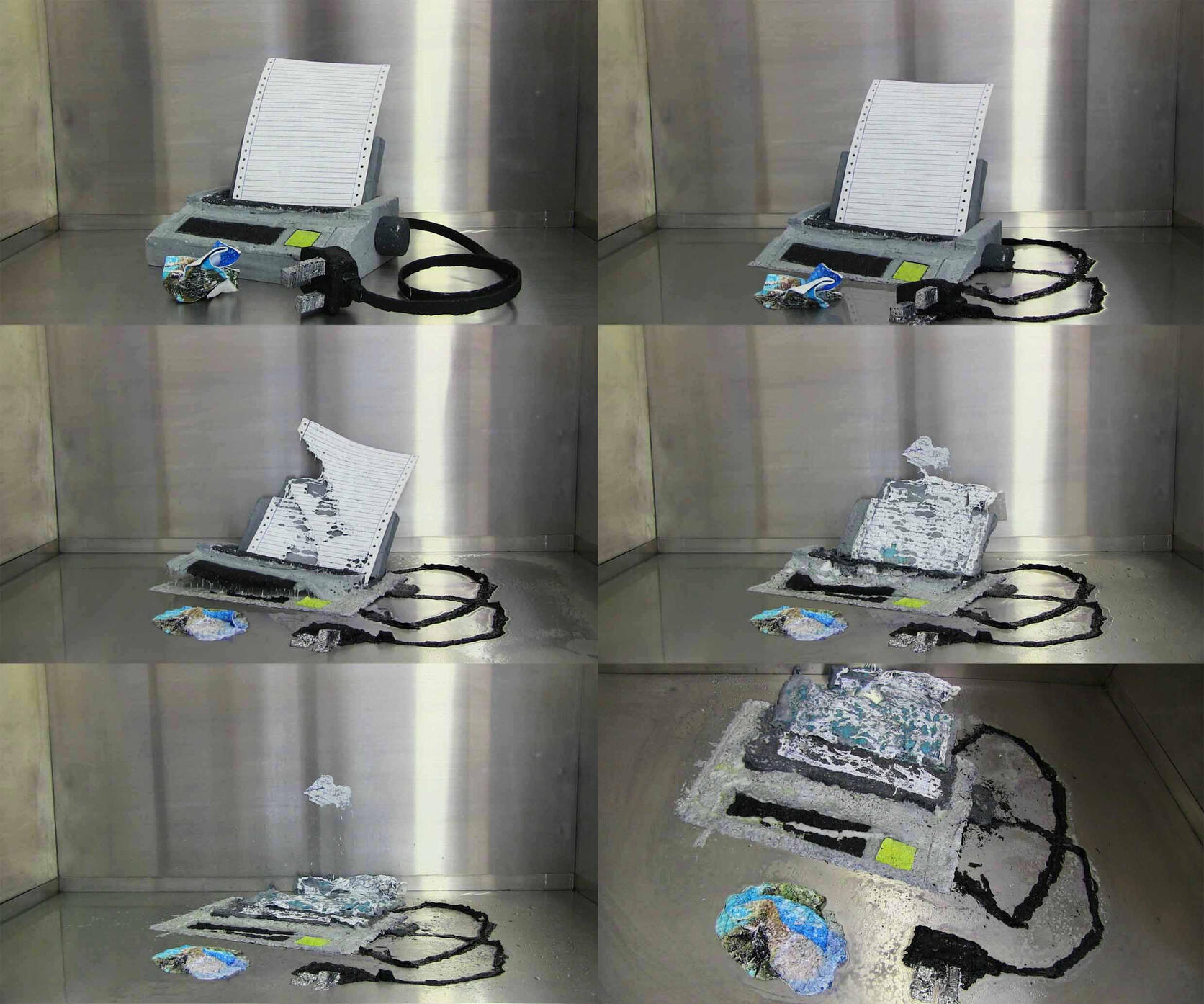
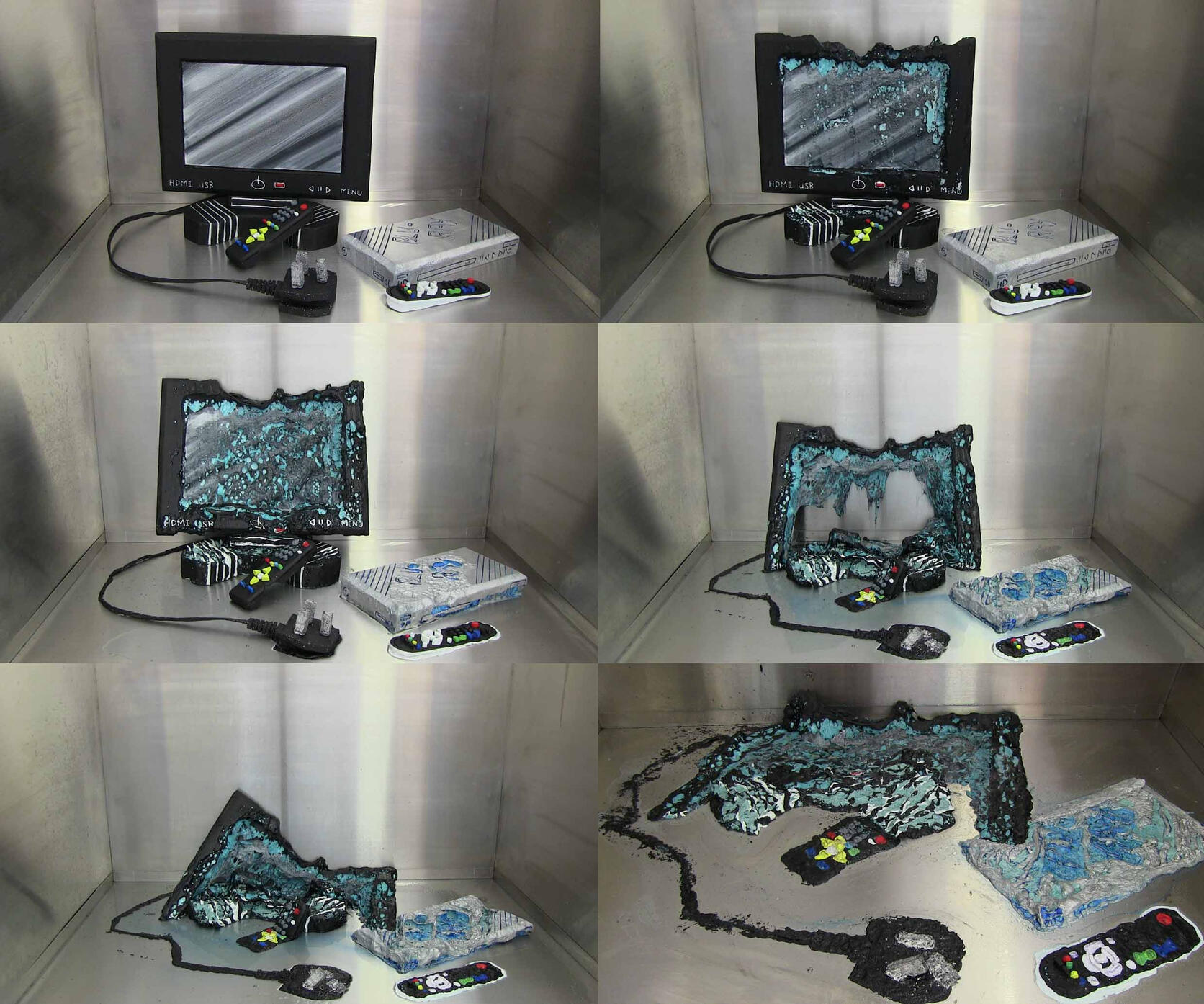
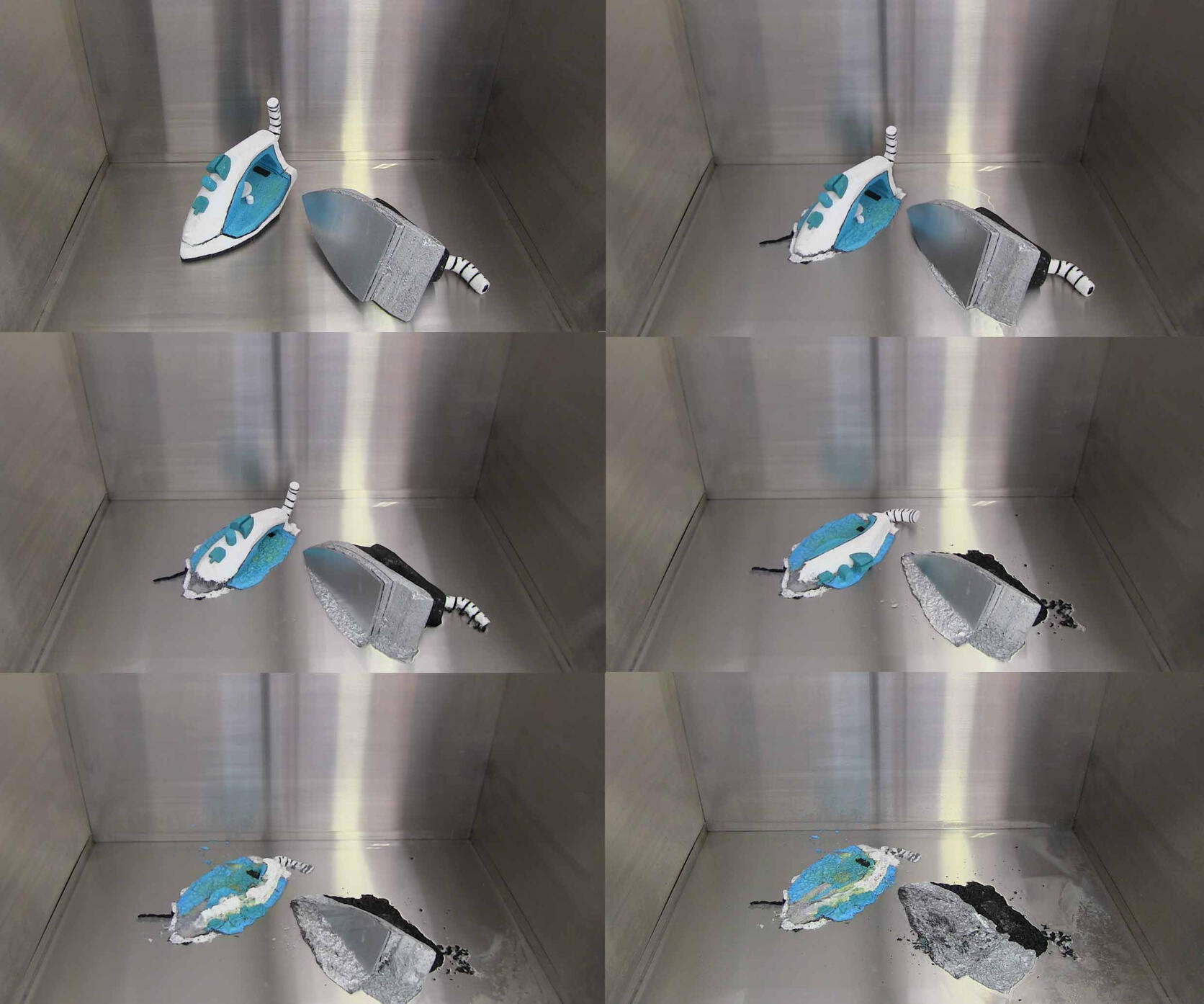
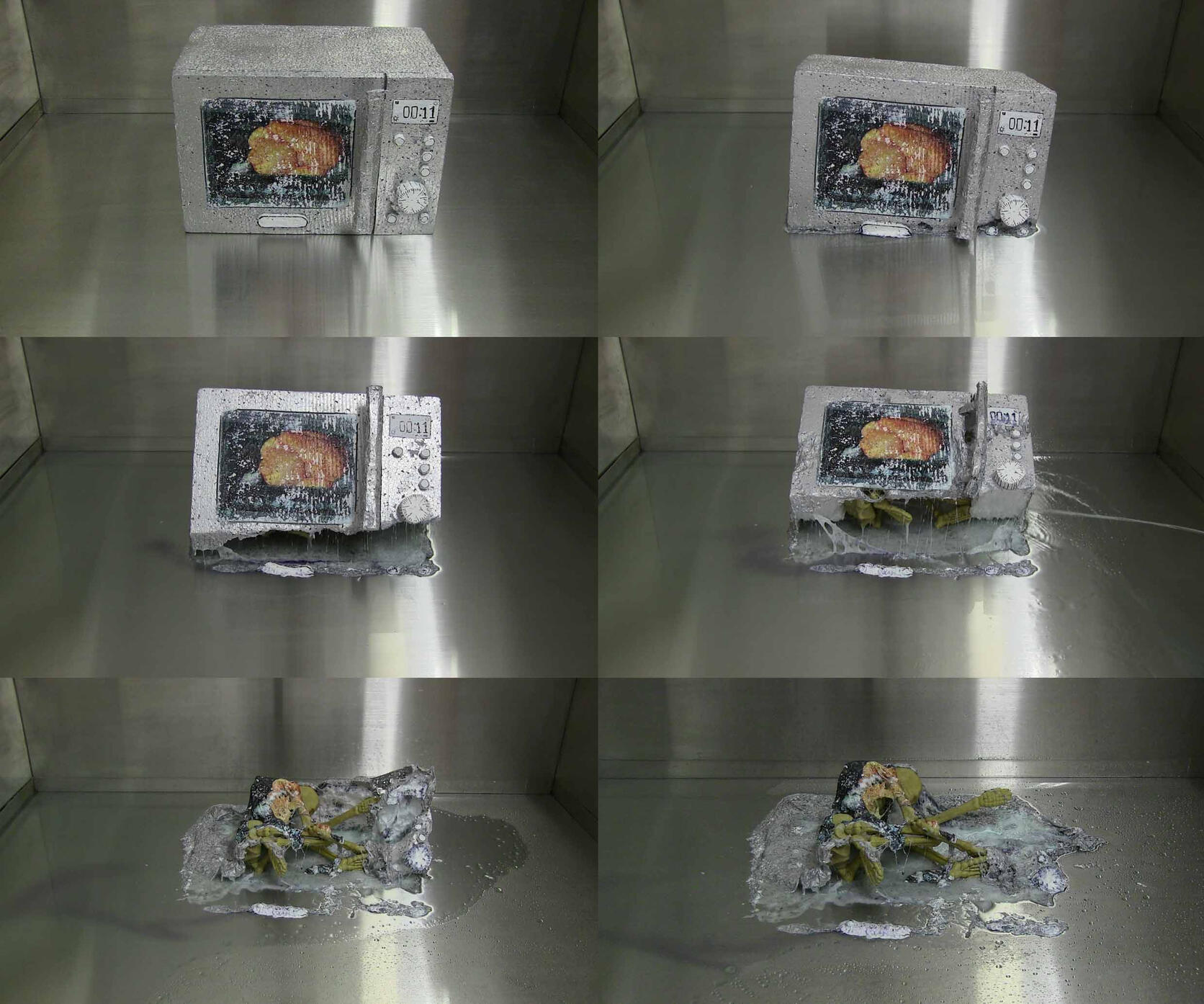
© Joo Choon Lin. All rights reserved.
Resolution of Reality, Video, Films taken in Glasgow and Singapore, 2012
FONDATION D’ENTREPRISE HERMÈS 2012
Image courtesy of Gabriel Leung
We live within a world of computer-generated images, where high definition has become our way of seeing. The search for ever-higher resolution is now woven into everyday life.In this work, I replace paper with mirror-reflective surfaces, shifting the image from something fixed to something felt. What appears is not a printed image, but a blank surface that reflects its surroundings.A park bench, a cemetery plinth (Necropolis in Glasgow), and a sculpture of Guanyin (Haw Par Villa, Singapore) these forms surface only faintly. The work gestures toward the impossibility of fully capturing reality, revealing the quiet contradiction of trying to hold a place through images, yet never quite arriving.
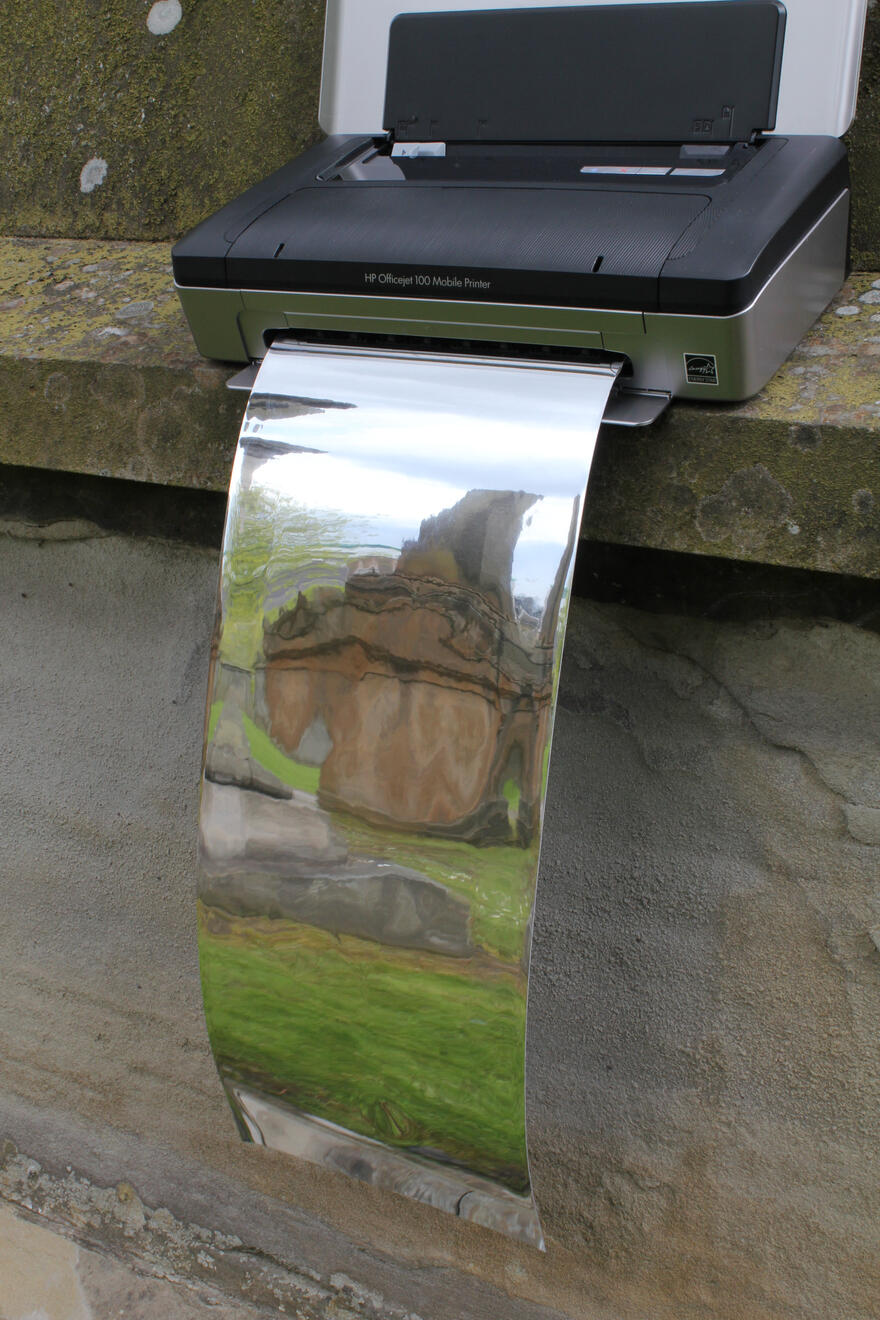
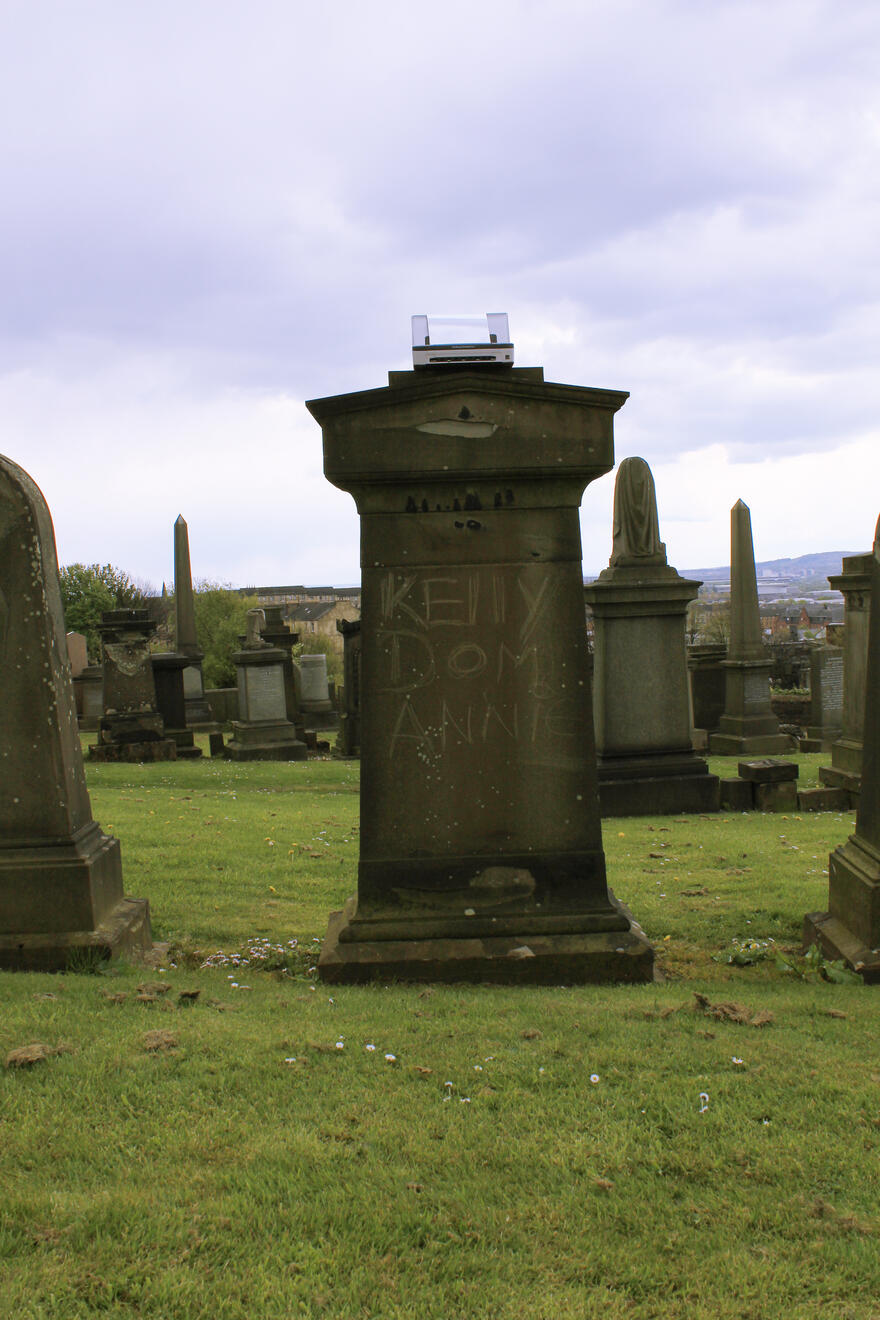
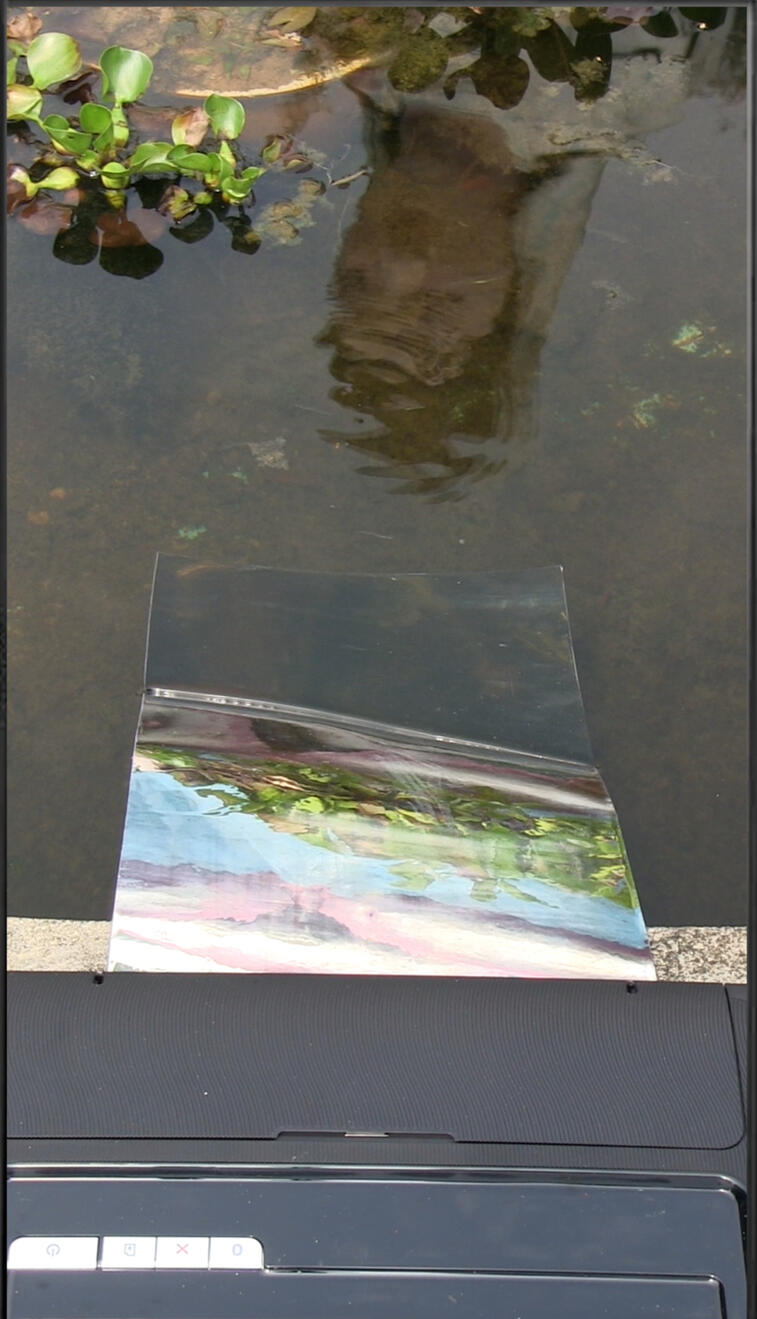
© Joo Choon Lin. All rights reserved.
Broken Tools Series, Perfectly Situated, group exhibition, New City Gallery, Glasgow, 2012
Photo by Gabriel Leung and Karen Tsi Kwan Lau
Broken Tools Series (Sculptural Version) expands upon the conceptual foundation of my video work by translating its temporal gestures of disruption, collapse, and material instability into a physical, frozen form.In this work, a writing desk emerges as both familiar and destabilized: its surface appears liquefied into a synthetic pool of slime, supporting pencils, scissors, color pencils, and writing instruments scattered across it as though abruptly interrupted mid-action. A sheet of paper, reimagined through the same viscous material language, dissolves into the table itself, while spike-like protrusions of colorful pencils erupt from the surface. Throughout the duration of the exhibition, the pencils gradually submerge into the synthetic slimeThe Broken Tools Series draws philosophical reference from Martin Heidegger’s concept of the “broken tool,” in which an object, when functioning normally, recedes into invisibility through habitual use. It is only when the tool breaks down, when its function is interrupted, that its presence becomes strikingly visible. Stripped of functionality, the object reveals its inherent strangeness.Broken Tools Series exposes how perception itself is structured by utility, habit, and conceptual projection. When function collapses, objects become unfamiliar, revealing both the instability of perceived reality and the possibility of encountering a deeper ontological presence.
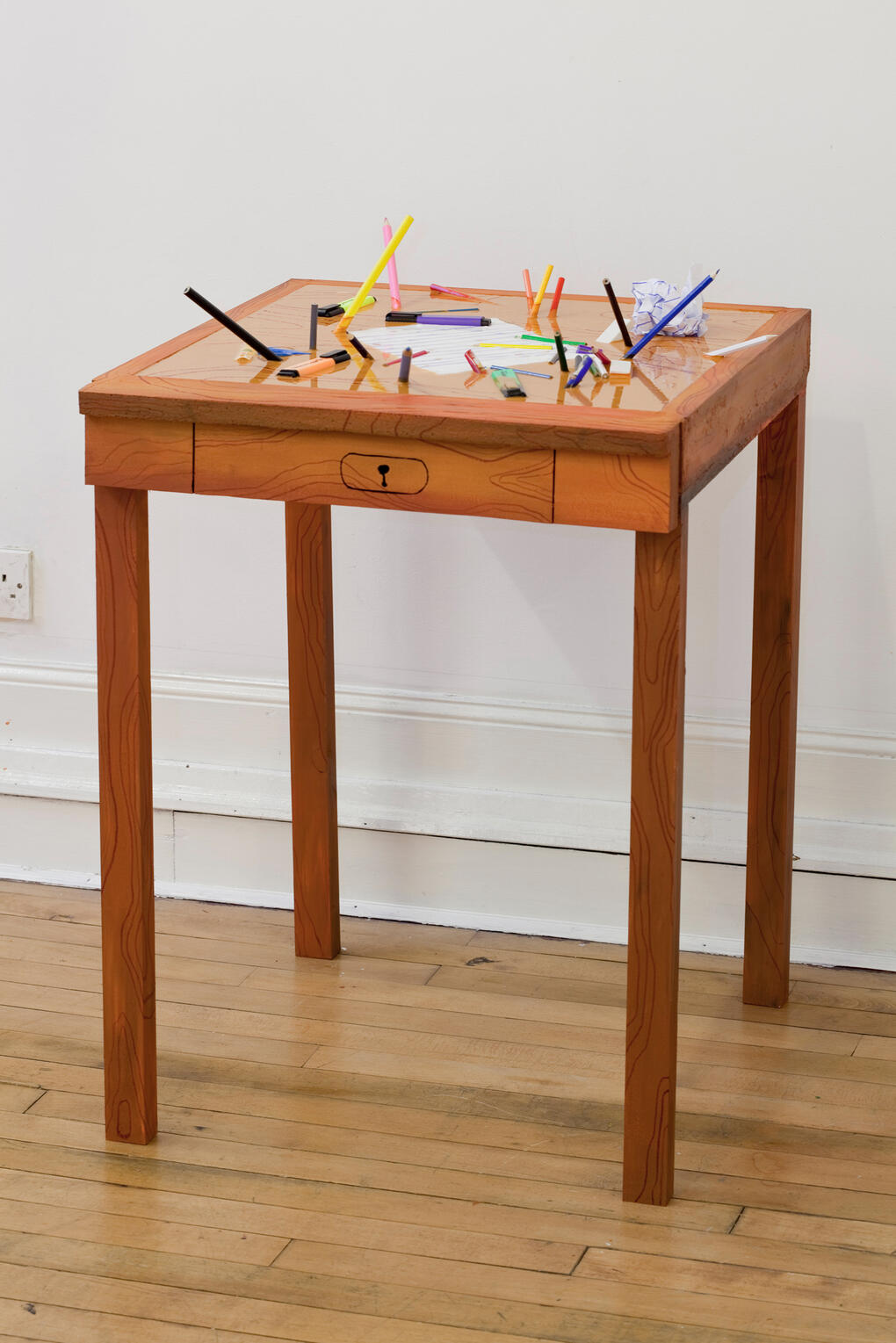
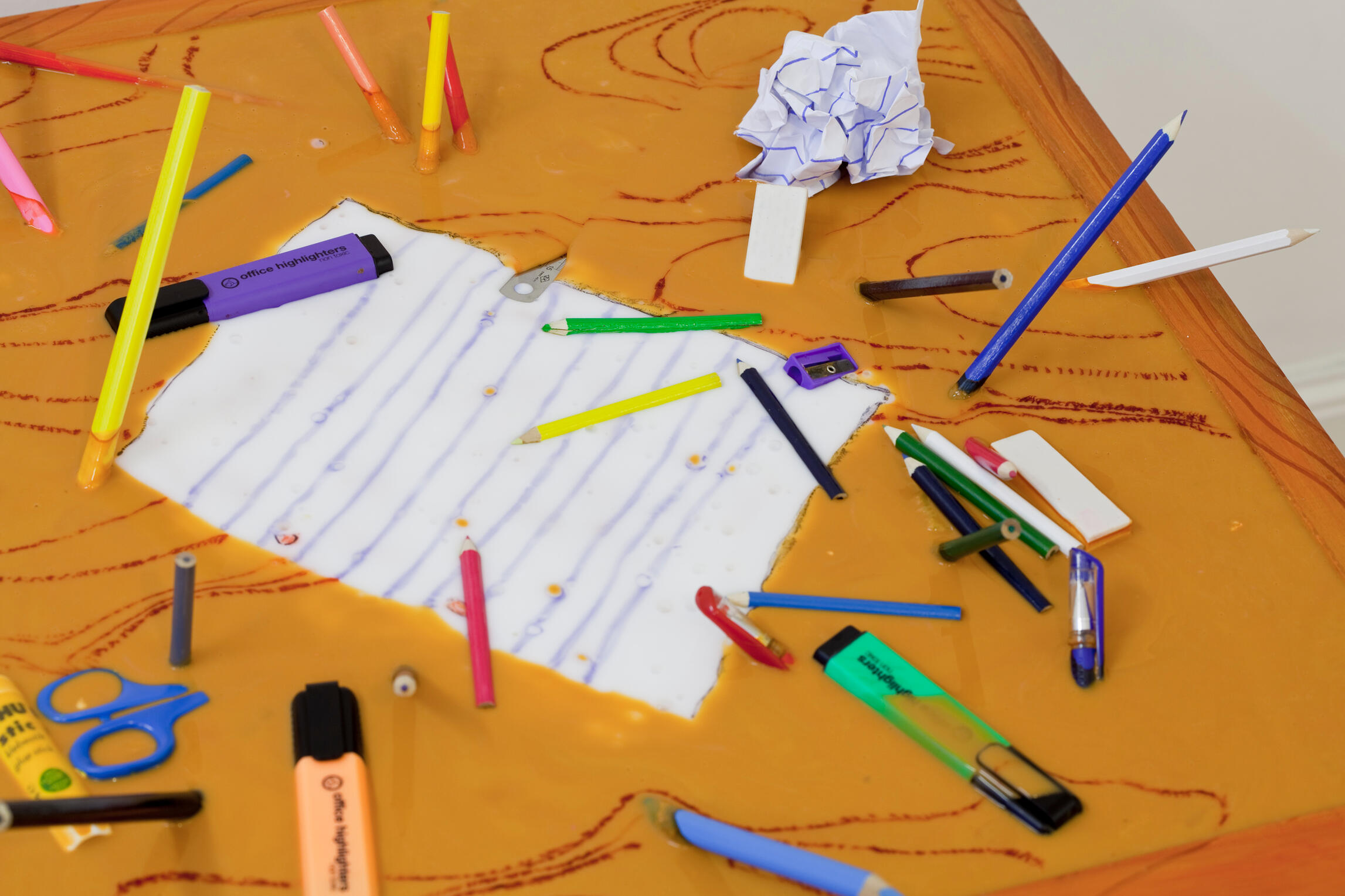
© Joo Choon Lin. All rights reserved.
Supersensible Realm
Re-Modernologio” phase3: Traces of Scenery, Aomori Contemporary Art Centre, Japan, 2012
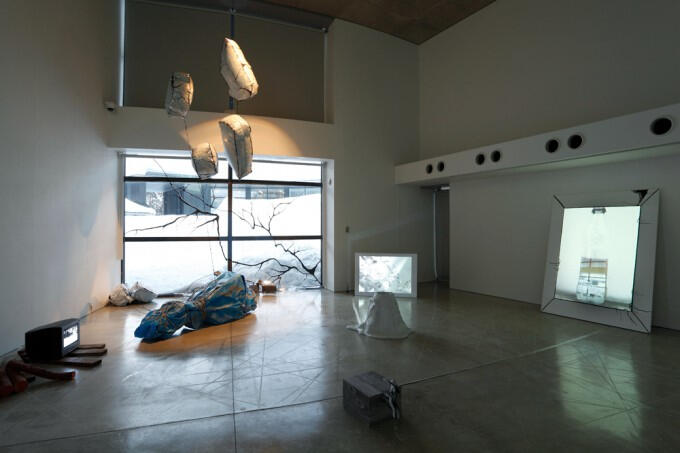
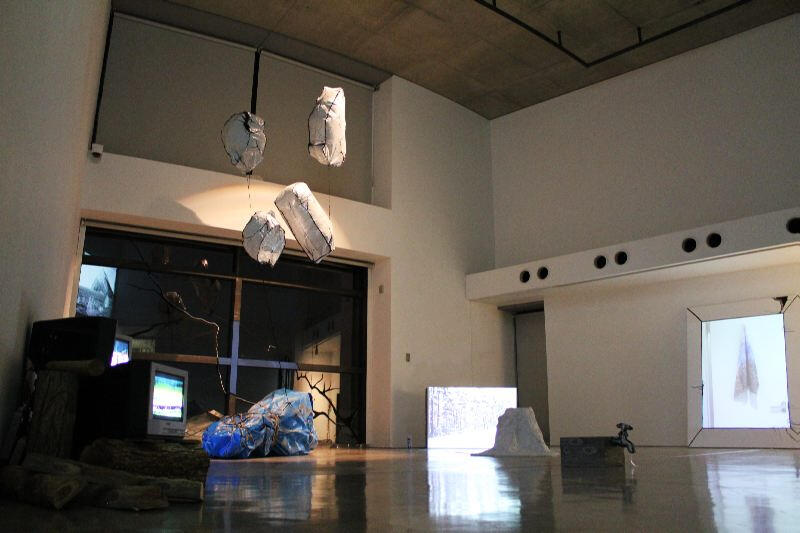
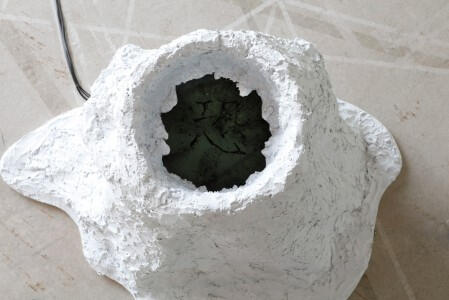
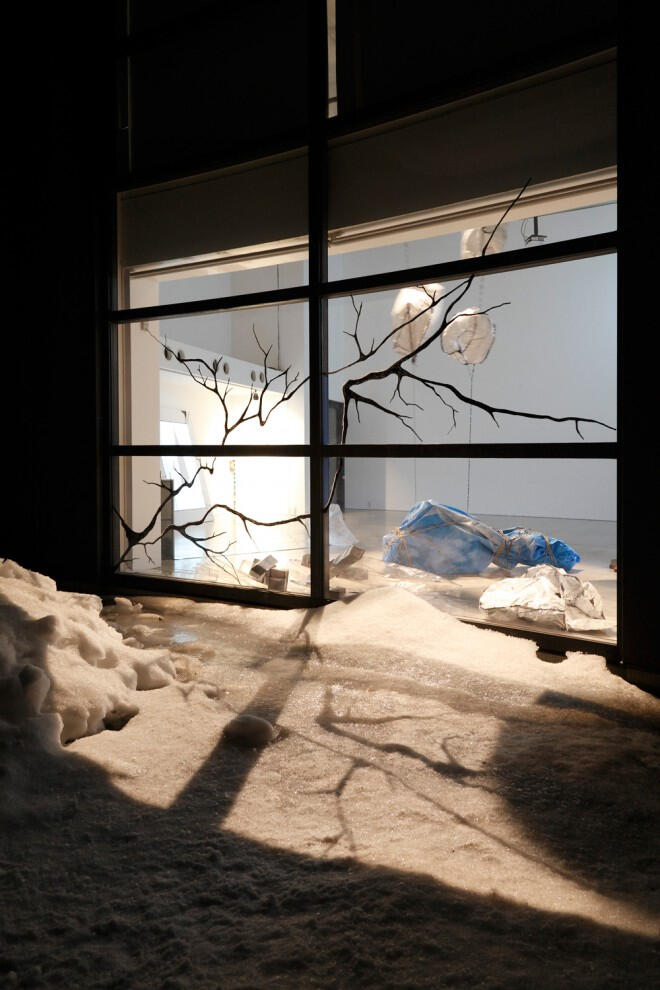
We live in an age of industrial society where we can find artificial elements in our environment and how technology and presence of ‘artificial decoration’ shape our society. The increasing urbanisation leads us away from anything authentic and instead leads us to a radical artificial environment where authentic interaction is displaced by interaction with artificial landscape. For example, we can see road side trees are planted in an orderly manner and benches and tables are made with concrete and painted like wood in the park. The wide usages of such decoration in society leads to another refined layer of artificiality imposed on reality. My videos are made to reference of this reality that is artificial, otherworldly or fabricated. I try to show the tension between the pastoral ideal of Aomori landscape and the destructive forces of artificial, something control by man and technology we have today. The materials I’m using for my works can be commonly associated with the industrial process, such as printer, plastics, paints and foil… a kind of blurring the natural and artificial, which is happening to the technology world we have today. Buildings and mechanism come to dominate and blending into our natural landscape now.I directly reference to Kant’s sublime as a way of translating the technology as our new sublime and to show how technology created industrial environments and structures that we cannot survive without them and the admiration of technology has transformed to fear in an attractive and well- disguise tactics that we the consumer are not aware about its destructive forces that have added to our environment. This artificial naturally transport us to another realm that we could no longer differential what is real and artificial. Perhaps this has characterise what our consciousness defines as “real” in a world where technology can radically shape and filter our living experience.
© Joo Choon Lin. All rights reserved.
Video of Supersensible Realm
Re-Modernologio” phase3: Traces of Scenery, Aomori Contemporary Art Centre, Japan, 2012
We live in an age of industrial society where we can find artificial elements in our environment and how technology and presence of ‘artificial decoration’ shape our society. The increasing urbanisation leads us away from anything authentic and instead leads us to a radical artificial environment where authentic interaction is displaced by interaction with artificial landscape. For example, we can see road side trees are planted in an orderly manner and benches and tables are made with concrete and painted like wood in the park. The wide usages of such decoration in society leads to another refined layer of artificiality imposed on reality. My videos are made to reference of this reality that is artificial, otherworldly or fabricated. I try to show the tension between the pastoral ideal of Aomori landscape and the destructive forces of artificial, something control by man and technology we have today. The materials I’m using for my works can be commonly associated with the industrial process, such as printer, plastics, paints and foil… a kind of blurring the natural and artificial, which is happening to the technology world we have today. Buildings and mechanism come to dominate and blending into our natural landscape now.I directly reference to Kant’s sublime as a way of translating the technology as our new sublime and to show how technology created industrial environments and structures that we cannot survive without them and the admiration of technology has transformed to fear in an attractive and well- disguise tactics that we the consumer are not aware about its destructive forces that have added to our environment. This artificial naturally transport us to another realm that we could no longer differential what is real and artificial. Perhaps this has characterise what our consciousness defines as “real” in a world where technology can radically shape and filter our living experience.

© Joo Choon Lin. All rights reserved.
The Beat Of the City That Freezed, Aichi Triennale 2010, Nagoya, Japan
Installation view
Installation view of The Beat Of the City That Freezed
At Aichi, Joo has created a stop-motion animation in a room at the Senni Kaikan building where the characters in the animation will interact with existing objects in the room. The narrative is a reflection upon the history of the Choja-machi area that was prominent for its textile wholesale industry. The area’s previous identity has diminished with changes in the cityscape. Joo has intended to present and preserve the past, with a resulting animation showing sculptural pieces that are made with photographs of street objects printed on fabric and a water monster inspired by the Kappa from Japanese mythology. Towards the end of the animation, everything seems to be eternally preserved in ice, ironically, by one of the symbols of modernity that is the air-conditioner.
© Joo Choon Lin. All rights reserved.
The Beat Of the City That Freezed, Aichi Triennale 2010, Nagoya, Japan
Animated film

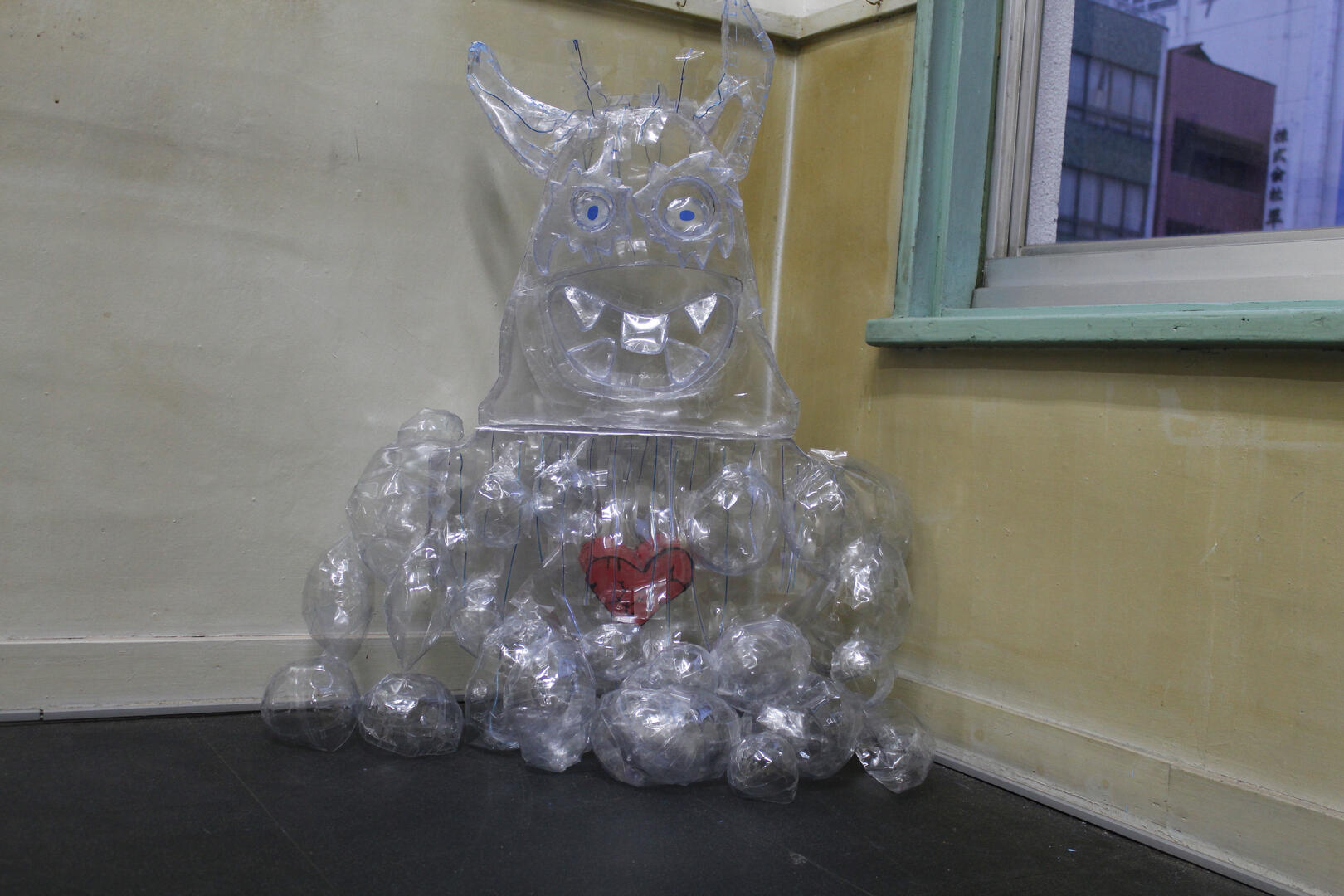
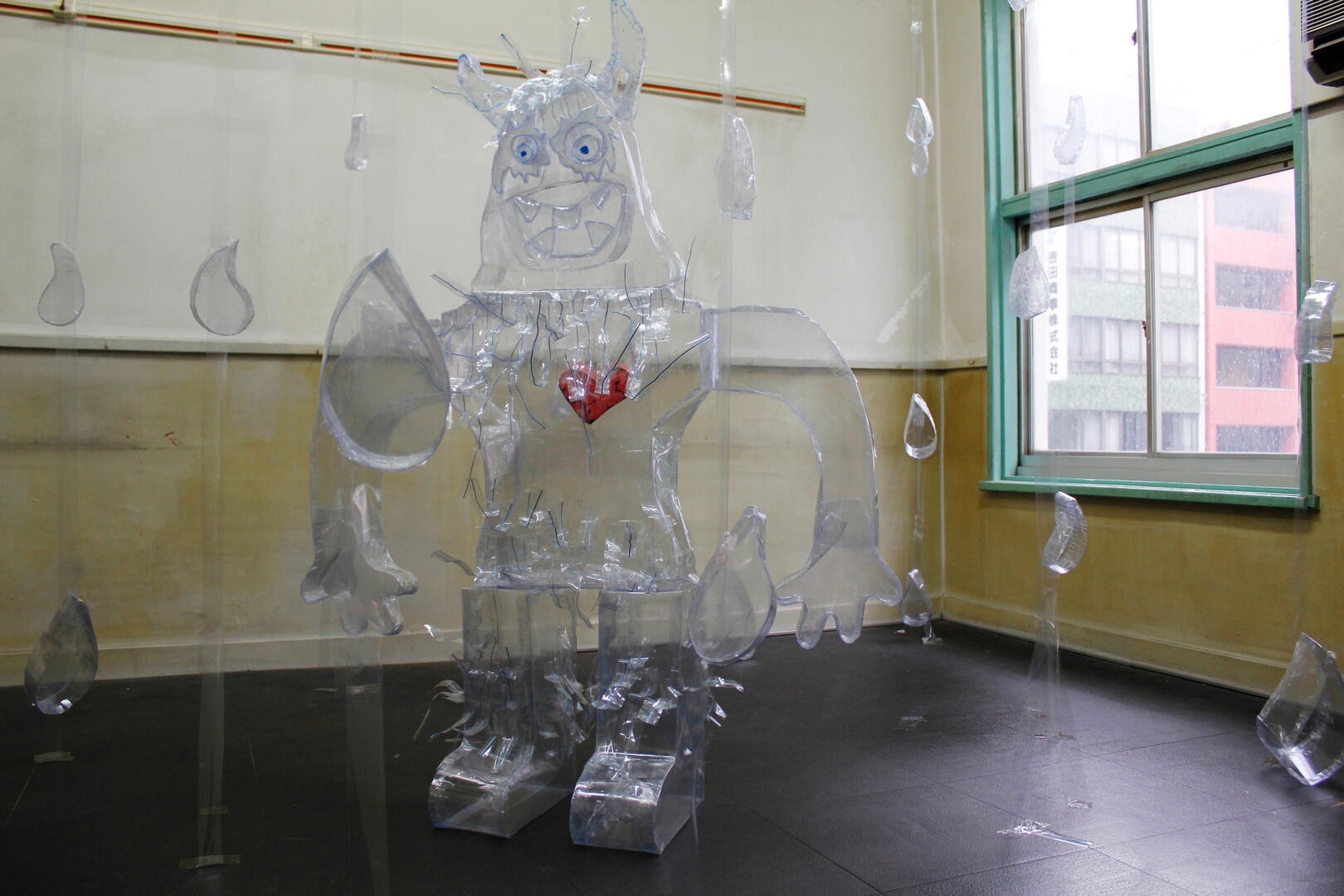
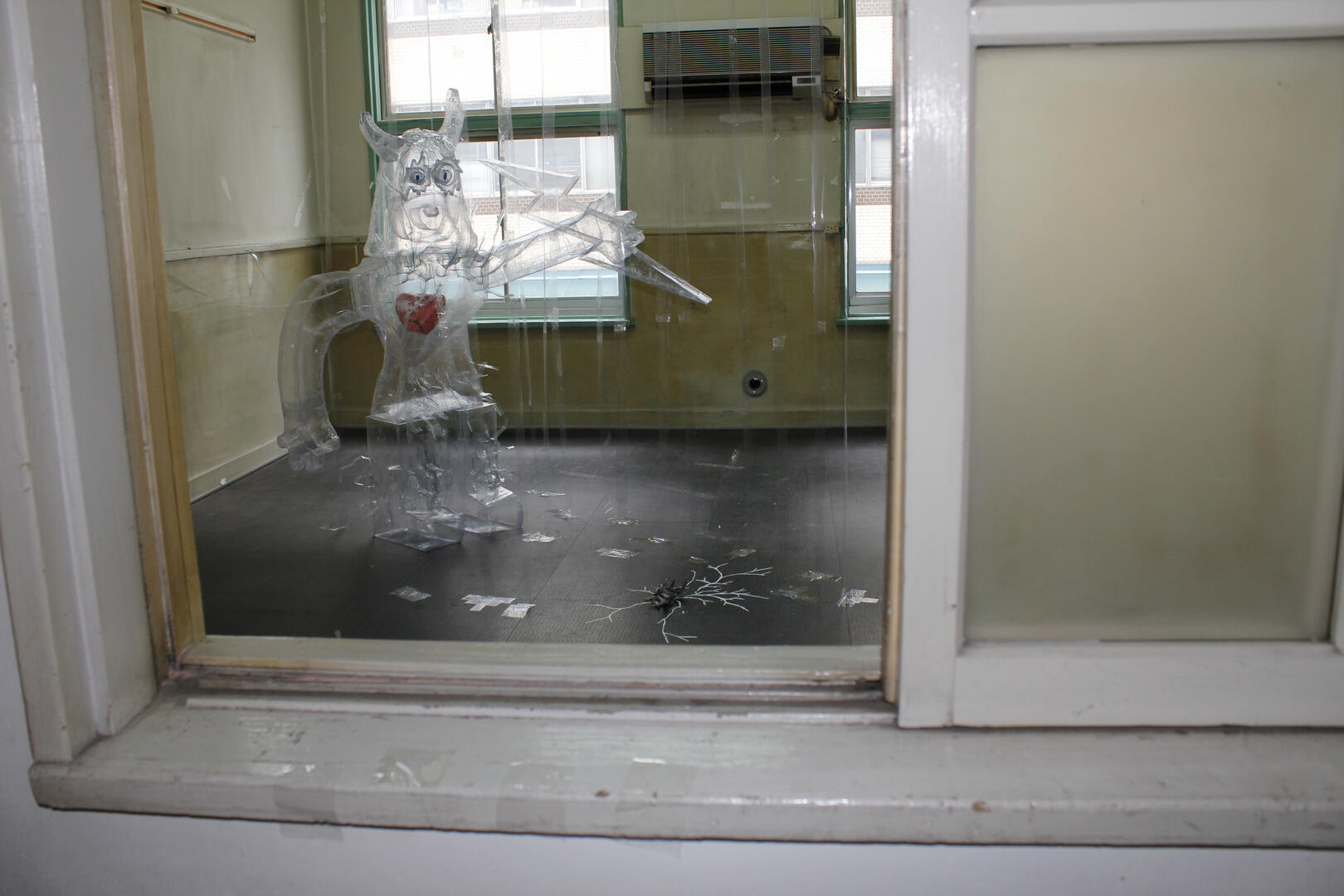
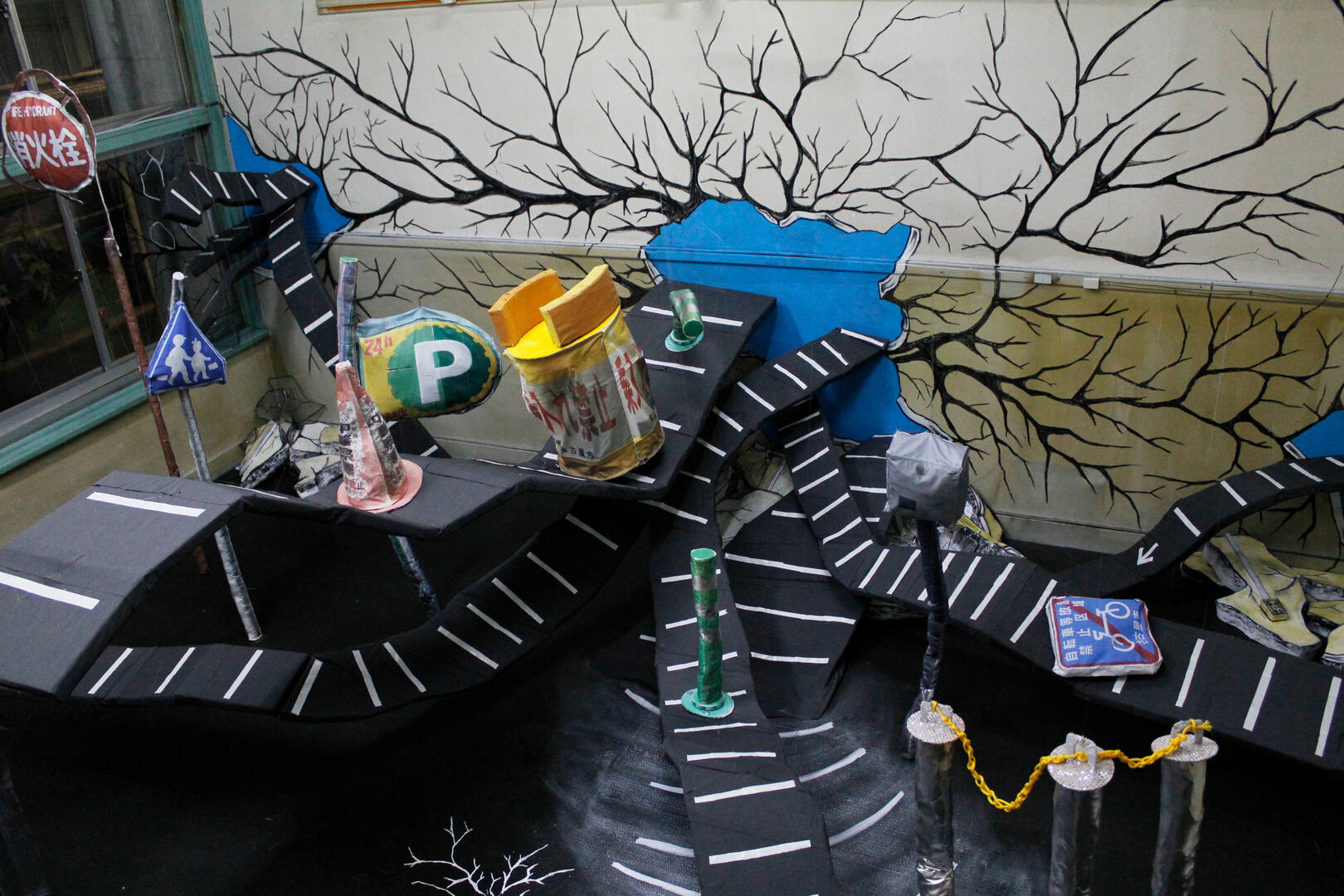
Video stills of The Beat Of the City That Freezed
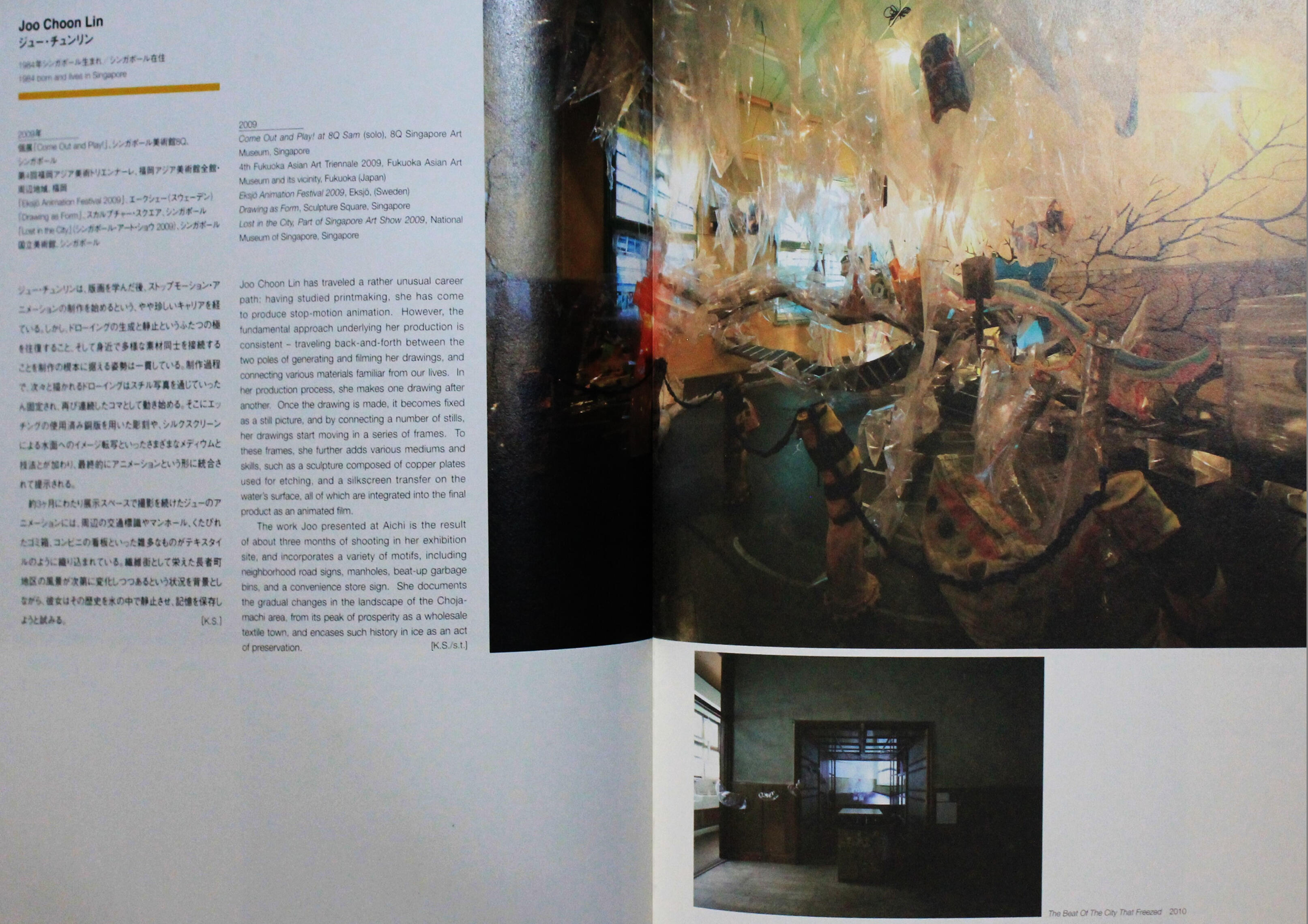
© Joo Choon Lin. All rights reserved.
Come Out and Play at 8Q!, 8Q Singapore Art Museum, 2009

Come Out And Play! | Stop-motion Animation InstallationThe works consist of a large wall projection, of a stop-motion animation made in situ at 8Q, by drawing painstakingly on the walls of the staircase, on the glass walls and windows of the museum, as well as invented unique silkscreen prints on water. I created a storyboard through a sequence of drawing, erasing and re-drawing, capturing the images frame by frame with only a still-life camera and tripod. The storyline in my animation is sometimes absurd because I try not to dictate a plot from the beginning and prefer to allow the materials and the environment that I come across to lend a hand in its progress. The movements of the characters are decided by the nature of the environment, so they will fly if there is a high ceiling or be constraint to just walking if I am unable to secure a ladder on uneven ground. It is about one adapting to the environment, rather than shaping it to needs.The equipment used are minimal, a camera with tripod, a ladder and basic drawing materials such as charcoal, chalk and pastels. The props that I prepare are also simple and they allow flexibility in the choice of location where my animation is created such as public-walkways, staircases and even the washroom.I try to respond to different environment and approach new areas, for example, the glass windows in 8Q SAM which provided a good flat surface to work with, yet also presented fascinating perspectives and interaction with the surrounding architecture.In this animation, there is a girl, whom I called Ringmaster, who makes her own toys with wrappers from chocolates. Her ability to make things out of found materials is a response to having limited resources. There are also a couple of chocolate-monsters having a tussle with her and the overall plot is very simple. I believe the meanings of my animation lies within the making and I always intended to make apparent the process of art-making to the audience.
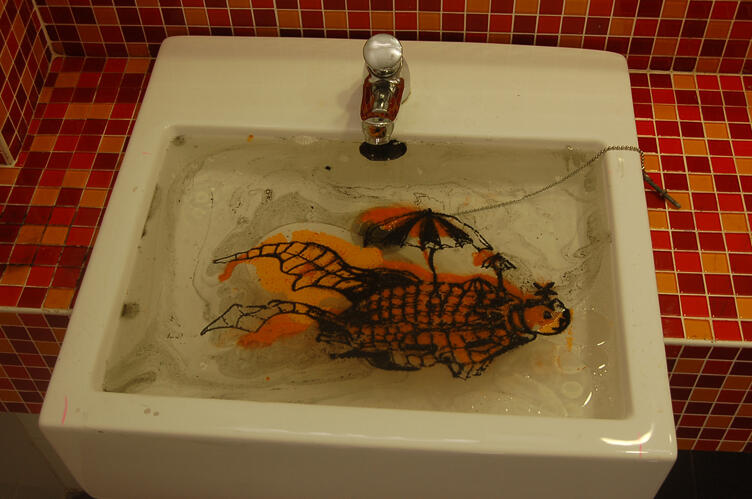
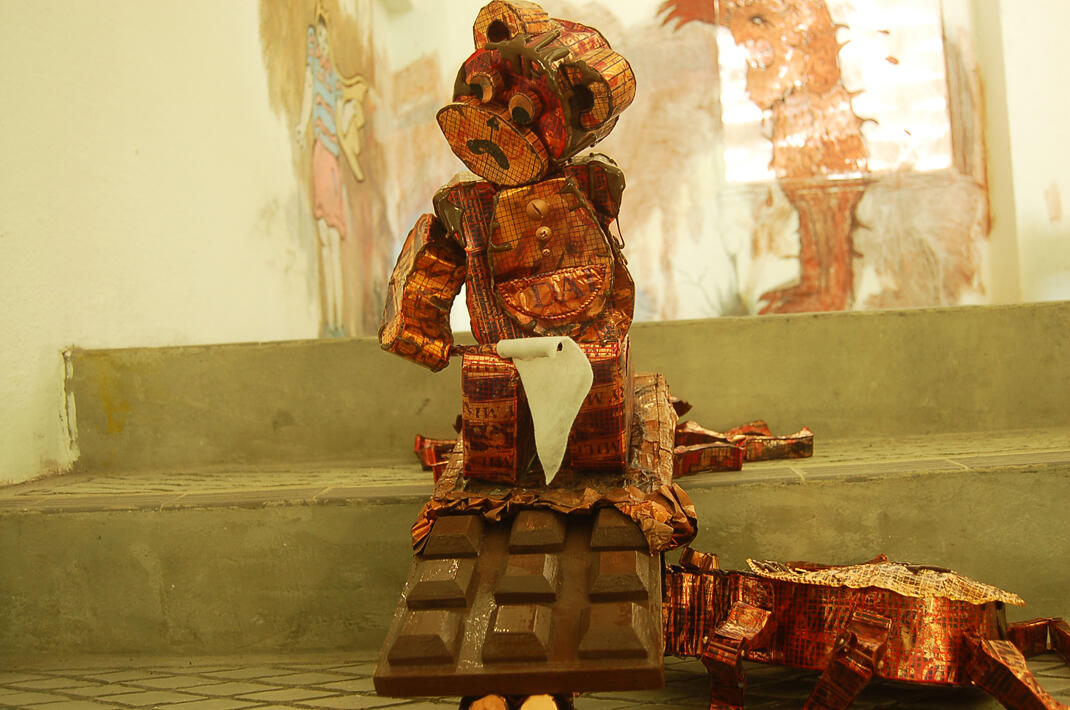
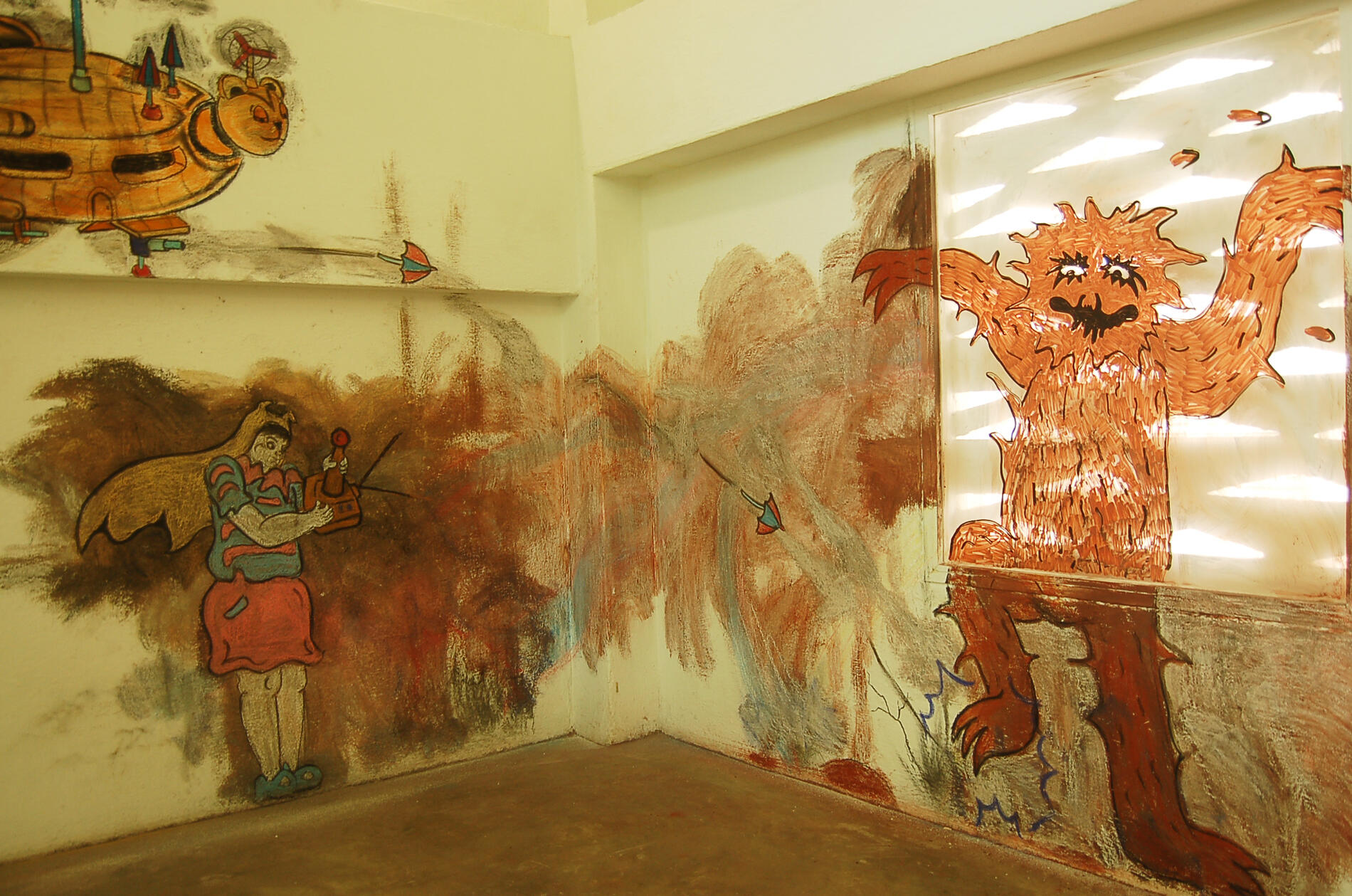
© Joo Choon Lin. All rights reserved.
Come Out and Play, 4th Fukuoka Asian Art Triennale, 2009
Fukuoka Asian Art Museum in Japan
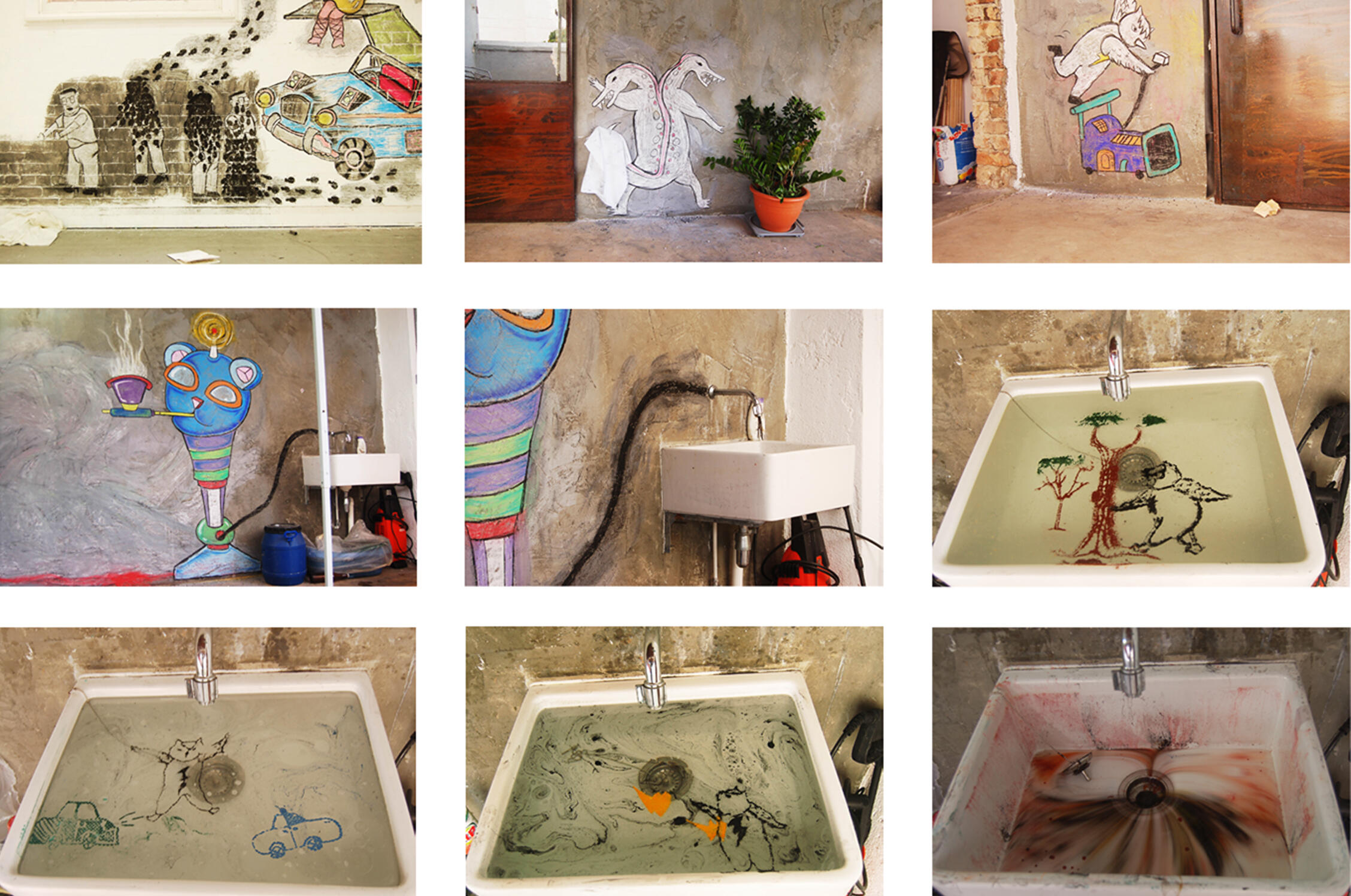
Come Out And Play! | Stop-motion Animation On Sculpture built-in Lcd ScreenJoo Choon Lin makes drawings in the environment: on the wall, around the door and power switches, in the basin water…. Each of these drawings is a ‘frame’ in her animation. Once photographed, the drawing is erased and the artist works on her subsequent frames, always leaving behind traces of the old. Made with drawing, photography and installation, this animation engages imagination and craftsmanship in ways that sideline the over-dependence on hi-tech interfaces in contemporary society.Combining live stop-motion and frame by frame drawings on real spaces. The characters in this short animation are derived from the surrounding environment of my studio in Melbourne, while on an artist residency programme. These characters then travel back to Singapore, and the animation process continues in Post-Museum.
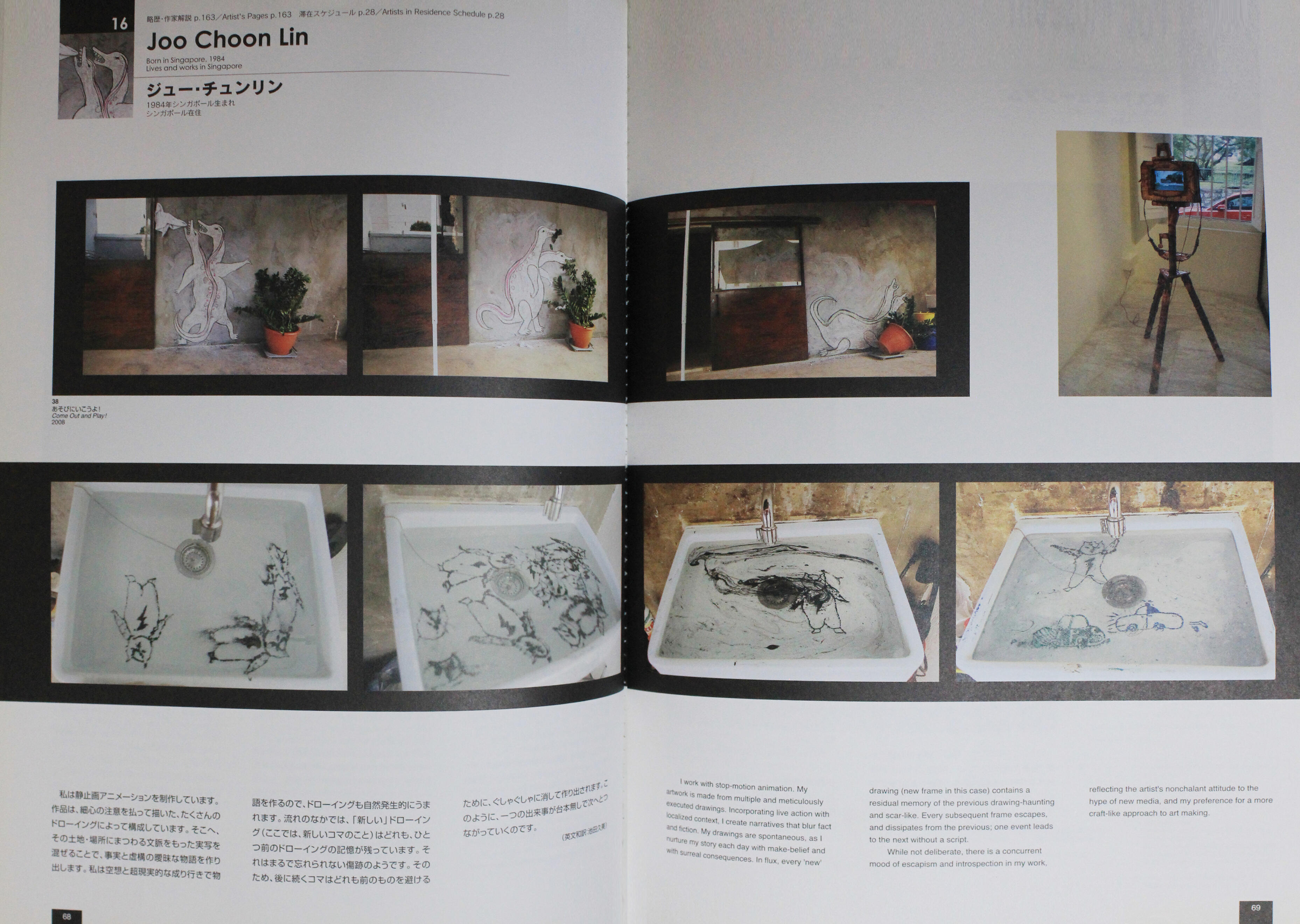
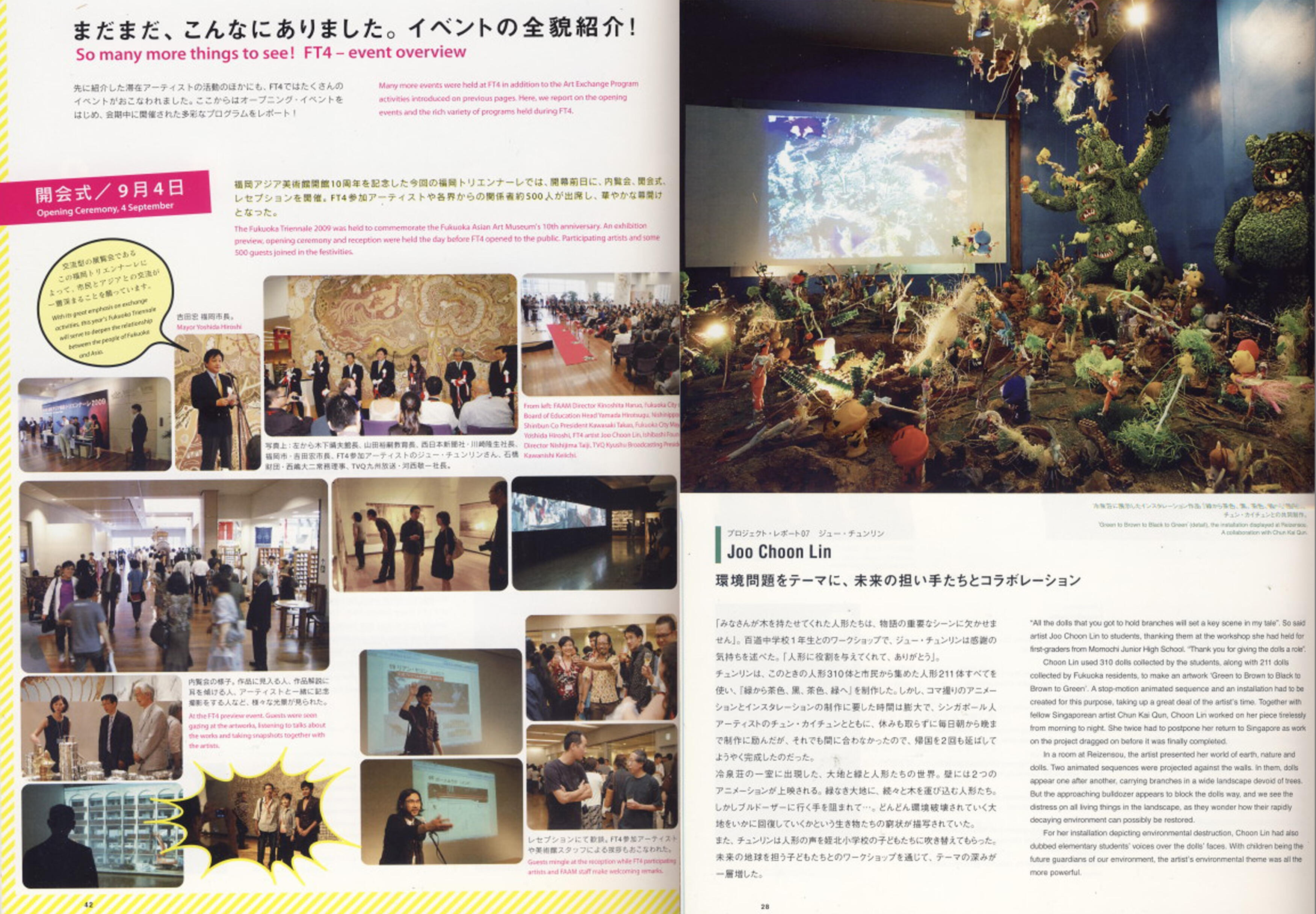
Catalogue, 4th Fukuoka Asian Art Triennale, Fukuoka Asian Art Museum in Japan, 2009
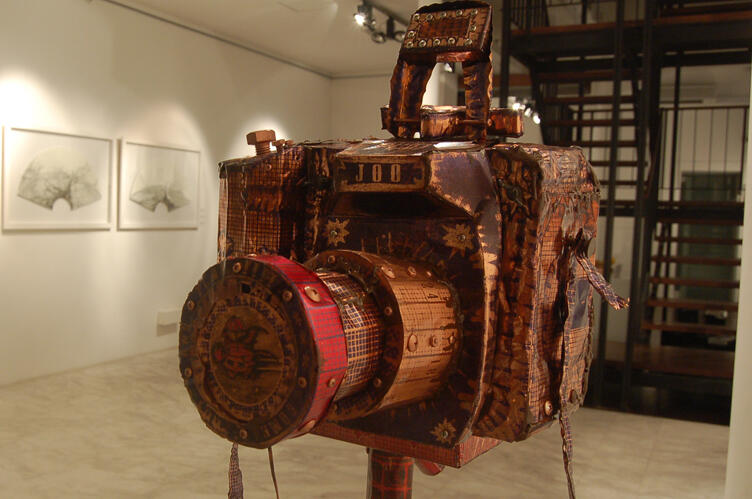
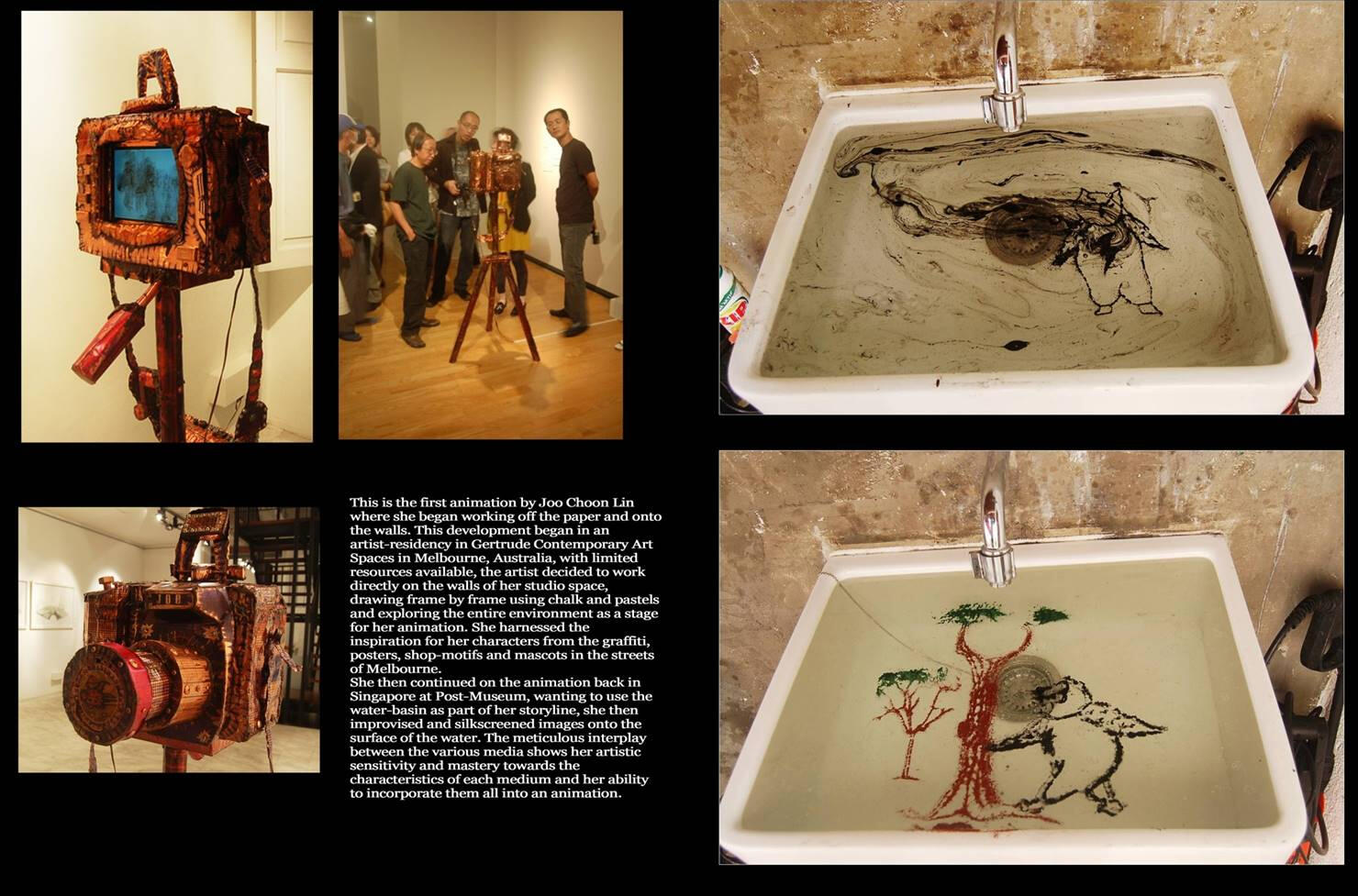
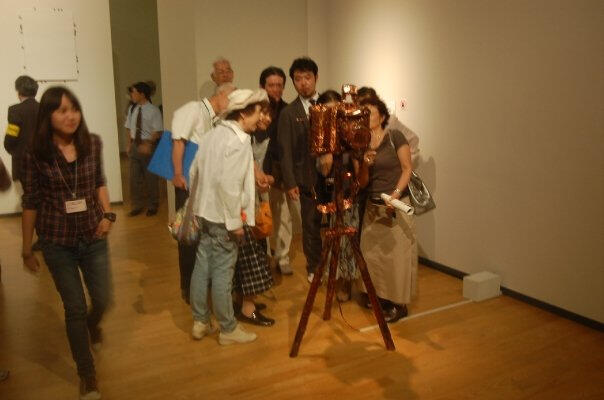
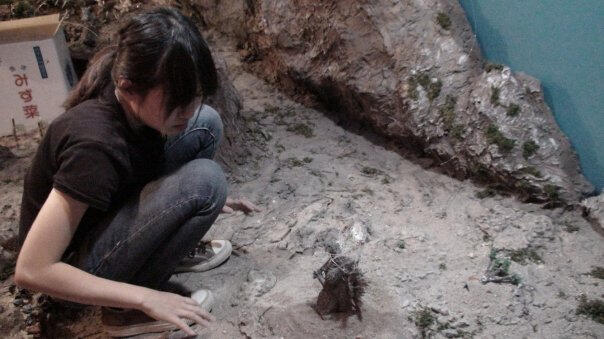
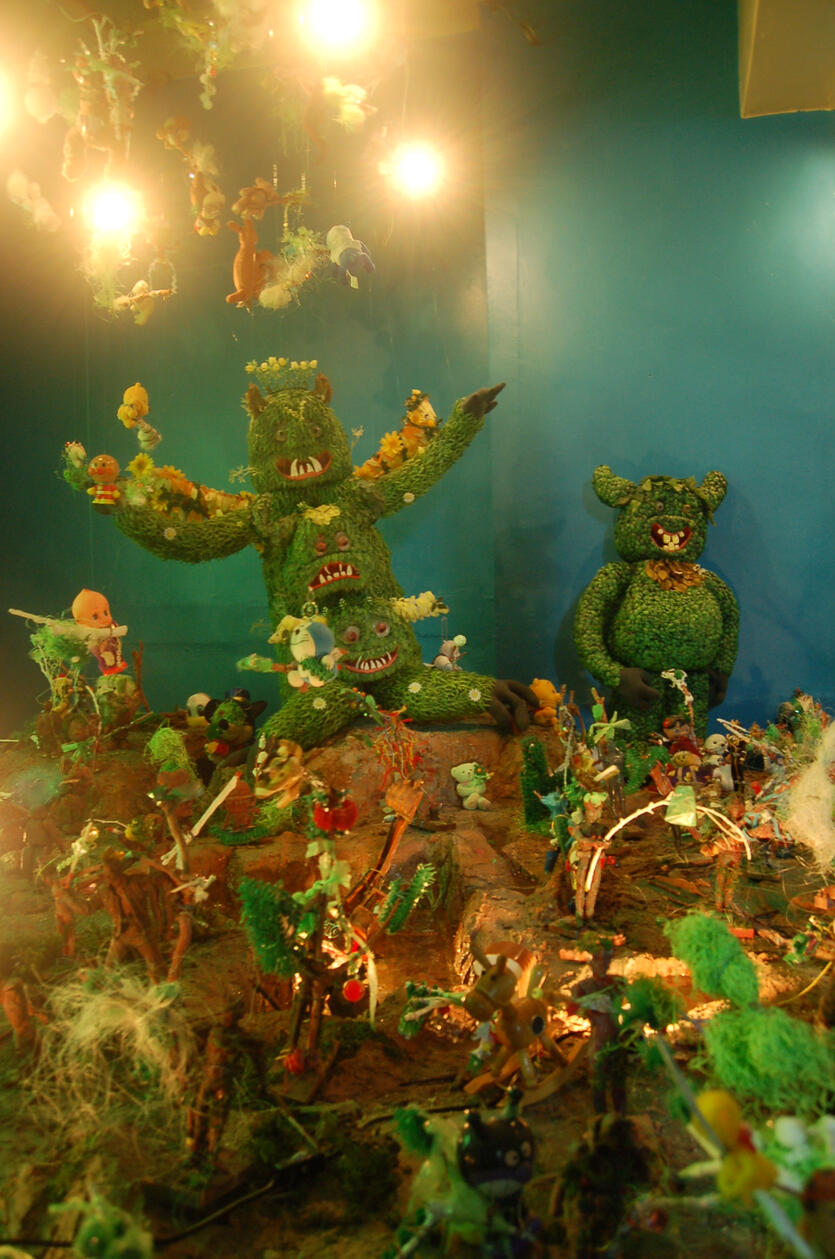
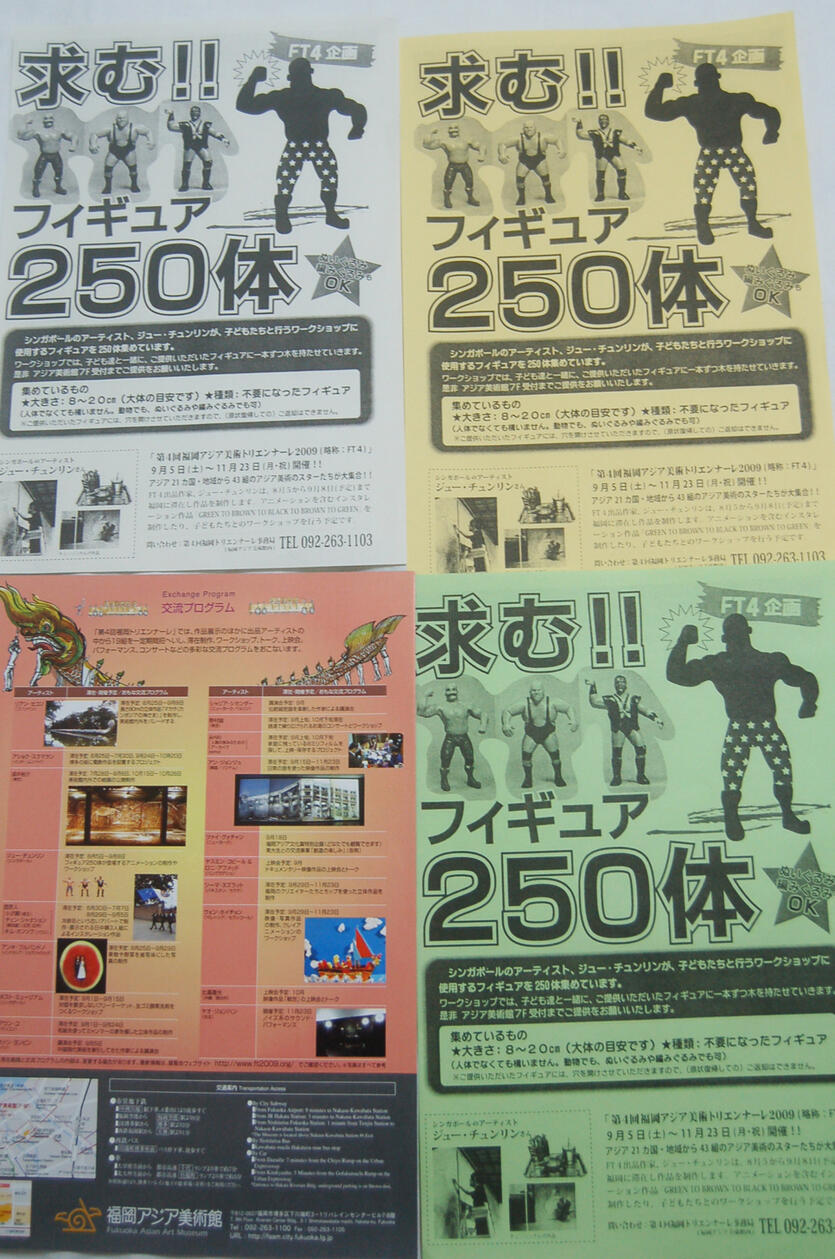
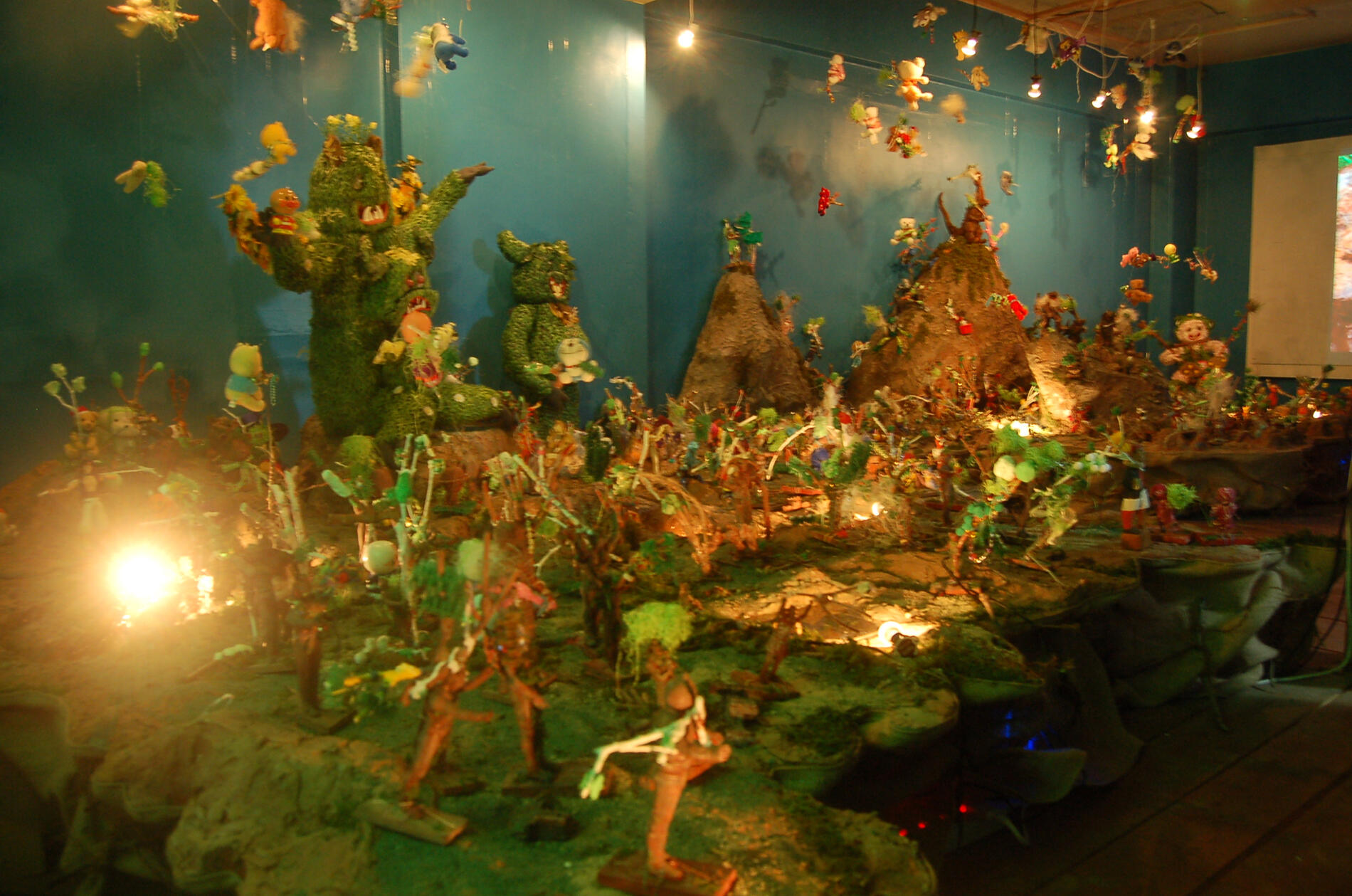
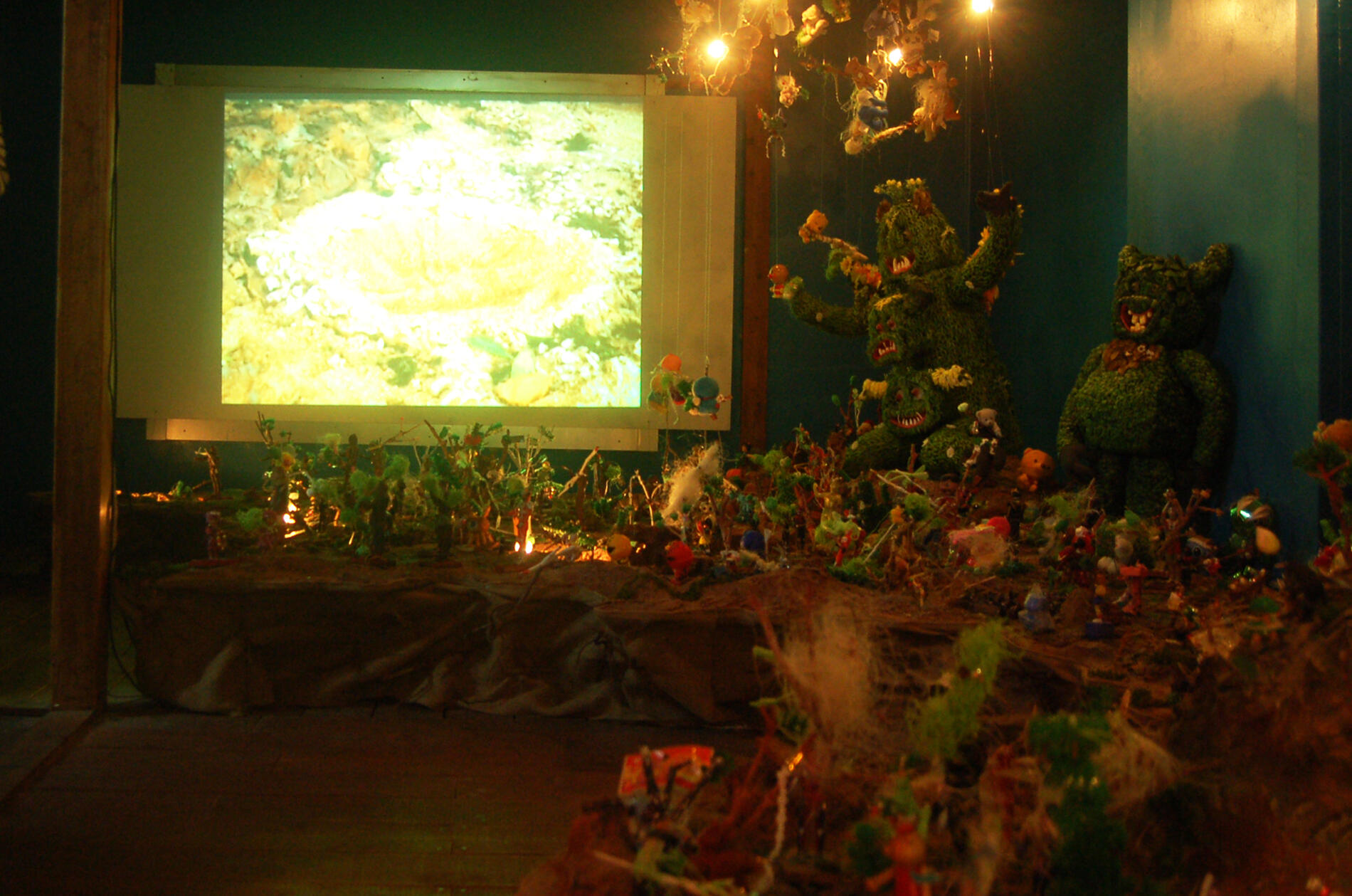
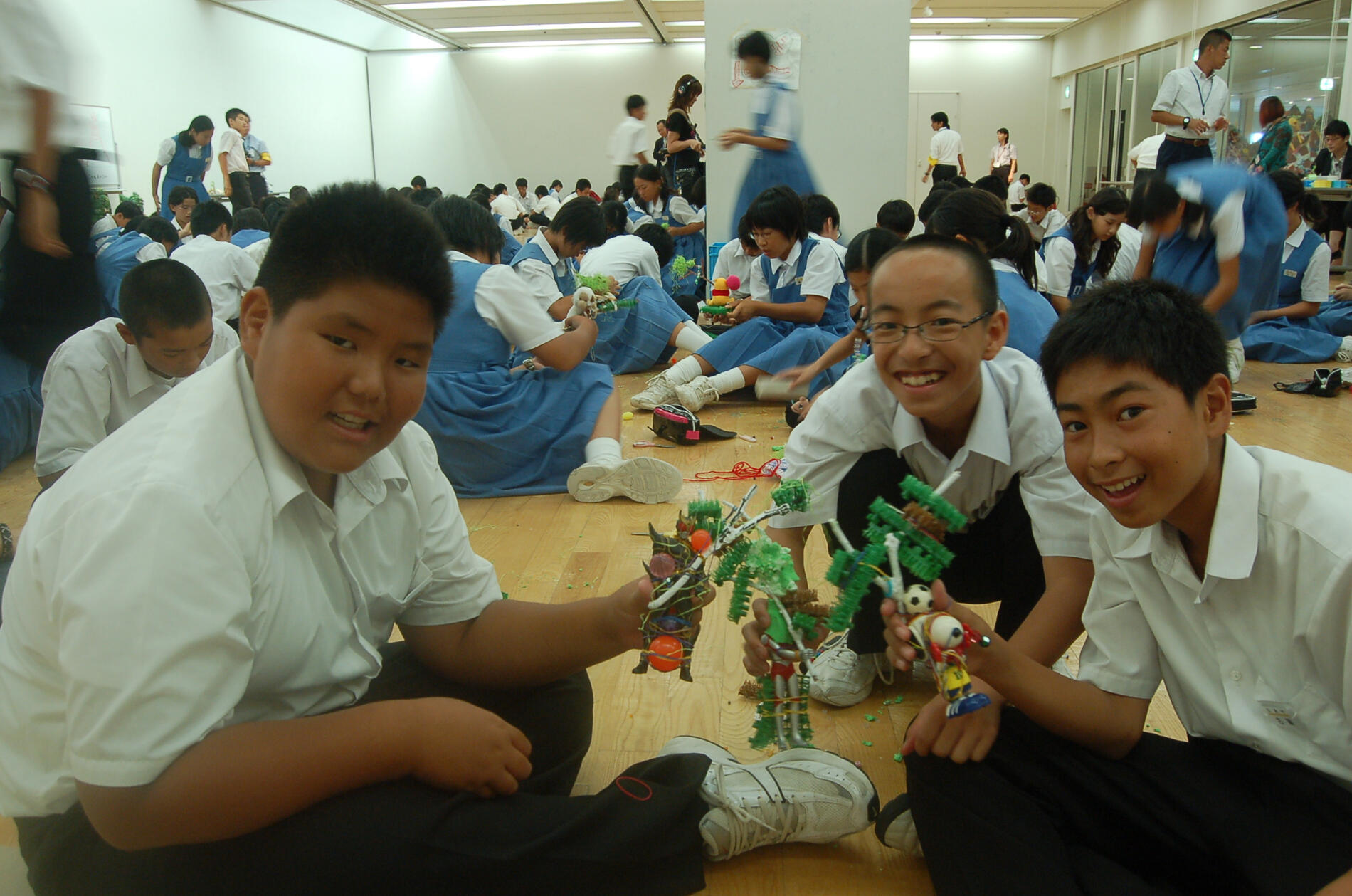
© Joo Choon Lin. All rights reserved.
STOP in here and get into the Motion, 8Q Singapore Art Museum
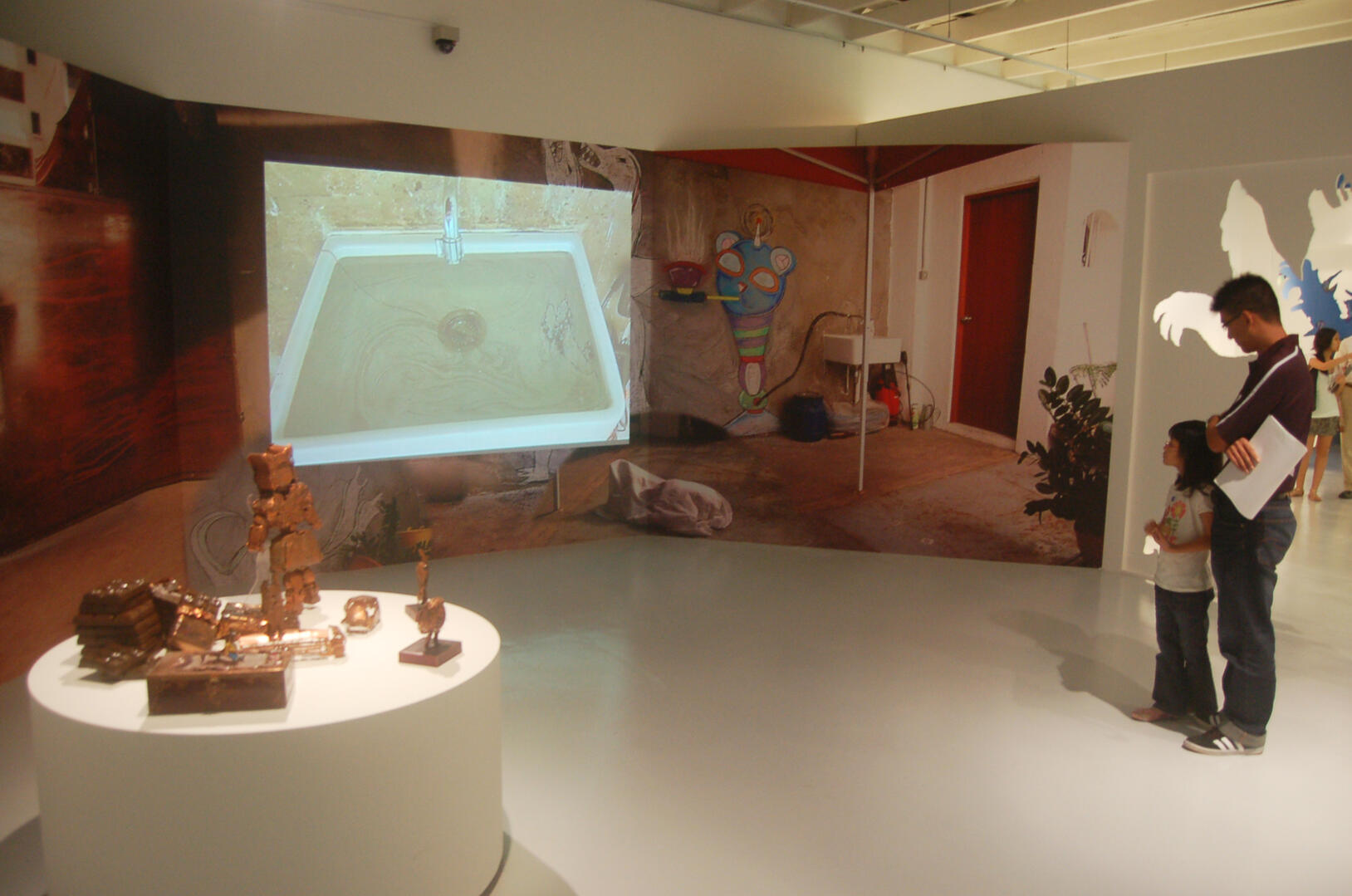
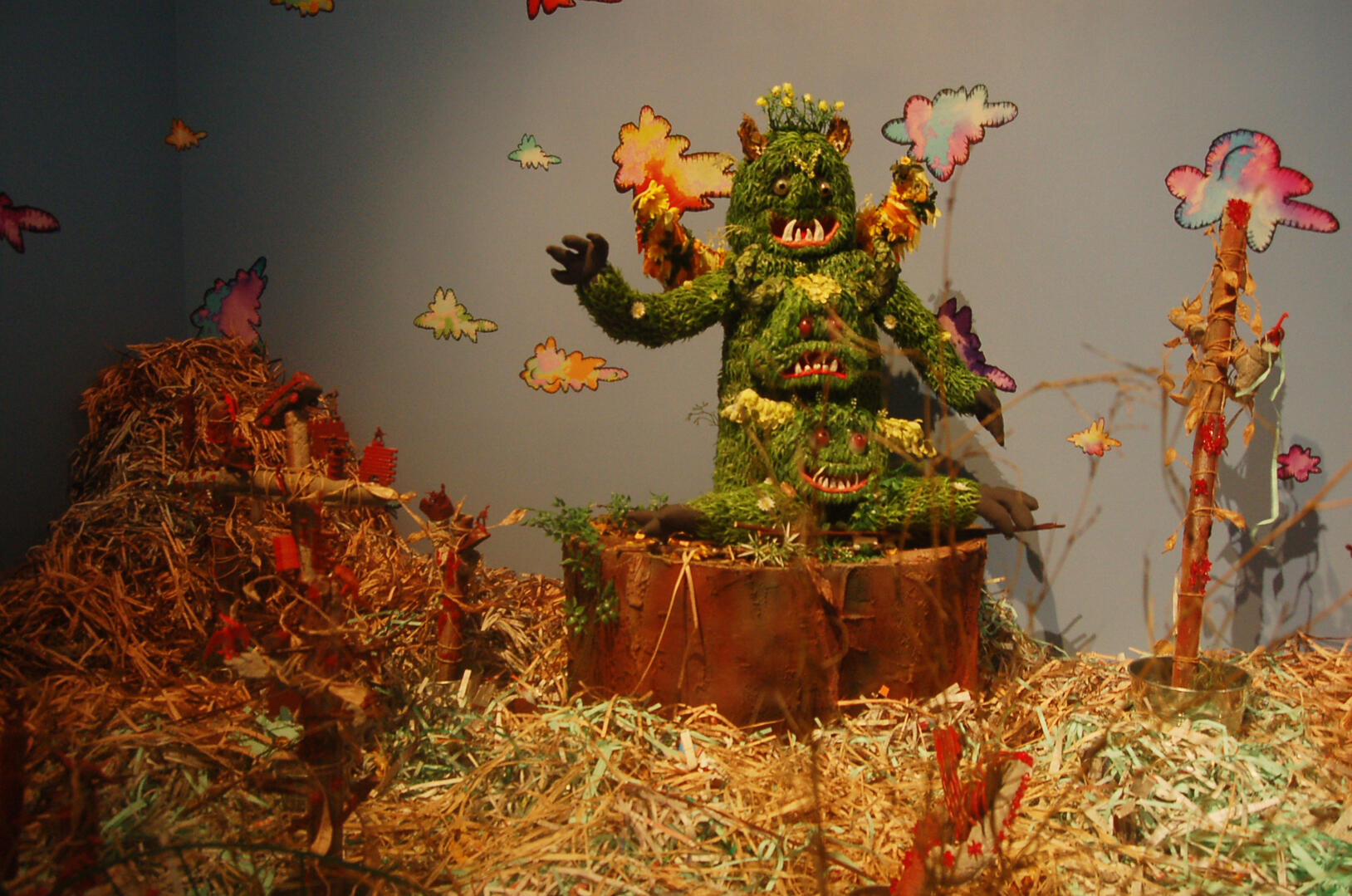
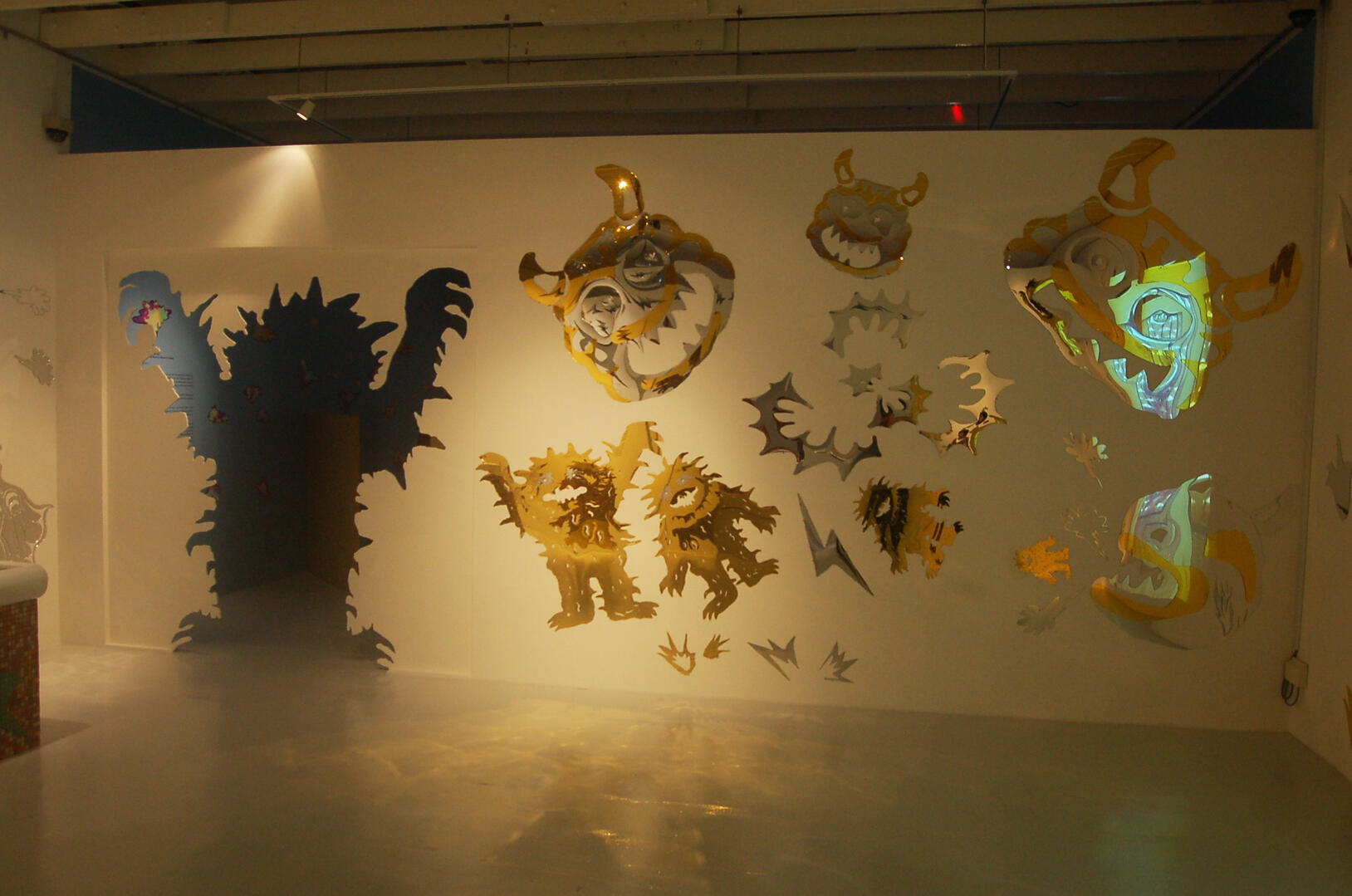
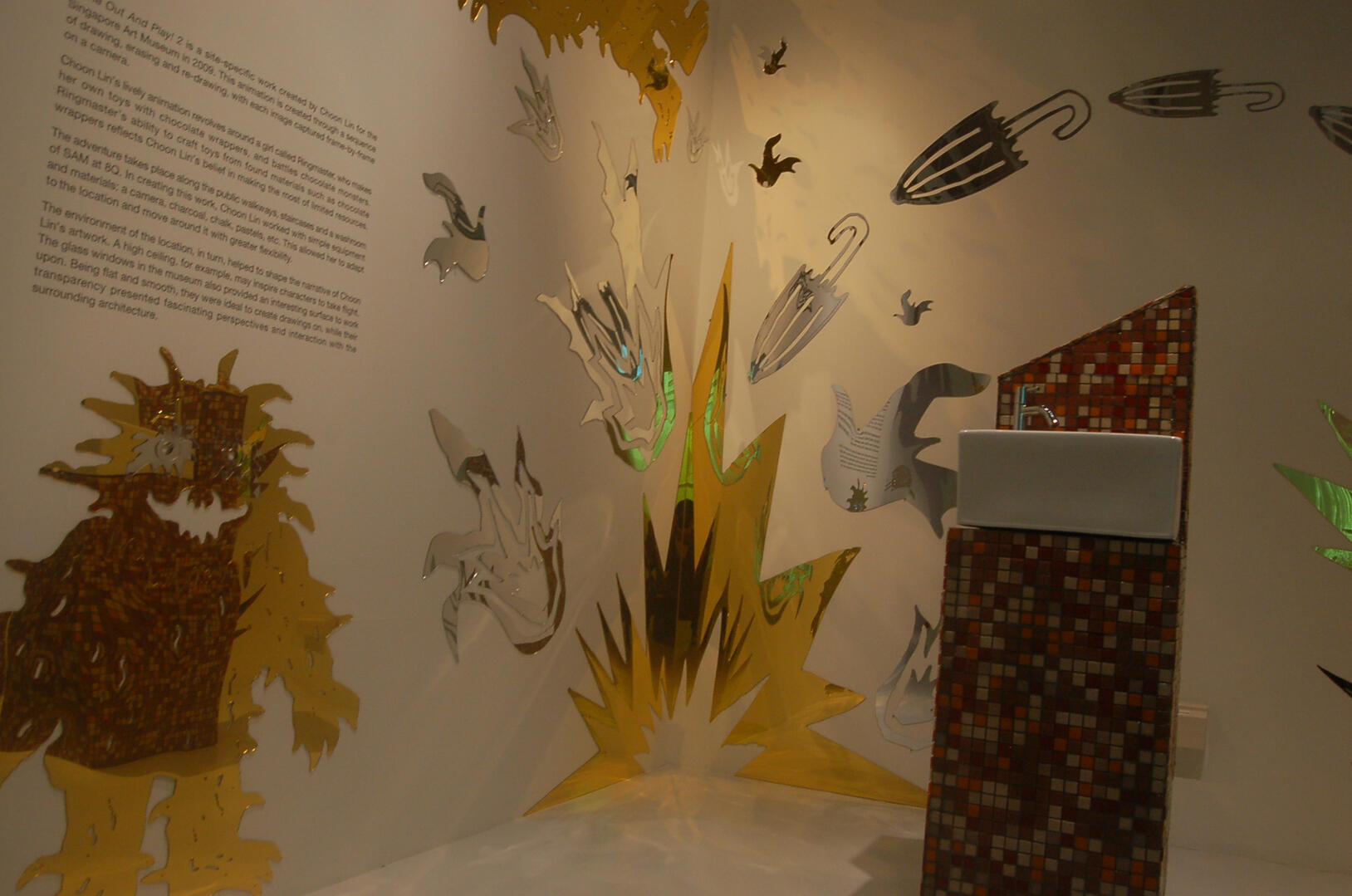
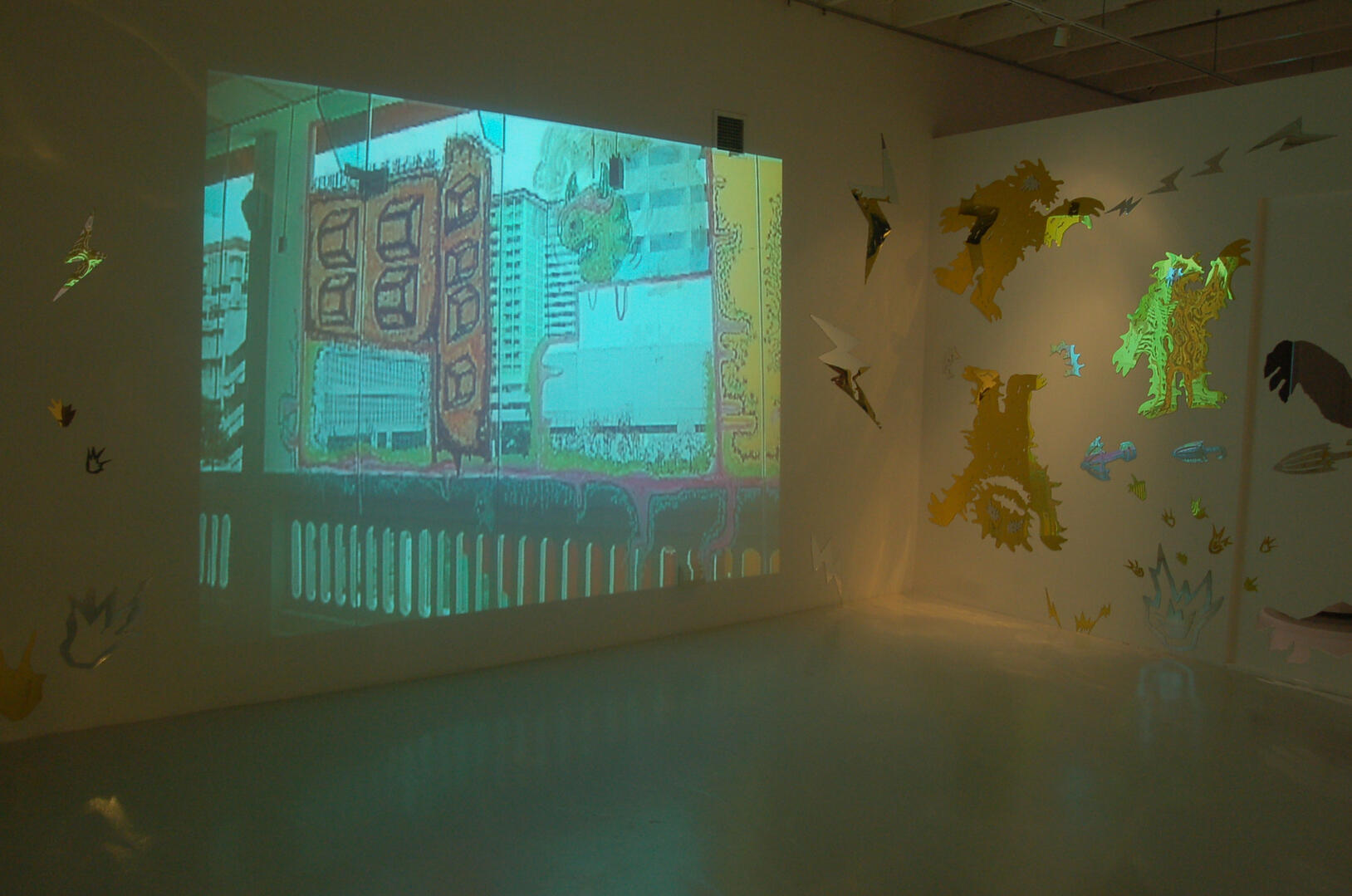
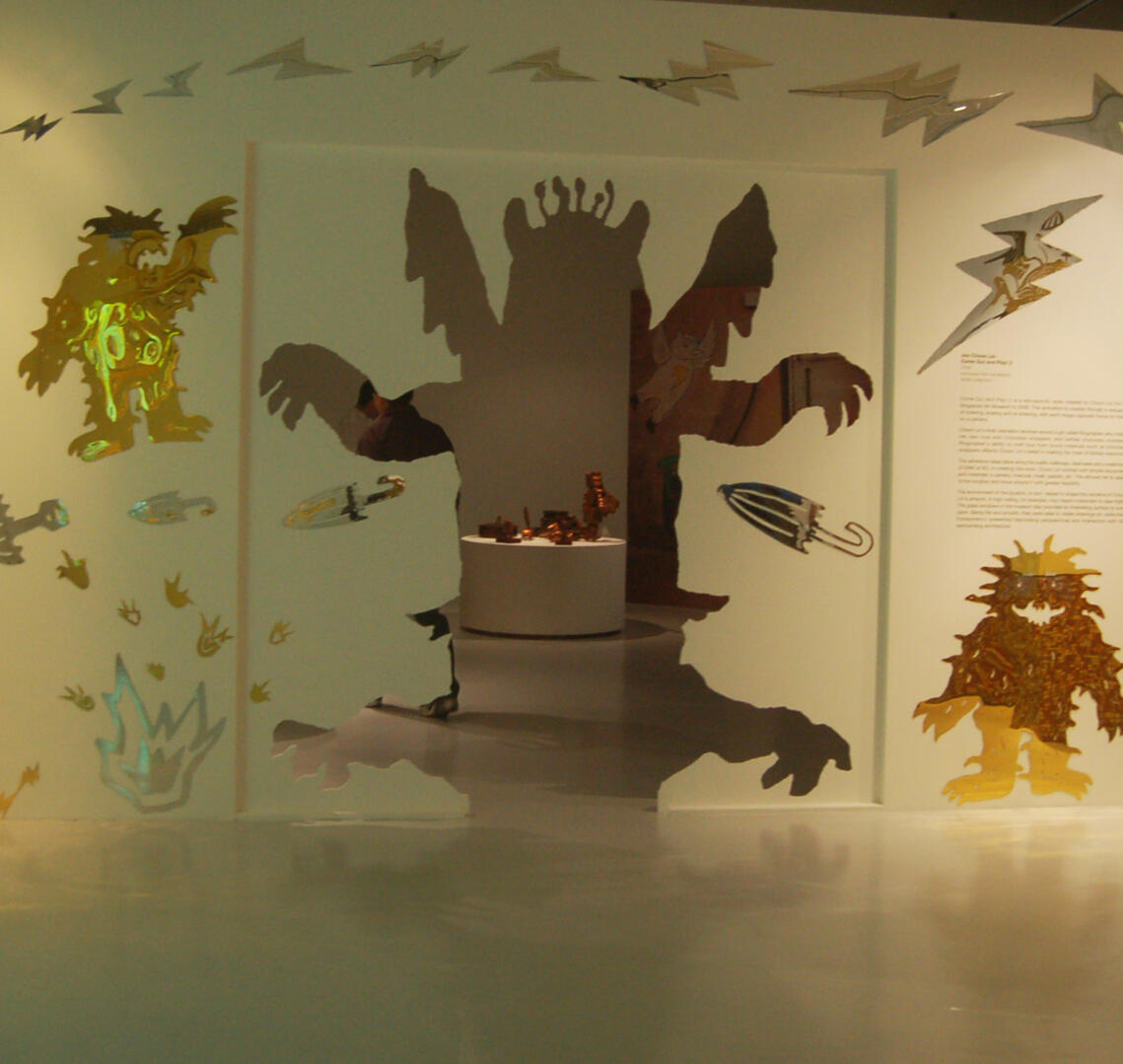
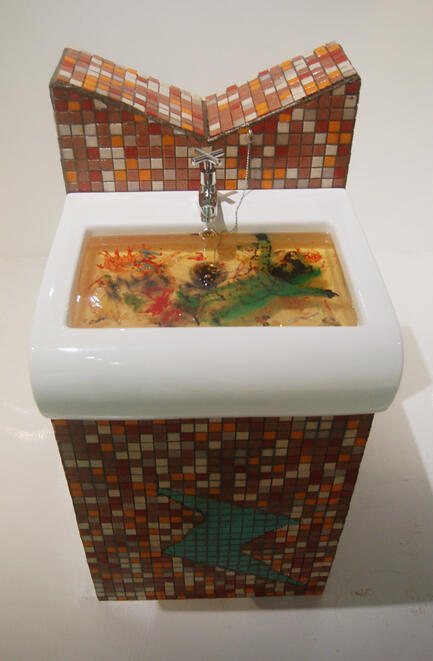
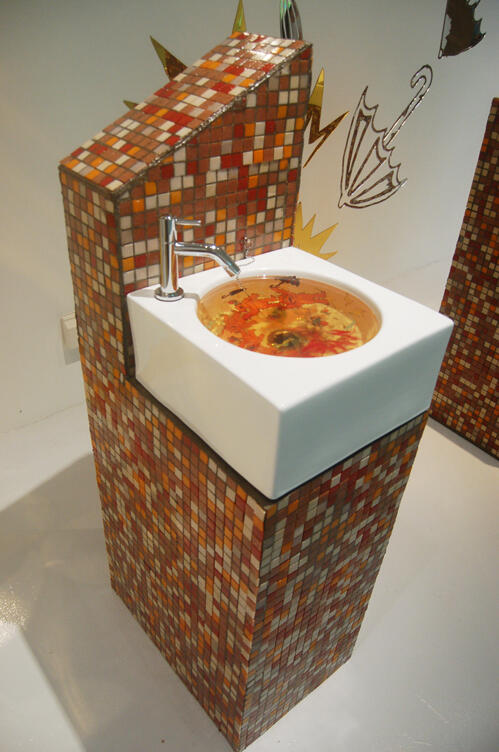
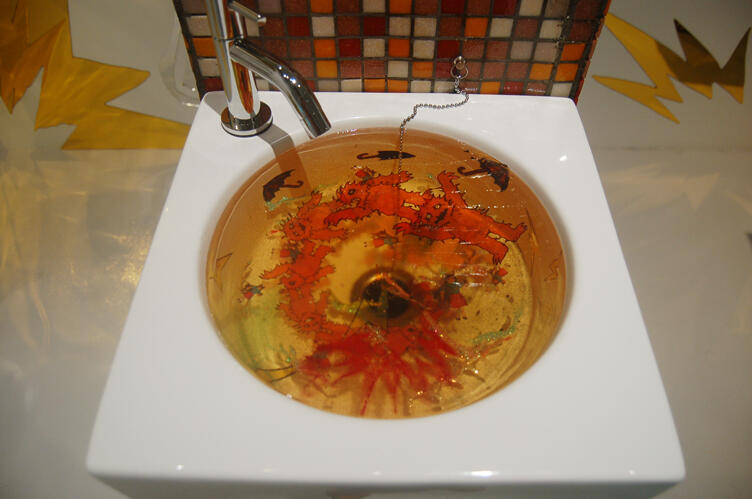
Animated Film Installation
ART GARDEN: Children Season at 8Q, Singapore Art MuseumJoo Choon Lin’s stop-motion animation is made from multiple and meticulously executed drawings. Her work incorporates live action and localised context to create narratives that blur fact and fiction. For her, the sketches also take the form of sculptural marquette. Joo’s drawings are spontaneous, as she nurtures her story each day with make-belief and with surreal consequences. In flux, every ‘new’ drawing (new frame in this case) contains a residual memory of the previous drawing—haunting and scar-like. Every subsequent frame escapes, and dissipates from the previous: One event leads to the next without a script. While not deliberate, there is a concurrent mood of escapism and introspection in Joo’s work, reflecting the artist’s nonchalant attitude to the hype of new media, preferring something more material and craftlike.The artist has created three rooms for her animations and this is born of the artist’s intention to develop her work in a way that it can be experienced in an environment rather than being confined to a screen alone. In this way, she includes the audience in her installation so that they can experience being part of her work as well.She has included sculptural works as extensions of her animation, for example, wash-basins with fixated water and still images, this static quality creates an experience as if you have wandered into one of her animation frames. She has also reinvented an 8Q SAM washroom where one of the animation was filmed, taking the audience into her vision and imagination of everyday spaces.
© Joo Choon Lin. All rights reserved.
When Drawing Becomes Still
Objectifs, Singapore, 2010

When Drawing Becomes Still, Objectifs
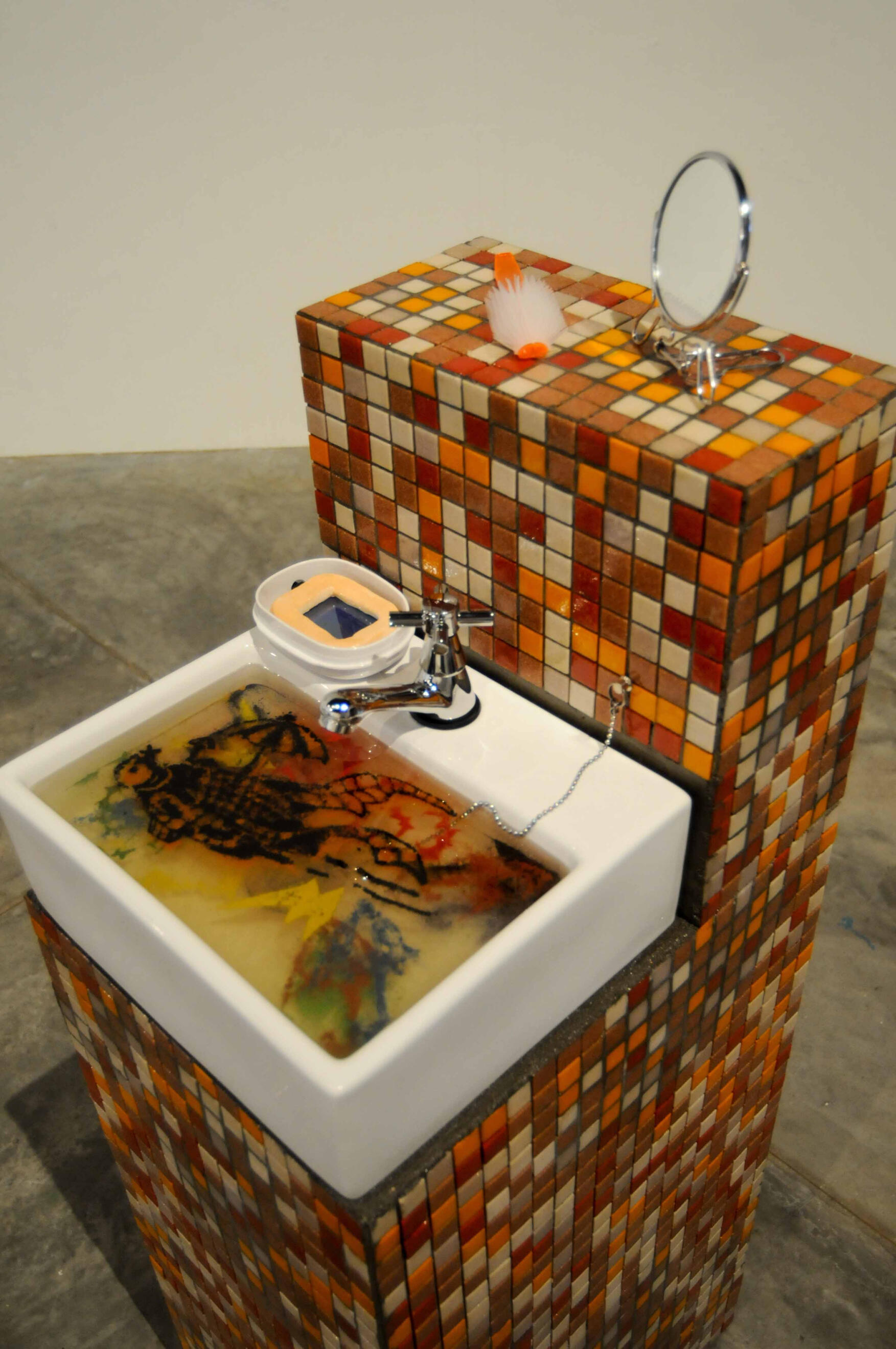
© Joo Choon Lin. All rights reserved.